
There's something truly magical about an upside-down cake. The moment of the 'flip' is always filled with anticipation, revealing a beautiful, glistening layer of caramelized fruit. This Apricot Upside-Down Cake is a celebration of summer, transforming simple ingredients into a stunning dessert. The apricots become tender and jammy, their slight tartness perfectly balanced by the sweet, buttery caramel. The cake itself is incredibly moist and tender, thanks to the addition of smetana, which gives it a rich, delicate crumb. It's a simple, rustic dessert that never fails to impress.
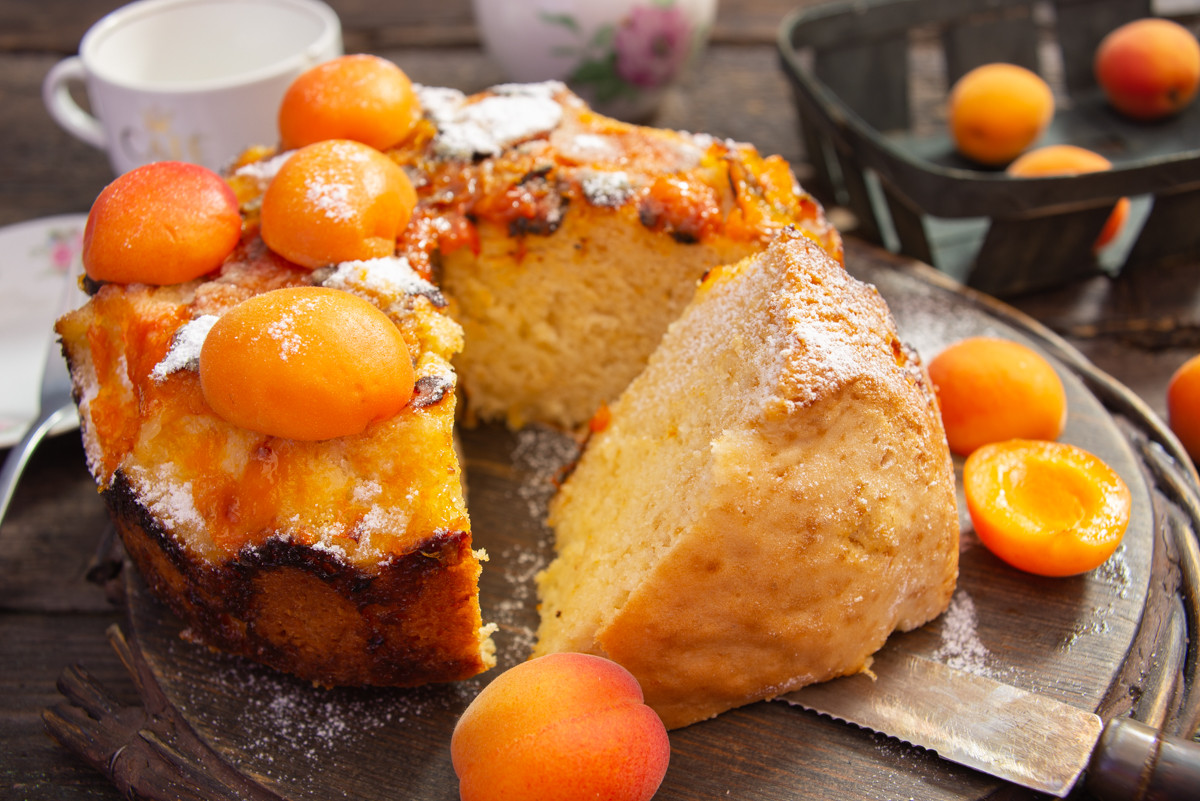
Apricot Upside-Down Cake
Ingredients for Apricot Upside-Down Cake
- 250 g apricots
- 150 g butter
- 200 g sugar
- 2 large eggs
- 50 g smetana (a type of sour cream)
- 220 g all-purpose flour
- 1 teaspoon baking powder
- vanilla, powdered sugar
How to Make Apricot Upside-Down Cake
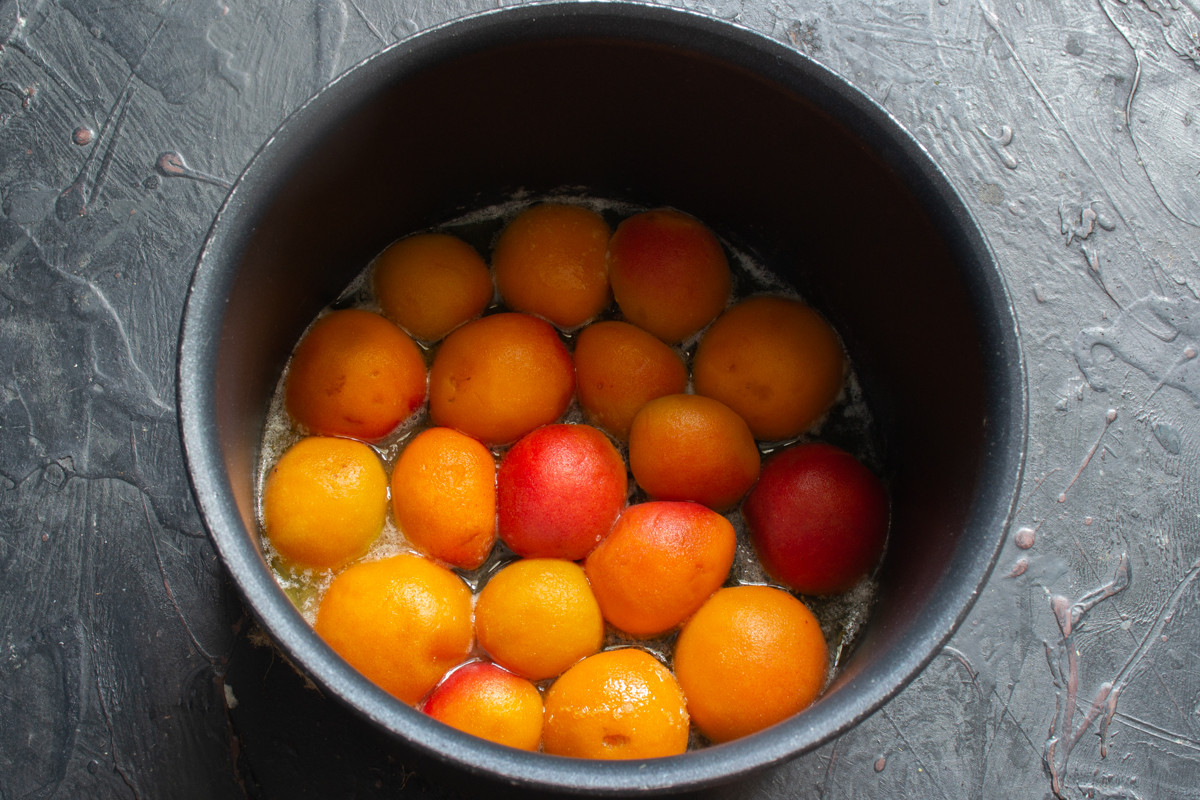
Place the apricot halves cut-side down into the caramel.
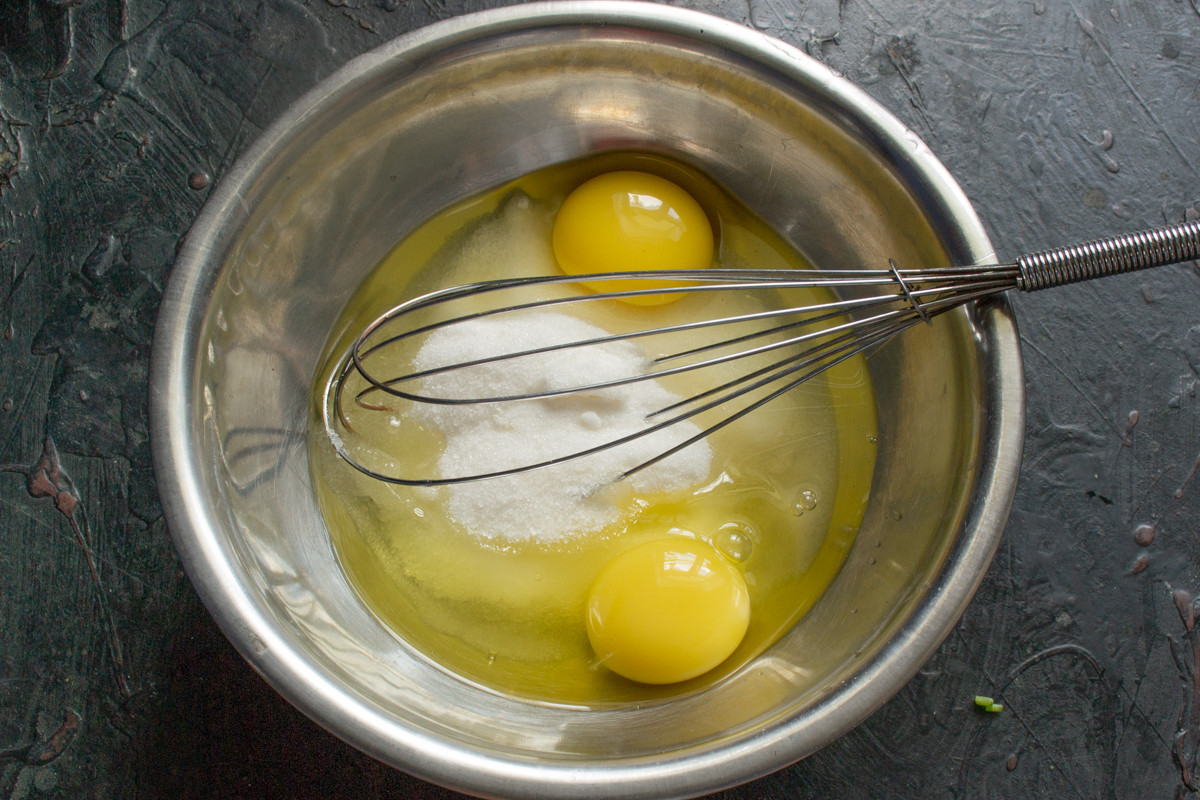
In a deep bowl, add 150g of granulated sugar and crack in the chicken eggs.
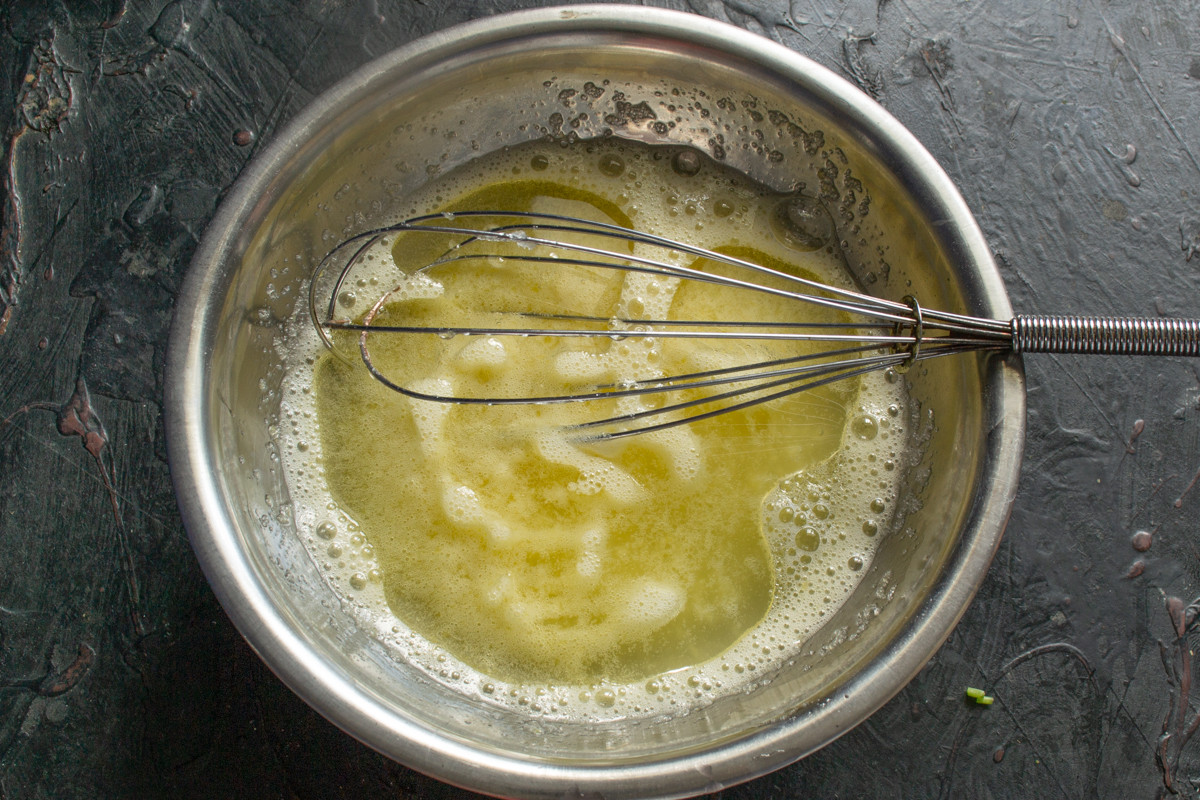
Mix the eggs with the sugar, then pour in the cooled melted butter.
Wash and dry the apricots. Cut the fruits in half and remove the pits. An upside-down cake is best made in a deep cast-iron skillet or a solid, heavy-bottomed pan (fruit juice will leak from a springform pan!). Place 50g of butter in the pan and melt it. Add 50g of granulated sugar and heat to form a caramel. Arrange the apricot halves cut-side down in the caramel. Cook over low heat for 5 minutes.
Now, make the batter. In a deep bowl, combine 150g of granulated sugar and the chicken eggs.
Melt 100g of butter and let it cool to room temperature. Mix the eggs with the sugar, then pour in the cooled butter. You can replace half of the butter with refined vegetable oil to make the batter more tender and keep it from going stale longer.
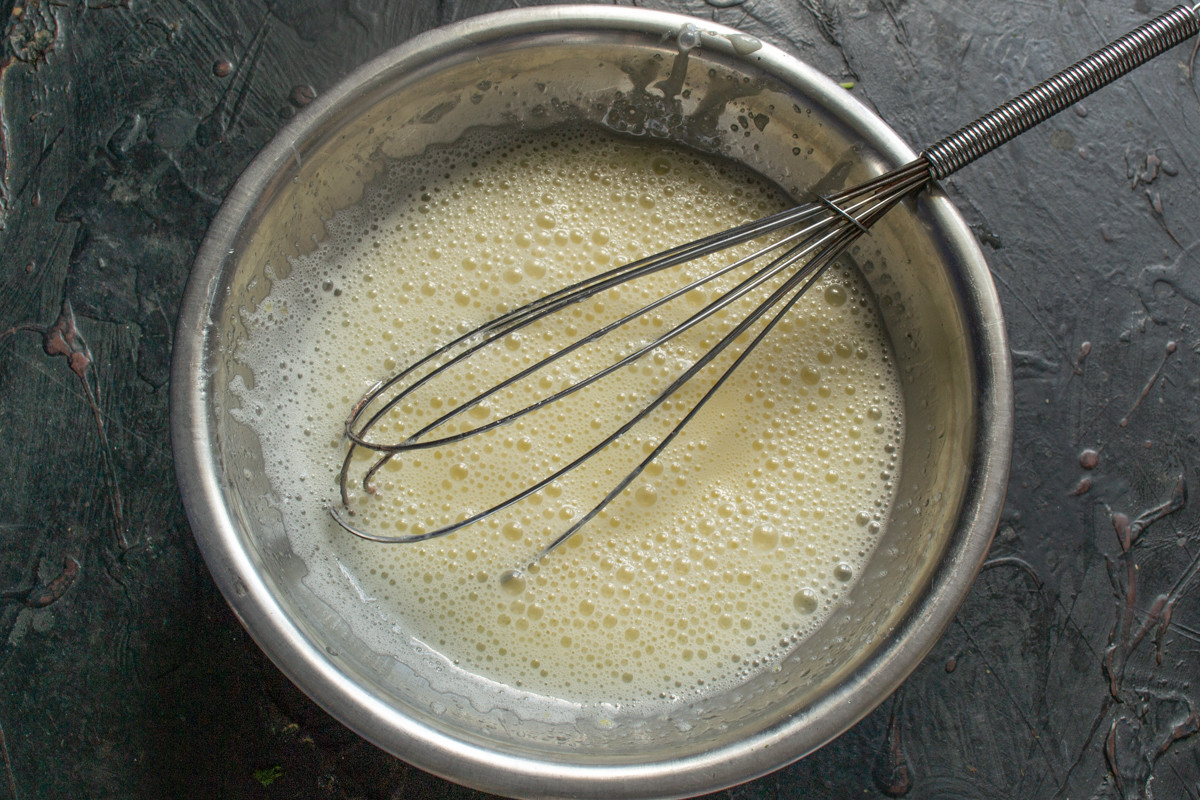
Mix the wet ingredients thoroughly.
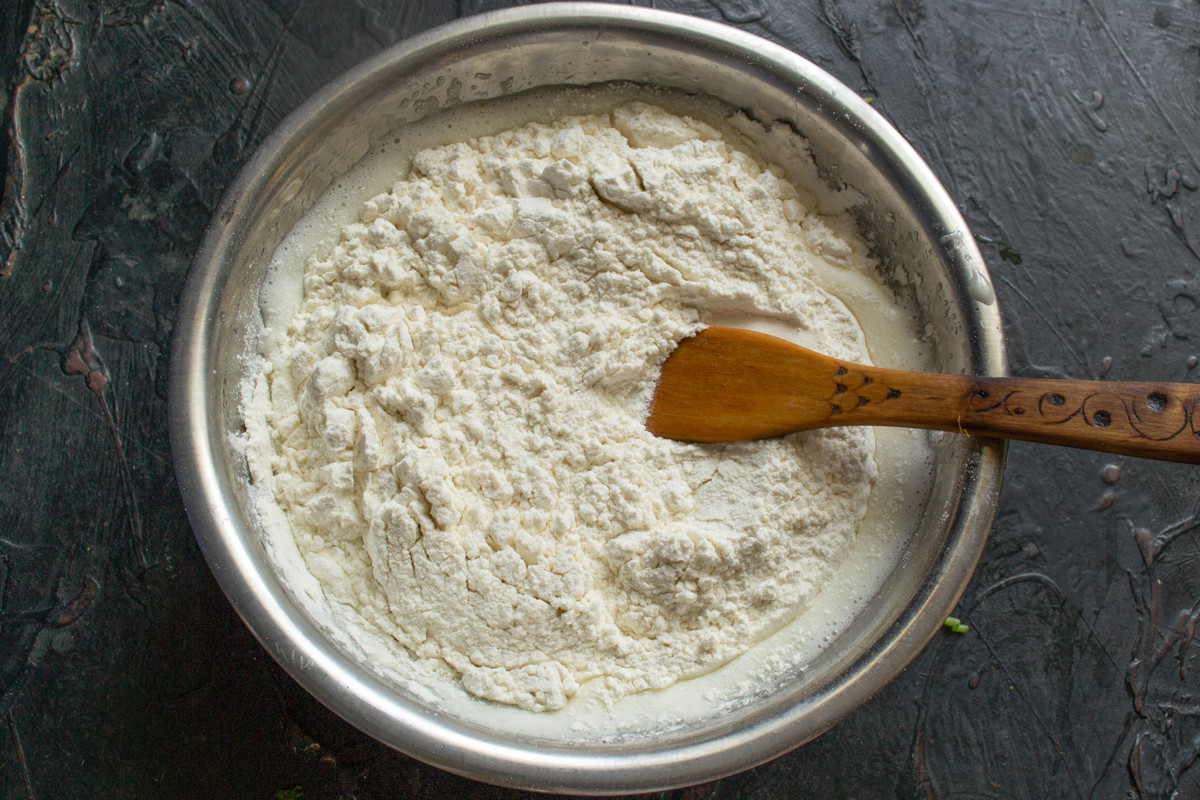
Add the dry ingredients to the wet ingredients.
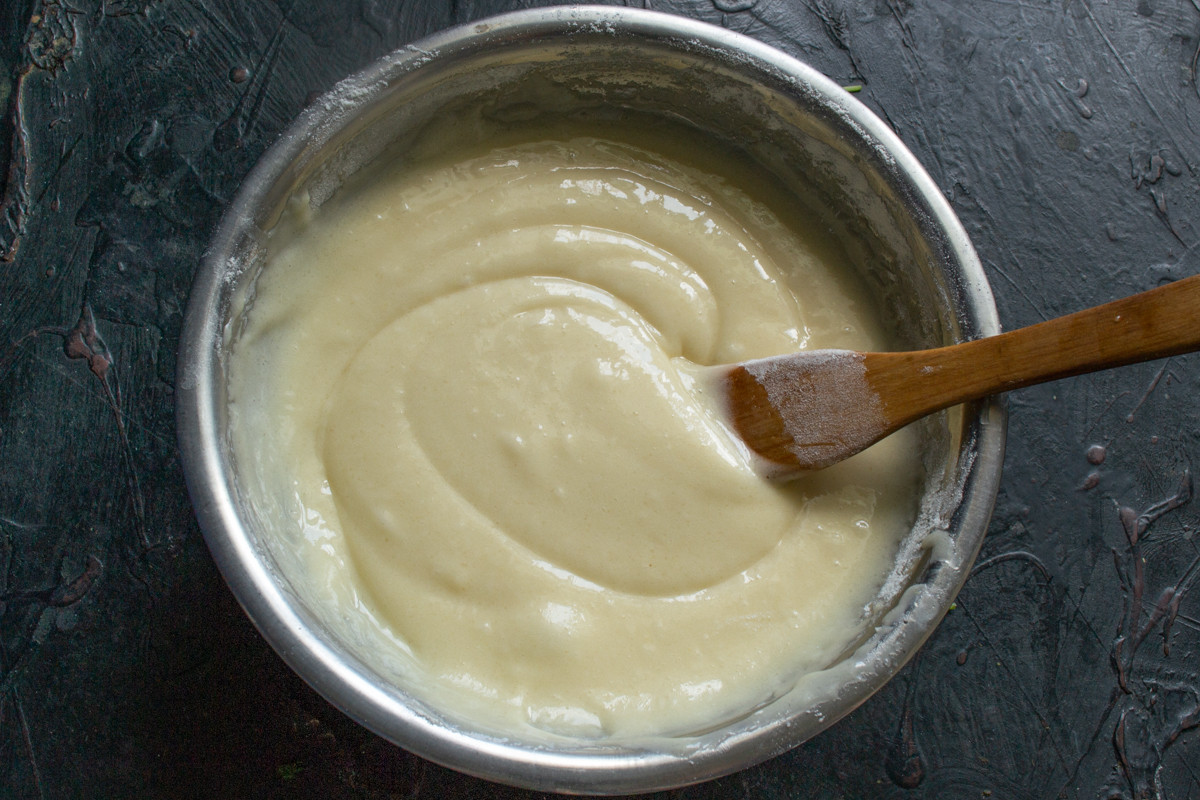
Mix the batter; its consistency will be similar to thick sour cream.
Add smetana (a type of sour cream) and vanilla to taste (vanilla extract, essence, or powder). Mix the wet ingredients thoroughly.
In a separate bowl, combine the all-purpose flour with the baking powder. Add the dry ingredients to the wet ingredients.
Mix the batter until it resembles thick sour cream. Let the finished batter rest for 10 minutes to ensure no sugar granules remain undissolved.
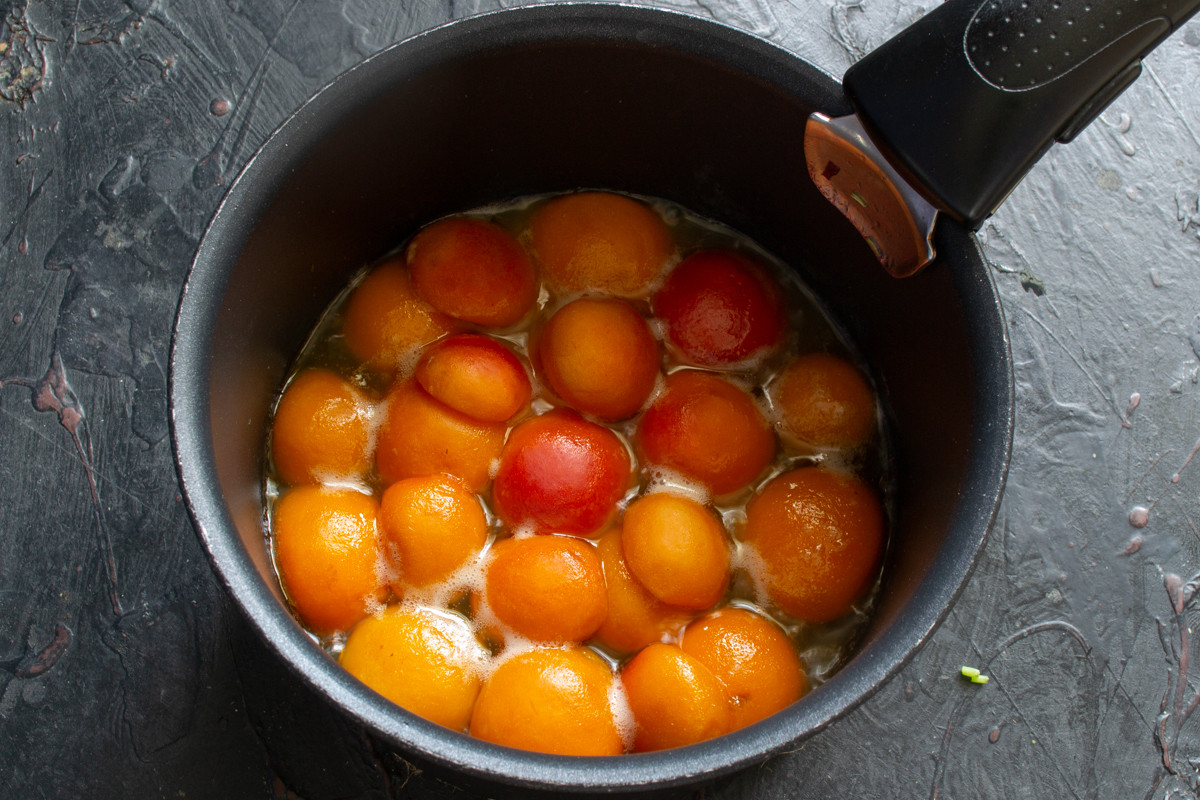
Remove the apricots with caramel from the heat and let them cool slightly.
Remove the apricots in caramel from the heat and let them cool slightly. The apricots should not turn into jam; they just need to be gently poached in the caramel.
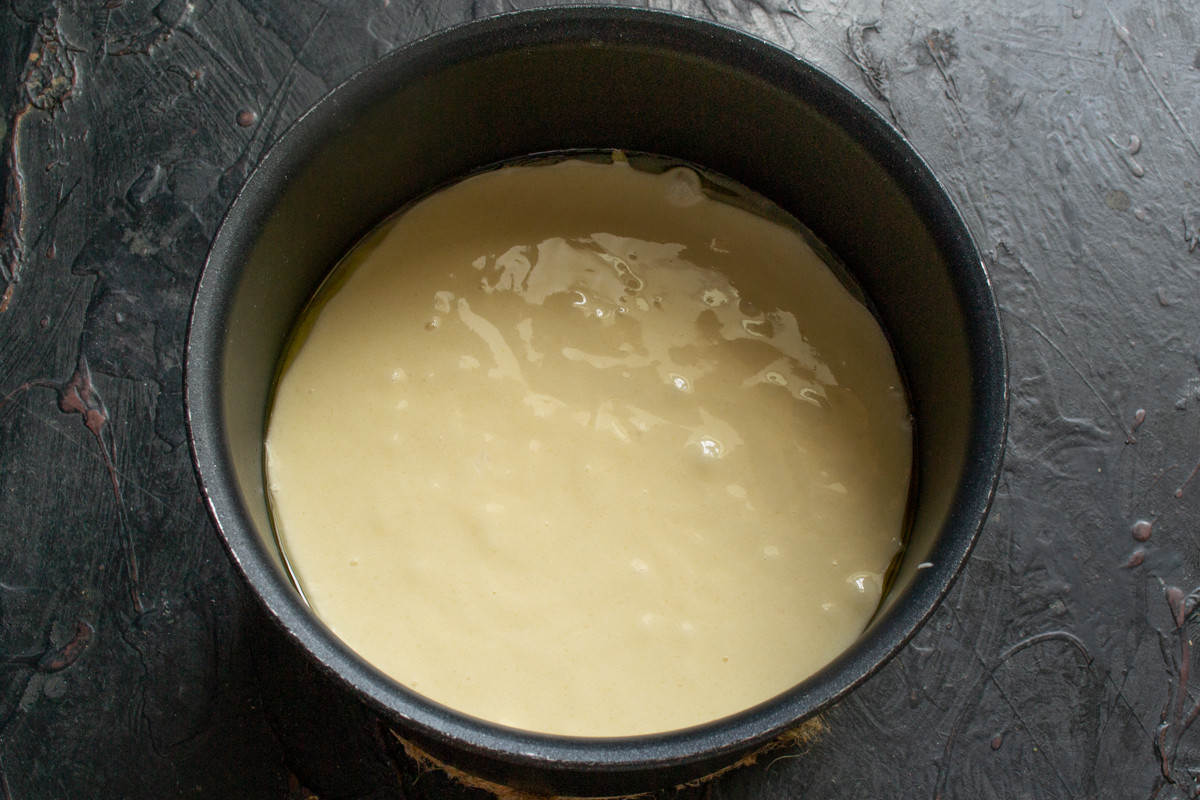
Pour the batter into the pan over the fruit.
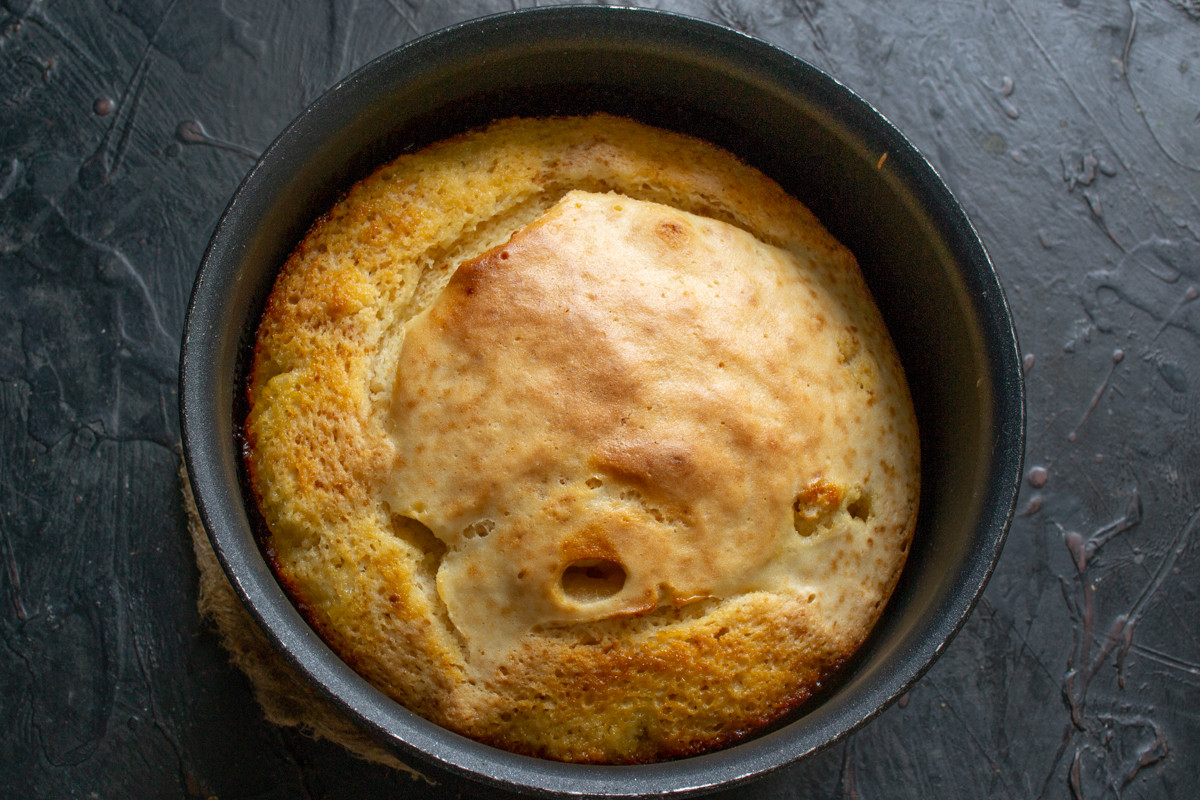
Bake for 45 minutes.
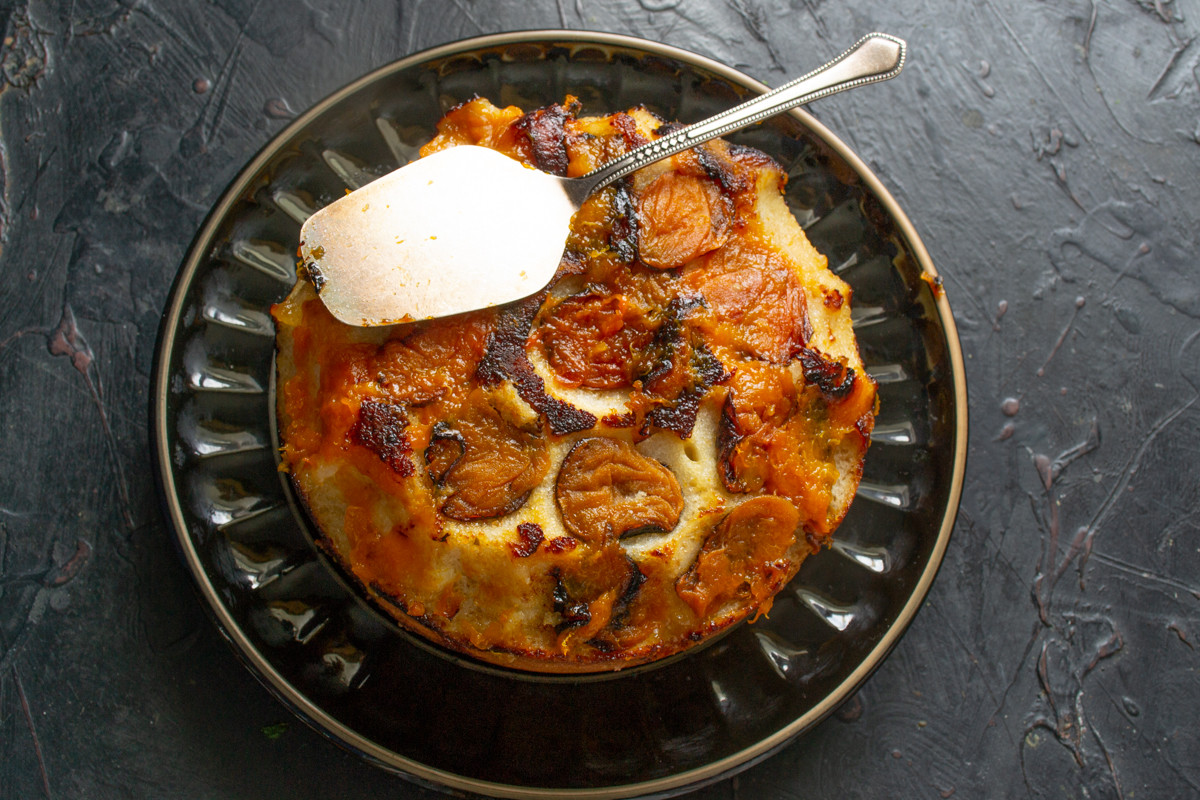
The finished cake should be immediately inverted onto a plate or wire rack.
Pour the batter over the fruit in the pan.
Preheat the oven to 170°C (340°F). Place the pan with the cake on the middle rack of the preheated oven. Bake for 45 minutes. It’s important that the temperature does not rise, as the caramel can burn. The exact baking time may vary slightly from the recipe, as it depends on your oven’s characteristics. The easiest way to check for doneness is with a wooden skewer – it should come out clean, without any sticky crumbs.
Once ready, you must immediately invert the cake onto a plate or wire rack, as the caramel sets quickly.
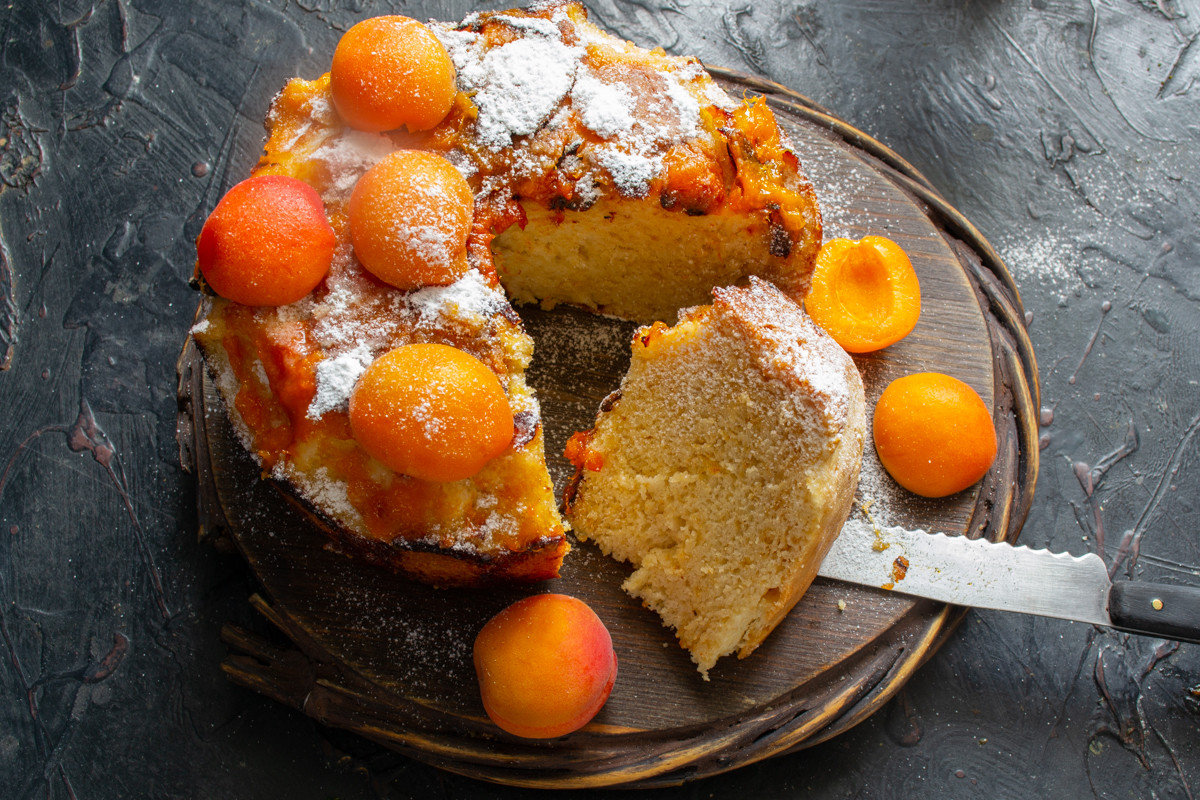
Sprinkle the cake with powdered sugar, garnish with fresh fruit, and serve warm.
Sprinkle the cake with powdered sugar, garnish with fresh fruit, and serve warm. It’s even more delicious with a scoop of ice cream or a dollop of custard.
And there you have it—a beautiful Apricot Upside-Down Cake, ready to be enjoyed! This cake is best served warm, allowing the gooey caramel to meld with the soft fruit and tender cake. A scoop of vanilla ice cream or a dollop of freshly whipped cream makes for a perfect pairing. Don't be afraid to experiment with other seasonal fruits like peaches, plums, or even apples in the fall. We hope this recipe brings a touch of warmth and sweetness to your table. Happy baking!
0 comments