
A bottle of Worcestershire sauce often sits in the refrigerator door for years right next to the mustard and ketchup. It is dark, narrow, and bears a long name that half the world hesitates to pronounce out loud. Home cooks pull it out rarely and usually on a whim, just to splash a few drops into “something meaty.” Yet the real magic of this condiment is that its own flavor should almost never stand out. When used wisely, a dinner guest will never point out the Worcestershire sauce. Instead, they will notice a deeper savory profile and a richer gravy, even though the recipe barely includes any extra ingredients.
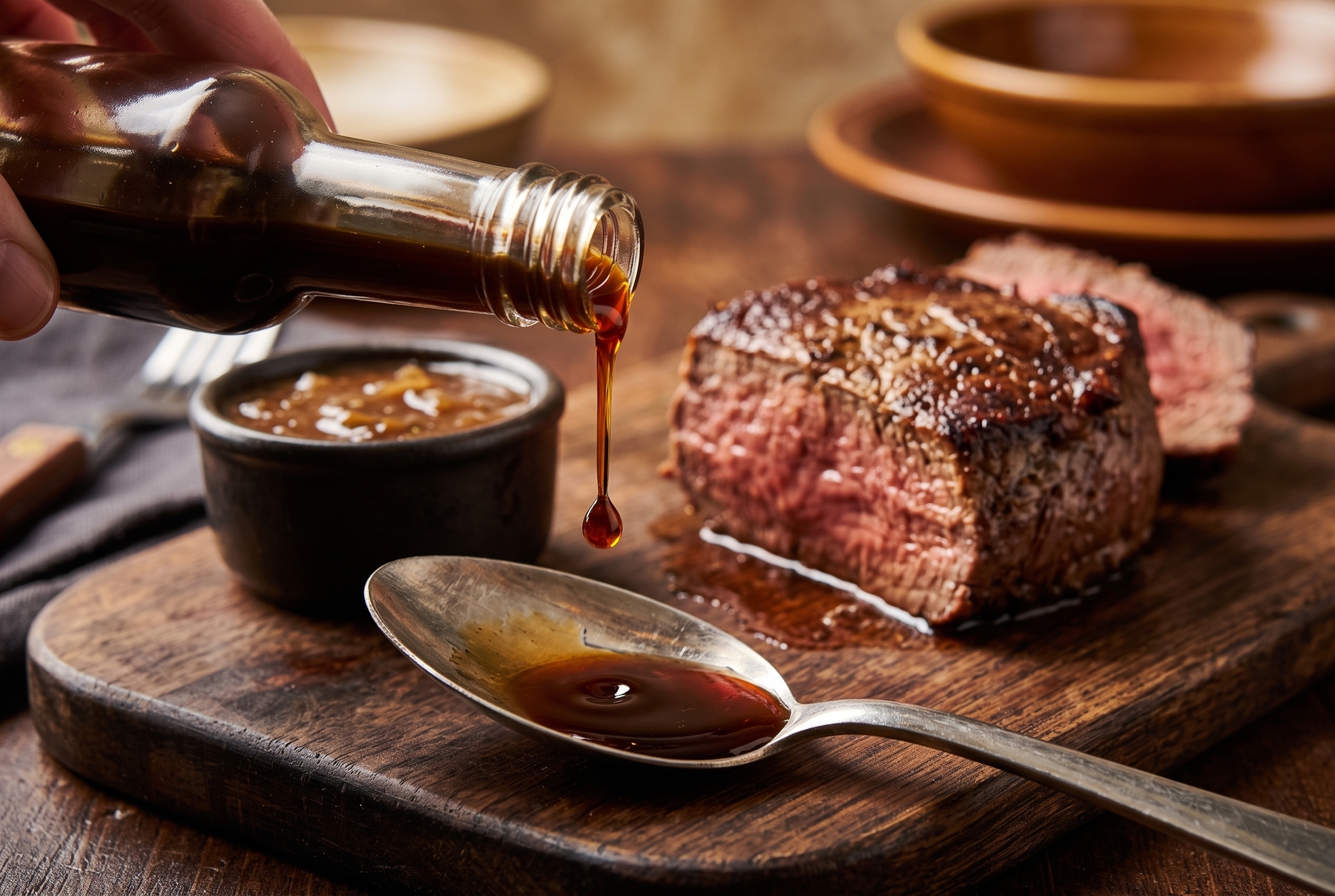
Worcestershire sauce amplifies savory meat flavors and adds depth without overpowering the dish.
Table of Contents
- What Goes Into Worcestershire Sauce
- How Worcestershire Sauce Transforms a Dish
- What Worcestershire Sauce Does to Meat
- Why It Shines in Sauces and Gravies
- Why a Splash Makes Stew Taste Slow-Simmered
- How Much to Use and When to Add It
- When to Leave the Bottle in the Fridge
- How to Substitute Worcestershire Sauce in a Pinch
What Goes Into Worcestershire Sauce
Vinegar—most often malt or distilled white vinegar—forms the base of almost every recipe, followed by a complex blend of fermented and spiced ingredients. Traditional versions rely on anchovies, tamarind, sugar or molasses, onions, garlic, and warming spices. Over months of aging, the anchovies break down completely, leaving the finished sauce with zero fishy aroma, just a deep saltiness and a pronounced umami punch. Tamarind contributes a sweet-and-sour backbone with a subtle fruity tartness. Uncapping the bottle releases an initial sharp hit of vinegar, quickly followed by the sweet, dark aroma of molasses and warm spices.
This profile describes a culinary tradition rather than a single universal product, as exact formulas vary by maker and country. American versions usually rely on distilled white vinegar, whereas classic British bottles favor malt vinegar. The market also offers fish-free vegan formulas, soy-based variations, and versions tinted with caramel coloring. Checking the label on a specific bottle provides a much better clue to its behavior than relying on a general idea of “Worcestershire flavor.”
Despite these regional differences, all versions share a common culinary architecture that plain salt, vinegar, or soy sauce alone cannot replicate. A single bottle packs salt, acidity, sweetness, umami, and warm spice. Soy sauce delivers salt and umami, but lacks tang. Vinegar brings brightness, yet offers no savory depth or spice. Worcestershire sauce delivers all of these elements in a single spoonful.
How Worcestershire Sauce Transforms a Dish
Cooks rarely reach for Worcestershire sauce to make a dish taste like the condiment itself; instead, they use it to fine-tune the overall flavor profile. A small splash never overwhelms the pot—it simply amplifies meaty notes while using salt and acid to cut through heavy fats.
Salt and Umami
Just a few drops make the flavors of beef and mushrooms pop. Naturally occurring glutamates from the fermented anchovies play a big role here, though they do not work alone. That distinctly “meatier” sensation comes from a synergy of ingredients: salt wakes up the palate, fermented components lay down a savory foundation, and aromatics like onion, garlic, and spices round out any flat notes.
Acidity That Cuts Through Richness
The tang of vinegar and tamarind does not necessarily make a dish taste sour. In the right proportions, this acidity works behind the scenes to slice through heavy fats, especially in rich pan gravies and slow-simmered stews. Stirring a spoonful into a hearty braise stops the fat from coating the tongue like a heavy film. Pouring with a heavy hand, however, will push the sharp vinegar notes to the front. Adding it gradually in small dashes ensures the best balance.
Sweetness, Spice, and Fermented Depth
Rich molasses softens the sharp edges of the salt and acid, leaving warm spices to linger in the finish. This effect shines brightest in dark meat sauces, where a hint of sweetness bridges the gap between savory and tart. The overall dish tastes fuller and more complete, while the Worcestershire sauce itself remains completely undetectable.
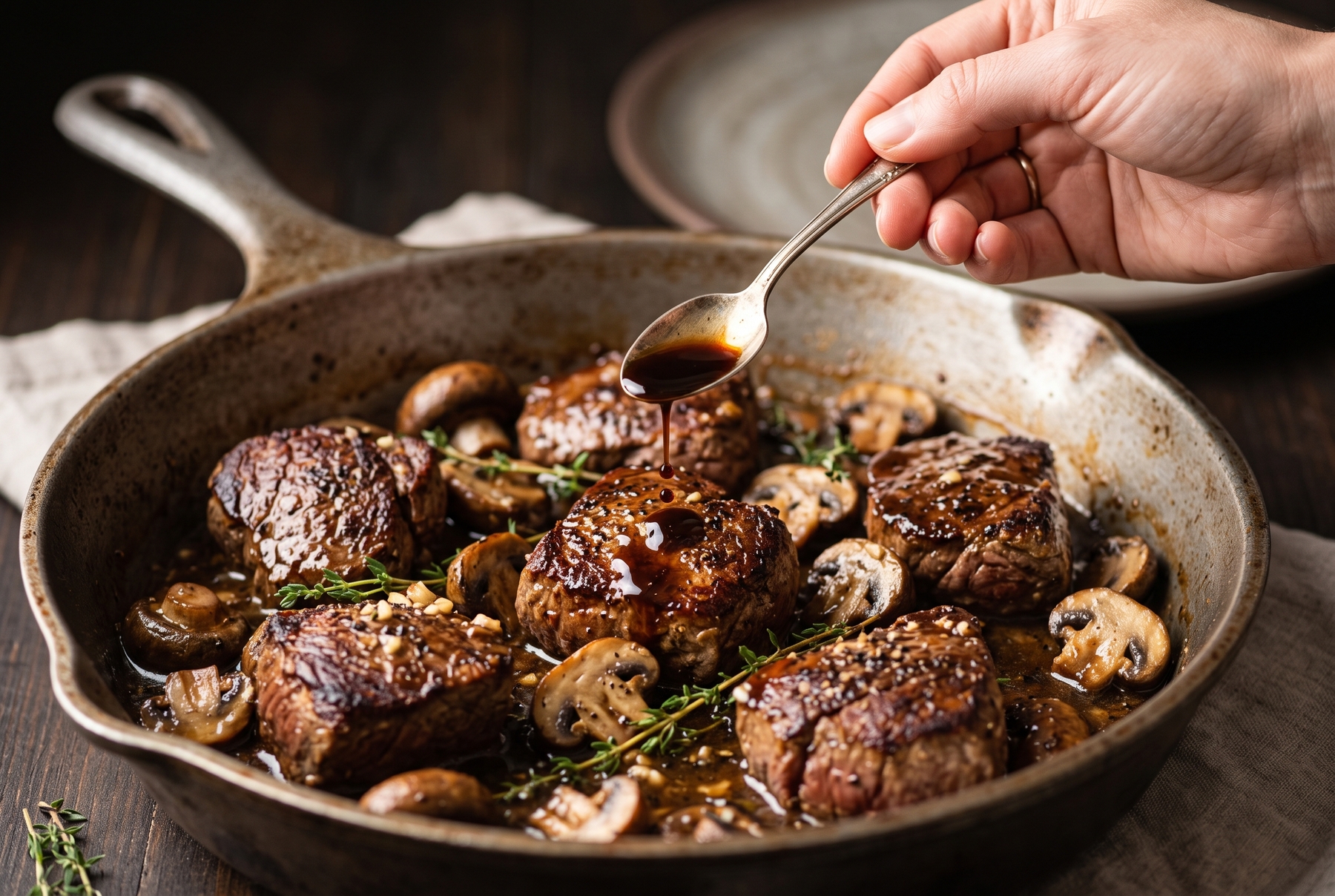
A small splash of sauce balances richness and highlights the savory flavor of pan-seared meat.
What Worcestershire Sauce Does to Meat
So far, we have looked at how the condiment shapes the final flavor of a dish. When working with raw meat, the sauce’s behavior depends entirely on whether it goes into a marinade or hits the pan during cooking.
Worcestershire Sauce in Marinades
In a marinade, the sauce primarily delivers surface salt, tang, and aromatic complexity. Expecting this mixture to noticeably tenderize a tough cut of beef, however, will lead to disappointment.
Acid does denature proteins on the exterior of the meat. Yet a marinade only penetrates a few millimeters below the surface, meaning a few spoonfuls of sauce will never transform a fibrous roast into a tender steak. Worse still, leaving meat in an acidic bath for too long turns the outer layer mushy and almost slimy while leaving the center just as tough as before. Breaking down stubborn connective tissue requires low, slow heat over a long period—not a marinade.
Consequently, adding Worcestershire sauce to a marinade alongside oil and spices serves to build surface flavor rather than alter texture. Tough cuts demand proper cooking temperatures and patience, while the sauce simply handles the seasoning.
In the Skillet and in Ground Meat
Using the sauce during active prep is much more straightforward: two teaspoons worked into 500 g (1.1 lb) of ground beef for burgers, a single teaspoon stirred into a pan gravy, or a few dashes splashed into braised beef or roasting juices. Pacing the additions is key here, because a heavy hand will instantly turn the food overly salty, sharp, and distinctly flavored like the bottle.
A well-seasoned meat dish or gravy should taste richer and more savory after the addition, without betraying the secret ingredient. If a bite immediately screams “Worcestershire,” the pot probably got a little too much.
Why It Shines in Sauces and Gravies
Worcestershire sauce truly comes into its own when paired with meat drippings and gravies. Pan juices from a seared steak, classic peppercorn sauce, broth-based gravies, and hearty tomato meat sauces already possess a strong savory foundation that welcomes a boost of salt, acid, and umami.
Bringing the sauce or gravy almost to its final thickness and salt level before adding a splash of Worcestershire yields the best control. Dumping tablespoons of the condiment into an unseasoned, unreduced liquid makes it far too easy to overshoot both the saltiness and the acidity.
The condiment pairs most naturally with ingredients that already boast deep savory or umami notes: pan drippings, rich stocks, tomatoes, mustard, butter, caramelized onions, and mushrooms. Mustard echoes its vinegar tang, butter rounds out its sharp acidity, and tomatoes harmonize beautifully with the sweet-tart profile of tamarind.
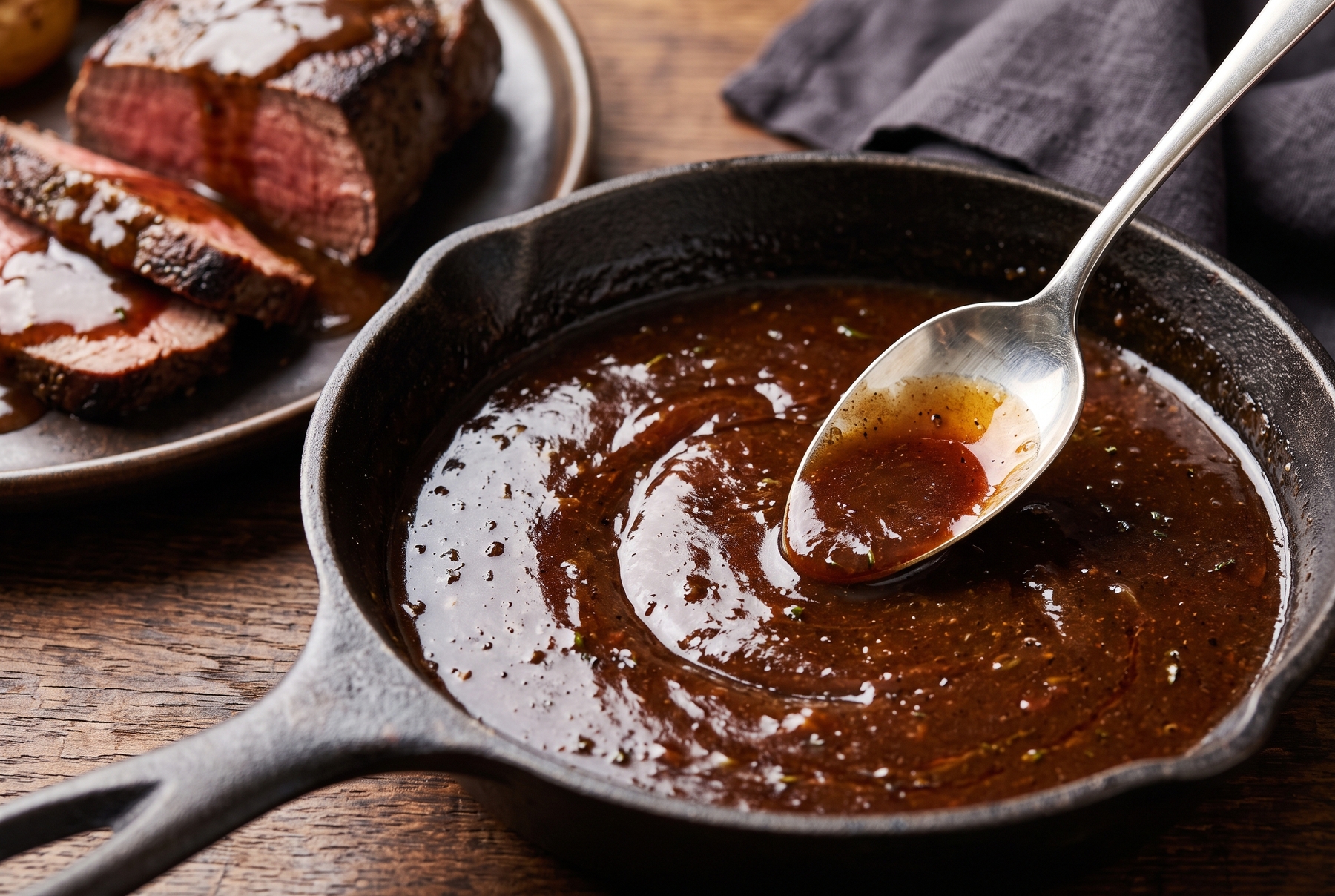
Worcestershire sauce shines brightest in pan gravies, seamlessly tying together salt, acid, and umami.
Why a Splash Makes Stew Taste Slow-Simmered
A slow-simmered stew gives Worcestershire sauce plenty of time to meld with meat juices, rendered fat, and broth. As the pot bubbles away, the distinct notes of the condiment dissolve into the broader flavor profile and stop registering as separate ingredients. The acidity keeps the richness in check, the salt and fermented elements push the beefiness forward, and the sweet spices fade into a warm background hum.
This seamless integration tricks the palate into thinking a stew has simmered on the stove for hours longer than it actually has. Still, no condiment can replace a deep sear on the beef, a rich stock, or actual time under the lid. Pouring Worcestershire into a pale, watery, rushed stew will never create deep flavor; proper browning, good broth, and patience must come first.
How Much to Use and When to Add It
Sodium levels vary wildly between brands, so an identical spoonful from two different bottles will yield different results. Starting with a small amount and tasting along the way prevents over-seasoning. For a sauce, gravy, or stew serving 2 to 4 people, half a teaspoon serves as a safe starting point before adjusting to taste. For ground meat, measuring by weight works best: 1 to 2 teaspoons per 500 g (1.1 lb) of meat hits the sweet spot, since tasting the raw mixture is not an option.
Marinades take their Worcestershire right at the beginning alongside the other ingredients, while stews benefit from an addition during the simmer, leaving time for a final taste check near the end. Finished pan sauces respond best to small dashes stirred in right at the end, and ground meat mixtures need the sauce worked in gently before shaping patties or meatballs.
When finishing a pan sauce, waiting until the reduction and salt levels are nearly spot-on before adding Worcestershire is crucial, as fixing excess acidity and saltiness later is nearly impossible.
When to Leave the Bottle in the Fridge
Not every savory dish benefits from a splash of Worcestershire. Delicate white fish, light chicken broths, or subtle vegetable sauces will easily get bulldozed by a heavy dose of this dark condiment. Pairing it alongside soy sauce, fish sauce, or heavily salted commercial stocks can also tip a dish into inedibly salty territory. Furthermore, it cannot rescue a weak, watery broth or poorly browned meat, and letting meat sit too long in an acidic Worcestershire marinade will only ruin its surface texture.
In my own kitchen, tasting the dish first always dictates the next move, allowing me to pinpoint whether it needs salt, brightness, umami, or warmth before reaching for the Worcestershire bottle.

Everyday pantry staples that mimic Worcestershire sauce: soy sauce, vinegar, honey, and tomato paste.
How to Substitute Worcestershire Sauce in a Pinch
No single ingredient can replicate Worcestershire sauce one-for-one, meaning an exact flavor match is out of reach. However, combining a few pantry staples can easily mimic its core functions: salty umami depth, a touch of tang, and a hint of spiced sweetness.
The simplest everyday swap combines soy sauce for salt and umami with a splash of apple cider vinegar or balsamic vinegar, plus a drop of honey or molasses if the dish needs sweetness. Fish sauce also delivers serious umami, though its distinct aroma is much harder to hide, while tomato paste contributes body and sweet-savory richness. None of these single ingredients can stand in alone. Whisking together soy sauce, a pinch of sugar, and a few drops of vinegar gets the closest to the original profile, even if the final nuance differs slightly.
0 comments