
Dinner is served. A plate of Brussels sprouts has been sitting in front of an eight-year-old for about ten minutes. The child sits looking like someone who has just been unjustly sentenced. The parent looks like someone who spent twenty minutes boiling those sprouts, hoping for at least one ‘yummy,’ and is instead watching a tragedy unfold. The plate is getting cold. The atmosphere is, too.

For many children, boiled cabbage has an overwhelmingly sharp smell and bitter taste due to the specific sensitivity of their taste receptors.
Table of Contents
- It Is Not Character — It Is Physiology
- Why Children Hate Cabbage So Fiercely
- Liver: Understanding the 'Metallic' Taste
- The Nose Decides Before the Mouth Opens
- Breaking Down the Complaints: What Exactly Is Wrong
- Should You Force a Child to Eat — An Honest Conversation
- How to Introduce New Foods Without Pressure
- The One-Bite Rule: When It Works and When It Fails
- What Definitely Does Not Work — Even Though We Try It Anyway
- How to Cook Vegetables, Liver, and Fish to Give Your Child a Chance
- About Age: Some Things Resolve Themselves
- Cheat Sheet: What to Do If Your Child Refuses a Specific Food
- A Story About Brussels Sprouts That I Lost, and Then Won
It Is Not Character — It Is Physiology
If your child refuses to eat vegetables and you are in your third year of fighting over broccoli, they do not have ‘bad taste’ or ‘tantrums.’ Their taste receptors genuinely work differently.
Children have significantly more taste buds than adults, and they function much more acutely. A bitterness that an adult perceives as a mild background flavor is felt several times more intensely by a child. This is pure physiology.
This sensitivity to bitterness is an evolutionary defense mechanism. In nature, a bitter taste often signals toxic substances. A child still knows very little about food, so they react to bitterness with extreme caution. The brain reads intense bitterness as a potential danger and triggers disgust. The child is not pretending — their body is simply defending itself.
Fighting physiology is pointless; it simply needs to be accommodated.
Why Children Hate Cabbage So Fiercely
Brussels sprouts (as well as green cabbage, broccoli, and kohlrabi) contain glucosinolates — compounds that are completely safe on their own. The problem begins during boiling, which destroys these compounds and releases a sulfurous odor and sharp bitterness. The longer the cabbage boils, the stronger this effect becomes.
Cabbage boiled for half an hour under a lid and cabbage roasted with oil until golden crisp are essentially different products when it comes to taste. Children sense this much more acutely than we do. Therefore, the phrase ‘they do not like cabbage’ often means only one thing: they cannot stand it boiled.
Liver: Understanding the ‘Metallic’ Taste
If a child dislikes liver, that is a separate conversation. Children describe it in various ways: ‘weird,’ ‘ugly,’ ‘stinky,’ or ‘like blood.’ And this is a highly accurate description of what they are experiencing.
Iron gives liver a distinct flavor that adults have long grown accustomed to and stopped noticing. Furthermore, pan-frying liver produces a sharp smell that permeates the apartment long before the plate hits the table. For a child with an acute sense of smell, the problem begins even before the first bite.

An acute sense of smell causes children to reject foods with strong aromas, such as liver or fish, even before they take their first bite.
The Nose Decides Before the Mouth Opens
A child often ‘tastes’ food with their nose first, and only then with their tongue. They catch the aroma of a dish and might reject the meal before a single bite is taken.
Fish with a strong scent, mushrooms with an ‘earthy’ spirit, celery with its sharp green notes, kefir (a fermented milk drink) with its tangy acidity — all these are rejected at the ‘putting the plate down’ stage. The child might not even have tasted it, but the smell has already told them: this is unfamiliar, unpleasant, and it is better not to risk it.
This is why cooking methods and presentation are just as important as the ingredient itself. Fish baked in a crust smells entirely different from steamed fish. Mushrooms, finely chopped and sautéed until crispy, smell different from mushrooms stewed whole in sour cream. There is no trickery here; it simply becomes a different product.
Breaking Down the Complaints: What Exactly Is Wrong
Children’s food refusals usually have a clear underlying cause.
Bitter Foods: Cabbage, Spinach, Broccoli, Leafy Greens
The culprits here are alkaloids and glucosinolates, which children sense much more sharply. However, proper cooking can easily eliminate bitterness. Boiling (especially prolonged boiling) enhances bitterness. Quick blanching, searing over high heat, and roasting noticeably alter the flavor profile. Broccoli blanched for two or three minutes and immediately plunged into cold water is far less bitter than broccoli boiled until mushy.
Sharp Odor and ‘Metallic’ Taste: Liver, Offal, Fatty Fish
Soaking liver in milk or water for several hours actually works, as it washes away part of the compounds responsible for the sharp aftertaste. Proper searing — keeping it juicy without drying it out — also completely changes the result. This is why children often accept pâté much more easily than fried chunks; its texture is smooth, and the flavor is far less aggressive.
Fish is quite straightforward. For a first introduction, it is better to choose cod, pollock, or zander instead of pungent mackerel. They have a neutral smell and a mild flavor. When made into fish cakes, such fish emits a much softer aroma during frying, and the texture is far more familiar.
Weird Texture: Mushrooms, Eggplant, Zucchini, Avocado
This is an entirely different story. For children, the texture of food often turns out to be more important than the flavor itself. ‘Slippery,’ ‘rubbery,’ ‘slimy,’ or ‘mushy’ are sensory barriers, not flavor ones. A child might not realize the texture is the issue and simply state, ‘I do not like it.’
Thickly sliced mushrooms stewed in sour cream are soft with a characteristic ‘rubbery’ bounce. Those same mushrooms, finely chopped and well-seared, are a completely different matter. Zucchini roasted in rounds until caramelized and zucchini boiled in soup offer entirely different textures. Avocado spread on bread instead of butter presents a new ingredient in a highly familiar sandwich format, making it much easier to eat.
Sour and Tart: Kefir, Plain Cottage Cheese, Olives
A child can also read acidity and tartness as something suspicious. For many children, this naturally resolves with age. A child who could not stand natural yogurt at five might eat it without a second thought at nine. Sometimes, you simply need to wait.
Spicy and Pungent: Heavy Garlic, Curry, Horseradish
Children feel capsaicin and other irritating compounds much more strongly due to their sensitive receptors. You can gradually introduce spicy flavors to children, but the dosage and intensity are absolutely crucial here.
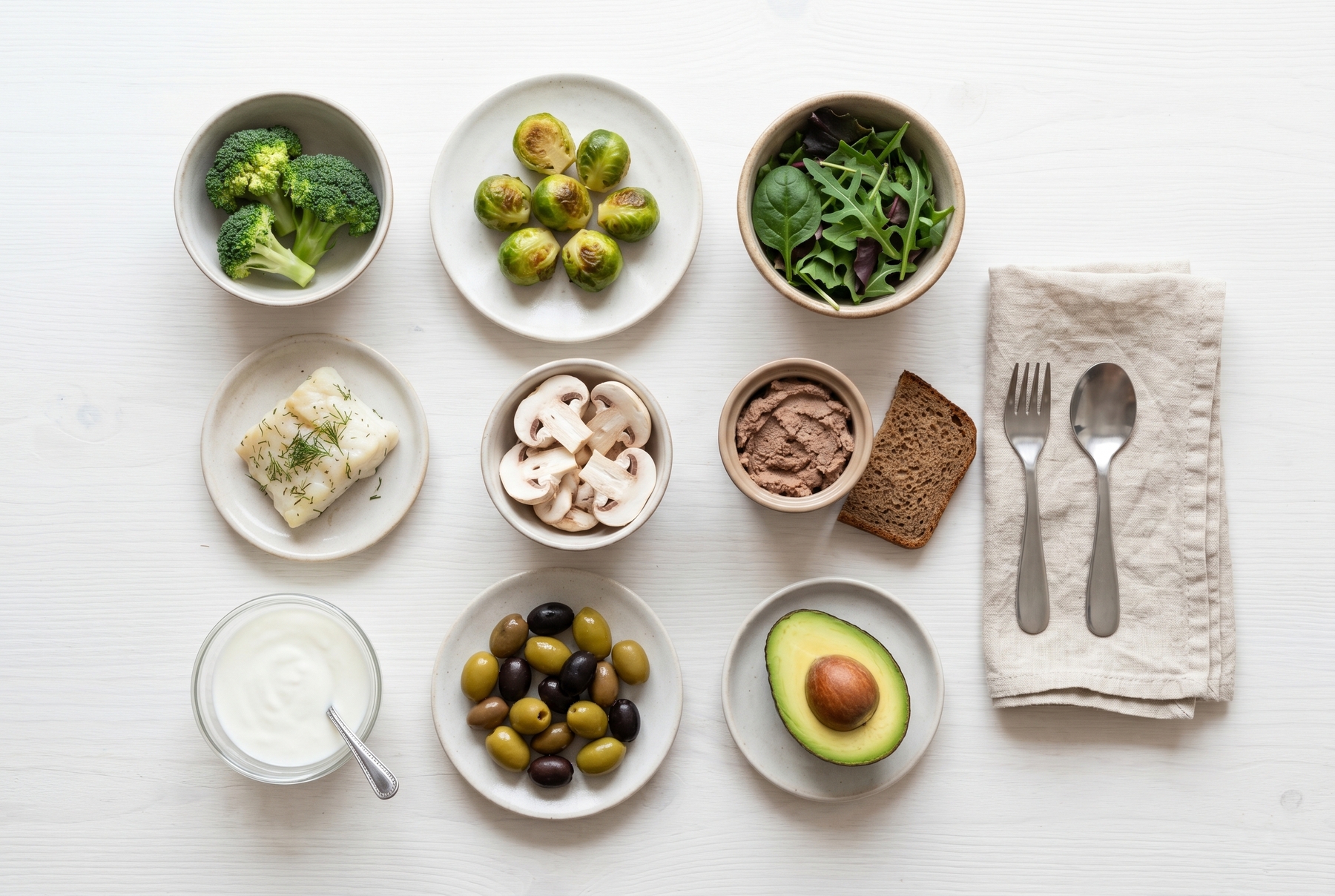
Broccoli, liver, mushrooms, and olives are foods with intense flavors or specific textures that require a special approach to preparation.
Should You Force a Child to Eat — An Honest Conversation
Let us speak frankly.
Coercion only yields a quick result. A child eats the broccoli because otherwise, they will not be allowed to leave the table. But the cost of this is a stable negative association — not just with broccoli, but with food in general, with family dinners, and with the entire concept of ‘sitting at the table and eating what is given.’ The strategy of ‘you are not leaving the table until you finish’ does not build a love for vegetables. Dinner begins to smell like tension, not food.
Foods that a child was forced to eat almost always become their lifelong enemies. A person pressured into eating liver during childhood is highly unlikely to eat it on their own at age thirty.
How to Introduce New Foods Without Pressure
It is quite simple: the unfamiliar is frightening, while the familiar is not. An ingredient that is simply present on the table, resting on a nearby plate in various forms and contexts, gradually stops being a threat. The child smells it, touches it, and occasionally tastes it by accident. Or perhaps they do not taste it, but they stop turning it into a major event.
Some foods require ten to fifteen neutral exposures before a child decides to take a bite. This is completely normal. You are doing everything right; the process simply takes time.
The One-Bite Rule: When It Works and When It Fails
With five-to-seven-year-olds who already understand agreements and accept rules, this sometimes works. One bite with no consequences, no scrutinizing their facial expressions, and no asking ‘well, is it yummy?’ can relieve anxiety.
But if the child hears ‘just one little spoonful’ as veiled coercion, and the parent stares with anxious expectation, the effect is entirely reversed. The child senses the tension, and it permanently attaches to the food.

Applying pressure during meals can cause a child to develop a long-term aversion to healthy foods.
What Definitely Does Not Work — Even Though We Try It Anyway
We can approach this with some self-deprecation because I have personally been through all of it.
‘A spoonful for mommy’ is a classic. It works exactly zero percent of the time. The child eats the spoonful for their mother, not for the cabbage, and absolutely no bonding with the cabbage occurs.
Stories about starving children in other countries are an argument that has absolutely nothing to do with what the child is feeling right now at the dinner table. Children intuitively understand this, even if they cannot articulate it.
Demonstrative eating with a look of sheer delight. I performed this with such enthusiasm that I think I only managed to fool myself. Children read insincerity instantly.
Hidden vegetables are a separate topic altogether. Spinach in meatballs, zucchini in pancake batter, or beets in a chocolate muffin. This can work as a temporary family tactic: the child eats more calmly, dinner passes without conflict, and more vegetables appear on the plate. However, it adds absolutely no love for the vegetable itself. A child who does not know they ate spinach is no closer to liking spinach. You can hide vegetables for the sake of nutrition, but you will still have to introduce the ingredient separately — calmly, in small portions, and without pressure.
How to Cook Vegetables, Liver, and Fish to Give Your Child a Chance
Brussels Sprouts. Slice them in half, arrange them cut-side down on a baking sheet, drizzle with oil, season with salt, and roast in the oven at 200°C (400°F) for about twenty to twenty-five minutes. The sprouts should caramelize on the outside and become tender inside. The aroma will be nutty, not sulfurous. The flavor will become slightly sweet. This is entirely different from cabbage boiled in a pot.
Liver. Soak it in cold water or milk for a couple of hours. Slice it thinly and sear it quickly over high heat — overcooked liver with a grayish tint inside is a disaster of its own. Alternatively, make a pâté: blended with butter and onions, liver loses its metallic edge and gains a creamy texture that children accept far more willingly.
Fish for the First Introduction. Cod, pollock, and zander smell milder and do not yield a sharp fishy flavor. Fish cakes made from such varieties smell far less ‘fishy’ while cooking than pan-fried herring or mackerel. Homemade breaded fish sticks made from lean fish caught on in our house faster than anything else.
Mushrooms. Finely chop them and sear them well until golden. The slippery ‘rubbery’ texture vanishes, leaving something perfectly caught between crispy and soft. Children agree to eat them much more easily in this form.
Avocado. Spread it on bread instead of butter and add a pinch of salt — the familiar context lowers the barrier. Or blend it into a smoothie, where the flavor is barely detectable but the texture becomes wonderfully creamy.
Leafy Greens. Blanching removes some of the bitterness, while finely chopping makes the greens much less noticeable both in the mouth and on the plate.
About Age: Some Things Resolve Themselves
For some reason, parents are rarely told the most important fact: childhood tastes are constantly changing. Taste receptors become less sensitive with age, and something that caused physical disgust at age four might be perceived as completely neutral at age eight. It is not that the child has ‘matured.’ Their physiology has simply changed.
At five years old, Alex could not eat anything with a noticeable smell of onions. Absolutely nothing. At eight, he was eating onions in his soup, failing to notice them in meatballs, and occasionally asking to add them himself. I did absolutely nothing special. I simply waited.
Tastes evolve, and the very food your child refuses today might become a massive hit in a couple of years.
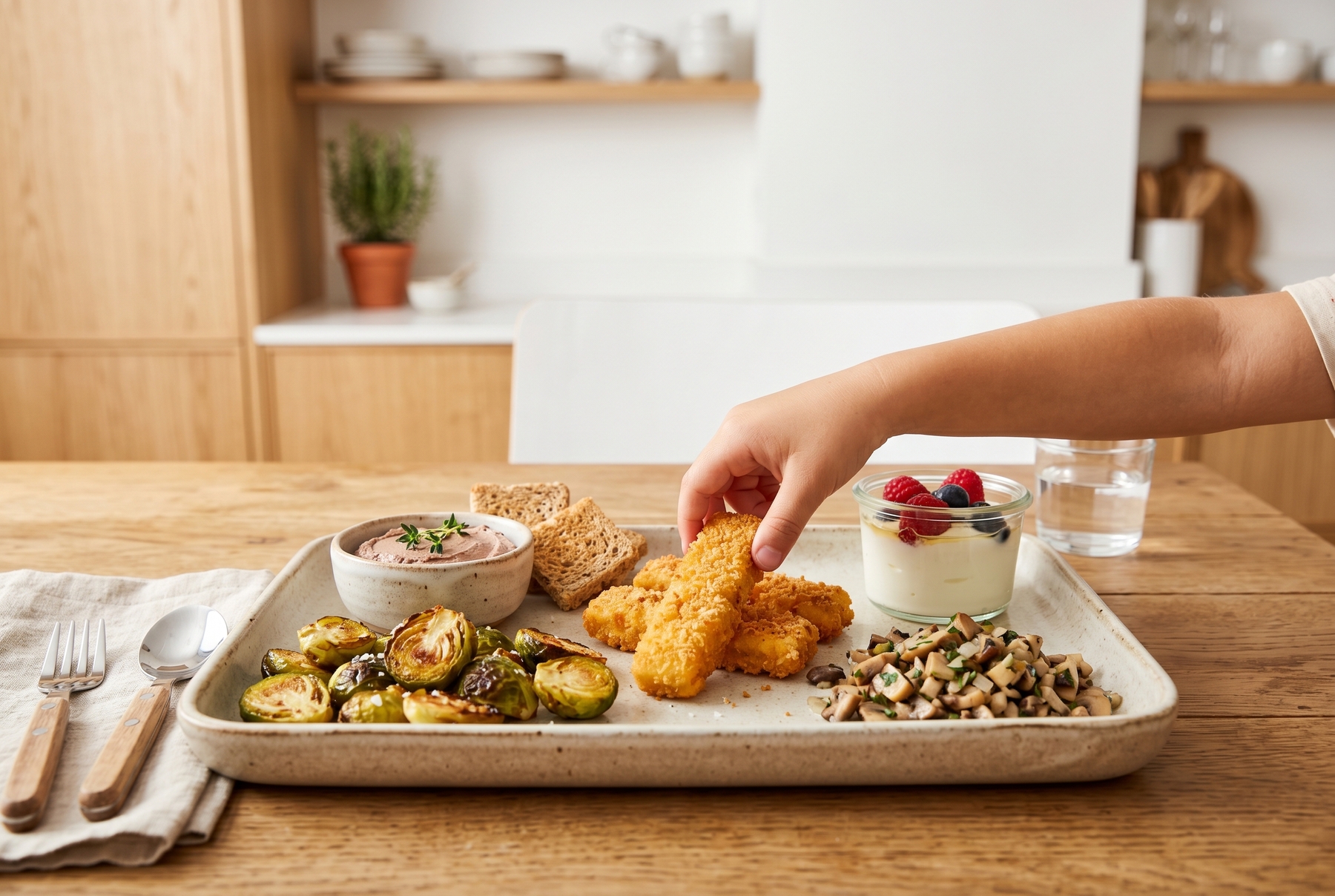
Changing the cooking method — such as roasting instead of boiling — can turn a hated vegetable into a favorite part of a child's menu.
Cheat Sheet: What to Do If Your Child Refuses a Specific Food
| Ingredient | Why It Is Rejected | What to Do |
|---|---|---|
| Cabbage/Sprouts | Bitterness from glucosinolates, smell during boiling | Roast instead of boiling: caramelization changes the flavor. Place it on a nearby plate without demanding they try it |
| Liver | Metallic taste, sharp smell during frying | Soak before cooking, avoid overcooking, make pâté. Offer it as part of a familiar dish |
| Fatty Fish | Sharp smell, specific acidic notes | Start with neutral varieties: cod, pollock. Make fish cakes or homemade fish sticks |
| Mushrooms | Slippery ‘rubbery’ texture | Finely chop, sear well, and add to a familiar dish |
| Spinach, Leafy Greens | Bitterness, unpleasant raw texture | Blanch, chop finely, add to smoothies. Start with very small amounts |
| Kefir, Plain Yogurt | Acidity and unfamiliar smell | Add berries or fruit, mix with something familiar. Do not insist; many outgrow this |
A Story About Brussels Sprouts That I Lost, and Then Won
A few years ago, I decided that my children were going to eat Brussels sprouts. It was a firm, almost ideological decision. I boiled them, stewed them, served them with butter, smothered them in cheese, and pretended to be absolutely thrilled. The result was always the same: Alex silently pushed the sprouts off his plate, Masha took a bite without enthusiasm and said ‘it is fine,’ and Varya once cried. Actual tears.
I gave up. I banished the sprouts from our dinner table for about a year. Then, I accidentally roasted them with some leftover vegetables — simply because I needed to clear out the fridge. I pulled them out of the oven: they had a nutty aroma, golden edges, and a slight crunch.
Alex tried one. He noted, ‘Not bad.’
Several years have passed since then. Today, Alex himself sometimes asks me to roast them. Masha eats them without a word. Varya still refuses. But she has entirely stopped crying at the sight of the plate.
The main goal is to raise a person who has a healthy relationship with food, rather than a child who eats vegetables purely out of fear, preventing dinner from turning into a battlefield. Sometimes achieving this means roasting the cabbage instead of boiling it, and sometimes it just means silently clearing the plate away and trying again six months later.
0 comments