
Travelers seek the flavor of a country and authentic local cuisine, yet they often leave with merely a postcard version of it. Ordering the quintessential dish—Pad Thai in Bangkok, seaside paella in Spain, or a Greek salad at a sunset-view tavern—yields a plate exactly as it appeared on their feed. It is recognizable, but almost never what the locals eat at home.
Calling this a deception is an overstatement. It is more of a showcase. A country’s genuine cuisine does not live in a guidebook list. It is built from daily habits, times of day, regional nuances, price points, seasonal harvests, and Sunday recipes cooked by grandmothers. The showcase highlights a single object under a spotlight, while real life happens in the kitchen next door.
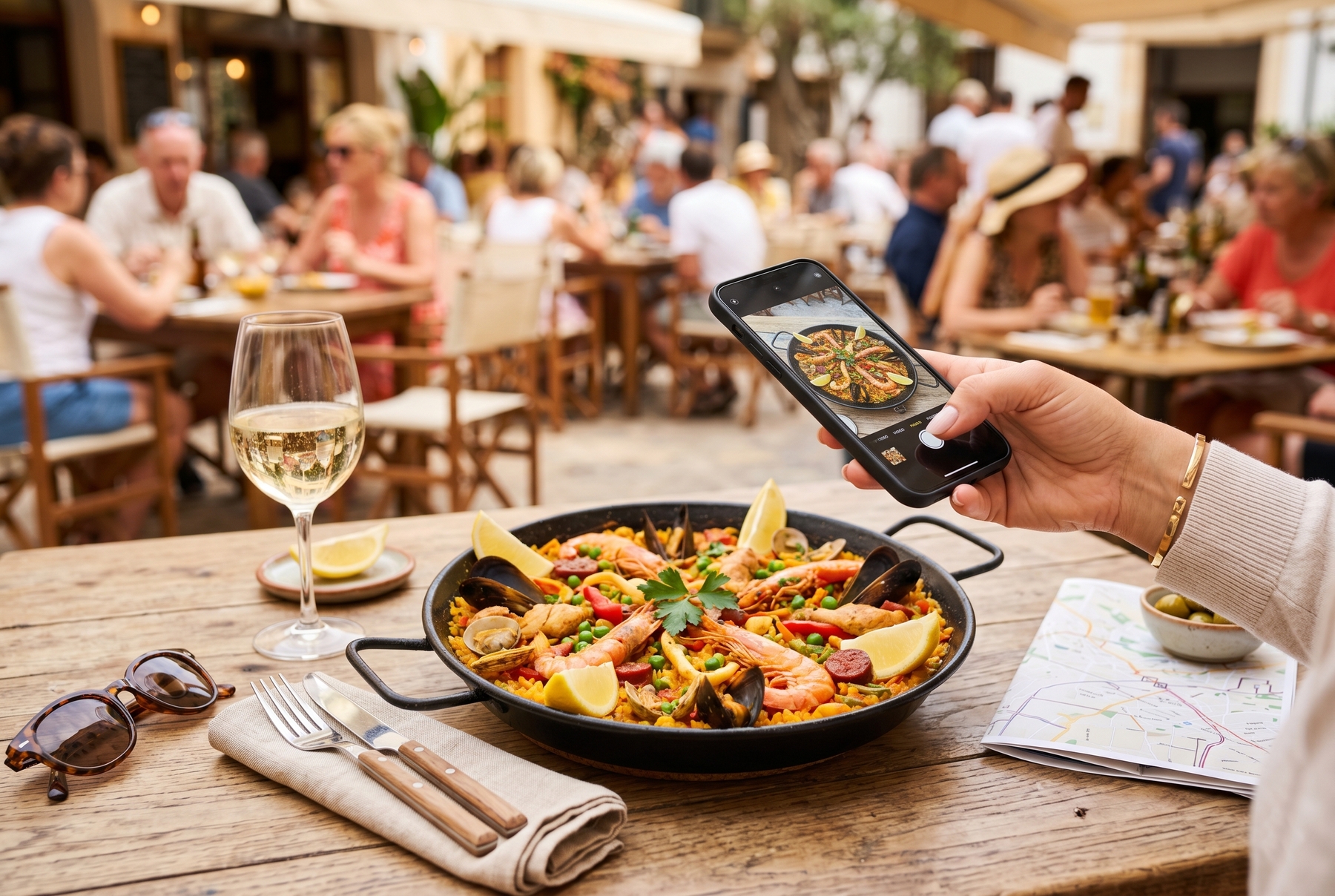
Popular dishes are often adapted for beautiful social media shots, oversimplifying their original flavor [6546].
Table of Contents
- The National Dish Is Rarely the Local Mainstay
- What Tourism Does to Cuisine: From Family Recipes to Menus in Five Languages
- Countries Where Tourists Believe They Are Eating Local
- Where to Find Authentic Local Cuisine
- How to Find Authentic Local Cuisine: Working Habits
- How to Avoid Becoming a Gastronomic Snob
- Cheat Sheet: 10 Signs of Authentic Local Cuisine
- How to Find Local Food in a New City in One Day
- Authentic Cuisine Begins With a Question, Not a Dish
The National Dish Is Rarely the Local Mainstay
Restaurants in tourist districts find it profitable to prepare what guests already recognize from photographs. Travelers arrive seeking confirmation: Thailand means Pad Thai, Italy means pizza and pasta, Japan means sushi. The cuisine becomes a symbol of the country: convenient, understandable, and photogenic. It is easy to miss beforehand and easy to recognize on the spot.
The problem remains that such a symbol is almost always simplified. The export version of a dish is usually milder than the original, featuring less spice, fewer sour and bitter notes, reduced fermentation, and almost no offal. Instead, it offers more sugar, oil, and smooth, predictable textures. A fiery salad that brings tears to local eyes is diluted to a pleasant warmth for the guest. A sauce that smells sharp and salty at home becomes slightly sweet at a resort.
When the flavor is suspiciously universal, the menu is as thick as a magazine, and the dish on the plate looks exactly like the first image from a search engine, you are likely looking at the theatrical costume of the food rather than an everyday meal.
Still, there is no need to stage an exposé. Sometimes the dish is honestly local, just not a daily staple. Paella, fondue, khachapuri (Georgian cheese bread), borscht, and ramen are certainly part of the culture, but they are not what a resident eats every single day. Festive, regional, homemade, street-style, restaurant-grade, and tourist-tailored meals are entirely different categories. They are easy to confuse if one only looks at the name.
What Tourism Does to Cuisine: From Family Recipes to Menus in Five Languages
Tourist spots operate on a different economic model. High rent, a constant stream of guests requiring fast service, and seasonal staff turnover naturally lead to standardized kitchens. The surviving menu items are those that are easy to store, quick to serve, and hard to ruin. Freshly caught fish made to order is replaced by ingredients waiting their turn in the freezer.
A fourteen-page menu boasting the traditional cuisine of the entire country speaks primarily of the freezer’s efficiency. Authentic local food menus are usually brief, featuring a few dishes made entirely by hand rather than simply reheated.
An English sign is not a crime in itself, as translated menus have saved many hungry evenings. However, when the crowd consists entirely of tourists, a barker stands at the entrance, food photos glare with laminate, and sushi, pizza, steak, and local classics coexist on the same menu, one should be cautious. A kitchen that attempts everything at once usually perfects nothing.
Social media creates an entirely different dynamic. Platforms like TikTok and travel blogs can elevate a single dish to cult status in just a few weeks. Locals might have loved it for years, but after a viral video, the dish transforms, becoming larger, brighter, and more camera-friendly. Hour-long queues form for a single shot. Sometimes, photographing such a meal becomes easier than actually eating it.
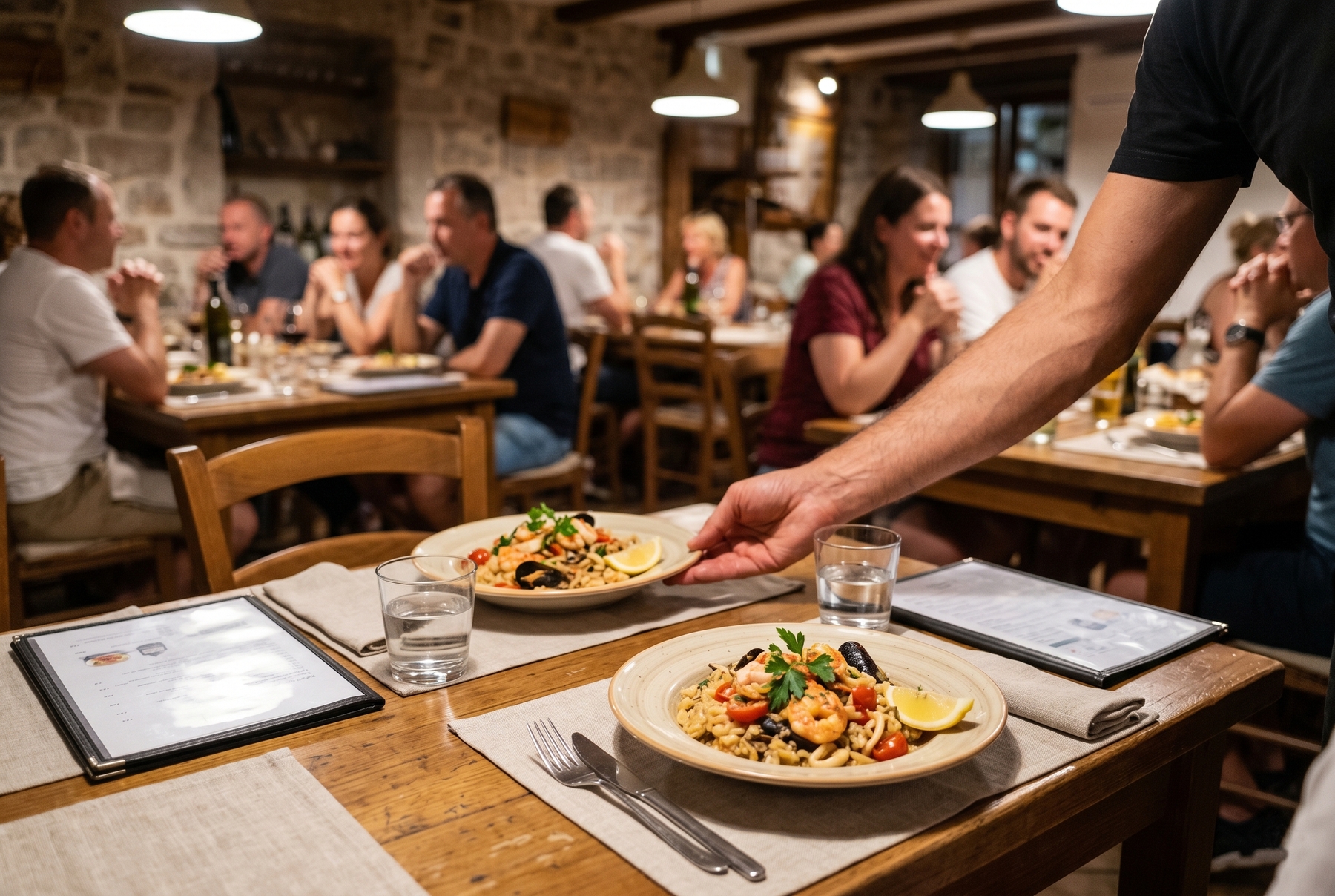
Authentic regional cuisine unfolds in small family-run establishments tucked away from popular tourist trails [6547].
Countries Where Tourists Believe They Are Eating Local
Thailand: Pad Thai as an Emblem
Pad Thai has long served as the coat of arms for Thai cuisine, especially for foreigners. The history of this symbol is shorter than it appears. The dish gained prominence in the late 1930s and 1940s during the administration of Plaek Phibunsongkhram, when the government was building a new national identity. Authorities promoted rice noodles as an affordable lunch, distributed recipes, and reportedly even provided street carts specifically for this format. Historians debate whether Pad Thai was intentionally invented by the government, as direct evidence is lacking, but the roots of fried noodles are more likely Chinese.
Daily Thai meals span far beyond a single wok of noodles. Soups, curries of varying heat levels, rice with dozens of toppings, intensely sour and fiery salads, fermented sauces, and distinct northern and southern noodle styles make up the real landscape. Pad Thai is merely one voice in this massive culinary choir.
Spain: A Single National Paella Does Not Exist
Paella was born as a highly localized meal in the rice fields around Lake Albufera, south of Valencia. The classic paella valenciana requires rice, olive oil, saffron, tomatoes, flat green beans, white beans, chicken, and rabbit, often including snails. It contains absolutely no seafood. The version featuring shrimp and mussels appeared later and, as Valencians themselves note, caters mostly to visitors. Locals even debate whether to call it paella at all, or simply rice with toppings.
A massive pan of paella sitting ready on a main tourist street at three in the afternoon, waiting for any passerby, remains a red flag. Authentic paella is prepared to order closer to lunchtime because perfectly cooked rice does not tolerate waiting.
Italy: Tourists Eat Italian Food While Locals Eat Their Region
A unified Italian cuisine does not exist; there are only regional cuisines, and sometimes purely municipal ones. A dish that is common in Naples is not necessarily an everyday occurrence in Bologna or Piedmont. The most famous example of this confusion is spaghetti bolognese. Such a dish simply does not exist in Bologna. The local classic is called tagliatelle al ragù: broad egg noodles paired with a slow-cooked meat sauce simmered for hours. Spaghetti cannot hold this heavy sauce, letting it slide to the bottom of the plate. Bologna takes its ragù recipe so seriously that it is officially registered with the local chamber of commerce.
Japan: Sushi Is Not an Everyday Affair
An expensive sushi set aligns closer to a holiday or a business meeting than a weekday lunch. Japanese daily dining usually looks quite different: a bowl of rice, miso soup, udon or ramen noodles, curry, a bento box from a konbini (convenience store) grabbed on the way to work, seasonal vegetables, and a set of several small plates. Sushi is undeniably important, but reducing the entire cuisine to raw fish on rice is akin to assuming everyone in certain countries eats caviar daily.
This pattern repeats almost everywhere. In Georgia, tourists hunt for khachapuri and khinkali (soup dumplings), while home cooking relies heavily on vegetables, beans, fresh herbs, walnuts, and dozens of regional sauces. In Turkey, stepping past the kebab displays reveals a rich world of soups, braised vegetables, savory pastries, and breakfasts worth waking up early for. In France, haute cuisine operates on a completely different frequency than a regular bistro lunch or home meal; an everyday French diner eats simply and quickly, rather than enjoying an eight-course tasting menu. Mexico faces its own confusion: the tacos and nachos found in tourist zones, often categorized as Tex-Mex, belong to a specific Mexican-American border history, whereas authentic regional Mexican cuisines from Oaxaca, Yucatan, or Puebla are structured entirely differently and boast profound complexity.
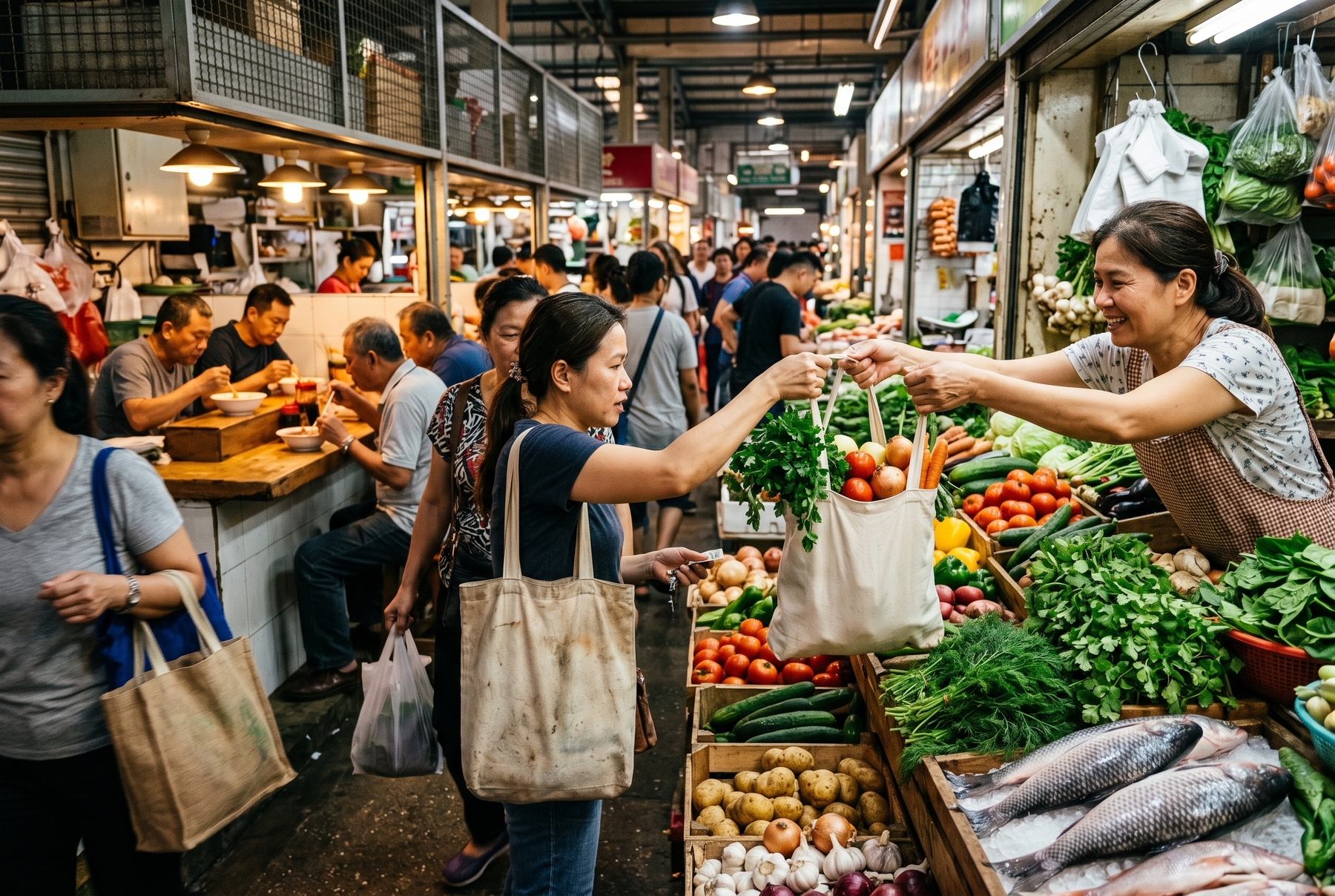
Purchasing ingredients at a bustling city market provides an excellent way to discover what locals eat every day [6548].
Where to Find Authentic Local Cuisine
When a famous dish frequently turns out to be a mere showcase, the question of where to find authentic local food naturally arises. The answer is less glamorous than one might hope. True culinary gems hide in places tourists usually overlook.
Markets top the list, but with a caveat. There is a distinct difference between working markets and market attractions. An attraction features beautiful stalls, skewered tastings, inflated prices for guests, and virtually no locals carrying grocery bags. A working market is immediately recognizable: vendors greet buyers by name, produce changes with the seasons, queues form at specific stalls while others sit empty, and somewhere in the corner sits a simple eatery where the merchants themselves have lunch. That eatery is the destination.
Next come the lunch spots. Canteens, family-run cafes, and small joints near offices and construction sites offer immense value. A central evening restaurant operates to create an impression, whereas a lunch spot caters to people who will return tomorrow and next week. Price, speed, and consistent flavor matter far more here than theatricality. Deception is difficult in these establishments, as the local clientele simply will not forgive a drop in quality.
The composition of a queue tells a story. A fast-moving line of locals who know exactly what to order is an excellent signal. A queue of tourists clutching identical smartphone screenshots suggests something else entirely, often resulting in paying a premium just for the wait.
Finally, the time of day plays a crucial, often forgotten role. Understanding a cuisine requires eating not only the right dishes but eating them at the proper hour. A quick breakfast on the way to work, a business lunch, a late dinner, a Sunday family feast, or a late-night post-shift snack reveals far more about a country than a single highly advertised restaurant. Many authentic culinary experiences only exist during their specific timeframes, such as morning pastries that vanish by noon or a slow-simmered weekend soup.
How to Find Authentic Local Cuisine: Working Habits
Asking what the quintessential national dish is leads directly to the tourist showcase. Phrasing the question differently yields better results: what do you eat for lunch on a regular weekday? What do you grab when there is no time to cook? Where do you take your parents for a meal? What is in season right now? These questions unlock doors that the country’s main dish keeps firmly shut.
Observing the context proves more valuable than checking ratings. A high score on a tourist app often simply means the venue accommodates foreigners well with an English menu, card payments, and easy navigation. It does not measure the depth of the cuisine. Relying on a local’s recommendation map, chatting with a market vendor, or stepping into an alleyway eatery devoid of glossy food photos generally uncovers the spots where locals actually dine.
Learning five to seven words in the local language makes a profound difference. Simple phrases like homemade food, daily lunch, spicy, no sugar, seasonal, your recommendation, or local dish go a long way. Even a clumsy attempt to speak their language shifts the dynamic, frequently moving diners beyond the confines of the tourist menu. The waiter might suddenly bring out something entirely absent from the English version.
Looking for a connection to the specific location, season, or ingredient guarantees a better experience. The local catch, a neighborhood soup, freshly baked morning bread, fermented sauces, offal dishes, or market greens all indicate authenticity. The tighter the regional connection, the more honest the food.
Requesting everyday dishes and saving the grand feasts for later is a smart strategy. Authentic cuisine rarely looks ceremonial. It is often simple, affordable, repetitive, and entirely unsuited for social media photography. A bowl of lentils, a hearty soup, or a piece of bread topped with whatever was on hand represents the true honesty of everyday life.
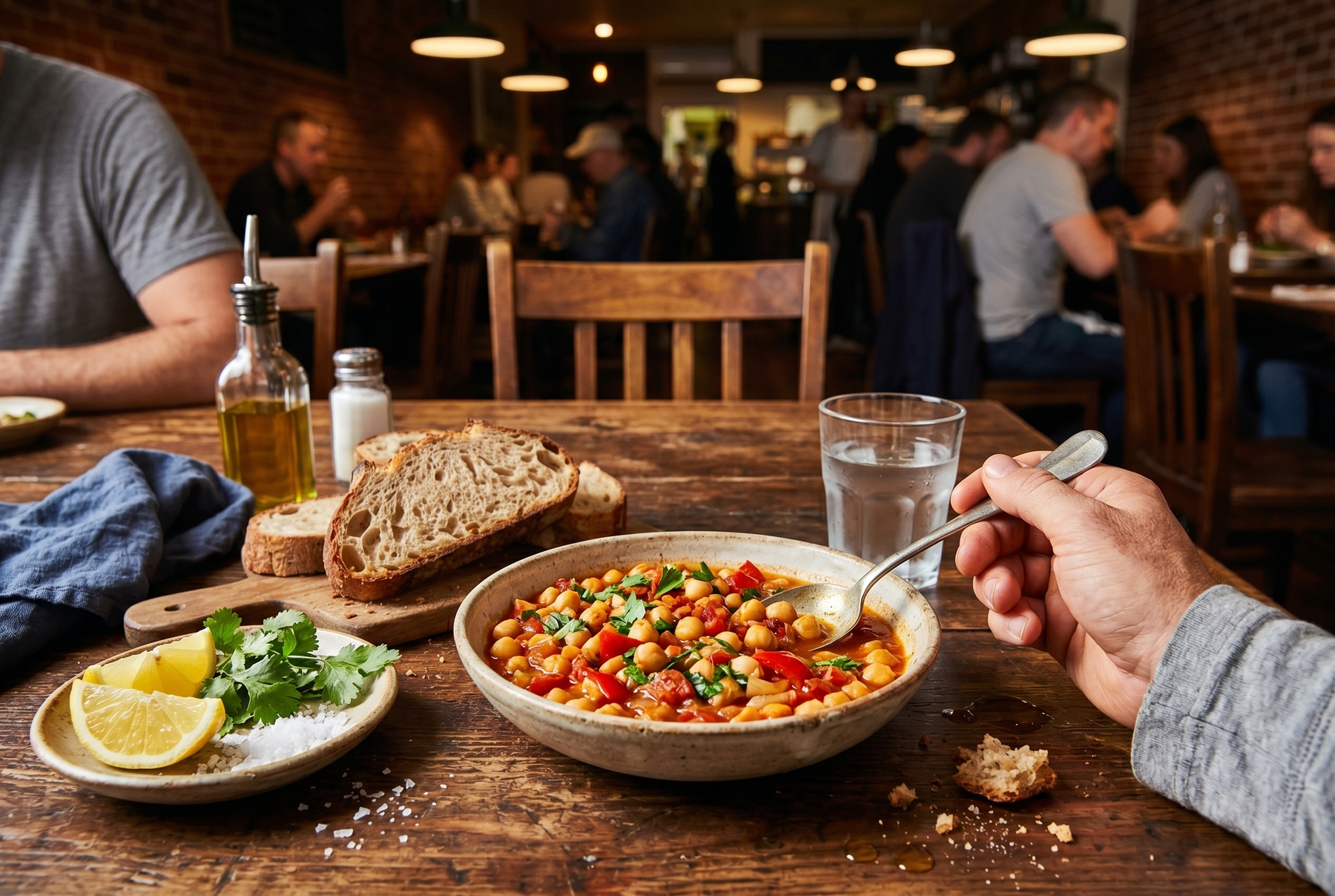
Everyday local dishes offer simple, hearty flavors prepared with seasonal ingredients and zero pretension [6549].
How to Avoid Becoming a Gastronomic Snob
It is easy to cross a line here. Upon discovering that Pad Thai and paella are mere showcases, a traveler might start despising any accessible food, hunting for authenticity like a trophy. This mindset is a dead end.
Tourist cuisine remains a part of reality. Sometimes it preserves historical recipes, provides jobs, and gently introduces newcomers to unfamiliar flavors. Despising a seaside paella or a bustling street Pad Thai simply because they are obvious choices is foolish. The obvious can still be deeply delicious.
Authentic food is not obligated to please on the first bite. Real cuisine can be sharp, featuring strong fermented aromas, bitter herbs, searing hot sauces, gelatinous textures, jaw-clenching acidity, or offal that challenges the uninitiated. No one has to fall in love with it immediately. For a traveler, understanding why a dish is eaten and loved holds more value than proving their own bravery.
There is another almost ethical consideration. Locals are not required to eat authentic meals every single day solely for our amusement. They also grab coffee to go, eat burgers, boil pasta, order delivery, and enjoy convenient food after a long workday. Demanding an eternal gastronomic spectacle from a country is simply arrogance turned inside out.
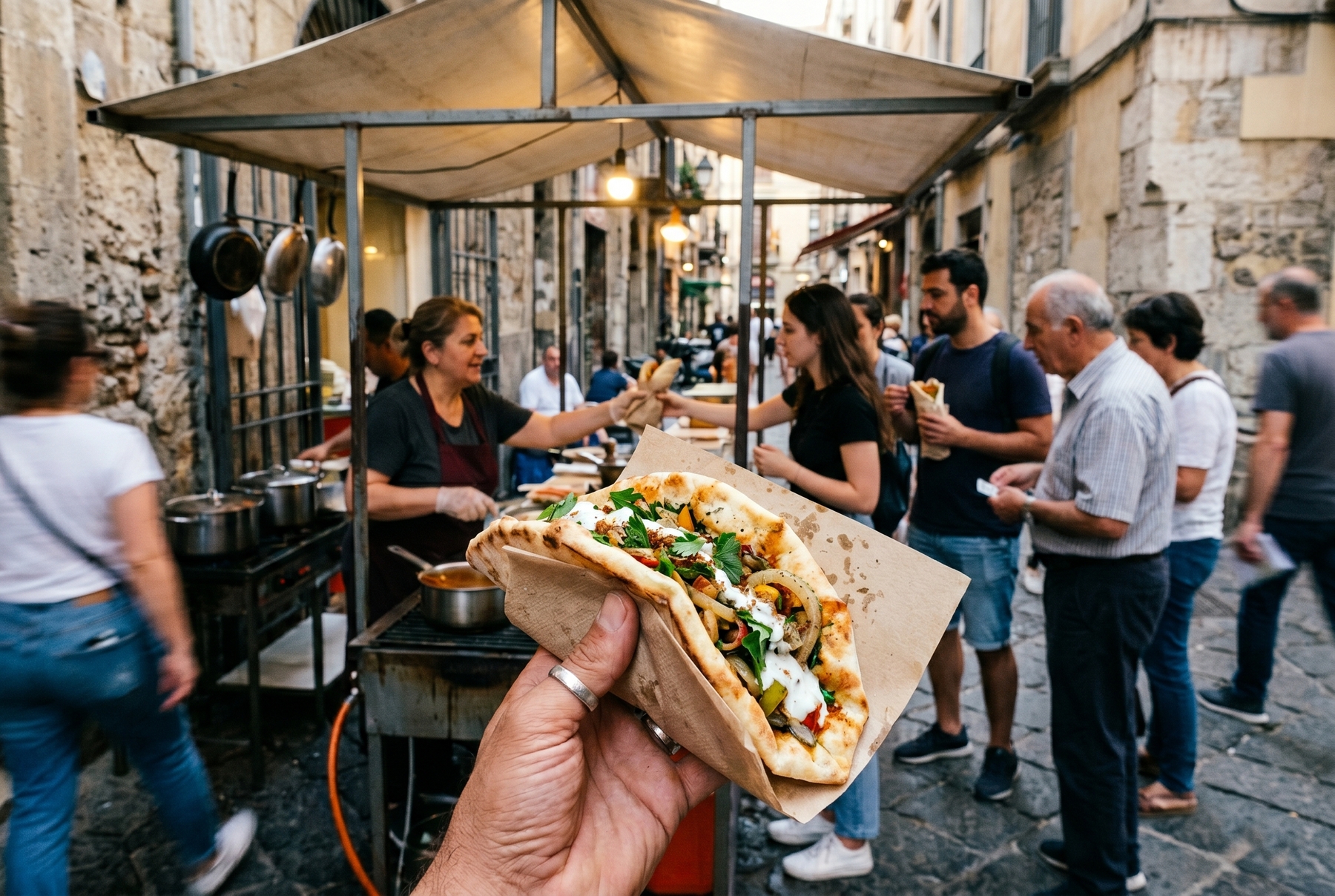
Street food eaten on the go reflects the true culinary habits of locals far better than upscale restaurants [6545].
Cheat Sheet: 10 Signs of Authentic Local Cuisine
- A short menu featuring a few items, rather than a magazine-sized book
- Locals are present among the patrons, not just visitors
- Dishes change according to the seasons throughout the year
- Breakfast, lunch, and dinner look completely different
- Clear specialization where the venue focuses on one thing made by hand
- Prices cater to residents rather than guests
- No barkers stand at the entrance
- The menu lacks glossy photographs of every single dish
- A fast-moving queue forms during lunchtime
- Dish names feature regional terminology rather than just national classics
How to Find Local Food in a New City in One Day
The flavor of a city is built through its daily routine. In the morning, go where people eat on their way to work: a bakery, a hot food stall, or a counter serving a local breakfast dish that will vanish by noon. During the day, seek out a lunch spot near offices, a market, or a construction site, where food is served quickly and affordably to those who will return tomorrow. In between, detour through a working market and grab something seasonal to eat by hand. In the evening, choose an establishment with a brief menu tied to the region, and bypass any restaurant offering menus in five languages. Somewhere along the way, try a street snack that locals eat on the go.
A single correct dish reveals almost nothing about a country, but a well-planned culinary route tells a comprehensive story.
Authentic Cuisine Begins With a Question, Not a Dish
To uncover the true cuisine of a country, stop hunting for its emblem and start observing. Who is eating here? At what time? What sits on the neighboring table? Why does this stall have a queue while that one is empty? What sells in the morning and disappears by evening? These questions offer far more insight than any must-try list.
And Pad Thai is still absolutely worth eating. Just avoid having it under the bright lights of the main street; instead, find a corner where the wok sizzles, the noodles stick to the searing metal, and the cook tosses in a pinch of dried chili without asking if you are used to the heat.
0 comments