
Freshly kneaded dough for noodles or dumplings can be surprisingly stubborn. Rolling it out into a 20 cm (8-inch) circle seems easy enough until lifting the rolling pin causes the dough to immediately shrink back. Pressing harder and rolling again is one option, but covering the dough and spending twenty minutes prepping the filling usually works much better.
Upon returning, that exact same piece of dough behaves completely differently. Nothing was added or altered. What actually happened during that break?
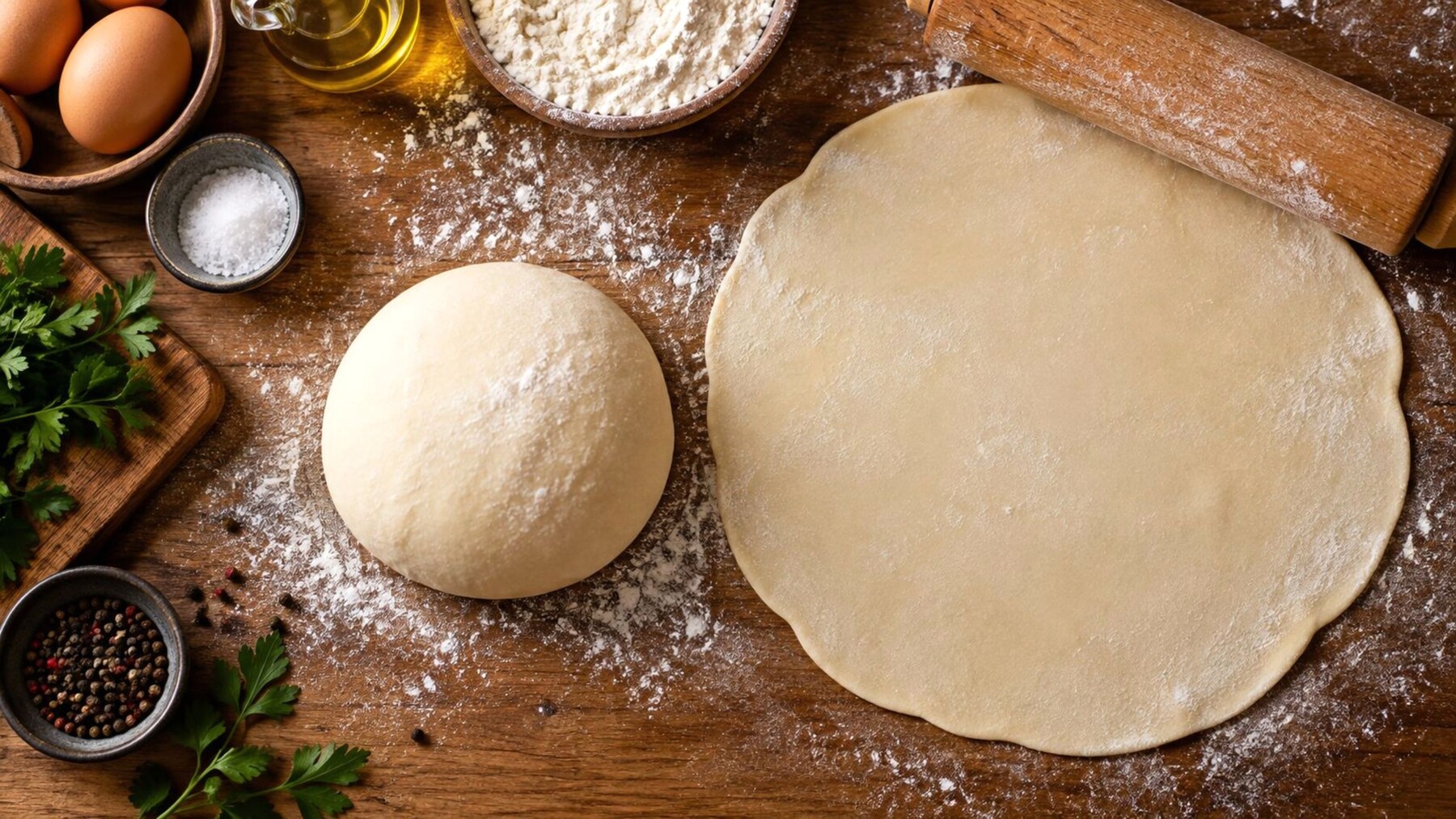
A short rest after kneading relaxes the gluten network, making it easy to roll the dough to the desired thickness.
Table of Contents
- Kneading and Time Perform Different Jobs
- Why Rushing to Add Extra Flour Backfires
- Tearing vs. Springing Back: Two Different Problems
- Testing the Theory with a Rolling Pin
- Resting Dough Must Stay Covered
- How Much Time It Actually Takes
- Different Doughs Require Different Rests
- Bread and Pastry Play by Different Rules
- Why Resting Is Not Autolyse
- When a Pause Will Not Help
- Kneading Builds It, Time Finishes It
Kneading and Time Perform Different Jobs
Combining flour with water and kneading the mixture builds a gluten network, which makes wheat dough cohesive, elastic, and extensible. However, the transformation does not stop the second the hands leave the bowl.
Two critical processes occur during this resting period.
Water Continues Hydrating the Flour
Flour does not absorb moisture instantly. Immediately after kneading, some areas of the mass may be better hydrated than others, making the dough feel stickier, drier, or more uneven than it will be a short while later.
A brief pause adds no extra water, yet it allows the existing moisture to distribute evenly. Evaluating the final consistency makes much more sense after a short rest rather than in the very first minute after kneading.
Gluten Stops Fighting Back
Kneading strengthens the dough while simultaneously creating internal tension. This explains the familiar frustration: the sheet stretches out, only to snap back toward its original shape once the rolling pin lifts.
Resting reduces this resistance. The gluten neither disappears nor breaks down; the dough simply becomes more extensible and holds its intended shape much more easily.
That covers the basic physics of a short rest. Understanding when this pause actually helps is the next crucial step.
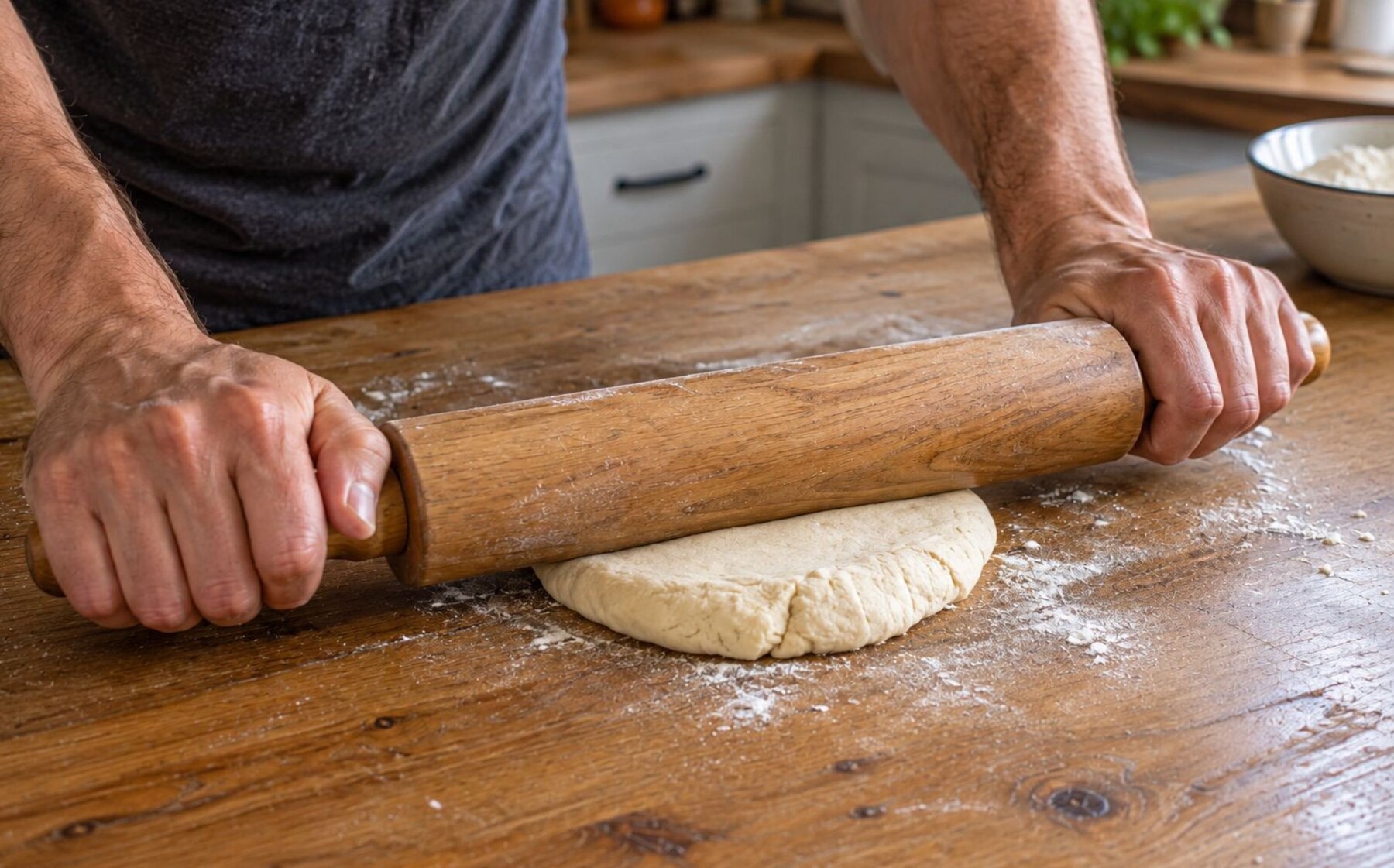
Freshly kneaded dough springs back and shrinks due to high tension in the gluten network.
Why Rushing to Add Extra Flour Backfires
The most frustrating mistake happens when bakers try to force freshly kneaded dough into an “ideal” consistency right away. Slight stickiness prompts a dusting of flour. Persistent tackiness leads to adding even more. Half an hour later, the dough turns into a dense, tight lump because the baker fixed a problem that would have resolved itself.
When working with tested proportions and a dough that looks generally fine, giving it a short break comes first; deciding on adjustments comes later.
This rule does not ban extra flour entirely. A recipe that genuinely requires an adjustment should get one. Making that call simply becomes much easier once the dough reveals its true consistency.
Tearing vs. Springing Back: Two Different Problems
Not every uncooperative dough needs a nap.
A mass that looks uneven, struggles to hold together, and tears easily when stretched usually points to an issue with the kneading, hydration, or the recipe itself. Resting the dough does not replace proper troubleshooting.
A smooth, cohesive dough that stretches well but resists holding a new shape tells a different story. This specific behavior signals that brute force will accomplish very little, making a brief pause the smartest move.
The distinction is practical: **if it tears, look for the cause; if it stretches but stubbornly shrinks back, give it time.**
Testing the Theory with a Rolling Pin
Comparing two identical pieces of dough side by side offers the best way to feel this effect firsthand.
Mixing a simple, unleavened wheat dough and dividing it in half sets up the experiment. Rolling out the first half happens immediately. Leaving the second half covered for twenty to thirty minutes before rolling it to the same thickness reveals the difference.
Focusing on the physical sensation matters more than measuring centimeters: notice how much effort the rolling pin requires, how willingly the dough stretches, and how easily it holds the desired shape.
The exact difference depends on the recipe, flour, and kneading method, so promising “twice the ease” makes little sense. Still, this simple test clarifies why recipes so frequently insist on letting the dough rest.
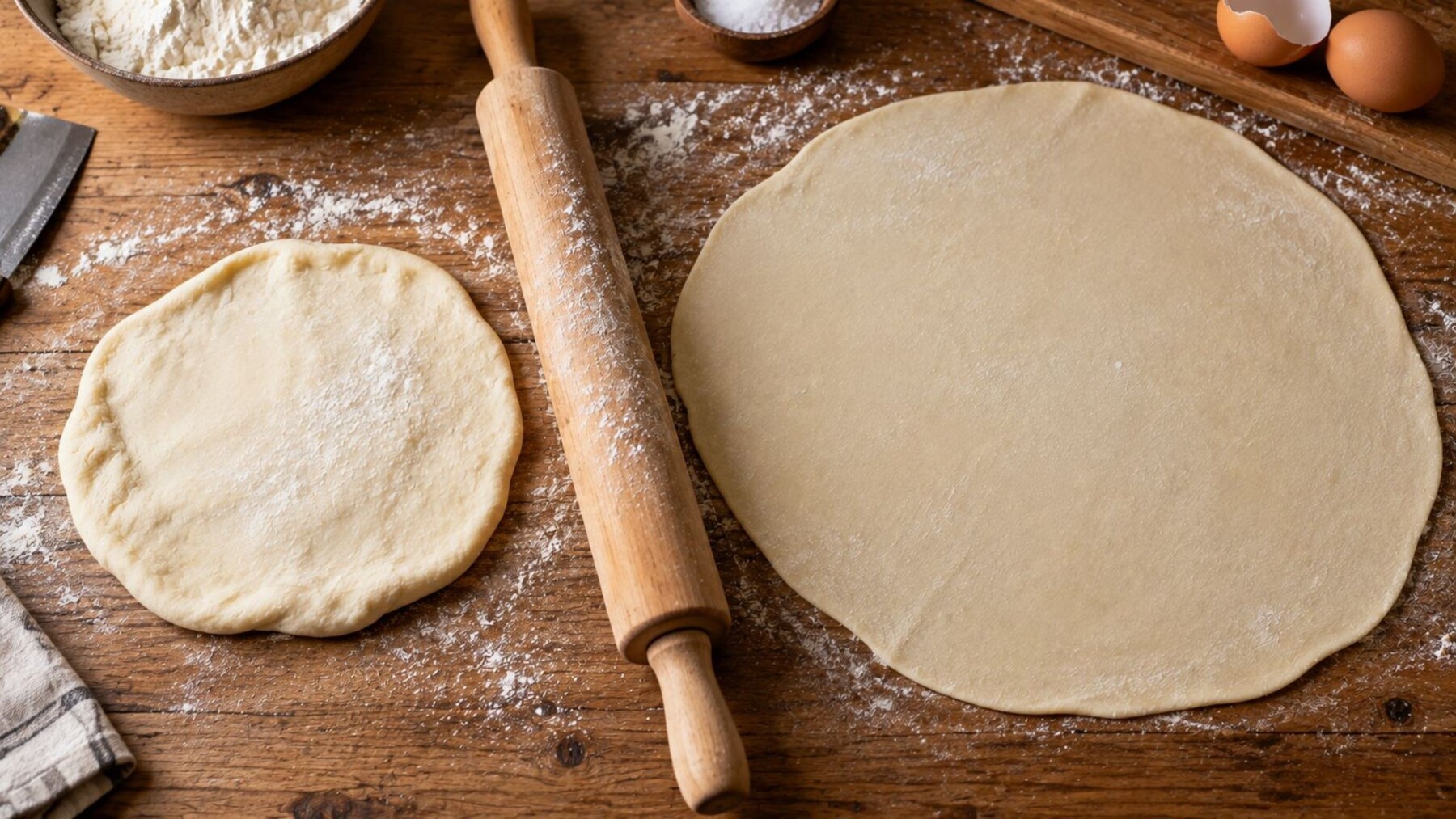
The practical difference: rested dough holds its shape and rolls out with significantly less effort.
Resting Dough Must Stay Covered
A short rest comes with one mandatory condition: the surface of the dough must never dry out.
Left exposed to open air, the dough gradually loses moisture, turns matte, and develops a thin, dry skin. Rolling out a crusted dough causes these dry patches to crack, ruining any chance of an even sheet.
Covering the dough with an inverted bowl, a lid, plastic wrap, or placing it inside a sealed container easily prevents this. The specific covering method matters far less than simply blocking out the air.
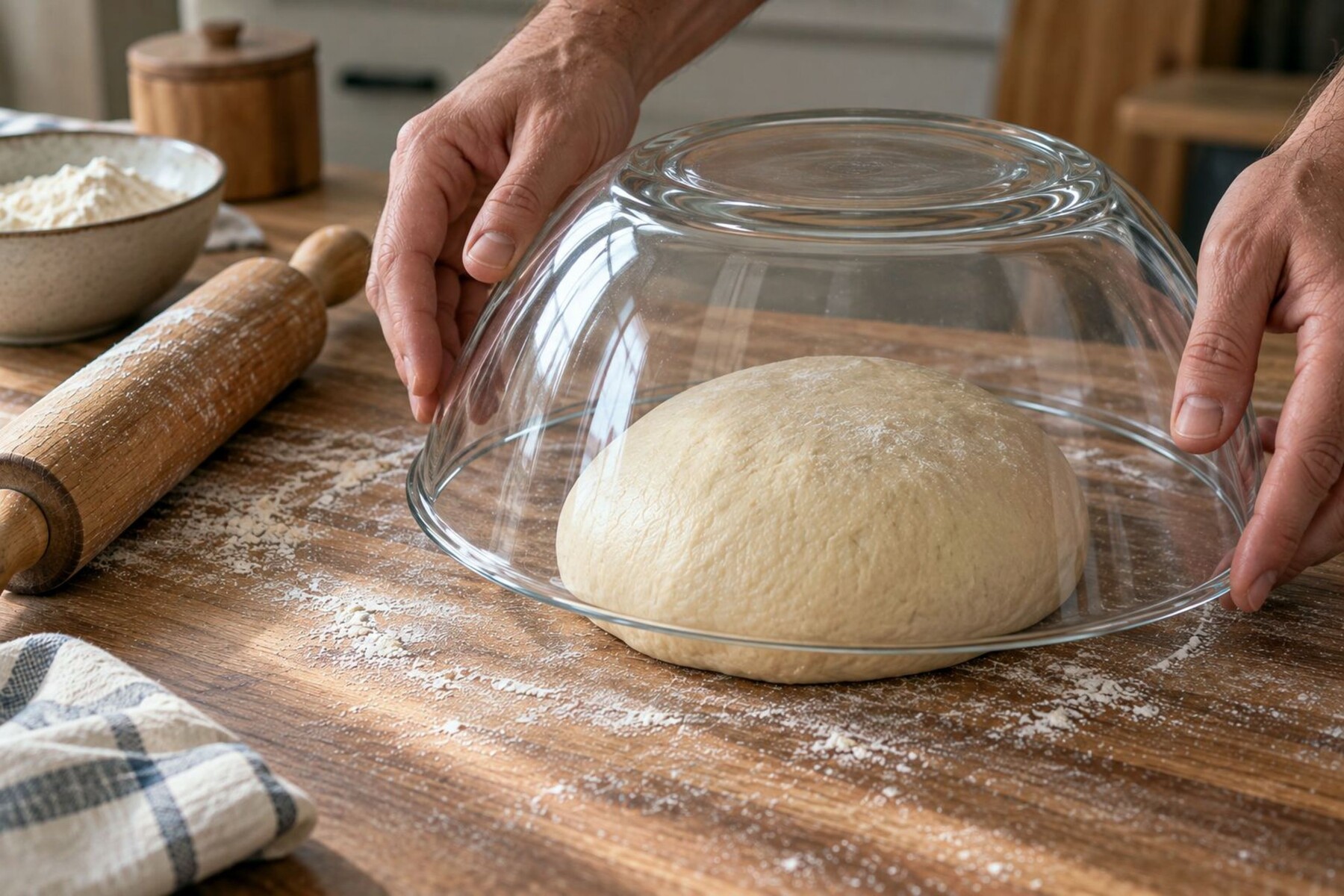
Covering the dough with a bowl or towel prevents the surface from drying out and forming a crust.
How Much Time It Actually Takes
No single magic number exists here.
Ten to fifteen minutes already makes a noticeable difference, especially when the dough just needs a quick breather between shaping and rolling.
Twenty to thirty minutes serves as a reliable everyday benchmark for most unleavened wheat doughs, including noodles, pelmeni (Russian meat-filled dumplings), vareniki (Slavic dumplings stuffed with potato, cheese, or fruit), and flatbreads.
Longer rests work well if the recipe calls for them. However, resting dough for an hour, several hours, or overnight enters different territory where ingredient ratios, ambient temperature, and storage conditions take over.
Watching the clock is hardly necessary. Pressing a finger gently into the dough or tugging an edge reveals its readiness; if the dough yields easily, the pause has done its job.
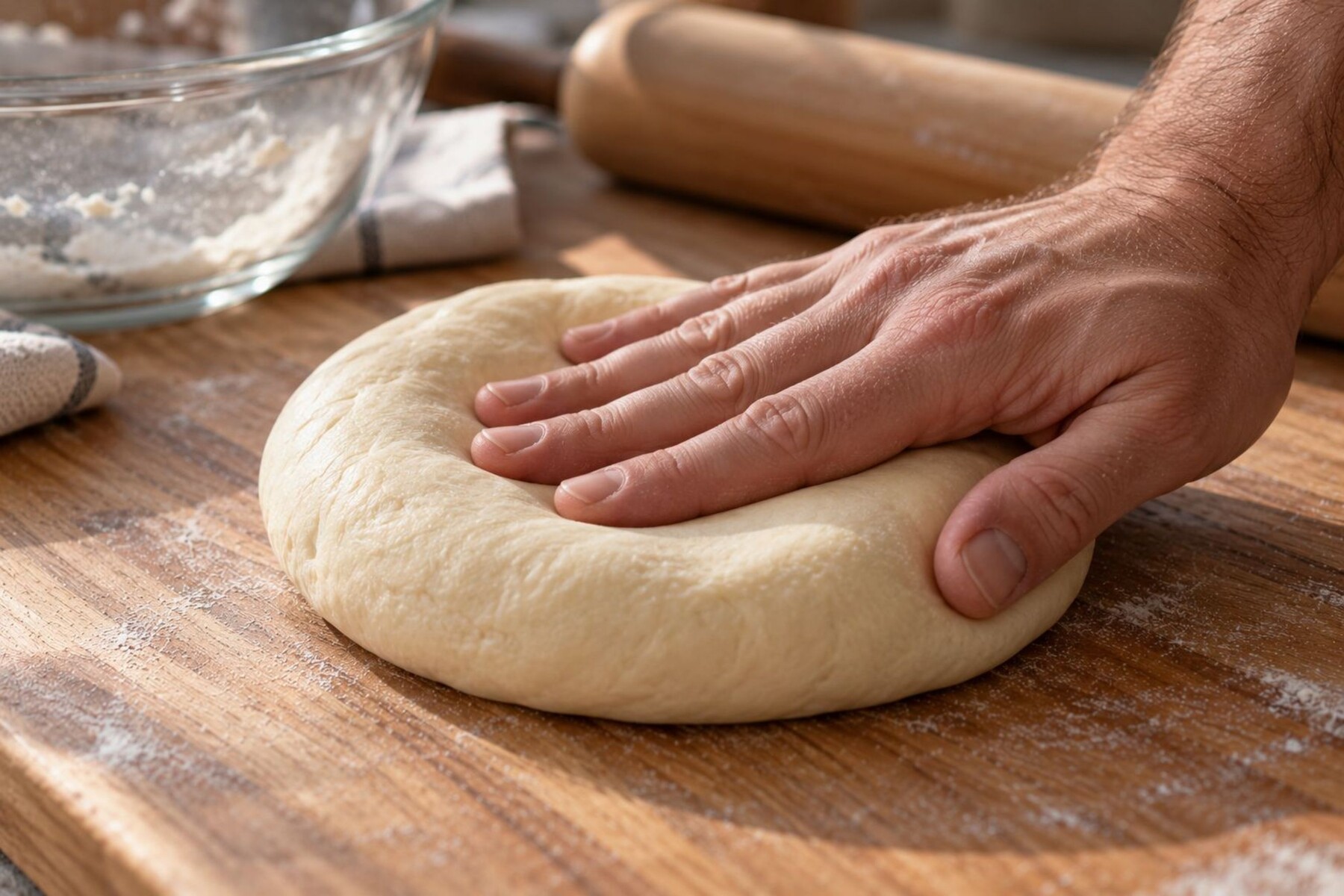
Well-rested dough yields gently under the palm without immediately springing back.
Different Doughs Require Different Rests
While the underlying physics remain identical, the ideal moment for a pause depends entirely on the dish.
For homemade pasta, resting makes the initial rolling and the first passes through the pasta machine much smoother. Dumplings like pelmeni and vareniki offer another practical bonus: well-rested dough requires far less dusting flour, which keeps the edges tacky enough to seal securely.
Flatbreads highlight a different timing trick: dividing the dough into portions and shaping them into tight balls creates new surface tension. Resting those shaped balls allows the tightened exterior to relax before meeting the rolling pin.
Pizza dough often benefits from a mid-stretch pause. When a proofed dough ball stops expanding and threatens to tear, leaving it alone for a few minutes works much better than forcing the center out until it rips.
Ultimately, these doughs do not rely on different resting mechanisms. The culinary goal simply shifts the stage at which that pause proves most useful.
Bread and Pastry Play by Different Rules
Other baking categories rely on entirely different food science.
Bread
In yeasted or sourdough bread, a long rest after mixing goes far beyond relaxing gluten. Fermentation takes over, producing gas, expanding the volume, and transforming both the internal crumb structure and the flavor profile.
Equating bulk fermentation in bread making with a quick twenty-minute rest for dumpling dough misses the point. The specific bread recipe always dictates the timing here.
Shortcrust Pastry
Shortcrust pastry flips the script entirely, as bakers actively avoid developing strong gluten networks. Fat temperature also plays a starring role.
Chilling pastry dough in the refrigerator makes it manageable while firming up butter that softened during mixing. Bakers often chill the rolled-out crust a second time inside the tart pan so the edges hold their sharp lines in the oven.
Many cookie doughs require chilling for similar reasons, though the exact outcome depends on the recipe: cold temperatures control the fat, limit how much the cookies spread on the baking sheet, and alter the final texture.
Why Resting Is Not Autolyse
Home bakers sometimes mistakenly refer to a short post-kneading rest as “autolyse.” In classic French breadmaking, however, autolyse describes a distinct preliminary step: mixing just the flour and water together and letting them sit before adding salt, yeast, and completing the main knead.
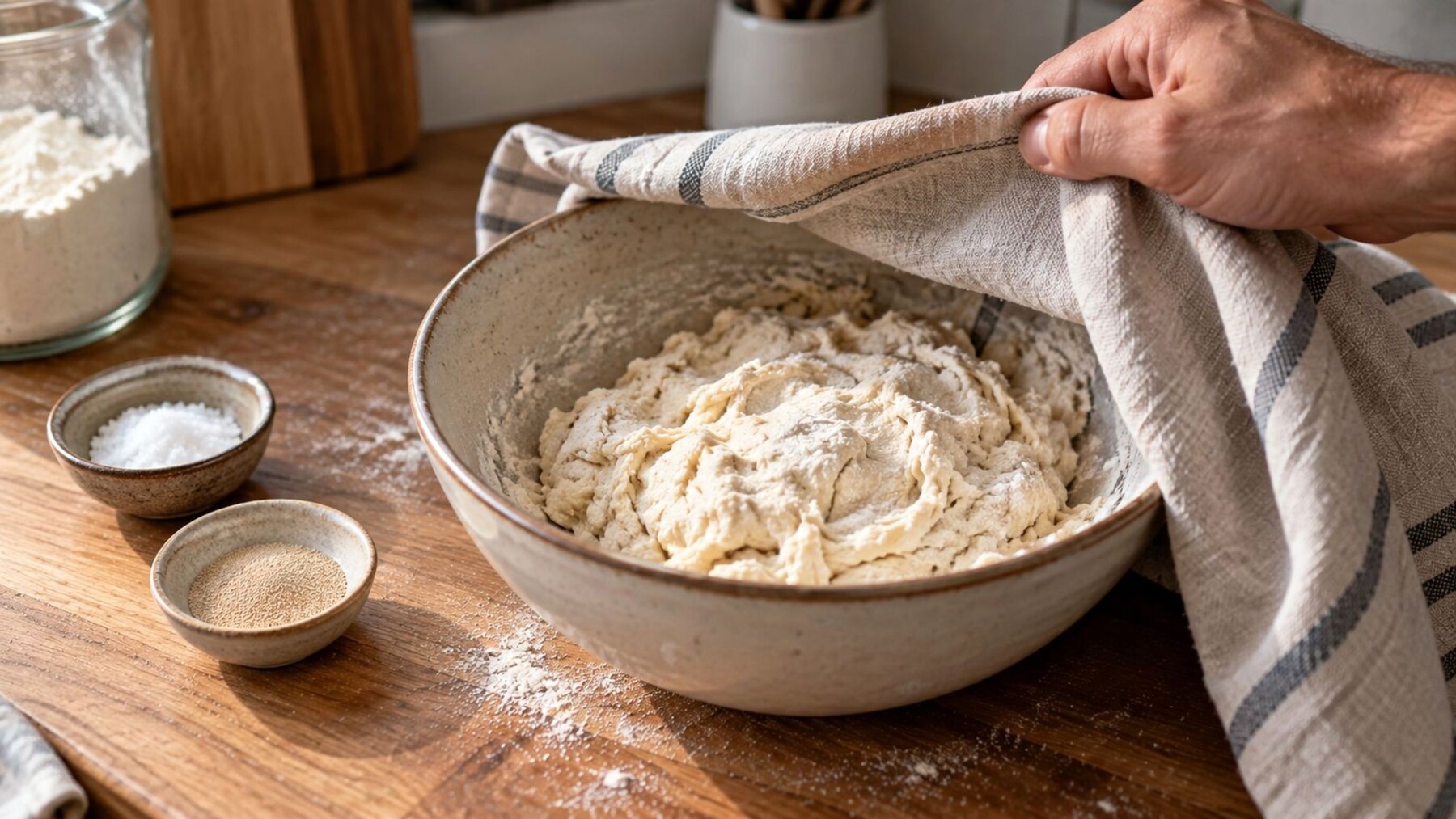
Classic autolyse involves soaking flour in water before adding yeast and salt.
While certain processes—primarily flour hydration—overlap, the techniques remain distinct. Simply walking away from a fully kneaded dough does not make it an autolyse.
When a Pause Will Not Help
Time only helps when the dough was mixed correctly in the first place.
Waiting will not magically conjure moisture in an under-hydrated, dry, and crumbly mixture. Conversely, a short rest cannot transform a soupy, over-hydrated batter into a firm noodle dough. Because flour absorbency varies by brand and climate, even trusted recipes occasionally demand manual adjustments.
Overheated pastry dough faces its own specific hurdle: room-temperature resting fails when only the refrigerator can firm up melting butter. Likewise, leaving a wind-chapped, crusted dough on the counter only worsens the dry skin.
Short rests also differ fundamentally from long-term storage. Thirty minutes on the counter during prep and twelve hours overnight require completely different handling. Doughs containing eggs, dairy, commercial yeast, or sourdough starter demand strict adherence to recipe timelines and safe refrigeration temperatures.
Kneading Builds It, Time Finishes It
Memorizing a rigid twenty-minute rule matters far less than recognizing two distinct dough behaviors.
A dough that crumbles, tears, or clearly misses the target consistency requires active troubleshooting. A well-kneaded, cohesive, and elastic dough that simply fights the rolling pin right after mixing calls for a different strategy: doing nothing at all.
Skipping the extra kneading, holding back the handful of flour, and easing up on the rolling pin allows a simple pause to do the heavy lifting.
Time often turns out to be the most underrated ingredient in the bowl.
0 comments