
Standing at the bakery counter, one often tries to guess the exact amount needed. Should it be one baguette or two? What if guests drop by tonight? Consequently, buying a surplus seems logical until nobody arrives, leaving a rock-hard loaf echoing with a hollow thud on the counter two days later.
Most people assume the bread has dried out and its moisture has vanished, rendering it a lost cause. This assumption is entirely wrong. The moisture never left. It remains inside, simply trapped.
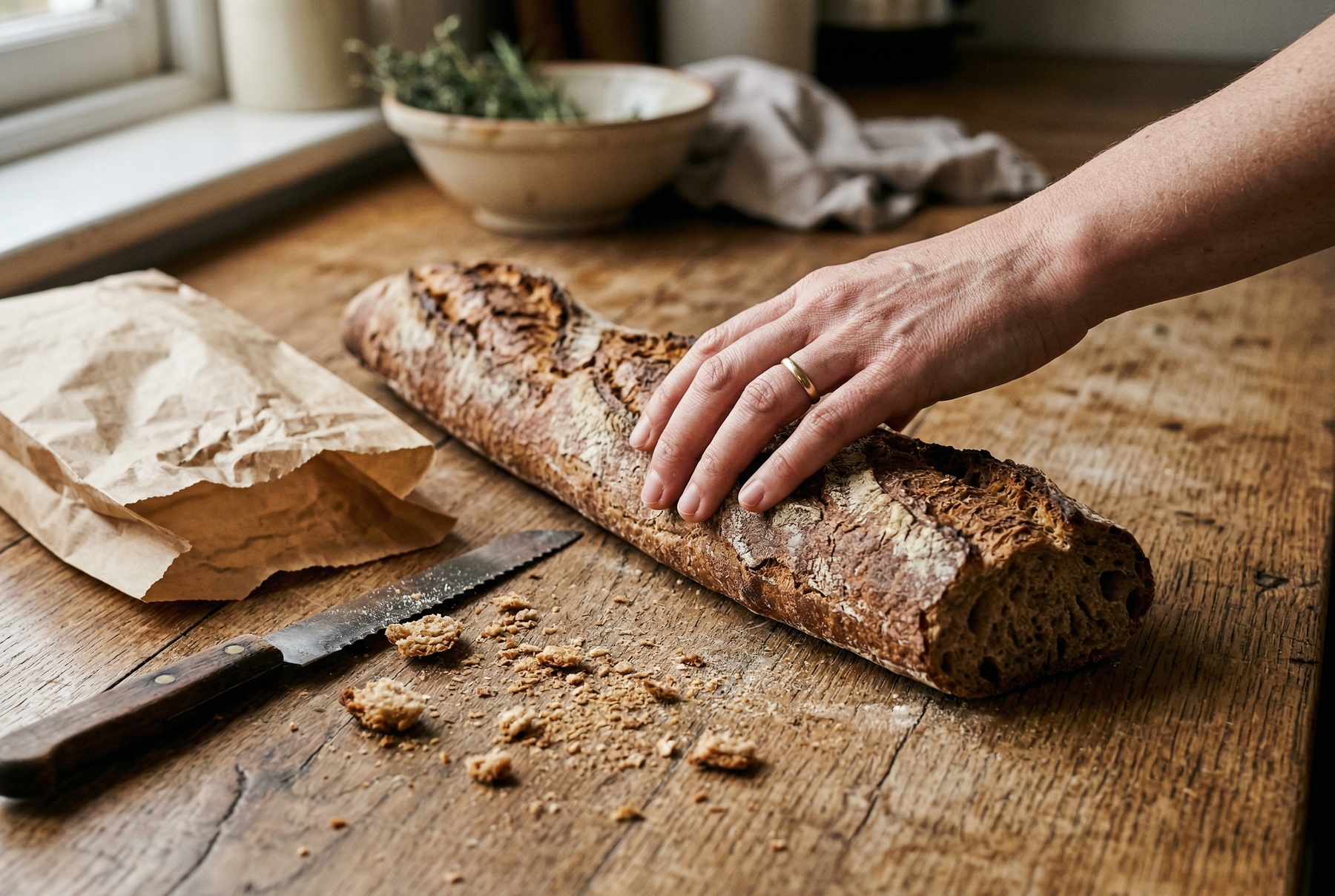
A forgotten loaf quickly loses its softness, but this hardly means it deserves to be thrown away.
What Happens Inside
During baking, the starch in the flour absorbs water and swells. Chemists refer to this process with the rather clinical term ‘gelatinization,’ but the culinary result is what matters most: this creates the moist, springy crumb that makes queuing at a good bakery worthwhile.
Cooling changes everything. The starch molecules realign, forming rigid crystalline structures that literally capture the water within. Bakers call this retrogradation, but practically speaking, the bread takes its own water hostage. It does not lose moisture to the air; it blocks it. The crumb goes stale not from dryness, but because the water is trapped.
Trying to save bread from drying out, many instinctively store it in the refrigerator. This proves to be a major mistake. Retrogradation occurs fastest at around 4°C (39°F). Refrigerated bread goes stale roughly twice as fast as bread kept at room temperature. Freezing remains the best option if quick consumption is impossible: at -18°C (0°F), the crystallization process essentially stops.
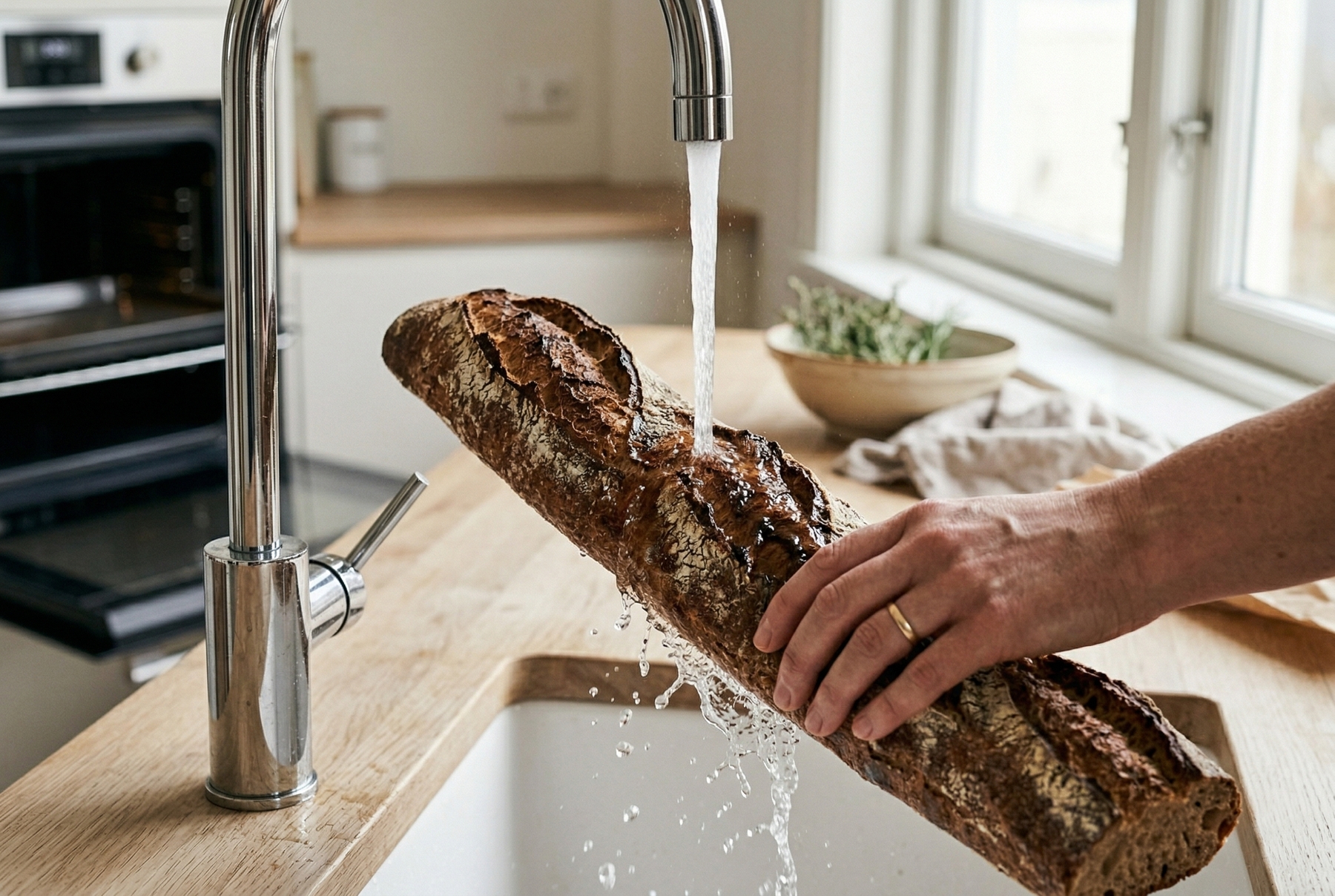
This radical yet highly effective method utilizes water to reintroduce moisture directly into the structure of a stale crumb.
Resurrecting Bread: Two Proven Methods
Since starch crystals form during cooling, the rescue plan is straightforward: heating the bread frees the trapped water. Temperatures above 60°C (140°F) break down the crystalline structure. Introducing additional moisture prevents the starch from heating up in a completely dry state.
The Microwave: When Every Minute Counts
Wrapping a slice in a damp (not soaking wet, just wrung out) paper towel and microwaving it for 10-15 seconds on medium power works wonders. The towel creates a miniature steam chamber around the slice. The crumb softens and warms beautifully. A catch exists, however: this slice requires immediate consumption. Waiting just 5-7 minutes turns the revived bread unpleasantly rubbery.
The Oven: For A Whole Loaf
Another approach sounds slightly absurd but yields incredible results. Taking the entire loaf and running it directly under a cold tap for about ten seconds is the first step. Yes, the whole loaf. Placing it onto a baking sheet in an oven preheated to 180-200°C (350-390°F) for 8-12 minutes, depending on the size, completes the magic. The surface water turns into steam, penetrating back into the crumb while the heat simultaneously melts the starch crystals. The crust regains its shatter, and the crumb springs back.
When executed perfectly, the crust crackles and yields slightly under pressure, rather than resisting silently. The aroma returns completely—that distinct, nutty fragrance, perhaps with the slight tang characteristic of rye.
This method effectively restores bread that is no more than three to four days old. A loaf abandoned near a radiator for a week, petrified into a stone-like state, truly lacks internal moisture, making the process irreversible.
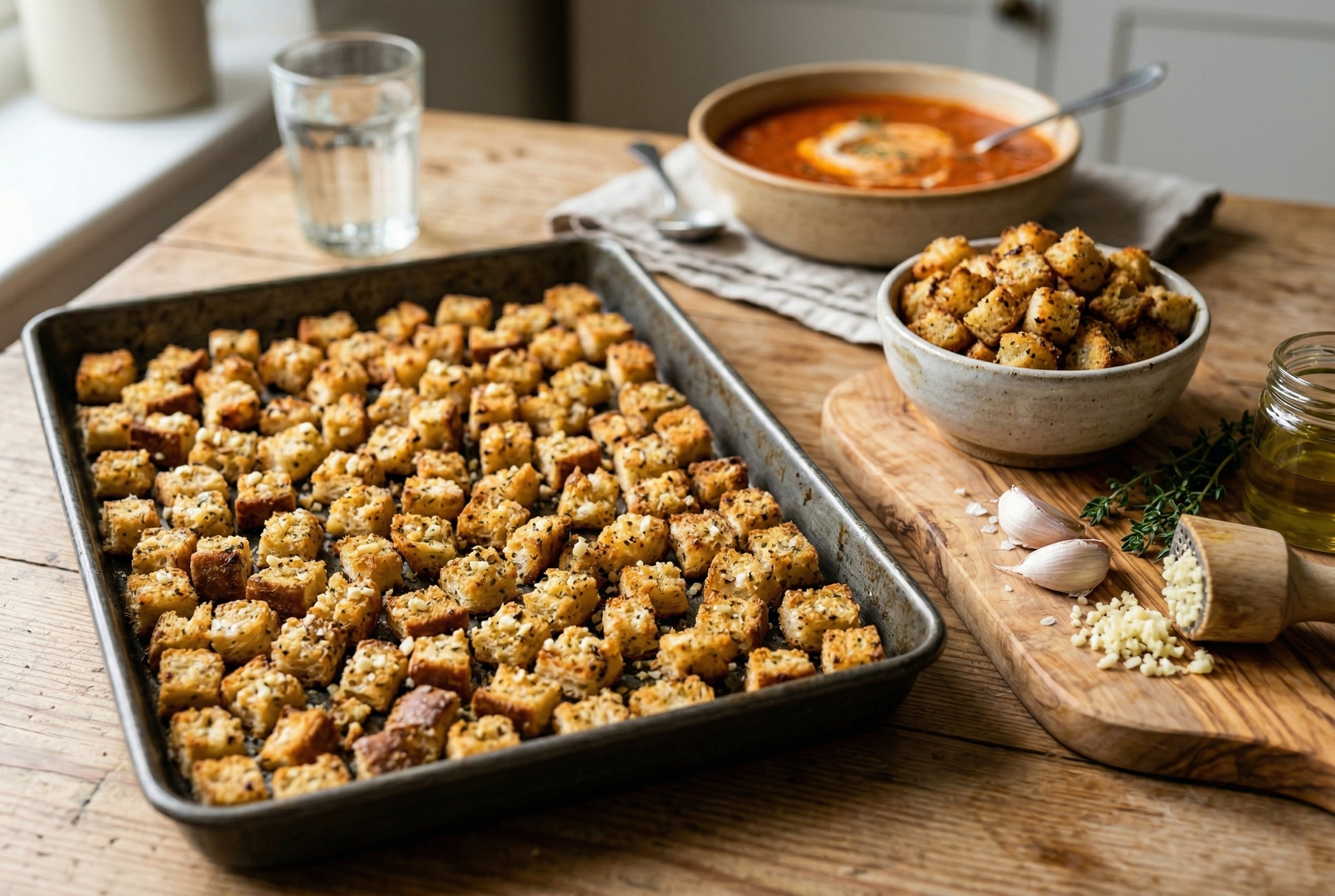
Transforming hopelessly stale bread into a perfectly crisp, garlic-infused appetizer offers brilliant culinary redemption.
When The Patient Is Hopeless: A Second Life
Croutons and breadcrumbs serve not as a mere consolation prize, but as exceptional standalone culinary elements.
Garlic Croutons
Slicing the bread into two-centimeter (about 3/4-inch) cubes and tossing them with a mixture of olive oil and crushed (flattened with the side of a knife, not grated) garlic, followed by a sprinkle of coarse salt, sets the stage. Baking them at 160°C (320°F) for 15-20 minutes transforms them until they reach the color of old ochre and exude the scent of toasted bread with garlicky smoke. These croutons perfectly complement borscht (a traditional Eastern European beet soup), tomato soup, or a salad featuring a poached egg. They also pair wonderfully with a simple glass of beer.
Breadcrumbs
Pulsing severely dry and dense bread in a blender offers a brilliant solution. Homemade breadcrumbs from yesterday’s loaf surpass store-bought varieties completely: they boast a coarser texture and distinct character, creating a genuine crust on a cutlet instead of turning into that commercial powder that either burns or turns soggy during frying.
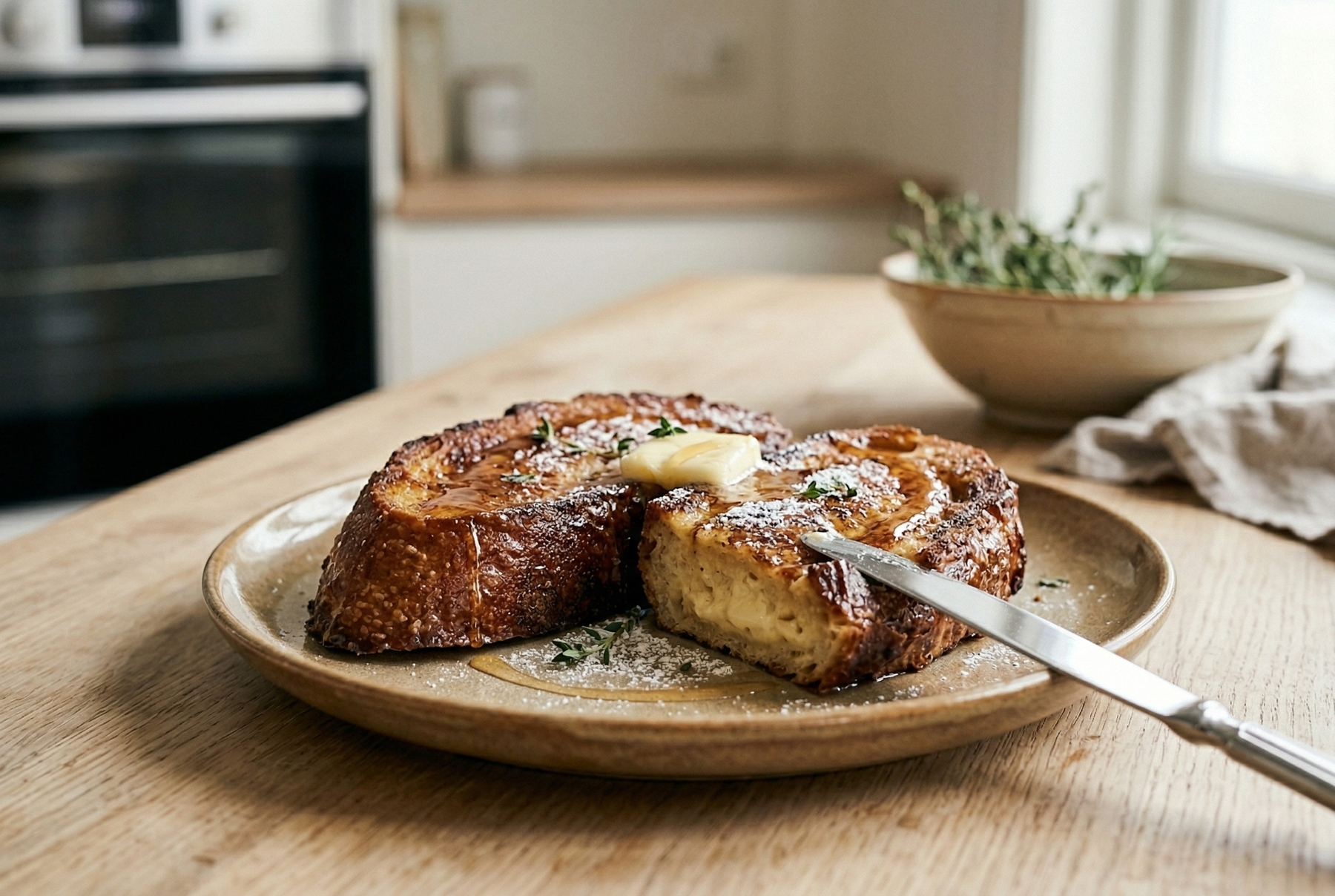
Classic French toast serves as the ultimate method for repurposing yesterday’s bread into an incredibly tender morning treat.
French Toast
Classic French toast—requiring only eggs, milk, and a pinch of salt—provides a perfectly legitimate way to consume what is essentially a dessert for breakfast under the guise of frugality. Soaking the bread in the mixture for a couple of minutes before transferring it to a hot, buttered skillet yields incredible results. The exterior develops a burnt-caramel crust, while the interior transforms into something resembling a rich custard.
Ultimately, discovering a rock-hard loaf should never cause disappointment. It merely signals the beginning of its second culinary life.
0 comments