
The soup turned out great, but it is slightly over-salted. Or perhaps it reduced more than anticipated, thickening to the consistency of a sauce. Your hand naturally reaches for the kettle to dilute the soup with boiling water, give it a stir, and call it done. You should pause for a second.
At this very moment, you are taking a complex system—one that collagen, fat, and dozens of dissolved molecules spent three hours building—and turning it into tinted water. I have witnessed this countless times. Soup is far more intricate than just water with chunks of meat and vegetables.
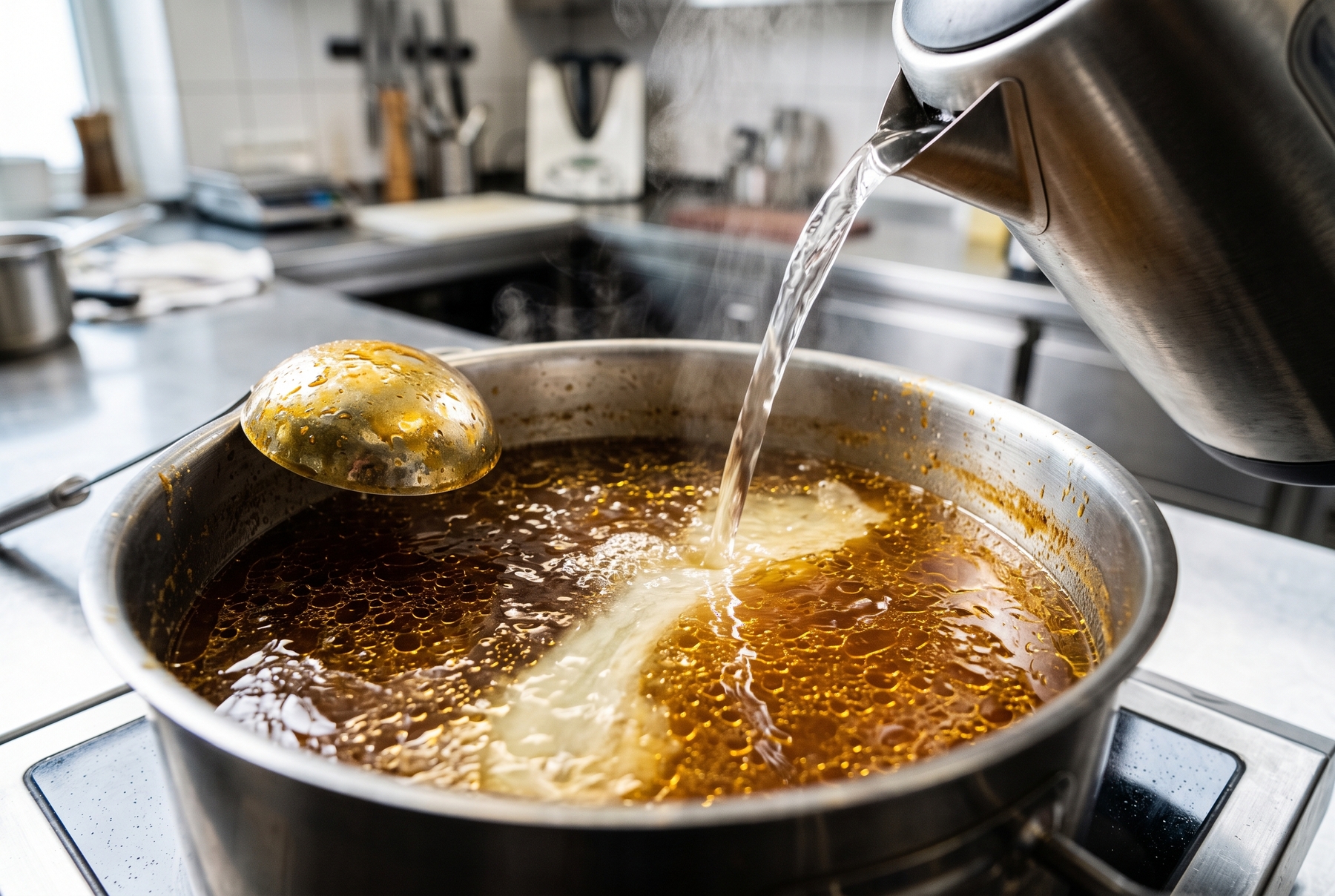
Adding pure water to a finished soup drastically reduces the concentration of aromatics, gelatin, and umami, completely destroying the flavor balance.
Table of Contents
Broth Only Pretends to Be Water
Pouring a good bone broth into a glass and tilting it reveals its true nature. It flows more slowly than water, stretches slightly, and leaves a thin film on the glass. Upon cooling, it sets into a quivering jelly. Water never behaves this way.
A proper broth is a colloidal solution. It relies on three fundamental components to maintain its structure.
While bones and meat simmer for hours, the collagen from connective tissues breaks down into gelatin. Gelatin consists of long protein molecules that bind water and provide the broth with viscosity. This creates that enveloping density in the mouth, leaving your lips slightly sticky after a spoonful of rich stock.
Fat works right alongside it. In a simmering environment, it shatters into microscopic droplets and suspends in the solution, creating an emulsion. This emulsion carries fat-soluble aromas and adds a velvety softness to the body of the soup.
The third layer is the most fascinating: the extractives. Free amino acids, peptides, minerals, and nucleotides make up this layer. This is where umami lives. Glutamate from meat and vegetables pairs with inosinate from beef or chicken, working synergistically to amplify the flavor perception far more than either could alone.
Now consider the kettle. Pouring pure water (H₂O) into a finished soup breaks three things simultaneously.
It is not just the salt level that drops. The concentration of everything plunges at once: glutamate, gelatin, and aromatic molecules. The flavor profile, which relied on the delicate balance of dozens of substances, simply unravels. The tongue interprets this as hollowness, even if the actual salt content has reached the perfect level.
The body disappears as well. Less gelatin per liter (about 34 fl oz) means the viscosity vanishes. The broth that once coated the spoon now runs off it like tap water. The palate feels empty. Scientifically, this is known as a loss of texture and mouthfeel; in plain terms, the soup has become watery.
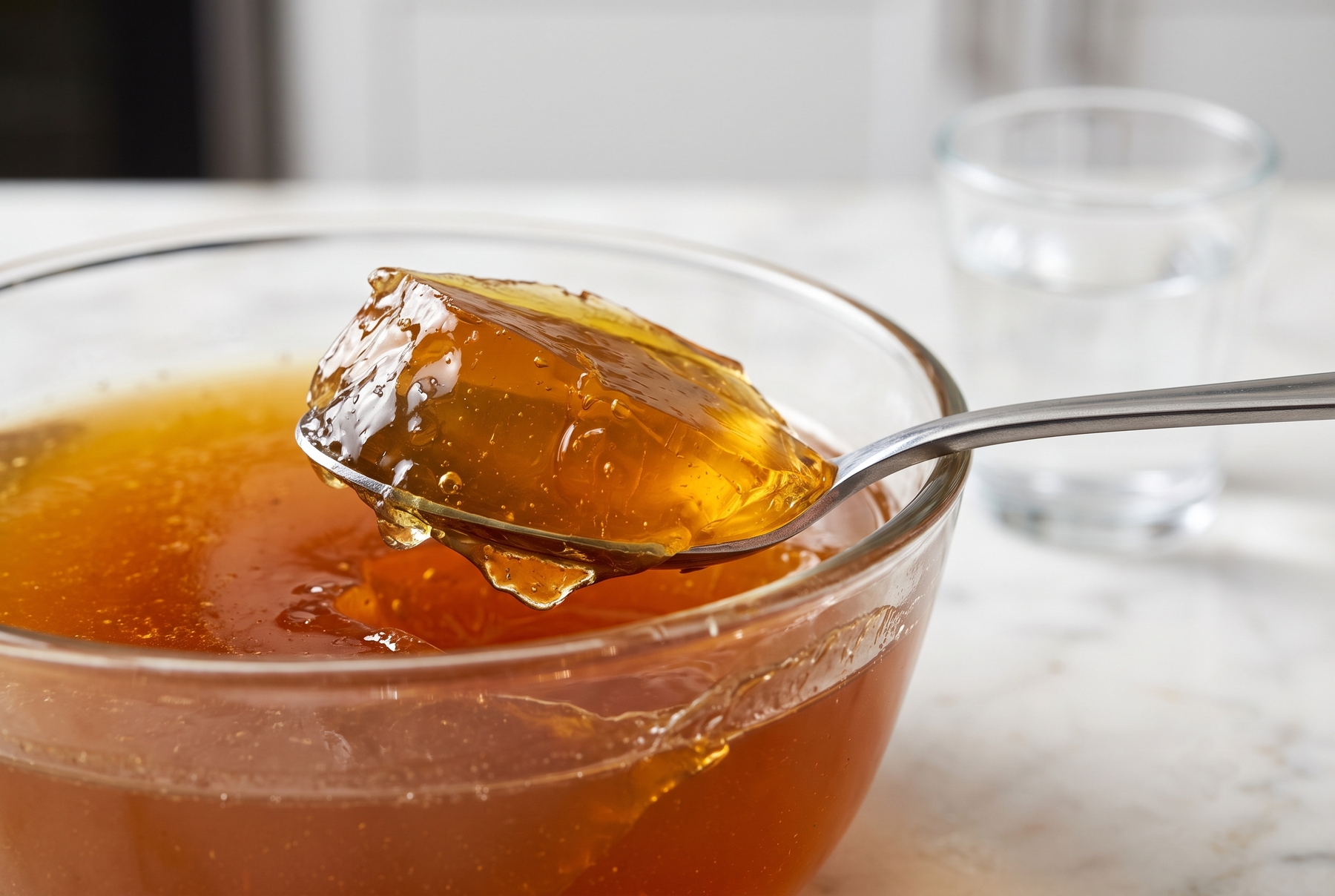
A high-quality bone broth is rich in gelatin, providing it with viscosity and a pleasant texture. Diluting it with water ruins this delicate structure.
3 Reasons Why the Hand Reaches for the Kettle
“It Turned Out Too Salty”
Salt is the most frequent trigger for kitchen panic. An overly salted dish causes fear, leading to immediate dilution. Water certainly drives the saltiness down; there is no arguing with that. The underlying issue is that along with the salt, it drags everything else down too. Umami, body, and aroma plummet in the exact same proportion. The result is a soup with acceptable salt levels but absolutely no flavor.
And no, adding a potato does not draw out the salt. It absorbs some of the liquid and releases starch, meaning it acts as the very same diluter, just at a slower pace. Physics does not care whether it is water or a potato.
“The Broth Boiled Down Too Much”
The second scenario is more straightforward: the liquid volume genuinely decreased, and the soup thickened from evaporation. However, the mistake happened much earlier, right on the stove. The broth was boiling vigorously.
Aromatic compounds are largely volatile. They escape with the steam. While the pot bubbles furiously and a cloud of fragrance hovers above it, the flavor vanishes into the kitchen air. It smells wonderful, but that aroma should have remained in the bowl. Adding water at the end offers no salvation: the molecules that flew away will never return. You are merely diluting whatever is left behind.
For future reference, a proper broth requires a gentle quiver on the surface, not a rolling boil. A single bubble should lazily break the surface every few seconds.
“I Need to Stretch It for Two Days”
The third reason is purely practical: there are more guests than soup. The hand reaches for water to ensure there is enough to go around. It seems economical on paper. From a culinary perspective, you are feeding people a weakened version of your hard work. One liter (34 fl oz) of excellent broth stretched to one and a half yields 1.5 liters (50 fl oz) of mediocrity. Serving smaller, uncompromised portions is always the better choice.
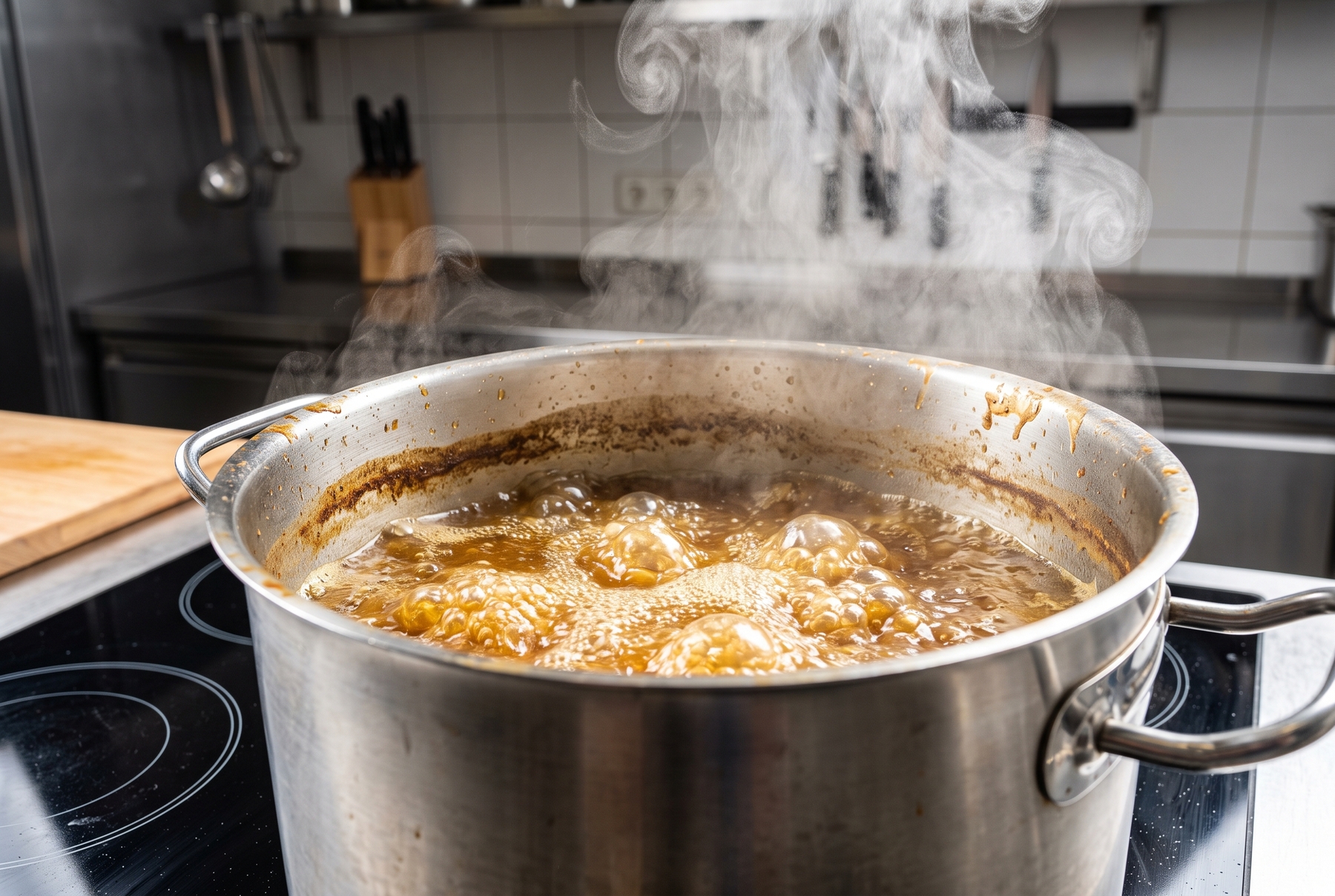
During a vigorous boil, volatile aromatic molecules evaporate with the steam, leaving the broth noticeably less flavorful.
How to Properly Dilute Soup When It Is Unavoidable
Avoid Using Cold Water
The first rule concerns temperature. Cold water drastically drops the heat of the soup and can break the fat emulsion, causing some fat droplets to clump together and float. A crystal-clear broth turns cloudy instantly, with greasy pools forming on the surface. If adding water is absolutely necessary, it must be hot, matching the temperature of the soup as closely as possible.
Like With Like
Chefs keep the second rule brief. You do not dilute with water, but with a similar liquid. A professional kitchen always keeps an unsalted, neutral base broth on hand—one that still possesses body and gelatin. This liquid increases the volume without destroying the structure.
Few home cooks keep a pot of unsalted base broth on standby, but the logic is easily replicated. An overly salty chicken soup benefits from unsalted chicken or vegetable stock. Even a quick 20-minute simmer of onion skins, carrots, and parsley stems adds volume much more gently than plain water. It introduces its own extractives, partially compensating for the dilution.
How to Restore Flavor After Diluting With Water
Occasionally, neither a base broth nor a quick stock is available, yet dilution is required. In such cases, the flavor profile must be manually rebuilt.
Umami can be restored with a few drops of soy sauce. It introduces concentrated glutamate and provides a deep, complex saltiness rather than a flat one. Starting with half a teaspoon per bowl and adjusting to taste yields excellent results.
Acidity provides brightness. A drop of lemon juice or high-quality vinegar at the very end tightens the flavor profile, which is especially crucial after dilution. A very light hand with acid is necessary to prevent the soup from turning sour.
Fat restores the body. Swirling a knob of cold butter into the hot soup right before serving emulsifies the liquid and imparts that sought-after enveloping density. The French culinary tradition calls this technique monter au beurre, and it works specifically by re-establishing the fat suspension.
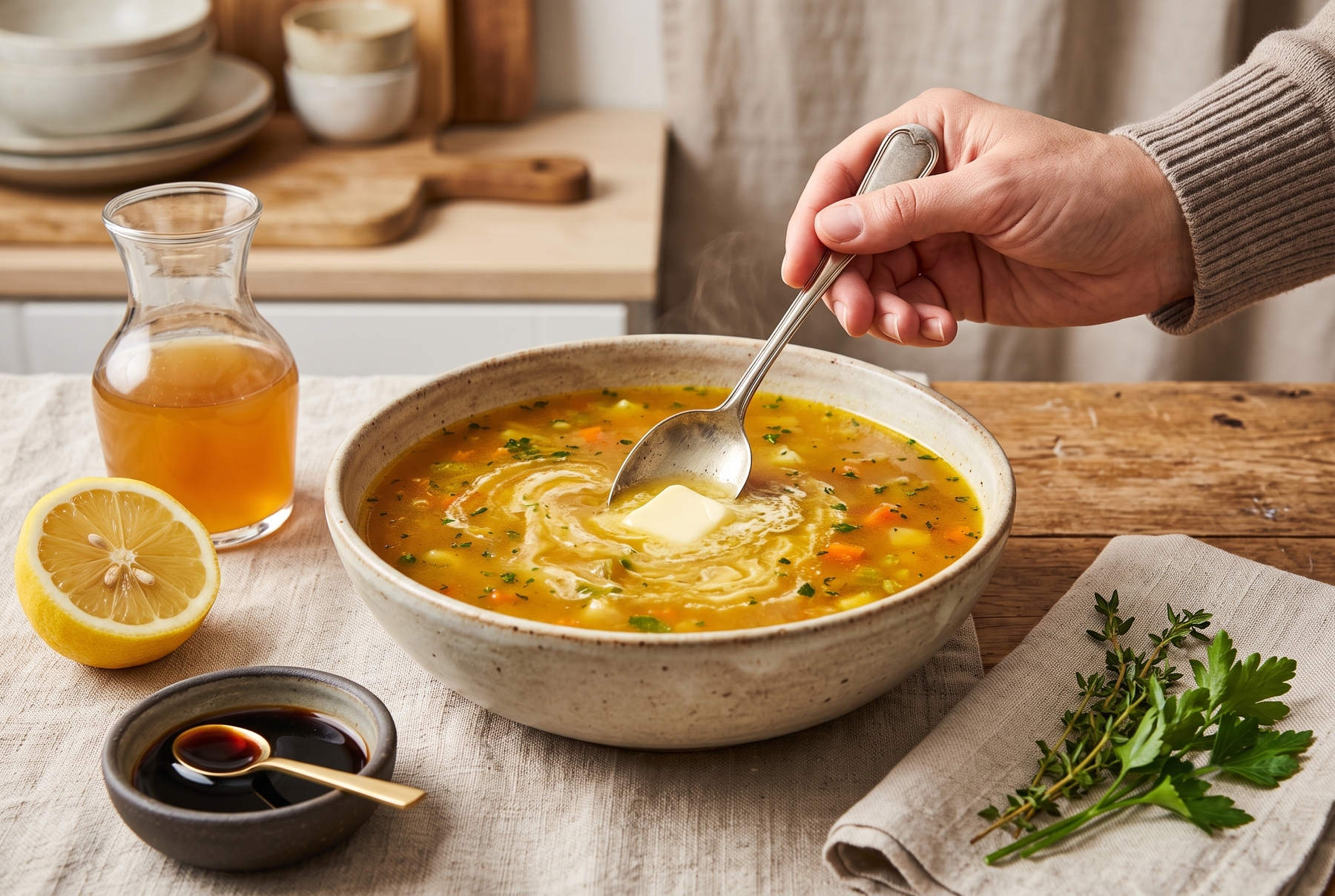
Glutamate from soy sauce, acidity from lemon juice, and fat from a knob of butter can help restore the balance to a diluted soup.
Which Soups Forgive Mistakes and Which Do Not
Clear broths suffer the most from dilution. Consommé, classic chicken soup, Pho, and Shurpa (a rich, clear Central Asian meat and vegetable broth) rely entirely on concentration and clarity. This delicate balance means any added water becomes glaringly obvious in both the flavor and a sudden cloudiness. These broths almost never welcome dilution. If a clear broth turns out too intense, serving a smaller portion honors the dish much more than ruining it.
Puréed and starchy soups tell a different story. Pea, lentil, potato, and pumpkin cream soups use starch and heavy cream as natural buffers. The starch granules have already bound the water and thickened the base, so extra liquid merely alters the consistency rather than destroying the structure. Carefully whisking hot water or warmed milk into these soups brings them to the desired texture. The only requirement is that the added liquid is hot and incorporated gradually, rather than poured all at once.
Hearty, chunky soups require their own approach. Borscht (beetroot soup), Solyanka (a thick, tangy soup with cured meats and pickles), and Shchi (traditional Russian cabbage soup) draw their strength from resting. While the pot sits and cools, flavors redistribute, acidity mellows, fat disperses, and the soup achieves a harmony it lacked straight off the stove. If Borscht seems too dense, the solution is rarely adding water, but rather letting it rest for a few hours. There is a very good reason Solyanka is traditionally eaten on the second day: overnight, the pickle brine, smoked meats, and tomatoes finally come to an agreement.
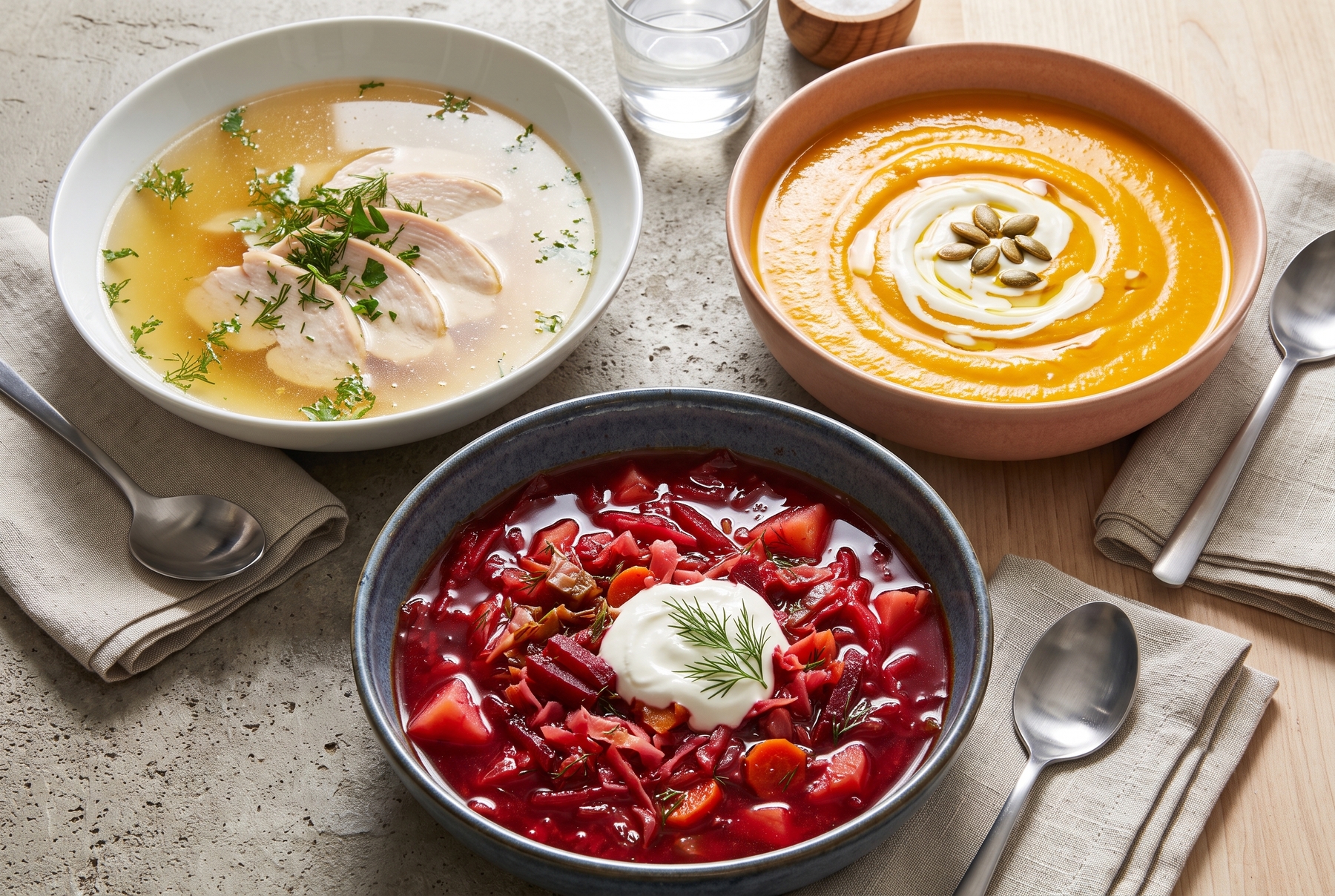
Clear broths never forgive the addition of water, whereas puréed and hearty chunky soups like Borscht handle it much more gracefully.
Water as a Tool: 2 Scenarios Where Dilution Is Correct
Certain bases are intentionally cooked for future dilution. Demi-glace, glazes, commercial concentrates, and bouillon bases undergo extreme reduction until they become a viscous mass, concentrating flavor and gelatin immensely. Eating such a base without water is impossible and unnecessary. Its true purpose is compact storage, ready to expand to the required volume in the kitchen. In this context, dilution is built into the technique itself; water completes the working structure rather than breaking it.
The most crucial nuance resolves half of these culinary dilemmas. The timing of when water enters the pot changes everything. While the base is still simmering—while the bones, meat, and vegetables are actively releasing flavor—any added water becomes a working environment. It extracts compounds from the ingredients, dissolves gelatin, and actively participates in the cooking process. The ingredients have plenty of time to saturate whatever liquid is added during this phase.
That very same water behaves entirely differently in a finished dish. There is nothing left to extract from the soup, as the ingredients have surrendered everything they had. Diluting a finished soup simply smears the existing flavor across a larger volume of liquid.
That initial mug of water cost me 10 liters (2.6 gallons) of broth. It went down the drain in five seconds, taking three hours of hard work and an aroma that lingered in the kitchen until late evening with it.
0 comments