
You arrive at a dinner party, and a heavy ceramic bowl filled with pink crystals sits on the table. It looks more like an interior decor piece than salt: large granules, a dusty salmon hue, and a tiny wooden spoon make it seem as though a mineralogy lecture is about to be served rather than a salad.
You ask what makes it better than regular salt. For a brief second, the table falls silent. The hosts look at you as if you just confessed that you still cannot tell the difference between gluten and lactose in 2026.
Then comes a monologue about the Himalayas, ancient seas, eighty-four minerals, the pure energy of the earth, and a ‘completely different taste.’ Suddenly, the ordinary white box of salt sitting in your bottom kitchen drawer seems awkward and obsolete.
In the kitchen, different types of salt operate not on legends, but on the physics of dissolution, crystal size, the timing of addition, and texture. Sodium chloride remains the same everywhere; what differs is the packaging, grind, moisture content, and price. Beautiful jars are perfectly fine. However, when someone boils pasta in a three-liter (3-quart) pot using fleur de sel that costs a fortune, one feels the urge to stop their hand: this salt serves an entirely different purpose.
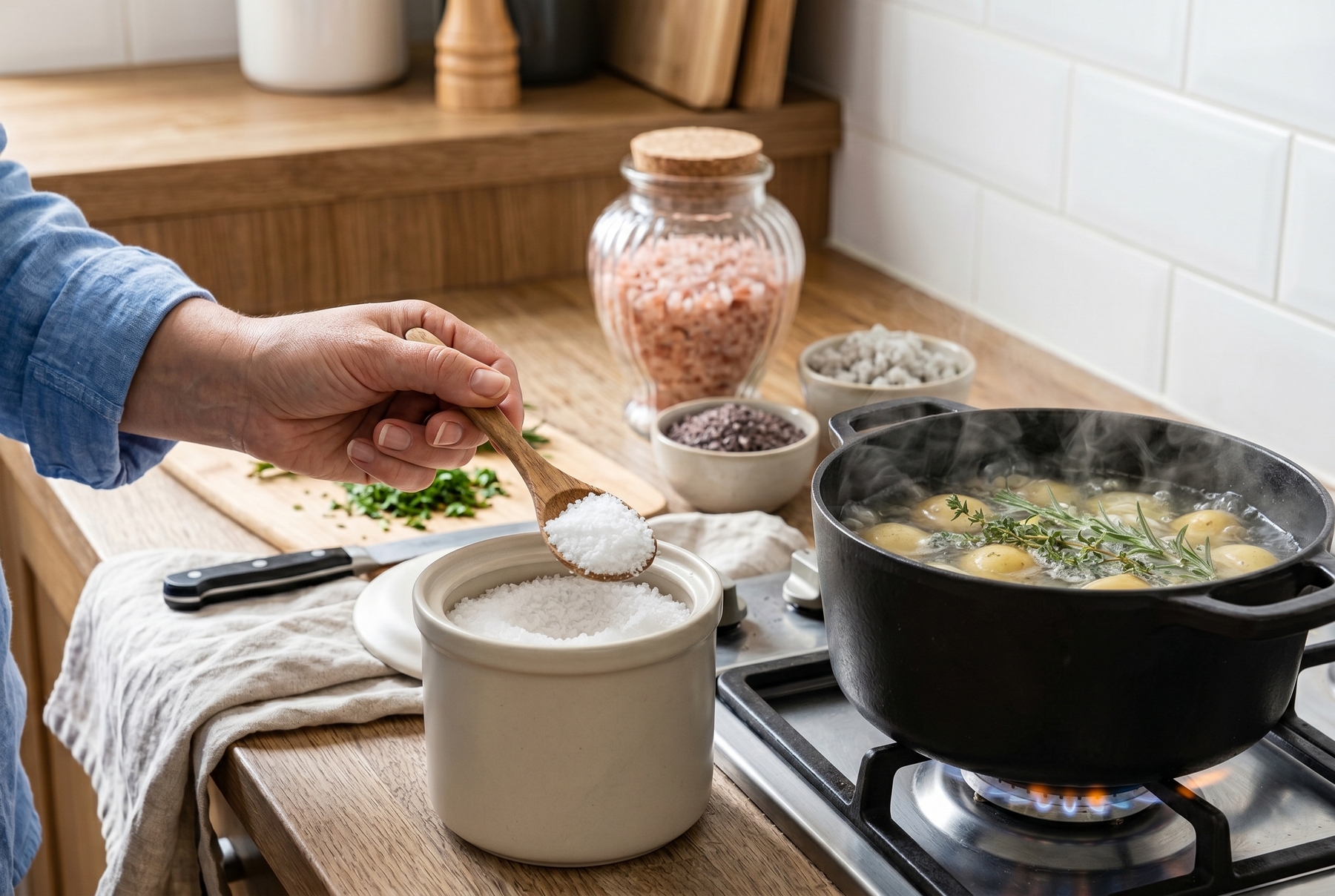
For everyday tasks, such as boiling potatoes or pasta, standard medium-grind table salt works perfectly.
Table of Contents
- Types of Salt: What Actually Impacts Taste and Cooking
- Basic Table Salt: Boring But Works Everywhere
- Iodized Salt: About Diet, Not Flavor
- Sea Salt: Sometimes Delicious, Sometimes Just a Pretty Name
- Rock Salt, Himalayan, and Mineral Legends
- Kosher Salt: Why Chefs Love It
- Flaked Salt, Fleur De Sel, and Other Finishing Touches
- Flavored, Smoked, and Garlic Salts: Salt or Seasoning?
- Curing Salt: Not a Universal Seasoning
- How Salt Transforms a Dish Beyond Saltiness
- The Salt You Actually Need at Home
- The Ultimate Cheat Sheet: Which Salt Goes Where
Types of Salt: What Actually Impacts Taste and Cooking
Chemically, It Is Almost Identical Everywhere
The basic salty taste comes from sodium chloride, NaCl. Table, sea, rock, pink, and black salt typically contain 97–99.7% of this compound. The rest consists of impurities, moisture, trace elements, sulfates, carbonates, and sometimes iodine or anti-caking agents.
Impurities provide color. Iron oxide produces a pink hue, while activated charcoal makes it black. Sulfides turn the salt gray and introduce a rotten egg odor (this is Indian kala namak, and it does not suit every dish). Yet, when salt dissolves in soup, dough, minced meat, or brine, most of these nuances disappear. Only the saltiness remains.
This does not mean all salts are identical. Simply put, once salt enters a pot of boiling water, its origin loses importance. It becomes a sodium chloride solution with a minor trace of something else. Paying for a beautiful legend in such a scenario makes little sense.
Crystal Size: Not Every Pinch Is Equal
Coarse and fine salt differ not in ‘salty strength,’ but in volume density. A teaspoon of fine salt weighs more than a teaspoon of large flakes because small crystals pack more tightly. If a recipe calls for ‘two teaspoons of salt,’ and you use coarse sea salt while the author used fine table salt, the result will differ. Your dish will end up underseasoned, even though the author calculated everything correctly.
Crystal size determines how quickly the salt dissolves in the food. Fine salt rapidly integrates into minced meat, dough, or sauce. Coarse salt dissolves more slowly, and salting meat right before searing means it will lack the time to penetrate deeply. It stays on the surface, which depends entirely on the culinary goal: sometimes this offers an advantage, and sometimes a drawback.
Meatballs require fine salt. It disperses more evenly throughout the mixture, tightens the minced meat, and leaves no salty crystals crunching between the teeth. A piece of fish before baking benefits from medium or coarse salt. It draws out moisture less rapidly, leaving salty specks on the crust. A finished steak shines with salt flakes: they offer a satisfying crunch, hit the palate as distinct salty bites, and do not vanish immediately.
Moisture and Shape: When Salt Crunches
Fleur de sel, Maldon salt, and Cyprus salt hold value primarily for their texture. They feature an irregular shape, often retain moisture, and lack the density of fine salt. Sprinkling them over a tomato or a slice of warm buttered bread means they do not dissolve instantly. They linger on the surface, providing a crunch and hitting the tongue as individual salty grains. The palate registers this immediately.
However, pouring such salt into a pot of potatoes or bread dough ruins the entire effect. It simply becomes a standard sodium chloride solution, meaning you wasted premium money on basic salt.
Tossing expensive finishing salt into pasta water feels like a tragedy. In water, it inevitably transforms into ordinary salted water.
Basic Table Salt: Boring But Works Everywhere
When Regular Table Salt Performs Best
Grains, soups, broths, dough, marinades, brines, and most everyday dishes only require regular table salt: it serves as the foundational cooking salt. Dosing it remains straightforward. The grind stays consistent, the price makes sense, and the weight on the package leaves no questions.
At the stove, cooks typically demand predictability from salt, not romance. Cooking borscht (a traditional Eastern European beet soup) means leaving the legend of the Breton coast on the label. Broth requires salt that dissolves without surprises and introduces no off-flavors. Standard rock salt or extra-fine table salt accomplishes exactly this.
Grinds: From Zero to Coarse
Extra-fine salt represents the smallest grind, often labeled as extra-fine or table salt. It proves convenient for dough, minced meat, sauces, and anything demanding rapid dissolution.
Medium-grind salt suits the majority of tasks: boiling, braising, frying, and salting meat or fish.
Coarse salt works best for curing, salt crusts, specific brines, and seasoning meat or fish prior to cooking.
Chasing the ‘trendiest’ salt never dictates my purchases. Buying what feels comfortable to dose by hand and spoon makes more sense. Two jars sit on my counter for daily cooking: fine salt for dough and sauces, and medium salt for everything else. This covers nearly all everyday culinary needs.
Anti-Caking Agents Offer No Reason to Fear
Manufacturers add potassium ferrocyanide (E536), magnesium carbonate, or calcium silicate to keep salt free-flowing. Such words on the packaging can appear intimidating, especially for those expecting a catch from any ‘E’-numbered additive.
The food industry uses these additives, and a box of salt contains very little of them. They exist solely to prevent the salt from clumping into a solid rock during storage. Choosing additive-free salt remains an option: this usually means coarse salt or a salt grinder. However, throwing a box of salt with E536 in the trash and rushing out for ‘pure’ Himalayan salt makes no sense. For an ordinary kitchen, it comes down to habit rather than a cause for alarm.
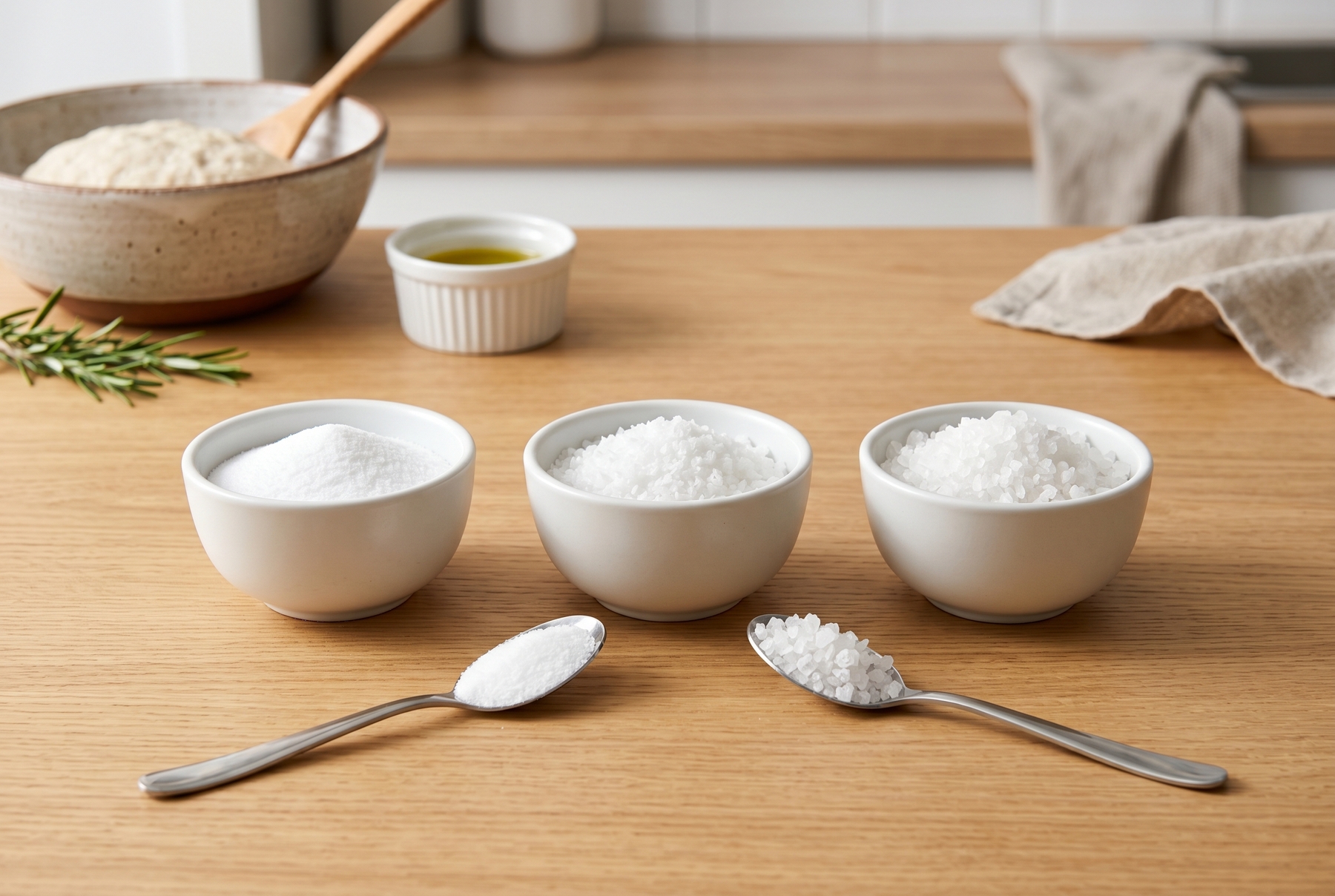
Crystal size dictates the density of salt in a spoon: fine salt will always taste 'saltier' than coarse salt in the exact same volume.
Iodized Salt: About Diet, Not Flavor
Why It Exists
Iodized salt emerged as a simple method to incorporate iodine into everyday meals. Producers add iodine in the form of potassium iodate or iodide. Iodine does not turn the salt into medicine; it simply seasons the food as usual. This ensures iodine enters the daily diet, particularly in regions far from the sea.
Prescribing diets belongs in a doctor’s office. Anyone with thyroid issues or other contraindications should consult a medical professional. If no contraindications exist, using iodized salt in normal doses represents a sensible choice.
Can You Cook With It?
People often claim that iodized salt ‘ruins the flavor,’ ‘cannot be heated,’ or ‘makes dishes bitter.’ In reality, the taste remains unchanged in most dishes. Iodine evaporates over time, and prolonged heating reduces its presence, yet the salt retains its core purpose.
Iodized salt carries a limited shelf life (usually 9 to 12 months). Afterward, the iodine dissipates, turning it into regular salt. Stockpiling it for years makes zero sense. Buying smaller packages and using them fresh proves much smarter.
When to Choose Regular Salt Without Iodine
In fermentation and certain preservation methods, iodized salt is best avoided. Iodine can interfere with lactic acid bacteria, potentially slowing fermentation or imparting an undesirable aftertaste in some recipes. Making sauerkraut, pickling cucumbers, or preparing kimchi calls for non-iodized salt. If a recipe relies on fermentation and precise salting, following its specified salt type yields the best results.
Sea Salt: Sometimes Delicious, Sometimes Just a Pretty Name
Sea Salt: What It Means in Practice
Sea salt originates from evaporated seawater, but what happens to it afterward matters more in the kitchen. Manufacturers might wash, recrystallize, dry, crush, leave it moist, or refine it into fine, dry crystals.
The mere word ‘sea’ on a package promises no difference in flavor. Cheap, washed, and ground sea salt tastes exactly like regular table salt. Expensive, moist sea salt featuring irregular flakes delivers a crunch on the surface, provided you avoid dissolving it in soup.
Where Sea Salt Excels
It belongs on the surface of foods at the very end of cooking. Roasted vegetables, grilled fish, tomato salads, soft-boiled eggs, buttered bread, chocolate brownies, and salted caramel all benefit. Here, flaked or coarsely crystallized sea salt creates an impact: offering a satisfying crunch, distinct salty bursts, and visually appealing crystals on the plate.
Sprinkling it without stirring until it dissolves leaves the crystals intact to act as a flavor accent. The crystal hits the tongue individually, sharpening the overall taste.
Where Sea Salt Loses Its Purpose in Cooking
Pasta water, soups, cucumber brines, minced meat, dough, and slow braises completely waste its potential. It dissolves entirely in these environments and behaves exactly like any other salt. You paid for texture, moisture, and crystal shape, only to watch all of that disappear in boiling water.
Using sea salt in pasta water is perfectly fine if it brings you joy while cooking. However, the finished pasta will show almost no difference from one made with basic table salt.
Rock Salt, Himalayan, and Mineral Legends
Rock Salt: A Solid Everyday Choice
Producers mine rock salt from natural deposits, often the beds of ancient dried seas. In medium or coarse grinds, it serves as an excellent everyday salt. It often comes pure, free of unnecessary additives, and boasts a stable composition. It suits curing, brining, and daily cooking perfectly.
Rock salt alone introduces no novel flavors to a dish. It simply adds saltiness, and that is entirely acceptable.
Himalayan Pink Salt: Beautiful Color, Weak Health Claims
Marketers love praising Himalayan salt (which actually comes from Pakistan) for its ’84 minerals,’ ‘mountain energy,’ ‘Himalayan purity,’ and various other claims. Iron oxide and other impurities provide its signature pink hue. While trace elements do exist, their quantities remain too miniscule to qualify the salt as a reliable mineral source. Obtaining a noticeable dose of iron from Himalayan salt requires consuming so much of it that entirely different health problems would arise.
Appreciating the pink aesthetic of Himalayan salt on your dining table is perfectly fine. Buying it as a substitute for vitamins, however, makes no sense.
Black Salt and Strongly Scented Salts
Indian black salt (kala namak) functions as a flavor seasoning rather than a garnish. It carries a sulfurous, eggy, and sometimes quite pungent aroma. Indian cuisine incorporates it into chutneys, salads, beverages, and dishes requiring a sulfurous, slightly egg-like undertone. Vegan cooking frequently utilizes it in tofu scrambles or sauces to replicate that eggy flavor profile.
Kala namak does not belong in the everyday salt shaker. Seasoning borscht or pasta with it yields bizarre results. It shines only where that specific aroma serves an intentional culinary purpose.
Do not confuse it with Hawaiian black salt (infused with activated charcoal), which acts purely as a decorative element without any distinct aroma.
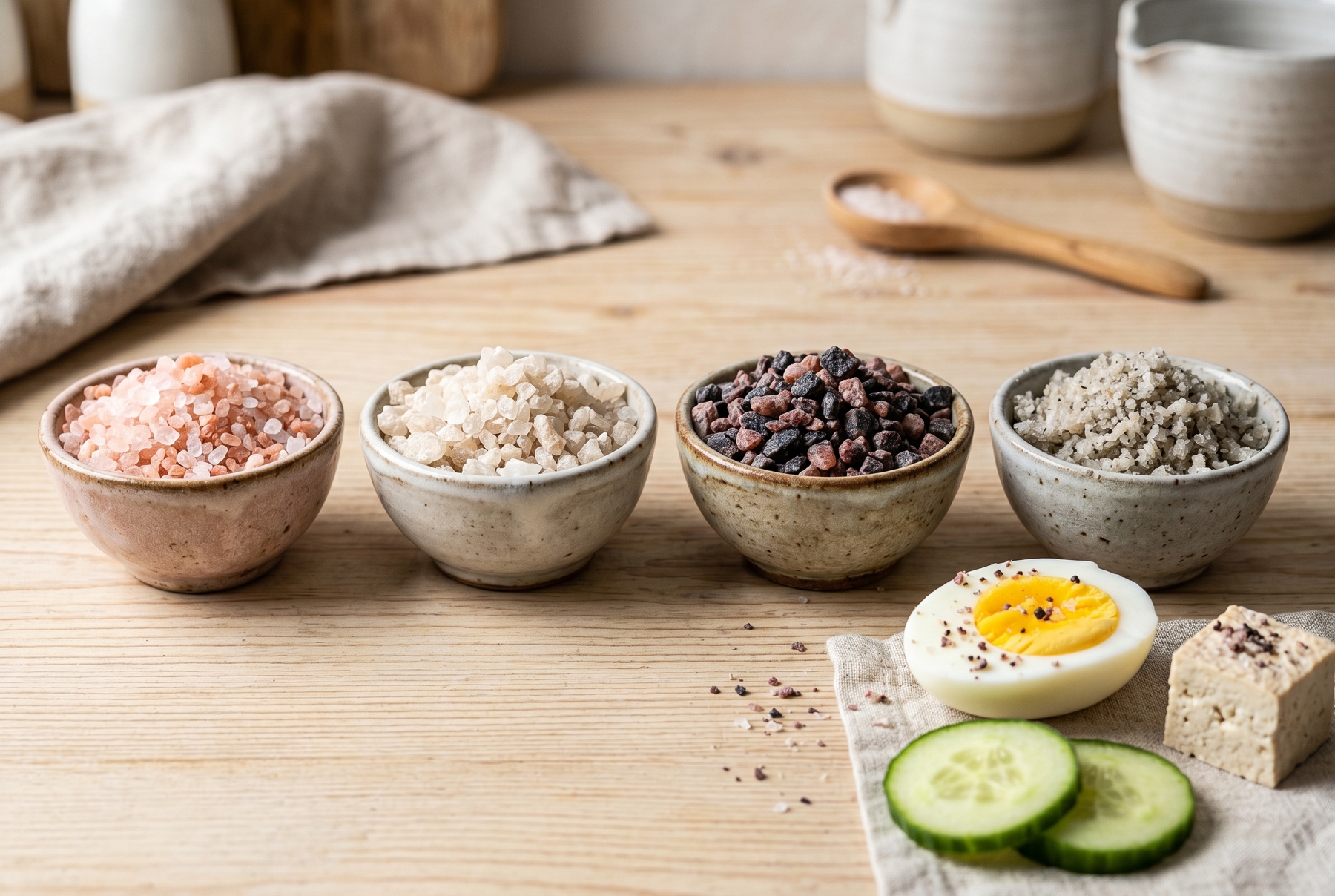
Pink, black, and gray salts hold value for their aesthetics and subtle flavor nuances, which reveal themselves best in finished dishes.
Kosher Salt: Why Chefs Love It
It Is Not More ‘Correct’ Than Others
In a culinary context, kosher salt gains its value from its large, flat crystals that feel comfortable between the fingers. This texture makes it highly convenient for seasoning meat, poultry, fish, and vegetables before roasting. Controlling a pinch becomes significantly easier. The crystals adhere well to moist meat or fish without rolling off.
Finding this salt outside of specialized stores can sometimes pose a challenge. The name itself creates confusion: it does not necessarily mean the salt holds rabbinical approval for all dishes. Its primary historical use involves koshering meat (removing blood according to kashrut). In the kitchen, its large, dry, flat, and additive-free crystals matter far more.
Where Its True Power Lies
Convenience remains its greatest asset. When salting a steak before searing, the pinch stays visible in your fingers, allowing for a more even distribution across the surface. Fine salt presents a challenge: it slips through the fingers, lands unevenly, and makes visual portion control much harder.
Without kosher salt on hand, look for a neutral coarse or medium salt devoid of strong flavors and featuring a comfortable grind. Coarse rock or sea salt works perfectly, as does an adjustable salt grinder.
How to Substitute Kosher Salt in American Recipes Without Oversalting
American recipes frequently call for kosher salt. Substituting it with the exact same volume of fine salt easily ruins the dish. A teaspoon of kosher salt weighs less than a teaspoon of extra-fine salt. Following a recipe that asks for ‘1 tablespoon kosher salt’ by pouring in a tablespoon of fine salt guarantees an overly salty result.
Converting the measurement by weight or seasoning gradually while tasting prevents this issue.
Flaked Salt, Fleur De Sel, and Other Finishing Touches
What Finishing Salt Actually Means
Finishing salt emerges at the very end, right before serving. It registers on the tongue, provides a crunch, delivers pinpoint salty accents, and remains visible on the food. Fleur de sel, Maldon salt, Cyprus flakes, and French floral salts all serve this exact final purpose.
Finishing salt does not require an expensive or exotic pedigree. The crucial factor lies in its inability to dissolve instantly, which imparts a noticeable texture.
Where It Genuinely Alters the Experience
A resting steak, removed from the heat and ready to serve, greatly benefits. Roasted beets, tomatoes, buttered toast, poached eggs, salted caramel, chocolate brownies, watermelon, and grilled fish all transform under its touch.
A dish will not fail without finishing salt, but it provides that final, satisfying salty snap.
How to Avoid Wasting It
Boiling water, soups, doughs, minced meat, marinades, and simmering sauces represent terrible destinations for finishing salt. Any environment where it dissolves completely calls for cheap, everyday table salt instead.
Finishing salt belongs on food that is fully prepared and requires no further heating.
Flavored, Smoked, and Garlic Salts: Salt or Seasoning?
When Flavored Salt Proves Useful
It offers a rapid way to finish a dish, season potatoes, eggs, fish, popcorn, or grilled vegetables. It provides a clear flavor accent without the need to pull out five different spice jars.
Svan salt (a traditional Georgian blend) combines salt, fenugreek, coriander, red pepper, and garlic. It elevates meat, khachapuri (Georgian cheese bread), vegetable dishes, and potatoes, imparting a recognizable Caucasian flavor profile. Keeping a jar handy makes sense for those who enjoy such combinations and frequently prepare Georgian-inspired dishes.
When You Are Staring at Marketing in a Jar
Consumers often pay a premium for a mixture of ordinary salt with dried herbs, flavorings, or spices that could easily be assembled fresher and cheaper at home. Reading the ingredient list reveals a lot. If a blend consists of 70% salt, 20% dry herbs of questionable freshness, and 10% artificial flavoring, its true value becomes highly debatable.
Focus on the basics: the salt ratio, the presence of flavorings, the aroma of the spices (three-year-old dried dill smells like nothing), and the price per 100 grams (3.5 oz).
Smoked Salt Easily Overpowers Flavors
Smoked salt introduces a smoky accent to dishes prepared without a grill. It shines in legumes, roasted vegetables, mushrooms, sauces, and meats—any dish requiring a subtle hint of smoke.
However, it overpowers delicate flavors rapidly. Smoked salt can easily crush the subtle taste of tender fish, salads, or eggs. Proceed with caution: start small, and add more if necessary.
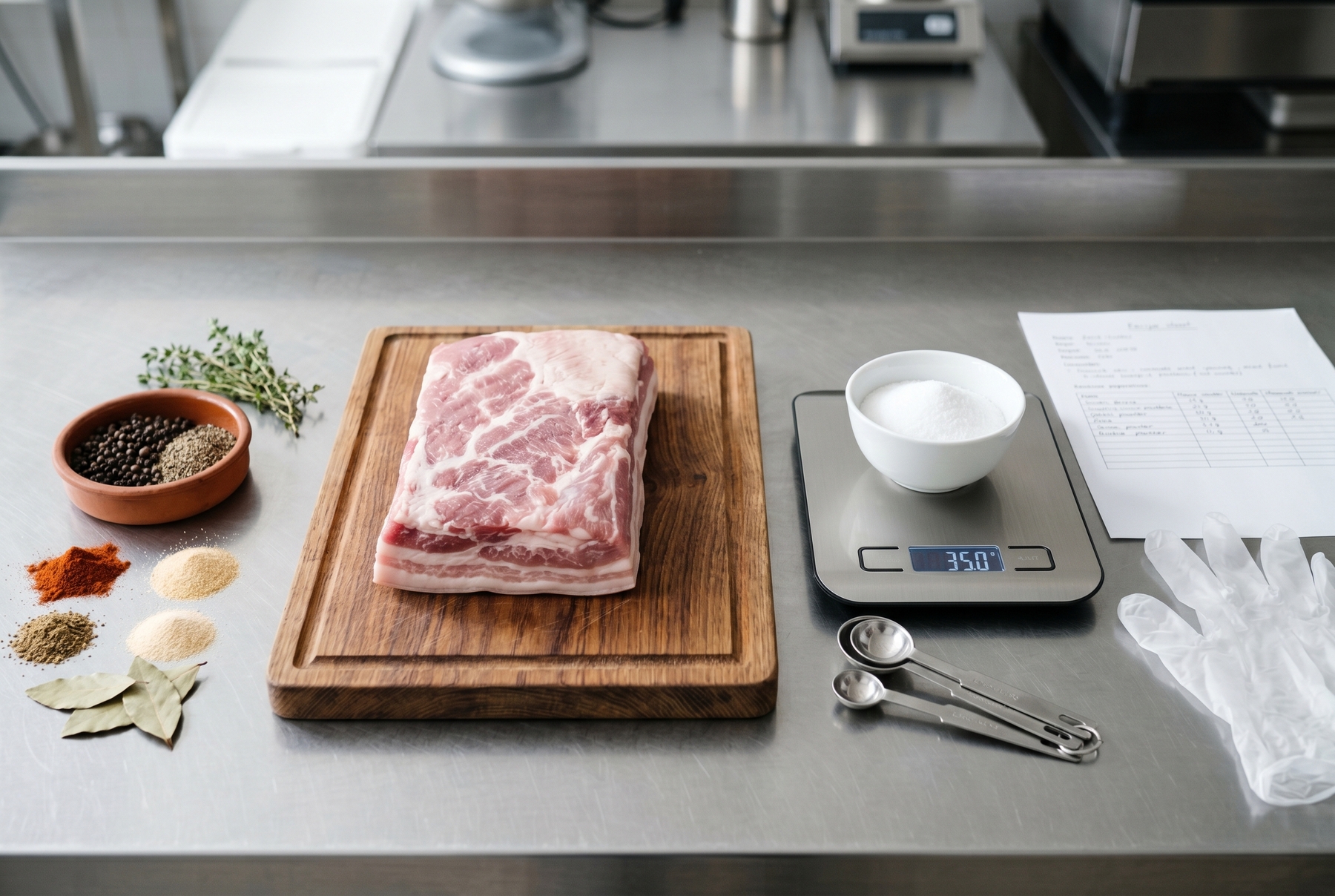
Curing salt functions as a technological tool for sausages and hams, demanding strict adherence to dosage and weight.
Curing Salt: Not a Universal Seasoning
Why It Exists
Curing salt (a mixture of regular salt and sodium nitrite), often called Prague Powder, serves specific technological purposes in sausages, hams, bacon, and other meat products. It preserves the pink color of the meat, helps develop the characteristic flavor, and inhibits the growth of certain bacteria, including the pathogen responsible for botulism.
Sprinkling curing salt on a salad or using it out of curiosity is a terrible idea. It functions strictly as a technological additive requiring rigid dosing.
Why Improvisation Fails Here
Curing salt demands tested recipes, precise weights, clear methodology, and standard dosages. It never replaces ordinary salt in everyday cooking and must never be measured by eye. Overdosing on nitrites poses severe health risks.
Making homemade sausage or bacon requires studying the process, purchasing curing salt with a clear nitrite concentration (typically 0.5–0.6% for standard European curing salt, or 6.25% for Prague Powder #1), and following a recipe from an author who understands charcuterie. Inventing your own dosages invites disaster.
How Salt Transforms a Dish Beyond Saltiness
Salt Draws Out Moisture
Salting cucumbers for a salad creates a puddle at the bottom of the bowl within ten minutes. Eggplants before frying behave exactly the same way. Salting fish prior to smoking dries it out and tightens the skin. Meat salted a day before roasting releases its juices to the surface, reabsorbs them partially, and grows denser, while its overall juiciness can actually increase given the right timing.
This proves helpful when removing excess water from vegetables to prevent a soggy salad, or when drying the surface of a fish to achieve a superior crust.
Salting a chicken breast half an hour before frying and failing to let the moisture return yields a terrible result: the meat turns out dry.
Salt Affects Proteins and Texture
Minced meat becomes noticeably stickier when salted and mixed thoroughly. The meat proteins partially dissolve, binding the water and helping the patties hold their shape. However, oversalting or mixing for too long turns the mixture rubbery.
Salting chicken 12 to 24 hours before cooking (dry brining) allows the salt to penetrate deeply and partially denature the proteins, enabling the meat to retain more moisture during heating. The final product ends up far juicier than meat salted right before searing.
Vegetables soaking in brine lose their crispness, becoming softer and more pliable.
Salt Enhances Sweetness and Balances Bitterness
A pinch of salt in a chocolate dessert forces the chocolate flavor to shine brighter. In caramel, it transforms flat sweetness into something voluminous and complex. Tomato sauces benefit from softened acidity and elevated sweetness. A tiny bit of salt in coffee significantly cuts the sharp bitterness.
Memorizing this like a multiplication table is unnecessary. Simply remember that salt does more than impart saltiness; it alters how the palate perceives sweet, sour, and bitter notes.
The Salt You Actually Need at Home
An Honest Basic Setup
- Versatile medium or fine salt for daily cooking. Soups, grains, pasta, sauces, and doughs demand it. A cheap box of standard rock or extra-fine table salt handles the job perfectly.
- Coarse salt for curing, roasting, meat, and fish. An adjustable grinder also works beautifully.
- Flaked finishing salt or fleur de sel—strictly optional. Buy it only if you genuinely use it on finished dishes rather than hoarding it as a souvenir.
- Iodized salt, provided it aligns with your dietary needs. Purchase it in small batches and use it fresh.
- Flavored or smoked salt—only if you reach for it at least once a week.
This serves as a practical working shelf, not a rigid dogma.
What You Can Skip Buying
Multiple varieties of ‘mineral’ salt that perform the exact same function. If your pantry already houses coarse sea salt, adding pink Himalayan salt with identical crystal size brings nothing new besides a color change.
Expensive sea salt for boiling pasta. It merely transforms into basic salted water.
Decorative salts lacking a clear culinary purpose. Black Hawaiian salt with charcoal, red clay salt, or lavender floral salt all look stunning in a jar, but without a plan for using them, they will collect dust on the shelf for years.
Massive 12-jar gift sets, unless you already know exactly how you plan to deploy each one.
How to Choose Salt at the Store
- Grind Size. Fine—for dough, sauces, and minced meat. Medium—versatile and universal. Coarse—for curing, meat, and fish.
- Ingredients. Salt, an anti-caking agent (if present), and iodine (if needed). A long, incomprehensible ingredient list requires closer inspection of the additives.
- Purpose. Establish why you need it: everyday cooking, finishing, curing, or smoking.
- Price per 100 Grams (3.5 oz). A gorgeous jar sometimes costs ten times more than a standard box holding the exact same contents.
- Packaging. Evaluate how easily it pours, stores, and seals.
- Shelf Life. This matters significantly for iodized and flavored varieties.
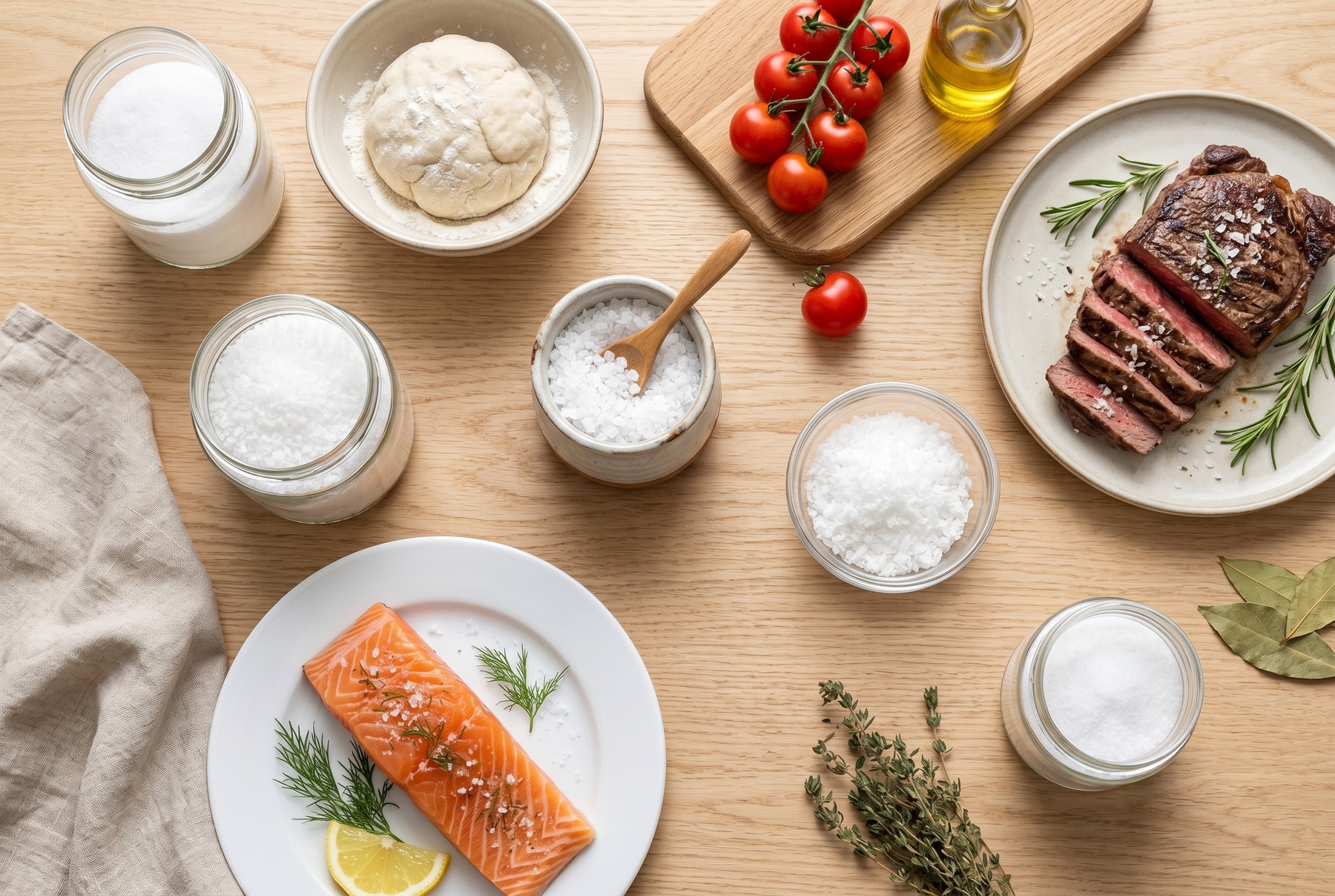
Flakes for steak, coarse salt for salmon, and fine salt for dough: choosing the right texture transforms the perception of a dish.
The Ultimate Cheat Sheet: Which Salt Goes Where
- Soups, grains, pasta, sauces—regular fine or medium salt.
- Meat and poultry before frying—coarse or medium salt, easy to pinch and distribute by hand.
- Fish—medium or coarse salt, timed carefully to avoid drying it out.
- Dough—fine salt for even dispersion.
- Curing and brines—the specific salt called for in the recipe, ideally free of extra additives like anti-caking agents or iodine.
- Finished steak, vegetables, salads, desserts—finishing salt.
- Dishes requiring a smoky accent—smoked salt.
- Sausages, ham, bacon—curing salt, strictly following established methodology.
Great cooking begins with understanding when salt should dissolve, when it should crunch, when it needs to draw out moisture, and when it just needs to honestly season potato water. A functional kitchen relies on a few reliable tools rather than a collection of legends: fine salt for dough, coarse salt for meat, and, if you genuinely put them to use, flakes for finishing.
Keeping everything else strictly for pleasure, as a souvenir, or for the sake of a beautiful jar is perfectly acceptable. The main rule remains simple: never dump that expensive beauty into a pot of boiling pasta water.
0 comments