
A hospital tray, a gray meat patty, overcooked carrots without a pinch of salt. That is the mental image most people conjure up when they hear the word “steamed,” and there is no point pretending this reputation came out of nowhere.
Yet the trouble with steamed food is not an inherent lack of flavor. For years, home cooks have expected steam to deliver results it simply cannot provide: a golden-brown surface, a roasted aroma, a satisfying crunch. None of that happens in a steamer. However, the texture that steam produces is difficult to achieve in a skillet and almost impossible to replicate in boiling water.
This guide is not about dieting. Instead, it explores which ingredients truly shine when cooked over steam—and when another cooking method makes much more sense.
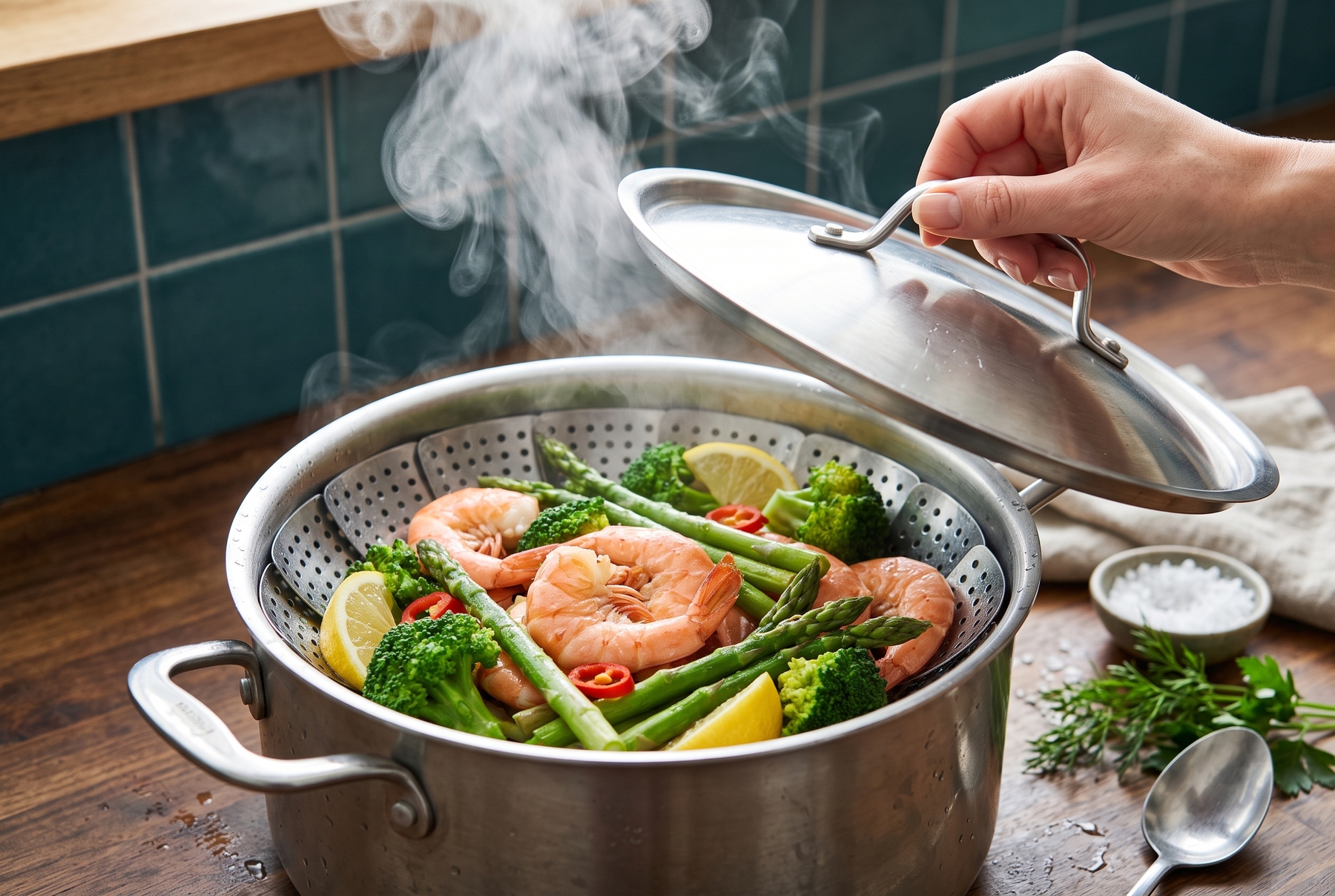
Steaming seafood and vegetables preserves their natural moisture, vibrant color, and tender-crisp texture.
Table of Contents
- What Happens to Food Over Boiling Water
- Steamed Fish: Where This Method Truly Shines
- Shrimp, Mussels, and the High Cost of One Extra Minute
- Doughs Designed Specifically for Steam
- Steamed Vegetables: When Vapor Beats Boiling
- Eggs: Steamed Custards and Silky Omelets
- Poultry and Ground Meat: Where Steam Works and Where It Fails
- Rice and Grains: Where True Steaming Ends and Confusion Begins
- What Reheats Beautifully Over Steam
- 7 Mistakes That Give Steaming a Bad Rap
- How to Steam Food Without a Dedicated Steamer
- Quick Cheat Sheet: Where to Start
What Happens to Food Over Boiling Water
In a steamer, food rests in a bath of hot, moist air. It does not swim, jostle against its neighbors in a churning pot, or touch searing-hot metal. Water constantly condenses around the ingredient, keeping its surface continuously hydrated.
Because of this environment, the exterior never dries out. Fish never develops that leathery, tough skin that often forms in an oven when the thin edges of a fillet lose their moisture long before the center cooks through.
Boiling leaches water-soluble flavor compounds and nutrients into the cooking liquid, which usually ends up down the drain. Steaming leaves nothing behind to pour out; almost all the natural juices stay locked inside the food.
Turbulent boiling water also batters delicate ingredients: tender fish fillets flake apart, dumplings stick together and tear, and green beans lose their snap and shape. Inside a steamer basket, everything remains completely still.
There is one major limitation: the temperature inside a standard steamer hovers around 100 °C (212 °F). At this relatively low temperature and high humidity, the Maillard reaction progresses far too slowly to produce any noticeable browning. You will not get a crust. Sometimes, though, that is hands-down the best outcome.
Steam is no cooler than boiling water, so the common claim that “steam is gentler” is only partially true. As vapor condenses on cold food, it transfers a massive amount of latent heat, cooking ingredients rapidly. The gentleness comes from the lack of physical agitation, minimal flavor loss, and the ease of dialing back the heat.
How to Tell When a Dish Does Not Need a Crust
When an ingredient’s greatest assets are tenderness, moisture, and a clean, pure flavor, steaming deserves serious consideration. When half the pleasure of eating a dish comes from a deeply browned, crispy exterior, steaming is the wrong tool for the job.
Steaming a steak makes no culinary sense. The same goes for potatoes when you are craving crunch. Over a pot of simmering water, chicken skin turns flabby and pale, and no amount of seasoning will ever fix it.
There is a third path: combination cooking. Steaming brings chicken to juicy perfection, and a quick thirty-second blast under the broiler crisps the skin. Consider Chinese shengjian bao—pan-fried soup dumplings whose bottoms get seared golden in a skillet while the tops steam to tender doneness under a lid. Steam handles the internal cooking, while a skillet or broiler delivers the final crust.
Steamed Fish: Where This Method Truly Shines
Lean white fish fillets are notoriously easy to overcook. They contain very little connective tissue, their proteins coagulate rapidly, and the window between succulent and sawdust-dry is measured in minutes—or mere seconds for thin cuts. In a frying pan, judging that window is tricky because the browned exterior hides what is happening inside.
Cod, pike-perch (zander), hake, and sea bream fillets behave predictably over steam. A 2 cm (3/4-inch) thick cut cooks through in 6–8 minutes over a gentle simmer. The flesh turns from translucent to opaque, and the flakes separate easily when nudged with a fork near the edge.
Salmon and trout are built differently: their higher fat content provides a buffer against drying out, though aggressive heat forces white albumin protein to squeeze out onto the surface in unsightly curds. Steaming minimizes this effect. The center stays moist, and the color transitions from vibrant orange-red to a soft, muted coral pink.
Whole small fish—such as sea bass, dorade, or trout—cook beautifully right on a heatproof plate, which catches every drop of savory juice. Cooking time ranges from 12 to 18 minutes depending on size. In a properly steamed whole fish, the flesh lifts effortlessly off the bone without falling apart into mush.
Standard food safety guidelines set the target internal temperature for fully cooked fish at 63 °C (145 °F) in the thickest part. While some chefs pull fish from the heat earlier for a more translucent center, anyone cooking for pregnant women, young children, or immunocompromised individuals should bring the center all the way to 63 °C (145 °F) without cutting corners for the sake of texture.
How to Make Steamed Fish Pop With Flavor
Relying on a pinch of salt at the very end leaves steamed fish tasting flat.
Salting the fillet 10–15 minutes before cooking makes a world of difference. The salt draws out a bit of surface moisture, dissolves, and reabsorbs into the flesh, seasoning it evenly while lightly firming up the outer layer.
Layering aromatics underneath and on top of the fish infuses it as it cooks: julienned ginger, scallion whites, cilantro stems, strips of lemon zest, or a couple of thyme sprigs work wonders. Underneath, the herbs and ginger elevate the fish slightly off the plate so heat circulates evenly; on top, they warm through and release their essential oils directly onto the flesh.
The real magic happens right after steaming. A classic Cantonese technique finishes the cooked fish with a generous scattering of fresh julienned scallions, a drizzle of soy sauce, and a spoonful of smoking-hot oil poured right over the top. The oil sizzles furiously, wilting the scallions on contact and unlocking their pungent aroma in fifteen seconds flat.
Mediterranean profiles work just as well: brown butter with capers, a vibrant parsley salsa verde, or good olive oil with fresh lemon juice. The underlying logic remains identical: steam builds the texture, and the finishing sauce brings the punch.
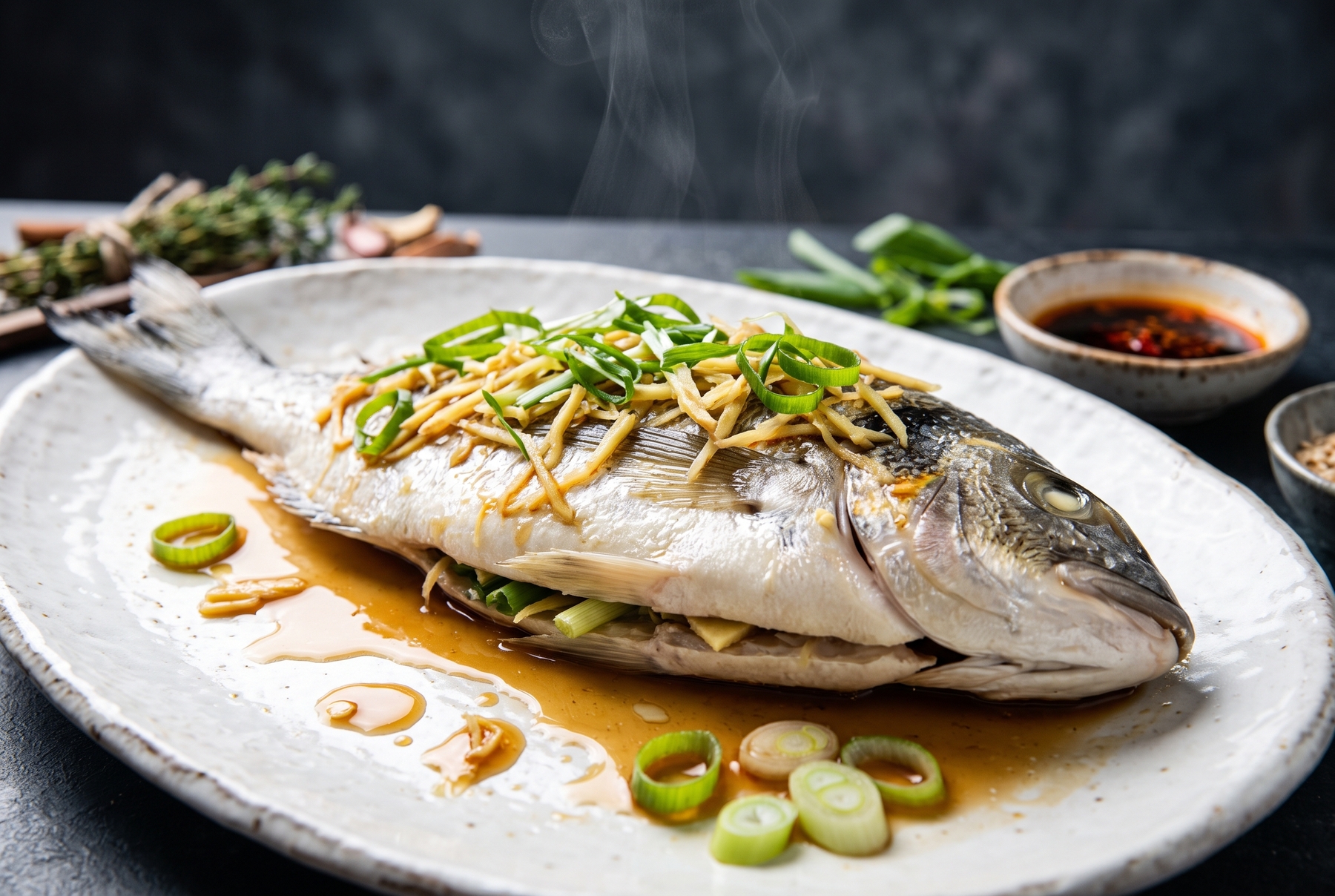
A whole fish steamed with julienned ginger, scallions, and a savory soy dressing.
Shrimp, Mussels, and the High Cost of One Extra Minute
Shrimp take to steam for the exact same reason fish does: they overcook in a heartbeat, and turbulent boiling water masks the visual cues of doneness. Medium peeled shrimp cook through over steam in 3–5 minutes. Shape is the best indicator here: a properly cooked shrimp curls into a loose “C” and turns pearly and opaque. Once it tightens into a closed “O,” it is overdone, and the texture has already turned rubbery.
Mussels and clams essentially steam in their own juices. A splash of wine or water in the bottom of a pot, a tight-fitting lid, and 4–6 minutes over high heat are all it takes. The shells pop open, leaving behind a briny, flavorful liquor at the bottom of the pot that forms an instant base for a pan sauce.
Scallops are a different story. The magic of a great scallop lies in the contrast between a deeply caramelized sear and a barely warm, translucent center—a job built for a cast-iron skillet. Steaming only makes sense when the scallops are destined for a chilled salad or a bright citrus ceviche-style dressing where a browned crust would feel out of place.
With squid, steaming offers no real advantage. Squid requires either flash-cooking for seconds or slow braising for tender results, and steam does nothing to bend that rule.
Doughs Designed Specifically for Steam
Certain culinary traditions revolve around doughs engineered specifically for moist heat.
Central Asian manti (large spiced meat dumplings), Buryat and Mongolian buuz (open-topped steamed dumplings), and Chinese baozi (fluffy yeast-leavened filled buns) vary in dough structure and folding style, yet they all rely on hot vapor without direct water contact.
Georgian khinkali and Russian pelmeni belong in a different category altogether; those dumplings are built for boiling water.
What Happens to Dough Inside a Steamer Basket
When dough designed for steaming hits boiling water, the surface turns waterlogged and slimy, and the seams easily burst open. Baking that same dough in a dry oven produces the opposite problem: a hard, dry crust forms on the outside before the filling finishes cooking.
Steam keeps dough supple and elastic. It heats evenly, holds its intricate pleats, and traps every drop of rich meat broth inside the wrapper.
Cooking times depend heavily on size: manti typically take 35–45 minutes, buuz need 20–25 minutes, and baozi finish in 12–15 minutes. However, thickly rolled wrappers, overcrowded steamer tiers, or partially frozen fillings can easily leave the centers cold. When steaming meat-filled dumplings, an instant-read thermometer is the safest bet. Standard food safety guidelines call for an internal temperature of 71 °C (160 °F) for ground beef, pork, and lamb, and 74 °C (165 °F) for ground poultry, measured right in the center of the filling.
When steaming dough, trouble usually starts in one of four places:
Sticking to the bottom. Brushing the steamer rack lightly with oil or lining it with perforated parchment paper prevents tearing. In Central Asia, cooks often rest dumplings on slices of raw carrot or cabbage leaves, which works brilliantly and adds subtle flavor.
Condensation dripping from the lid. Large water droplets falling from the lid onto the dough create gray, soggy craters. Wrapping the lid in a clean kitchen towel—securing the ends on top away from the burner—absorbs the moisture before it can drip.
Waterlogged bottoms. When the water underneath boils too violently, splashes reach the upper tiers, or the water level sits too close to the basket. Lowering the heat to a steady simmer and raising the steamer tier solves the issue.
Cooked filling, tough wrapper. This usually points to dough rolled too thickly or a cook lifting the lid too often. Every peek drops the internal temperature and hits the dough with a fresh wave of cooler condensation. If checking is necessary, doing it once midway through cooking—and doing it quickly—protects the texture.
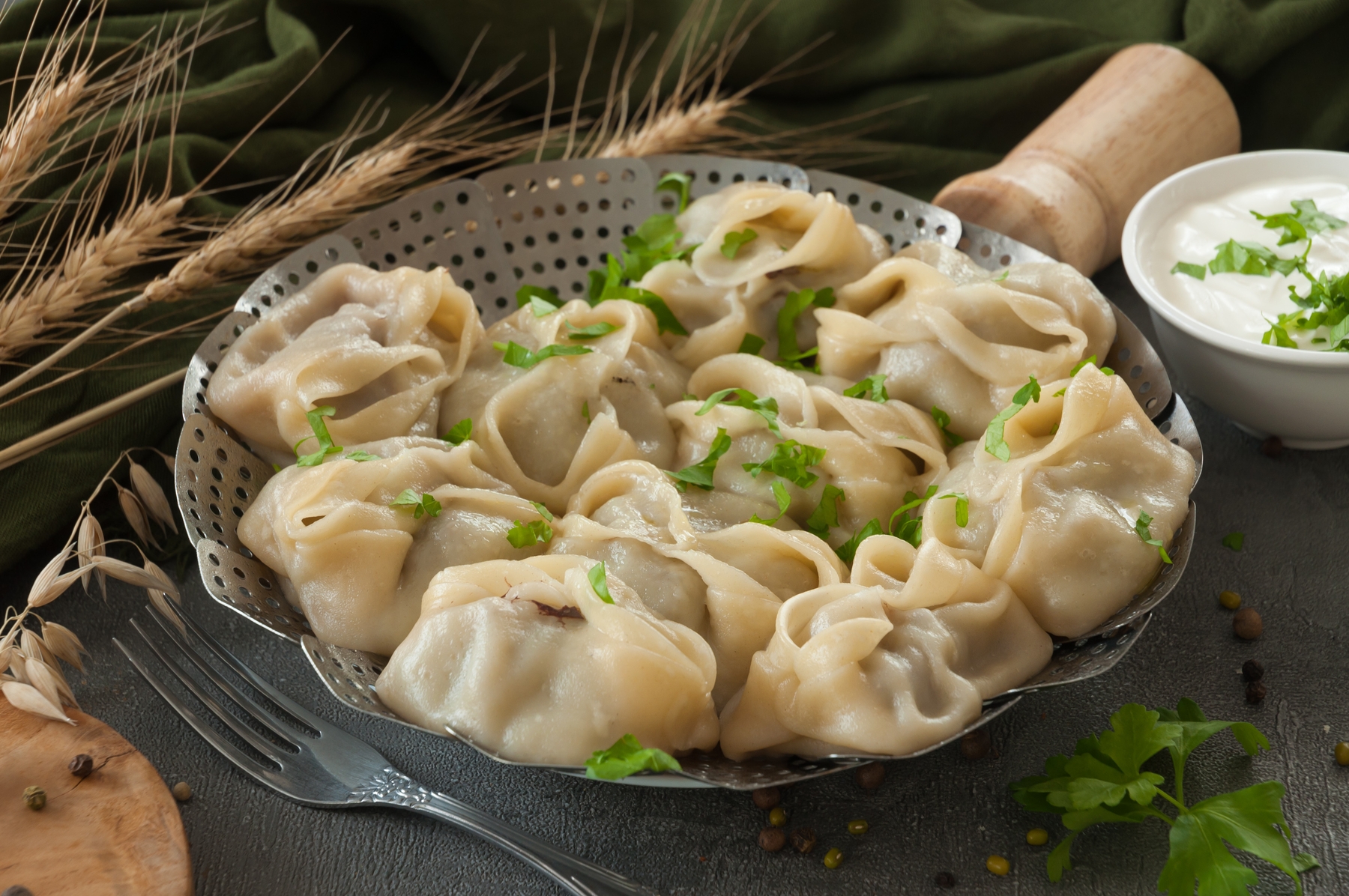
Steam keeps dumpling wrappers soft and elastic while locking the savory meat juices inside.
Steamed Vegetables: When Vapor Beats Boiling
Claiming that steaming “preserves 100% of nutrients” is an oversimplification; too much depends on the specific vegetable, cut size, and cooking time. The difference in flavor and texture, however, is obvious without a lab test.
Submerged in boiling water, broccoli absorbs excess liquid—its florets break apart and the stems turn waterlogged and mushy. In a steamer basket, that same broccoli turns vibrant emerald green in 4–5 minutes, and the tip of a paring knife slips into the stem with a pleasant, crisp-tender resistance. Leave it in for three minutes too long, though, and that bright broccoli fades to olive-gray and goes limp.
Cauliflower florets take 6–8 minutes, asparagus needs 3–4 minutes depending on spear thickness, green beans take 5–6 minutes, and fresh sugar snap peas need just two. Small florets cook twice as fast as large ones, making uniform knife work far more important than any timer setting.
How to Nail Vegetable Doneness
Color. Green vegetables turn brilliantly vivid during the first few minutes of steaming before gradually dulling into drab olive tones.
Resistance. The tip of a paring knife should slide into the thickest part of the stem with slight pressure rather than sinking in effortlessly.
Aroma. Brassicas like broccoli and cabbage smell subtly sweet at first; once a strong, sulfurous cabbage odor fills the kitchen, the vegetables are already overcooked.
The core test. Breaking a piece in half reveals the truth: the center should be warm all the way through while retaining slightly more bite than the edges.
Almost every steamed vegetable needs a bold finishing touch once it leaves the basket. Extra-virgin olive oil with flaky sea salt and lemon juice, melted garlic butter, toasted sliced almonds, freshly grated Parmesan, anchovies melted into warm oil, or a pinch of red pepper flakes all transform plain produce. Steam delivers the ideal toothsome texture; fat, acid, salt, and aromatics provide the excitement.
Eggs: Steamed Custards and Silky Omelets
Egg proteins hate aggressive heat. They coagulate within a narrow temperature window, and overheating forces the protein network to tighten and squeeze out moisture—leaving behind spongy holes, a rubbery bounce, and a watery puddle at the bottom of the bowl. That exact disaster happens whenever an omelet hits a scorching-hot pan for too long.
Over gentle steam, beaten eggs behave completely differently. The mixture sets into a porcelain-smooth custard that parts effortlessly under a spoon and gleams with a glossy sheen.
Japanese cuisine celebrates this technique in chawanmushi, a savory egg custard thinned with dashi broth at roughly a three-to-one liquid-to-egg ratio. Korean kitchens turn out gyeran-jjim (fluffy steamed egg casserole), while Chinese home cooks prepare silky “water eggs” (zheng shui dan) using warm water or stock. For an easy everyday version at home, whisking eggs with milk or broth and a pinch of salt, straining the mixture through a fine-mesh sieve to catch chalazae, covering the ramekin with foil, and steaming over low heat yields restaurant-worthy results.
Food safety guidelines set the benchmark for fully cooked egg dishes at 71 °C (160 °F). When cooking for pregnant women, young children, or older adults, verifying the center with a thermometer is much safer than relying on visual jiggle alone.
Dialing Back the Heat Is Non-Negotiable
Many cooks interpret “steam” as “crank the burner to high.” With eggs, a rolling boil guarantees failure. The water in the pot should barely murmur, with small bubbles gently trembling across the surface rather than churning violently.
Leaving the lid cracked slightly open or wrapping it in a kitchen towel prevents condensation from dripping onto the custard and pockmarking its mirror-smooth top.
When steaming eggs, controlling the simmer matters far more than owning fancy equipment. Turning the burner knob down lower than seems necessary is the secret to success.
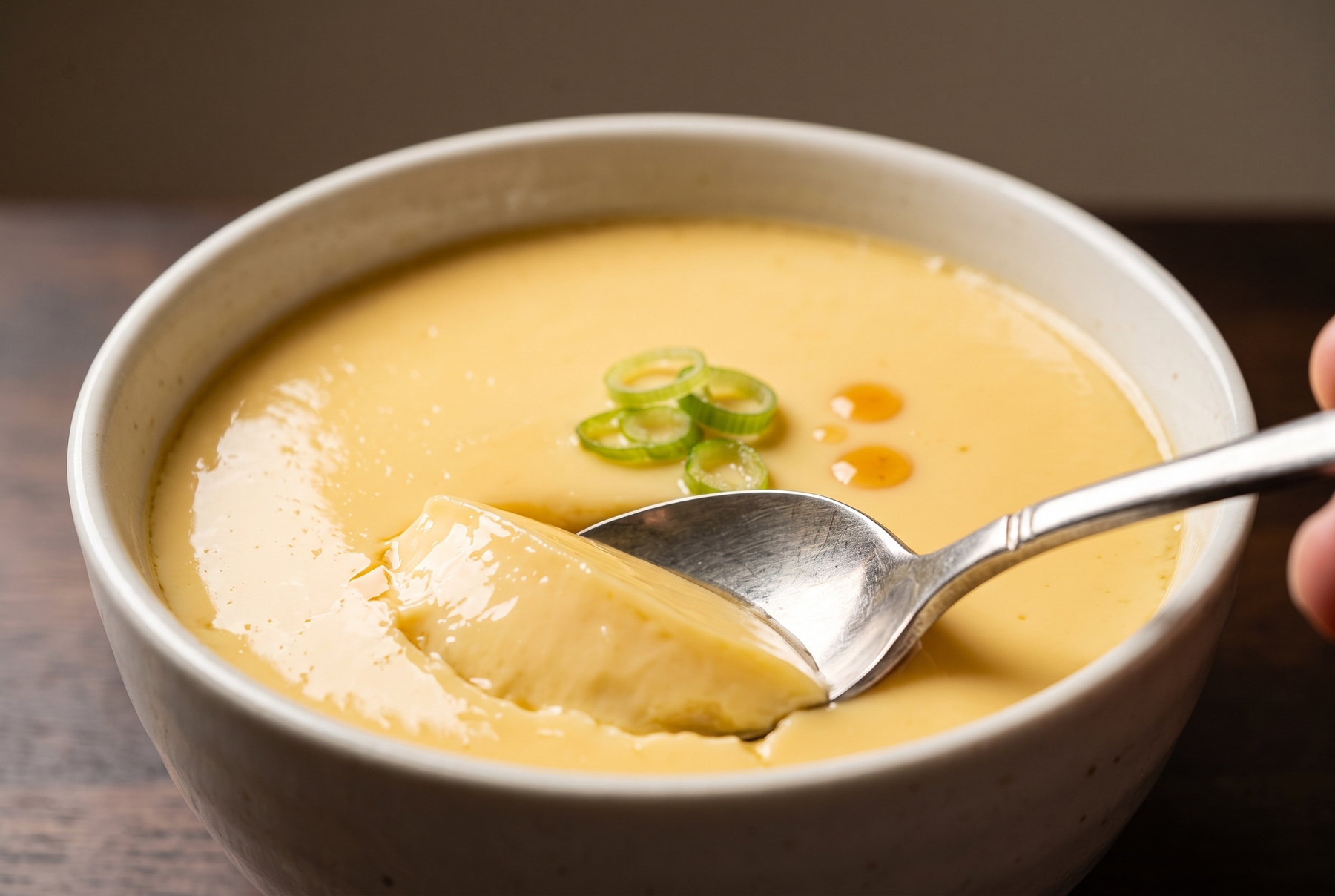
Gentle heat over simmering water transforms beaten eggs into a porcelain-smooth, silky custard.
Poultry and Ground Meat: Where Steam Works and Where It Fails
Boneless, skinless chicken breasts come out remarkably juicy over steam without brining or fuss: 12–15 minutes for an average fillet does the trick, ready to be sliced and draped in sauce. Because the safe internal temperature for poultry is 74 °C (165 °F), an instant-read thermometer is far more reliable than cutting into the meat to check the color.
Poultry quenelles, stuffed meat roulades, and ground meat patties stay much softer and moister in a steamer than they do in a skillet. Because a steamed patty lacks a seared crust to hold its shape and contribute savory Maillard notes, the ground meat mixture needs a slightly higher fat content and a bold, flavorful sauce. A rich mushroom gravy, a bright tomato ragù, or a creamy dill sauce bridges the gap. Serving a steamed meat patty naked on a plate recreates the exact dreary cafeteria meal mentioned at the start.
Being honest about the trade-offs saves disappointment. Breaded schnitzels, chicken wings, skin-on thighs, and pub-style burgers lose everything that makes them great when deprived of dry, high heat. Their entire appeal rests on rendered fat and a shattering, deeply browned crust.
Rice and Grains: Where True Steaming Ends and Confusion Begins
A standard electric rice cooker does not actually steam rice. It cooks grains via the absorption method: the rice simmers directly in measured water until the liquid disappears into the starch, and the “steam” label on the button merely refers to the final resting phase under a closed lid.
Certain grain traditions, however, rely on true vapor cooking. In Laos and northeastern Thailand, glutinous (sticky) rice soaks in water for several hours before steaming inside a conical woven bamboo basket suspended over a pot of boiling water. Across North Africa, traditional couscous steams in a perforated couscoussier set over a simmering pot of fragrant stew, gets fluffed with oil and water, and returns to the steam multiple times. Persian chelow starts out parboiled in salted water like pasta before being drained and steamed under a towel-wrapped lid to develop fluffy, separate grains.
In short, a “steam” button on an appliance rarely means the grain cooks purely by vapor.
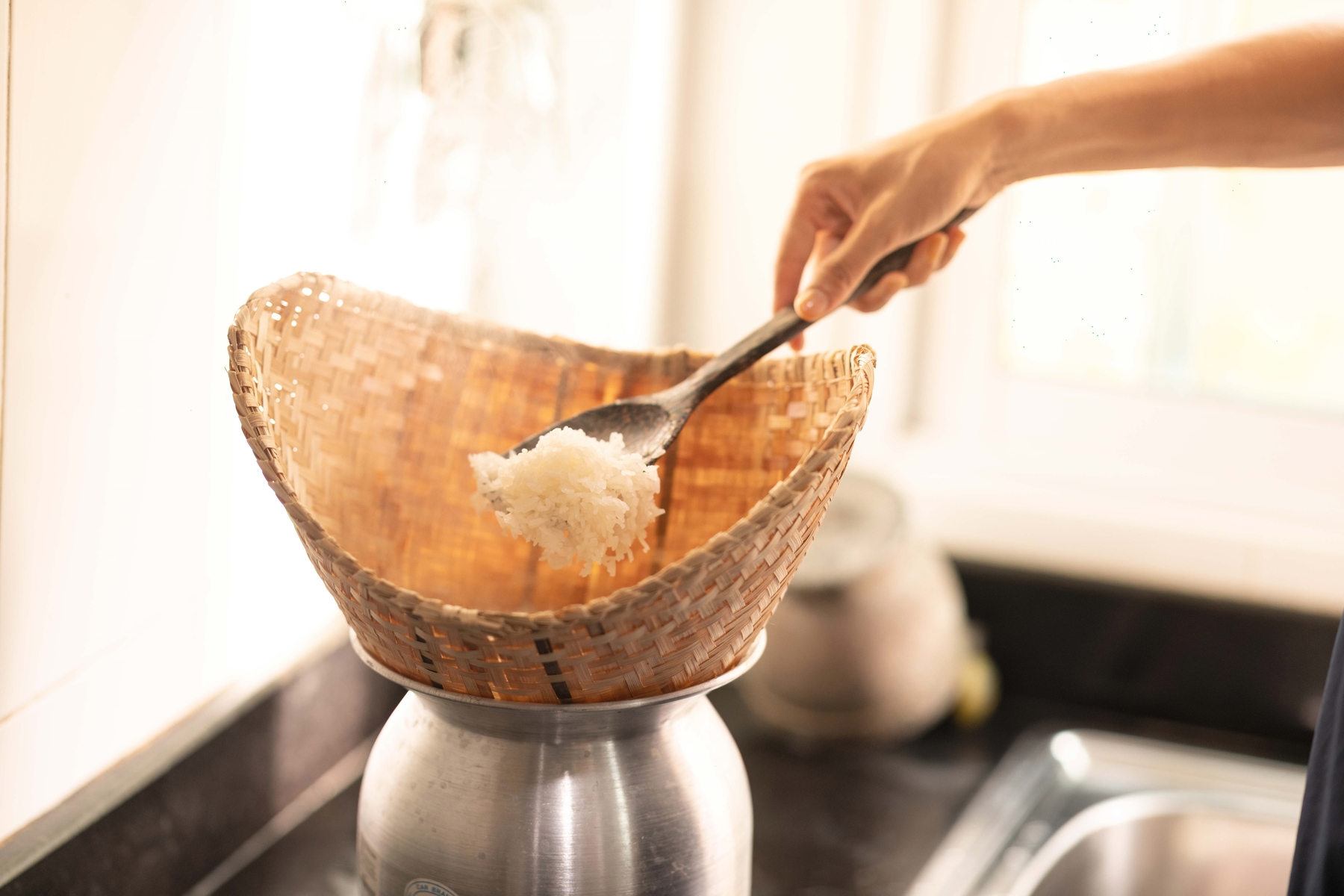
The traditional Southeast Asian method of steaming glutinous rice inside a woven bamboo basket.
What Reheats Beautifully Over Steam
Bread, yeast rolls, manti, boiled dumplings, and baked buns go stale not just from moisture evaporation, but from starch retrogradation—a process where starch molecules recrystallize and turn firm as they cool. A combination of gentle heat and moisture reverses this process, relaxing the starches back into a soft gel. Microwaves heat unevenly and often turn dough into tough rubber, while dry ovens simply toast stale bread into croutons.
Three minutes over steam brings leftover manti back to life: the wrappers turn supple again and regain their glossy sheen. However, a warm wrapper does not guarantee a hot center. Leftover meat fillings must be reheated all the way to 74 °C (165 °F) in the center rather than just “warm to the touch,” and large dumplings usually need more than three minutes to reach that mark. Day-old dinner rolls turn bakery-soft in two minutes flat. Leftover rice warms through much more gently in a steamer than in a skillet, regaining its tender bounce without drying out.
One crucial food safety note on rice: cooked rice must be cooled rapidly and refrigerated promptly. Leaving rice at room temperature allows Bacillus cereus bacteria to multiply and produce heat-stable toxins that no amount of reheating will destroy.
On the flip side, fried foods, pizza, crispy chebureki (deep-fried turnovers), and anything else built on crunch will turn soggy and limp in a steamer. A dry skillet or a hot oven is the only way to revive crispness.
7 Mistakes That Give Steaming a Bad Rap
- Boiling the water too violently. The telltale signs: water spots on the food, soggy patches, and misshapen dumplings. Dial the burner back to a calm, steady simmer.
- Overcrowding the basket. When pieces touch, steam cannot circulate freely, leaving food in the center undercooked. Leave a finger’s width of space between items and cook in batches if needed.
- Unevenly cut pieces. Thin edges dry out while thick centers remain raw. Cut vegetables uniformly, or arrange thicker portions toward the hotter outer perimeter of the basket.
- Lifting the lid every two minutes. Every peek vents trapped heat and stalls the cooking process. Check once midway through if necessary, then keep the lid closed.
- Ignoring dripping condensation. Falling water droplets leave gray craters in custards and doughs. Wrapping the lid in a clean towel catches the moisture.
- Serving food naked and unseasoned. Steamed ingredients almost always need a finishing hit of flaky salt, bright acid, and good fat right after cooking.
- Expecting roasted flavors from moist heat. When a dish needs a crust, pair steaming with a finishing sear in a hot skillet, under the broiler, or with a kitchen torch.
How to Steam Food Without a Dedicated Steamer
Buying a specialized countertop appliance is completely unnecessary; improvising a steamer from everyday kitchen gear takes seconds.
An inexpensive collapsible metal steamer basket fits inside almost any standard saucepan. A heatproof metal colander or fine-mesh sieve works just as well, provided it rests securely above the waterline and allows the pot lid to close on top. Woven bamboo steamers excel with dumplings and buns because the natural wood absorbs excess condensation instead of letting it drip. For silky egg custards, resting a heatproof plate on top of a twisted ring of aluminum foil inside a wide skillet creates an instant water-bath steamer.
A few universal rules apply to every improvised setup: the water must never touch the food, the rig must sit level without wobbling when the lid comes off, and the lid must fit snugly. If the pot runs low on water during a long steam, top it off with boiling water from a kettle to avoid dropping the temperature.
Finally, treat steam with respect: as hot vapor condenses on cooler skin, it releases a concentrated burst of heat that causes nasty burns. Always lift the lid away from your face, tilting the far edge up first to act as a shield.
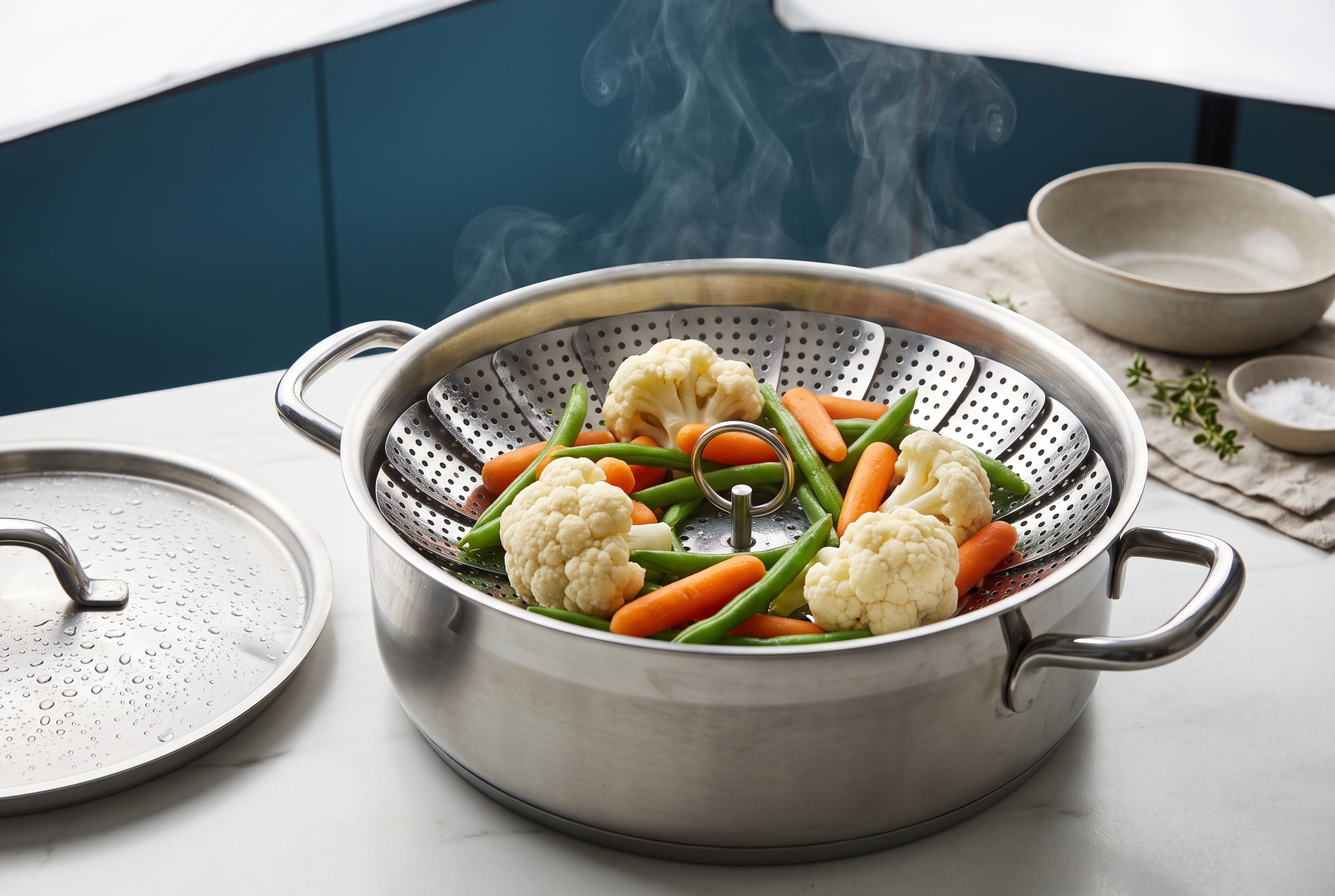
A simple collapsible metal steamer basket easily turns any standard saucepan into a versatile home steamer.
Quick Cheat Sheet: Where to Start
For maximum juiciness: White fish fillets, salmon, boneless chicken breasts. Judge doneness by opaque flesh and an instant-read thermometer.
For crisp-tender texture: Shrimp, mussels, spring vegetables. Watch the shape and vibrant color, and pull them off the heat a moment earlier than instinct suggests.
For supple dough: Manti, buuz, baozi, and reheated dumplings. Look for a glossy, elastic surface free of soggy wet spots.
For delicate custards: Savory egg custards, steamed omelets, tender poultry quenelles. Test for a gentle, uniform jiggle in the center when the dish is nudged.
For reviving leftovers: Day-old buns, crusty bread, leftover dumplings, and cooked rice. Check for a fresh aroma and a soft, springy yield when pressed.
The ultimate rule of thumb fits into a single sentence: when an ingredient’s value lies in tenderness, moisture, and clean flavor, steam belongs at the top of the list; when a dish relies on a crispy crust, deep caramelization, and roasted aromas, reach for dry heat—or combine the two.
0 comments