
In any supermarket from Oslo to Seoul, a jar filled with bright green paste sits on the shelf, and almost every shopper feels confident about the basics of pesto sauce: basil, pasta, Italy. That is where the misconceptions begin. The word pesto does not mean basil, pasta, or any specific ingredient at all. Instead, it describes a motion of the hand.
The Italian verb pestare translates to “to pound,” “to crush,” or “to grind.” It shares the same root as the familiar English word “pestle.” In other words, the label does not tell us what we are eating, but rather what was done to it. It is roughly equivalent to naming a sauce “Crushed” or “Pounded.”
This distinction goes far beyond philology. It dictates the flavor, texture, color, and the exact reason why some home cooks achieve a rich, aromatic sauce while others end up with a bitter green puddle. After fifteen years of walking through markets and professional kitchens, the same mistake still appears everywhere: people replicate the ingredient list while completely ignoring the method. Yet here, the method is the recipe.
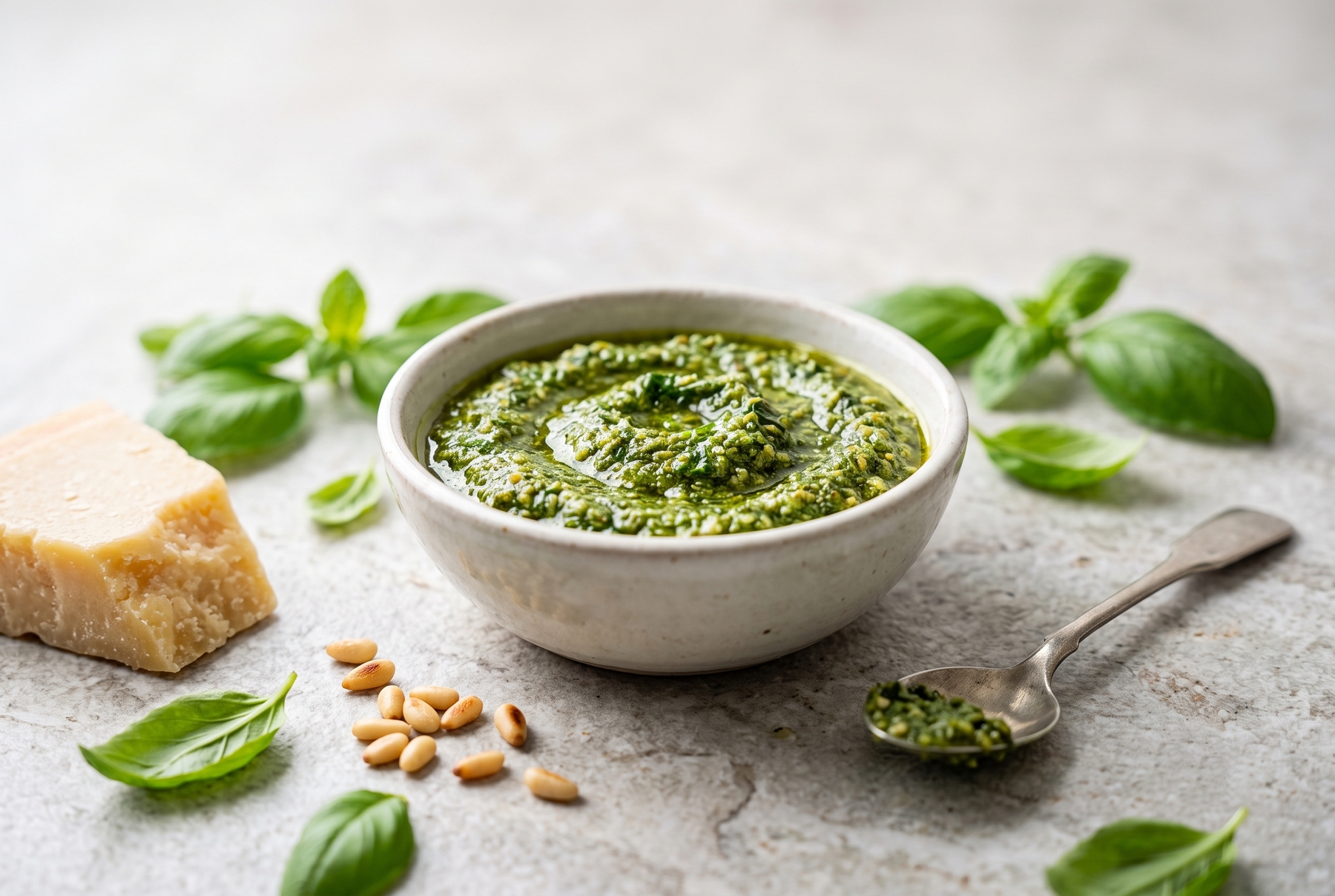
Classic Italian pesto made from fresh basil, pine nuts, Parmigiano, and extra-virgin olive oil.
Table of Contents
Pesto as a Technique, Not a Recipe
Why the Mortar Historically Outperforms the Blender
A knife slices. A blender chops and aerates simultaneously. A mortar crushes.
When a basil leaf meets the pestle, its cells do not get sliced open; they burst under pressure, releasing essential oils gradually and without friction heat. The metal blade of a blender spins at a speed that makes the bowl warm to the touch within thirty seconds. Heat plus oxygen plus bruised greens equals rapid oxidation: the sauce darkens right before your eyes, shifting from vibrant herbal green to the shade of swamp water.
A second, less obvious factor is also at play. Under aggressive high-speed blending, extra-virgin olive oil releases bitter polyphenols, giving the sauce that metallic harshness that cooks often blame on “bad basil.” In a mortar, the oil gets stirred in at the very end with a spoon, almost lazily. It coats the crushed solids rather than emulsifying into a mayonnaise-like suspension.
From this process emerges a universal formula that works for any pesto on earth: aromatic greens, fat (nuts and oil), salty umami (aged cheese), pungent heat (garlic), and coarse salt acting as an abrasive. Swapping out the individual ingredients changes the profile, but the structural roles remain identical. Removing the fat turns the sauce into wet herbal mulch; skipping the salty cheese leaves the flavor completely flat.
The Origins of Genoese Pesto (Pesto alla Genovese)
Liguria sits wedged between the Apennine Mountains and the Ligurian Sea. It is a narrow ribbon of land defined by steep coastal terraces, abundant sunshine, and a scarcity of flat pastureland. This rugged geography dictates the contents of the local pantry.
The basil grown here features small, tender leaves with a gentle aroma completely free of harsh anise or minty notes (locals take particular pride in the basil cultivated in the Pra’ district of Genoa). Olive oil from the Ligurian coast tastes delicate, buttery, and almost sweet, lacking the peppery throat-catch typical of Tuscan varieties. Italian pine nuts come from Mediterranean stone pines (Pinus pinea): these seeds are larger, softer, and milder than the smaller, more resinous Siberian pine nuts often sold in Northern and Eastern Europe. Finally, the traditional recipe calls for two distinct cheeses: aged cow’s milk Parmigiano-Reggiano from Parma and sharp sheep’s milk Pecorino Fiore Sardo from Sardinia, which contributes salinity and a pleasant tang.
The recipe in its recognizable modern form first appeared in Genoese cookbooks during the 19th century, although mortar-crushed pastes made from herbs, garlic, and nuts had circulated throughout the Mediterranean since Roman times. No historian can pinpoint the exact birth date of the sauce, and anyone claiming otherwise is likely repeating a romanticized culinary legend.
What matters more is practical reality. The classic ingredient list did not emerge from high-concept gastronomy, but simply from whatever grew within a thirty-minute walk of a Ligurian kitchen.
Why Pesto Conquered the World
What Makes the Flavor Instantly Recognizable
Holding a teaspoon of well-made pesto on the tongue reveals its architecture. First comes a bright, grassy, almost lawn-like herbal aroma. Immediately behind it, fat takes over: pine nuts and olive oil coat the palate, softening any sharp edges. Next, the aged cheese steps in with its crystalline saltiness and deep, savory umami finish. At the very end, raw garlic delivers a brief, clean prickle at the back of the throat.
Four distinct sensory signals fire within two seconds.
Its second superpower is sheer practicality. Pesto is concentrated to the extreme, containing almost no water. A single tablespoon transforms the flavor of an entire bowl of pasta because the cook is adding an extract rather than a diluted liquid. No cream- or tomato-based sauce operates with that kind of efficiency; those require a full ladle and simmering time.
Why It Fits the Modern Kitchen So Effortlessly
Making fresh pesto takes 10 to 15 minutes without ever turning on the stove. There is no stock to simmer, no mirepoix to sweat, and no reduction to monitor. It keeps in the refrigerator for several days, freezes beautifully for months, and pairs effortlessly with pasta, potatoes, fish, chicken, crusty bread, eggs, roasted vegetables, and soups.
Most importantly, it rescues boring food. Plain boiled potatoes become a dish worth sitting down for. Poached chicken breast stops feeling like a dietary punishment. A condiment capable of elevating humble everyday ingredients always holds the highest chance of going global.
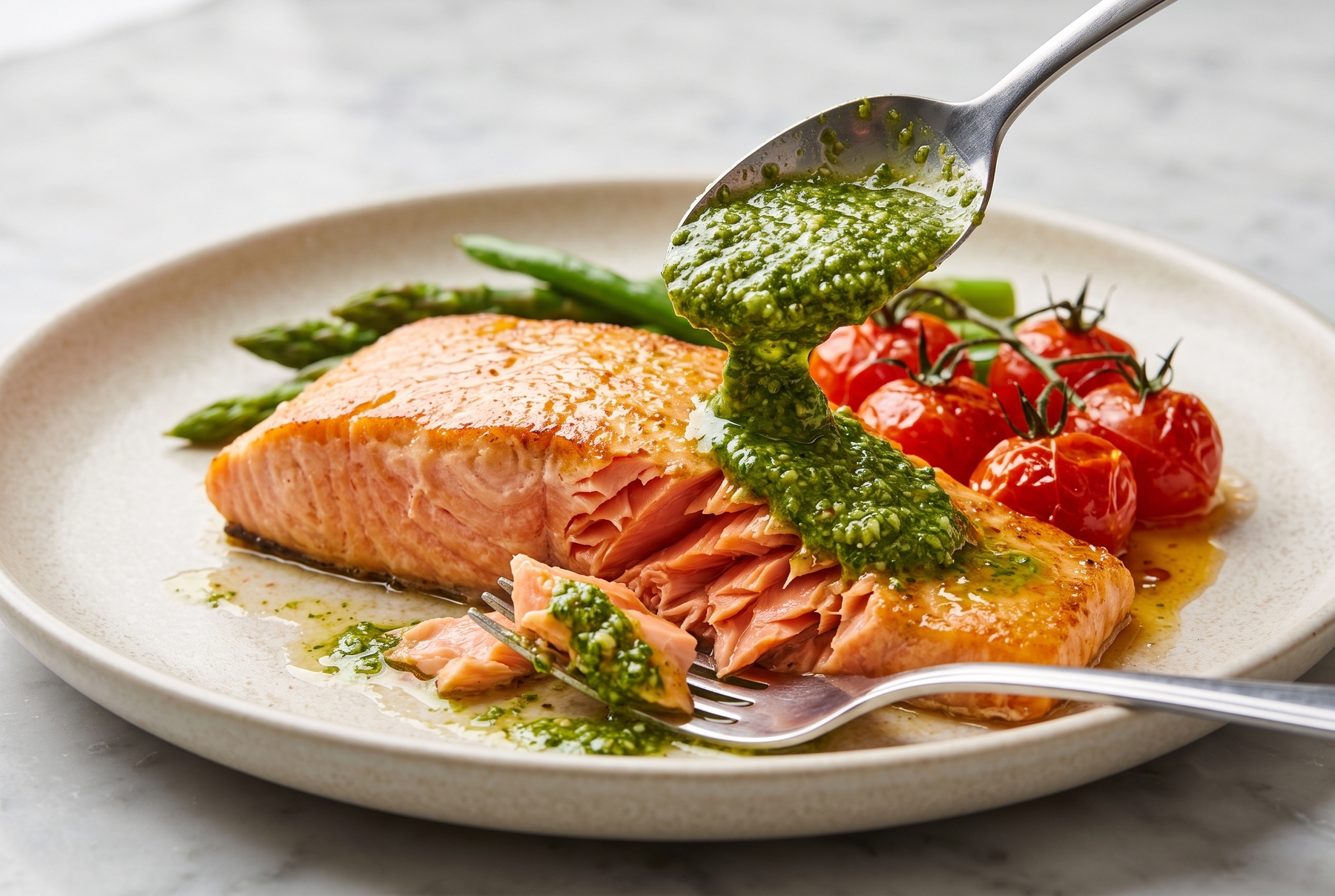
Pesto pairs effortlessly with fish: a spoonful of sauce over a hot salmon fillet unlocks its rich herbal aroma.
The Anatomy of Classic Pesto
Basil drives both the aroma and the color. Small, young leaves yield the sweetest flavor; large, leathery leaves grown in winter greenhouses often carry a licorice-like anise note that turns harsh once crushed. Washing the leaves thoroughly and drying them completely—first on a kitchen towel, then air-drying for ten minutes—is essential, as residual water dilutes the oil and accelerates browning. When only tough basil is available, replacing a third of the volume with baby spinach or flat-leaf parsley preserves the basil aroma while eliminating bitterness.
Parmigiano-Reggiano and Pecorino supply salt, umami, and structural body. Parmigiano brings savory depth and a nutty dryness, while Pecorino delivers a sharp, salty punch. The classic ratio sits at roughly two parts Parmigiano to one part Pecorino. Grana Padano or another hard, well-aged grating cheese works as a substitute, whereas young, semi-soft cheeses melt into a sticky, stringy mass when mixed with warm pasta. Grating the cheese finely ensures it dissolves seamlessly into the oil instead of feeling gritty on the teeth.
Pine nuts function like heavy cream. Soft, oil-rich, and subtly sweet, they bind the crushed herbs and cheese into a unified emulsion. One practical caveat from experience: cheap pine nuts of questionable origin (specifically certain inedible species like Pinus armandii) occasionally cause “pine mouth,” a harmless but unpleasant metallic aftertaste that lingers for days. Sourcing pine nuts from reputable suppliers prevents this issue entirely.
Garlic provides necessary pungency, yet it remains the ingredient most likely to ruin the batch. Crushed raw garlic grows fiercer with every passing minute. For a large bunch of basil, a single clove—or two at most, if using mild spring garlic—is plenty. When working with older winter garlic that has sprouted a green germ in the center, splitting the clove and removing that bitter core keeps the sauce balanced.
Extra-virgin olive oil carries the fat-soluble aromas and builds the texture. A mild, fruity oil works best here; an aggressive, peppery oil in a raw sauce overwhelms delicate herbs and amplifies bitterness. Pouring the oil gradually while watching the consistency keeps the emulsion stable.
Coarse sea salt in the mortar does more than season the dish; its crystals act as miniature grinding stones that tear through tough plant fibers. Because both cheeses already contribute substantial salinity, adding salt requires a light hand.
6 Pesto Varieties Worth Knowing
Every variation follows the exact same structural blueprint, simply swapping out the players inside each role.
Red Pesto (Pesto Rosso)
Sicilian culinary logic replaces the mountain of fresh basil with oil-packed sun-dried tomatoes. A complete batch combines sun-dried tomatoes, almonds in place of pine nuts, a small handful of basil for lift, Parmigiano or Pecorino, a garlic clove, and olive oil. The resulting paste tastes dense, sweet-tart, and intensely savory. Where green pesto refreshes the palate, red pesto brings rich warmth.
It performs brilliantly alongside short tubular pasta, roasted eggplant, grilled chicken, and fresh cheeses like burrata or ricotta. If the sun-dried tomatoes taste overly salty, soaking them in warm water for 10 minutes and patting them dry before grinding solves the problem, leaving final salt adjustments until the very end.
Arugula Pesto
Arugula introduces a peppery bite and an assertive backbone that sweet basil lacks when paired with rich meats. Combining fresh arugula, walnuts or pine nuts, Parmigiano, garlic, and olive oil creates a vibrant, punchy condiment. Mixing arugula fifty-fifty with basil or flat-leaf parsley tames its natural aggression, while a squeeze of fresh lemon juice at the end counterbalances the bitterness.
This version outshines classic pesto wherever animal fat is involved: ribeye steak, roasted pork shoulder, duck breast, or crispy roast potatoes. Delicate white fish, however, will get completely overpowered by arugula.
Parsley Pesto
This is the smartest everyday option in the dead of February, when supermarket basil costs as much as truffles and smells like nothing. Flat-leaf parsley leaves (stripped from their fibrous stems), walnuts or hulled sunflower seeds, Parmigiano, garlic, olive oil, and freshly grated lemon zest come together effortlessly. Parsley delivers clean herbal brightness without any anise undertones, holds its emerald color far longer than basil, and costs pennies.
It shines spooned over boiled potatoes, vegetable soups, baked white fish, and poached beef. Skipping the lemon zest is a mistake, as the sauce tastes noticeably flat without citrus aromatics.
Cilantro Pesto
At this point, Italian tradition leaves the room entirely. Fresh cilantro, walnuts (or roasted peanuts), garlic, neutral or olive oil, and fresh lime juice steer the profile toward the Caucasus and Southeast Asia, making it a phenomenal match for rice noodles, grilled shrimp, crispy tofu, chicken thighs, and coconut milk soups. Cheese is usually omitted here because aged dairy clashes with sharp citrus acidity; instead, flaky salt or a splash of soy sauce handles the savory role.
Trimming away the thick lower stems near the root removes any muddy, earthy aftertaste. Because cilantro’s volatile aromatics dissipate much faster than basil’s, this sauce is best eaten fresh rather than stored.
Ramps, Spinach, and Beet Green Variations
Ramps (wild spring garlic, Allium tricoccum) make a sauce garlicky by definition, meaning raw garlic cloves should be left out completely. The remaining formula stays intact: ramp leaves, pine nuts or walnuts, Parmigiano, salt, and olive oil. The result is a dense, untamed spring condiment that belongs on soft-boiled eggs and new potatoes.
Spinach carries almost no assertive flavor of its own, yet it provides lush body and deep forest-green color. Blending spinach half-and-half with basil stretches expensive herbs, while mild nuts like cashews or blanched almonds prevent overpowering the delicate base.
Beet tops and feathery carrot greens step in nicely for zero-waste cooking; pairing them with robust walnuts and sharp Pecorino masks their natural earthiness. Blanching tough root-vegetable tops in boiling water for 20 to 30 seconds before shocking them in ice water softens their texture considerably.
Successful improvisations almost always rely on contrast: pairing a neutral green with a pungent one, a mild cheese with a sharp one, or a sweet nut with a bitter herb.
Choosing the Right Nuts for Pesto
Walnuts make the sauce denser and earthier with a tannic, slightly bitter finish (rubbing off the papery skins after toasting smooths out the flavor). Almonds contribute gentle sweetness and a clean, neutral backdrop, making them the ideal anchor for sun-dried tomato pesto. Hazelnuts bring a distinct roasted aroma, especially when warmed in a dry skillet until fragrant. Cashews create a remarkably creamy texture and a mild, rounded flavor that appeals to children and anyone sensitive to sharp greens. Pistachios yield a striking lime-green hue and a buttery sweetness that naturally complements seafood and delicate pasta shapes.
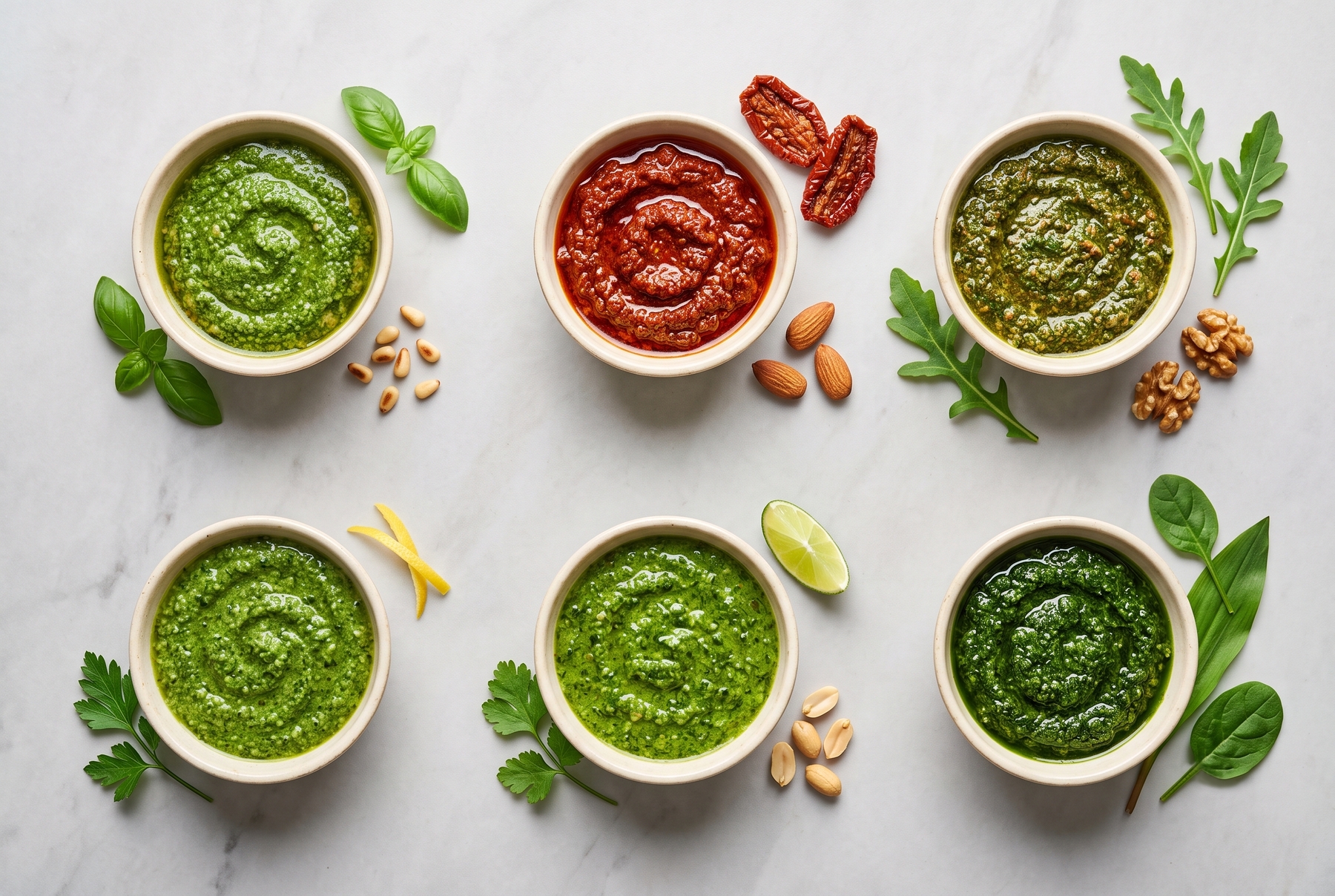
A spectrum of pesto styles: from traditional Genoese green and Sicilian red to variations made with arugula, cilantro, and parsley.
How to Use Pesto
Pasta
One rule governs everything here: never cook the sauce. Draining the al dente pasta, returning it to a warm (not scorching hot) pot or mixing bowl off the heat, and tossing it with pesto alongside two or three tablespoons of starchy pasta cooking water is the only proper technique.
That starchy water acts as an emulsifier. It transforms a thick, oily paste into a glossy sauce that clings to every strand of pasta instead of sliding to the bottom of the bowl in a greasy pool. Exposing pesto to boiling heat instantly kills the fresh basil aromatics and causes the finely grated cheese to clump into rubbery strings.
In Liguria, cooks traditionally boil cubed potatoes and trimmed green beans in the exact same pot as the pasta (typically trofie or trenette) before tossing everything together with pesto. Combining starch on starch sounds unusual right up until the first bite.
Meat, Fish, and Vegetables
Chicken and pesto work together in two distinct ways. First, rubbing the sauce under the skin of chicken breasts or thighs before roasting bastes the meat in herbal fat. Second, spooning fresh pesto over hot, resting meat right off the grill allows residual heat to bloom the aromatics without scorching them.
Fish prefers more restrained pesto profiles built on parsley, pistachios, or almonds. Spreading a thin layer over cod or salmon fillets before baking creates a fragrant, savory green crust.
Roasted vegetables only need a generous spoonful tossed directly onto the hot sheet pan the moment it comes out of the oven. Cauliflower, broccoli, zucchini, and bell peppers absorb the oil immediately, filling the kitchen with the scent of toasted nuts and warm basil.
Potatoes deserve special mention. Steaming young new potatoes, crushing them lightly with a fork, and finishing them with flaky salt and a dollop of pesto represents simple home cooking at its absolute peak.
Bread, Eggs, Soups, and Beyond
Bruschetta succeeds through smart layering: toasted country bread, a barrier layer of pesto, and something juicy or creamy on top (fresh mozzarella, ripe tomatoes, or whipped ricotta). The oil-rich sauce prevents the bread crumb from turning soggy.
Inside a sandwich, pesto replaces mayonnaise and brings far more complexity. For omelets or scrambled eggs, folding a spoonful in after turning off the burner preserves its vibrant color. A poached egg set over pesto-smeared toast looks like a bistro brunch dish while taking five minutes to assemble.
In soups, pesto serves as the final garnish stirred directly into the hot bowl—elevating vegetable broths, white bean stews, minestrone, and pureed squash soups. In Provence, this exact practice defines soupe au pistou, featuring the French cousin of pesto made without nuts and often without cheese.
On pizza, pesto works either as a base alternative to tomato sauce or dabbed in small spoonfuls across the hot pie right after it leaves the oven. Whisking pesto one-to-one with lemon juice and extra olive oil turns it into a bright salad vinaigrette.
Even a single leftover spoonful pulls its weight. Stirring it into sour cream or Greek yogurt creates an instant vegetable dip. Beating it into softened butter, rolling it into a cylinder in plastic wrap, and freezing it yields compound butter coins ready to melt over hot steaks. Kneading it into flatbread dough, tossing it with breadcrumbs for a savory gratin topping, or folding it into steaming hot white rice are all effortless upgrades.
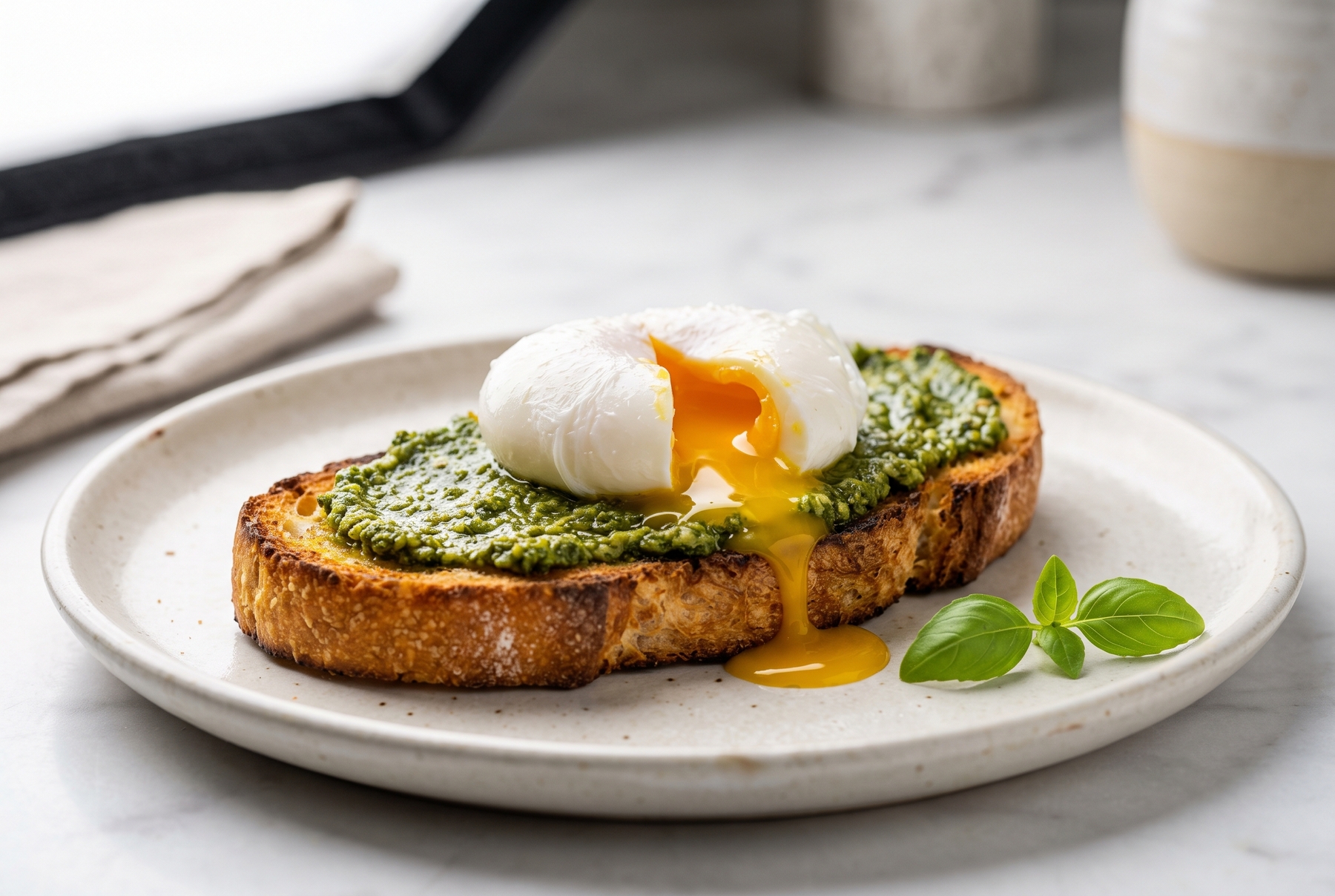
Bruschetta layered with aromatic pesto and a runny poached egg makes a simple, satisfying breakfast.
How to Make Pesto at Home
Mortar vs. Blender
A mortar and pestle delivers the superior result in exchange for 15 minutes of manual labor. The texture remains rustic and nubby, with recognizable flecks of nuts and herbs, while the flavor stays sweet and vibrant. A heavy marble mortar paired with a wooden pestle is the Ligurian standard, though any weighty mortar with a rough, unpolished interior works well; smooth glazed ceramic simply lets the leaves slide around.
A blender or food processor saves time and produces a smoother, almost creamy emulsion. Pulsing the machine in short two- to three-second bursts gives the bowl time to stay cool between rotations. Chilling the blade and processor bowl in the freezer for 10 minutes beforehand provides extra insurance against heat damage, and folding the olive oil in by hand at the very end prevents bitter over-emulsification.
In all honesty, while a difference exists, it is not monumental. A blender pesto made with care and temperature control will always beat a mortar pesto rushed through impatiently.
Classic Pesto Recipe (Serves 4 with Pasta)
Ingredients:
- 60 g (2 oz) fresh basil leaves (about two large bunches, stems removed)
- 40 g (1.4 oz) finely grated Parmigiano-Reggiano
- 20 g (0.7 oz) finely grated Pecorino (preferably Fiore Sardo or Romano)
- 30 g (1 oz) pine nuts
- 1 garlic clove, peeled
- 100–120 ml (3.5–4 fl oz) mild extra-virgin olive oil
- 1/2 tsp coarse sea salt
Method:
- Washing the basil in cold water and drying every leaf thoroughly is the first step, as wet leaves result in a watery, unstable sauce.
- Warming the pine nuts in a dry skillet over medium-low heat for 1 to 2 minutes releases their aroma without browning them, after which they must cool completely.
- Pounding the garlic and coarse salt together in the mortar creates a smooth paste, with the salt crystals acting as an abrasive.
- Adding the cooled pine nuts and grinding them with the pestle produces a coarse, textured paste with visible flecks.
- Introducing the basil in small handfuls and grinding the leaves against the walls of the mortar in a circular motion tears the fibers rather than chopping them, turning the mixture bright emerald and visibly glossy.
- Folding in both grated cheeses with a spoon builds the savory body.
- Drizzling in the olive oil in a thin, steady stream while stirring continuously brings the sauce together into a cohesive, pourable emulsion.
Properly made pesto shows a deep, vibrant herbal green without brown oxidized edges. The aroma shifts noticeably the moment the cheese hits the bowl, adding a salty, lactic richness to the sweet basil. The ideal consistency allows the sauce to slide slowly off a spoon while leaving a thick coating behind. If the mixture feels too stiff, stirring in olive oil a teaspoon at a time loosens it; if it runs too thin, a spoonful of finely ground nuts or extra cheese tightens it right up.
Tasting for final salt adjustments happens only at the very end, after the cheese is fully incorporated.
6 Common Mistakes and How to Fix Them
An overheated blender. The sauce turns dull olive-drab and tastes bitter. While oxidation cannot be reversed completely, folding in extra grated cheese and a handful of finely ground nuts masks the bitterness and restores balance. Next time, chilling the bowl and using short pulses prevents friction heat.
Too much garlic. The sauce burns the throat and overpowers every other ingredient. Expanding the batch with more fresh greens, nuts, cheese, and oil dilutes the harshness. For future batches, blanching the peeled garlic clove in boiling water for 30 seconds removes aggressive raw bite while keeping the savory aroma.
Excess olive oil. The emulsion breaks, leaving a slick puddle of oil floating on top. Stirring in extra finely ground nuts or grated cheese absorbs the free fat and pulls the sauce back together.
Oversalting. This almost always happens when a cook seasons heavily before adding the salty aged cheeses. Fixing an oversalted batch requires folding in an unsalted buffer: a couple of tablespoons of mashed boiled potato, a dollop of fresh ricotta, or an extra portion of crushed greens and nuts.
Bitter greens. Mature arugula, beet tops, or older parsley stems sometimes carry natural bitterness. Blanching the greens in boiling water for 15 to 20 seconds, shocking them immediately in ice water, and squeezing them bone-dry flushes out bitter compounds and locks in bright chlorophyll.
Flawed texture. If over-blending turns the sauce into a featureless baby-food puree, folding in a spoonful of hand-chopped toasted nuts restores pleasant crunch. If the sauce clumps into oily curds on hot pasta, tossing it vigorously with a splash of starchy pasta cooking water smooths it out instantly.
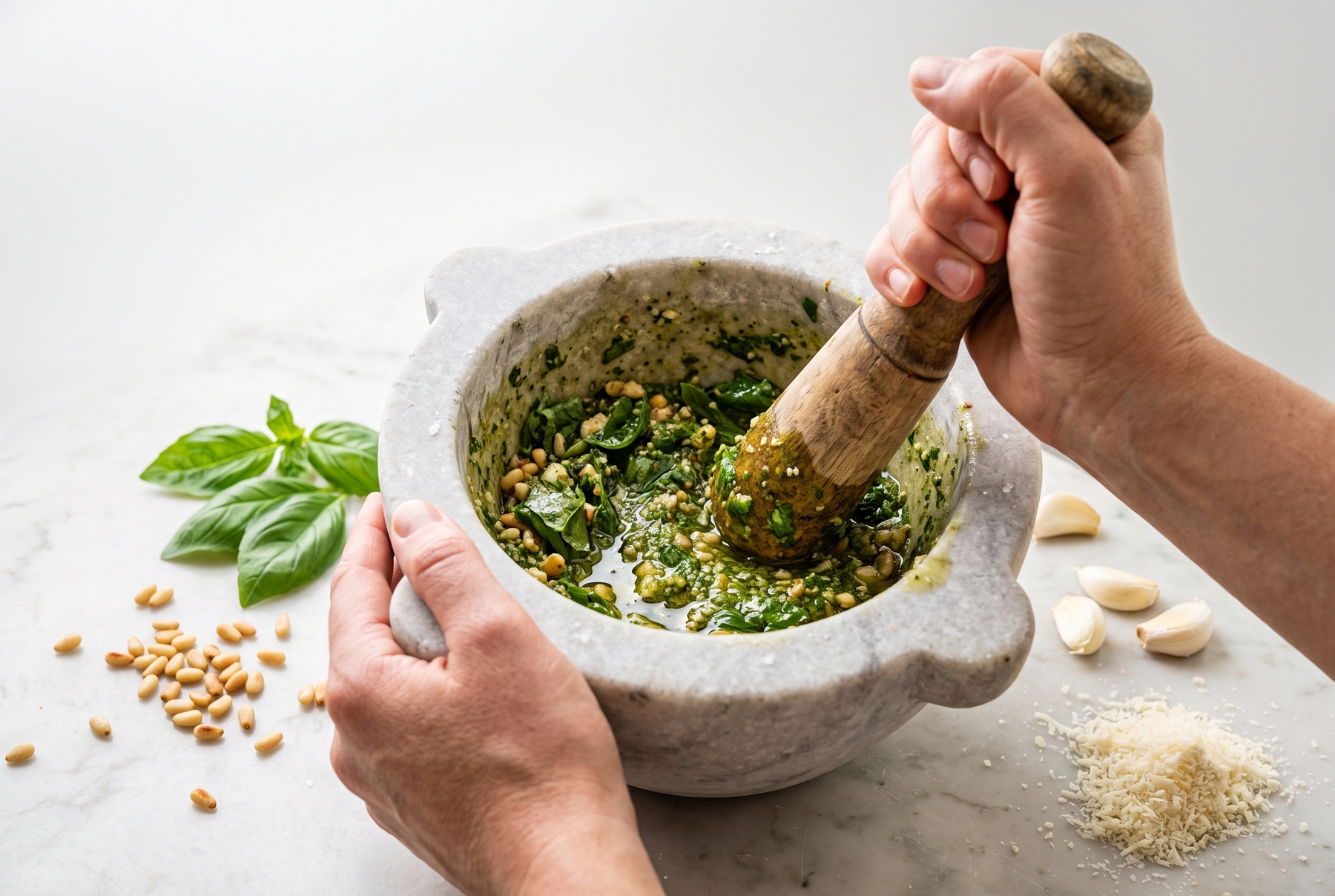
Crushing pesto by hand in a traditional marble mortar preserves its vibrant emerald color and deep herbal flavor.
How to Store Homemade Pesto
Freshly made pesto keeps in the refrigerator for 3 to 4 days when packed into a clean glass jar with a tight-fitting lid. Trusting your senses is the best guide: if the sauce smells sour or develops tiny fermentation bubbles, it belongs in the trash.
Pouring a 2–3 mm (1/8 inch) layer of olive oil over the top seals out oxygen and slows down surface browning. However, oil does not act as a preservative, meaning the jar must never sit out at room temperature—raw garlic submerged in anaerobic oil at warm temperatures creates a serious food safety hazard (Clostridium botulinum). Smoothing the surface of the pesto flat with the back of a spoon before pouring the oil seal prevents trapped air pockets.
Freezing works exceptionally well. Spoon the freshly made sauce into an ice cube tray, freeze until solid, and transfer the cubes into an airtight freezer bag. Stored this way, pesto keeps for several months, allowing a cook to grab the exact number of portions needed for a single skillet. Many professional cooks freeze the herb-nut-oil base without dairy, stirring in freshly grated Parmigiano only after thawing to preserve a cleaner, less grainy texture.
Two simple tricks help maintain vibrant emerald color during storage. First, blanching basil leaves in boiling water for 10 seconds before icing and drying them deactivates browning enzymes (the herbal aroma becomes slightly quieter, but the color stays neon green). Second, blending a few raw baby spinach leaves into the batch boosts stable green pigment without altering the flavor.
Is Store-Bought Pesto Worth Buying?
How to Read the Label on a Supermarket Jar
The first line of the ingredient list tells the whole story. If sunflower or canola oil leads the list and olive oil appears near the bottom after salt, that jar contains an industrial imitation rather than real pesto. A respectable commercial jar lists basil first and clearly states its percentage (30% or higher is the benchmark to look for).
Next, check the nut and dairy components. Because pine nuts are expensive, mass-market producers routinely substitute cashews, almonds, or even dried potato flakes and bamboo fiber for cheap bulk. Using cashews is not a culinary crime in itself, provided the retail price reflects the cheaper ingredients. Quality brands specify protected cheeses by name (Parmigiano-Reggiano, Grana Padano, Pecorino Romano), whereas budget jars list generic “hard cheese” or dehydrated whey powder.
Preservatives like sorbic acid or acidity regulators such as lactic acid appear frequently in shelf-stable jars; while completely safe to eat, they impart a distinct tangy sourness that dulls the sweet perfume of fresh basil.
When Jarred Pesto Makes Sense
There is no shame in keeping a jar of store-bought pesto in the pantry. When the sauce goes into a meat marinade, a simmering soup, bread dough, a sheet pan of roasted vegetables, or a baked savory pastry, only the most pedantic diner would ever spot the difference. High oven heat burns off delicate fresh basil top notes anyway.
Homemade pesto is essential where the sauce plays the lead role: tossed with warm pasta, spread onto bruschetta, or spooned raw over a finished plate of fish. In those moments, the volatile freshness of just-crushed basil is the entire point of the dish.
Ultimately, pesto succeeded across every continent because it operates as an open-source culinary framework: greens, fat, salt, umami, and heat. Plugging whatever sits in the crisper drawer into that equation keeps the formula working seamlessly, whether built around wild spring ramps or roasted pistachios.
Working by hand makes this logic click immediately. Leaves burst beneath the pestle, loose greens bind into a glossy paste, and the entire aroma of the kitchen shifts the second the grated cheese hits the mortar.
0 comments