
Breaking open a bulb of black garlic reveals nothing like garlic in the traditional sense. There is no sharp aroma and no pungent bite that brings tears to the eyes during chopping. The cloves are dark—almost pitch-black all the way through—soft, and yielding under a knife. The flavor leans toward a tangy sweetness, dense umami, and something bordering on balsamic vinegar, prunes, and caramel. Some palates catch notes of soy sauce, while others taste molasses.
Black garlic is neither a distinct botanical variety nor the result of leaving a bulb in the oven too long. Instead, holding ordinary white garlic in a warm, humid environment for several weeks transforms it beyond recognition.
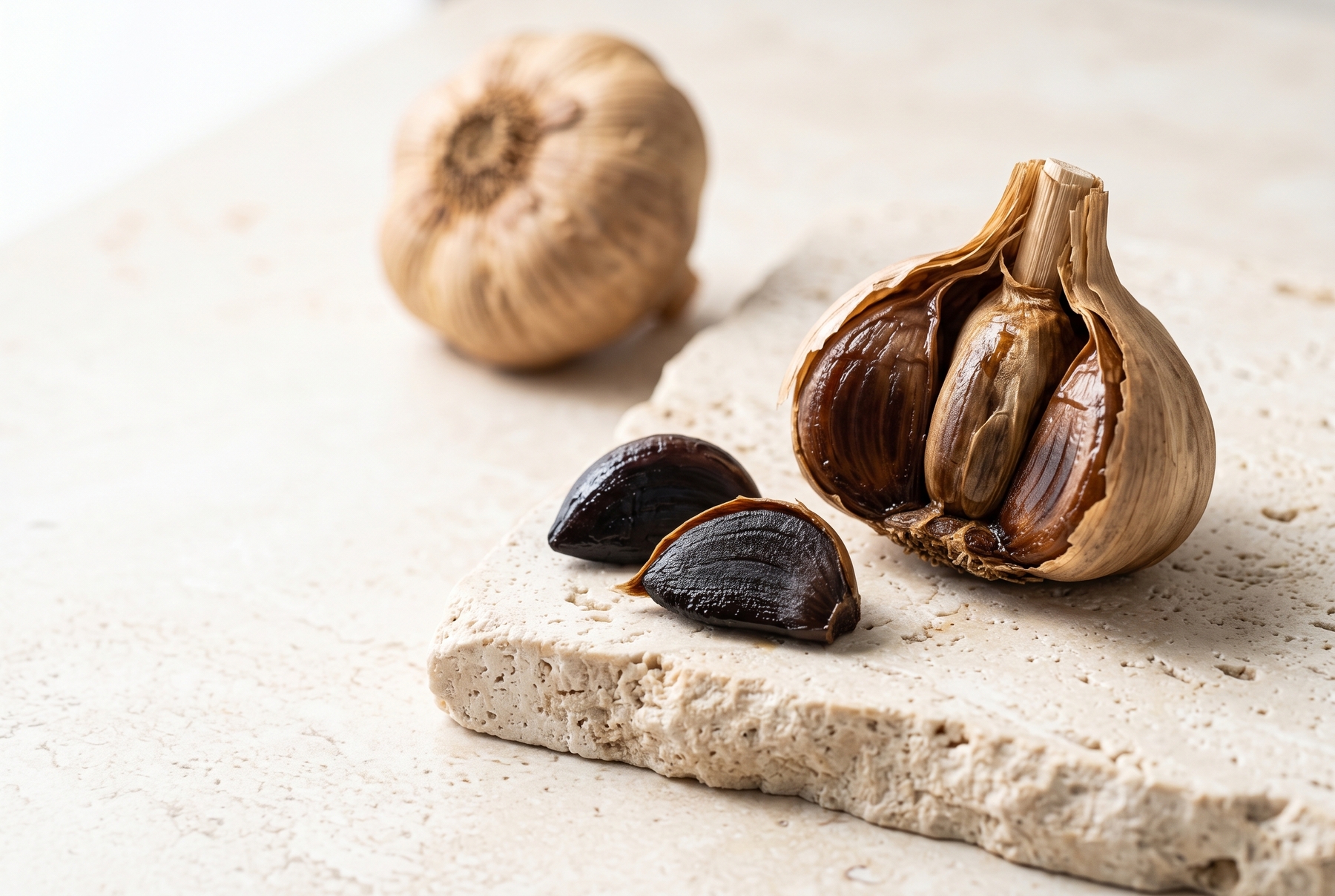
Aging ordinary garlic for weeks at a controlled temperature and high humidity produces black garlic.
Table of Contents
What Black Garlic Actually Is
Producers place ordinary garlic bulbs into an environment with a constant temperature and high humidity for an extended period. The process involves no additives, no artificial coloring, and no smoking. Gentle heat and several weeks of aging do all the work. After three to four weeks (and sometimes longer), the white cloves turn dark, soft, and sweet.
Grocery stores and recipes frequently label it as fermented. From a food science perspective, this is not entirely accurate. True fermentation relies on live cultures, bacteria, or yeasts to transform a food. Here, the mechanism is completely different. Heat-driven chemical reactions, rather than microorganisms, perform the heavy lifting. Calling it heat-aged is much more precise, though the word “fermentation” sticks around out of habit because the lengthy process alters the raw ingredient just as dramatically as true fermentation transforms cabbage into sauerkraut or flour into sourdough.
Why Black Garlic Turns Black
The dark color does not come from burning. Inside the clove, a slow, non-enzymatic browning takes place, driven primarily by the Maillard reaction—the exact same chemical process that gives bread its golden crust and roasted coffee its deep hue. Under the influence of heat, the complex sugars in garlic, known as fructans, break down into simple sugars like fructose and glucose. These simple sugars react with free amino acids, gradually forming melanoidins—dark pigments that stain the clove all the way through.
Simultaneously, the sulfur-containing compounds responsible for raw garlic’s sharpness and odor break down. As allicin and its related compounds degrade, the pungent bite disappears. Meanwhile, the acidity rises as the pH drops, creating that signature subtle tang.
During production, equipment maintains temperature and humidity within a narrow corridor. This typically ranges between 60–90 °C (140–194 °F) at 70–90% humidity, with many producers considering 70 °C (158 °F) the sweet spot. Higher temperatures speed up the process but increase the risk of bitterness and excessive sourness. This has nothing in common with roasting: in an oven at 180 °C (350 °F), garlic will simply burn on the outside and dry out before it ever completes its chemical transformation.
What Black Garlic Tastes Like and Why It Differs From Fresh Garlic
No two jars are identical; the final flavor depends on the garlic variety, the aging duration, and the exact temperature profile. However, the core flavor notes remain consistent from batch to batch. Sweetness leads the way, followed by rich umami and gentle acidity, finishing with a dark, slightly dried-fruit undertone that people compare to prunes, balsamic glaze, dates, molasses, or soy sauce.
The harsh, garlicky punch is almost entirely gone. The compounds in a fresh clove that sting the nose and linger on fingers and wooden cutting boards vanish alongside the degraded sulfur molecules. What remains is pure depth without the aggression.
A well-made clove is soft and pliable, sometimes approaching the consistency of a thick paste. It yields under the pressure of a finger and spreads effortlessly over bread. A slimy texture indicates that the garlic has either spoiled or was pulled from the aging chamber too early. Conversely, a dry, rubbery clove means it lost too much moisture during the aging process.
Black garlic functions best as a standalone condiment and a source of deep savoriness, rather than a direct one-to-one substitute for fresh garlic.
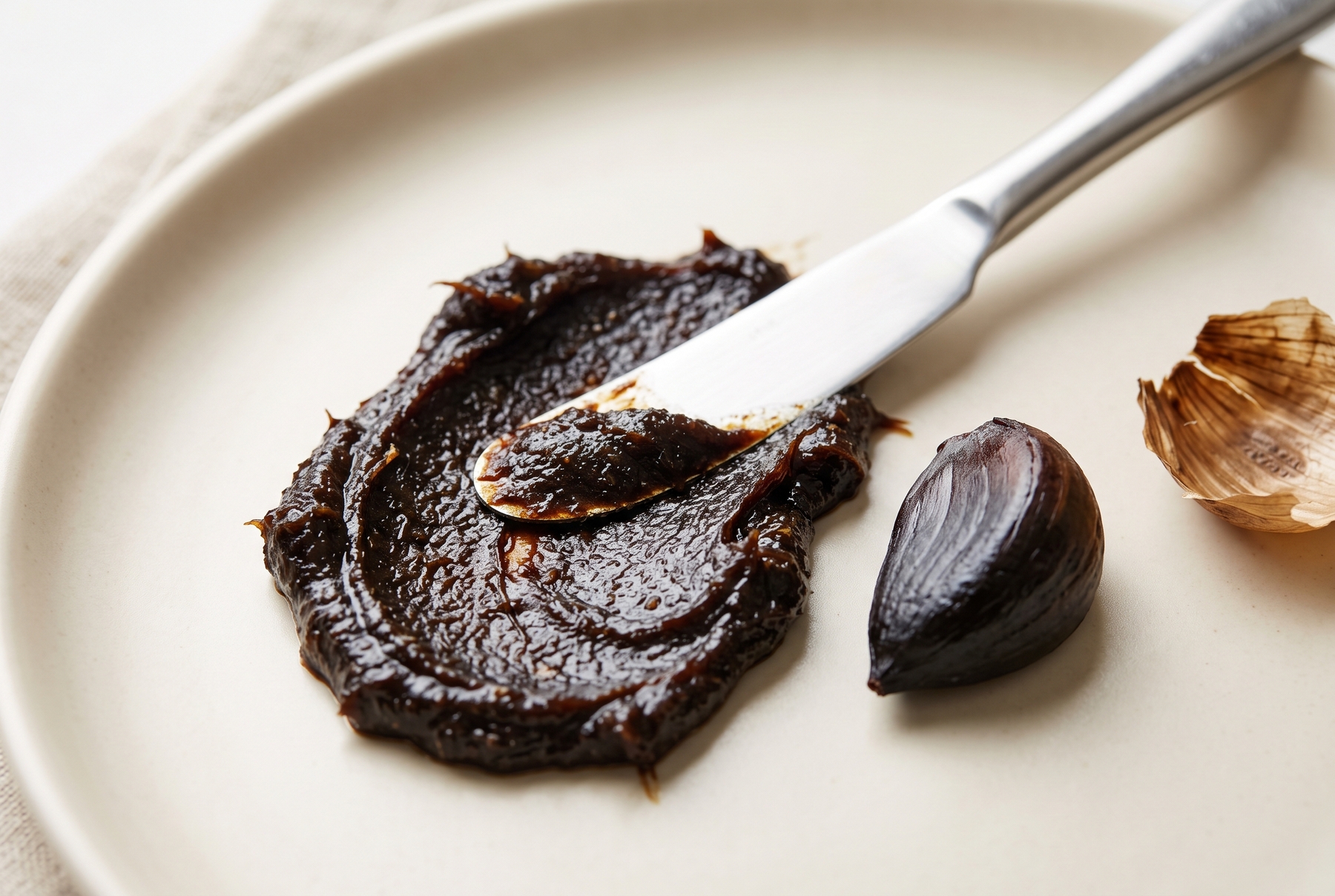
Finished black garlic has a soft consistency that mashes easily into a puree and spreads with a knife.
How to Choose Good Black Garlic
Whether browsing a specialty grocery shelf or shopping online, a few key indicators signal high quality:
- The cloves and bulbs display an evenly dark color, free of pale, under-aged spots;
- The flesh feels soft and yielding, never wet or slimy;
- The aroma smells deep and savory, without any sour notes of spoilage or traces of mold;
- The ingredient list for whole black garlic contains strictly garlic, with no unnecessary additives.
Black garlic paste follows different rules. Checking the label is essential, as manufacturers frequently blend in salt, oil, or sugar. While convenient, these pastes require different dosing, and cooks must adjust the additional salt in their dishes accordingly.
What Pairs Well With Black Garlic
Black garlic shines brightest in dishes that benefit from sweetness, mild acidity, and rich umami without a sharp, garlicky bite.
In Sauces and Dressings
Mashing a clove and stirring it into mayonnaise or aioli creates an instant condiment. It can replace a portion of the mustard in a classic vinaigrette, blend into yogurt or sour cream for a vegetable dip, fold into softened butter, or dissolve straight into a pan sauce for meat.
Using it sparingly yields the best results. Because the flavor is highly concentrated, the goal is to build a savory background rather than overwhelm the dish. Starting with a single clove per batch of sauce allows the cook to taste and adjust as needed.
With Meat, Poultry, and Fish
The guiding principle is simple: fat, acid, and the sweetness of black garlic balance one another. Mashing a couple of cloves with olive oil, a splash of vinegar, and salt creates a complex glaze for roast chicken or pork. When paired with mackerel, its sweet-tart profile cuts right through the richness of the fish. For steak, stirring it into the basting butter at the very end prevents the delicate sugars from scorching over high heat.
Memorizing a catalog of recipes is unnecessary. Remembering that black garlic loves fat and thrives alongside a touch of acid is enough to improvise.
With Vegetables, Mushrooms, and Grains
It pairs exceptionally well with ingredients that have a mild, earthy baseline. Roasted root vegetables like carrots, beets, and celeriac welcome its sweetness. Crispy roasted potatoes benefit from its depth, while mushrooms absorb its meaty, almost brothy undertones. For legumes and rice, mashing a clove with a spoonful of warm water or oil makes a quick paste that stirs smoothly into the finished dish right before serving.
Where Garlic Is Least Expected
In small quantities, black garlic even crosses over into desserts. Finely minced black garlic folded into dark chocolate or salted caramel reads on the palate as dried fruit rather than an allium. It also belongs on a cheese board alongside aged cheeses, where the umami in the cheese bridges seamlessly with the umami in the clove. Tasting it this way highlights just how far the flavor has traveled from raw garlic.
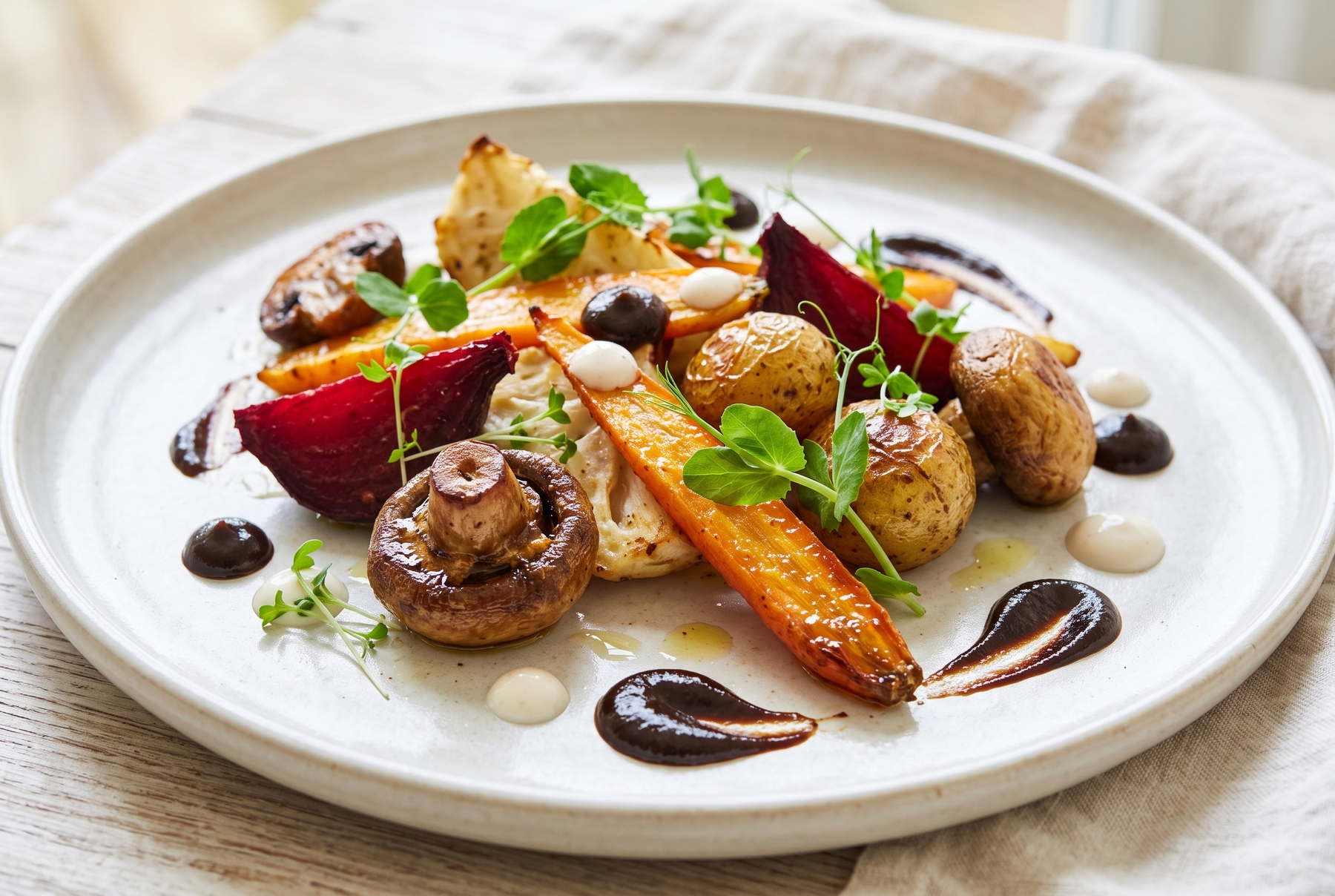
A thick black garlic sauce brings out the natural sweetness of roasted root vegetables and mushrooms.
How to Use Black Garlic at Home
If a jar is already sitting in the refrigerator waiting to be opened, three simple applications offer an easy starting point:
- Mashing a clove into softened butter and spreading it over warm bread. The heat coaxes out the sweetness and umami, offering the purest way to experience the ingredient on its own.
- Whisking a small amount into a sauce or dressing. Even half a clove in a vinaigrette or mayonnaise shifts the flavor profile, adding deep resonance without any harshness.
- Stirring it into roasted vegetables, sautéed mushrooms, or the pan drippings from seared meat. Here, it acts as a natural flavor enhancer, drawing a denser, more savory profile out of everyday ingredients.
Treating black garlic as a concentrated pantry condiment rather than a precious, exotic curiosity is key. The most common mistake is buying a jar out of curiosity and saving it for a special occasion while the cloves slowly dry out in the cupboard. There is no need to wait for a special occasion; it belongs in everyday cooking.
Can Regular Garlic Replace It?
The short answer is no; there is no true one-to-one substitute. Fresh and black garlic serve entirely different culinary purposes. Fresh garlic delivers heat, a bright aromatic punch, and the sharp edge required for a sautéed base or a classic pesto. Black garlic operates in a different realm, offering sweetness, umami, gentle acidity, and dark complexity.
When a recipe calls for black garlic and none is on hand, mimicking its function requires combining a few pantry staples rather than reaching for raw garlic. A splash of balsamic vinegar provides the sweet acidity, a drop of soy sauce or miso paste brings the umami, and a bit of caramelized onion builds the dark, sweet foundation. The final result will taste different, which is completely fine—it is a functional workaround rather than an exact replica.
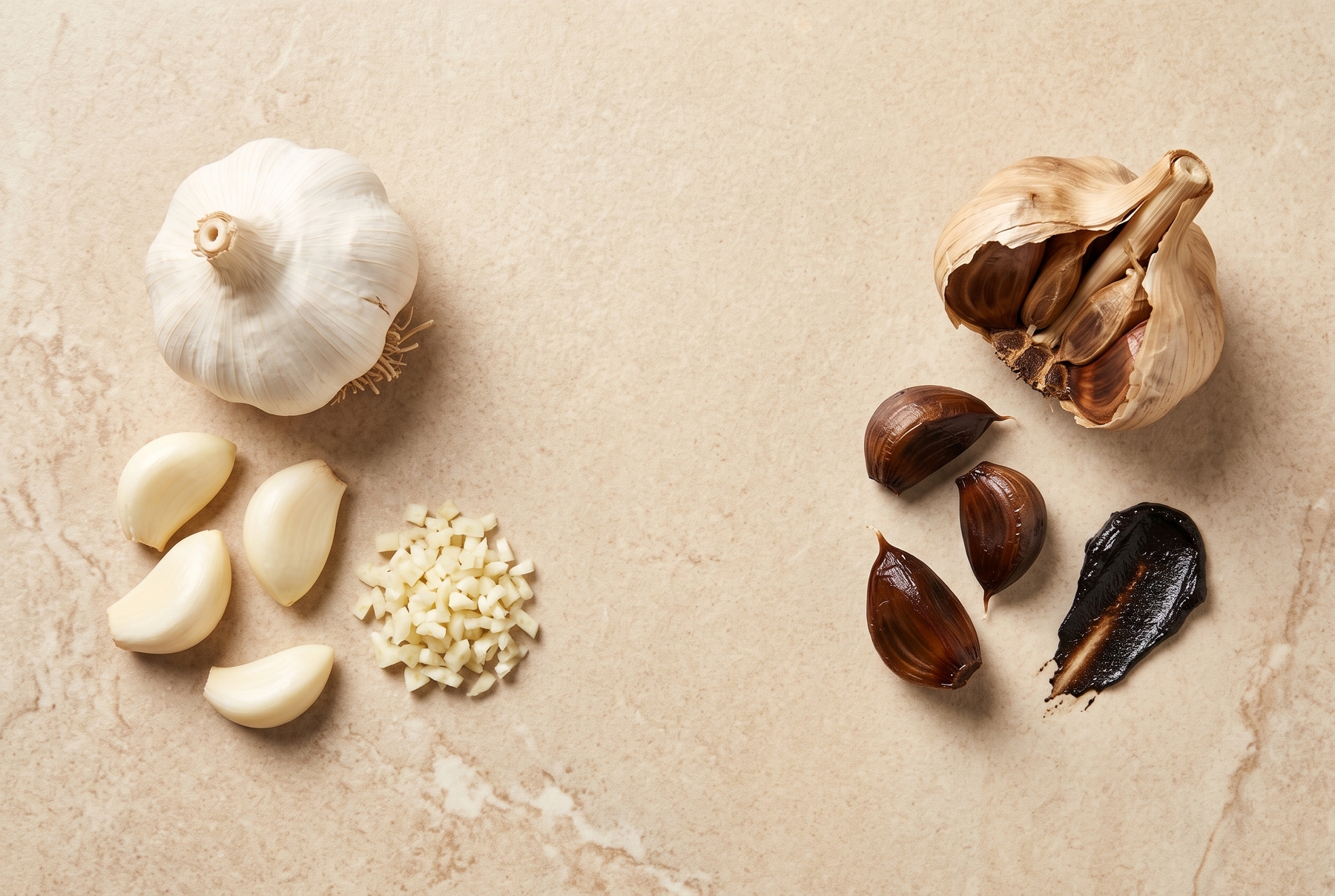
Fresh garlic delivers pungent heat and allicin, whereas black garlic brings mild acidity, sweetness, and umami.
How to Store Black Garlic After Opening
Proper storage depends entirely on the form in which it was purchased.
Whole bulbs still wrapped in their papery skins keep well at room temperature in a cool, dark place—ideally in a breathable container rather than a tightly sealed plastic bag. Peeled cloves belong in the refrigerator inside an airtight jar; otherwise, they quickly dry out and perfume the rest of the fridge with their rich aroma. Commercial pastes almost always require refrigeration after opening.
There is no universal shelf life, as longevity depends on moisture content, added ingredients, and packaging methods. Checking the manufacturer’s label and expiration date is always best. Once opened, the format dictates the timeline: whole bulbs outlast peeled cloves, while pastes follow the specific guidelines printed on their jars.
Is It Worth Buying?
Black garlic is by no means a mandatory kitchen staple. Cooks can make extraordinary food without ever touching it. However, for those who love building pan sauces, roasting vegetables, searing meats, and experimenting with new flavor dimensions in familiar dishes, it offers a remarkably convenient shortcut to complexity and umami without a trace of raw garlic harshness.
Ultimately, the most fascinating thing about black garlic is not its color. A black clove impresses not because it looks dark, but because it demonstrates just how far an ordinary ingredient can travel from its original state when held at a steady temperature and humidity for a few weeks. It relies on the exact same fructans, the same amino acids, and the same Maillard reaction found in a crust of bread. The only difference is time.
0 comments