
Asking ten people how to serve wine usually yields eight identical answers. White comes from the fridge, red sits at room temperature, and champagne is best served as cold as possible. This sounds logical, yet almost all of it works against the flavor.
A good white wine left in the refrigerator overnight loses its aroma entirely. You end up drinking a cold, acidic liquid and wondering why you spent the money. Red wine at 24 °C (75 °F) in a hot apartment falls apart; the alcohol pushes forward, leaving a flat, burning sensation instead of depth. Champagne chilled to an icicle remains completely silent, offering bubbles but no scent.
Temperature alters flavor almost more profoundly than the price tag. The exact same wine at 8 °C (46 °F) and 16 °C (61 °F) feels like two completely different beverages on the tongue. Finding the correct serving temperature acts as a free method to elevate a wine’s taste. This requires no expensive glasses, decanters, or a sommelier standing nearby. A refrigerator and a little attention are all that is needed.
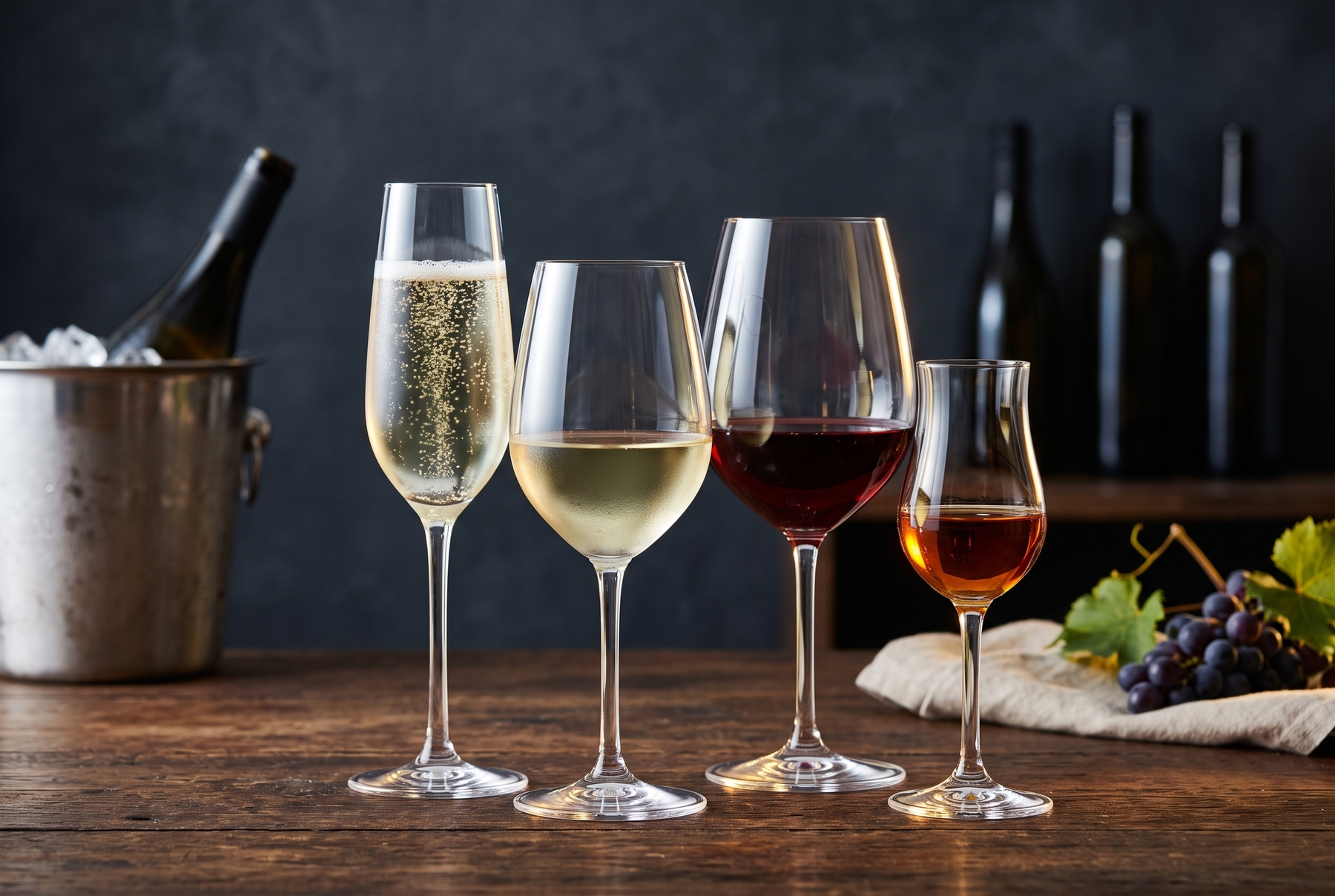
The correct serving temperature fully reveals the aroma and flavor profile of every wine type, from sparkling to fortified.
Table of Contents
- Why Temperature Changes Flavor More Than It Seems
- The Most Common Mistake: The Phrase "Room Temperature"
- Cheat Sheet: Serving Temperatures for Different Types of Wine
- Champagne and Sparkling Wines: Why They Are So Easy to Overchill
- White Wine: The Refrigerator is Fine, But With Nuances
- Red Wine: To Refrigerate or Not to Refrigerate
- Sweet and Fortified Wines: Where Degrees Decide Almost Everything
- Should Opened Wine Be Stored in the Fridge?
- How to Quickly Chill or Warm a Bottle of Wine
- How to Determine Wine Serving Temperature Without a Thermometer
- 6 Common Mistakes at Home
- How to Test All of This at Home in 20 Minutes
Why Temperature Changes Flavor More Than It Seems
What Happens to the Aroma
Scent consists of volatile molecules. These molecules need to evaporate from the surface of the wine and rise to the nose for you to perceive them. Heat accelerates this evaporation, while cold slows it down.
Taking a bottle straight from the fridge and pouring a glass often results in an empty or nearly empty aroma. Holding the glass in the palm of your hand for a couple of minutes and swirling it allows the scent to unfold, revealing fruit first, followed by deeper notes. The wine remains the same. The temperature changed, and with it, the amount of aroma that reaches the senses.
This leads to a simple rule that proves useful later: cold hides, heat reveals. An overly chilled wine seems mute. An overly warm wine dumps everything out at once, including elements better kept in check, with alcohol being the primary offender.
What Happens to the Taste
Temperature operates differently on the tongue, but its effects remain just as noticeable.
Acidity feels sharper and fresher in the cold. This explains why a light white wine from the fridge invigorates the palate, yet begins to feel flabby as it warms up. Sweetness behaves in the exact opposite manner, muting in the cold and stepping forward in the warmth. A warm sweet wine tastes cloying, while a chilled one remains focused.
Tannins—that astringent tartness in red wine that dries the mouth—become harsh and prominent in the cold. A young red wine, chilled too much, turns prickly. Heat causes alcohol to rise, adding sharpness to the nose and a burning sensation in the throat. Bitterness also intensifies with warmth.
Putting this together reveals a clear pattern. Cold provides freshness and highlights acidity, but it dampens aroma and sharpens tannin. Heat opens up the scent and softens the wine, but it drags out the alcohol and makes sweetness intrusive. The entire process of temperature tuning revolves around finding the exact point where each of these sensations exists in perfect harmony.
Why the Same Bottle Can Both Delight and Disappoint
This story sounds familiar to many. A simple local white wine enjoyed during a seaside vacation goes down perfectly, feeling cold, crisp, and acidic. Bringing a bottle home and opening it in a warm room during winter leaves one wondering where the magic went. The wine stayed the same, but the environment changed.
The reverse also happens. An expensive red wine at a restaurant dinner tastes velvety and deep, but a bottle from the exact same case tastes harsh and alcoholic at home. The difference usually lies in the degrees. The restaurant kept the wine in a cellar at 14–16 °C (57–61 °F), while the bottle at home sat near a radiator and warmed up to 23 °C (73 °F).
Testing this requires little effort. Pouring a wine too cold and tasting it, then letting it sit for 20 minutes before tasting it again, clearly demonstrates the difference.
The Most Common Mistake: The Phrase “Room Temperature”
The rule stating that red wine should be served at room temperature did not originate yesterday, nor did it start in modern apartments. It was born in Europe, in stone houses lacking central heating, where room temperature meant a cool 16–18 °C (61–64 °F). Red wine still thrives at exactly that temperature.
The catch lies in the fact that a modern apartment in winter is heated to 23–25 °C (73–77 °F). Radiators, double-glazed windows, and underfloor heating play their part. Room temperature has moved up by about eight degrees, but the rule has stayed the same. As a result, people honestly serve red wine as expected and honestly receive a warm, flabby, and alcoholic beverage.
At 24 °C (75 °F), even a decent red wine loses its shape. The fruitiness washes out, alcohol steps forward, and the finish turns hot. Dropping the temperature to 16–18 °C (61–64 °F) brings the same wine back together. Freshness emerges, the tannins smooth out, and the aroma becomes readable.
Almost any red wine benefits from a slight chill before serving during the winter. Spending 15 to 20 minutes in the refrigerator often helps to brighten up the evening.
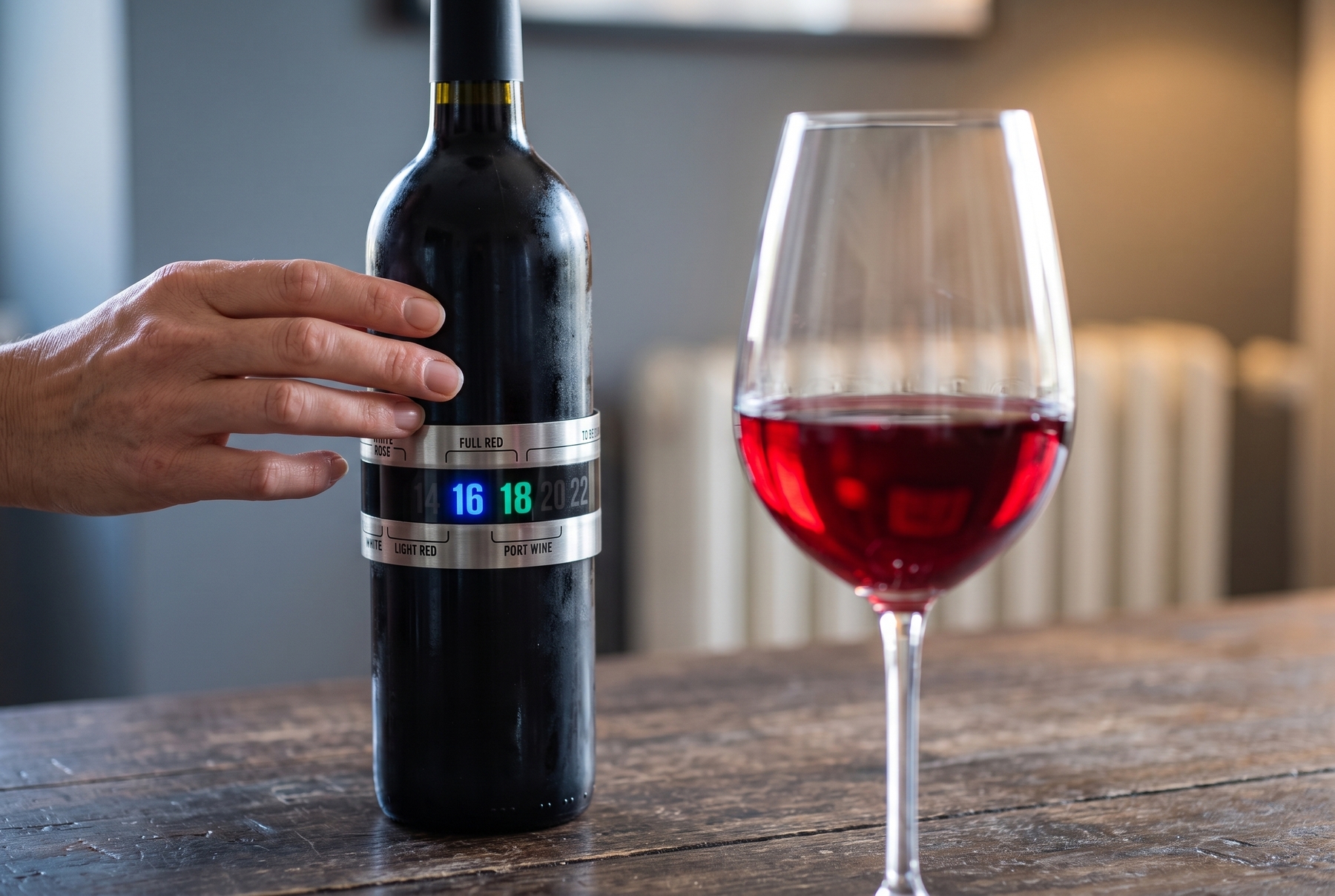
Red wine displays its best bouquet at 16–18 °C (61–64 °F). It requires a slight chill before serving in a warm modern apartment.
Cheat Sheet: Serving Temperatures for Different Types of Wine
The ranges below provide a convenient starting point. A specific bottle might ask for a couple of degrees warmer or cooler, and this remains perfectly normal.
| Wine Category | Temperature | Too Cold | Too Warm |
|---|---|---|---|
| Sparkling (Prosecco, Cava) | 6–8 °C (43–46 °F) | prickly bubbles, suppressed aroma | lazy foam, flat taste |
| Champagne | 8–10 °C (46–50 °F) | complex scent disappears | loses fizz quickly, alcohol protrudes |
| Light Whites | 8–10 °C (46–50 °F) | goes numb, only acid remains | becomes flabby and loose |
| Full-Bodied Whites (oaked, aged) | 11–13 °C (52–55 °F) | closes up, loses body | feels oily and heavy |
| Rosé | 8–10 °C (46–50 °F) | berries hide | cloying and loose |
| Light Reds | 12–14 °C (54–57 °F) | tannin becomes harsh | washes out, alcohol protrudes |
| Full-Bodied Reds | 16–18 °C (61–64 °F) | becomes rigid and closed | flat and hot |
| Sweet Wines | 8–10 °C (46–50 °F) | all aromatics are muted | cloying, like syrup |
| Dessert Wines (Sauternes, etc.) | 8–11 °C (46–52 °F) | complexity hides | sugar overpowers everything else |
| Fortified (Port, Sherry, Madeira) | 6–16 °C (43–61 °F) (depends on style) | dry styles go numb | sweet styles become heavy |
Champagne and Sparkling Wines: Why They Are So Easy to Overchill
Sparkling wine almost always gets served far too cold. The logic seems clear: bubbles, celebration, and the desire for a frosted bottle. This extreme chilling, however, comes with a price.
Below 4 °C (39 °F), the aroma of champagne shuts down entirely. An expensive aged wine featuring a complex scent of bread crust, nuts, and baked apples turns into a neutral, prickly soda in such extreme cold. You pay for complexity but receive only bubbles.
A very low temperature sometimes proves appropriate. If a sparkling wine leans toward being simple, young, and sharply acidic, the cold actually rescues it. The chill mutes the rough edges, leaving behind only freshness and foam. This explains why mass-market prosecco drinks easily when ice-cold, whereas vintage champagne deserves a warmer presentation, closer to 10 °C (50 °F), allowing its true value to shine.
Good champagne presents best at 8–10 °C (46–50 °F). Simple sparkling wine shines at 6–8 °C (43–46 °F). Leaving a bottle in the freezer overnight renders it unfit for the table. At best, it results in an icy slush under the cork. At worst, it yields shattered glass and a fountain across the shelf.
White Wine: The Refrigerator is Fine, But With Nuances
White wine undeniably tastes better chilled. The question lies in how much, and this is where different whites part ways.
Light, crisp varieties such as Sauvignon Blanc, Pinot Grigio, dry Riesling, and most affordable white wines thrive in the coldest range of 8–10 °C (46–50 °F). Their strength lies in acidity and freshness, which read much better in the cold. This kind of wine offers pure pleasure when the glass fogs up.
Mineral-driven white wines like Chablis, Sancerre, and character-rich Rieslings ask for slightly warmer conditions. Serving them too cold causes them to close up, causing the loss of that exact saline, flinty line that makes them so desirable. Allowing them to reach 10–12 °C (50–54 °F) brings out their best.
Aged and oaked white wines like oaked Chardonnay, white Rioja, and mature Burgundies behave almost exactly like light reds. They possess body, texture, and a dense aroma, all of which get muffled by the cold. Their optimal zone rests at 11–13 °C (52–55 °F). Taking this type of wine out of the fridge in advance or warming it directly in the glass by swirling it in the palm works wonders.
Guessing the temperature perfectly is unnecessary. Pouring a white wine slightly cooler than needed and letting it warm up in the glass offers a great experience. You can literally feel the scent opening up and the taste rounding out over 5 to 10 minutes. If it gets too warm, returning the glass to the fridge or dropping a single ice cube into a simple everyday wine fixes the issue. While an ice cube ruins a complex wine, it remains perfectly acceptable for a casual weekday white.
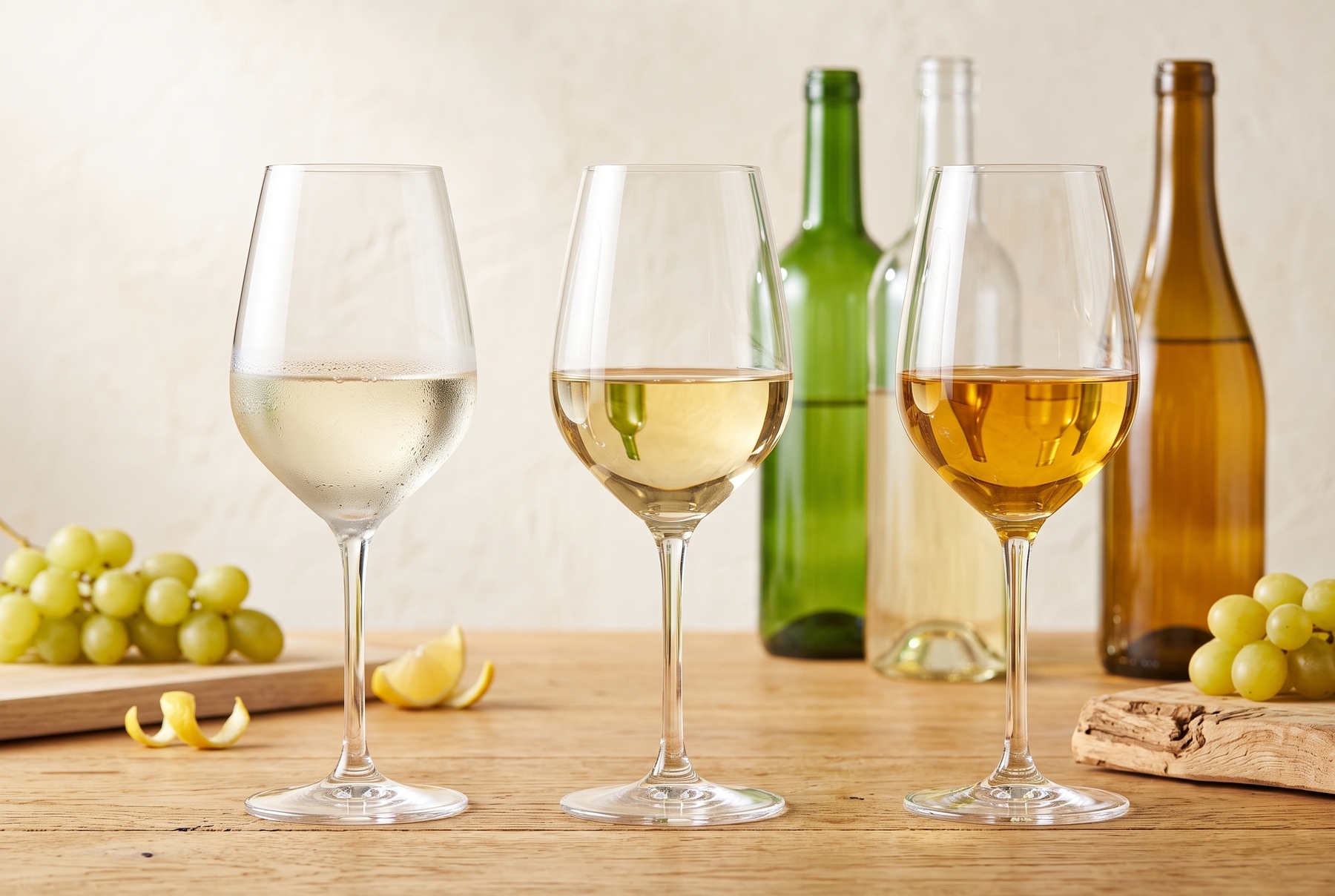
Light white wines perform best at 8–10 °C (46–50 °F), while aged oaked varieties prefer a warmer 11–13 °C (52–55 °F).
Red Wine: To Refrigerate or Not to Refrigerate
Red wine absolutely belongs in the refrigerator at times. In fact, many red wines greatly benefit from a chill.
Everything hinges on the density of the wine. Light reds featuring high acidity and a lighter body, such as Gamay, Beaujolais, light Pinot Noir, and Italian varieties like Schiava or young Barbera, open up beautifully when chilled to 12–14 °C (54–57 °F). During summer, serving them almost like a rosé elevates their profile. A crisp freshness emerges, and the berry notes become much more vibrant.
Full-bodied reds operate differently. Cabernet Sauvignon, Syrah, mature Bordeaux, and Barolo rely on body and softness. Cold restricts them, causing tannins to turn coarse and the wine to become rigid and closed. Their ideal zone lies at 16–18 °C (61–64 °F). Chilling them requires caution and should only happen when the room feels genuinely hot.
Summer heat changes the rules. When an apartment hits 28 °C (82 °F), a resting wine quickly warms up. In this scenario, sending any red wine to the fridge before serving is highly recommended. Light reds need 30 to 40 minutes, while dense ones need 15 to 20. The bottle should feel noticeably cool to the touch, but never ice-cold.
Winter apartments keep their radiators blasting at 24 °C (75 °F). Even a dense red wine benefits from a 15-to-20-minute chill, otherwise it presents a warm, alcoholic profile instead of a deeply satisfying one.
A country house and an outdoor table offer a different setting. Shade, a breeze, and evening coolness allow the wine to adjust naturally. But if the table sits in the sun, a bottle heats up in half an hour. Keeping it in the shade or in a bucket of water prevents the red from becoming hot and flat before the first glass is finished.
Sweet and Fortified Wines: Where Degrees Decide Almost Everything
Temperature exerts the harshest control over sweet and fortified wines. The reason stems from the sugar. In warmth, sweetness pushes to the forefront and rapidly becomes intrusive. Coolness restores balance, highlights acidity, and prevents the wine from turning into syrup. Sweeter wines demand much closer attention to chilling.
Port
Port varies wildly, and serving every bottle the same way proves to be a mistake. Tawny port, aged with nutty and caramel notes, prefers a light chill at 12–14 °C (54–57 °F). The cold gathers its sweetness and cleans up the nutty tones. Vintage and ruby ports, which are dense, berry-forward, and full-bodied, present better slightly warmer, closer to 16–18 °C (61–64 °F), much like a full-bodied red. White port drinks exceptionally well chilled to 8–10 °C (46–50 °F), often served with tonic and ice, a completely legitimate approach.
Sherry
Sherry offers an even wider spread. Dry, light styles like Fino and Manzanilla drink cold at 6–8 °C (43–46 °F), almost exactly like a white wine. The chill accentuates their briny sharpness. Dark, oxidized styles like Oloroso and Amontillado unfold in warmth at 12–14 °C (54–57 °F), where nut and dried fruit flavors emerge. Thick, sweet Pedro Ximénez requires a cool presentation so the sugar does not overpower the rest of the profile.
Madeira
Madeira also depends entirely on its style. Dry versions like Sercial and Verdelho benefit from a slight chill to 12–13 °C (54–55 °F). Sweet styles like Bual and Malmsey serve slightly warmer, around 14–16 °C (57–61 °F). However, serving them hot causes the sweetness and alcohol to merge into a heavy lump.
Sauternes and Dessert Wines
Sauternes, Icewine, late-harvest wines, and Tokaji boast high sugar and typically bright acidity. They absolutely demand cold temperatures, ideally 8–11 °C (46–52 °F). This temperature keeps their dense sweetness in check, while the acidity keeps the wine fresh, allowing the glass to be finished effortlessly. A warm Sauternes resembles a spoonful of honey: delicious for one second, then overwhelmingly cloying.
Should Opened Wine Be Stored in the Fridge?
Almost always, yes, and this applies to red wine as well.
Once opened, wine begins to oxidize. Oxygen alters its flavor, the aroma fades, and the freshness disappears. Cold slows down this process exactly as it slows down the spoilage of any food product. A bottle closed with a stopper and placed in the refrigerator easily survives for two to three days. A dense red wine sometimes holds on for four to five days.
White, rosé, sparkling, sweet, and fortified wines head straight into the fridge after opening without question. Sparkling wine requires a specialized stopper, as a standard cork will not hold the pressure.
Red wine also belongs in the cold. Simply taking it out in advance before the next serving and letting it warm to the required 14–18 °C (57–64 °F) solves any temperature issues. Drinking it straight from the fridge remains inadvisable, but it rests much more comfortably there than in a warm kitchen.
A tightly inserted cork works perfectly well. A vacuum stopper with a pump partially removes air from the bottle, and a separate clamp exists for sparkling wines. Everything else proves less effective than the simple application of cold.
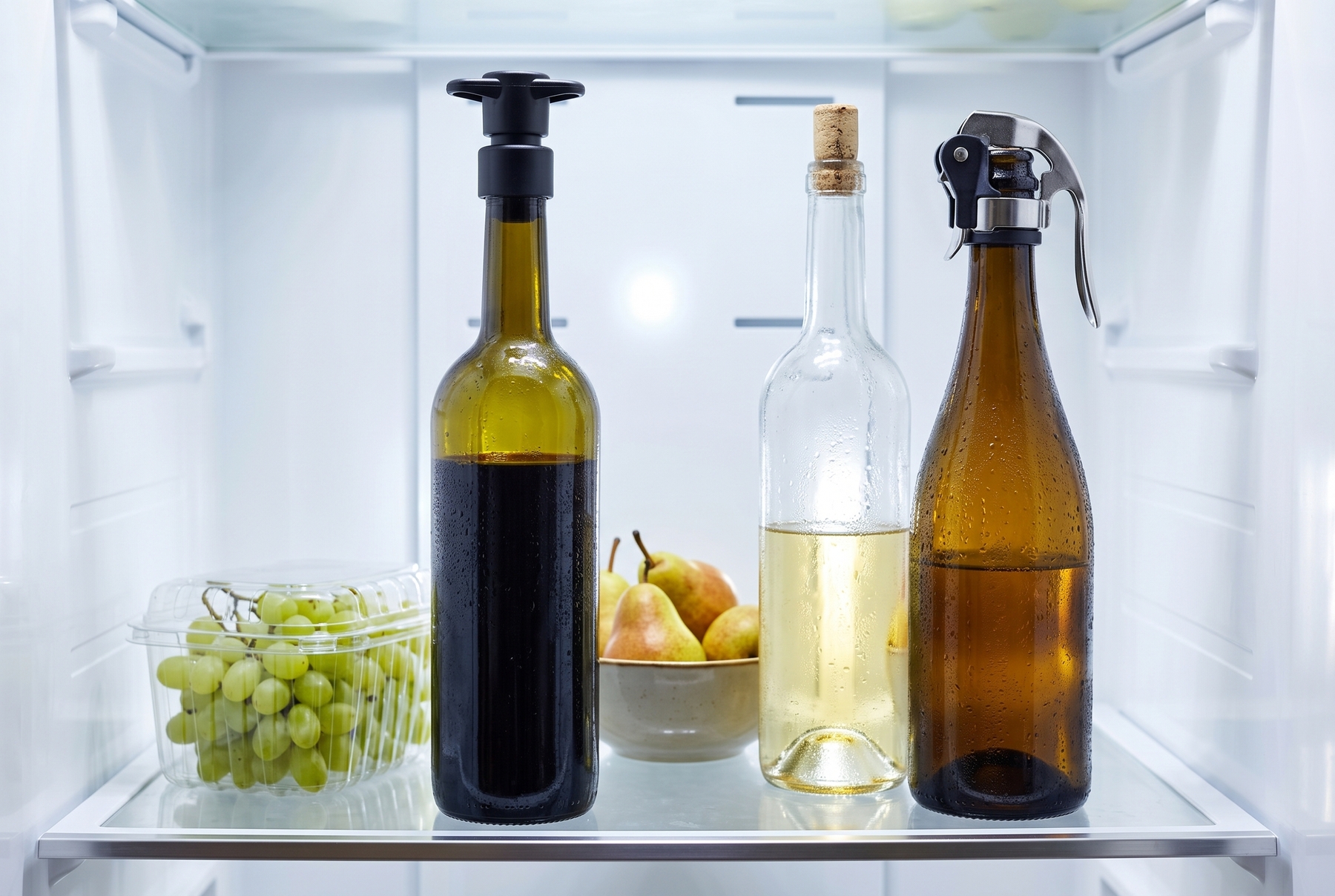
Cold temperatures slow down oxidation. An opened wine bottle secured with a tight or vacuum stopper belongs in the refrigerator.
How to Quickly Chill or Warm a Bottle of Wine
Guests stand at the door, and the wine sits warm.
The Refrigerator
This remains the most predictable method. Its one downside is the speed. A warm bottle requires about two to three hours to travel from room temperature down to 8 °C (46 °F). If time permits, this remains the best option. Without time, ice becomes necessary.
An Ice and Water Bucket
The fastest method requires ice, but the ice must be paired with water. A bucket filled exclusively with ice cubes cools poorly because the ice only touches the glass at specific points. Water fills the gaps and pulls heat from the entire surface of the bottle simultaneously.
Using half ice, half water, and a pinch of salt speeds up the process significantly. A bottle cools down in this bath in 10 to 15 minutes. This works faster than a freezer and remains infinitely safer.
The Freezer
This method works but demands a timer and a reliable memory. A warm bottle of white wine reaches the desired temperature in roughly 20 to 30 minutes. Sparkling wine gets there faster, usually in about 15 minutes.
The danger lies in how easily one forgets about the bottle. Frozen wine expands, pushing out the cork or shattering the glass, while carbonated wine turns into a bomb. Placing a bottle in the freezer demands immediately setting a timer on a phone. Leaving it for more than 30 to 40 minutes guarantees a disaster.
Cool Water Without Ice
When ice is unavailable, regular cold tap water steps in to help. Submerging the bottle in a pot or a sink filled with cold water cools it more slowly than an ice bath, but still three times faster than the air in a room. Changing the water when it warms up keeps the process moving.
If the Wine Turns Out Too Cold
Solving the reverse problem requires even less effort. Pouring the wine into a glass and cupping the bowl from below with both hands, avoiding the stem, works wonders. The warmth of a hand raises the temperature by a degree or two in a few minutes. Swirling the wine accelerates the warming through contact with the glass and air, while simultaneously opening up the aroma. Placing a bottle in hot water or near a radiator creates uneven heating and ruins the flavor.
How to Determine Wine Serving Temperature Without a Thermometer
A wine thermometer serves as a pleasant, yet entirely optional, tool. Relying on sensations works perfectly well at home.
Feeling the bottle offers a solid clue. A properly chilled white wine feels noticeably cool. The glass chills the palm but does not burn with frost. A red wine ready for serving feels slightly cooler than the room, roughly resembling a concrete wall in a hallway—neither warm nor ice-cold.
Timing in the refrigerator provides another gauge. A standard home fridge maintains roughly 4–6 °C (39–43 °F). A warm bottle of white wine reaches a drinkable 8–10 °C (46–50 °F) in about two hours. A red wine requires only 15 to 20 minutes for a light chill.
A fogged glass or bottle usually indicates a temperature below 10 °C (50 °F). This is standard for a light white and a sparkling wine. For a red wine, it acts as a clear signal that the chilling went too far.
The aroma in the glass reveals the truth. A weak, muted scent indicates an overly chilled wine that needs time to warm up. A sharp strike of alcohol to the nose means the wine is too warm.
A thin, empty, and sour wine on the tongue often points to overchilling. A heavy, flabby, and alcoholic profile indicates overheating. Taking a sip, waiting ten minutes, and taking another reveals the difference and points the way forward.
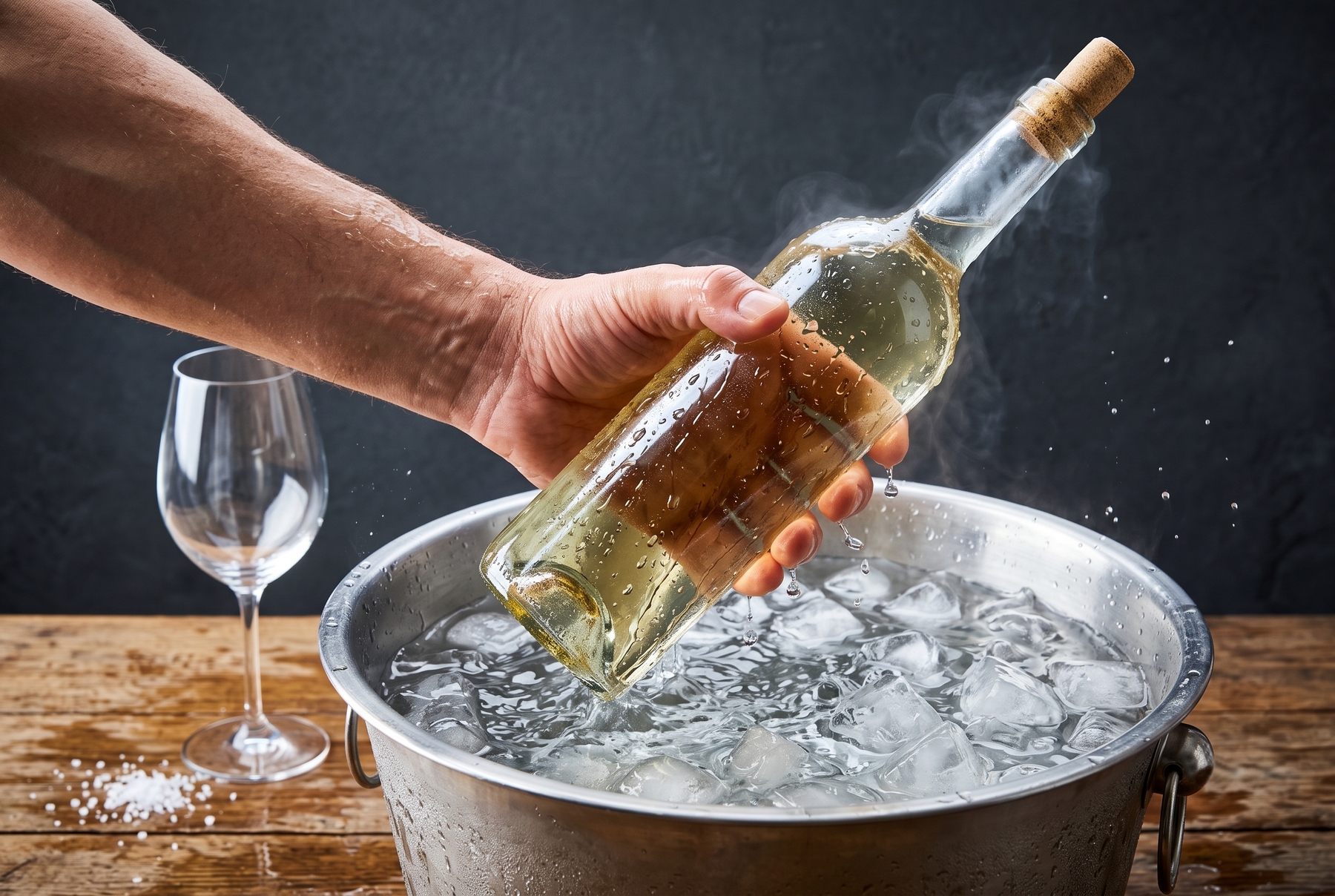
A mixture of water and ice provides the fastest and safest method to chill a wine bottle to the proper temperature in 10 to 15 minutes.
6 Common Mistakes at Home
- Serving red wine hot. The room temperature of a modern apartment (23–25 °C / 73–77 °F) sits far too high for red wine. Chilling it before serving remains essential.
- Overchilling white wine. Most white wines go numb below 6 °C (43 °F). Leaving a bottle in the cold indefinitely ruins the experience.
- Freezing champagne. Pulling it from the freezer destroys the aroma, and sometimes the bottle itself. A temperature of 8–10 °C (46–50 °F) works perfectly.
- Leaving a bottle in the sun. Wine heats up in half an hour on a summer table. Keeping it in the shade or a water bucket saves the flavor.
- Ignoring room conditions. The same 15 minutes in the fridge produce wildly different results in winter and summer. Adjusting to the environment proves crucial.
- Blindly trusting social media advice. A beautiful video showcasing the perfect temperature often ignores both the wine’s style and your specific apartment. The temperature range always matters more than a single number from a clip.
How to Test All of This at Home in 20 Minutes
Experiencing this firsthand bypasses all the theory. Taking a bottle of red wine sitting on a shelf and pouring two glasses makes the point clear. The first glass pours immediately, warm directly from the cabinet, while the second pours after 20 minutes in the refrigerator. Smelling and tasting both back-to-back reveals the truth. The warm glass pushes alcohol forward, making the wine feel flat and washed out. The chilled glass gathers the berry notes, smooths the tannins, and feels crisper and more precise on the palate.
The same bottle, the same evening, and a world of difference found in just six degrees.
0 comments