
Sangria has a reputation as a drink that is impossible to ruin: pouring wine, tossing in fruit, and dumping in sugar seems to be the standard approach. This exact mentality gives birth to those heavy, cloyingly sweet pitchers found in tourist zones that leave one craving water and shade. In Spain itself, there is no single strict canon; every bar has its own version, which is perfectly normal. However, a bad sangria is universally betrayed by the same signs: a cheap, overwhelming sweetness, a warm pitcher where the ice melted long before serving, and fruit floating on top merely as a decoration.
A good sangria operates differently. It is light and ice-cold, allowing the wine to shine through, while the fruit provides aroma rather than sheer volume. Preparing such a sangria at home is entirely achievable.
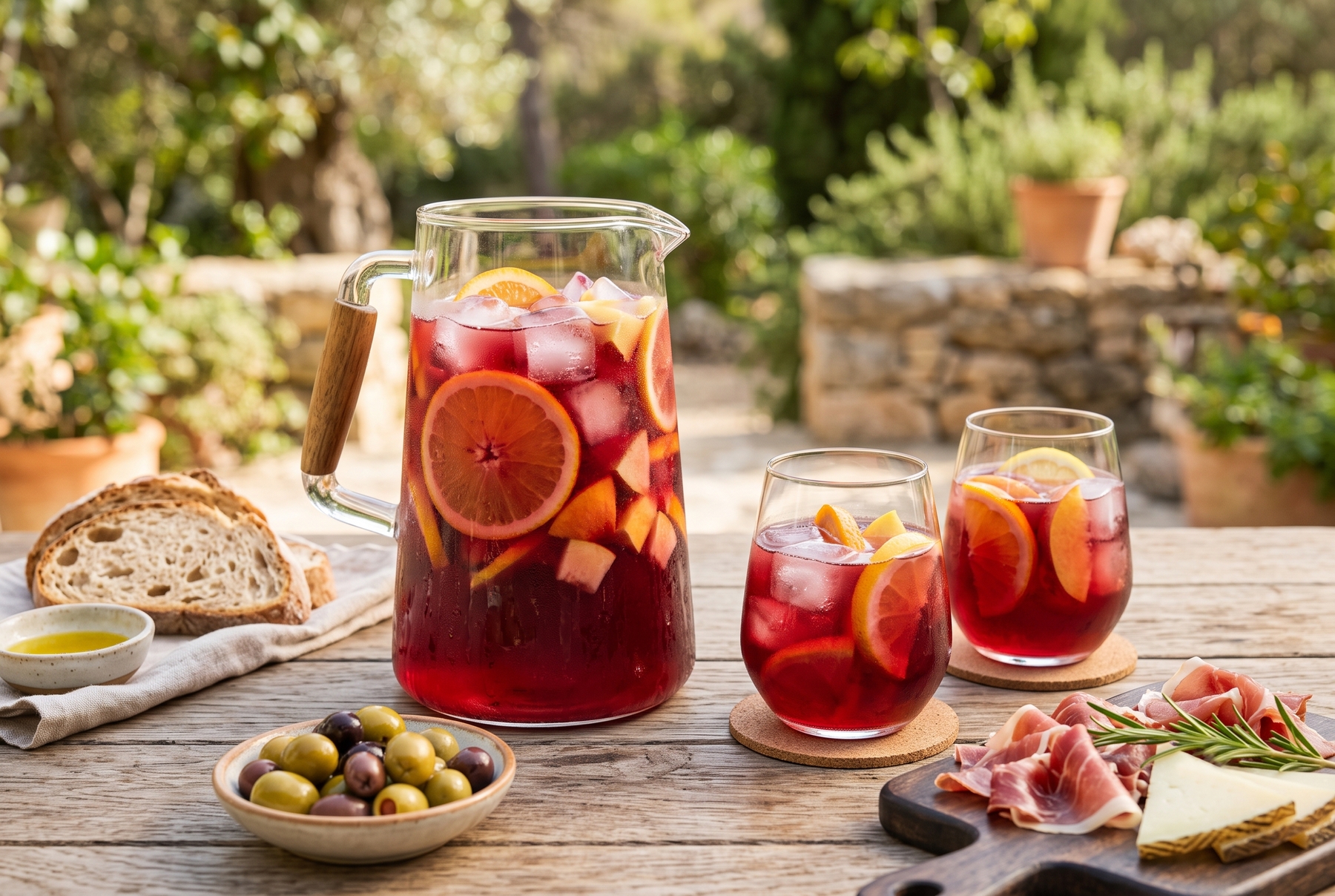
Proper homemade sangria is served in a frosted pitcher filled with ice and ripe citrus, alongside traditional Spanish tapas on a rustic wooden table.
Table of Contents
- The Formula of Balance
- Which Wine to Choose: Not the Best, But Solid
- Fruit: Less Randomness, More Aroma
- Sweetness: Where to Draw the Line
- The Strong Accent: Brandy and Vermouth as Seasoning
- Steeping Time: 1 to 2 Hours, Not Overnight
- Ice and Temperature: The Quiet Secret of a Spanish Bar
- A Working Formula per Pitcher
- How to Know You Succeeded
- White and Rosé: Same Rules, Different Profile
- Tinto de Verano: What Spaniards Often Drink Instead of Sangria
- The Proper Tinto de Verano: Vermouth and Real Lemonade
- Sangria or Tinto de Verano: Two Drinks for Different Evenings
- What to Serve It With
- Cheat Sheet: 8 Signs of a Great Sangria
The Formula of Balance
Deconstructing successful versions from various Spanish bars reveals the exact same underlying structure: wine, fruity freshness, moderate sweetness, a slight bitterness or a spicy accent, cold temperature, and time. That is all.
The goal is not to mask the wine with fruit and sugar. The objective is the exact opposite: assembling a drink where the wine remains the foundation, the citrus provides aroma and acidity, the sweetness binds everything together, and the cold maintains the structure. Removing any single element ruins the pitcher. Lacking acidity results in a flat fruit compote. Lacking cold yields a cloudy, warm liquid. Lacking restraint with sugar creates a lip-smacking syrup.
Which Wine to Choose: Not the Best, But Solid
Young Red Without Oaken Heaviness
Creating a classic red wine sangria requires a young, fruity red with soft tannins. In Spain, this is most often a young Rioja, Tempranillo, Garnacha, or a simple table wine that costs less than water in a local bar. An aged wine with a heavy oak profile does not work here: the vanilla and smoky notes clash with the citrus, and the dense tannins become harsh after chilling.
A practical guideline for local wine shops involves looking for a dry or semi-dry red without pronounced vanilla or ‘heavy oak’ in its description. A mid-range price point is ideal. It should be a wine you would happily drink on its own, yet can mix with oranges without a single regret.
Why Bad Wine Cannot Be Hidden
There is a prevailing myth that sangria was invented to salvage spoiled wine. In practice, the opposite is true: mixing and chilling amplify the wine’s base character. A vinegary note will turn sharper, harsh alcohol will pierce through the fruit, and unpleasant bitterness will not simply disappear. Poor wine creates poor sangria, only now it is also excessively sweet.
Fruit: Less Randomness, More Aroma
Orange and Lemon as the Foundation
Citrus fruits in sangria are not mere decorations but rather the load-bearing walls: without them, a fruit-based recipe quickly falls flat. The essential oils from the zest provide that signature fresh scent, while the acidity keeps the sweetness in check. Slicing the orange into thin rounds with the peel intact works best. Lemons require a gentler touch: the white pith beneath the zest carries bitterness, meaning the slices should not be muddled in the pitcher, and restraint is needed with the quantity.
Apple, Peach, and Berries
The rest depends on the season. Apples yield almost no juice but hold their shape and impart a light autumnal aroma. A ripe peach works the opposite way: it oozes juice, softens, and fills a summer version with pulp and sweetness. Berries offer visual appeal and fragrance but turn mushy quite fast; adding strawberries and raspberries closer to serving makes them an accent rather than a base.
The Fruit Salad Mistake
Overloading the pitcher with fruit makes the drink heavy. The chunks displace the wine, absorb the cold, crumble, and turn a translucent ruby liquid into a cloudy mush. The rule of thumb is simple: the amount of fruit in the pitcher should allow the wine to remain the star. This is a beverage with fruit, not a wine-soaked dessert.
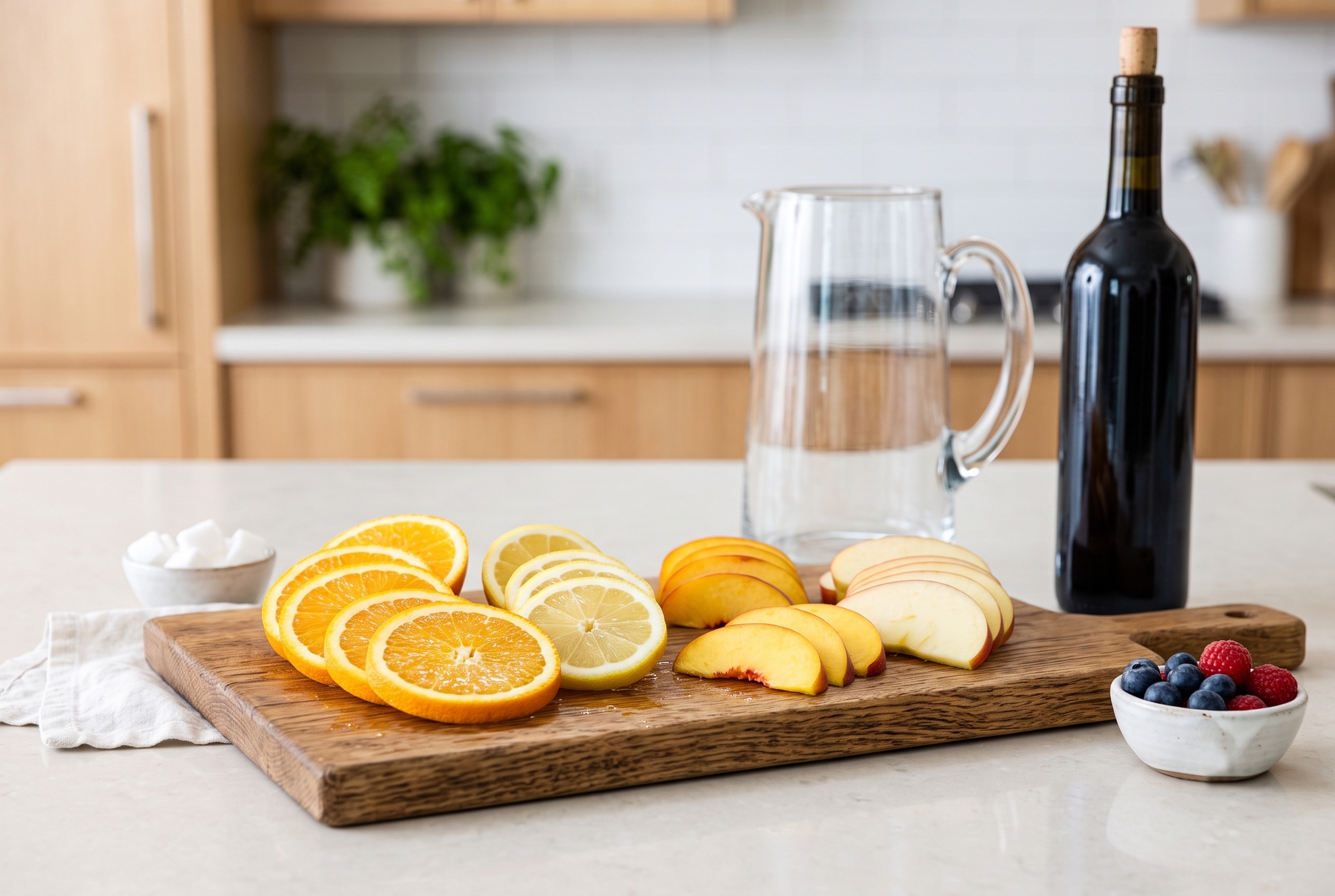
Sliced fresh oranges, lemons, peaches, and apples form the aromatic foundation of a proper sangria.
Sweetness: Where to Draw the Line
Sugar is not needed here to create a dessert. Its purpose is to bind the acidity of the wine and citrus, smoothing out the rough edges. There are several options: simple syrup, orange liqueur, or a splash of fruit juice. Syrup offers the most predictability, liqueur adds an aromatic dimension, and juice provides the softest integration.
Pouring crystallized sugar directly into the pitcher is ill-advised: it dissolves reluctantly in cold wine and settles at the bottom as a sweet sludge. Dissolving it beforehand in an equal volume of hot water and letting it cool is a much better approach.
There is only one sensory guideline: sangria must be refreshing. Experiencing sticky lips after a sip means the sweetness has crossed the line, and no amount of fruit can fix that.
The Strong Accent: Brandy and Vermouth as Seasoning
A small addition of strong alcohol acts in sangria just like spices in a dish: it should not be identifiable on its own, but its absence leaves the flavor flat. Brandy provides a warm depth and notes of dried fruit, orange liqueur enhances the citrus profile, while sweet red vermouth brings botanicals and a noble bitterness.
The dosage remains modest: 30–50 ml (1–1.7 oz) per pitcher. Sangria remains a wine-based beverage, not a potent fruit cocktail. Conversations about the ‘authentic Spanish recipe’ should be approached with caution: there is no single official recipe in Spain. One bar might pour brandy, the neighboring one relies on vermouth, and the place across the street adds nothing at all. And all three are absolutely correct.
Steeping Time: 1 to 2 Hours, Not Overnight
The Minimum for Aroma
Steeping sangria for an hour or two in the refrigerator is perfectly sufficient: this window allows the zest to release its oils, the fruit and wine to exchange aromas, and the flavor profile to unify. Covering the base mixture—without sparkling water or ice—and chilling it is the right step.
Why Longer Does Not Mean Better
Leaving sangria in the fridge overnight usually does more harm than good. Citrus peels begin to release bitterness over long hours, fruit turns unpleasantly mushy, and the drink itself acquires a tired, flat taste. Needing to prepare ahead means steeping the wine with sturdy fruits (oranges, apples) and adding the delicate ones right before serving.
What to Pour at the Last Moment
Sparkling water, lemonade, ice, and soft berries are introduced right before serving. Bubbles only live for minutes, ice melts instantly in a warm liquid, and berries left overnight in a pitcher turn into rags.
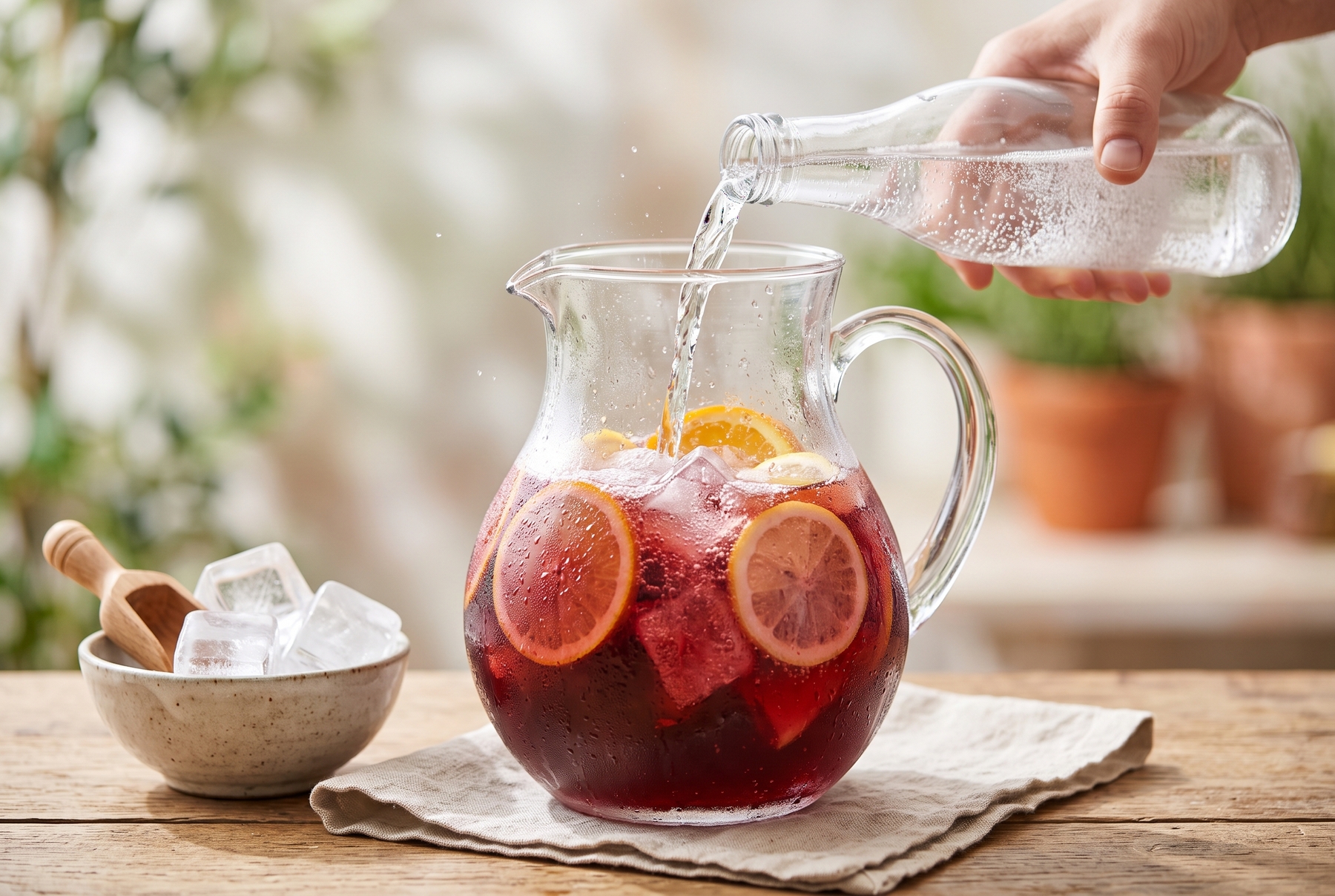
Sparkling water or lemonade is poured into the pitcher right before serving to maintain the lively bubbles.
Ice and Temperature: The Quiet Secret of a Spanish Bar
The main factor separating bar-quality sangria from homemade versions is that in a bar, it is ice-cold even before it meets the ice. Ice cannot chill a warm base effectively; it only dilutes it. Cubes in warm wine melt in minutes, leaving a pitcher full of pinkish water instead of sangria.
Therefore, chilling everything in advance is essential: the wine, the pitcher, and even the fruit. Opting for large ice cubes ensures they melt slower. Keeping the pitcher out on a hot table for hours is a mistake; pouring a glass and returning the pitcher to the fridge preserves the quality. A good sangria fails not from a lack of exotic ingredients, but from a warm pitcher.
A Working Formula per Pitcher
This is not a rigid sangria recipe, but rather a framework that adapts to the wine’s acidity and the fruit’s sweetness:
- 750 ml (25.4 oz) of young red wine
- 1 orange and half a lemon, sliced into thin rounds
- 1 seasonal fruit (apple or peach)
- 30–50 ml (1–1.7 oz) of simple syrup or orange liqueur
- 30–50 ml (1–1.7 oz) of brandy or sweet red vermouth (optional)
- 150–200 ml (5–6.7 oz) of sparkling water or lemonade right before serving
- Large ice cubes
The algorithm:
- Chilling the wine, pitcher, and fruit is the first step.
- Slicing the fruit, placing it in the pitcher, and pouring in the wine, syrup, and strong alcohol follows.
- Placing the mixture in the refrigerator for 1–2 hours allows the flavors to meld.
- Adding the sparkling water, ice, and delicate berries right before serving finishes the drink.
- Tasting is crucial. Lacking freshness requires another lemon slice. Excessive acidity demands a touch more syrup.
How to Know You Succeeded
A proper sangria boasts a translucent ruby color without any suspended fruit pulp. The aroma is fresh and citrusy, with the wine clearly detectable underneath. The first sip is cold, showcasing a soft fruitiness, where sweetness is present but does not dominate. The ultimate test is simple: finishing a glass should spark the desire for a second small glass, not a glass of water.
The signs of failure are equally specific: stickiness on the lips, bitterness from oversteeped zest, a harsh alcoholic punch to the nose, wateriness from melted ice, and swollen, bloated fruit at the bottom.
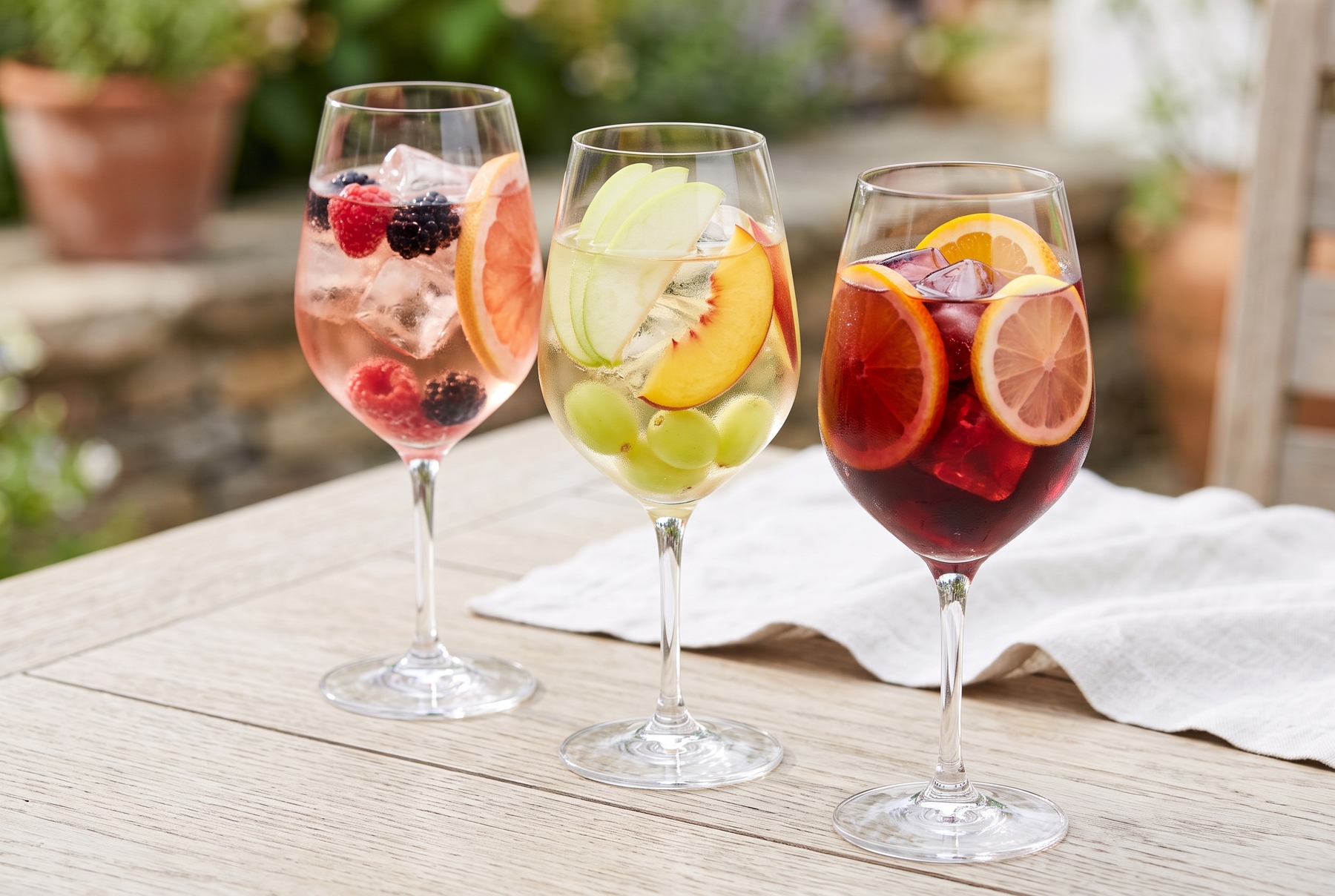
Rosé, white, and classic red sangria offer three magnificent variations of this refreshing summer beverage to suit any gathering.
White and Rosé: Same Rules, Different Profile
White sangria is built upon dry white wine paired with apples, peaches, grapes, and citrus: this variation turns out lighter and crisper. Rosé loves berries and light summer fruits. Changing the wine color and fruit selection is encouraged, but the balance remains unchanged: cold temperatures, moderate sweetness, lively acidity, and wine as the foundation. Grasping the structure of the red version makes assembling any other variation effortless.
Tinto de Verano: What Spaniards Often Drink Instead of Sangria
Here is a twist rarely shared with tourists. While sangria has become the symbol of Spain for visitors, locals on a hot weekday evening are much more likely to order a Tinto de Verano, or ‘summer red’. Tinto de Verano is simply red wine cut in half with lemonade or lemon soda, poured over plenty of ice, and garnished with a citrus slice. It comes together in 30 seconds straight in the glass, costs very little, and drinks exceptionally easily.
Pitting it against sangria as the ‘only true tradition’ is unnecessary: both beverages comfortably coexist in Spanish bars. Sangria simply embodies the role of a festive pitcher meant for a group, whereas Tinto de Verano aligns more closely with an everyday habit, much like iced tea on a hot afternoon.
The Proper Tinto de Verano: Vermouth and Real Lemonade
Why Vermouth Belongs Here
The basic Tinto de Verano recipe is good on its own, but a small shot of sweet red vermouth (20–30 ml / 0.7–1 oz) transforms a simple fizzy drink into a mature aperitif. Vermouth introduces botanicals, spices, and a slight bitterness that clings to the palate, preventing the drink from devolving into a flat soda profile.
Why the Lemonade Is More Important Than It Seems
Half of the glass consists of lemonade, meaning a randomly chosen cloying soda will ruin everything. Seeking out a lemonade with genuine citric acidity, where sweetness and tartness compete on equal footing, is essential. A homemade alternative involves lemon juice, a splash of syrup, and sparkling water. Avoiding a syrupy consistency is key, as the wine will provide enough body on its own.
The Glass Formula
- Packing a tall glass to the brim with large ice cubes is the foundation.
- Pouring 100 ml (3.4 oz) of cold young red wine follows.
- Adding 20–30 ml (0.7–1 oz) of sweet red vermouth builds the complexity.
- Topping with 100–120 ml (3.4–4 oz) of lemonade completes the mix.
- Dropping in a slice of orange or lemon and giving it a single stir with a spoon makes it ready.
Steeping is not required: this beverage is alive in the here and now.
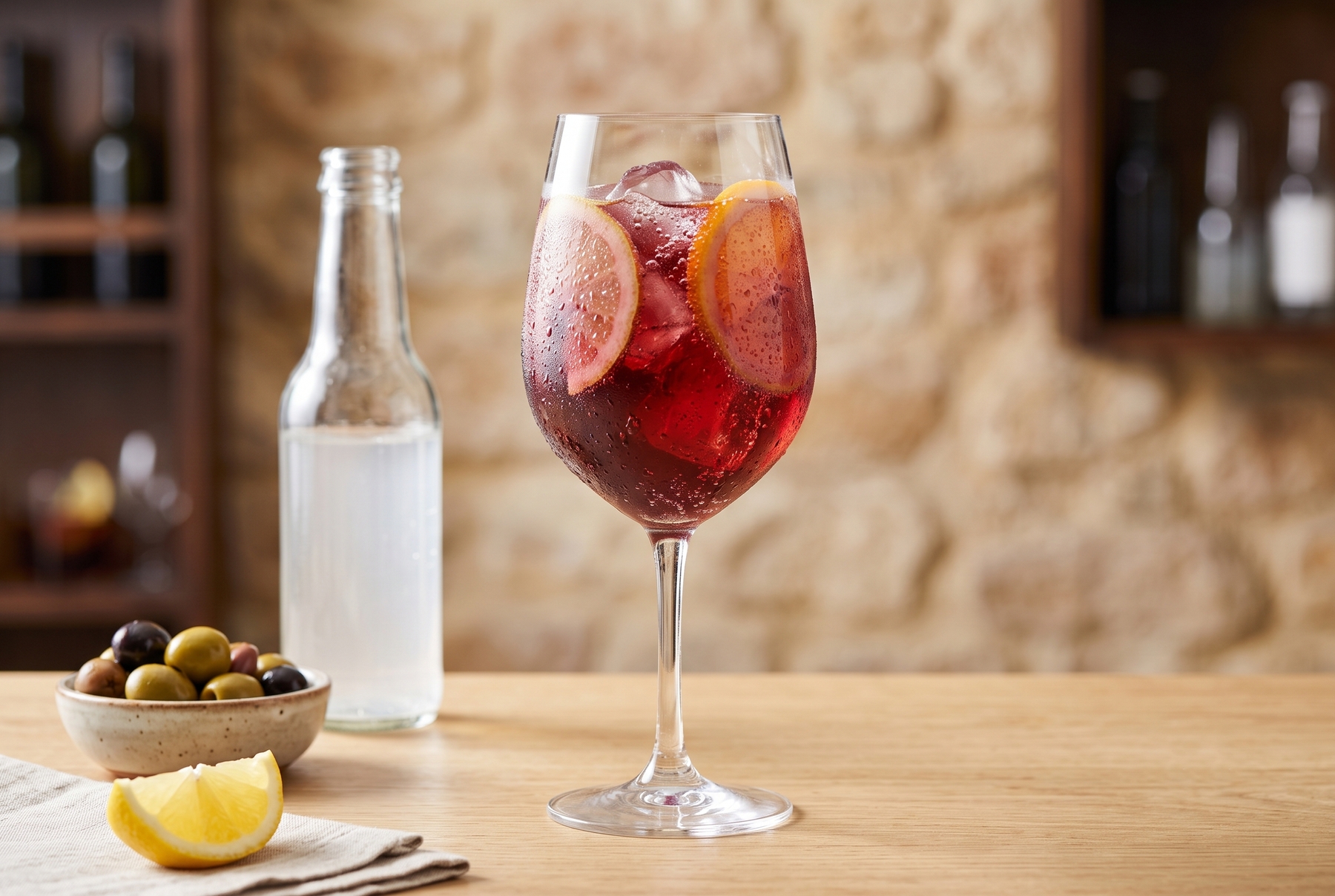
Tinto de Verano is a simple and widely popular Spanish summer beverage made with red wine, lemonade, and a touch of vermouth.
Sangria or Tinto de Verano: Two Drinks for Different Evenings
Sangria calls for a pitcher, good company, fruit, and unhurried time: it is prepared in advance, poured at the table, and stretched out over the evening. Tinto de Verano comes to the rescue when the weather is hot, guests are already at the door, and turning an aperitif into a grand project is unappealing: backyard grilling, tapas on the balcony, or a quick post-work dinner. One drink is about preparation, the other is about improvisation, and both are far more honest than a sugary cocktail from a tourist menu.
What to Serve It With
In Spain, these beverages are typically accompanied by jamón, olives, cheeses, tortilla (a potato and egg omelet), fried green peppers, and seafood. At home, these can easily be substituted with accessible local ingredients: roasted chicken, grilled vegetables, tomato bruschetta, a cheese board, summer salads, and cold appetizers. The only rule is that the food should remain relatively simple, avoiding aggressive spices that might overpower the drink. Ultimately, there are no strict rules, as sangria pairs amicably with almost any summer spread.
Cheat Sheet: 8 Signs of a Great Sangria
- A decent young, unoaked wine that is enjoyable to drink on its own
- Citrus sliced into thin rounds, avoiding muddled bitterness
- A sweetness that binds the flavors rather than dominating them
- A strong spirit accent kept under 50 ml (1.7 oz) per pitcher
- A base mixture chilled thoroughly before meeting the ice
- Large ice cubes and sparkling water added right before serving
- Fruit that provides flavor rather than acting merely as decoration
- A steeping time limited to 1–2 hours
There is no secret ingredient on this list, and Spanish bars do not go looking for one either. They simply pour cold liquids into cold liquids, slice an orange, and do not hold back on the ice: large, clear chunks clinking against the sides of a proper pitcher.
0 comments