
A single ideal dough for pelmeni (traditional Russian meat dumplings) does not exist. Instead, specific formulas suit specific culinary goals. Some cooks prefer a whisper-thin wrapper that lets the savory filling show through. Others want a compliant, supple mass that yields easily to the hands and seals without a fight. For many, the priority is structural integrity—ensuring the dumplings survive both deep freezing and a rolling boil without splitting at the seams. Three foundational mixing methods solve these challenges differently, and each behaves in its own distinct way during shaping and cooking.
Below are three foolproof pelmeni dough recipes, an honest side-by-side comparison, and essential troubleshooting tips.
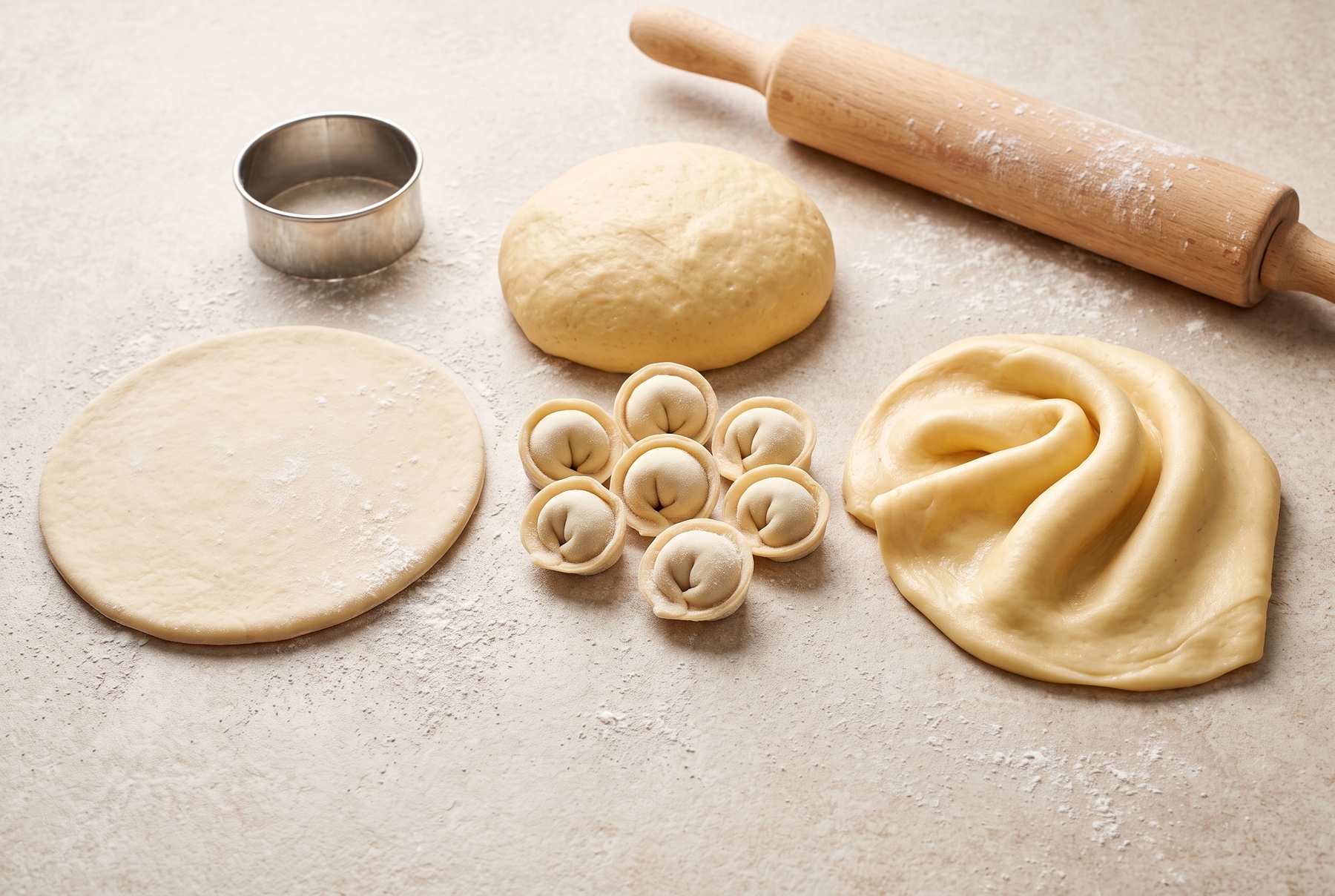
Different pelmeni dough variations for effortless shaping: classic water-based, hot-water choux, and egg dough.
Table of Contents
What Makes a Great Pelmeni Dough
Exceptional dumpling dough rolls out smoothly without tearing, stretching gracefully rather than snapping back. The edges seal at the first pinch, requiring neither water nor tedious crimping with a fork. Once dropped into boiling water, the wrapper holds its shape and refuses to burst. After cooking, it remains delicate and tender rather than turning into a dense, rubbery casing around the meat.
Several factors govern this behavior: the exact hydration ratio, the presence of an egg, the kneading duration, and whether the dough gets a proper rest. Kneading develops the gluten network, which gives the dough its elasticity and prevents tearing under the rolling pin. Boiling water interacts with flour quite differently than cold water does. Adding an egg increases density and lends a warm, golden hue. Finally, resting relaxes the gluten strands, making rolling effortless.
A quick caveat regarding flour comes first. Every bag of flour behaves differently. One brand absorbs water rapidly, while another takes in noticeably less—a variance driven by grain moisture, milling fineness, and even the ambient humidity in your kitchen. Consequently, monitoring the physical feel of the dough matters far more than blindly forcing every last gram of flour from the recipe into the bowl.
Option #1: Classic Water-Based Pelmeni Dough
This serves as the universal baseline. It offers a neutral flavor, a straightforward ingredient list, and the ability to roll paper-thin. Beginners making dumpling dough from scratch will find this the most forgiving starting point.
- 300 g (10.5 oz) all-purpose wheat flour
- 140 ml (4.7 fl oz) warm water
- 5 g (0.18 oz) salt (about 1 tsp)
- 1 tbsp vegetable oil (optional, for added elasticity)
How to Mix the Dough
- Dissolving the salt in warm (not hot) water comes first.
- Sifting the flour into a mound on the work surface and creating a central well prepares the base for the water and optional oil.
- Incorporating the liquids starts with a fork before transitioning to kneading by hand for 8–10 minutes.
- Wrapping the dough in plastic or covering it with an upturned bowl allows it to rest for 30 minutes at room temperature.
Tactile cues matter more than the clock here. Immediately after kneading, the dough feels firm, slightly rough, and springy under a finger, with almost no stickiness. After resting, its texture transforms: it becomes smoother, softer, and far more pliable. A finger presses in effortlessly, and the indentation slowly springs back.
The Final Result
Because the dough has a clean, neutral flavor, the meat filling remains the star of the dish. The sheet rolls out thin enough to become translucent, relying on the simplest pantry staples: flour, water, and salt.
Only one pitfall threatens this method. Working in extra flour during the initial kneading—a strong temptation when the raw dough feels sticky—produces a tough wrapper that turns chewy and dense after boiling.
Years in the kitchen have taught me one simple truth: resisting the urge to add extra flour pays off. Letting the dough rest for at least half an hour solves the problem, as most seemingly “too sticky” doughs turn out to have the exact right hydration. During the rest period, moisture distributes evenly throughout the flour proteins, and the tackiness vanishes on its own.
When to Choose This Dough
This formula shines for everyday homemade pelmeni and straightforward hand-shaping. It is the go-to choice when you want a predictable, classic wrapper that never lets you down.
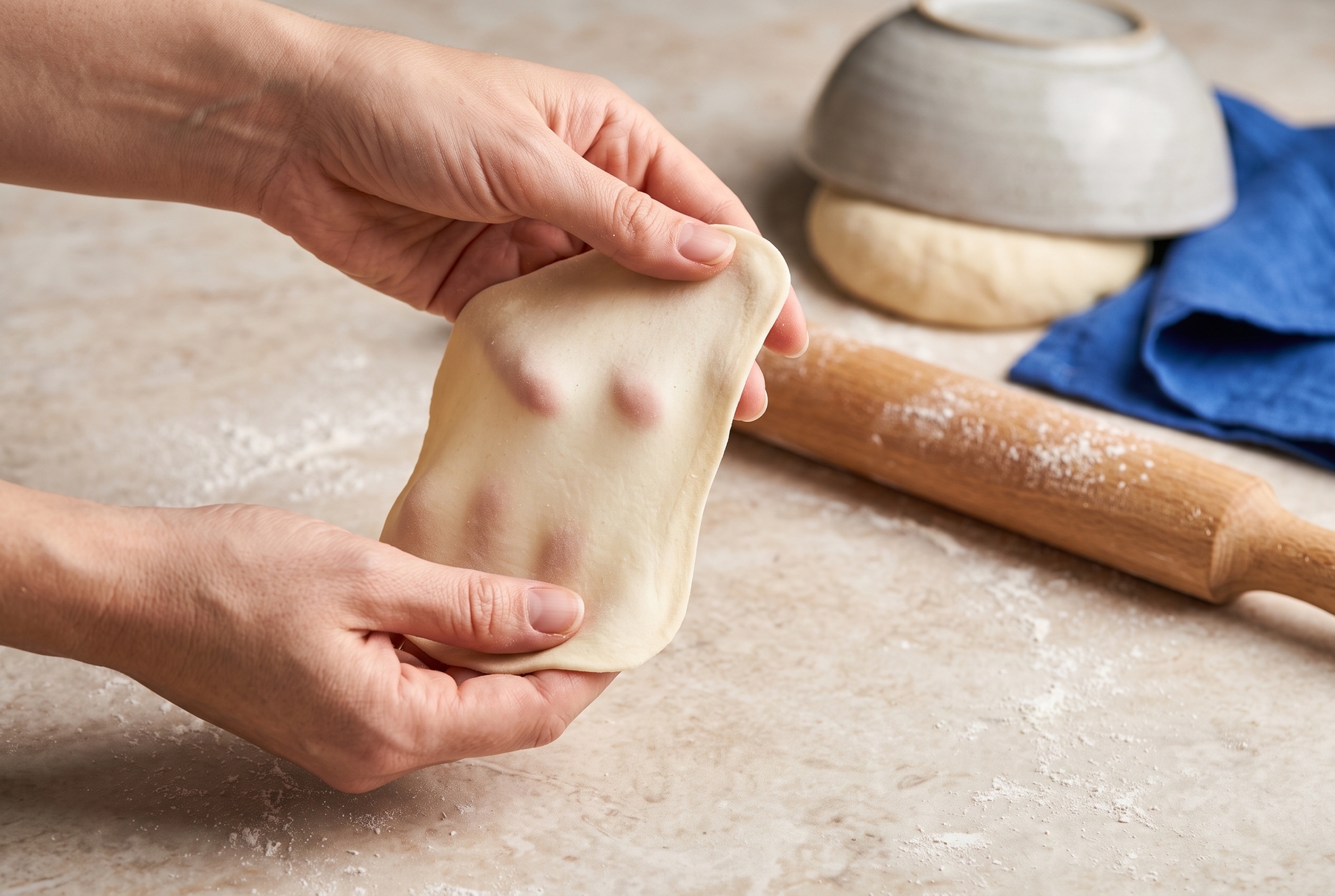
After resting, classic water-based dough becomes supple and stretches easily without tearing.
Option #2: Choux (Hot-Water) Pelmeni Dough
Hot-water dough—known in Russian kitchens as zavarnoye (scalded or choux-style dough)—is noticeably more pliable than the classic version. This forgiving formula yields a soft, stretchy mass that rolls out effortlessly, even for cooks who struggle with traditional stiff doughs.
- 300 g (10.5 oz) all-purpose wheat flour
- 150 ml (5 fl oz) boiling water
- 2 tbsp vegetable oil
- 5 g (0.18 oz) salt
Why Boiling Water Works
Boiling water partially gelatinizes the flour’s starches: the granules swell, creating a remarkably supple dough that offers zero resistance to the rolling pin. As you roll, the sheet rarely shrinks back and stretches easily into a gossamer-thin layer.
Following the exact mixing order is crucial here. Combining the salt and oil with the flour comes first. Pouring the boiling water in a thin stream while stirring constantly with a spoon or fork protects your hands from the scalding, lumpy mixture. Once the mass comes together into a shaggy ball and cools to a comfortable warmth, kneading by hand brings it to complete smoothness.
How It Behaves During Shaping
The dough feels soft and obedient, rolling into an even sheet without springing back. The edges pinch together permanently and almost never require moistening with water. Shaping moves quickly, and the seams hold with absolute confidence.
Mistakes usually happen in two places. Eyeballing the boiling water ruins the hydration ratio, resulting in either a soupy mess or dry, unworkable crumbs. The second error is judging the dough’s firmness while it is still hot. Allowing the mass to cool to lukewarm lets the starches set and firm up naturally.
When to Choose This Dough
This recipe is ideal if standard dumpling dough feels stubborn and springy under your rolling pin. The hot-water method also freezes well, though freezer performance depends just as much on flour quality, gluten structure, and storage conditions. After boiling, the wrapper stays wonderfully soft and slightly more delicate than the classic water version.
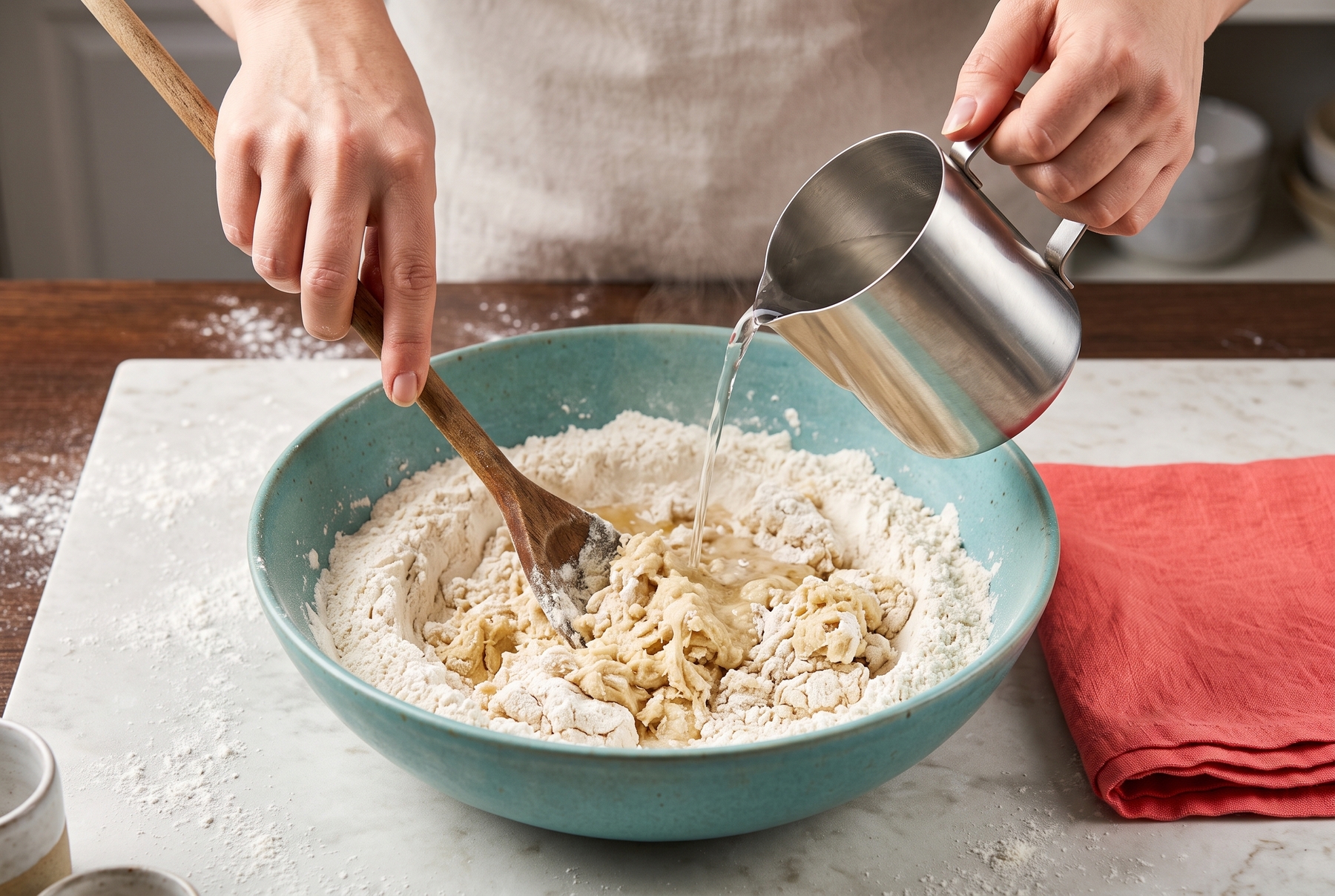
Boiling water gelatinizes the starches in the flour, making hot-water dough remarkably soft and pliable.
Option #3: Pelmeni Dough with Egg
This variation produces a firmer, bouncier dough with a warm yellow tint. Once boiled, the wrapper offers a denser, more substantial bite and holds its shape impeccably.
- 300 g (10.5 oz) all-purpose wheat flour
- 1 egg (about 50 g / 1.75 oz)
- 110 ml (3.7 fl oz) water
- 5 g (0.18 oz) salt
What the Egg Changes
An egg introduces extra protein and fat into the matrix. The resulting wrapper becomes denser and more elastic, takes on a rich golden hue, and maintains an even thickness during rolling. The flavor shifts as well, becoming richer and more pronounced, similar to fresh pasta.
However, assuming an egg automatically makes the dough “superior” is a mistake; it simply introduces a trade-off. Maximum bounce isn’t always desirable, and excess flour punishes egg dough twice as hard. Adding too much flour here turns the boiled wrapper tough and leathery, much like overcooked heavy noodles.
How to Tell When You Have Enough Flour
The dough should gather into a cohesive ball and pull away cleanly from your palms while remaining faintly tacky. If it feels tight and dry on the kneading board, rolling it out will be an exhausting workout.
Giving the dough a mandatory 30-minute rest is non-negotiable. Resting transforms the temperament of egg dough: the tight gluten network relaxes, rolling takes half the effort, and the sheet neither tears nor snaps back.
When to Choose This Dough
This option suits cooks who prefer a substantial wrapper with a toothsome, al dente bite, a warm color, and a richer, eggy flavor. An egg alone does not guarantee crack-free freezing or invincible seams—proper flour hydration, thorough kneading, and smart storage still do the heavy lifting.
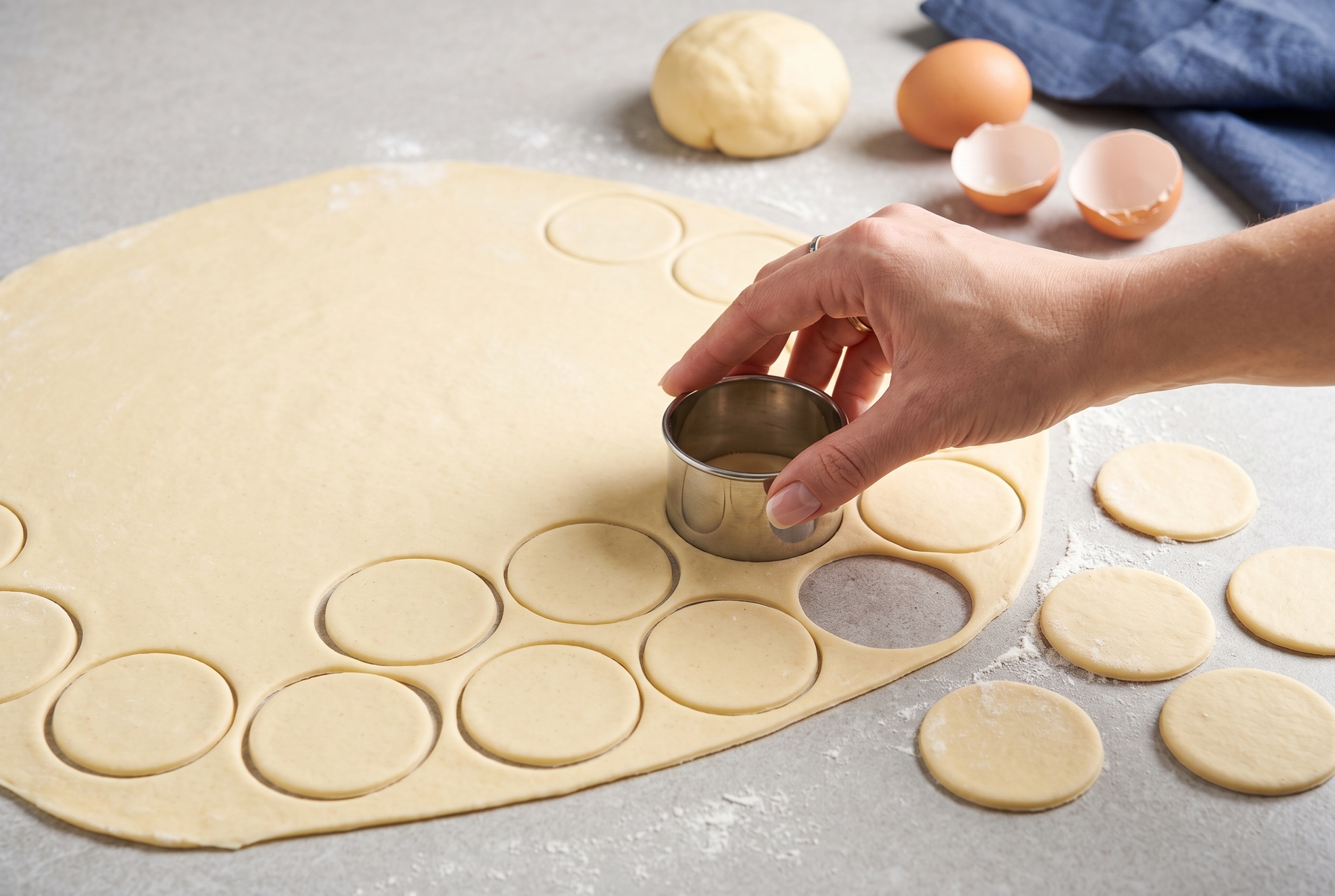
Egg dough boasts a warm golden hue, wonderful elasticity, and reliable seam-sealing power.
Which Dough to Choose: A Quick Cheat Sheet
| Feature | Water-Based | Hot-Water (Choux) | With Egg |
|---|---|---|---|
| Ease of Mixing | High | Medium | High |
| Ease of Rolling | Medium | High | Medium |
| Pliability for Shaping | Medium | High | Medium |
| Texture After Boiling | Medium | Soft & Tender | Firm & Toothsome |
| Best Suited For | Beginners, everyday cooking | Cooks who dislike fighting a rolling pin | Fans of a firm, pasta-like bite |
The right choice comes down to your immediate goal: warm water delivers an all-purpose classic, boiling water yields effortless pliability, and an egg provides a firm, chewy bite.
3 Mistakes That Ruin Any Dumpling Dough
Adding too much flour. Raw dough naturally feels tacky at first, tempting the cook to keep dusting the board. This habit creates a dry, stiff block that boils into a tough, unyielding wrapper. Resisting the urge to fight stickiness with flour is key, as the dough naturally absorbs the moisture and smooths over during its rest.
Skipping the rest period. Freshly kneaded dough is stubborn; it tears and fights the rolling pin at every pass. Giving it 30 minutes under plastic wrap relaxes the gluten, turning a wrestling match into calm, effortless rolling.
Rolling to the wrong thickness. Aiming for 1.5–2 mm (about 1/16 inch)—where the sheet becomes faintly translucent—hits the sweet spot. Anything thicker boils into a heavy, doughy layer that overwhelms the meat filling, while an overly thin wrapper tears in the boiling water and leaks all its savory broth.
While printing out a recipe and taping it to the fridge helps at first, muscle memory quickly takes over. Once your hands feel how a tacky mass transforms under plastic wrap into a smooth, springy ball, and how an even sheet glides beneath the rolling pin without tearing, you will barely need the kitchen scale again.
0 comments