
Homemade lemonade rarely fails because of a lack of fruit. There are usually plenty of berries, enough sugar, and ice at the ready. The culprit is almost always balance: the sweetness is there, but nothing connects it to acidity and aroma. The glass ends up either cloying or watery, and in both cases, the issue is not the sugar ratio, but a lack of cohesion.
True flavor does not come from sweetness alone; it emerges from the interplay of acidity, aroma, temperature, and a subtle bitterness or herbal accent in the right proportion. Removing the acid leaves the drink flat. Stripping away the aroma leaves nothing more than sweet water. Furthermore, an under-concentrated base loses noticeable acidity and aroma once chilled. While this balance defies exact gram measurements, a single intuitive principle applies to almost any fruit in the refrigerator.
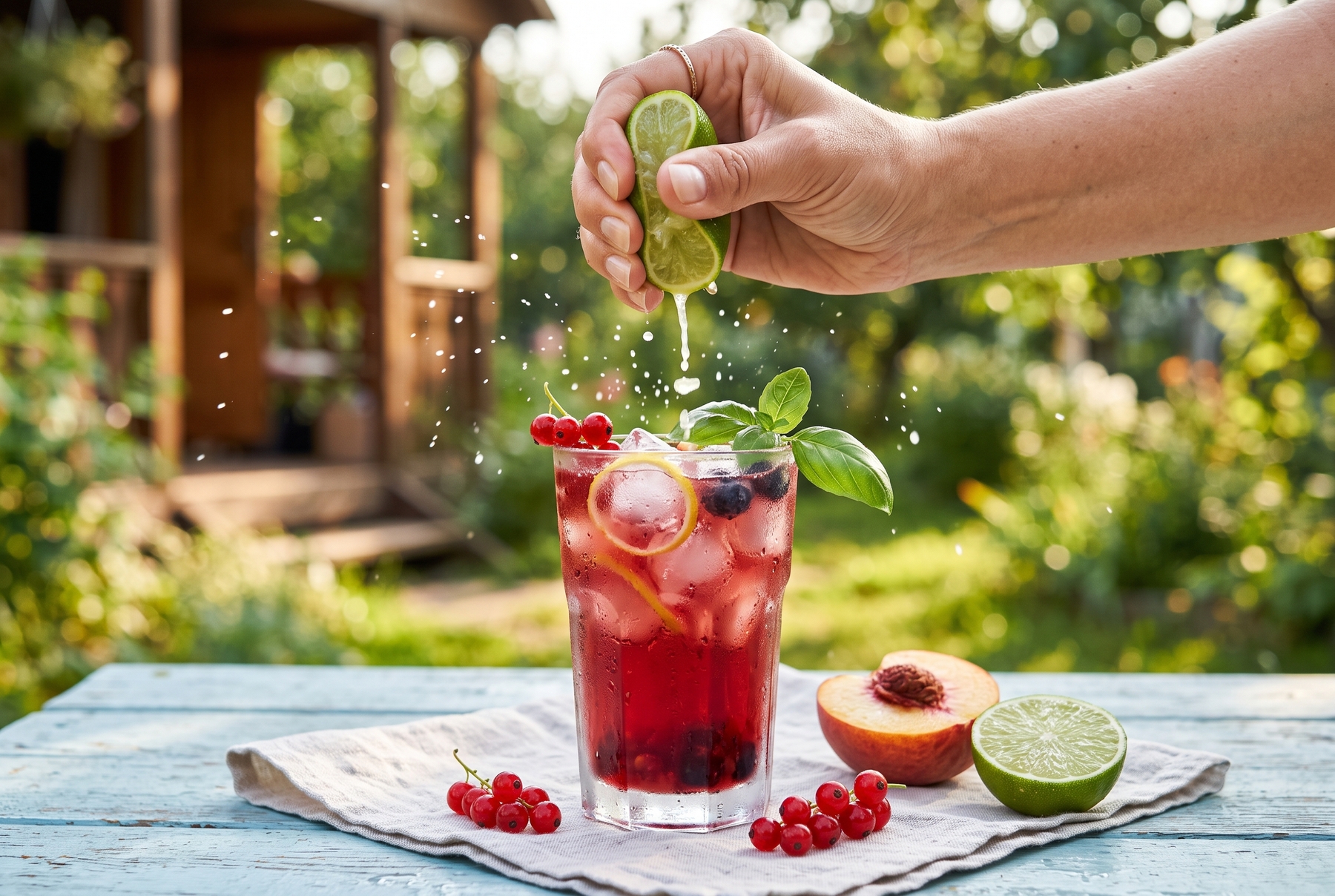
Adding fresh citrus juice right before serving balances the sweetness and unlocks the vibrant berry aroma.
Table of Contents
- What Happens to Fruit and Berries in the Pitcher
- The Formula for a Great Summer Drink
- Which Fruits and Berries Work Best for Summer Drinks
- 5 Ways to Make Summer Fruit and Berry Drinks
- How Much Sugar You Actually Need
- Temperature, Ice, and Serving
- 7 Flavor Combinations Worth Remembering
- Why Drinks Turn Out Flat
- How to Store Homemade Drinks in Summer
- Quick Cheat Sheet: Building a Summer Drink From What You Have
What Happens to Fruit and Berries in the Pitcher
Juice, Infusion, Syrup, Puree: Each Has Its Own Character
A single fruit can yield entirely different homemade drinks depending on how it is treated. Fresh juice delivers immediate, sharp acidity that fades quickly. A cold infusion feels softer and more fragrant, though lighter in body. Syrup concentrates flavor and extends shelf life, yet the required heating sacrifices some fresh brightness. Puree contributes a lush density and texture that nothing else can replicate.
Strawberry puree builds the body of a drink, creating a richness felt on the tongue before the first swallow. Currants drive the acidity, raspberries supply the aroma, and peaches soften everything around them. Citrus strikes a sharp, direct note. Apples and pears rarely take center stage, instead serving as a calm foundation that supports bolder ingredients.
Why Berries Dislike Prolonged Boiling
Extended cooking destroys the very qualities that make fresh berries desirable: volatile aromas and vibrant color. After ten minutes on the stove, raspberries smell like jam rather than summer. Currants turn gray and cloudy. Mint left in boiling water for more than a couple of minutes releases a harsh bitterness that is impossible to mask.
A brief simmer makes sense when extracting color and juice from thick-skinned berries like blackcurrants, gooseberries, or lingonberries. Cold infusion preserves delicate aromas in ingredients like raspberries, mint, and basil. Making a syrup works best when building a concentrated stash for later rather than a drink for right now. These three techniques serve three distinct purposes. Confusing them turns a potentially vibrant mors (a traditional Eastern European berry drink made by combining cooked berry pulp broth with fresh raw juice) into something brown and flat.
The Formula for a Great Summer Drink
Base, Acid, Sweetness, Aroma, Cold: The 5 Elements of Flavor
A well-crafted drink brings together five elements: a liquid base (water, sparkling water, tea), acid (lemon, lime, tart berries), sweetness (sugar, syrup, honey), aroma (herbs, zest, spices), and cold, which mutes sweetness, acidity, and fragrance alike. This functions less like a rigid formula with exact weights and more like practical kitchen logic: tasting reveals what is missing, allowing for targeted adjustments rather than defaulting to extra sugar.
How to Tell When the Flavor Is Balanced
A properly balanced drink leaves no sticky sweetness on the palate. It invites another sip rather than a chaser of plain water. Acidity registers as refreshing brightness rather than a scratch in the throat. The fragrance of berries or herbs arrives first, followed gently by sweetness.
Evaluating the base before chilling requires making it slightly more concentrated than seems necessary. Cold temperatures and melting ice mute flavors more aggressively than expected: a mixture that tastes balanced at room temperature transforms within five minutes over ice into sweetened water with only a vague memory of fruit.
Which Fruits and Berries Work Best for Summer Drinks
Berries With Bright Acidity
Currants, cranberries, sour cherries, gooseberries, sea buckthorn, and raspberries rarely need extra sugar. Instead, they benefit from proper dilution and an aromatic element to soften their sharp edges. Cranberry mors diluted one-to-five with water often tastes brighter than a batch loaded with an extra spoonful of sugar to “cut the sourness.” Sugar does not erase acidity; it merely balances it.
Soft and Sweet Fruits
Peaches, apricots, nectarines, pears, apples, watermelons, and melons almost always require outside acidity. Without lemon, lime, currants, or a tart apple, drinks made from these fruits resemble watered-down puree: sweet, yet lacking lift. A spoonful of lemon juice in peach water achieves more than adding another whole peach.
Citrus, Herbs, and Spices as Flavor Tuners
Lemon, lime, orange zest, mint, basil, tarragon, rosemary, ginger, and cardamom act primarily as flavor and aroma enhancers. Mint refreshes and leaves a gentle cooling sensation on the exhale. Basil lends a spicy, slightly peppery fragrance to berry drinks. Ginger provides a warm bite that lingers on the palate. Citrus zest amplifies aroma without introducing excess sourness, giving it a distinct advantage over citrus juice.
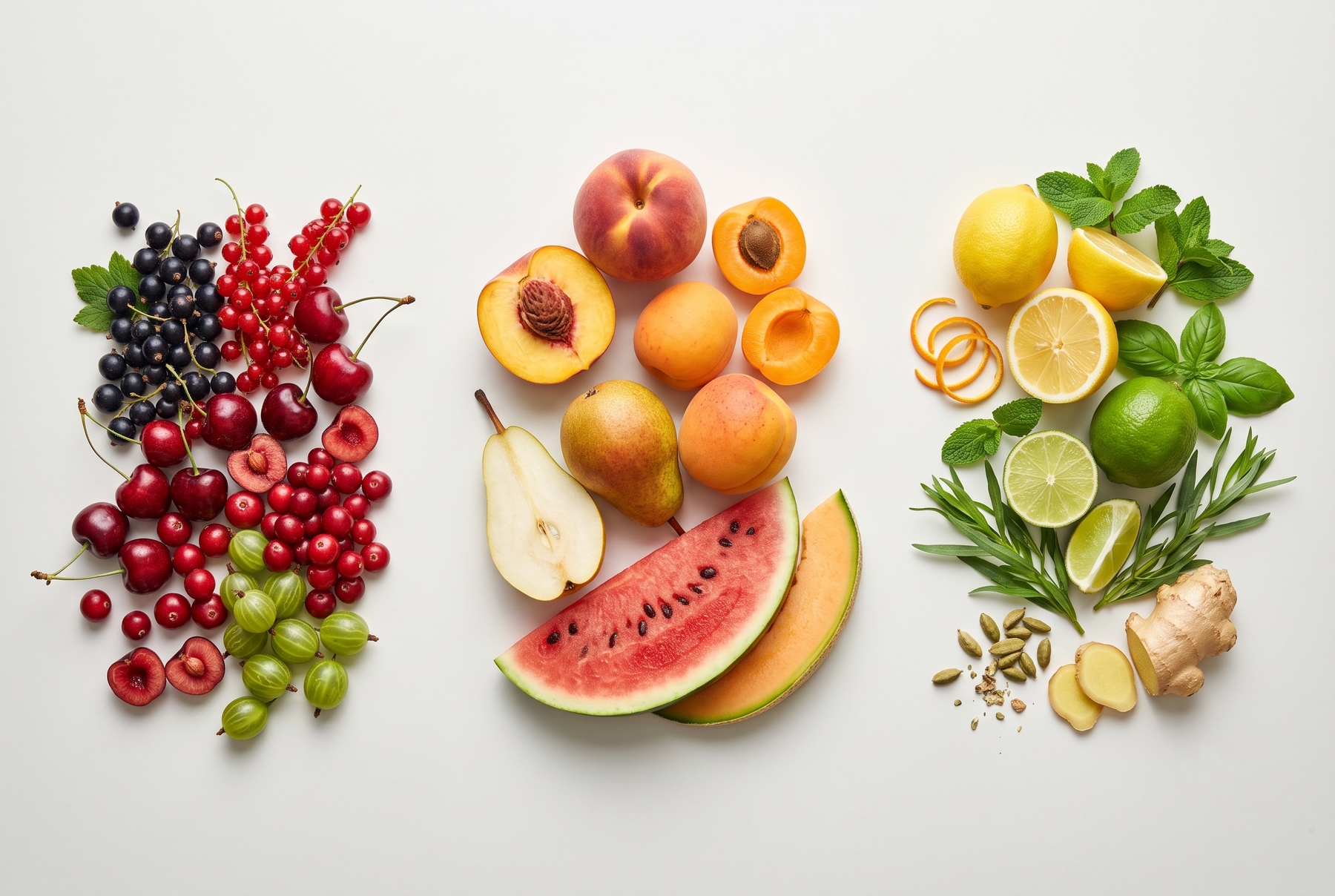
Tart berries, soft stone fruit, and fresh herbs form the trio needed for a harmonious flavor balance.
5 Ways to Make Summer Fruit and Berry Drinks
How to Make Mors: Pure Berry Freshness
The logic behind mors (the classic Russian non-alcoholic berry drink) is straightforward: simmering the pressed berry skins briefly builds a flavorful base, while stirring in the raw juice or puree off the heat preserves vibrant color and lively aroma. Finished mors remains clear—or slightly opaque when using lingonberries or sea buckthorn—never muddy brown. Straining through a fine-mesh metal sieve works best, as cheesecloth lets too much fine pulp pass through, clouding the drink.
Cranberry Mors for 1.5 L (50 fl oz):
- 300 g (10.5 oz) cranberries
- 1.2 L (40 fl oz) water
- 4 tbsp sugar
- 1 strip of lemon zest
- Crushing the berries with a masher releases their liquid, which is then pressed through a sieve into a separate bowl and refrigerated.
- The remaining berry pulp is covered with water, brought to a boil, and removed from the heat before stirring in the sugar and zest to steep for 15 minutes.
- Straining and cooling the broth prepares it for the raw cranberry juice, after which the finished drink chills completely.
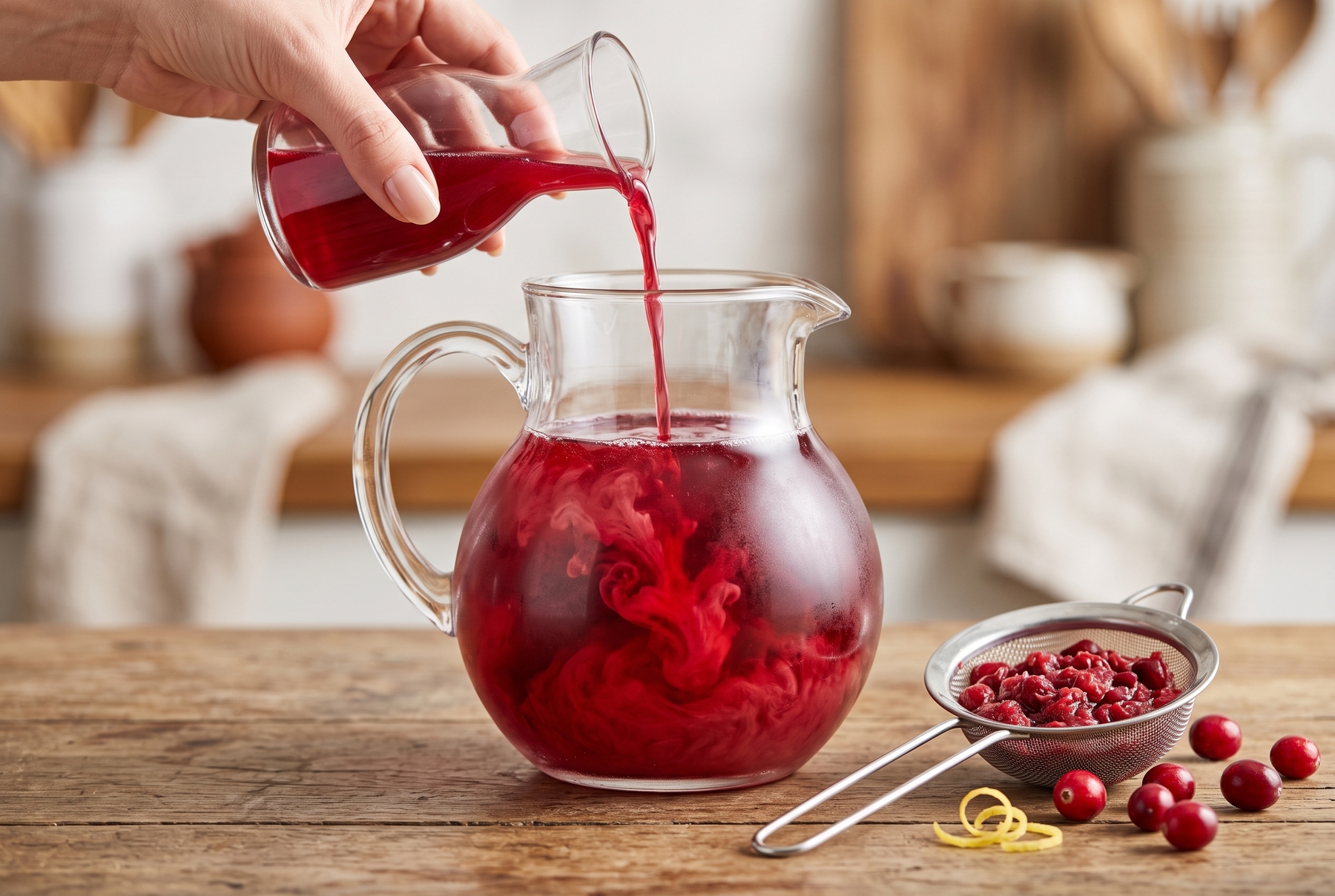
Pouring raw juice into the cooled berry pulp broth preserves the ruby color and delicate nutrients.
Homemade Lemonade: A Bright Cold Drink
Lemonade does not always begin with lemons. Berry syrup topped with sparkling water follows the same principle, as does fruit puree brightened with citrus. In cold water, syrup outperforms granulated sugar: crystals dissolve slowly and reluctantly, whereas syrup integrates instantly. Sparkling water belongs at the very end, poured gently; premixing the entire sweet base with soda causes the drink to go flat within ten minutes.
Blackcurrant Lemonade for 4 Glasses:
- 200 g (7 oz) blackcurrants
- 100 g (3.5 oz) sugar
- 100 ml (3.4 fl oz) water
- Juice of 1 lemon
- 700 ml (24 fl oz) sparkling water
- 6 mint leaves
- Warming the sugar and water until dissolved creates a hot base; once off the heat, the blackcurrants steep in this liquid for 10 minutes.
- Pressing the mixture through a sieve and stirring in the lemon juice yields a vibrant syrup ready for chilling.
- Dividing the syrup among ice-filled glasses with mint leaves and topping with sparkling water finishes the drink.
{{8845}}
Chilled Kompot: Softness and Nostalgia
Kompot (a traditional Slavic drink made by simmering fruit in water) does not have to resemble the dull beverage of school cafeterias. A lighter, modern approach uses less sugar, relies on a shorter cooking time, and incorporates brighter acidity alongside a clean strip of citrus zest. Served cold over ice, it transforms from an afterthought into a standalone summer refresher.
Sour Cherry and Apple Kompot for 1.5 L (50 fl oz):
- 300 g (10.5 oz) sour cherries
- 1 tart apple
- 1.5 L (50 fl oz) water
- 3 tbsp sugar
- 1 strip of orange zest
- Bringing the water and sugar to a boil sets the stage for the sliced apple, which simmers for 3 minutes.
- Adding the cherries and orange zest brings the pot back to a brief boil for 1 minute before the heat is turned off.
- Covering the pot allows the flavors to meld as the liquid cools completely before being served over ice.
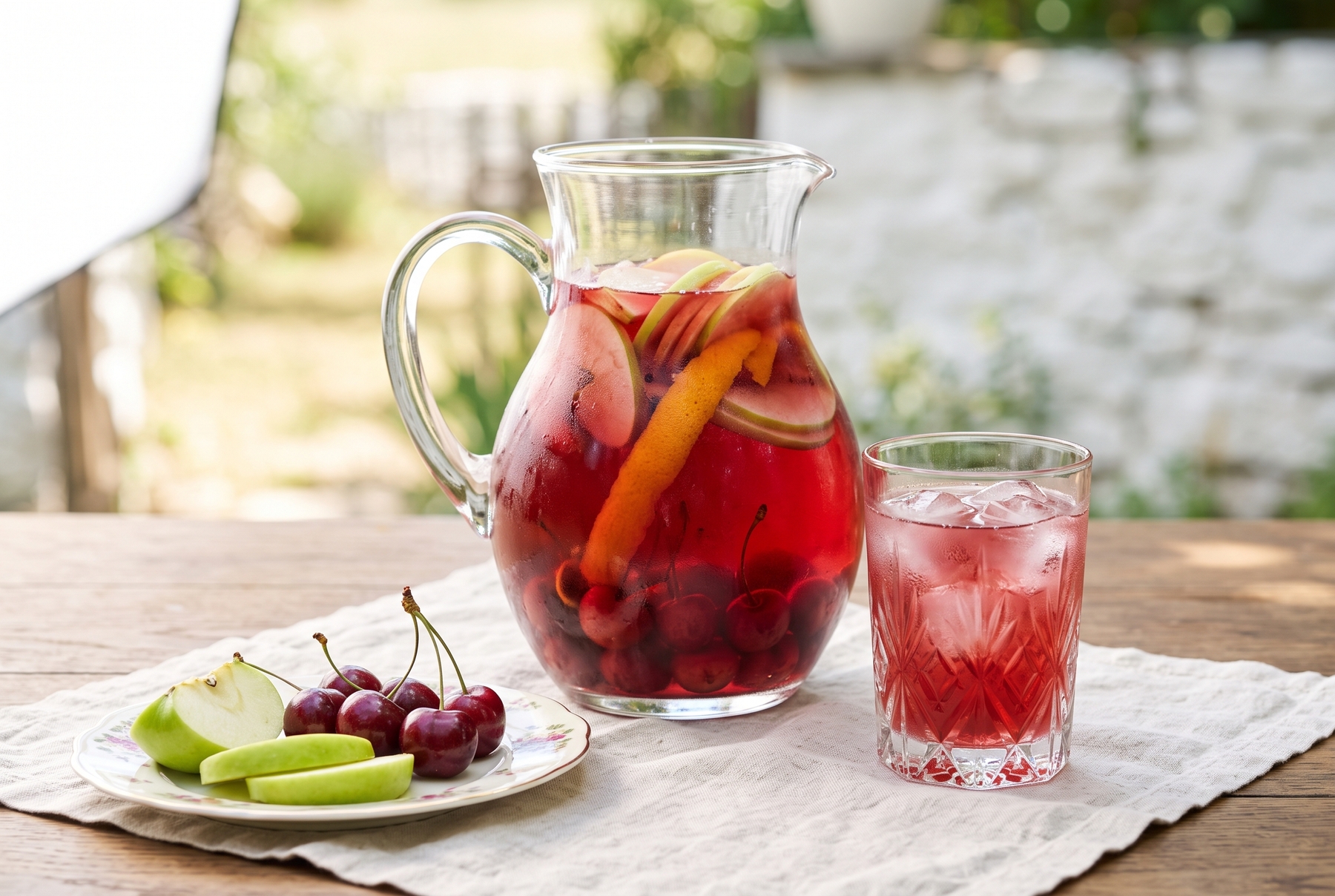
Briefly simmering apples with sour cherries and orange zest preserves the fruit texture while building deep flavor.
Iced Tea With Berries and Fruit
Chilled tea, hibiscus (karkade), or herbal infusions provide an excellent structural base for fruit drinks. The natural astringency of black tea keeps sweet peaches from tasting cloying. Hibiscus contributes its own ruby color and sharp tang, requiring a lighter hand when paired with already tart berries. Pure hibiscus petals, like mint or chamomile infusions, remain naturally caffeine-free.
Peach Hibiscus Iced Tea for 1 L (34 fl oz):
- 2 tbsp dried hibiscus petals (karkade)
- 500 ml (17 fl oz) hot water (about 90 °C / 194 °F)
- 2 ripe peaches
- Juice of half a lime
- 1 tbsp sugar
- Steeping the hibiscus in hot water for 5 minutes before straining produces a concentrated tart base.
- Pureeing the peaches with sugar and blending them into the hibiscus infusion with lime juice unites the flavors.
- Chilling the mixture and adding cold water to reach a total volume of 1 L (34 fl oz) prepares the tea for serving over ice.
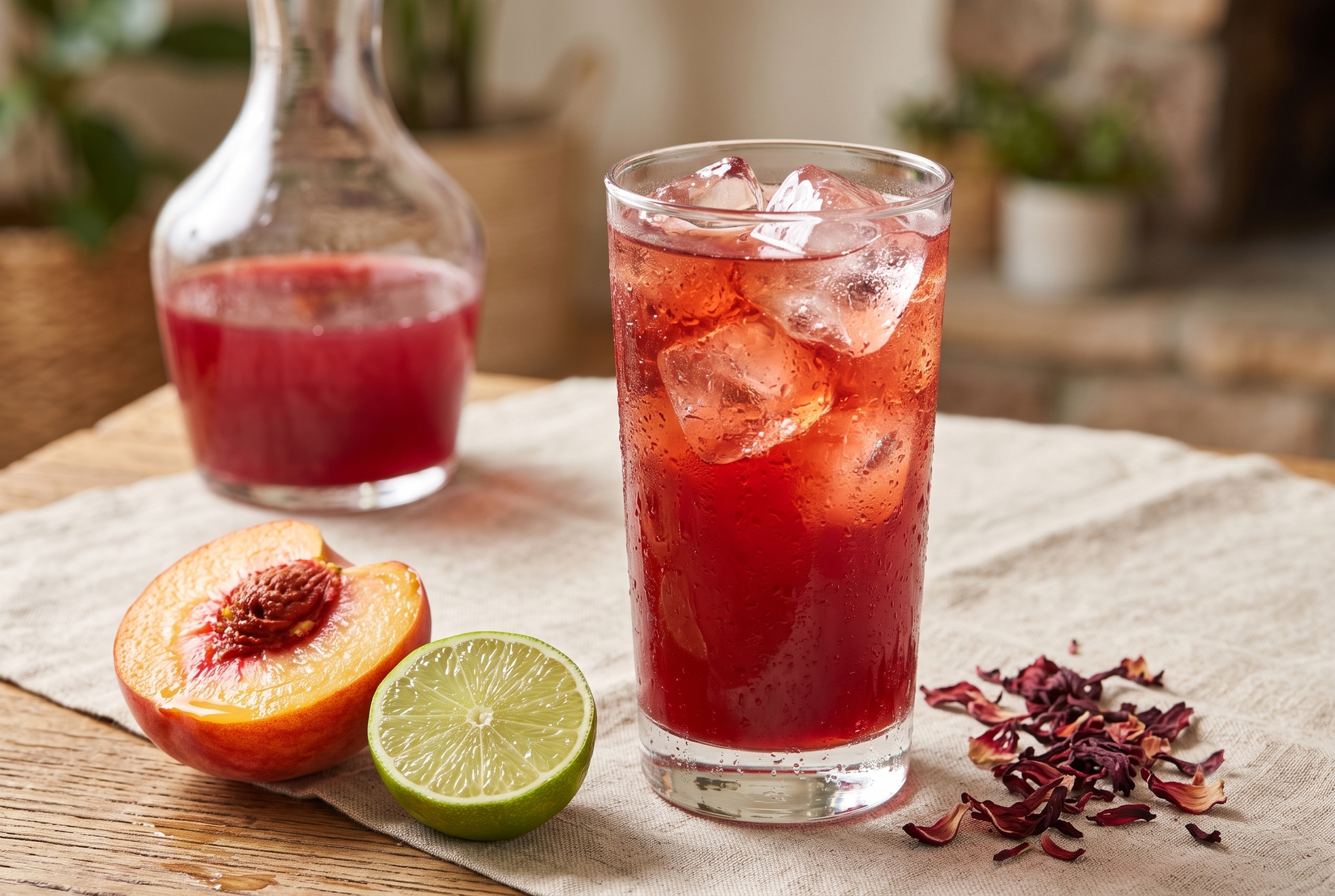
A bold hibiscus infusion tempers the sweetness of ripe peaches, while lime juice adds a lively tang.
Shrub, Syrup, and Concentrate: Prep for Quick Drinks
Cooked berry syrups, raw berries macerated with sugar, and vinegar-based shrubs offer a practical way to keep flavor concentrates on hand for instant drinks. A quick splash in a glass, a top-up of sparkling water, and a handful of ice complete the preparation in seconds. Spotless jars and unblemished berries are essential for keeping these concentrates fresh.
Raspberry Shrub:
- 250 g (8.8 oz) raspberries
- 150 g (5.3 oz) sugar
- 80 ml (2.7 fl oz) apple cider vinegar
- Layering the berries with sugar in a covered container and refrigerating them for 24 hours draws out their natural juices.
- Pouring in the vinegar, stirring, and returning the mixture to the refrigerator for another 24 hours develops the tangy profile.
- Straining the liquid into a clean bottle yields a refrigerator-stable concentrate; 2 tbsp per glass of sparkling water creates a balanced drink.
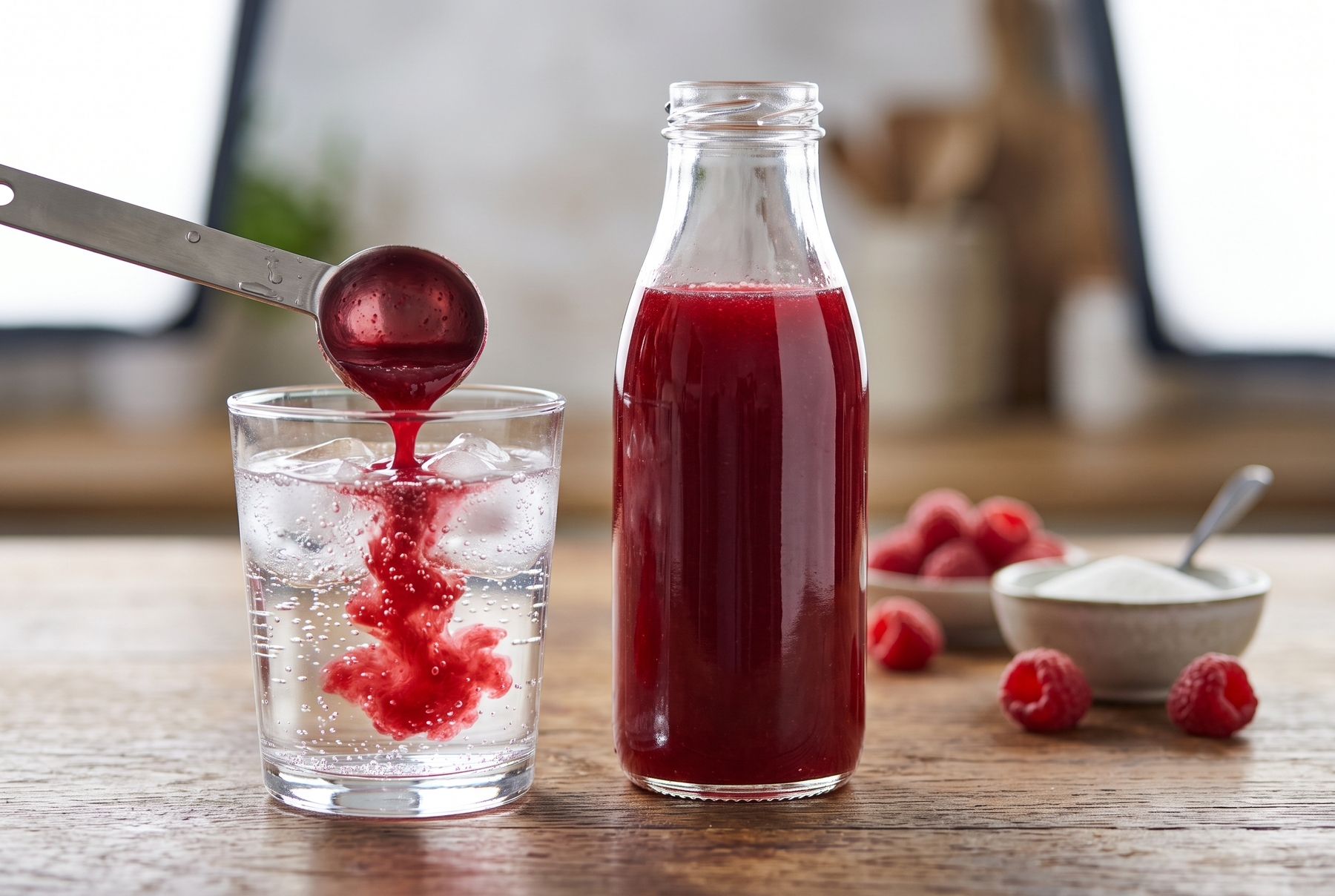
A homemade berry vinegar concentrate turns sparkling water into a fragrant raspberry spritzer in seconds.
How Much Sugar You Actually Need
Sugar Unlocks Aroma, Not Just Sweetness
A modest amount of sugar amplifies berry flavors and gives them dimension. Too much makes a drink heavy and one-dimensional, masking the fruit beneath a blanket of syrup. The ideal amount shifts with every batch, as even berries from the same bush vary in tartness. Starting conservatively and adjusting with acidity or water works far better than adding sugar blindly.
Sweeteners Beyond White Sugar
Honey, cane sugar, fruit syrups, date syrup, and sweet apple puree each bring a distinct personality to the glass. Honey introduces floral notes that can clash with aggressively tart berries like cranberries. Date syrup imparts a deep caramel hue that noticeably darkens a clear kompot. Rather than viewing these alternatives as diet foods, it makes more sense to treat them as distinct flavor tools.
Temperature, Ice, and Serving
Cold Mutes Flavor
A base that tastes ideal at room temperature often loses its punch once chilled. The solution is straightforward: building the flavor profile slightly bolder than seems necessary, chilling the liquid thoroughly, and only then making final adjustments to the acid and sugar. Balancing a drink while warm and tossing in ice at the end almost guarantees a watered-down result.
Ice as an Ingredient, Not a Garnish
Standard ice cubes melt rapidly, diluting carefully constructed flavors within minutes. Berry ice—made by freezing fruit juice or puree in trays—solves this problem by maintaining flavor intensity as it melts. Ice cubes frozen with fresh mint leaves inside perform a similar trick, releasing herbal aroma as they dissolve. In a home pitcher, the quality of the ice often shapes the final impression more than the price of the berries.
7 Flavor Combinations Worth Remembering
- Strawberry + Basil + Lemon. The puree provides body, basil steers the sweetness in a savory direction, and lemon holds the structure together.
- Blackcurrant + Mint + Sparkling Water. Classic mors flavors reimagined as a spritzer: currant acidity, cooling mint, and effervescence for lift.
- Peach + Raspberry + Lime. Plush peach nectar gains an acidic backbone from lime and high aromatic notes from raspberry.
- Watermelon + Lemon + Pinch of Salt. A trace of salt suppresses bitterness and draws out the natural sweetness of watermelon without making the drink taste salty.
- Sour Cherry + Hibiscus + Orange Zest. The tannic bite of hibiscus reinforces cherry acidity, while orange zest rounds out the bouquet.
- Sea Buckthorn + Honey + Ginger. Floral honey tames the fierce sourness of sea buckthorn, and ginger keeps the finish lively down to the last drop.
- Apple + Gooseberry + Tarragon. A mellow apple base meets tart gooseberries and an anise-like herbal note, resulting in a sophisticated, grown-up profile.
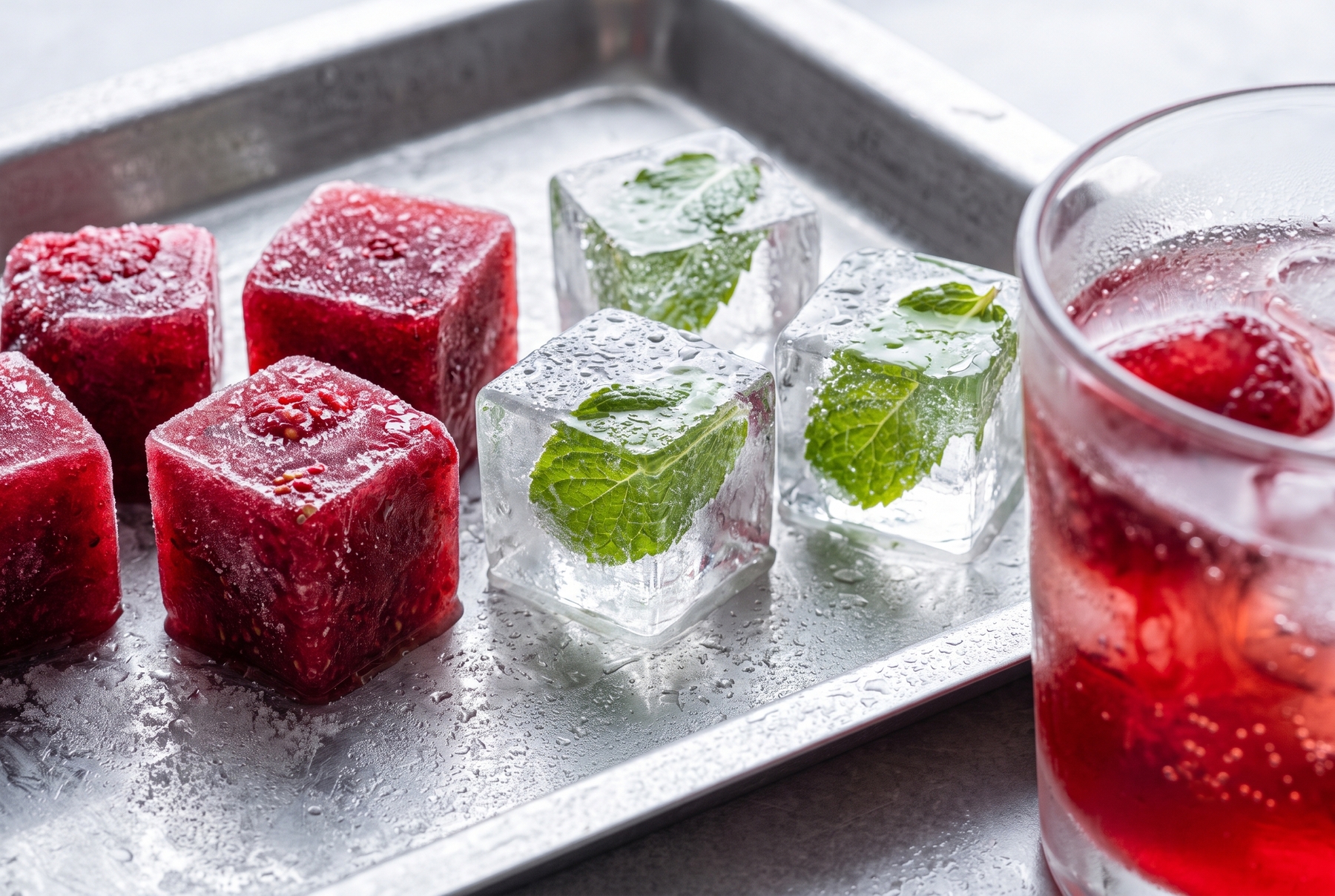
Frozen berry puree and mint leaves trapped in ice chill the glass without diluting the flavor.
Why Drinks Turn Out Flat
Too Much Water
Over-dilution announces itself immediately as acidity and aroma recede into the background. Adding a splash of concentrate, fruit puree, or syrup restores body, as does letting the mixture steep for another hour or two so the ingredients can catch up.
Too Much Sugar
A heavy, cloying batch responds well to fresh citrus juice, extra ice, sparkling water, or bruised herbs. Often the simplest fix involves cutting the mixture with an unsweetened base like cold water or plain iced tea.
Bitterness From Herbs
Mint, basil, and tarragon suffer when left in boiling water. Their vibrant green fragrance survives only brief contact with heat before degrading into a dull, grassy bitterness that cannot be reversed. Aroma serves as the best guide: the infusion should smell crisp, green, and lively rather than like steeped hay.
Cloudy or Brownish Color
Muddy color usually stems from prolonged boiling, oxidation, reactive cookware (uncoated aluminum quickly dulls berry pigments), overly aggressive blending, or rushed straining. Fresh blackcurrant mors belongs in the ruby spectrum, never grayish-brown. When the color turns murky, the fresh flavor has almost certainly faded alongside it.
How to Store Homemade Drinks in Summer
Clean glassware and immediate refrigeration keep homemade drinks safe and vibrant. Pitchers containing fresh muddled fruit, berries, raw juice, or puree deteriorate quickly when left on a warm table or sunny windowsill; they belong in the refrigerator as soon as glasses are poured. As a practical food-safety rule, perishable drinks should not sit at room temperature for more than about 2 hours—or 1 hour during peak summer heat. Exact shelf life varies depending on the freshness of the produce and the cleanliness of the container, but infusions made with fresh berries and herbs taste best within 24 to 48 hours rather than stored for a week.
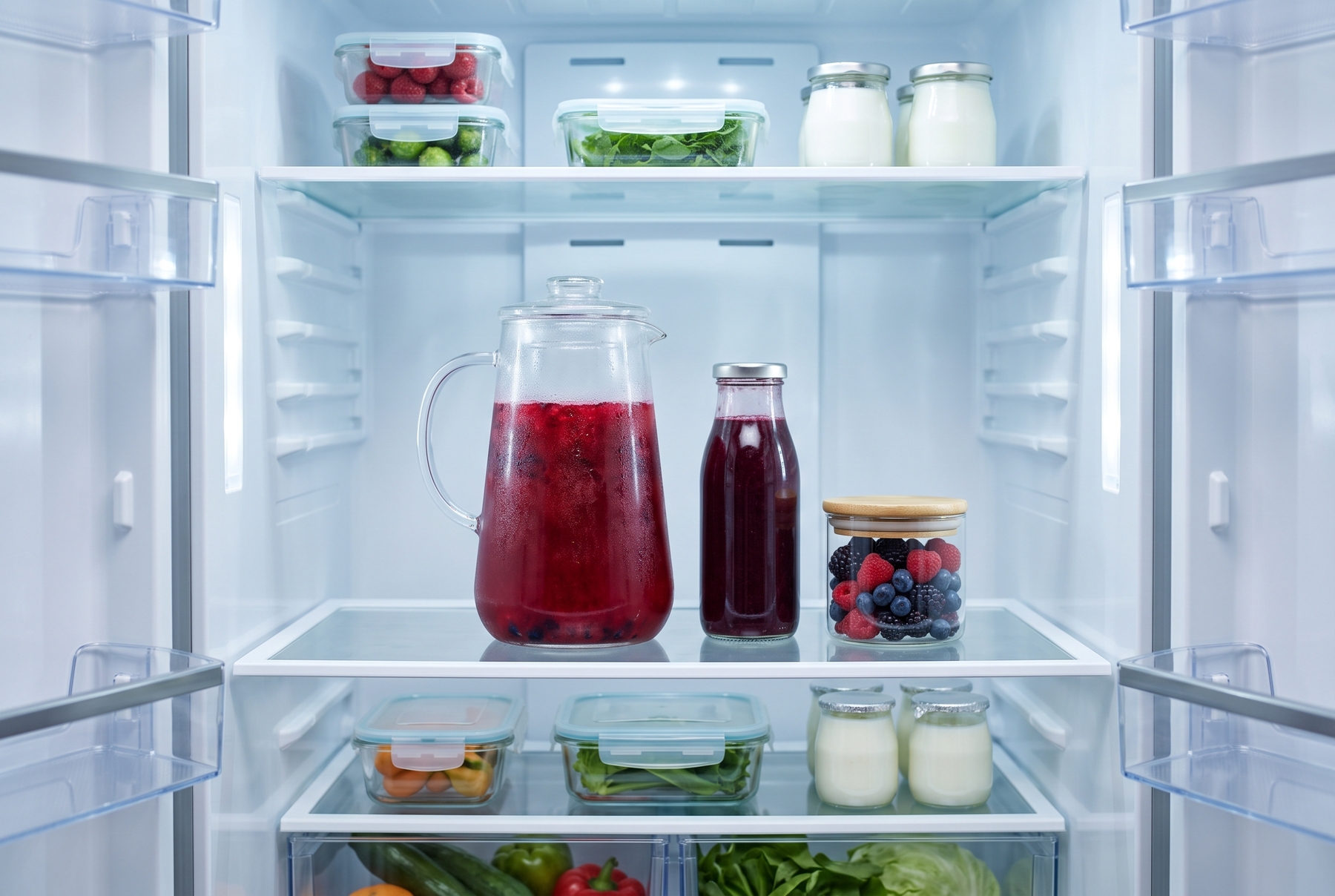
Finished drinks made with fresh juice and berries belong in the refrigerator immediately to preserve their brightness.
Quick Cheat Sheet: Building a Summer Drink From What You Have
- Selecting a fruit or berry base sets the foundation;
- Tasting reveals what is missing: acidity, sweetness, aroma, body, or chill;
- Layering in syrup, puree, citrus, herbs, or spices sharpens the profile;
- Chilling thoroughly and tasting a second time ensures true balance;
- Serving with flavor-protective ice keeps the drink vibrant to the bottom of the glass.
Homemade drinks do not require restaurant-level precision. Understanding the role of each component is enough: berries supply character, acid pulls the profile into focus, sugar unlocks aroma, and cold reshapes how the palate perceives all three. Fresh herbs and thoughtful ice elevate a simple pitcher of fruit water into something worth pouring into your finest glassware.
0 comments