
A green potato triggers immediate alarm because the change is so visible. Yet that green hue is simply chlorophyll, an everyday plant pigment no more dangerous than a handful of spinach. The real issue lies beneath the surface: the very same light that triggered the chlorophyll production may have simultaneously prompted the tuber to synthesize glycoalkaloids. In the kitchen, that green tint acts as a dashboard warning light—the pigment itself is harmless, but it signals a deeper chemical shift within the potato.
Conversations around solanine routinely conflate three distinct concepts: the visual marker (color), the catalyst (light exposure, physical damage, poor storage), and the actual risk (the exact dose of the compound that ends up on your plate). The word “solanine” itself requires no panic. Instead, smart cooks pay attention to context: which part of the plant is on the chopping block, whether the produce shows signs of damage or sprouting, how it was stored, and how much of it will be eaten in a single sitting.
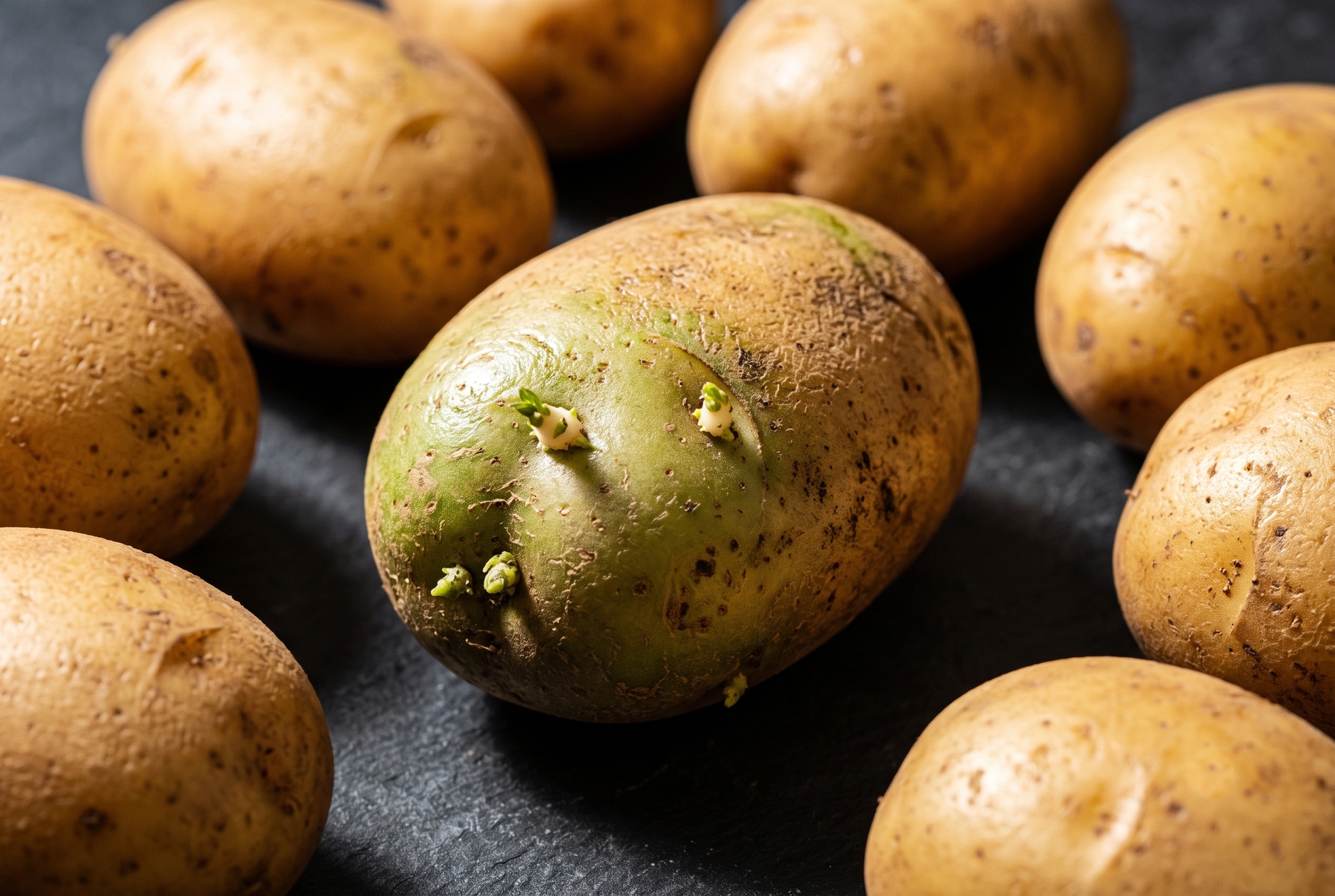
Greening skin and emerging sprouts serve as the primary visual cues of elevated solanine levels in a potato.
Table of Contents
- What Solanine Is and Why the Dose Makes the Poison
- Where Glycoalkaloids Hide in Everyday Produce
- What Actually Deserves Your Attention
- 4 Solanine Myths It Is Time to Retire
- How Poor Storage Turns Good Potatoes Bad
- A Practical Kitchen Cheat Sheet
- Potato Skins, Peels, and Skin-On Fries
- Distinguishing Solanine From Other Kitchen Spoilage
- Quick Reference Guide: What to Watch and What to Ignore
What Solanine Is and Why the Dose Makes the Poison
Solanine is a steroidal glycoalkaloid, one of the natural chemical defenses produced by the nightshade family (Solanaceae). Potatoes, eggplants, tomatoes, and peppers synthesize these compounds as a built-in pesticide to ward off insects, fungi, and bacteria. Because a plant cannot run away or grow claws, it keeps a chemical security guard directly inside its tissues. In potatoes, the primary actors are α-solanine and α-chaconine. Eggplants rely on solasonine and solamargine, while tomatoes produce tomatine. The names shift across species, but the botanical logic remains identical.
Translating Milligrams Into Real Potatoes
The mere presence of solanine and related glycoalkaloids tells us very little; the crucial factor is the actual dose that reaches the dinner plate. The European Food Safety Authority (EFSA) uses a benchmark of 1 mg of total potato glycoalkaloids per kilogram (2.2 lb) of body weight. This figure is neither a guaranteed safe threshold nor a legal limit; rather, it marks the lowest observed adverse effect level (LOAEL) in humans. Germany’s Federal Institute for Risk Assessment (BfR) works with a more conservative figure of 0.5 mg/kg per day, a level at which no adverse effects have been observed. For a 70 kg (154 lb) adult, that first European benchmark translates to roughly 70 mg in a single meal—representing the threshold where observable harm begins, not a daily target.
Next, we have to translate those milligrams into actual groceries. A potato stored properly in the dark contains an average of 12–20 mg/kg, and once peeled, the flesh usually drops below 10 mg/kg because the compounds concentrate heavily in the skin and the thin layer just beneath it. At a concentration of 15 mg/kg, an adult would need to eat 4–5 kg (9–11 lb) of potatoes in one sitting to hit that 70 mg threshold. However, averages do not tell the whole story of supermarket produce: glycoalkaloid levels fluctuate wildly depending on the potato variety, tuber size, weather patterns, growing conditions, and storage history, pushing individual batches much higher. The European Union uses an indicative monitoring level of 100 mg/kg—exceeding this prompts an investigation into farming and storage practices. In the United States and Canada, regulators generally use 200–250 mg/kg as the upper safety guideline.
With a green potato, the math changes dramatically. On average, a greening tuber contains 250–280 mg/kg—roughly 15 times the normal amount (and the green skin itself can skyrocket to 1500–2200 mg/kg). At that concentration, a 70 kg (154 lb) adult only needs to eat about 250–300 g (9–10.5 oz, or two medium potatoes) to reach the threshold of observable harm, while a 20 kg (44 lb) child could hit it with just 70–80 g (2.5–2.8 oz). These numbers do not act as a rigid tripwire where symptoms instantly switch on at a specific gram weight. Instead, they illustrate a vital culinary reality: reaching a toxic dose with normal potatoes requires eating kilograms of food, whereas a single serving of green potatoes can easily cross the line.
When someone consumes a high enough dose, symptoms emerge anywhere from 30 minutes to 12 hours after the meal, most commonly within a few hours. The body reacts with nausea, abdominal cramping, vomiting, and diarrhea, occasionally accompanied by a fever. Fortunately, severe cases involving neurological disruptions remain rare. Estimates of the exact toxic dose vary across scientific literature because human clinical data is scarce—for obvious ethical reasons, researchers cannot run controlled poisoning trials on volunteers.
Your palate also provides a built-in early warning system. Potatoes develop a noticeable bitterness at around 140 mg/kg, followed by a distinct burning sensation in the mouth and throat near 200 mg/kg. Bitterness is a serious cue to put down your fork. Still, taste alone cannot tell you how many milligrams you have already swallowed; concentration, portion size, and body weight all play a role. A bitter potato is never just “an earthy heirloom variety”—it is a clear signal to stop eating.
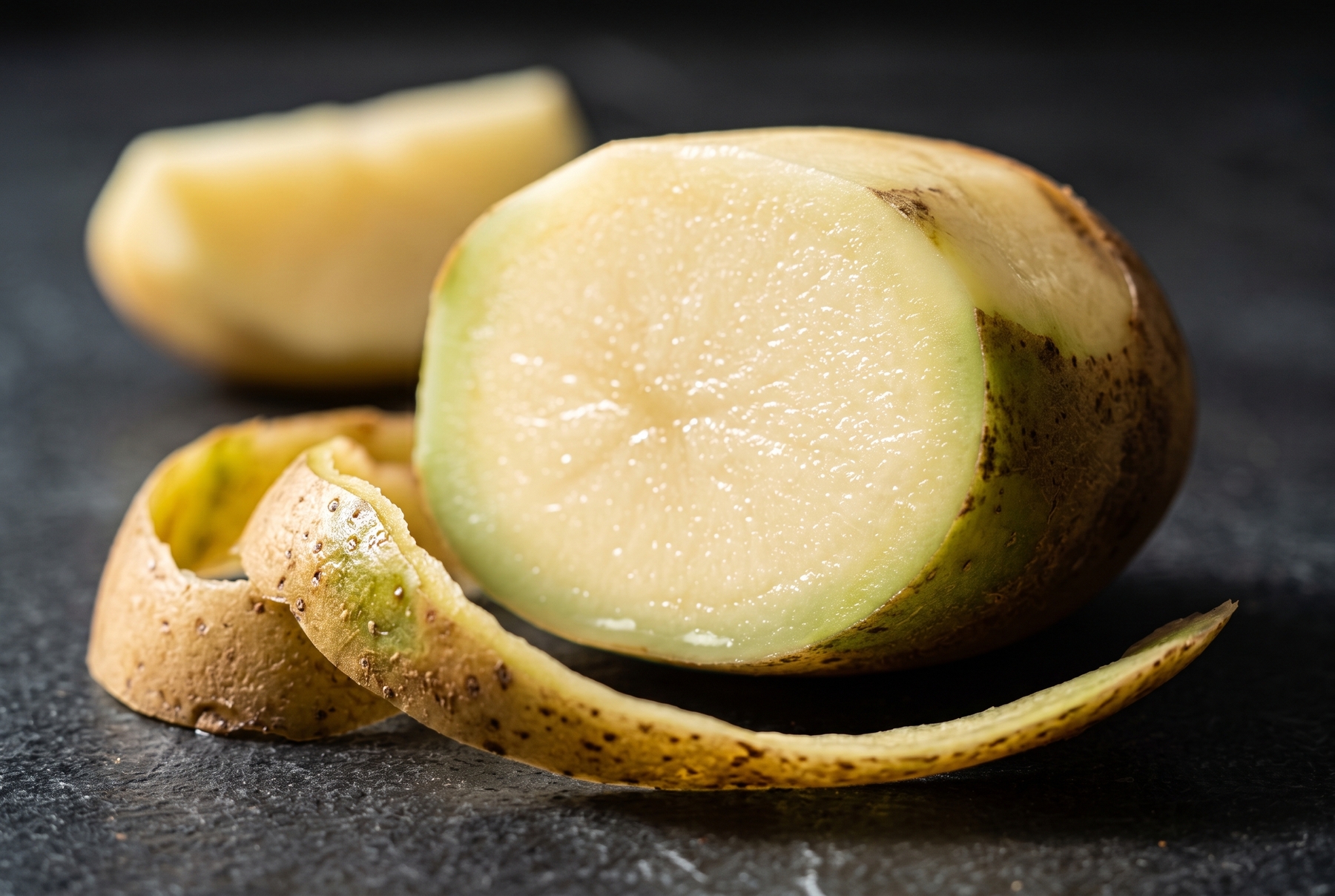
Glycoalkaloids concentrate in the peel and outer flesh, migrating deeper into the tuber during prolonged exposure to light.
Where Glycoalkaloids Hide in Everyday Produce
Potatoes: Skins, Eyes, Sprouts, and Green Patches
In the home kitchen, potatoes serve as the primary vehicle for solanine and related glycoalkaloids, though the compounds do not distribute evenly throughout the vegetable. They cluster near the surface: in the peel, the immediate sub-surface layer, the eyes, the sprouts, and any greening areas. Mechanical damage—bruising, cuts from harvesting equipment, and prolonged exposure to store lighting—also drives those numbers up. A firm, fresh tuber pulled from a dark pantry bin and a shriveled, sprouting potato with a green flank that spent the winter next to a warm radiator demand entirely different culinary judgments.
Eggplants: Decoding Bitterness and Glycoalkaloids
Eggplants carry a natural bitterness that many home cooks automatically blame on solanine. That assumption is partially fair: the bite comes from related glycoalkaloids (specifically solasonine and solamargine) alongside steroid saponins. Standard, ripe supermarket eggplants are rarely considered a significant dietary risk. A mild bitterness in a firm, glossy-skinned eggplant is completely normal. What warrants caution is an aggressive, acrid bitterness found in overgrown specimens with spongy flesh and brown seeds, or in severely underripe fruit. Those belong in the compost. The classic kitchen technique of salting and sweating eggplant slices draws out some of these bitter compounds and doubles as a quality test: if the flesh remains aggressively bitter even after a salt purge, toss the vegetable.
Tomatoes: Tomatine, Green Fruit, and Garden Vines
Tomato terminology often muddies the waters. Here, the active compound is not solanine, but a cousin called tomatine. As a tomato ripens on the vine, natural enzymes systematically break tomatine down. An unripe, rock-hard green tomato can hold up to 500 mg/kg of tomatine, whereas a sun-ripened red tomato retains only about 5 mg/kg—a nearly hundredfold drop. Furthermore, the human digestive tract absorbs tomatine poorly (it binds with cholesterol in the gut to form an insoluble complex), which keeps its oral toxicity relatively low.
This chemistry gives cooks clear practical boundaries. Ripe red tomatoes require zero hesitation. Unripe green tomatoes carry noticeably more tomatine, yet culinary traditions like Southern fried green tomatoes or pickled green tomatoes have thrived for generations without triggering waves of food poisoning. While limitless portions and massive batches of home preserves warrant some mindfulness—especially when feeding small children—a standard serving of fried green tomatoes poses no mortal danger. The leaves, stems, and vines, however, are a different story: they pack significantly higher concentrations of tomatine than the fruit and have no place in the stockpot.
Peppers and Other Nightshades: Why the Panic Is Overblown
Because the nightshade family is vast, a persistent food myth claims that every member of the botanical group carries equal danger. The science disagrees. Sweet bell peppers, ripe tomatoes, and culinary eggplants kept under normal storage conditions contain glycoalkaloids in trace amounts far below any threshold of concern. Demonizing these staples makes little sense; risk stems from the condition of a specific piece of produce—whether it is damaged, sprouting, or greening—not its family tree.
Chili peppers often get dragged into this debate by pure misunderstanding. Their fiery heat comes from capsaicin, a compound from an entirely different chemical class that has nothing to do with glycoalkaloids. Ripe hot peppers are not a meaningful source of solanine.
When navigating exotic nightshades in the produce aisle, one universal rule applies: eat only the fully ripe fruit and discard any green husks or stems. In cape gooseberries (also known as goldenberries or Peruvian groundcherries, sold inside their papery lantern husks), glycoalkaloids concentrate in the unripe berries, the leaves, and the papery calyx itself, while the fully ripened yellow-orange berry inside is completely safe. The husk is inedible. Tomatillos, though related, operate differently: tested commercial varieties show only trace alkaloids, and their vibrant green color at maturity is a normal varietal trait, not a chemical warning sign.
Beyond those staples, quantitative scientific data grows sparse. Pepino melons, tamarillos (tree tomatoes), naranjillas (lulo), and cocona all harbor glycoalkaloids in their leaves, stems, and roots, while comprehensive studies on their ripe flesh remain limited. The smartest culinary habit is to consume only fully ripe, cultivated fruit and strip away all leaves, stems, and green calyces. Cooks routinely peel tamarillos, for instance, not to dodge toxins, but simply because the skin is fiercely bitter. Goji berries (wolfberries) have the cleanest bill of health in this exotic lineup: targeted laboratory screenings for α-solanine, α-chaconine, and solanidine across multiple cultivars came up empty.
Garden huckleberries (Solanum scabrum), occasionally grown in backyard plots for pies and jams, require special caution. Researchers have identified a wide array of potentially toxic glycoalkaloids in these berries, and their exact concentrations fluctuate unpredictably depending on the cultivar and ripeness. Unripe berries—and any wild nightshade you cannot identify with absolute botanical certainty—should never cross your lips.
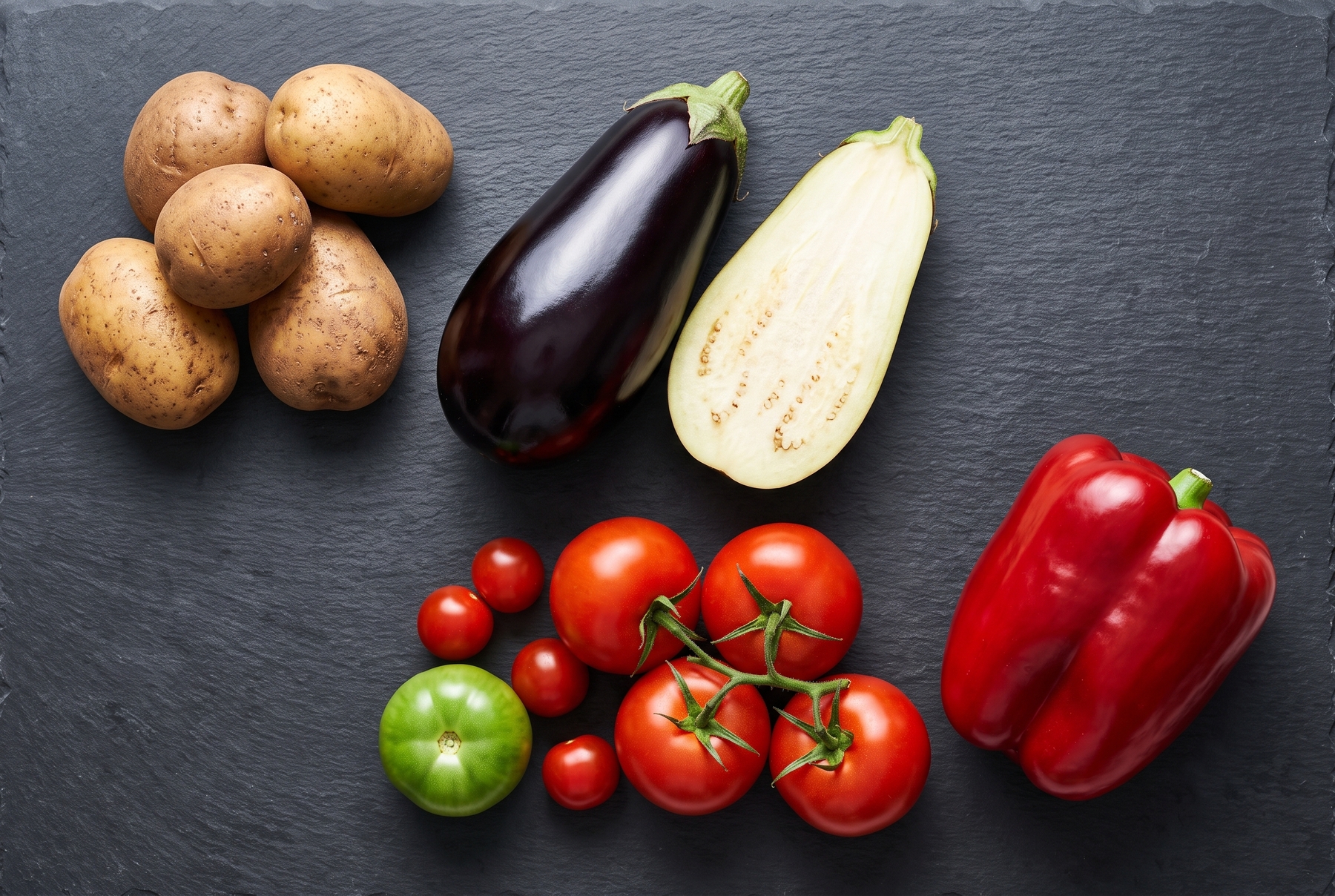
Different members of the nightshade family produce their own specific glycoalkaloids, though dangerous concentrations rarely appear in ripe, well-stored produce.
What Actually Deserves Your Attention
3 Kitchen Red Flags You Should Never Ignore
Instead of memorizing chemical names, home cooks can rely on three sensory cues: greening skin on a potato, pronounced bitterness, and active sprouting. Factor in physical deterioration like shriveling, spongy flanks, visible mold, and a musty cellar odor. A single minor flaw calls for a paring knife; a combination of several means the potato belongs in the trash.
Bitterness deserves special emphasis. In a potato, an acrid bite is never a charming varietal quirk or an acquired taste. If a forkful of boiled potato burns or tastes distinctly bitter, spit it out rather than swallowing it out of politeness.
Why Portion Size Trumps a Minor Blemish
Toxicology always comes down to total intake. Digging a single eye out of a rock-hard russet and mashing ten heavily greened potatoes into a family-sized casserole represent two completely different realities, even though the chemical compound is identical. A small, localized blemish on a firm tuber can easily be excised with a deep cut. When green patches, long sprouts, or rubbery textures dominate the bag, cut your losses and throw the batch away.
Why Children Need Extra Margin for Error
Because toxicity scales with body weight, an identical serving delivers a much higher dose per kilogram to a child than to an adult. This math dictates a strict kitchen rule: questionable tubers never go into baby purees, family soups, or shared gratins. If a potato raises even a shadow of a doubt, keep it off a child’s plate. Adults benefit from that same caution, even though current scientific literature shows no evidence that pregnant women or the elderly are uniquely hypersensitive to potato glycoalkaloids.
4 Solanine Myths It Is Time to Retire
“Boiling green potatoes makes them safe.” This is the most dangerous kitchen myth because it offers a false sense of security: a cook spots a problem, assumes a pot of boiling water will neutralize it, and serves food that should have been discarded. Solanine and related glycoalkaloids are remarkably heat-stable, only beginning to break down significantly at 260–270 °C (500–518 °F)—well above standard cooking temperatures. Preparation methods do reduce levels somewhat, but the results vary wildly depending on the technique, temperature, time, peeling depth, and the potato itself. According to EFSA estimates, peeling removes roughly 25–75% of glycoalkaloids, boiling removes 5–65%, and frying in oil removes 20–90%. None of those wide ranges guarantee safety in your specific skillet. A heavily greened potato boiled for an hour remains a heavily greened potato. Safety relies on smart selection, deep peeling, and throwing out compromised produce.
“All nightshades are inflammatory and toxic.” False. For the vast majority of eaters, the edible parts of properly stored and cooked potatoes, tomatoes, peppers, and eggplants pose no threat simply because of their botanical lineage. Demonizing an entire vegetable family stems from confusing the toxic foliage of a plant with the safe fruit on the plate.
“Green tomatoes are poisonous.” Another myth, though with a caveat. Tomato leaves and vines pack high concentrations of tomatine and are genuinely inedible. Heat does not act as an insurance policy here either, as boiling or frying will not reliably destroy tomatine. Safe enjoyment of green tomatoes comes down to moderate portion sizes, stripping away all stems and leaves, and exercising restraint when serving children or canning massive batches of unripe garden surplus.
“Soaking potatoes in water draws out the solanine.” Soaking sliced potatoes alters their starch content and texture while washing away a fraction of surface compounds, but it cannot rehabilitate a spoiled tuber. Water will not leach all the solanine out of a compromised potato; the only reliable strategy is buying sound produce, storing it in the dark, and peeling generously when needed. Soaking a vividly green potato in hopes of making it edible is pure wishful thinking.
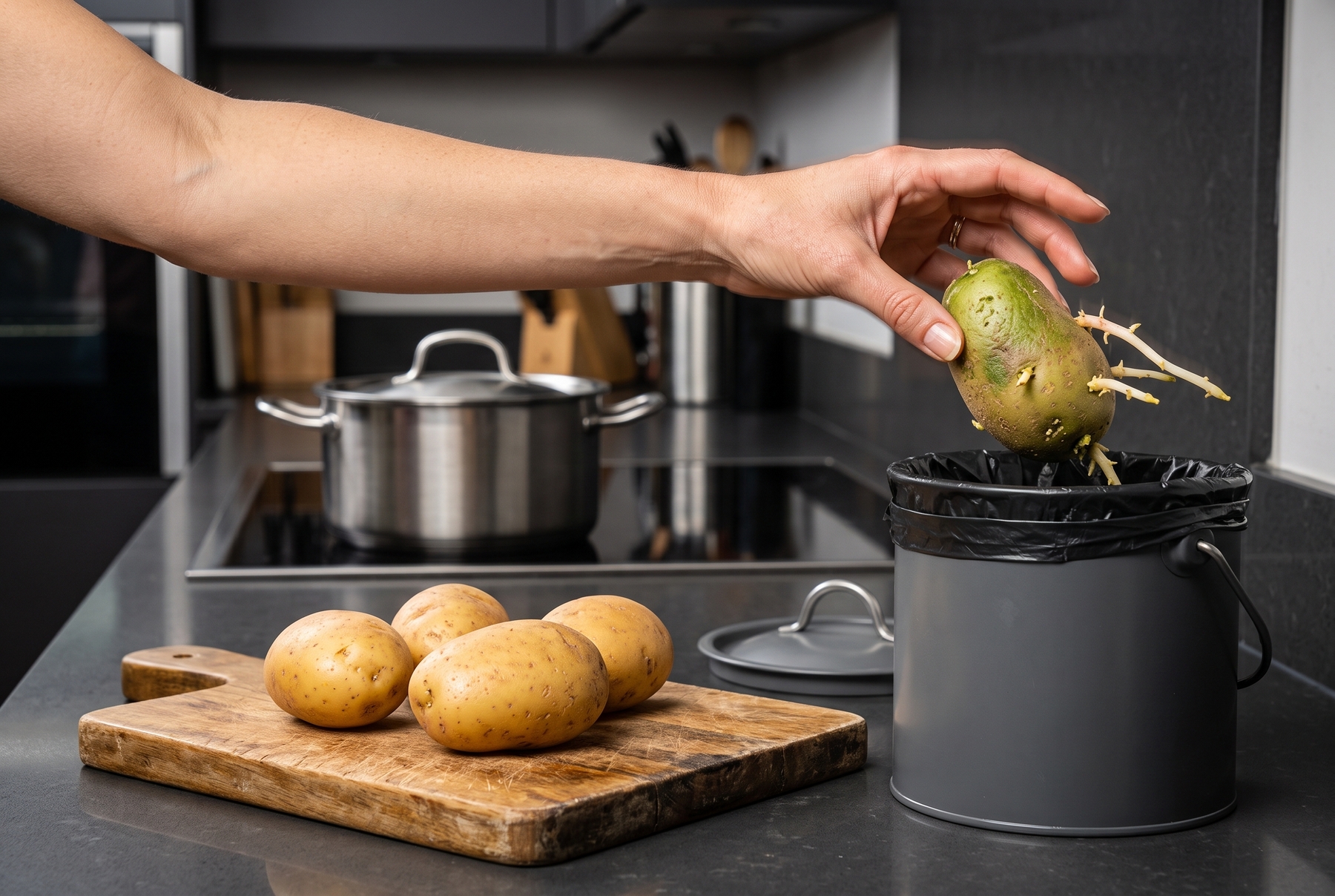
Heavily greened and sprouting tubers cannot be rehabilitated by boiling—the only safe move is throwing them in the trash.
How Poor Storage Turns Good Potatoes Bad
Light, Warmth, and Time
Potatoes turn green and synthesize glycoalkaloids when exposed to light, warmth, and extended storage. The plant’s internal logic is straightforward: light signals that the underground tuber has been unearthed and exposed to predators, triggering its chemical defense system. Proper home storage requires three simple conditions: total darkness, cool temperatures (ideally below 10 °C or 50 °F), good airflow, and zero sealed plastic bags. Because a single rotting potato releases moisture and gases that accelerate spoilage in its neighbors, checking your pantry stash regularly is essential.
Why Keeping Potatoes on the Windowsill Is a Mistake
A sunny countertop or windowsill is the worst possible place for a potato bag, yet many home kitchens store them right in the open. A mesh bag in the sun, a cupboard next to the oven, a sealed plastic grocery bag trapping condensation, or an uninsulated porch swinging between freezing and thawing represent the classic lineup of storage blunders. Combining light, ambient heat, and trapped moisture guarantees the exact outcome you want to avoid: greening on top and rot on the bottom.
A Practical Kitchen Cheat Sheet
When a Potato Can Be Saved
Minor, localized flaws on an otherwise firm, healthy potato are easy to manage:
- Carve away any small green patch at the edge with a generous margin, cutting deep into the pale flesh.
- Gouge out isolated eyes and tiny nascent sprouts along with the surrounding base.
- Peel the entire tuber more deeply than usual, removing two to three passes of flesh since glycoalkaloids concentrate just beneath the skin.
Even after this surgical prep, reserve that salvaged potato for an adult skillet of home fries rather than mashing it for a toddler.
When to Toss It in the Trash
Throw away without hesitation: tubers that are extensively or deeply green, potatoes covered in long sprouts, shriveled and spongy specimens, anything showing wet rot, mold, a musty smell, or distinct bitterness, and any bag where the majority of the potatoes show greening skins. When in doubt, composting a cheap ingredient is always smarter than risking a miserable night.
How Cooking Methods Affect Risk
Boiling, roasting, baking, and deep-frying transform flavor and texture while partially reducing glycoalkaloid levels (deep-frying at high heat has the strongest effect, as some compounds leach into the cooking oil), but heat never fixes bad produce. Cooking is the final culinary step for sound ingredients, not a decontamination chamber for spoiled ones.
Potato Skins, Peels, and Skin-On Fries
Because glycoalkaloids concentrate in the peel, cautious eaters sometimes assume that any skin-on potato dish—what Eastern European cooks traditionally call potatoes “in their uniforms” (v mundire)—is an inherent gamble. That is an overreaction. A young, firm new potato with paper-thin, blemish-free skin and zero bitterness is wonderful roasted whole, sliced into rustic skin-on wedges, or crisped in a restaurant fryer. This applies to adult portions; for small children, peeling remains the smarter habit. Safety hinges not on the mere presence of skin, but on the condition of the tuber: its freshness, firmness, and complete lack of greening or bitterness. Old, thick-skinned winter storage potatoes that have started to sprout have no business being turned into skin-on potato skins.
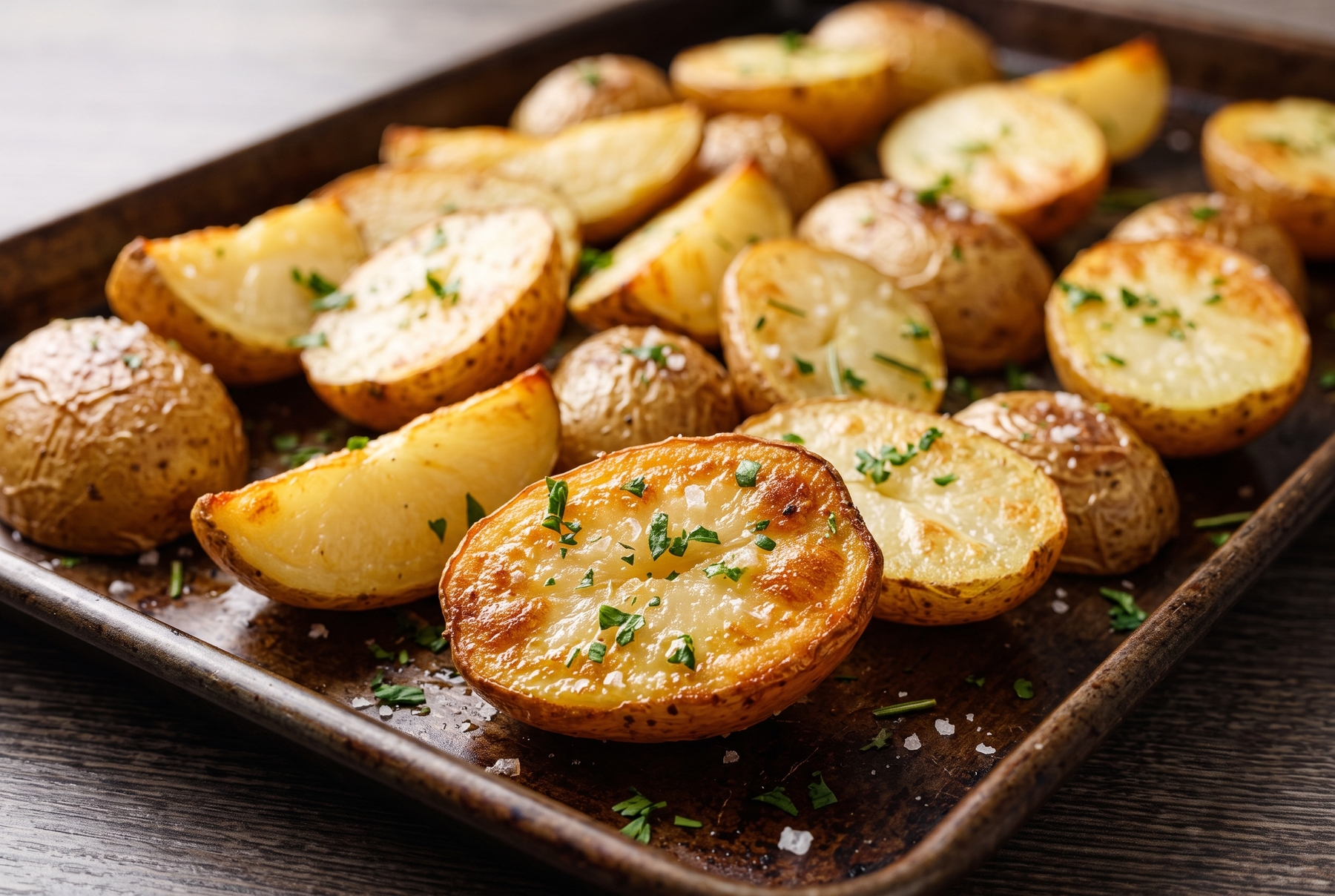
Fresh, young potatoes without a trace of greening are completely safe to roast with their skins intact.
Distinguishing Solanine From Other Kitchen Spoilage
Not every off-flavor in a potato points to glycoalkaloids. Rancid cooking oil from a neglected fryer, gritty soil trapped in poorly scrubbed skins, and basic bacterial rot or mold all ruin a dish in their own ways. Solanine delivers a sharp bitterness and a lingering burn at the back of the throat; mold brings a dusty, cellar-like mustiness; bacterial spoilage produces a sour, putrid stench. For the home cook, however, forensic diagnosis is unnecessary: if a potato tastes aggressively bitter or smells off, stop eating it and throw it out, regardless of the specific culprit.
Natural chemical defenses are a standard feature of the plant kingdom. In the kitchen, staying safe simply requires paying attention to the physical state of your groceries and refusing to salvage heavily greened, sprouting, or bitter tubers.
Quick Reference Guide: What to Watch and What to Ignore
| Produce | Caution Level | What to Check | Kitchen Action |
|---|---|---|---|
| Green potatoes | High | Surface area and depth of greening, bitterness | Cut away deep margin for tiny spots; discard if extensively green |
| Sprouted potatoes | Medium–High | Sprout length, tuber firmness, odor | Gouge out short sprouts on firm tubers; discard shriveled or heavily sprouted ones |
| Thin-skinned new potatoes | Low | Freshness, absence of green patches | Safe to cook skin-on for adults; peel for young children |
| Bitter eggplants | Medium | Maturity, seed color, intensity of bitterness | Salt and sweat slices; discard if harsh bitterness persists |
| Ripe red tomatoes | Low | Basic freshness | Enjoy without restriction |
| Unripe green tomatoes | Medium | Portion size, who is eating | Keep portions moderate; remove all stems/leaves; use caution with kids and large canned batches |
| Nightshade leaves and stems | High | — | Never use in cooking |
| Sweet bell peppers | Low | Basic freshness | Enjoy without restriction |
A sound, ripe vegetable that has been properly stored and cooked requires zero anxiety at the dinner table. Real dietary risk only emerges from specific, visible flaws: heavily greened, sprouting, bitter, damaged, or improperly stored produce—especially when consumed in large quantities at once. Everything else is just internet background noise.
0 comments