
An hour and a half. That is exactly how much time I spent on a turkey stew with zucchini, carrots, and sweet peppers—when I somehow believed he would finally try it today. Lyosha, who was seven at the time, approached the plate, sniffed it, pushed it away, and declared, “This is not food.” Not “it is not tasty,” not “I do not want it”—specifically “not food.” It was as if I had served him a shoebox.
I decided not to argue. I cooked him some pasta instead. I opened a bottle of wine—for myself, not for him. And I realized that fighting at the dinner table is the most pointless strategy of all the ones I had tried.
Over fourteen years of parenting, I have raised three children with entirely different tastes. Masha, at nine, ate absolutely everything, including pickled eggplants. Lyosha still looks at soup with deep suspicion, while Varya is a whole different story. Until she was about five, she refused to eat anything green altogether. A single pea on her plate would turn dinner into a catastrophe. So I truly know what I am talking about.
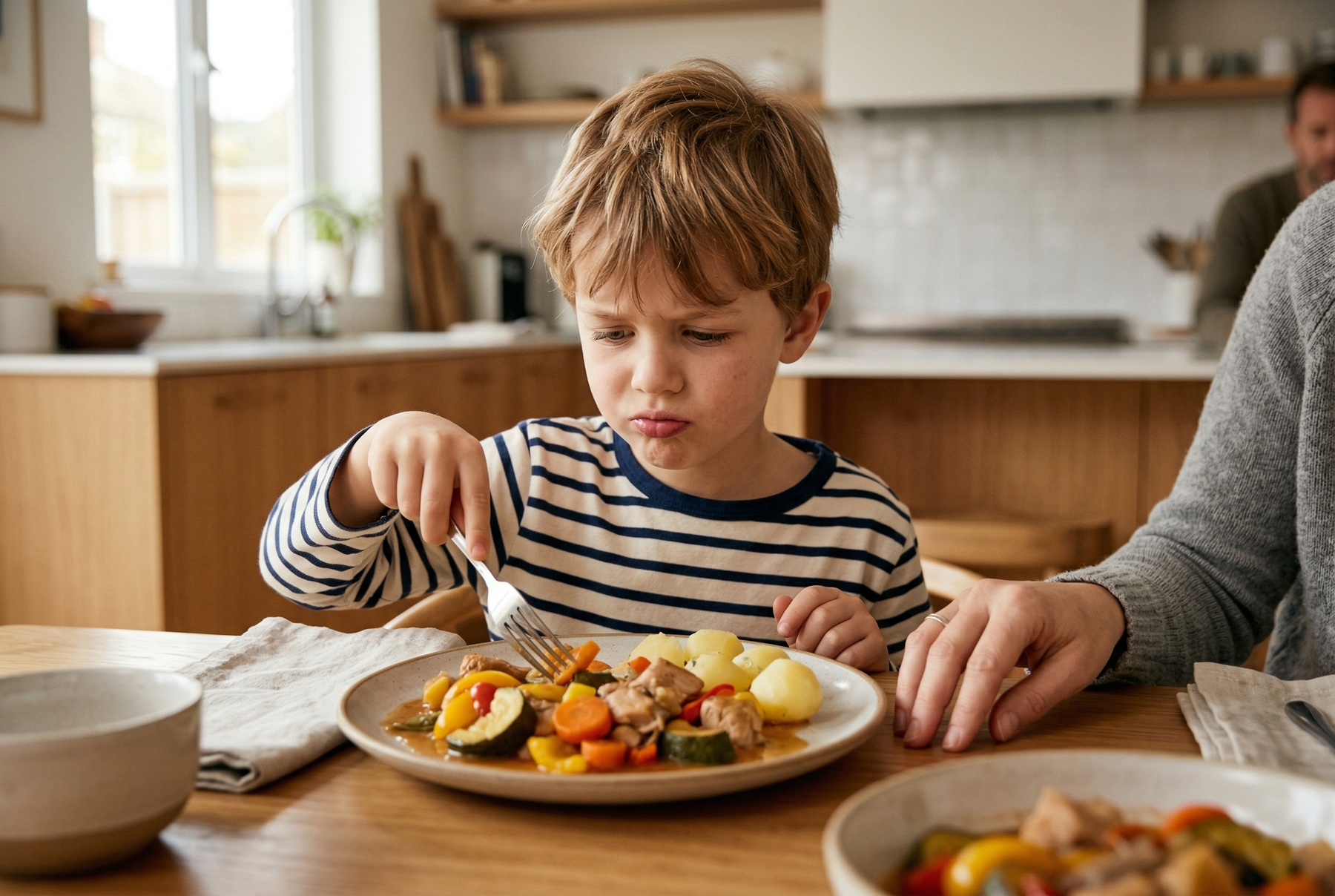
Food neophobia is not a whim, but an ancient survival instinct that forces children to be wary of unfamiliar food.
Why They Turn Their Noses Up
It Is a Primal Instinct, Not Spite
There is a well-documented phenomenon known as food neophobia: the fear of unfamiliar food. It sounds like a medical diagnosis, but it is actually nature’s design. Child gatherers who put every unfamiliar berry into their mouths rarely survived into adulthood. Those who cautiously sniffed everything new and initially refused it were the ones who survived. Your child is not mocking you. Their brain is simply fine-tuned for survival.
The peak of neophobia occurs between the ages of two and six. After that, it usually subsides a bit. Although my Lyosha, apparently, has chosen his own special path.
We often forget one crucial detail: children physically perceive bitterness much more sharply than we do. Most poisonous plants are bitter, so the brain takes extra precautions. Broccoli, spinach, and Brussels sprouts are literally more unpleasant to their taste buds. It is not an act.
The Fifteen-Touch Rule
Nutritionists believe that a child needs to be offered a new food ten to fifteen times before they agree to try it. The goal is not to force them to eat it, but simply to place it next to their plate. Letting them smell it and touch it builds familiarity. First, the child must get used to the look and smell, and only then might they agree to taste it.
With Varya and green peas, this process took four months. Four whole months. But one day, she simply poked a pea with her finger and said, “Give.” I nearly burst into tears right over the plate.
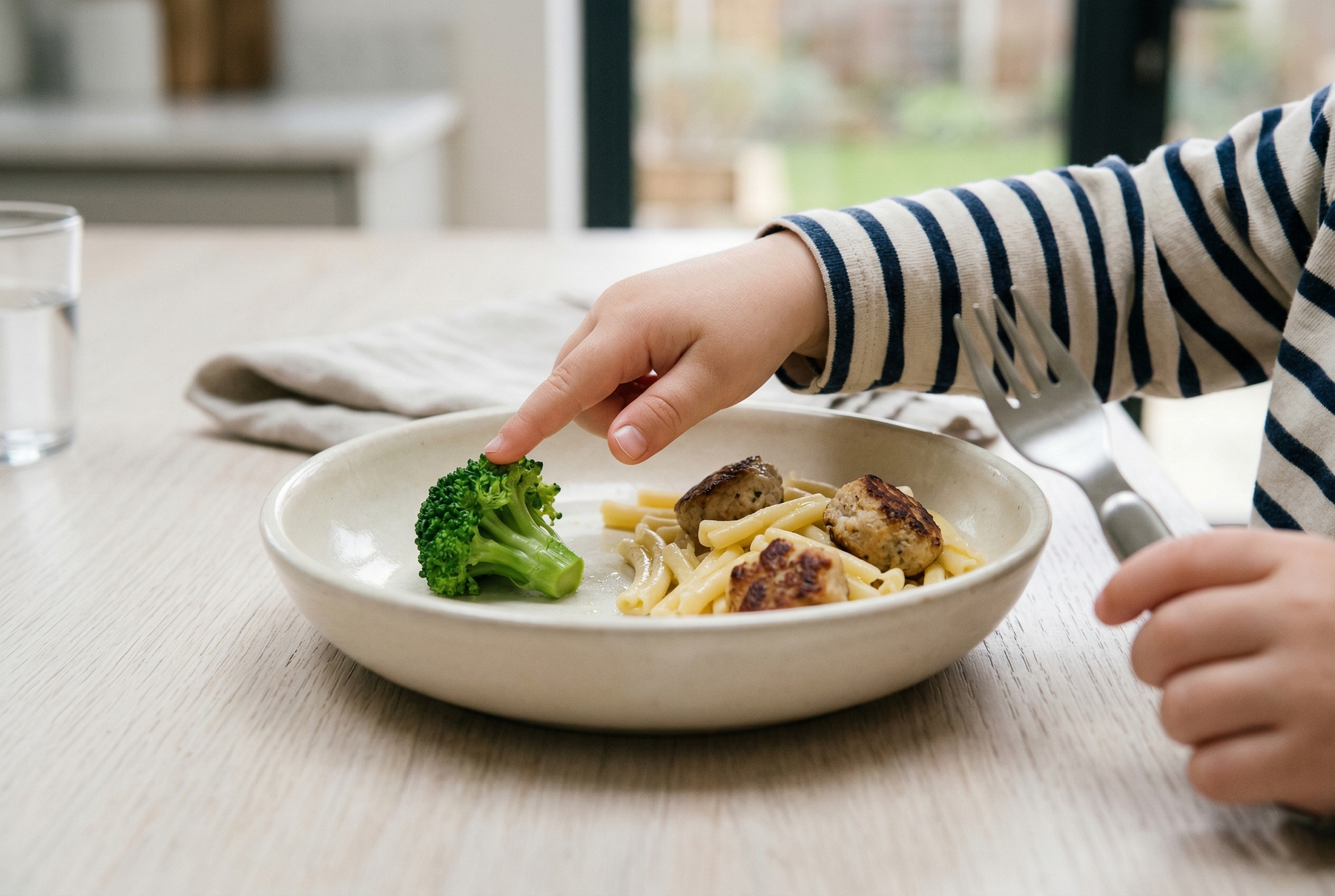
Sometimes a child needs to see a new food on their plate up to fifteen times before deciding to actually taste it.
Culinary Camouflage
How to Hide Vegetables So They Cannot Be Found
Some might call it adaptation, masking, or trickery, but the essence remains the same: these are the methods that genuinely worked in our family.
The simplest and most proven technique involves grated vegetables in meat patties. Zucchini is incredibly watery, so it completely disappears into ground meat—leaving no distinct taste or smell, only pure juiciness. Carrots add a slightly sweet undertone, which is a significant advantage in beef or pork patties. The proportion I use relies on one small zucchini and one carrot for every 500 grams (1.1 lbs) of ground meat. The patties turn out much softer and never dry out in the pan.
Cauliflower in cheese sauce is an entirely different story. Roasted until it develops a light crust and smothered in a thick sauce made from cream and hard cheese, its status in a child’s eyes skyrockets instantly. It transforms from “that white tasteless stuff” into “more cheese, please.” The sauce is straightforward: 150 ml (5 fl oz) of 20% cream, 50 grams (1.7 oz) of grated Parmesan or any hard cheese, a pinch of nutmeg, and salt. Heating it while stirring until it thickens yields a perfect topping to pour directly over the cauliflower.
Cauliflower puree mixed half-and-half with potatoes has been a staple in our home for two years. Varya loves that it is “softer.” Lyosha calls it “fine.” Coming from him, that is practically a Michelin-star review.
Spinach and Frog Skin
I once had a culinary failure that I still recall with a shudder. I decided to incorporate spinach into sweet crepes, as parenting blogs insisted that children never notice. Masha did not notice. Lyosha, however, noticed instantly. He looked at the crepe, looked at me, and said, “Mom, this is frog skin.”
I could have gotten flustered and covered the crepes with a lid. Instead, I proudly confirmed, “Of course it is frog skin. These are Shrek’s crepes. Strictly for real heroes.” Lyosha ate three of them. Masha demanded a fourth.
Renaming dishes works far better than lengthy explanations about nutritional benefits. The word “broccoli” goes right over a child’s head, whereas “tiny trees from a giant’s forest” sparks immediate interest. For six-year-olds, the story behind the food is far more important than the actual ingredients on the plate.
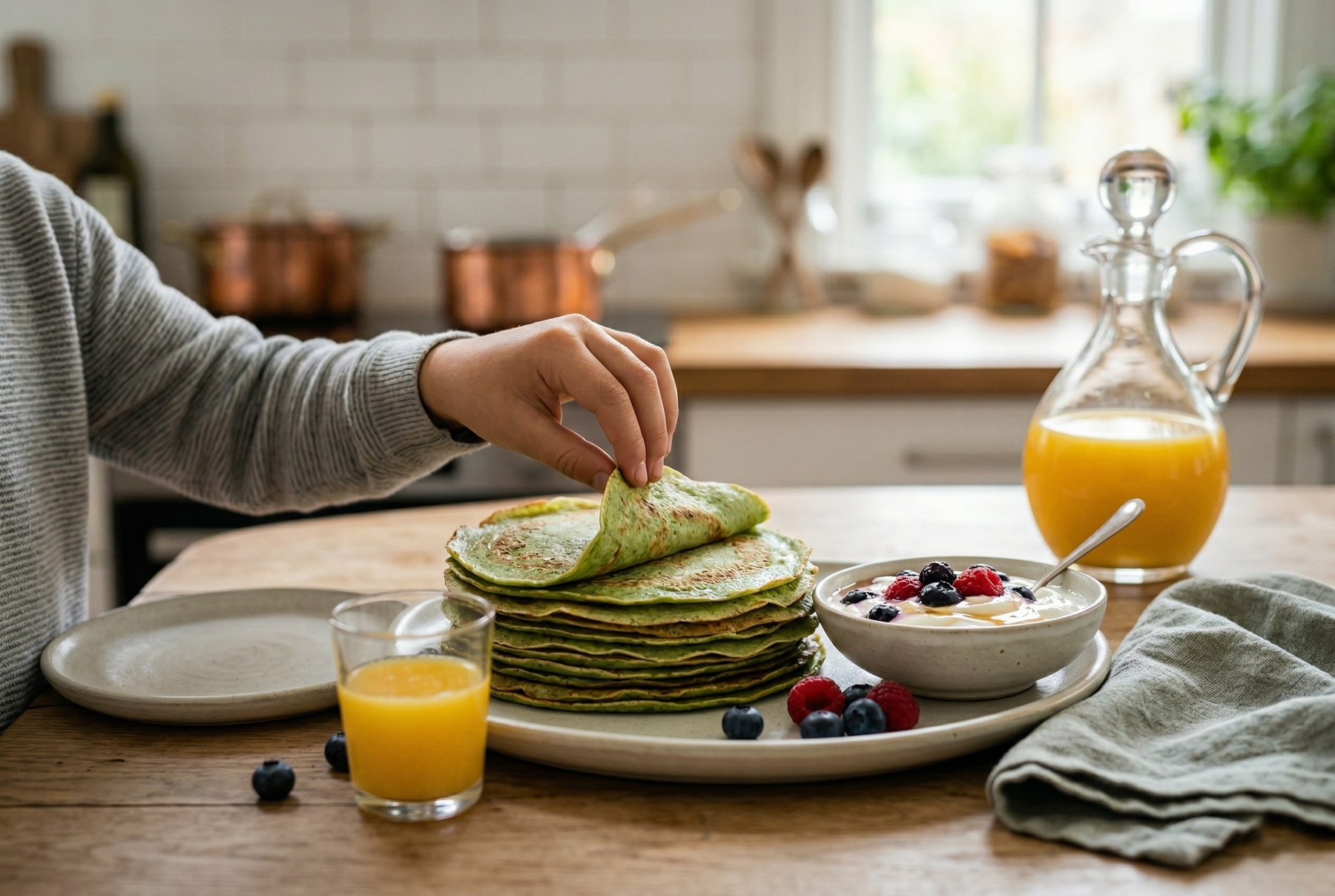
“Shrek’s crepes” or “superhero food”—giving a dish the right name often works much better than lecturing about vitamins.
The Soft Power Tactic
The Safe Island Method
One golden rule completely changed our family dinners: there must always be a food item on the plate that the child is guaranteed to eat. This is their food, their safe island—whether it is buckwheat (a staple roasted grain in Eastern European cuisine), a slice of cheese, or those ever-reliable pasta noodles. A micro-dose of something new is placed right next to it. Not a full portion, but literally one tiny piece of broccoli. Just one. The objective is not to make them eat it, but rather to help them coexist with it.
I stopped making a big deal out of it. I simply served the food and went about my business. About a month later, Varya began silently moving that piece from her plate into her mouth. No ceremonies required.
Patties They Shaped Themselves
This method works almost flawlessly. If a child shapes the meat patties themselves—crooked, flattened, covered in tiny fingerprints—they will eat them. It happens because these are their patties, representing their own hard work. At four years old, Lyosha shaped his dinner into a tractor and ate the whole thing, even though it was packed with onions he previously despised.
Friday nights dedicated to making pelmeni (traditional meat-filled dumplings) have become a cherished tradition. Varya rolls the dough, Lyosha shapes them—poorly, but with immense enthusiasm—and Masha, considering herself too grown-up for this, helps out of “respect.” The added bonus is a full hour where everyone is engaged in a shared task, and nobody is staring at a phone.
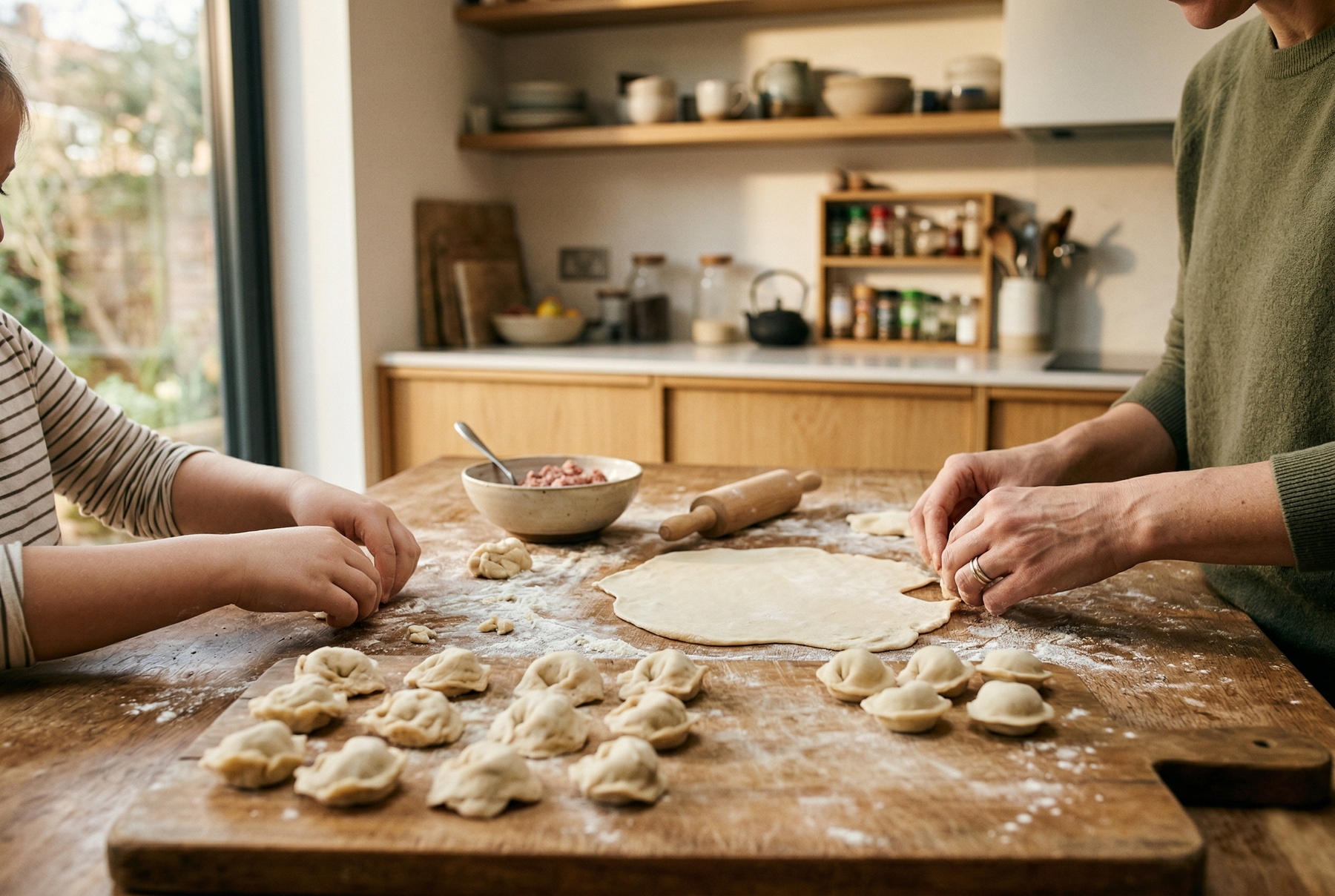
Involving children in the cooking process reduces stress at the dinner table and increases the likelihood that the meal will be eaten.
What to Say Instead of “Finish Your Plate”
“You are not leaving the table until you finish” is a phrase I heard often in my childhood, and I promised myself I would never repeat it. It simply does not work. The child either chokes down the food forcefully or learns to lie about how much they have eaten.
Several alternative phrases have genuinely taken root in our home. Saying “You do not have to eat this, just let it sit nearby” relieves the pressure and removes the food from the conflict zone. Mentioning “Try one bite; if you do not like it, I will not offer it again” works perfectly, provided you actually keep that promise; otherwise, the child will stop trusting you. Asking “What would you like to put on your plate yourself today?” gives the child agency; when they decide what goes on their plate, they feel less anxious and eat with much greater enthusiasm.
When the conversation at the table remains lively, and no one is scolding or monitoring every bite, children naturally eat better. I have tested this thoroughly.
Varya eventually asked me to add some green peas to her plate herself. Green ones. I silently poured them and walked back to the kitchen.
0 comments