
Two bunches of parsley bought on the same day in the same store for exactly the same price. Twenty-four hours later in the refrigerator, one stands crisp and vibrant, while the second droops like a wet rag, its base coated in a slimy film. The store is the same. The price is the same. What exactly happened?
Herbs remain living plants even after being cut. The leaf continues to breathe, evaporate moisture, and consume its internal sugar reserves, but the root no longer provides nourishment. The remaining vitality depends entirely on the condition at harvest, the transportation method, the store’s storage practices, and how you carried the bunch to your kitchen. I watched identical-looking bunches behave completely differently in the same kitchen for years, treating it as an everyday mystery. In Belgium, where I trained as a food technologist, people treat herbs with almost apothecary precision, and that exact meticulousness eventually explained everything.
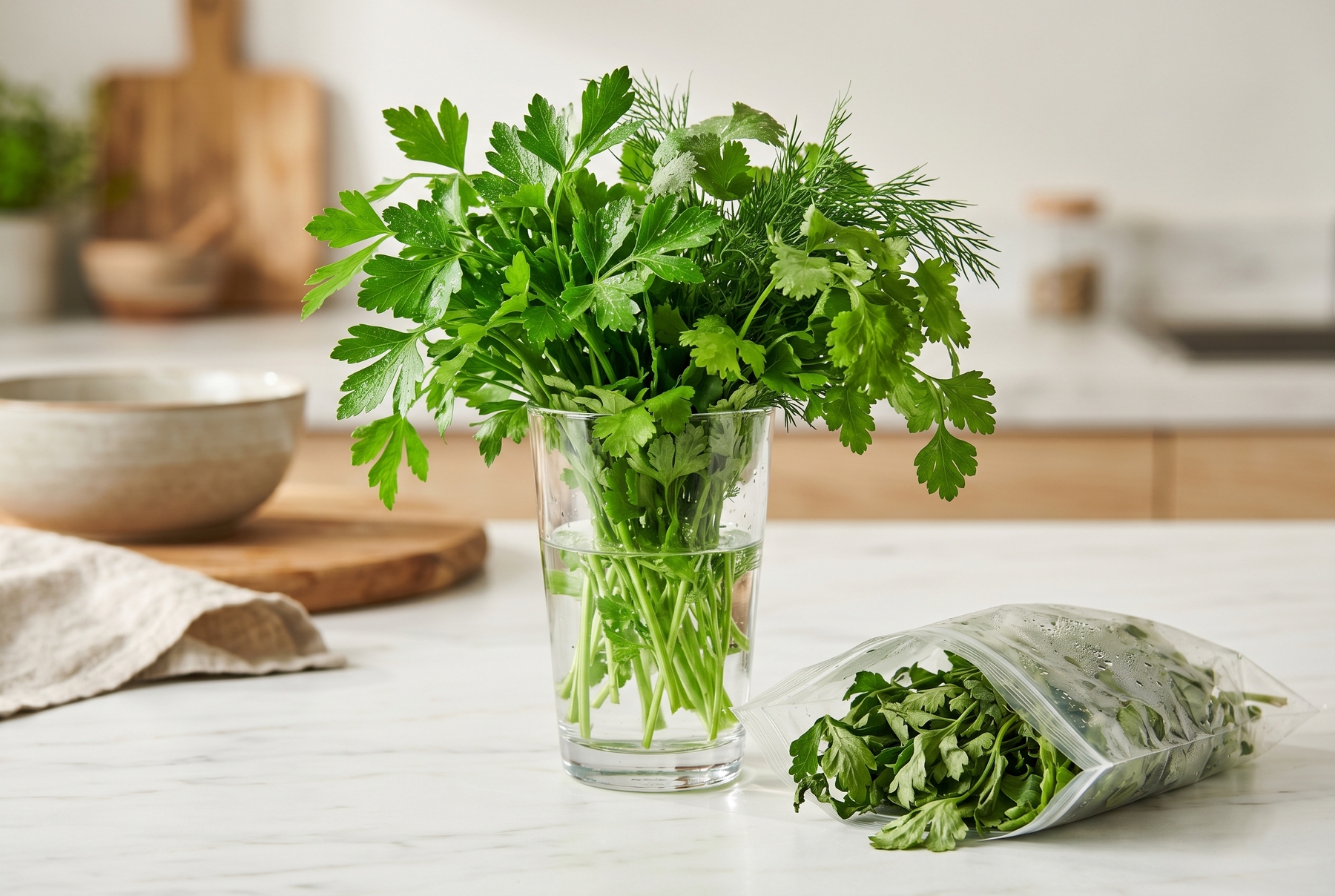
Storing delicate herbs in a glass of water provides the ultimate method for extending freshness and locking in vibrant aromas for up to ten days.
Table of Contents
The Biology of Fresh Herbs
A severed plant operates as an autonomous system. It sustains photosynthesis, breathes, and evaporates water for several days by utilizing whatever it managed to accumulate before the cut. Three factors determine everything.
The first factor is turgor. Internal water pressure pushes against the cell walls, which keeps a fresh leaf firm, structured, and springy. Once the cells lose water, the pressure drops, and the leaf sags like a deflated balloon.
The second factor relies on essential oils. The signature aroma of parsley or cilantro lives in microscopic glands on the leaf surface. These represent highly volatile compounds, and the word “volatile” acts literally here: they evaporate into the air at the first opportunity, especially when cellular damage occurs or the surrounding temperature rises.
The third factor involves oxidation. Cutting a stem or bruising a leaf exposes the cell contents to oxygen. Enzymes immediately trigger a reaction, causing the cut to turn brown, darken, and develop rusty spots. This identical mechanism turns the flesh of a sliced apple brown in mere minutes.
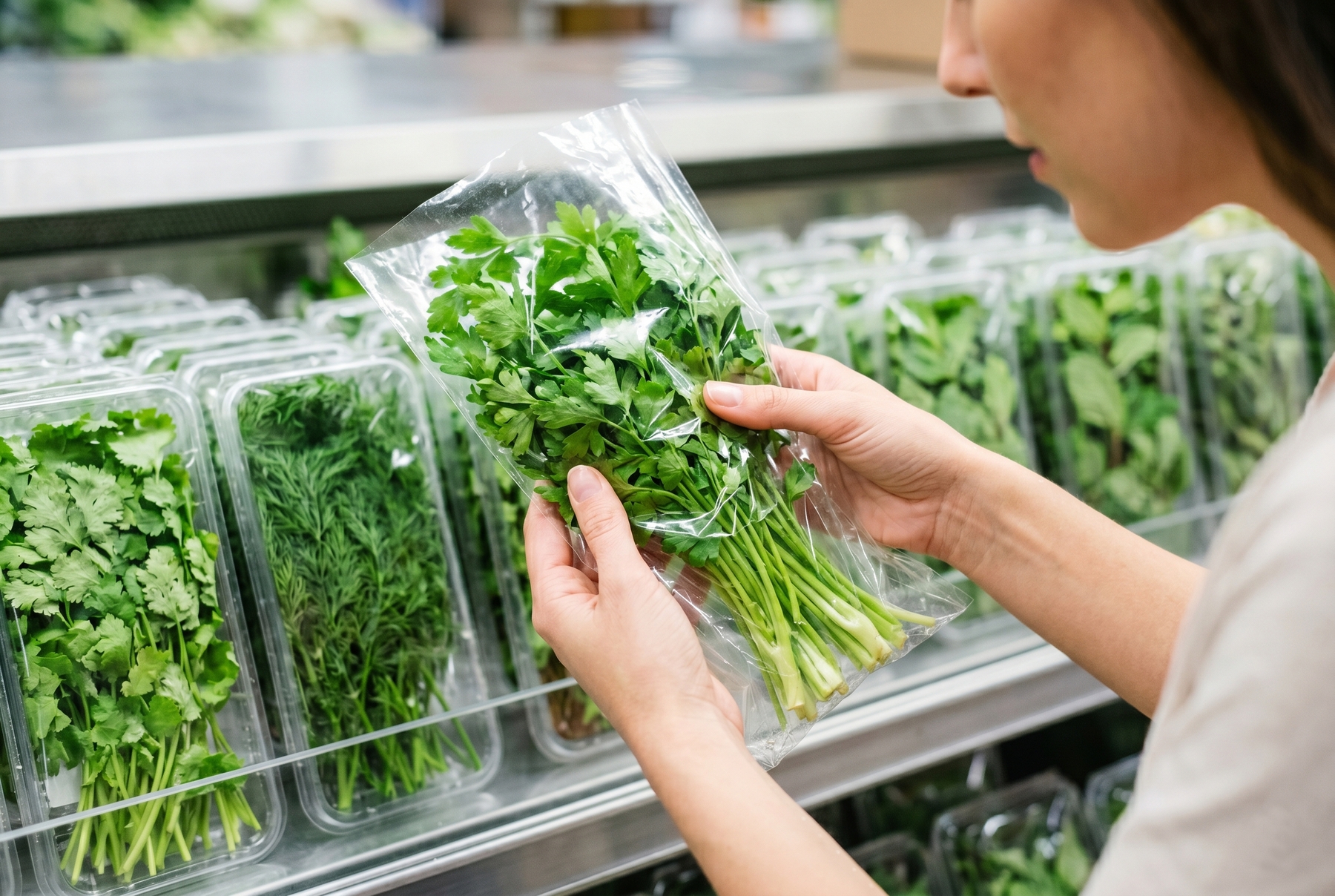
Always inspect the cut stem when selecting greens; a healthy bunch showcases a pale, moist base rather than a darkened or dry stump.
How to Select Fresh Herbs in the Supermarket: What to Look For, Smell, and Touch
You do not need a strict checklist here. You simply need to understand what each visual and tactile cue communicates.
The Stem Tells the Truth Better Than the Leaf
First, examine the cut at the base of the bunch. A freshly cut stem looks pale, slightly moist, and dense. If it has darkened, dried into a hard stump, or become slimy and brownish, the bunch has lingered on the display for too long. The upper leaves might still look decent because someone trimmed and sorted them, but the base always reveals the true age. The cut rarely lies.
The Leaf: Firmness, Color, and Edges
A living leaf feels firm and slightly cool to the touch, offering mild resistance against your finger. A wilted leaf folds without resistance and fails to spring back. Finding a couple of yellowed leaves at the bottom of the bunch presents no issue, as the lower tier always ages first. However, yellowness or translucency in the middle of the bunch indicates deep-seated decay. Dark, wet spots on the leaves signal that the herbs have started to rot in their own trapped moisture inside the packaging.
The Scent: The Crucial Test Almost Everyone Skips
Fresh parsley, cilantro, and dill project their aroma even through plastic packaging. Bring the bag close to your nose. Catching the scent means the essential oils remain intact. If your nose detects nothing, the volatile compounds have already vanished, and the bunch will taste flat on your plate. Bruised leaves lose their scent fastest because damaged cells let the oil evaporate. Heat accelerates this exact process, which explains why a bunch resting on a warm display smells noticeably weaker than its neighbor in the chilled section.
The Packaging: Sealed Bags Work Against Fresh Herbs
A bag fogged from the inside with condensation droplets serves as a clear warning sign if you want to keep your herbs fresh beyond a couple of days. Moisture, warmth, and trapped air provide microflora with the ultimate breeding ground. This does not make the herbs dangerous, so you can skip the panic. Such a bunch simply spoils significantly faster, making it pointless to buy if a drier alternative sits nearby.
Why Herbs Wilt and Lose Their Aroma
Three distinct biological processes operate simultaneously, making storage a constant compromise between them.
Warmth and air circulation drive essential oils outward, severely weakening the aroma. Oxygen interacting with the cut stem produces brown edges and dark spots. Room-temperature moisture awakens bacteria, resulting in that distinctively sour odor of rotting vegetation.
The resulting storage logic remains simple, albeit somewhat inconvenient. Excessive dryness makes the leaf wilt, while excessive moisture causes rot. Warmth simply exhausts the flavor. The ideal sweet spot lies somewhere in between, and this perfect balance varies across different herb varieties.
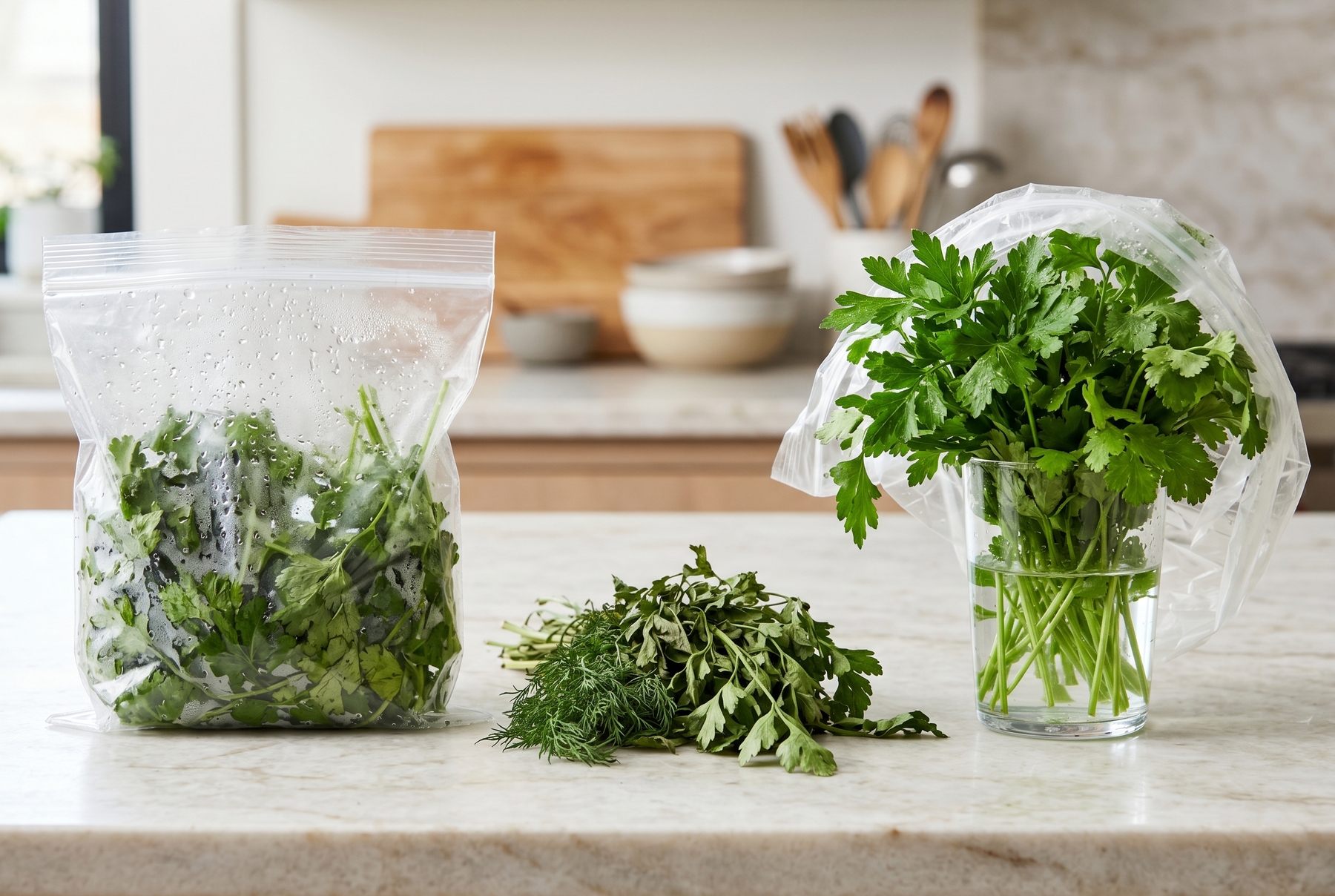
Different herbs demand tailored approaches, ranging from a damp paper towel for robust rosemary to a water bouquet for fragile parsley.
How to Store Herbs at Home and in the Refrigerator: Proven Methods for Each Variety
A single universal trick fails here because different herbs possess fundamentally different biological needs.
Delicate Leafy Greens: Parsley, Cilantro, and Dill
I call the best method for storing parsley, cilantro, and dill the “bouquet technique.” You trim the very tips of the stems by a few millimeters so the fresh cut can drink water again, and you place the bunch in a glass of cold water just like cut flowers. You drape a plastic bag loosely over the top without sealing it, ensuring adequate airflow inside. You place this setup in the refrigerator. This method excels because the stems continue drawing water to maintain turgor, while the leaves avoid sitting in a puddle of their own moisture. You need to change the water every two to three days or whenever it turns cloudy. Parsley and cilantro remain incredibly fragrant for up to 7-10 days, and often much longer, when stored this way.
Basil Requires a Completely Different Approach
Basil despises the cold, making the refrigerator a terrible destination for it. Temperatures below approximately +8 °C (46 °F) inflict severe chill damage on its cellular structure, causing the leaves to turn entirely black overnight. You must keep it far away from the fridge. You place it in a glass of water at room temperature, safely out of direct sunlight. Most people habitually toss basil into the main crisper drawer with the rest of their greens, only to act surprised by the ruined, blackened leaves the next morning.
Hard-Stemmed Herbs: Rosemary, Thyme, and Sage
These woody shoots release moisture very slowly and completely reject the glass-of-water treatment. You wrap them in a damp paper towel and place them inside a container or zip-top bag, leaving a corner slightly open to allow gentle air circulation. They rest peacefully for weeks in this environment.
Green Onions and Ramson (Wild Garlic)
Alliums release potent sulfur compounds that thoroughly permeate everything nearby within hours. Butter resting in the same refrigerator door will absorb that aggressive aroma, permanently ruining its delicate flavor. You must keep green onions and ramson isolated in a tightly sealed airtight container.
How to Revive Wilted Herbs
You can successfully resurrect wilted but not yet rotting greens, and this trick works wonders on parsley, dill, and cilantro. Plunging the bunch into ice-cold water for 15 to 20 minutes rapidly restores cellular turgor. Osmosis allows the cells to draw water back inside, making the leaves unfurl and crisp up once again. I must admit that the original aroma will never fully return. You cannot force evaporated essential oils back into the leaf tissue. However, the ice bath confidently restores the visual appeal and crunchy texture, which proves more than sufficient for hot dishes.
Sometimes, you simply cannot save the bunch. A slimy coating on the stems, a sour or distinctly musty smell, and dark, cloudy water in the storage glass strongly indicate active bacterial breakdown. You must discard such greens immediately, without any hesitation.
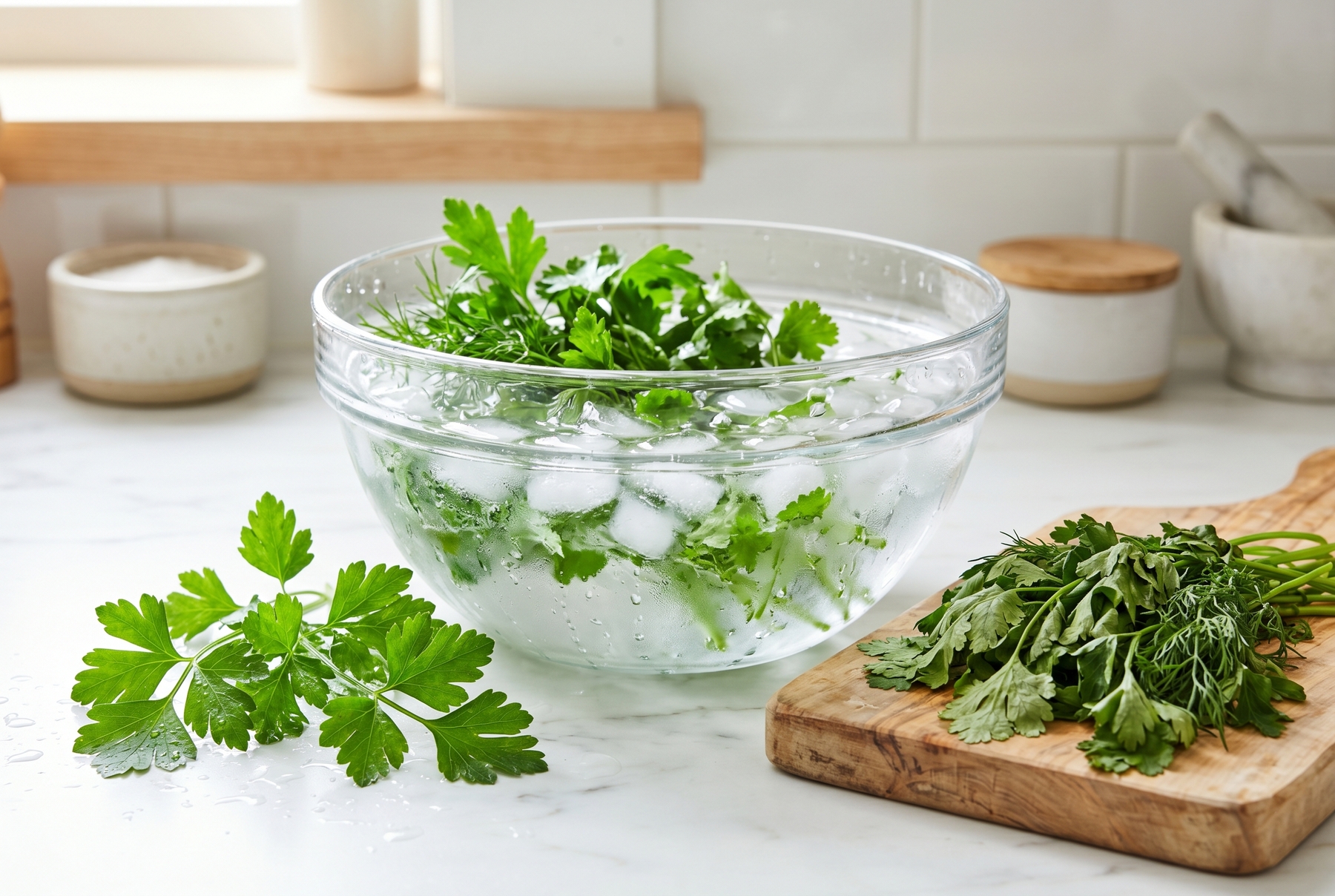
A brief twenty-minute ice bath easily restores crispness to wilted leaves by rapidly replenishing intracellular water pressure.
Freezing and Drying: The Fate of Culinary Aromas
Both preservation methods alter the herbs fundamentally, each in its own unique way.
Freezing forces the intracellular water to expand, violently rupturing the cell walls from the inside out. This explains why thawed dill completely fails in a fresh salad; it retains absolutely zero texture. However, frozen herbs perform brilliantly in soups, stews, or sauces where crunch holds no importance, successfully preserving a significant portion of their original aroma. A highly convenient professional trick involves chopping the herbs, distributing them into ice cube trays, covering them with water or melted butter, and freezing them solid. The fat actively locks the volatile compounds in place, trapping the scent far better than plain water ever could.
Drying strips away the vast majority of the light, volatile notes, while heavily concentrating the heavier aromatic compounds. Consequently, dried dill smells entirely different from its fresh counterpart. The dried version is not spoiled; it simply develops a different, deeper character. You must add dried herbs earlier in the cooking process, allowing them enough time to release their flavor through sustained heat.
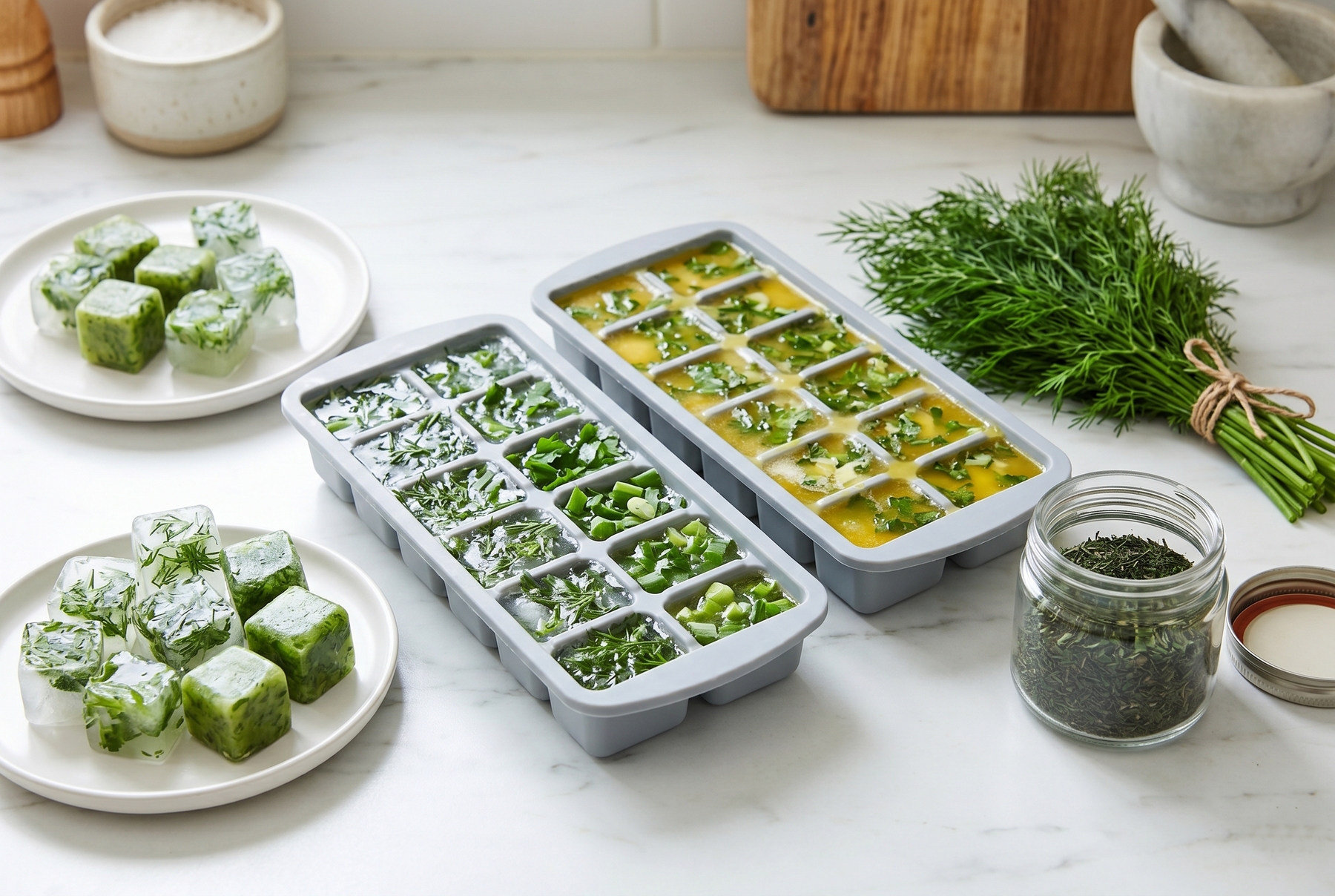
Freezing herbs in oil or water brilliantly preserves their flavor for hearty soups, while drying grants the greens a completely new, concentrated character.
Keep these brief rules in mind. You inspect the basal cut in the supermarket, smell the herbs right through the plastic, and actively avoid bags fogged with condensation. You never transport delicate greens in a hot shopping bag. Once home, you immediately unpack the bunch and discard any rotting pieces to prevent them from spoiling the rest. You place delicate leafy greens in a glass of water under a loose plastic bag in the refrigerator. You keep basil in room-temperature water. You isolate pungent alliums in dedicated sealed containers.
Parsley easily maintains its crisp freshness for an entire week when placed in a glass of cold water and covered loosely with a plastic bag.
0 comments