
A hot dog cut into neat little circles, grapes sliced in half, and an apple divided into perfectly even wedges make the plate look like a picture from a parenting magazine. An adult looks at this spread and feels a sense of care and precision. However, for a young child, such a plate can actually pose a safety hazard.
Sharing this is not meant to cause panic. Having raised three children, I remember how overwhelming the information feels with the first baby: choosing organic purees, figuring out the right weaning approach, and timing the introduction of meat and fish. Yet, the shape of the pieces on a child’s plate gets discussed far less frequently. This specific detail determines so much about mealtime safety.
The shape of a piece, its size, softness, and whether it is slippery or sticky all influence safety just as much as ingredient composition and freshness. Serving food safely to children and cutting solid pieces correctly represent cooking steps just as essential as washing hands or removing bones from fish.
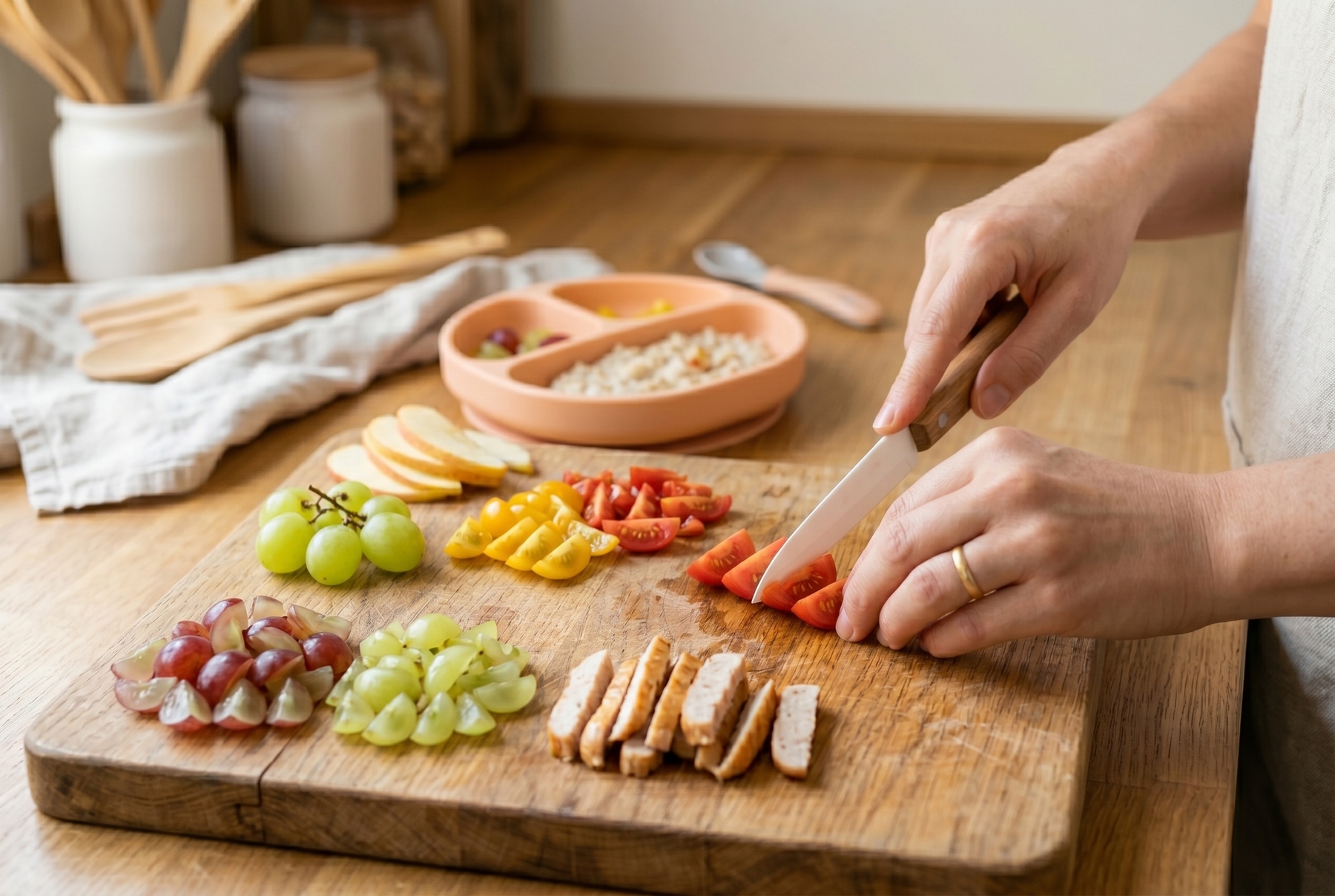
The main rule when preparing solid foods involves avoiding round shapes. Cherry tomatoes must always be cut lengthwise into four pieces.
Table of Contents
- It Is Not About the Food, But the Shape: Why a Child Might Choke
- Four Rules for Safely Cutting Food for Children
- How to Cut Everyday Homemade Food for a Toddler
- Why There Are No Strict Tables Here
- Situations Where the Risk Elevates
- A Mini Checklist Before Serving
- Time-Saving Tricks
- Dangerous Foods: What to Postpone for Toddlers
It Is Not About the Food, But the Shape: Why a Child Might Choke
Round Shapes Can Act Like a Plug
A small, firm ball and a child’s throat roughly the width of their pinky finger illustrate the danger perfectly. A small round or oval piece fits exactly to block the airway. This mechanism works differently for adults, who have a larger airway diameter, stronger chewing force, and different reflexes. A toddler does not always manage to react in time.
Grapes, cherry tomatoes, large blueberries, peas, raisins, hot dog rounds, and small cheese balls all require a different cutting method. A grape does not become child-safe simply because it is small. Sometimes its small size actually creates the problem.
My middle child once deftly swallowed a cherry tomato half at age two, which I had cut correctly straight down the middle. Everything turned out fine. That moment made me realize that halves still remain two rounded pieces. Slicing them lengthwise into quarters would have been the safer choice.
Bite-Sized Means Different Things
For adults, a bite-sized piece translates to convenience and speed without extra effort. Everything is different for a toddler, for whom that same piece remains too large, too slippery, or too hard to chew thoroughly before swallowing.
A piece of apple that an adult easily bites into can prove hard, slippery, and simply too big for a two-year-old’s mouth. Children do not always understand when a piece is too large. They attempt to swallow it exactly as it is, either pocketing it in their cheek or gulping it whole.
This explains why cutting food into pieces and cutting food into pieces correctly represent slightly different concepts.
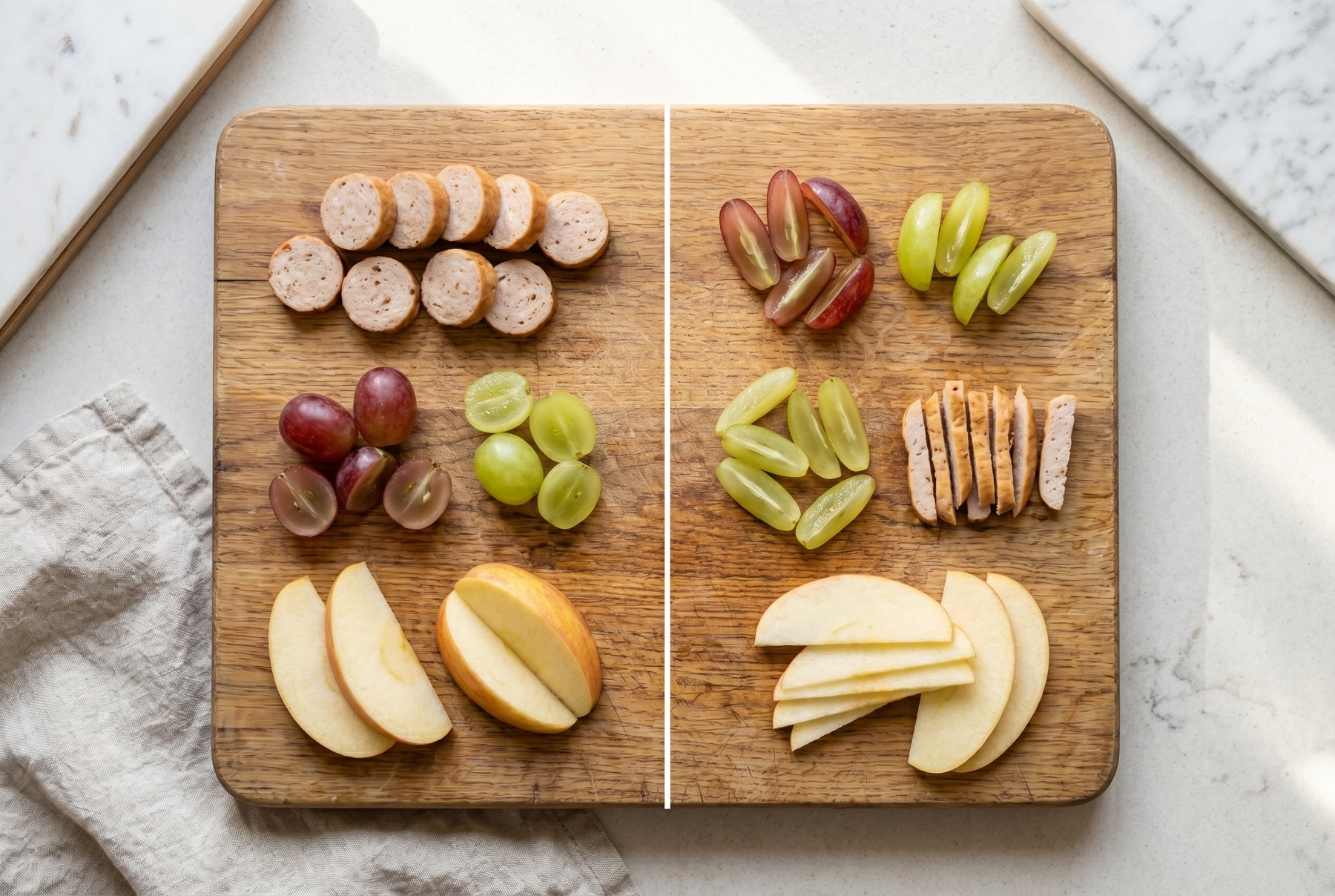
A visual comparison: dangerous round pieces that can block airways on the left, and a safe presentation utilizing strips on the right.
Four Rules for Safely Cutting Food for Children
1. Cut Round Items Into Lengthwise Quarters, Not Halves (How to Properly Cut Grapes and Cherry Tomatoes)
Grapes, cherry tomatoes, large berries, small plums, and pitted sweet cherries should never be sliced crosswise into coins or simply halved. The correct approach involves slicing them into lengthwise quarters. For very young babies, chopping them even smaller works best, depending on their age and chewing confidence.
A pitted cherry sliced in half still consists of two rounded pieces. Cutting it into four lengthwise sections changes its dangerous shape entirely.
Taking this extra step requires only thirty seconds. The child might stare from the highchair looking impatient, but the safety benefit outweighs the brief wait.
Regarding grapes, slicing large ones into six pieces rather than four provides extra safety, especially for children under three. A quarter of a jumbo grape can still pose a choking risk.
2. Cut Cylindrical Foods Into Strips, Not Rounds
Hot dogs, sausages, imitation crab sticks, firm cucumbers, string cheese, and bananas for babies typically end up cut into rounds. This habit makes sense since it is faster and looks prettier on a plate. However, a hot dog coin shares roughly the same shape as a grape, remaining small, round, and slippery.
The proper method involves slicing lengthwise first, then cutting into short, thin pieces. Strips replace coins. This takes the exact same amount of time but yields a different, safer result.
Being honest about hot dogs, my family of five certainly eats them. They appear on the menu especially on evenings when the oldest has late practice, the middle child is whining in the hallway, and the youngest is pulling things off the kitchen table. The goal is not avoiding them entirely. The goal remains avoiding cutting them into rounds.
For very young babies, slicing bananas into lengthwise strips allows the child to grip them in a fist and bite off small amounts. Thick banana slices create an issue since the flesh is soft yet simultaneously dense and slippery.
3. Soften, Grate, or Thinly Slice Hard Foods
Apples, carrots, pears, firm cucumbers, cabbage, bagels, and tough bread crusts present an issue with texture rather than shape. A child will eventually try to swallow a poorly chewed hard piece whole.
Serving carrots works best when they are grated, lightly steamed, or cut into very thin, soft matchsticks. Raw carrots might seem like the ultimate healthy snack. For a toddler, they mean sharp edges when bitten, hard chunks that resist chewing, and large fragments swallowed unnoticed.
Apples require cutting into thin slices, grating, baking, or serving as small soft pieces without the tough skin. The peel creates an additional hurdle because its tough, slippery nature challenges a child’s chewing skills.
Cucumbers need peeling to remove the tough skin and should have any large, dense, watery cores removed. Thin matchsticks work perfectly. Removing the skin entirely helps children who are still learning to chew confidently.
Crackers and bagels tell a separate story. Handing a child something to gnaw on while adults drink tea makes sense, especially with a grandmother nearby. However, dry products crumble, break into sharp hard pieces, and pack the mouth. Avoiding leaving a child unattended with them is best, and they should never be offered in a stroller or car.
4. Spread Sticky Foods Thinly Instead of Serving Them in Lumps
Thick oatmeal, cottage cheese, soft cheese, peanut butter, pâté, and dense mashed potatoes all look soft and harmless. They lack sharp corners and hard textures. Yet, a sticky mass clings to the roof of the mouth, forming a lump that mimics the sensation of something being stuck. A child might panic or struggle to clear it, which does not always end well.
The solution involves offering small portions, spreading a thin layer on bread or pancakes, or thinning the mixture to a softer consistency. Adding milk to stiff oatmeal softens it perfectly. Mixing dry cottage cheese with sour cream, yogurt, or fruit puree improves the texture, while peanut butter requires only a very thin layer.
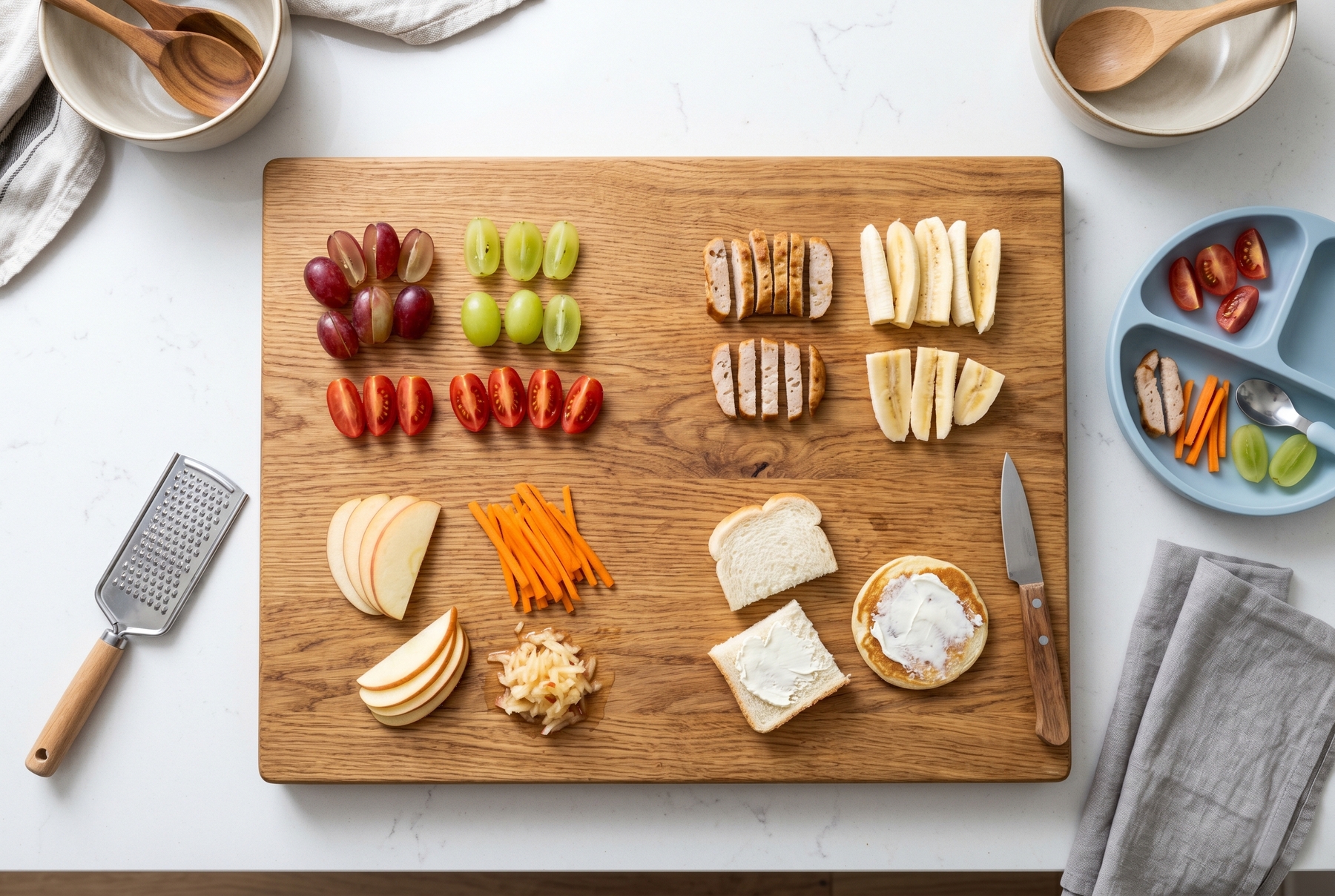
Properly prepared foods for baby-led weaning: grapes and berries sliced lengthwise, grated carrots, and bananas served in long strips.
How to Cut Everyday Homemade Food for a Toddler
Breakfast: Oatmeal, Cottage Cheese Pancakes, Omelets, and Sandwiches
Oatmeal demands attention to its thickness alongside its temperature. A spoon standing vertically without support indicates a mixture that is too dense. Pushing such a heavy mass around the mouth challenges a baby. Adding a couple of tablespoons of milk easily resolves this.
Dense, dry pieces of cottage cheese pancakes or baked ricotta fail to provide the best experience. Breaking them into small, soft pieces and adding a spoonful of sour cream or yogurt instantly creates a moister, more manageable texture.
A soft omelet serves as an excellent option for babies. Serving it in strips or small pieces works best. Presenting a large sheet that the child must figure out alone usually leads to them tearing off random, unmanageable chunks.
Bread and sandwiches require soft, small pieces with tough crusts removed. Pâté, soft cheese, butter, or peanut butter need to be spread in a thin layer. A one-centimeter (0.4-inch) layer of spread might look generous. For a toddler, it becomes a dense, sticky lump in the middle of their sandwich.
Lunch: Soup, Meatballs, Potatoes, and Pasta
Soup usually causes trouble through large chunks: potatoes the size of a child’s fist, three-centimeter (1.2-inch) carrot coins, or large pieces of meat that even an adult would need to cut. Mashing everything with a fork right in the bowl before serving or chopping ingredients beforehand works much better.
Boiled meat in soup feels deceptively soft but remains fibrous. Pulling it apart into fine shreds and removing any veins, cartilage, or tough edges ensures a safer meal.
Meatballs or patties generally provide a more convenient option than a solid piece of roasted meat. The inside texture must remain soft, avoiding a dense, dry core or an overly crispy crust.
Long spaghetti provides entertainment but lacks practicality for little ones. Since children struggle to gauge portion sizes, they tend to overstuff their mouths. Opting for short pasta shapes or cutting long noodles in advance solves this issue.
If a lump of mashed potatoes resists breaking apart easily with a fork, incorporating a splash of milk improves its consistency.
Afternoon Snack: Fruits, Berries, Cottage Cheese, and Cookies
Grapes require slicing lengthwise into quarters. Avoid crosswise coin slices or simple halves. Jumbo grapes need to be cut into six pieces.
Apples should avoid appearing as large, hard wedges. Thin slices, grated portions, baked pieces, or small soft chunks without tough skin provide the safest choices.
Pears follow a simple rule: cut soft ones into small pieces, and treat firm ones like apples by slicing them thinly and finely.
Bananas should skip the large round slices in favor of small soft pieces or lengthwise strips.
Large berries like strawberries, plump blueberries, and pitted sweet cherries need cutting according to their size and shape. The main goal involves eliminating the small ball effect.
Dry cottage cheese gathers in the mouth to form a dense lump. Incorporating yogurt, sour cream, or a small amount of fruit puree transforms the texture.
Giving a child cookies or crackers to gnaw on while adults drink tea sounds familiar. However, dry products crumble and break into sharp fragments. Avoiding them in the stroller or on the go is essential, and leaving a child unattended with them is never recommended.
Dinner: Vegetables, Fish, Chicken, and Casseroles
Raw, chunky carrots fail to make a good choice. Serving them grated, boiled, roasted, or very thinly sliced offers better safety.
Cucumbers serve best as matchsticks, removing the tough skin if necessary. Thick rounds should be avoided entirely.
Cherry tomatoes strictly require quartering. Serving them whole presents a terrible idea for toddlers.
Soft broccoli and cauliflower florets work perfectly. Removing tough stems or chopping them finely on the side ensures easier chewing.
Fish demands strict attention to bones. Visually inspecting it is not enough; shredding it with a fork and feeling through it with fingers guarantees safety. For little ones, fish should be soft, skinless, and free of dry, dense edges.
Chicken should be served as soft shreds or small pieces. Removing skin, cartilage, veins, and dry edges is non-negotiable. While chicken breast provides excellent nutrition, its dry texture makes chewing difficult for a child, often crumbling and clumping uncomfortably.
Casseroles offer a great option provided they remain soft and moist inside. Serving them in small pieces rather than dense squares works best.
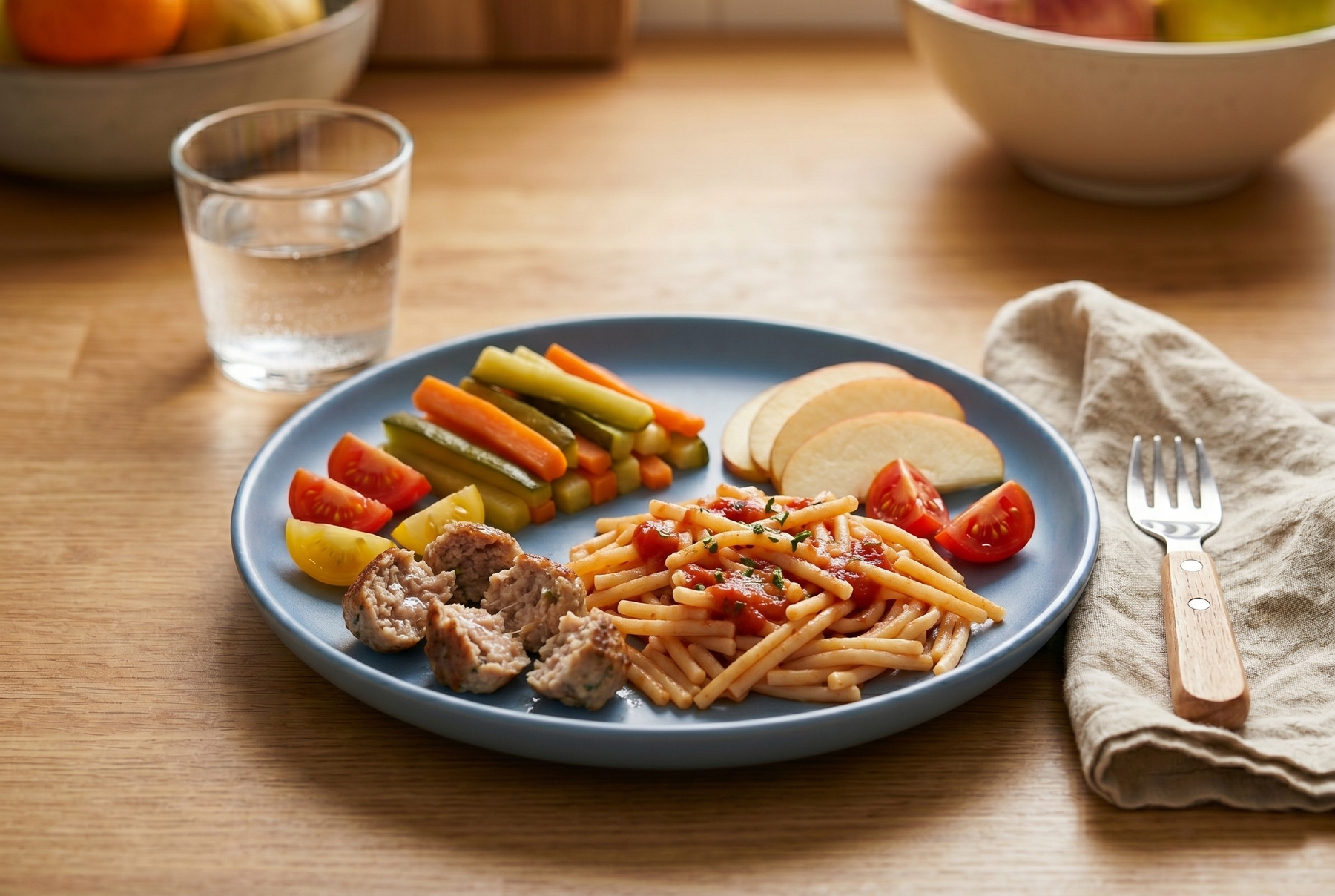
An example of a balanced lunch where all hard foods are minced or sliced into safe, easily chewable pieces.
Why There Are No Strict Tables Here
One Child Chews Confidently While Another Still Pockets Oatmeal in Their Cheek
Age serves as a guideline, not a precise instrument. One one-year-old comfortably handles soft pieces. Another child at eighteen months still collects everything in their cheek, holding it there before spitting it out onto the table with the expression of a restaurant critic.
True readiness indicators involve watching whether the child sits steadily, chews without immediately swallowing, avoids choking regularly, refrains from stuffing their mouth for later, and stays focused enough during meals to avoid swallowing blindly.
Many pediatric associations recommend starting solid foods between four and six months, strictly in a seated position. By eight months, the consistency gradually shifts from purees to minced textures. This remains a general guideline, allowing every child to progress at their own pace.
Purees, Pieces, and Parental Common Sense
Families adopt various approaches: some begin with classic purees and transition to pieces gradually, while others embrace baby-led weaning immediately with soft pieces. Both methods yield successful results. The key factor remains ensuring the child is seated, the food is soft and appropriately sized, and an adult is present.
Situations Where the Risk Elevates
Eating on the Run
A child running, laughing, shouting, jumping on the couch, crying, or riding in a car or stroller creates the worst possible environment for eating. This applies especially to solid pieces that require chewing. Movement impairs a child’s ability to control their chewing and swallowing.
Snacking on solid pieces in a stroller happens to every parent. However, reserving solid pieces for moments when the child sits still and focuses on the plate rather than passing pigeons ensures much greater safety.
Cartoons During Meals
Speaking honestly, cartoons have saved me countless times. This holds true especially when needing to feed one child peacefully while the second tackles homework and the third rolls toy cars across the floor.
The problem lies elsewhere: staring at a screen prompts a child to open their mouth automatically without monitoring the process. They wait for the next bite rather than actively chewing. While this poses minimal danger with soft purees, solid pieces introduce complications since chewing demands at least some attention.
Grandma Gave It to You Because You Ate It and Grew Up Fine
Grandparents accustomed to different methods respond best to advance explanations without drama. A simple, calm phrase works wonders: Mom, he can have an apple, let me just cut it differently real quick. Avoiding twenty-minute lectures helps. Simply standing up, grabbing a knife, and cutting it suffices.
A Mini Checklist Before Serving
Before placing the plate down, a quick safety check is essential:
Is the piece round? Slicing it into lengthwise quarters eliminates the spherical shape.
Is the piece hard? Softening, grating, or slicing it very thinly resolves the issue.
Is the piece sticky? Avoiding lumps by offering a thin layer or a small portion works best.
Are there pits, skin, veins, or cartilage? Complete removal is mandatory.
Is the child sitting calmly? Meals belong at the table, not on the run.
Is an adult nearby? Constant supervision with potentially challenging foods is required.
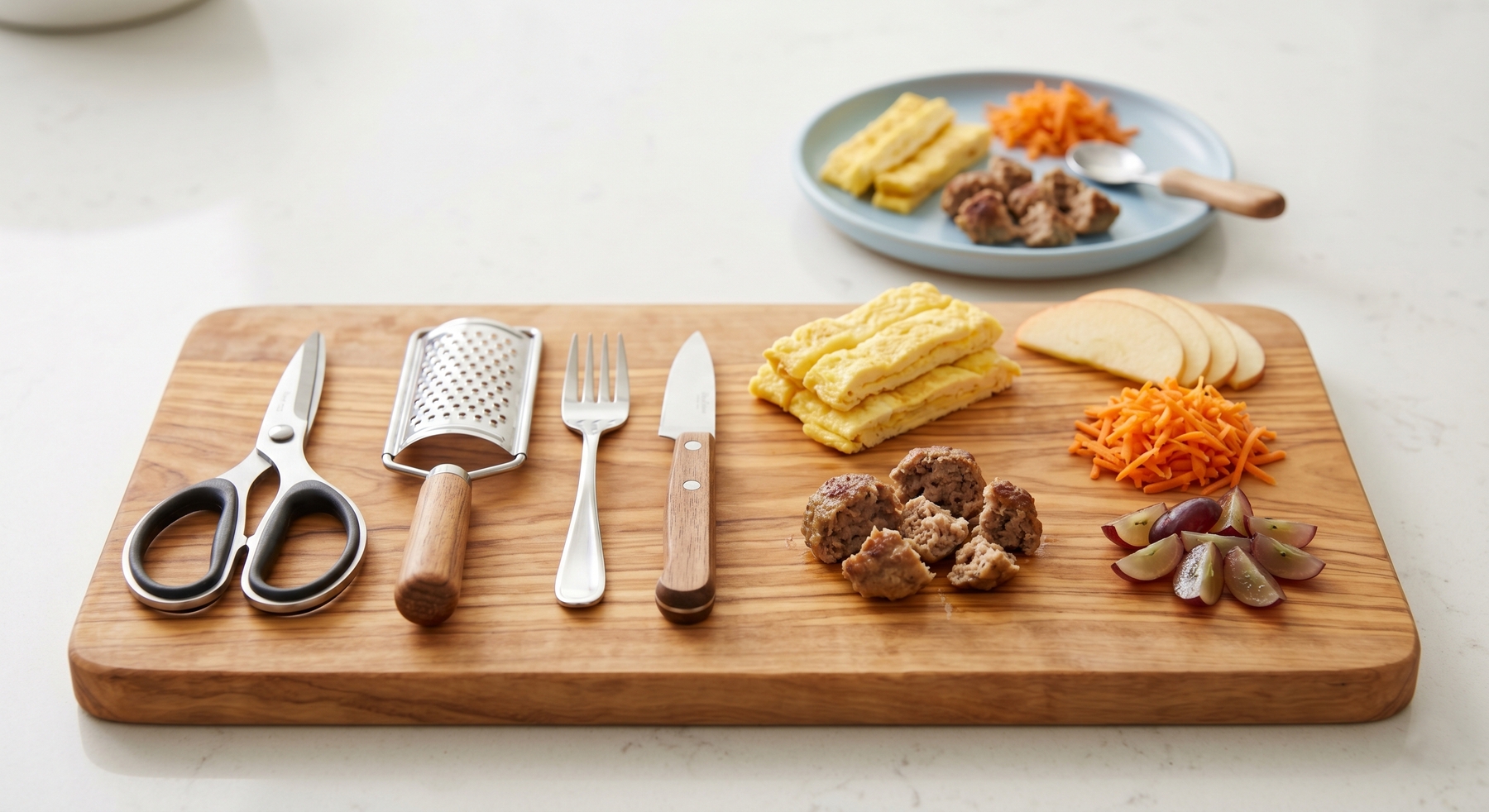
Using kitchen shears and a grater significantly simplifies life for parents, allowing for rapid processing of foods into safe sizes.
Time-Saving Tricks
Kitchen Shears
These stand out as the most underrated tool for parents of young children. Shears effortlessly chop an omelet right in the bowl, snip pasta, divide meatballs, cut herbs, and shred casseroles. This method proves faster than taking out a knife and cutting board. When hands are full and a hungry child waits, shears win.
A Box Grater
Grated carrots, grated apples, and grated pears represent more than just how they used to do it. This tool genuinely transforms texture. Swapping an apple wedge for grated apple delivers the same flavor with superior safety.
The Fork Test
When doubting whether a piece is soft enough, attempting to mash it with a fork provides the answer. If mashing requires effort, a toddler will likely struggle as well.
A Small Plate Instead of a Mountain of Food
Serving a small amount and adding more later works best. Faced with a large, full plate, a child often starts stuffing their mouth for later because they lack an understanding of how much fits at once.
Dangerous Foods: What to Postpone for Toddlers
Certain foods warrant patience: whole nuts, popcorn, hard candies, chewy sweets, whole grapes, whole cherry tomatoes, large chunks of raw carrot, unattended crackers and bagels, fish with bones, and meat featuring cartilage or tough veins.
This does not constitute a permanent ban list. These items simply need to wait until the child chews confidently, sits calmly at the table, and eats without rushing.
Inspecting every single berry with a magnifying glass is unnecessary. Simply asking three questions before serving proves sufficient: is it not round, not too hard, and not sticky?
0 comments