
Bringing an avocado home only to slice into a rock-hard center is a familiar disappointment. Even worse is discovering a dark, oily mush that feels like a waste to discard but is impossible to eat. This scenario repeats itself so often that it feels like bad luck. In reality, luck has nothing to do with it. An avocado reads almost like an open book when you know exactly where to look and how it should feel.
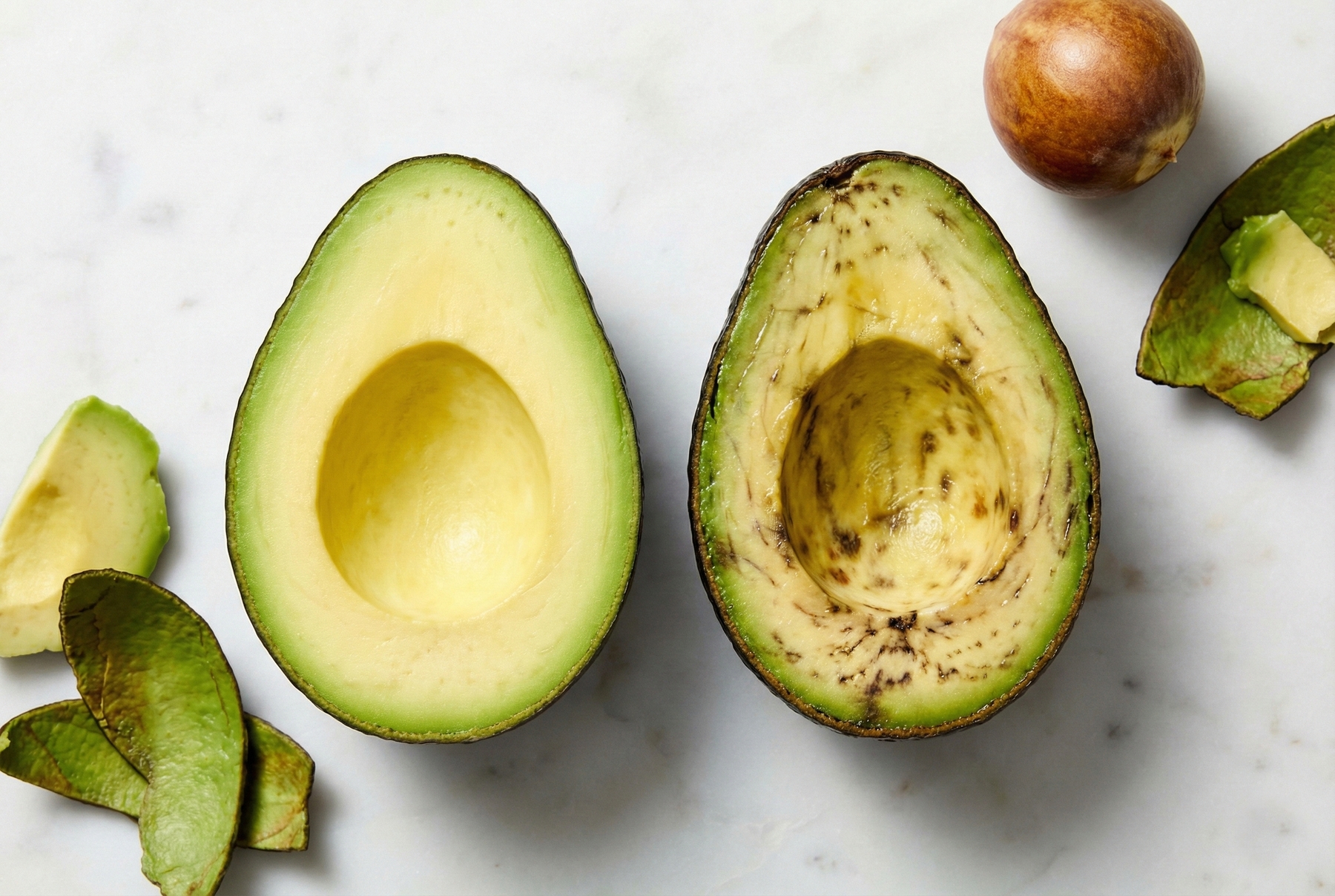
Two possible outcomes: pristine green flesh and an avocado plagued with dark spots—a distinction crucial to recognize before leaving the store.
How to Choose an Avocado with Your Hands and Eyes
Poking an avocado with a single finger remains the most common supermarket mistake. Concentrated pressure easily damages the flesh, leaving a dent that will brown within hours, all without revealing the true state of the fruit. Cradling the avocado in the palm of your hand and giving it a gentle, even squeeze provides a much more honest assessment, similar to testing a tennis ball before a match. A perfectly ripe fruit yields slightly and immediately springs back into shape. Catching that specific resilient bounce is the key.
An avocado that completely resists gentle pressure will need about three more days to reach its prime. One that leaves a lasting indentation after the hand is removed has already overripened or sustained mechanical damage during transport. The ideal fruit exists precisely between these two extremes.
Relying on skin color introduces further complications. Hass, the most ubiquitous variety in supermarkets, darkens as it matures, shifting from vibrant green to a deep, purplish black. However, varieties like Fuerte and Reed maintain their green hue even at peak ripeness. Spotting the variety name on a store display takes out half the guesswork, clarifying exactly what to expect from the color. Since this labeling is rare, judging solely by appearance carries risks. The gentle palm test, however, works universally across all varieties.
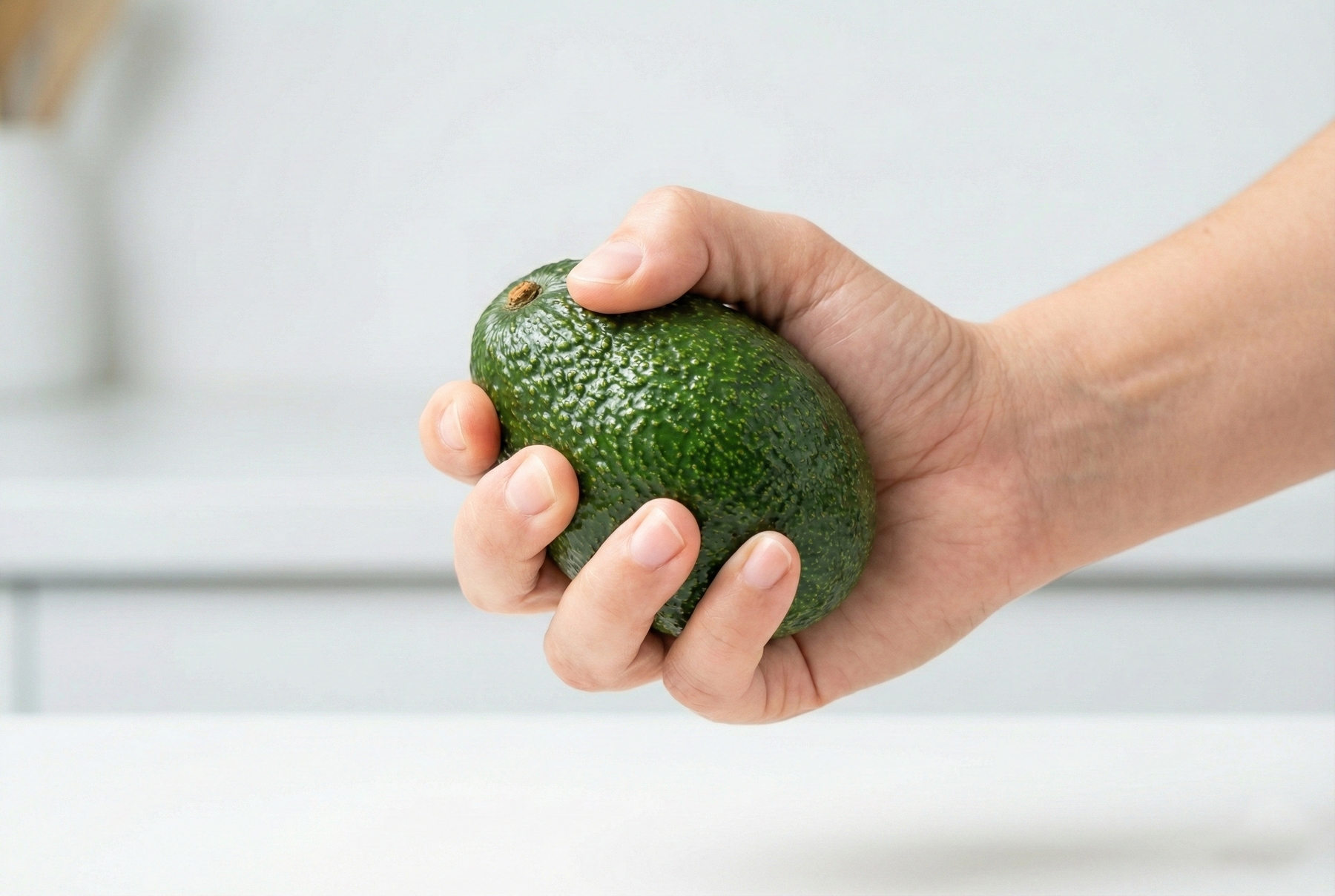
A perfectly ripe avocado yields gently to an even squeeze and immediately regains its shape, avoiding any lasting indentations.
Once the tactile test is complete, checking the stem offers a fast and highly informative secondary method. Gently nudging the dry stem with a fingernail should cause it to pop off effortlessly if the fruit is ready. Examining the small patch underneath reveals the final clue. A bright green circle indicates an unripe fruit. A yellow or yellowish-green hue signals perfection, meaning the flesh has softened beautifully without starting to degrade. A brown spot warns of dark, fibrous patches inside, making it a fruit best left on the shelf.
The area beneath the stem loses its protective layer first and reacts to oxygen before the rest of the fruit, acting as a tiny window into the avocado’s overall condition. Utilizing this simple trick yields incredibly reliable results.
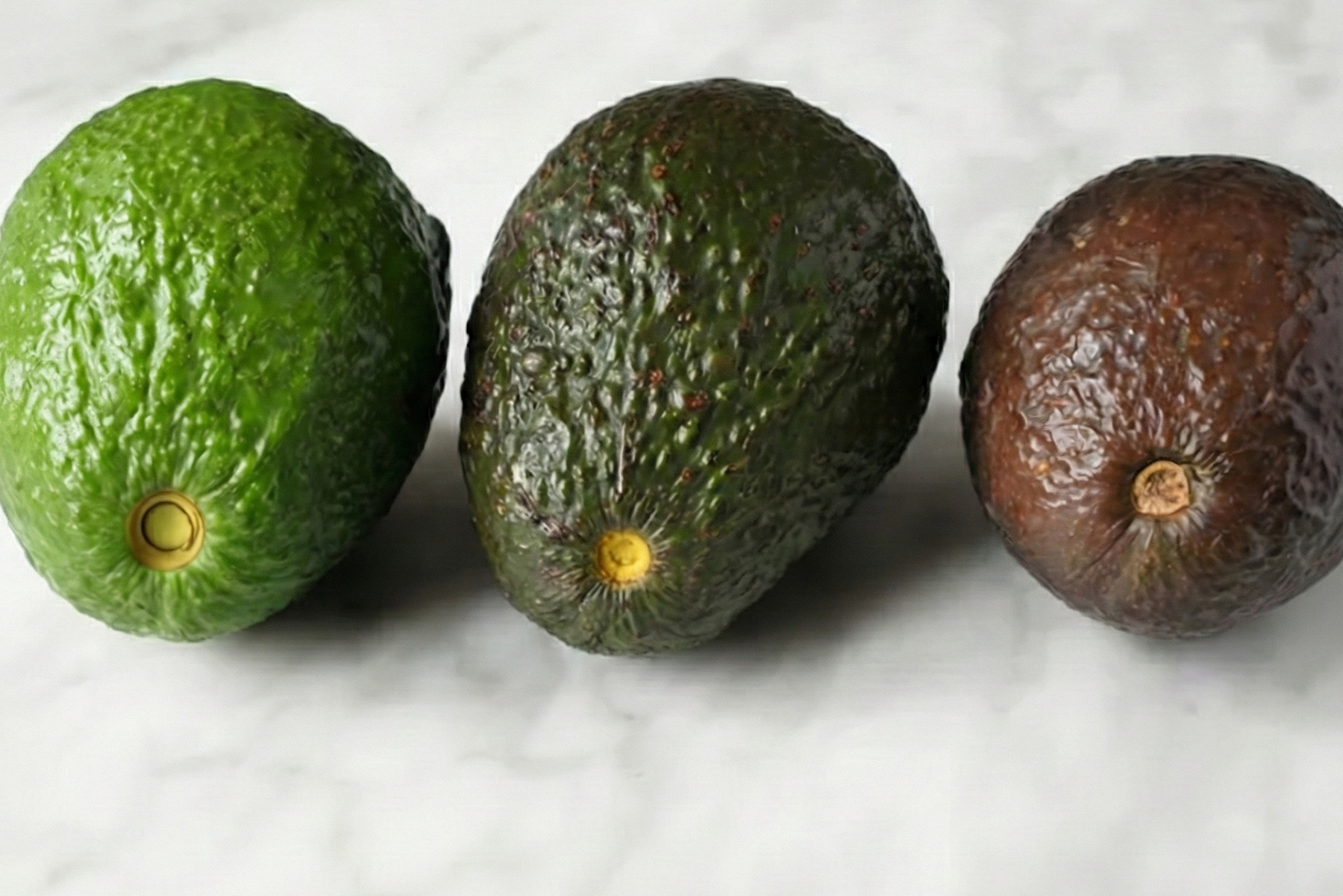
Removing the dry stem reveals a color indicator: bright green means too early, yellow-green signals perfect ripeness, and brown warns of overripeness and internal fibers.
What to Do When the Perfect Avocado Is Nowhere to Be Found
Facing a display of rock-hard avocados is no reason to panic. The fruit possesses the remarkable ability to finish ripening on the counter, doing so quite rapidly when provided with the right environment.
Avocados are unique because they do not ripen on the tree; they wait to be harvested before initiating the process. Ethylene gas, which the fruit naturally produces, governs this entire transformation. Higher concentrations of this gas accelerate ripening. This explains why an avocado placed next to a bunch of bananas softens so much faster: bananas emit significant amounts of ethylene, effectively encouraging everything nearby to ripen.
Harnessing this principle involves a simple paper bag. Placing a firm avocado inside with a banana and folding the top shut traps the ethylene gas while allowing the fruit to breathe. At a standard room temperature of around 20°C (68°F), an avocado that has already begun to yield will reach perfection in 18 to 24 hours. A completely solid specimen requires 36 to 48 hours, making it essential to set realistic expectations rather than hoping for an overnight miracle.
Swapping the paper for a plastic bag is a mistake. Plastic prevents airflow, trapping moisture and heat, which encourages mold to develop long before the fruit has a chance to soften. Paper easily solves this ventilation issue.
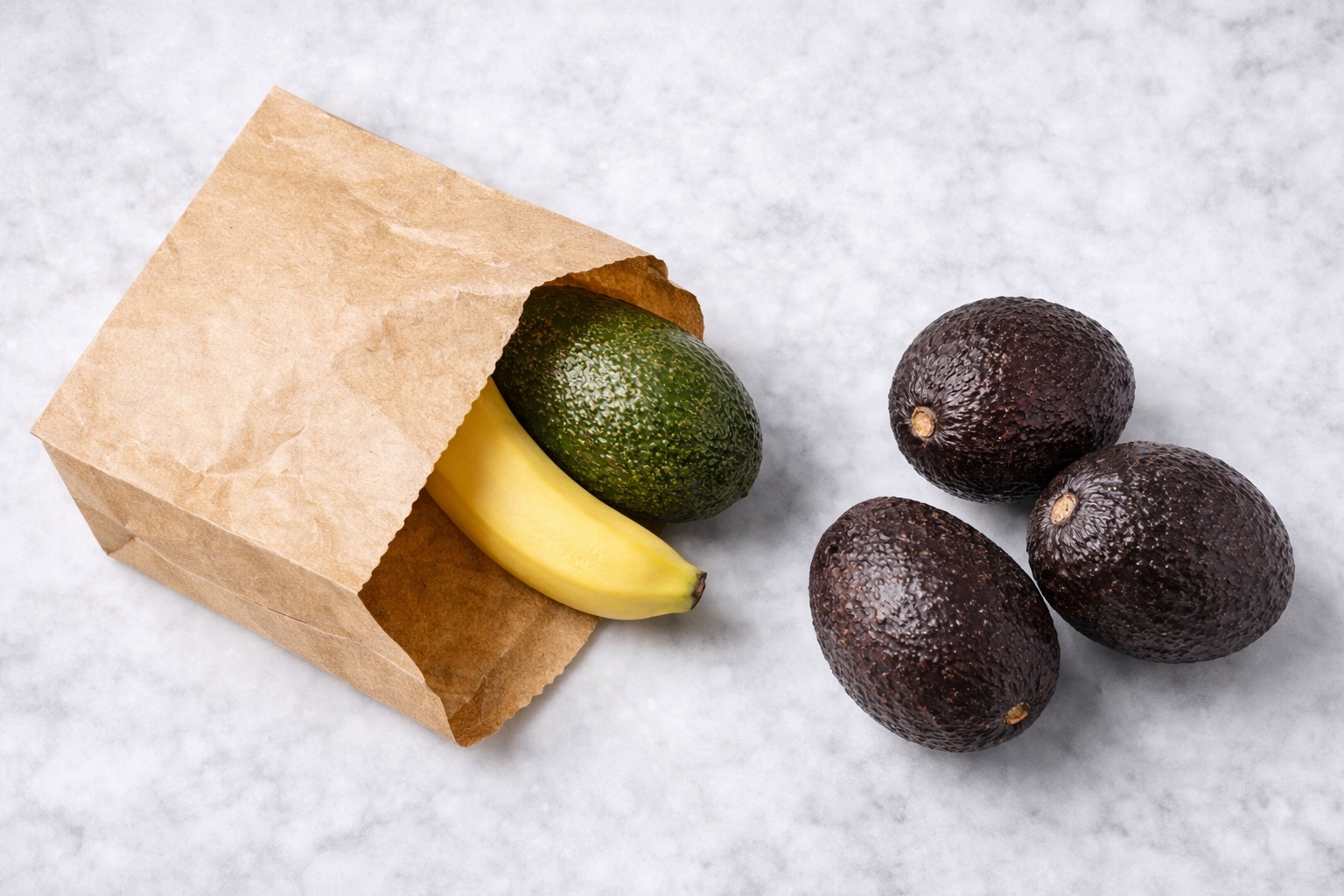
Bananas actively release ethylene gas, and the paper traps it without creating excess moisture, allowing the avocado to ripen swiftly and safely.
One Popular and Harmful Ripening Myth
The internet frequently tempts impatient home cooks with a supposed shortcut: wrapping the fruit in foil and baking it at 90°C (195°F) for ten minutes. While it sounds like a brilliant culinary hack, the actual result is a hot, watery mush.
Applying heat abruptly halts the natural biological processes responsible for proper ripening. The temperature physically breaks down the cellular structure, softening the flesh without developing the rich flavor. Simultaneously, the natural fats begin to oxidize, creating a distinct, unappealing rancid taste. The baked result might mimic the texture of a ripe avocado, but eating it proves deeply disappointing. A heated, unripe avocado and a naturally ripened one remain fundamentally different.
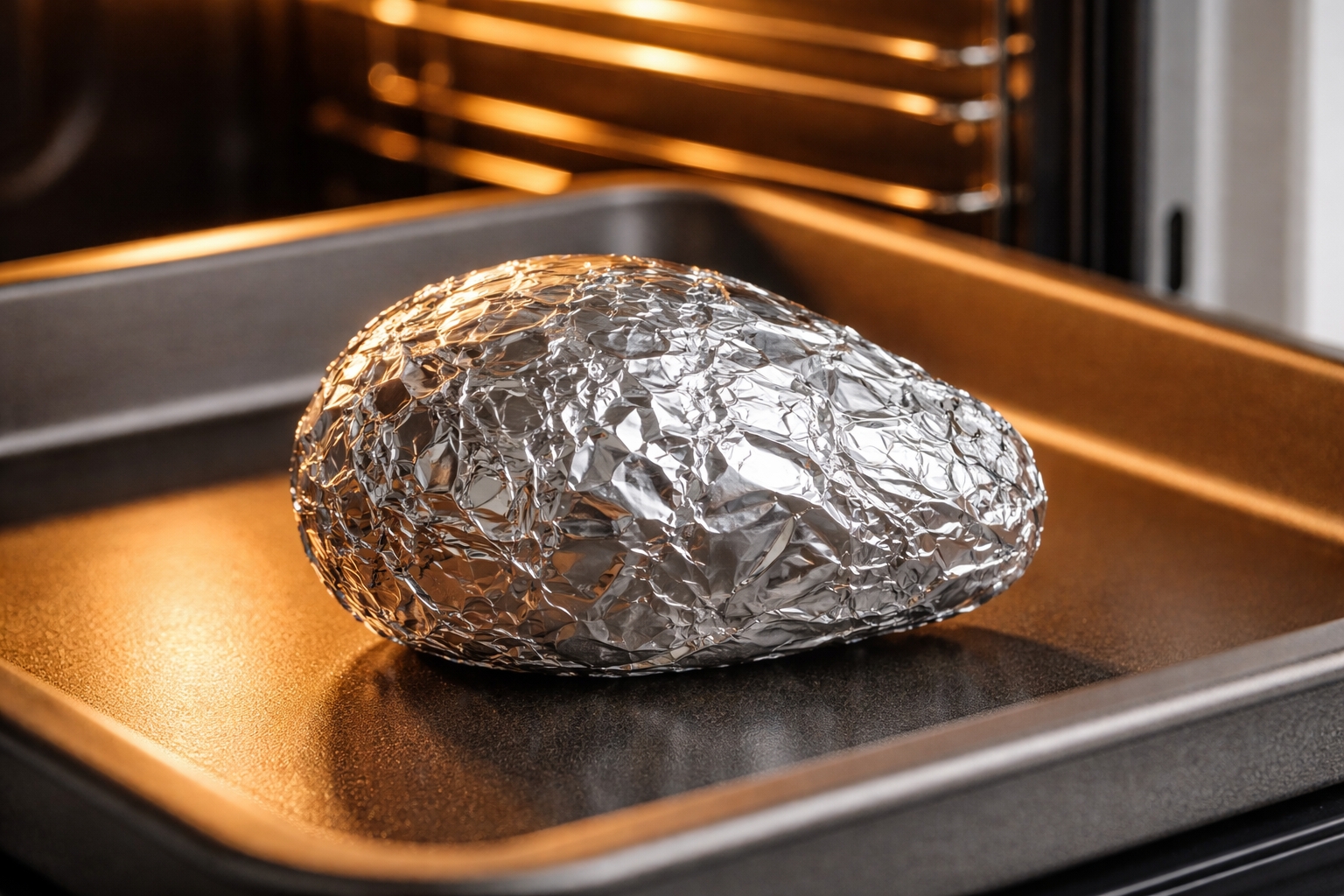
Heating mechanically softens the flesh but fails to trigger true ripening, resulting in a watery texture and degraded flavor.
When the Fruit Finally Reaches Peak Ripeness
Transferring the avocado to a different climate at the exact right moment prevents a gorgeous piece of produce from becoming compost. Firm avocados require warmth and time. The moment the fruit yields evenly to a gentle squeeze, moving it to the refrigerator arrests the process. Storing it at around 5°C (41°F) nearly pauses the ripening, buying an additional two to three days of perfect texture.
Cold storage benefits only mature fruit. Chilling an unripe avocado damages its internal tissues. Returning a cold-damaged, hard avocado to room temperature will not resume the ripening process; the fruit will simply spoil.
Pressing cling film directly against the exposed flesh of a cut avocado eliminates air pockets and preserves it in the fridge for a day or two. Leaving the pit in the remaining half provides a mechanical barrier that shields a portion of the surface, though it does not completely prevent oxidation.
The browning of a cut avocado is a simple oxidation process, identical to how a sliced apple reacts to the air. Brushing the surface with lemon juice slows this reaction, as the citric acid creates an environment where oxidation struggles to occur. Applying citrus and wrapping it tightly ensures several extra hours of vibrant green color, significantly extending the fruit’s visual appeal.
Storing an avocado half face-down on sliced onions is another frequently shared tip. While it offers minimal preservation benefits, the avocado eagerly absorbs the pungent onion aroma. This method only works if the final dish naturally calls for a strong onion flavor.
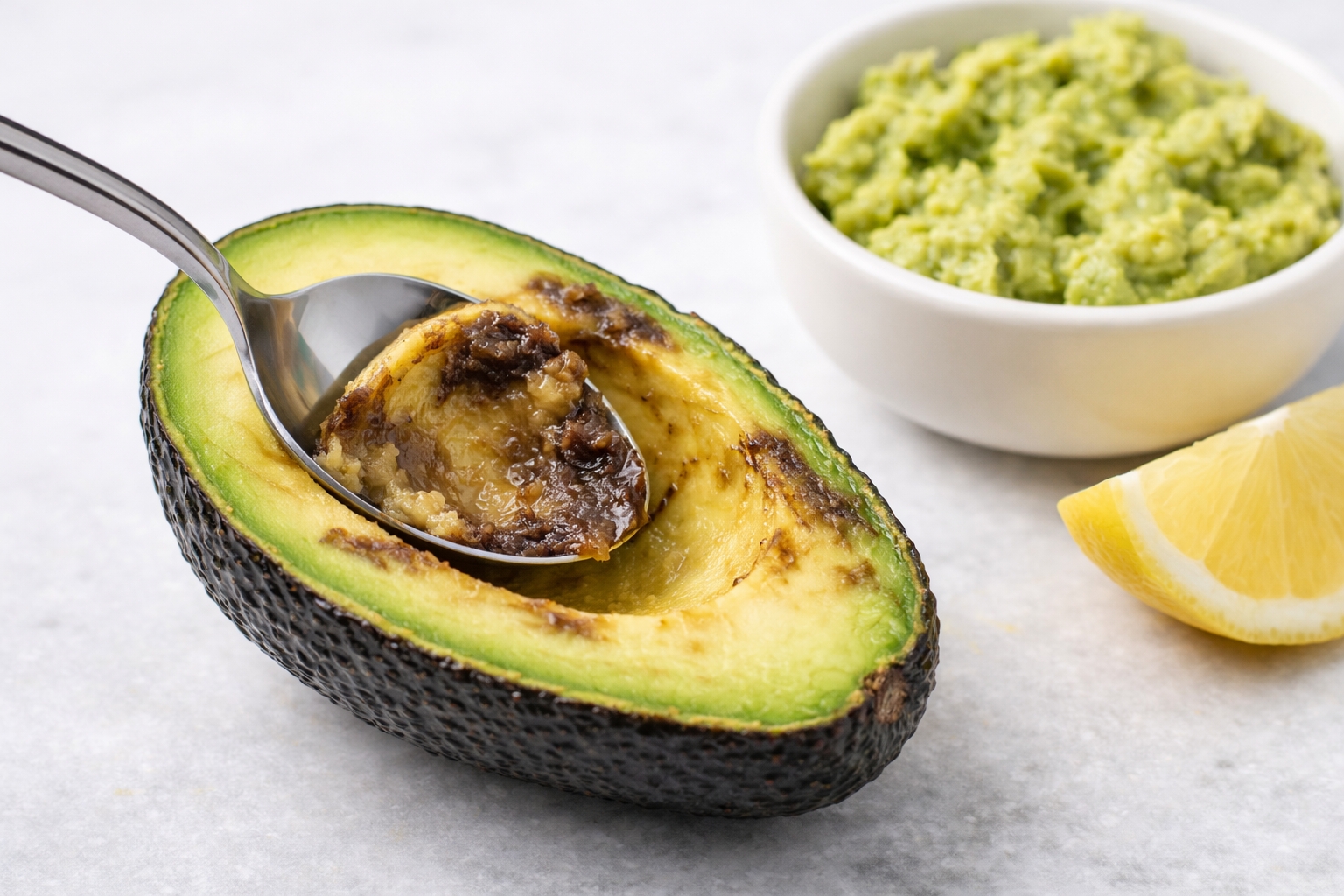
Removing the darkened areas salvages the rest of the fruit for guacamole, sauces, or smoothies, while lemon juice effectively slows further oxidation.
What to Do When the Avocado Is Overripe
Discovering soft, dark spots and a slightly bitter edge does not mean the fruit is a total loss. Scooping out the damaged sections leaves perfectly usable flesh behind. Blending overripe avocados into guacamole or a creamy pasta sauce masks any textural imperfections completely. The extra softness actually benefits these recipes. Tossing it into a smoothie with spinach, banana, and coconut milk utilizes the avocado strictly as a thickener and a source of healthy fats, making its exact stage of ripeness irrelevant.
Puréeing a heavily overripe avocado with a teaspoon of lemon juice prepares it perfectly for the freezer. Portioning the purée into ice cube trays allows it to maintain its quality for two to three months before the flavor starts to degrade. Defrosted avocado purée seamlessly incorporates into sauces and smoothies.
Mastering the art of selecting avocados takes only a few dedicated shopping trips. Relying on the palm test, checking the stem, utilizing the paper bag method with a banana for firm ones, and reserving the refrigerator strictly for ripe fruit will quickly become second nature. Understanding these details ensures that a perfectly good avocado never goes to waste again.
0 comments