
The first five minutes in Ho Chi Minh City or Hanoi feel overwhelming. Motor scooters flow in an endless stream, never stopping at intersections, but somehow weaving through them according to their own unwritten laws. On the sidewalk sit plastic stools, practically child-sized, resting just a foot from the ground. People sit on them, eating with deep concentration. Pots steam over burners. The scent is an intoxicating blend of lime, fried onions, savory meat, fresh fish, and vibrant greens. Ten minutes later, you stop trying to decode it all and simply stand there thinking: where do I begin?
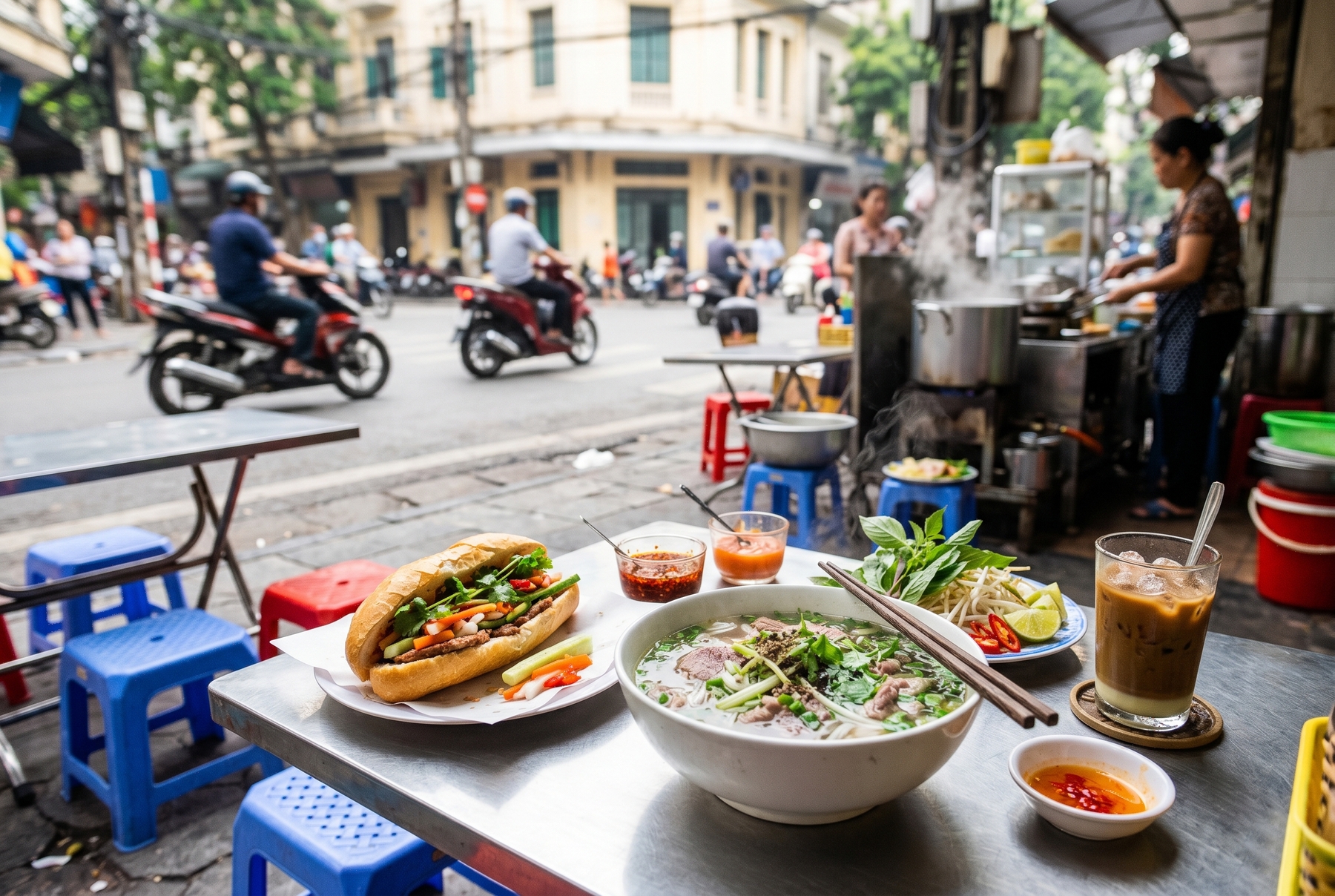
A typical scene in Hanoi or Ho Chi Minh City: low plastic stools and a table filled with the greatest hits of local street food.
This is not a rhetorical question. Food in Vietnam is a cult: people eat everywhere, all the time, and with great seriousness. Breakfast here is never just a quick bite on the go; it is an elaborate affair, chosen in advance and pursued with purpose. A street food cart serving noodles might open at five in the morning and close by nine because everything has sold out. The list of dishes, even in a single city, is longer than anyone could possibly conquer in a week.
This guide contains no ‘best’ or ‘worst’ rankings. Instead, it offers a clear roadmap to Vietnamese cuisine for a first-time visitor: northern restraint, central heat, southern sweetness, and the ever-present cult of fresh herbs that quickly becomes the new normal. Ten dishes. Not a ranking, but a culinary itinerary.
Table of Contents
- Why Vietnamese Food Seems Chaotic at First, Then Becomes a Perfect System
- 1. Vietnamese Pho (Phở) — The Perfect Starting Point
- 2. Banh Mi (Bánh Mì) — The Baguette Vietnam Perfected
- 3. Bun Cha (Bún Chả) — The Smoky Lunch of Hanoi
- 4. Goi Cuon (Gỏi Cuốn) — Fresh Rolls for a Gentle Start
- 5. Banh Xeo (Bánh Xèo) — The Crispy Yellow Crepe Eaten Like No Other
- 6. Bun Bo Hue (Bún Bò Huế) — The Soup for Those Who Thought They Knew Pho
- 7. Cao Lau (Cao Lầu) — The Noodle Worth Traveling to Hoi An For
- 8. Com Tam (Cơm Tấm) — Broken Rice That Looks Simple Until the First Bite
- 9. Banh Cuon (Bánh Cuốn) — Steamed Rolls You Should Never Ignore
- 10. Cha Ca (Chả Cá) — Fish with Dill That Will Surprise You
- Bonus: Egg Coffee and a Customizable Dessert
- What to Try in Vietnam: A Quick Guide for the Exhausted Traveler
- How Not to Ruin Your Gastronomic Trip: Rules for Local Eating
Why Vietnamese Food Seems Chaotic at First, Then Becomes a Perfect System
Sour, Sweet, Salty, Spicy, and Fresh — All in One Bowl, Yet Entirely Separate
Diners are used to food arriving completely finished and assembled in the kitchen. You are served, and you eat, perhaps adding a pinch of salt at most. Vietnamese cuisine follows a different logic. Most dishes arrive with a separate plate of fresh herbs, half a lime, sliced chili, and a small bowl of sauce. These are not mere garnishes or decorations; they are essential tools.
A plate of herbs at a good establishment goes far beyond basic cilantro. It might feature three types of basil (none resembling the standard supermarket variety), mint, slightly bitter leaves, and sprouts. Lime provides the acid. Chili brings the heat. The sauce delivers salt and depth. When all these elements land in a single spoon in the right proportions, they create something difficult to describe. It is not just satisfying; the flavors snap together into a perfect puzzle that keeps you coming back for more.
When presented with herbs, lime, and chili, diners should never push them to the edge of the plate as unnecessary decor. Tasting the dish without them first is a good start. Adding a little lime and dropping in a few herb leaves comes next. Then a bit more, followed by a dash of sauce. This is not a test of bravery; it is the process of understanding how each element unlocks the dish.
Street Food in Vietnam: Plastic Stools and Other Signs of a Great Spot
An overly formal establishment—complete with pristine tablecloths, illuminated picture menus, and a uniformed hostess—does not guarantee a bad meal. However, it certainly does not guarantee the best pho in the city. Often, the finest breakfast begins where a full-grown adult perches on a tiny stool, looking somewhat like a thoughtful heron, only to discover that the broth costs a dollar and a half and its incredible aroma has blanketed the block since dawn.
Bustling food stalls with high turnover are almost always more reliable than tourist-oriented restaurants with English menus. Pointing at what diners at the next table are eating is perfectly acceptable; in Vietnam, this is considered normal and often leaves the owners flattered.
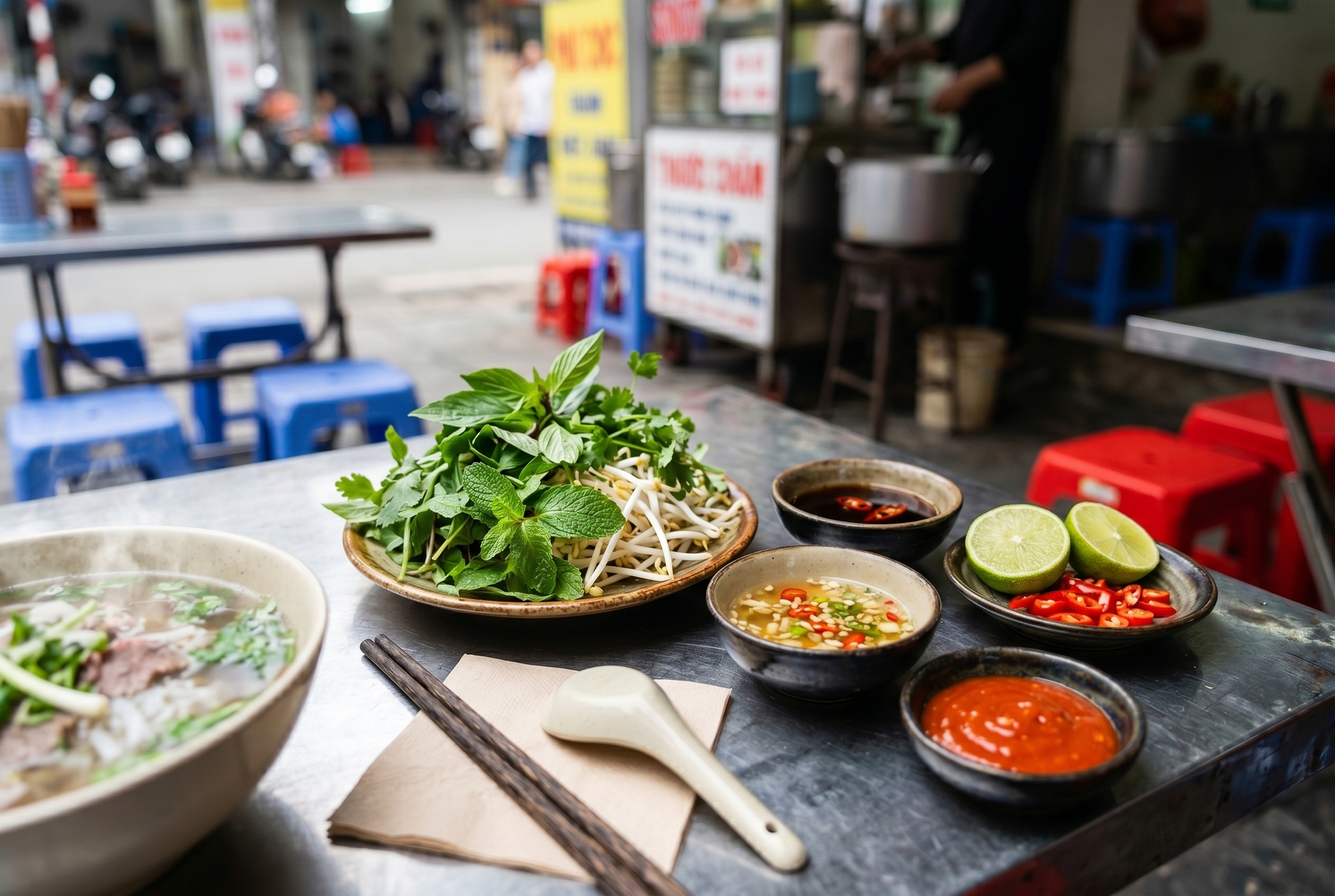
Fresh herbs, lime, and sauces are an integral part of the meal, allowing diners to customize the dish to their own taste.
1. Vietnamese Pho (Phở) — The Perfect Starting Point
Two Broths, Two Distinct Characters
Pho comes with either beef or chicken, and these are not just different toppings, but two entirely different soups based on their broth logic. For pho bo (phở bò, beef noodle soup), the base is simmered for hours with beef bones, ginger, star anise, cinnamon, and local spices that defy simple translation: the resulting broth is dark amber, deeply aromatic, yet crystal clear. Pho ga (phở gà, chicken noodle soup) features a softer base—a chicken broth with ginger, charred onion, and spices, appearing lighter and more delicate in character.
It is best to discard the stereotype immediately: this is not ‘Asian noodles in water’ in the way one might imagine generic takeout with soy sauce and chili oil. Pho is Vietnam’s answer to the ultimate morning broth. It is light, fragrant, slightly sweet, yet never heavy. It is wonderfully restrained.
Where and When to Find It
Morning is the ideal time. In Hanoi, pho tends to be purer in flavor: a clear broth and an almost ascetic assembly of noodles, meat, green onions, and minimal table condiments. The southern version is richer: the bowl often arrives alongside a separate plate loaded with cilantro, basil, bean sprouts, lime, chili, and two sauces. Both make perfect sense; they simply reflect the different northern and southern personalities of the same dish.
A good pho never overwhelms the palate with aggressive spices, yet diners often find their bowls empty within ten minutes without realizing how it happened. Serving the meat raw—sliced paper-thin over the hot broth—is standard and correct, as it cooks right in the bowl in under a minute. The broth must be aromatic, never cloudy or overly greasy. The noodles should remain springy, never mushy.
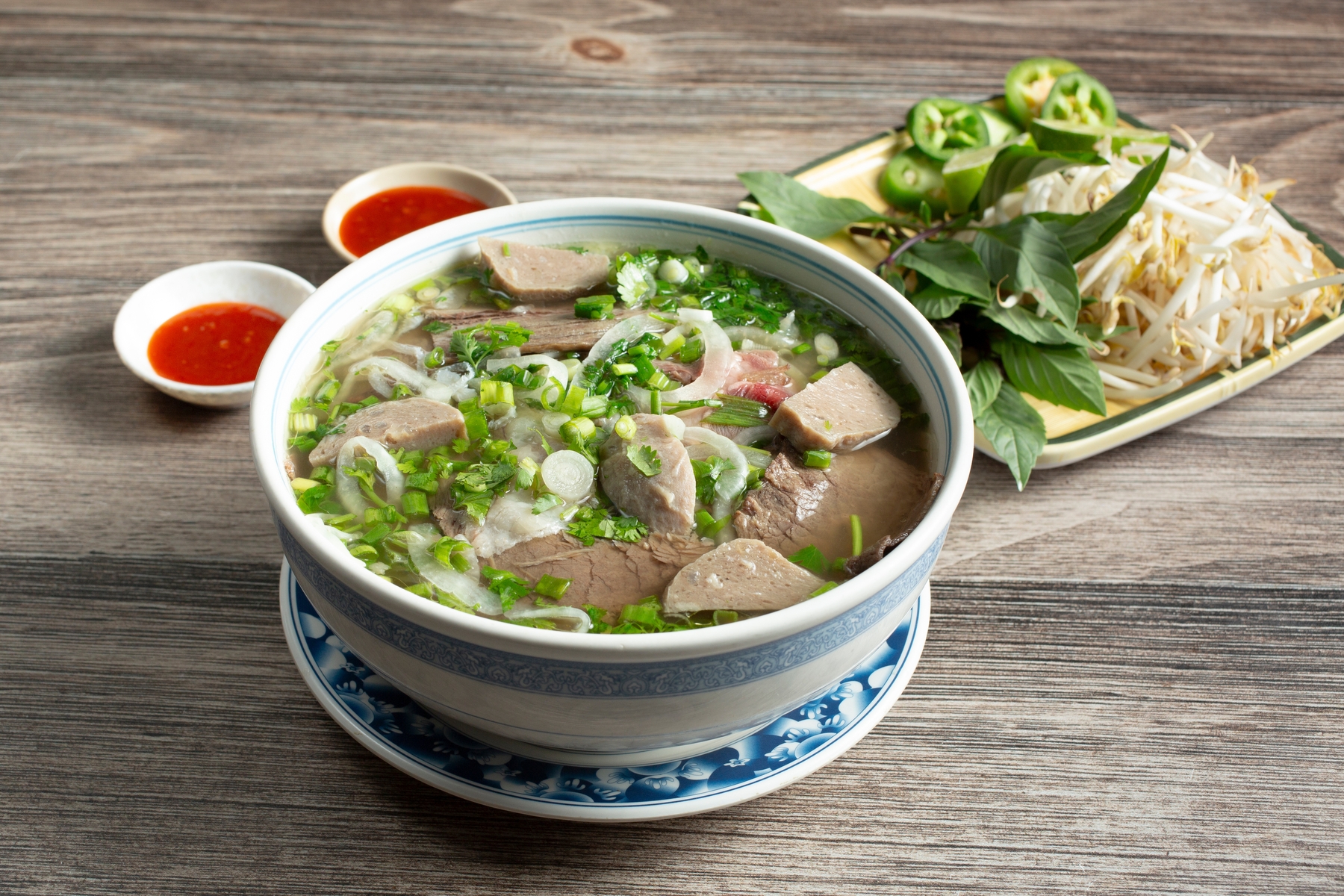
Pho bo is more than a soup; it is a symbol of Vietnam. A rich broth, rice noodles, and fresh herbs create the perfect balance.
2. Banh Mi (Bánh Mì) — The Baguette Vietnam Perfected
How the French Baguette Became Asian
The French introduced bread to Vietnam during the colonial era. The Vietnamese took the idea of the French baguette and reinvented it for the streets: the bread became lighter and airier, featuring a shatteringly crisp crust. This is not always due to rice flour—it is often standard wheat flour, simply prepared with a different recipe and baking method. The filling utilized whatever was on hand: pâté, roasted pork or chicken, pickled carrots and daikon, cucumber, cilantro, chili, and sauce. The result is a sandwich that tastes nothing like its French ancestor, nor like anything traditionally Asian.
For a first trip, it serves as an excellent introduction: the format feels familiar, and the components—bread, meat, vegetables—are recognizable. Yet the flavor profile is entirely unique.
The Ultimate Street Food
Banh mi represents street food at its finest. You buy it on the go, eat it, and keep moving. A single sandwich costs about two dollars and provides lasting energy for hours. Every bite delivers the crunch of the crust (almost glass-like, shattering upon impact), the richness of the pâté, the tang of pickled vegetables, the cool freshness of cilantro, and a slightly fiery chili finish. All of this happens within half a baguette.
Purchasing from a busy vendor ensures freshness. A baguette that feels limp and soft all around has been sitting too long. A proper banh mi smells like fresh pastry and roasted meat all at once, an aroma that carries down the street long before you reach the cart.
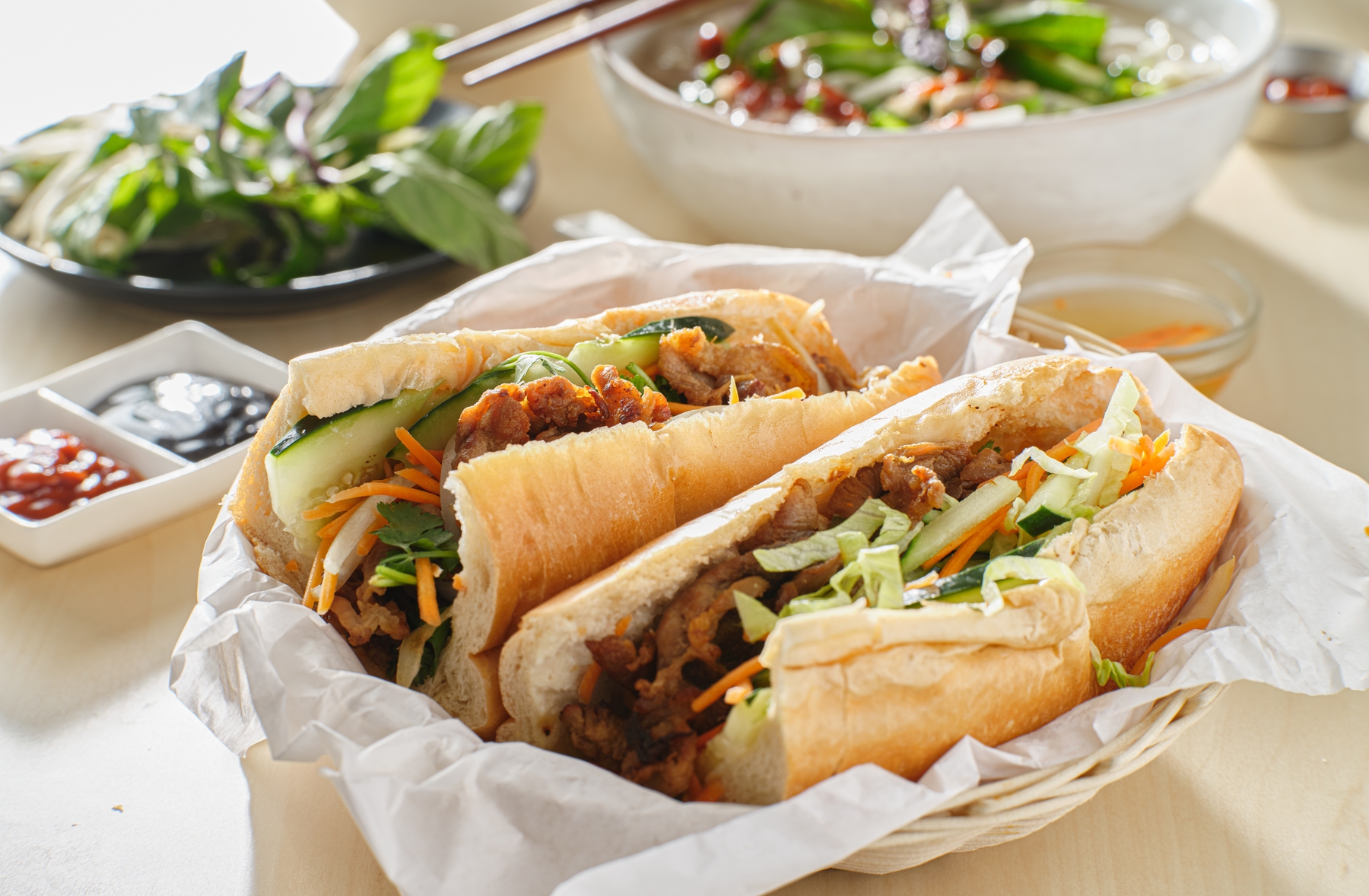
Banh mi unites the French baguette with Vietnamese fillings: pâté, roasted meat, and pickled vegetables.
3. Bun Cha (Bún Chả) — The Smoky Lunch of Hanoi
What Arrives at the Table
Diners are presented with charcoal-grilled pork in two forms (larger slices and small minced patties), cold and thin white rice noodles known as bun, a bowl of warm, sweet-sour-salty dipping sauce already holding the grilled meat, pickled carrots and green papaya, and a separate plate of fresh herbs—mint, basil, cilantro, and others that might be entirely new. The tradition is to mix these elements together while eating, rather than receiving a pre-assembled bowl.
Bun cha perfectly illustrates northern Vietnam: outwardly modest, almost ascetic, yet maintaining a flavor balance built on precise proportions. Too much sauce drowns the dish. Too few herbs sacrifice the freshness. The smoke from the meat, the cool noodles, and the crisp mint work together better than any high-end restaurant concept.
How to Eat It
Diners take the noodles, dip them into the sauce, and add the meat and herbs. It is neither a soup nor a salad, but rather a culinary construct with no single correct assembly method, though a few are obviously wrong. For example, dumping all the herbs into the sauce at once creates an unappetizing mess.
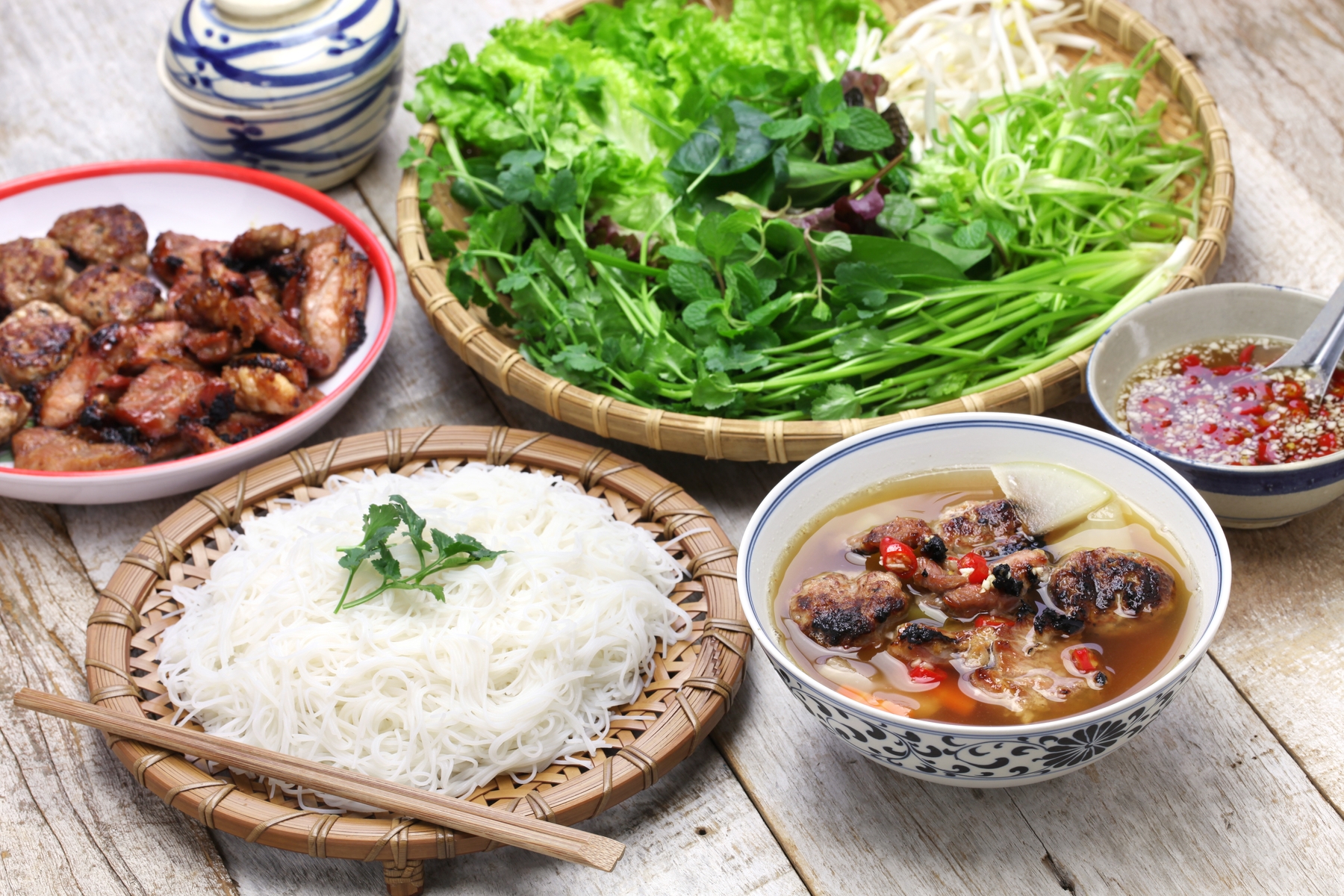
Bun cha is the beloved lunch of Hanoi residents. Smoky grilled pork is served with a light dipping sauce and a mountain of aromatic herbs.
4. Goi Cuon (Gỏi Cuốn) — Fresh Rolls for a Gentle Start
Translucent rice paper wraps boiled shrimp or pork, rice noodles, lettuce, and fresh herbs. There is no frying involved. These are not the deep-fried, crispy brown spring rolls commonly found in overseas Vietnamese restaurants. Goi cuon (fresh spring rolls) are served cold, fresh, and exceptionally light. The rice paper feels slightly slippery, almost gelatinous—an unusual texture at first, but one that quickly becomes addictive.
After several days of hot soups, charcoal smoke, and rich sauces, these rolls offer a welcome palate cleanser. For those cautious about overly unfamiliar flavors, goi cuon provides a gentle introduction: it is fresh, straightforward, and entirely approachable.
The dipping sauce carries half the flavor profile. Typically, it is either a peanut sauce or nuoc cham (nước chấm)—a blend of fish sauce, lime, sugar, chili, and garlic. Sour, salty, and mildly spicy, this sauce elevates the fresh roll from merely good to undeniably crave-worthy. The rice paper should never be dry or cracking. The herbs inside must be crisp, not wilted. Shrimp that smell like the ocean are a great sign; if they smell like anything else, it is best to find another vendor.
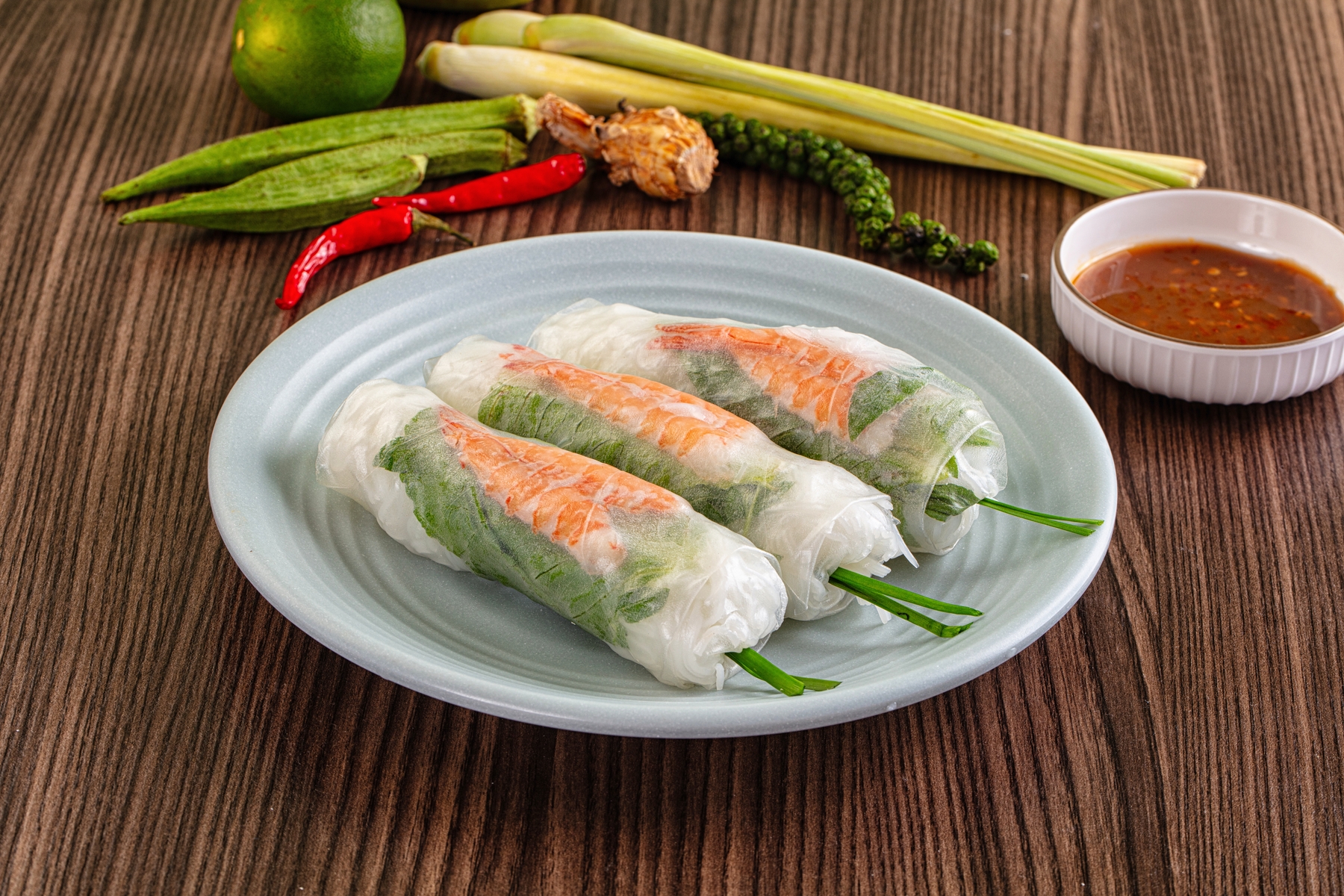
Goi cuon represents lightness and freshness. Translucent rice paper conceals shrimp, pork, and vibrant herbs.
5. Banh Xeo (Bánh Xèo) — The Crispy Yellow Crepe Eaten Like No Other
Rice Batter and Sizzling Sounds
A batter made of rice flour infused with turmeric (providing that deep, almost ochre yellow hue) is poured onto a hot skillet, creating a loud sizzle. This sound gives the dish its name: ‘xeo’ mimics the very sizzle. The crepe is stuffed with pork, shrimp, and bean sprouts, then folded in half. The result is shatteringly crisp on the outside and warm and tender on the inside.
How to Eat Banh Xeo Properly
Attacking it with a knife and fork like a standard omelet means missing half the joy. The proper technique involves tearing off a piece of the banh xeo, wrapping it in a lettuce or mustard leaf along with fresh herbs, and dipping the whole bundle into nuoc cham. The hot filling wrapped in a cool leaf delivers a textural contrast impossible to achieve with a fork.
If the assembly process seems confusing, glancing at the neighboring table always helps. In Vietnam, observing locals provides the best, and free, masterclass. In Central Vietnam, banh xeo is typically smaller and crispier, whereas the southern version is larger and heavily stuffed.
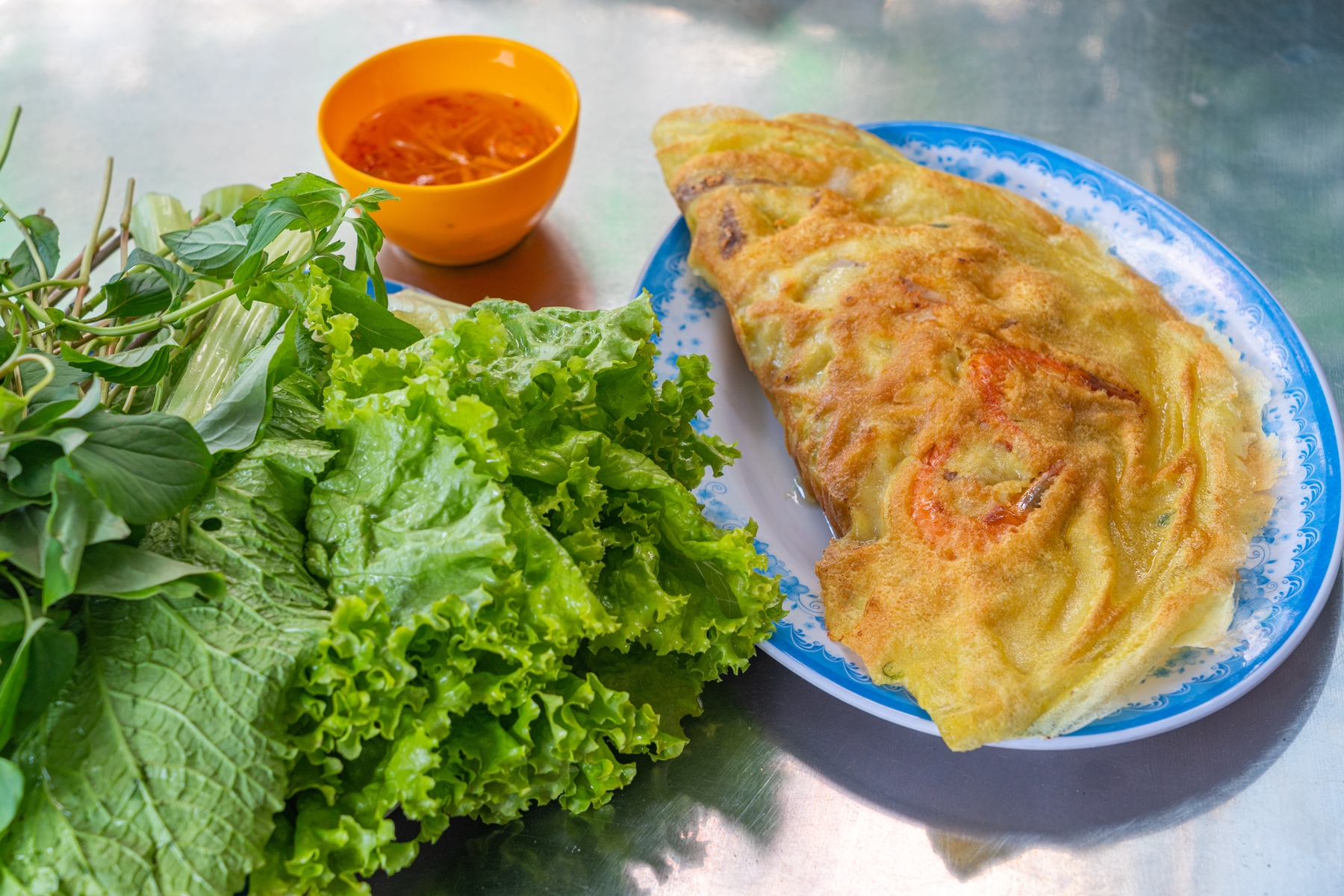
The name 'banh xeo' translates to 'sizzling crepe.' It is eaten by wrapping pieces in lettuce leaves with fresh herbs.
6. Bun Bo Hue (Bún Bò Huế) — The Soup for Those Who Thought They Knew Pho
How It Stands Apart
If pho is delicate and restrained, bun bo Hue aggressively hits the palate with spice and heat. The broth is reddish and oily on the surface, glowing with a crimson tint from the chili. It smells intensely of lemongrass and something deeply savory, almost resinous. Originating from the central city of Hue, this soup combines beef, rice noodles, and a broth built on lemongrass, fermented shrimp paste, chili, and various aromatics to create a dense, dark, and boldly defiant flavor.
Handle the Chili With Care
It is spicy—sometimes extremely spicy. Those sensitive to heat should request a milder version or refrain from adding the extra chili typically served on the side. The noodles here differ: they are thicker, cylindrical, and slightly chewier than those in pho. The meat selection is often diverse, featuring beef, pork knuckle or trotter, sometimes Vietnamese sausage, and cubes of congealed pork blood for those seeking the fully authentic experience.
In Hue, the chances of encountering a truly expressive, signature version are incredibly high, but it is always best to seek out establishments where bun bo Hue is the specialty rather than a random entry on a fifty-item menu.
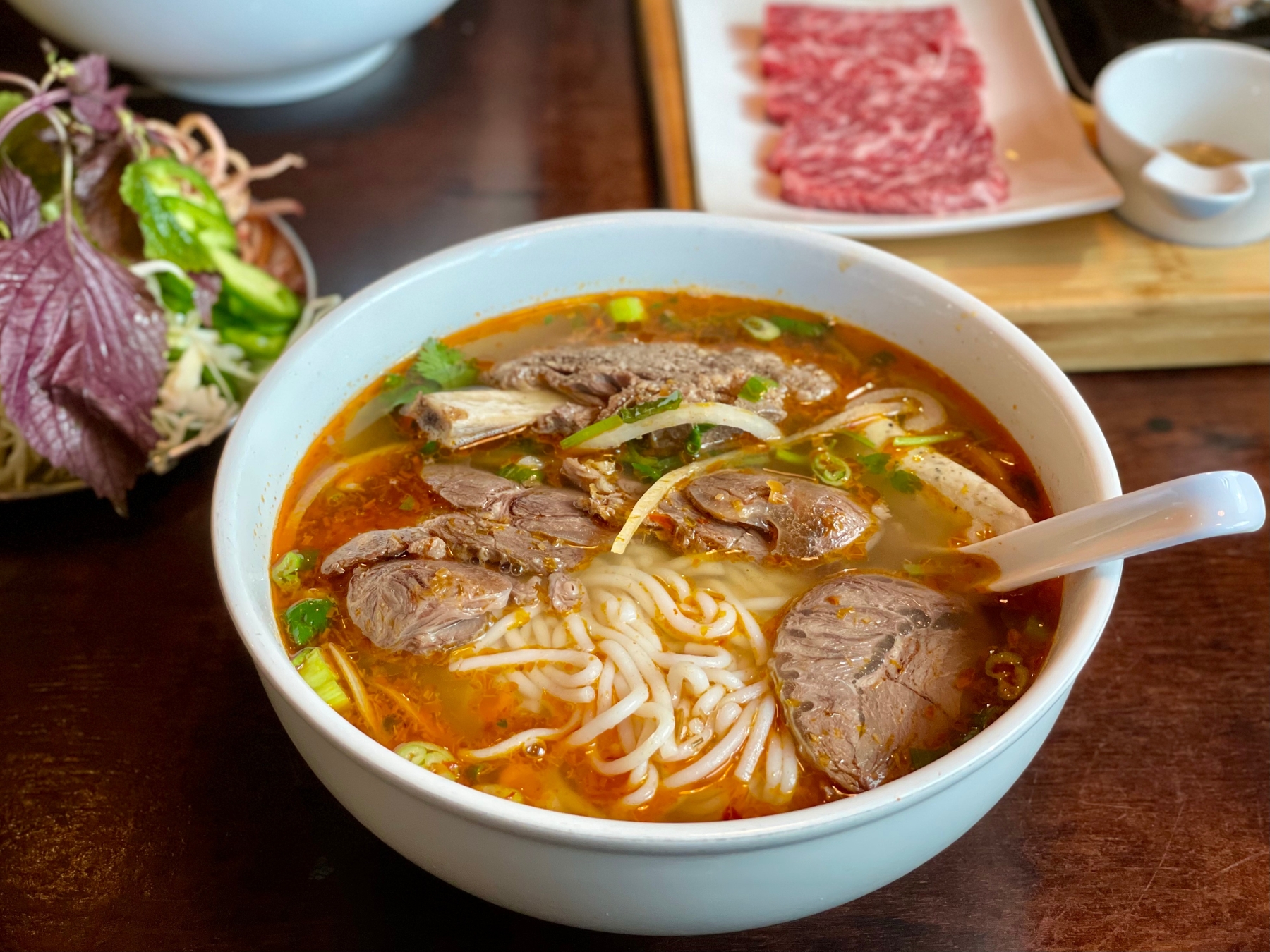
Bun bo Hue differs from pho with its thicker noodles and a rich, spicy broth infused with lemongrass aroma.
7. Cao Lau (Cao Lầu) — The Noodle Worth Traveling to Hoi An For
Why It Is Not Just Another Noodle Dish
Cao lau is steeped in local legend: the traditional noodles are supposedly made using water drawn exclusively from the local Ba Le well and lye ash from specific regional trees. Whether this strict process is still followed today remains a mystery, but the legend perfectly explains why cao lau is so fiercely tied to Hoi An. When prepared in other cities, it frequently tastes slightly off, a difference that goes beyond mere tourist sentiment.
The bowl contains thick, dark noodles, slices of roast pork, fresh herbs, crispy squares of fried dough, and a small amount of intense, savory broth at the bottom. There is very little liquid. The dish is dry and highly concentrated. It is not a soup, but rather a moistened noodle dish packed with character.
A Different Texture
In terms of density and chew, cao lau might bring udon to mind, yet it is entirely a rice noodle—just far more robust than the familiar thin strands of pho or bun. After days of consuming liquid-heavy hot soups, this dish serves as a wonderful reminder that Vietnamese cuisine is not confined to a single bowl of pho.
Cao lau takes a moment to reveal its depth, but once it does, stopping is nearly impossible. In Hoi An, cao lau is sold everywhere, including highly touristy areas, and it is often quite good even there, as it remains the city’s culinary calling card. However, finding a small eatery slightly off the main waterfront is always the better choice.
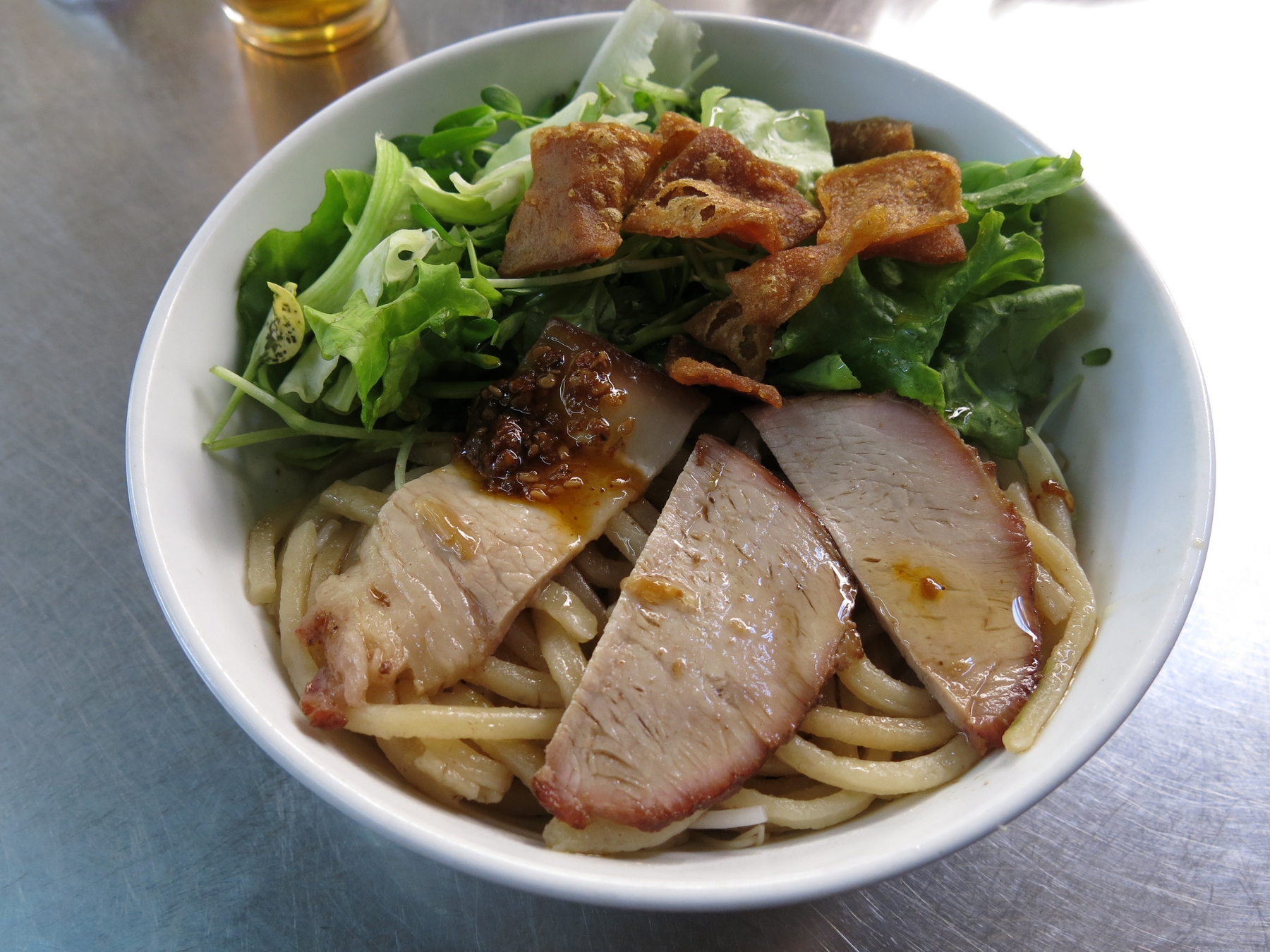
Cao lau is a unique Hoi An specialty. The distinct texture of the noodles and a secret recipe using water from a local well make it truly incomparable.
8. Com Tam (Cơm Tấm) — Broken Rice That Looks Simple Until the First Bite
The Food of Working-Class Neighborhoods
‘Com tam’ translates literally to ‘broken rice.’ Historically, it consisted of fractured rice grains that were cheaper to buy, serving as the staple food for Ho Chi Minh City’s working-class districts. Today, it stands as one of the south’s premier dishes, and it is certainly no longer served merely for economic reasons.
The plate holds fluffy rice with a uniquely fine, granular texture. It is crowned with a grilled pork chop marinated in fish sauce, sugar, and lemongrass, cooked over charcoal until the edges develop a dark, slightly charred crust. Alongside sits cha trung (chả trứng, a steamed egg and pork meatloaf), sometimes bi (bì, thinly shredded pork skin and meat), pickled cucumbers and carrots, fried shallots, and herbs. A small bowl of nuoc cham sauce is always served on the side.
In its layout, com tam often feels like the most approachable dish of all, resembling a standard ‘meat and rice’ platter. Yet, instead of heaviness, it delivers the aroma of charcoal and marinade, vibrant herbs, tangy sauce, and multiple layers of texture simultaneously.
When and Where to Eat It
Ho Chi Minh City is the place, and breakfast or early lunch is the time. Com tam is eaten in the morning—it is a substantial meal designed to fuel the first half of the day. Diners should look for signs reading ‘Cơm Tấm’ accompanied by a line of locals. They always know exactly where the pork smells of real wood fire rather than a frying pan, and where the rice is perfectly fluffy instead of clumping together.
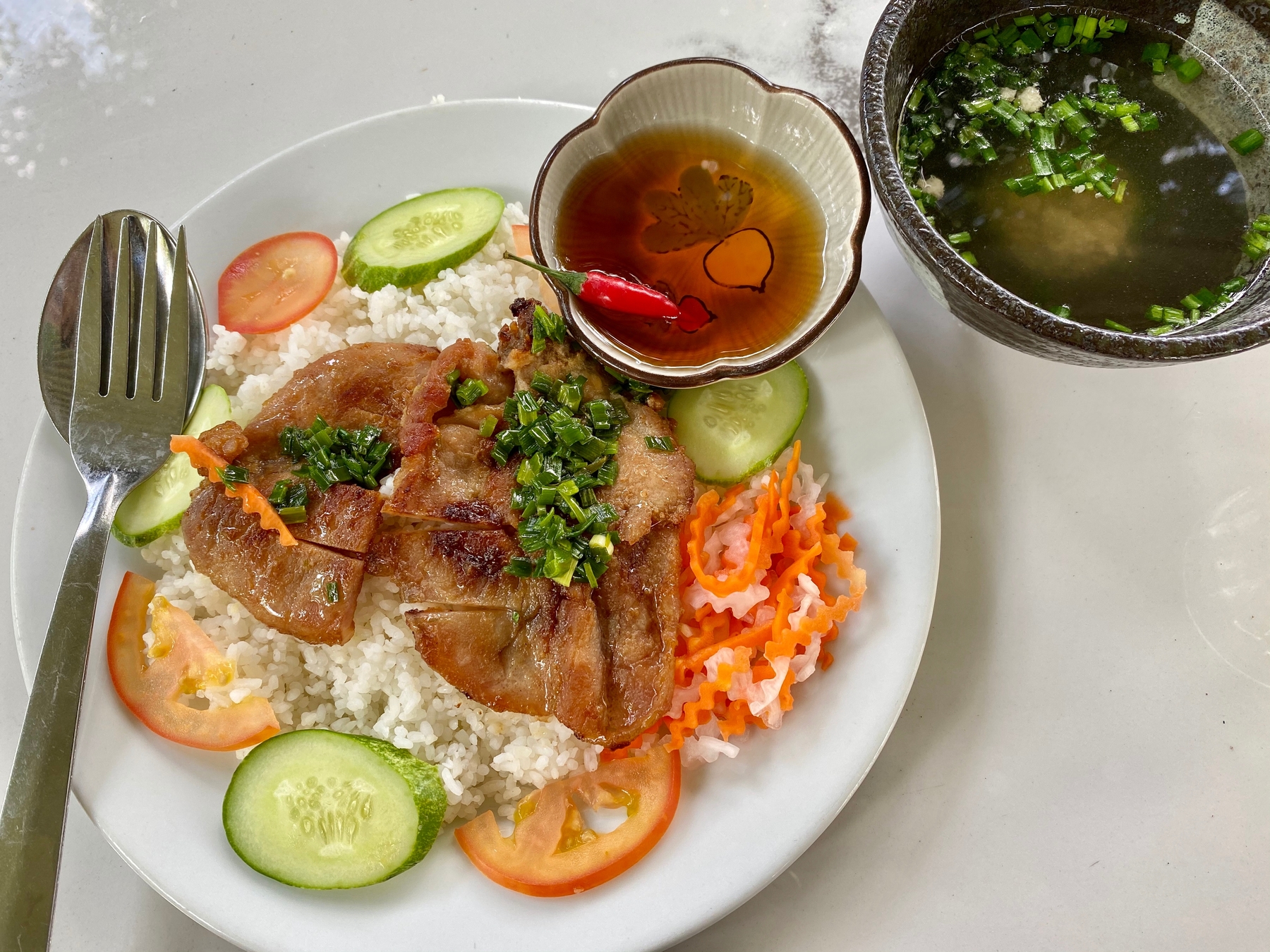
Com tam, or 'broken rice,' is a Ho Chi Minh City classic. A satisfying combination of rice, grilled meat, and pickled vegetables.
9. Banh Cuon (Bánh Cuốn) — Steamed Rolls You Should Never Ignore
These delicate steamed rice crepe rolls are filled with minced pork and wood ear mushrooms, then topped with crispy fried shallots, fresh herbs, and occasionally slices of Vietnamese boiled sausage. The entire assembly is dressed with nuoc cham sauce.
Visually, the dish is incredibly modest. Pale, thin, and soft. Yet the batter of a well-made banh cuon is nearly translucent and possesses a silky texture that practically melts before you can chew it. It offers a completely different mouthfeel from any other rice noodle or crepe imaginable. The fried shallots on top smell of toasted oil and provide a crucial crunch—the sole textural contrast on this incredibly delicate plate.
Following vibrant soups, crispy banh xeo, and the smoky charcoal of bun cha, this dish reveals another side of the cuisine. It is quiet, soft, and delicate. It functions beautifully as a breakfast or a light mid-day snack when the intense heat has set in. Sometimes, the defining feature of Vietnamese food is not the volume of meat or the spice level, but the sheer finesse of the batter and the quality of the sauce. Banh cuon demonstrates this more accurately than any other dish on the list.
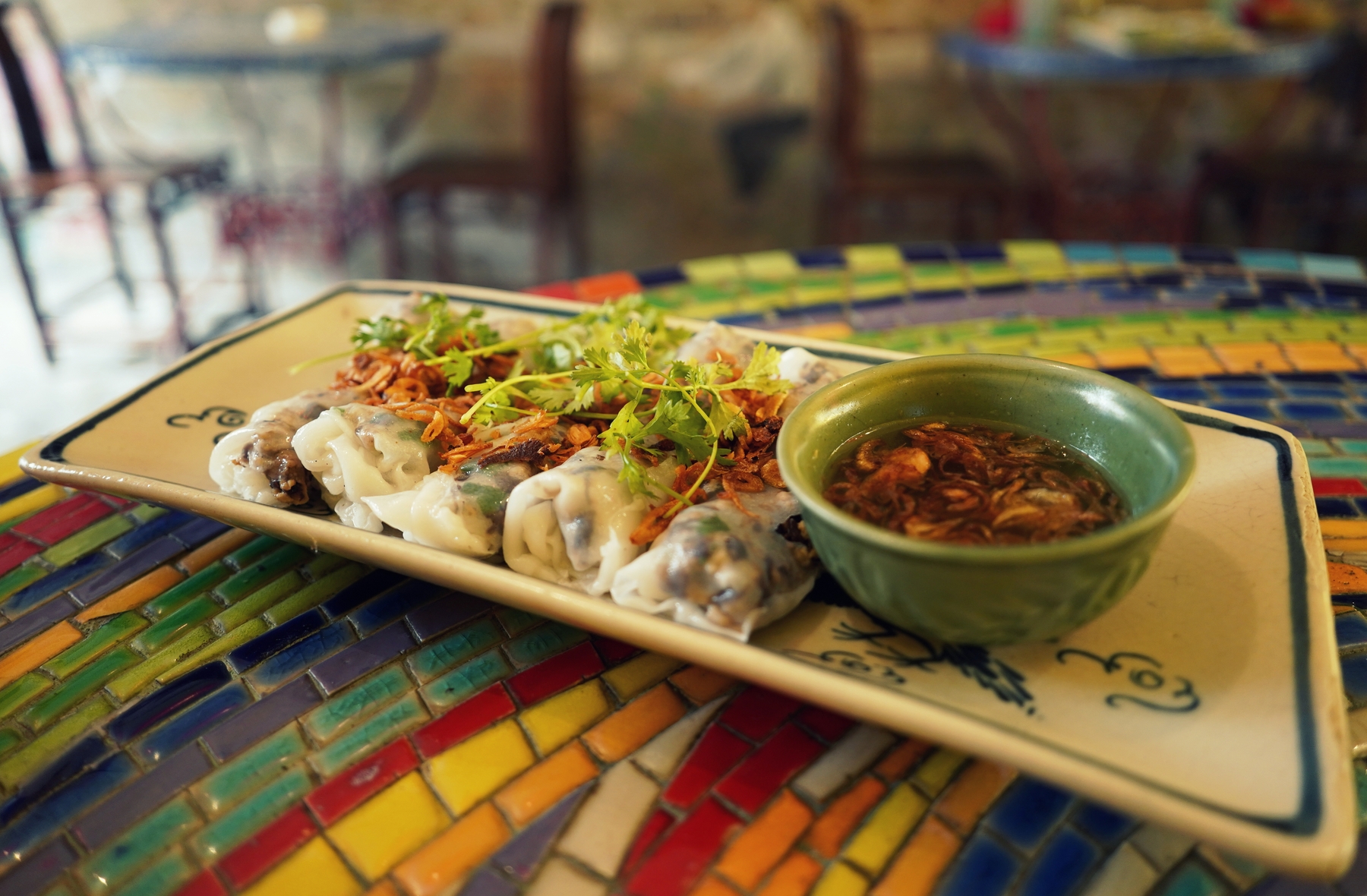
The paper-thin rice batter of banh cuon practically melts in the mouth. It is the perfect choice for a light and refined breakfast.
10. Cha Ca (Chả Cá) — Fish with Dill That Will Surprise You
Why It Is Unexpected
Cha ca features fried fish (usually catfish or another freshwater variety) heavily seasoned with turmeric, galangal, and copious amounts of fresh dill. The fish is served in a small skillet placed directly on the table, still sizzling and emitting plumes of steam scented with toasted turmeric. Alongside arrive bun rice noodles, roasted peanuts, green onions, and mam tom (mắm tôm)—a fermented shrimp paste with a pungent, dense aroma that might seem overwhelming at first. For the cautious, a milder nuoc cham is often provided. Every diner constructs their own bowl.
Finding dill in an Asian dish ranges from strange to unexpectedly delightful. Vietnamese dill smells identical to its Western counterpart, but its role is entirely different: it is not a background herb in a soup, but an active participant. It fries directly in the pan alongside the fish, taking on a toasted, slightly nutty aroma that shares nothing with raw dill.
When to Order It
Cha ca is best saved for later in the trip. Let the palate first acclimatize with pho, banh mi, and some bun cha. By then, sizzling fish presented with dill and peanuts will register as an exciting next level rather than culinary chaos. In Hanoi, an entire street is named after this dish—Pho Cha Ca, where ‘pho’ means street, entirely unrelated to the famous noodle soup, despite the similar transcription.
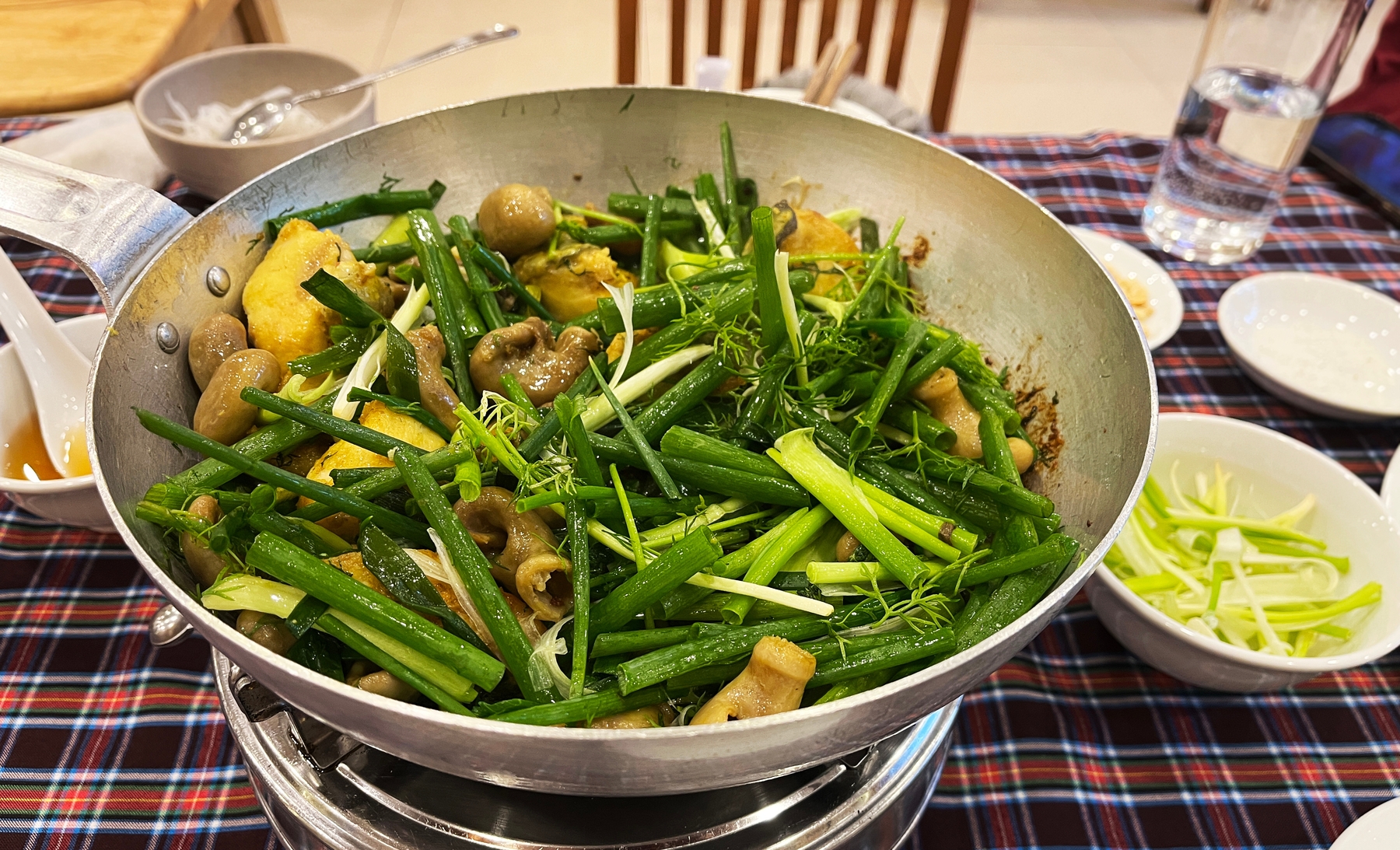
Cha ca is an incredible pairing of fish and dill. The dish is cooked right at your table over a small burner.
Bonus: Egg Coffee and a Customizable Dessert
Ca Phe Trung (Cà Phê Trứng) — The Coffee Best Treated as Dessert
Skipping this in Hanoi is practically a crime. Strong Vietnamese coffee is crowned with a thick, frothy foam made of whipped egg yolks, sugar, and condensed milk. The texture lands somewhere between a coffee mousse and a light sabayon—sweet, dense, and incredibly creamy. It is meant to be consumed with a spoon rather than sipped like regular coffee. Originally invented during milk shortages, it has long transcended its substitute status to become a standalone reason to visit specific cafes.
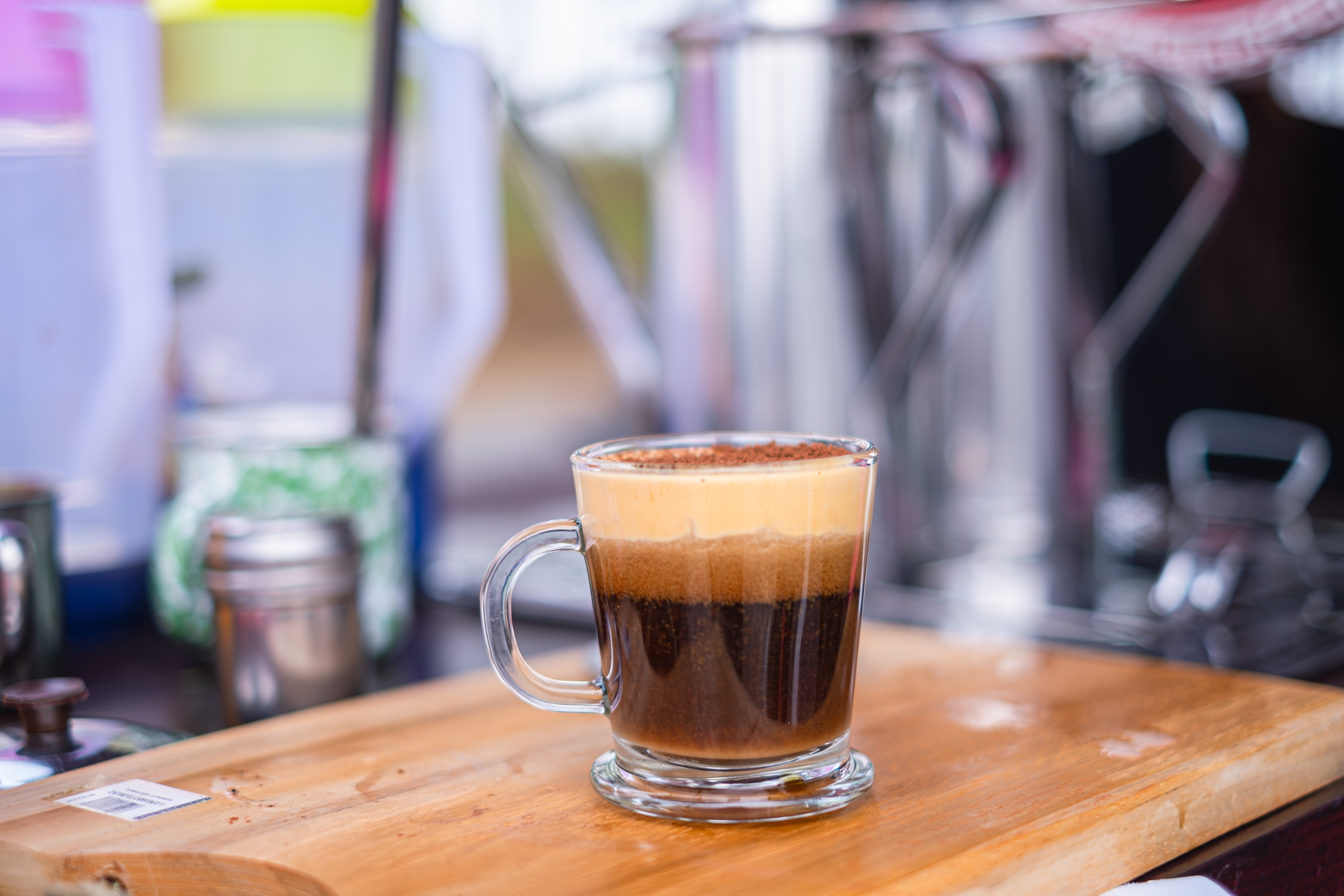
Egg coffee is more of a dessert than a beverage. The delicate, creamy yolk foam tastes reminiscent of tiramisu.
Che (Chè) — A Sweet Dessert That Sounds Strange but Works Miracles in the Heat
Black beans, agar-agar jelly, coconut milk, tropical fruit, and shaved ice. A single cup might contain absolutely anything, depending on the region and the vendor’s mood. Initially, this dessert might look like a plating mistake. But in ninety-five-degree heat (35°C), an ice-cold cup of che serves as absolute salvation.
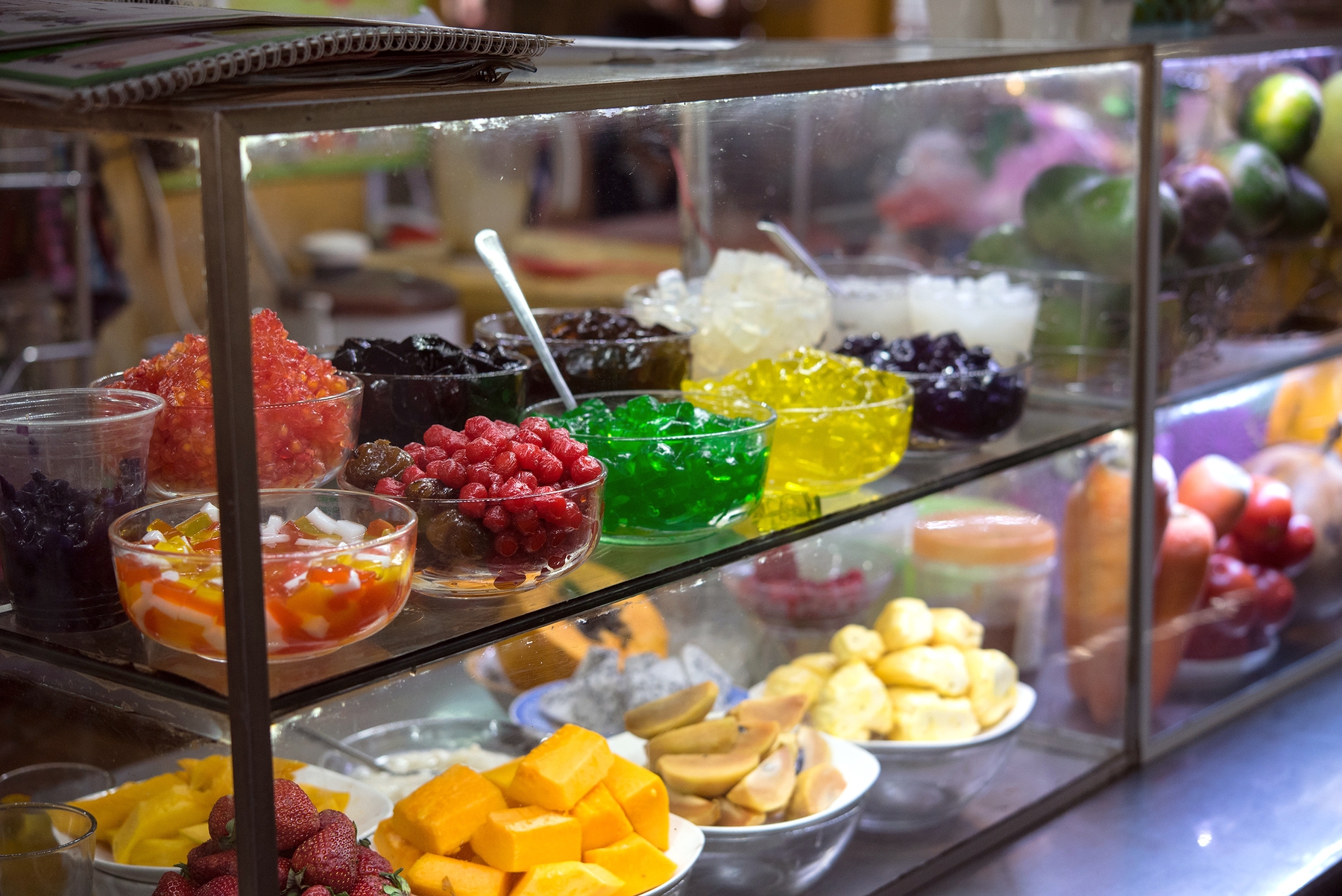
Che offers an endless variety of flavors and textures: jelly, beans, fruit, and coconut milk. It is an absolute lifesaver in the heat.
What to Try in Vietnam: A Quick Guide for the Exhausted Traveler
If you arrive late, feel exhausted, have no idea where to start, and want zero margin for error: choose pho for breakfast, banh mi for lunch, and goi cuon as a snack. The format is clear, the elements are familiar, and the risk of disappointment is minimal.
If the craving calls for authentic street food featuring charcoal smoke and dynamic sauces, bun cha, banh xeo, and com tam are the answers. They deliver more smoke, more herbs, and a deeper sense of eating far off the tourist trail.
For a regional journey, bun bo Hue belongs to Hue, cao lau remains in Hoi An, and cha ca is a Hanoi staple. Seeking these out elevates the experience from simply ‘trying Vietnamese food’ to truly understanding distinct regional identities.
How Not to Ruin Your Gastronomic Trip: Rules for Local Eating
Beautiful Interiors Mean Nothing
In Vietnam, the best food rarely resides where comfortable chairs and laminated four-language menus are found. The ultimate sign of quality is a steady stream of locals and the confident, rhythmic movements of the cooks behind the counter. If an establishment is empty during peak hours, it is always best to keep walking.
Spice and Ice: Without Paranoia, but With Common Sense
Approach spicy food gradually. Do not dump all the provided chili into the first bowl—Vietnamese chili packs serious heat, and building a tolerance takes more than a single day. Regarding ice, panic is unnecessary, but caution helps. Good cafes and restaurants frequently use commercially purified ice, though it is never guaranteed. In questionable stalls, at markets, and far off the tourist trail, ordering drinks without ice or sticking to sealed bottled water is the smarter choice.
Do Not Compare It to What You Already Know
Vietnamese food is lighter, more acidic, and fresher than standard Western fare. It lacks the heavy cream-and-butter logic of rich sauces or dense pastries acting as the center of a meal, though banh mi, with its French heritage and wheat bread, remains a notable exception. At first, dishes might feel ‘not filling enough.’ After three days, this sensation generally vanishes, and it suddenly becomes difficult to fathom eating any other way.
By the end of the trip, your hand will automatically reach for the lime.
0 comments