
I once cleaned out my mother-in-law’s kitchen cabinet. In the far corner, I discovered a jar of honey with a faded label, a box of salt with a price tag from a long-closed store, rice in a bag bearing a terrifying date, vinegar, two cans, and a packet of cumin without a single word on it. The smell of old cardboard and stale grains hit my nose.
The first instinct is tossing everything without looking. The second is figuring out what remains usable. Food does not live forever. But some items age slowly and almost harmlessly if stored correctly. The expiration date on the packaging serves as a guideline, not a strict law. Many expired products are perfectly safe to use.
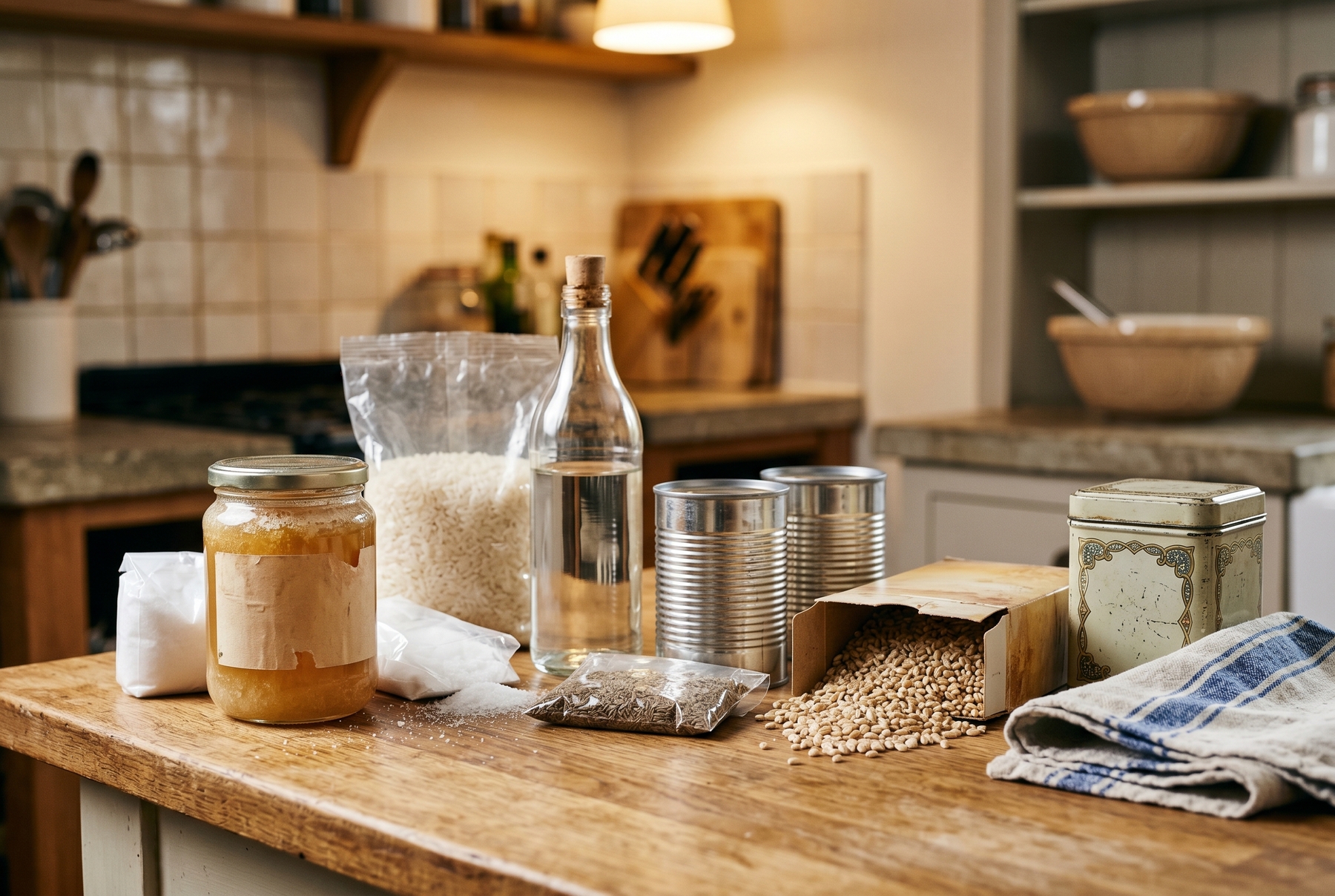
Many pantry staples, such as honey, rice, and vinegar, remain safe for years when stored correctly.
Table of Contents
- What Expiration Dates Actually Mean and Why They Are Often Misread
- Pantry Staples: What Can Sit In The Cupboard Without Paranoia
- Foods That Look Eternal But Actually Age
- Canned Goods: Long-Livers But Not Immortal
- Dry Goods: What To Keep, What To Smell, What To Toss
- Pantry Audit In 30 Minutes
- How To Properly Store Grains And Groats So They Don't Spoil
- Quick Reference: What Is Almost Eternal, What Lasts Long, And What Spoils Unnoticed
- What To Cook From What You Found
What Expiration Dates Actually Mean and Why They Are Often Misread
Packaging Dates Often Guarantee Quality Rather Than Act As A Bomb Timer
Food packaging typically features two main types of date labels. The first type (“Best before”) concerns quality: taste, smell, and texture. A product does not become dangerous after this date, although it might lose some of its properties. The second (“Use by” or “Expires on”) is about safety: perishable foods require strict adherence to this limit. However, in practice, the risks still depend on the product itself. Expired yogurt, a tin of canned goods, and a bag of dry rice carry completely different risks.
In dry goods, flavor suffers first, rather than safety. Honey, rice, salt, and vinegar can change their appearance, but with normal storage, they do not become dangerous immediately after the printed date.
Why Some Foods Last For Years While Others Surrender In A Week
Bacteria and mold need water to grow. More precisely, they need free water, the kind that is not bound to sugars, salts, or other molecules. This parameter is called water activity: the lower it is, the harder it is for microbes to survive.
Salt and honey have almost no free water, making it impossible for bacteria to survive there; it is like a desert without shelter for them.
Acid works differently: it lowers the pH to a level where microbes simply perish. Vinegar, with a pH around 2.4–3.4, provides one of the most hostile environments for pathogenic bacteria.
Additionally, oxygen oxidizes fats, light destroys vitamins and delicate aromas, and heat accelerates all unwanted chemical reactions.
Pantry Staples: What Can Sit In The Cupboard Without Paranoia
Salt: More Likely To Clump Than Spoil
Ordinary table salt lasts endlessly if kept dry and free from external contamination. It never rots, oxidizes, or molds. Clumps from moisture pose no problem; they are just crystals sticking together. Breaking them apart makes the salt perfectly usable.
One nuance exists with iodized salt: potassium iodate gradually breaks down from air and moisture. After a few years, the salt loses some of its added iodine. However, the salt itself remains completely functional.
Keeping it in a tightly sealed jar away from the stove works best. Near the burner, salt absorbs moisture and clumps more actively.
Sugar: Eternal While Dry
Sugar never spoils from time. Its crystalline structure remains stable, it contains no fats that could go rancid, and it has no proteins that decompose. The only enemy is moisture, which forces the crystals to stick together into a solid block.
If white sugar turns into a brick, breaking it apart, sifting it, and using it works perfectly. In baking, especially in wet dough, this goes entirely unnoticed. Brown sugar clumps faster due to its molasses content, but it also never becomes dangerous.
Honey: A Legend With Caveats
Honey truly lasts a very long time, sometimes decades. It protects itself: it contains no free moisture, but it boasts natural acids and antibacterial substances.
A condition exists: honey must stay dry. If water enters the jar—from a spoon, wet hands, or condensation—the wild yeast almost always present in small amounts begins to work. The honey ferments. A sour smell, foam, and gas appear. The product changes irreversibly.
Many mistake crystallization for a sign of spoilage, although it is merely a physical process: glucose precipitates upon cooling. White, dense, grainy honey remains normal honey that has changed its form. Melting it in a water bath at a temperature no higher than 40°C (104°F) returns it to a liquid state without losing its properties.
Vinegar: A Preservative That Defies Time
Table, apple cider, wine, and rice vinegar last a very long time. The acidic environment reliably protects against microbial contamination.
Over time, vinegar can change slightly: the color fades, and sediment or a whitish suspension appears at the bottom. In apple and wine varieties, this is the so-called “mother”—a living colony of bacteria that produces the acid. It looks like jelly-like floating fragments and sometimes frightens people. Straining it and continuing to use it poses no danger.
White Rice: The Champion Among Grains
Under special conditions—an airtight container, a dry and cool place, and protection from oxygen and insects—white polished rice can last for decades. In a regular kitchen pantry, thinking in years rather than decades makes more sense: after opening, storing it in an airtight container and periodically checking for smell, moisture, and insects ensures safety.
Brown rice presents a completely different story. It retains its bran layer, rich in unsaturated fats that oxidize during storage. After 6 to 12 months, a characteristic smell of old oil emerges. Using it remains possible, but it brings little pleasure.
A bay leaf in the jar serves as a folk method for repelling insects. It works moderately well and does no harm.
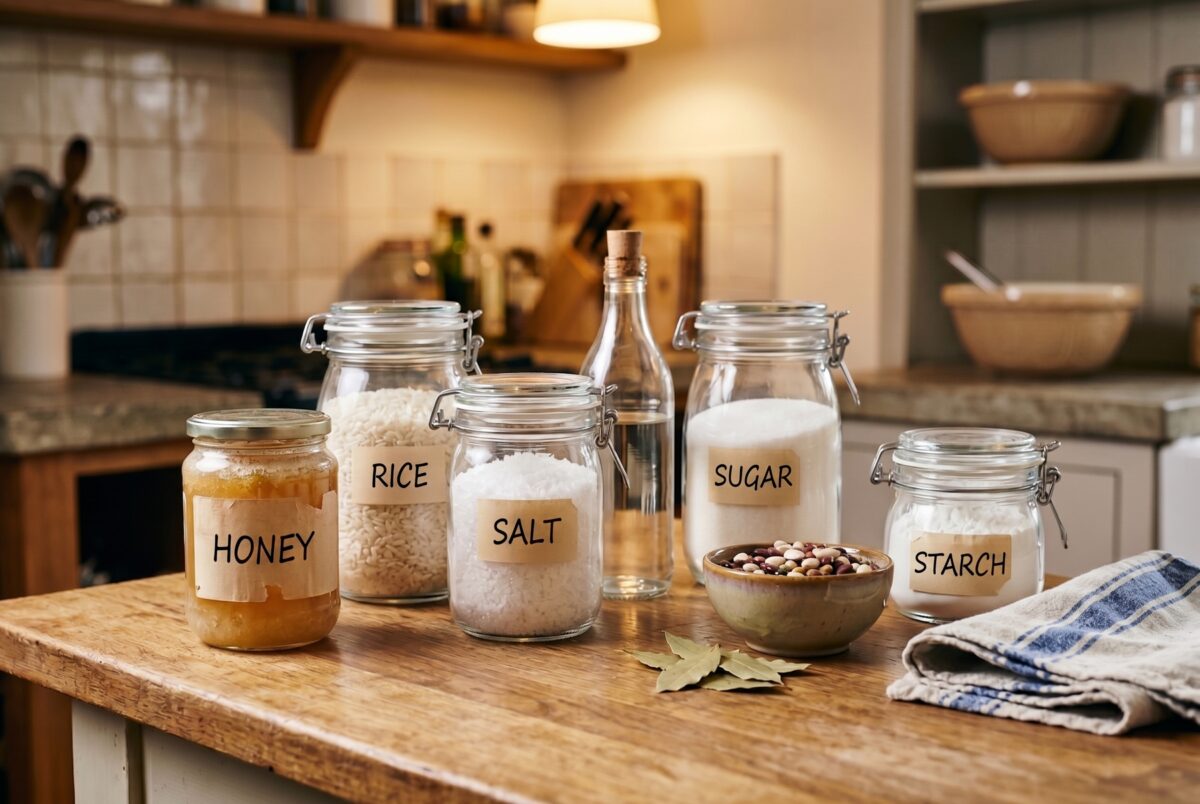
White rice, salt, and sugar act as champions of longevity. In airtight jars, they practically have no expiration date.
Foods That Look Eternal But Actually Age
Flour: Faster Than It Seems
White wheat flour in a sealed package lasts about 12 months. Whole wheat flour lasts half as long because it retains the bran containing oils. The mechanism mirrors that of rice: unsaturated fats oxidize.
The check remains simple. Flour should smell neutral and slightly starchy. If bitterness, mustiness, the smell of old nuts, or something resembling cardboard appears, keeping it out of baked goods is essential. If bugs or cobwebs appear in the bag, this signals a thorough audit of the entire cabinet: insects crawl around.
Vegetable Oil: The Pantry’s Main Traitor
Oil can look perfectly normal while being completely rancid. The problem lies not in toxicity (rancid oil is more unpleasant than poisonous). The main trickery lies elsewhere: a spoiled product looks brand new.
Oil oxidizes due to oxygen, light, and heat. Unsaturated fatty acids—especially in flaxseed, sunflower, and corn oil—break down faster than in olive or coconut oil. Oxidized oil produces a characteristic smell: old seeds, paint, stale walnuts, or something resembling a cardboard box.
Cooking with such oil ruins the dish. Heating it completely destroys the flavor of the food.
Keeping an open bottle in a dark, cool place and using it within 2 to 3 months after opening provides the best results. If the kitchen consistently stays above 25°C (77°F) in the summer, placing it in the refrigerator works better.
Spices: Losing Aroma Rather Than Shelf Life
Spices rarely become dangerous. They might lose their aroma, fade, and become flat—but they do not cause harm. A spice without a smell acts as colored powder rather than an ingredient.
Ground paprika after a year and a half to two years often becomes just red dust with a slight aftertaste. Bay leaves might smell like a wooden cabinet instead of laurel. Old black pepper sometimes retains its heat but loses its resinous notes and depth.
Checking spices by smell rather than date works best: pouring a pinch onto the palm, rubbing it with a finger, and smelling it. If there is no aroma, the spice is spent. Whole spices (cumin, coriander, cloves, peppercorns) last longer than ground ones: essential oils evaporate slower as long as the seed or bud remains intact.
Tea, Coffee, Cocoa
No danger exists in any of these products as long as they stay dry. However, the aroma leaves—and does so quite quickly.
Storing ground coffee for a “rainy day” over years guarantees receiving a brown powder smelling of cardboard at the crucial moment. Whole bean coffee lasts longer, but its lifespan is not infinite either.
Tea fears moisture and foreign smells. An open pack next to an onion smells like onion after a month. In an airtight container and a dark place, it can sit for several years without noticeable losses, although the aroma still fades.
Checking cocoa for mustiness and moisture clumps ensures quality. If it smells clean and chocolatey, it remains usable.
Canned Goods: Long-Livers But Not Immortal
When A Can Is Safe And When To Avoid It
Industrial canned goods under normal storage often remain safe well past the label date, but this gives no reason to keep them for decades. At home, keeping canned goods for no longer than a couple of years, periodically checking the cans, and confidently tossing suspicious ones ensures safety.
Two scenarios exist here. First: do not open the can at all if it shows a swollen lid or bottom, leaks, deep dents, or rust along the seam (penetrating, not superficial). If the can looks like something inside is trying to get out, do not smell or taste it; throwing it away is the only option. A swollen can indicates gas accumulation inside. This frequently points to botulism bacteria: they love multiplying without oxygen and produce a deadly neurotoxin.
The second scenario: the can looked normal on the outside, but opening it reveals a sharp pop, foam, a strange sour or putrid smell, or cloudy liquid where none belongs. Again, do not taste it; throw it away.
Establishing a habit works best: placing newly bought items behind the old ones. Using the old cans first keeps the pantry rotation healthy.
What Is Truly Worth Stocking Up On
Canned meats (like the classic Tushenka or stewed meat), canned fish (sardines, mackerel, pink salmon), beans and peas in their own juice, corn, and tomatoes all form a practical reserve that genuinely finds use in everyday cooking. Condensed milk lasts a long time if the can is not swollen or rusty. Pâtés are a finicky, highly perishable product. In warmth or dampness, bacteria multiply unpredictably. Here, the date on the can matters much more than for stewed meat.
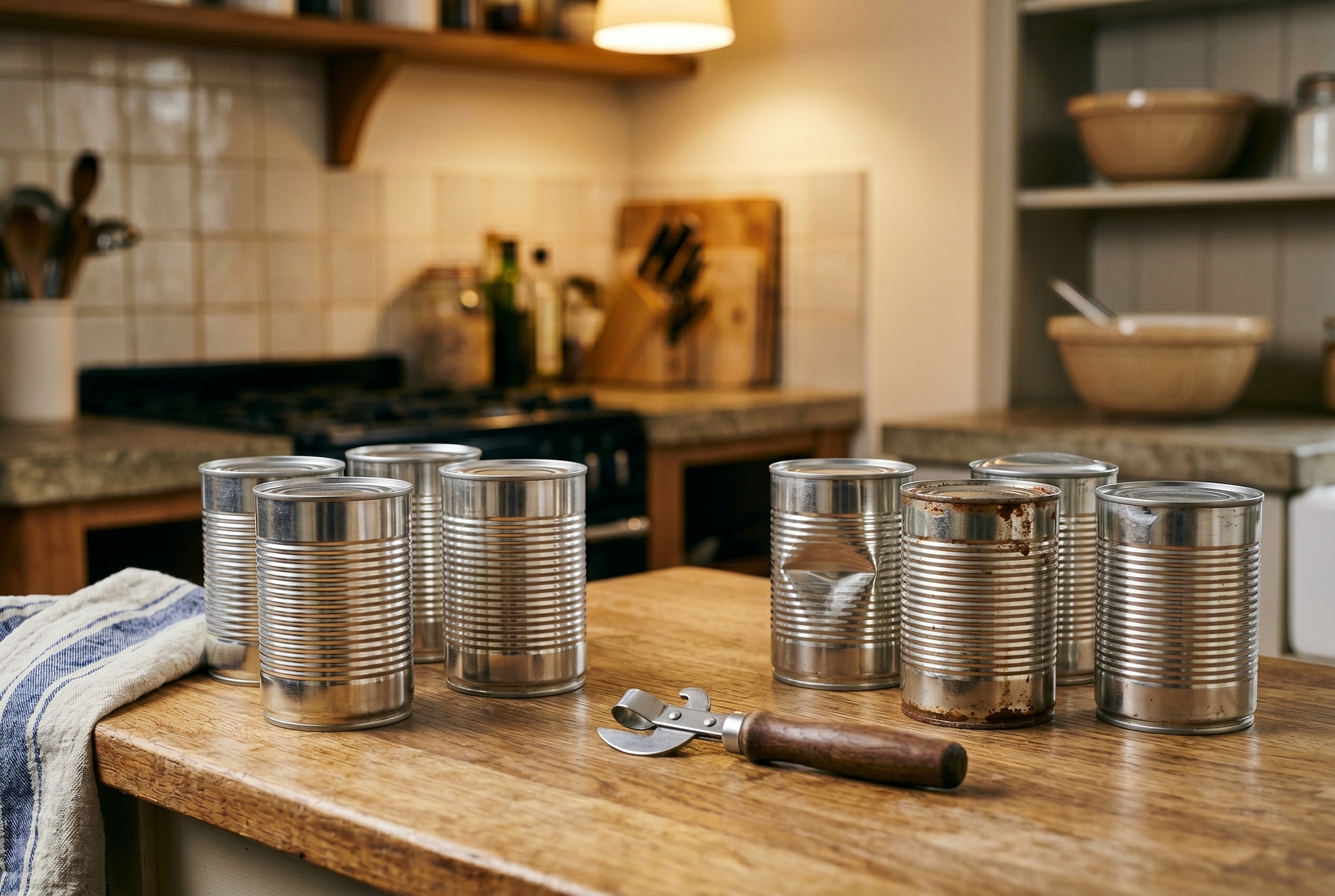
Swelling, rust, or deep dents on a can represent critical signs that the product is unsafe to consume.
Dry Goods: What To Keep, What To Smell, What To Toss
Grains, Pasta, Legumes
Dry pasta made from durum wheat holds up for 2 to 3 years and longer when stored correctly. Buckwheat (Grechka, a staple roasted groat) lasts up to two years. Pearl barley, millet, and corn grits share a similar timeline, provided they stay dry and bug-free.
Old legumes require a separate discussion. Beans, peas, and chickpeas can take a very long time to cook after several years of storage and still remain hard in the center. The issue lies in the chemistry of the grain: over time, the starch crystallizes, and the shell thickens. It poses no danger, but it brings culinary disappointment. If dry lentils boil for an hour and a half and still crunch, their time has passed.
Milk Powder, Egg Powder, Baking Mixes
These products seem eternal, but they show more sensitivity to oxidation than grains. Their composition includes fats and proteins reacting to air, moisture, and heat. The smell of old milk, cardboard, or mustiness signals the need to throw them away. Lumps should not exist under proper storage; their presence means moisture got in somewhere.
Nuts, Seeds, Flaxseed
People often store nuts for years and later wonder about the bitterness in their dish. The reason: fats in nuts are rich in polyunsaturated fatty acids, which oxidize at room temperature within a few months after opening the package.
Walnuts and cashews spoil faster than others. Almonds show slightly more stability. Ground flaxseed remains highly unstable; keeping it in the refrigerator and using it quickly provides the best outcome. Whole flax seeds last longer.
If nuts or seeds simply seem old, smelling them works: rancidity is usually recognizable. However, if mold, moisture traces, stickiness, mustiness, or damaged packaging appear, do not taste them; throw them away. Certain molds on nuts and seeds produce aflatoxins—odorless substances that are highly toxic and target the liver.
The most reliable method: storing nuts and seeds in the freezer, inside a sturdy container or vacuum bag. They stay perfect for years without quality loss.
Pantry Audit In 30 Minutes
Take Everything Out And Divide Honestly
Everything inside the cabinet goes onto the table. No exceptions. This includes mysterious packets with leftovers and jars with unreadable labels.
Next, sorting begins: keeping the understandable, smelling the suspicious. Items nearing their expiration get eaten in the coming days, while the rancid and swollen go into the trash without regret.
Three Things To Check In Every Product
Smell. Mustiness, bitterness, old oil, and dampness act as signals. A neutral or characteristic “native” smell indicates a good sign.
Appearance. Mold (white, green, black—it does not matter), insects and traces of their presence (cobwebs, larvae, bugs), and swelling of the package or can mean immediate disposal.
Packaging. Holes, moisture traces inside the bag, rust along the can’s seam, or deformation not caused during transport warrant caution.
Label Dates Clearly To Read Them Later
Using a marker, write large and in a visible spot. Noting not just the purchase date but the opening date is crucial—especially for oil, flour, nuts, spices, and coffee. If finding the date requires searching, it is not a storage system, but hoping for the best.
How To Properly Store Grains And Groats So They Don’t Spoil
Main Enemies In The Cabinet
In damp conditions, grains and flour absorb moisture, sugar clumps into a monolith, honey ferments, and spices lose their aroma faster. A poorly ventilated kitchen makes a terrible place for long-term storage.
Heat accelerates chemical reactions (including oxidation). A cabinet next to the stove or above the dishwasher provides the worst spot for nuts and oil. Light destroys vitamins and strips foods of their aroma. Oil in a clear bottle on a windowsill loses quality exponentially faster than in a dark cabinet. And oxygen forces fats to go rancid.
Pantry insects present a real problem. If bugs (weevils, flour beetles, pantry moths) appear in the grains, remember: they easily penetrate cardboard packaging and thin polyethylene bags.
Proven Storage Methods
Glass jars with tight-fitting lids in a dark cabinet offer the best option for grains, flour, sugar, and salt. Clear ones make it easy to see the remaining amount. Lids with rubber seals keep moisture out better than simple screw-on caps.
Plastic containers with snap locks work worse than glass, but better than cardboard boxes and bags. Zip-lock bags serve well for temporary storage and freezing nuts.
A bay leaf in a jar of grains: its essential oils genuinely repel some insects. It gives no guarantees, but it certainly does no harm.
Which Products Are Better Stored In The Fridge Or Freezer
Nuts go in the freezer, in a closed container. Ground flaxseed belongs there too. Whole wheat flour goes in the fridge if the kitchen gets hot. Open oil, during a consistently hot summer, also belongs in the fridge. Nut butters (peanut, sesame tahini) after opening fare much better in the fridge.
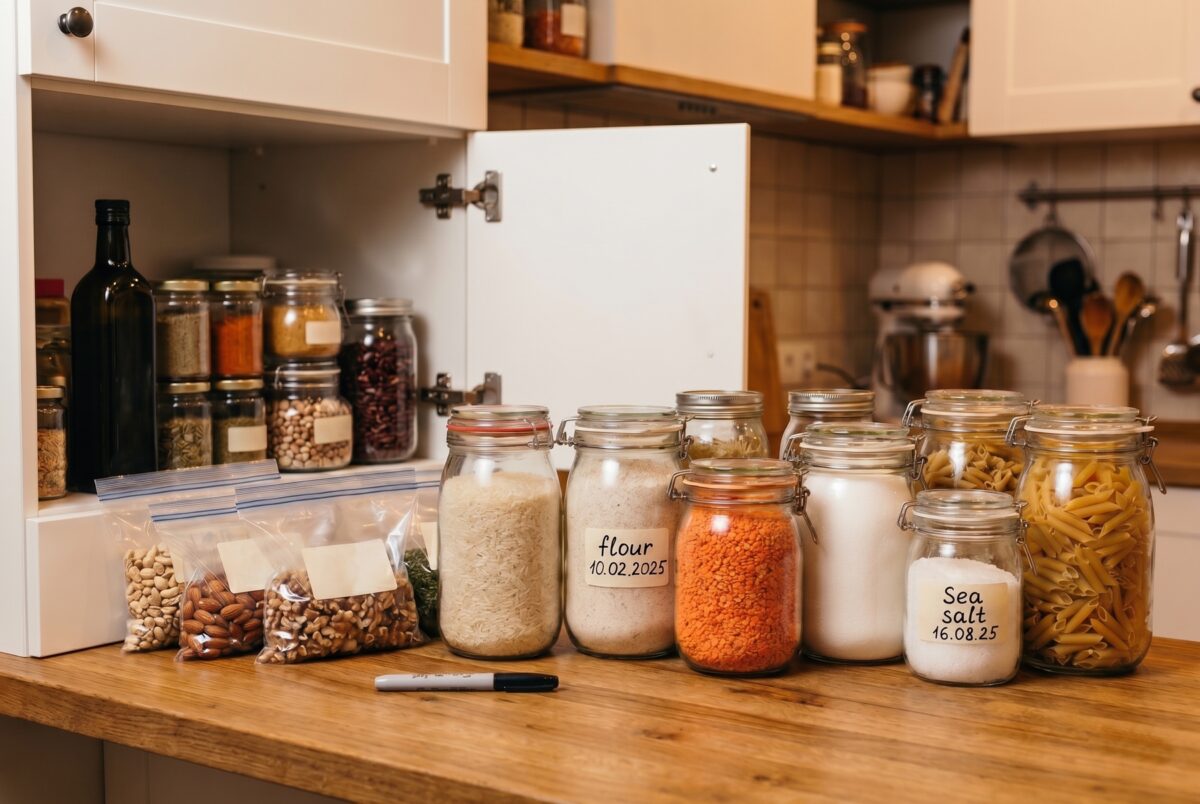
Using clear containers and clear labeling of opening dates helps conduct timely audits and avoid food spoilage.
Quick Reference: What Is Almost Eternal, What Lasts Long, And What Spoils Unnoticed
Last forever (if protected from moisture): salt, sugar, vinegar, starch, strong alcohol without creamy or perishable additives.
Very long, but with periodic quality checks: honey, white rice, dry legumes, baking soda. Their issue usually lies not in danger, but in moisture, insects, loss of properties, or changes in taste. Additionally: white flour, pasta, buckwheat, spices, tea, coffee, cocoa, canned goods, dried fruits.
Products that spoil unnoticed: vegetable oils, nuts, seeds, whole wheat flour, brown rice, open sauces, milk powder, mixes with fats in their composition.
What To Cook From What You Found
A Pantry Dinner Without Going To The Store
Rice with canned fish: boiling rice, opening a tin of sardines in oil or tomato sauce, adding fried onions, and drizzling with vinegar. Simple, filling, and helps gather scattered leftovers from the fridge into a proper lunch.
Pasta with beans and tomatoes. Boiling the pasta. Opening a can of beans and draining the liquid. Opening canned crushed tomatoes, mashing them right in the pan, adding the beans, simmering for 10 minutes, salting, and adding spices that still retain their smell.
Buckwheat with stewed meat (Tushenka)—a Soviet classic that still works perfectly today. Frying onions until brown, smelling slightly of burnt caramel, adding the stewed meat, and letting it simmer for a couple of minutes. Cooking the buckwheat separately.
Lentils with spices. Lentils cook quickly, require no soaking, and absorb aromas beautifully. Cumin, coriander, paprika, and a little vinegar at the end create a dish with real character.
How To Revive A Boring Stash
Fried onions change almost everything. If grains or legumes seem bland, frying onions in oil until amber and adding them to the finished dish transforms the flavor.
Acid. A little vinegar or lemon juice at the end of cooking enhances the flavor, giving it greater depth. This works exceptionally well with legumes and grains.
Texture. Fried garlic, toasted seeds, or croutons add what a monotonous porridge or soup lacks.
Spicing more generously than usual works if they have partially lost their aroma but do not smell bad. Adding twice as much as seems necessary does the trick.
Sorting the cabinet every few months remains a great habit: tossing obviously expired items in the trash, moving grains to glass jars, keeping oil away from the stove, and putting nuts in the freezer.
And that jar of honey from the far corner—melting it in a water bath revives it beautifully. Most likely, it is in perfect condition.
0 comments