
A slice of chocolate cake at ten in the evening is not to blame. Everything is decided by a short internal contract we make on the way to the fridge: ‘It was a hard day, I earned this.’ The phrase is honest and almost touching. Yet, it quietly appoints dessert as the sole reward and the only permitted way to find comfort.
Recognizing yourself here means acknowledging that this is not about weakness. You have simply found a quick way to exhale, and the brain loves such methods and is in no hurry to part with them. Until offered something equally reliable, your hand will naturally reach for sweets. It is completely logical from a physiological standpoint.
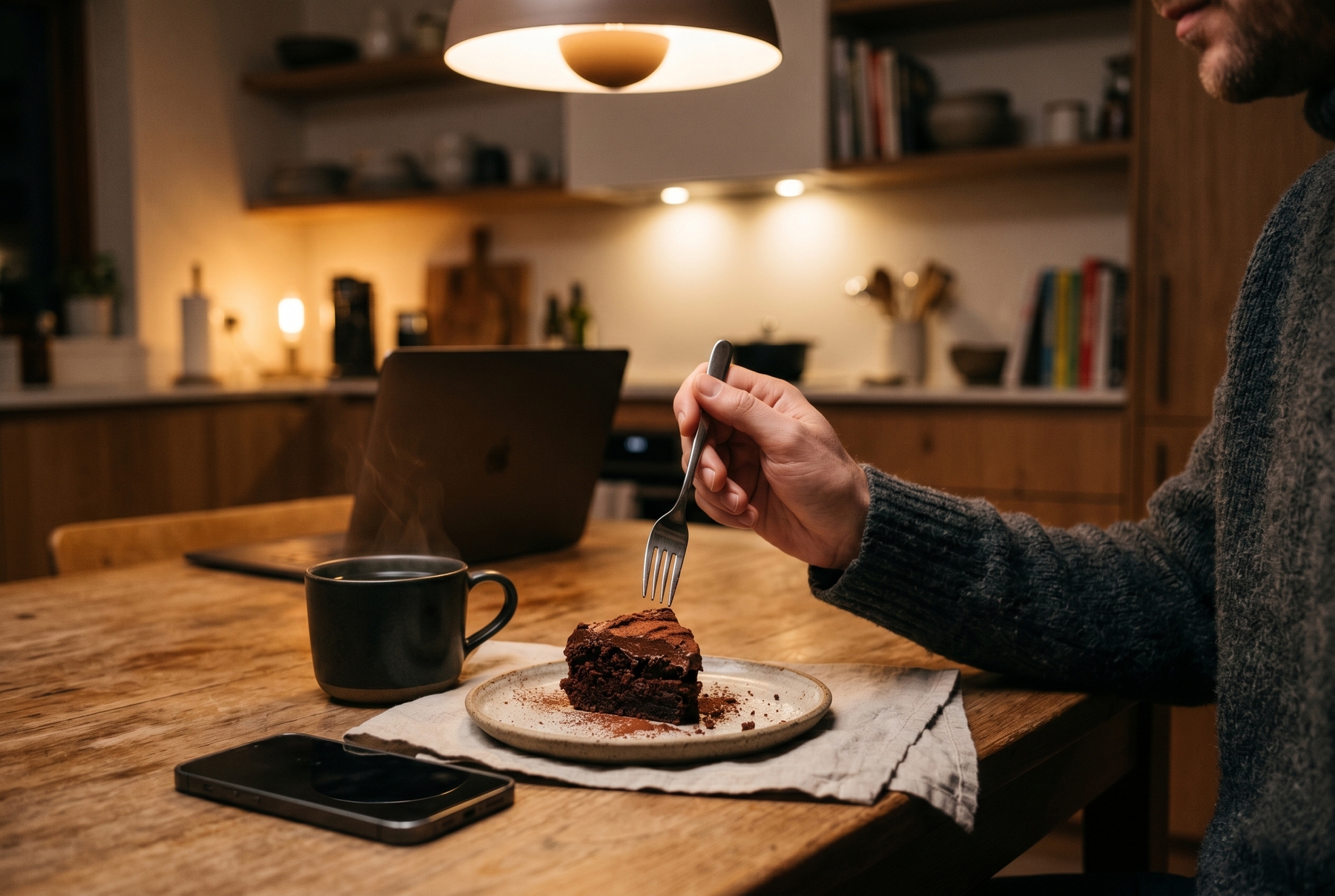
A late-night slice of cake often becomes the only accessible way to reward oneself after a hard day.
Table of Contents
- Why Sweets Easily Become a Food Reward
- How to Tell if Dessert Has Become an Automatic Compensation Instead of a Pleasure
- Why Forbidding Sweets Only Increases the Craving
- The First Step: Separating Dessert From the Right to Rest
- Replacing Food Rewards Without Defaulting to 'Drinking Water'
- Keeping Dessert in Life Without Making It a Problem
- What to Do in the Evening When Your Hand Reaches for Sweets
- Why the Habit Returns
- A Gentle 7-Day Plan Without Fighting Yourself
- When Sugar Cravings and Overeating Are a Reason to Seek Help
Why Sweets Easily Become a Food Reward
The Brain Loves Quick and Clear Bonuses
Sweet flavors possess a rare combination: they are pleasant, predictable, and act instantly. There is no waiting involved. Taking a bite makes things feel slightly warmer and calmer inside within seconds. A ritual naturally adds to this. A boiling kettle, a favorite mug, that specific evening light in the kitchen, and the silence after all chores are done. The body quickly memorizes this scene as a signal: the day is closed, and relaxing is finally allowed.
Simple repetition takes over from there. When something brings relief easily and effortlessly, the brain writes it down in a short list of proven solutions. After a month of such evenings, the hand already knows the way to the cookie cabinet.
Fatigue Often Drives Evening Sugar Cravings
Observing the moment when the craving hits reveals a lot. It is rarely an empty stomach. It is the end of a shift, after which there is no energy left even to choose a movie. It is an evening when you spent the entire day holding back, caring for others, worrying, or simply feeling bored. Dessert in such moments provides a pause that a person does not know how to take otherwise.
The body desperately needs a stop, yet it receives sugar. The pause itself never actually happens: finishing the cake just means returning to chores, only now with a slight heaviness inside.
How to Tell if Dessert Has Become an Automatic Compensation Instead of a Pleasure
Pleasure differs from making a deal with oneself in several ways. Craving sweets strikes precisely after tension, rather than on a calm, well-fed day. The hand opens the packaging before a conscious thought is formed. The most telling sign is that dessert is followed by guilt and a promise to start over tomorrow, rather than genuine satisfaction.
Conscious pleasure works differently. The dessert is chosen calmly, eaten with attention, and requires no excuses. It simply becomes a part of life that does not need to be fixed. However, if sweets are required to cover up fatigue, anxiety, or a void after a long day, it makes sense to examine the void itself rather than the dessert. The dessert just happened to be the closest thing available.
Why Forbidding Sweets Only Increases the Craving
The most tempting solution sounds simple: ‘That is it, no more sweets.’ Naturally, it is usually the first to break. A strict ban makes the dessert even more valuable, turning it into a symbol of freedom, the very forbidden fruit that is missing.
The pendulum then swings. The ban accumulates tension, which breaks through in a binge, followed by guilt, and then a new, even stricter ban. This cycle lasts for weeks. Therefore, eliminating sweets is unnecessary. Making sure they stop being the only available reward is completely sufficient.
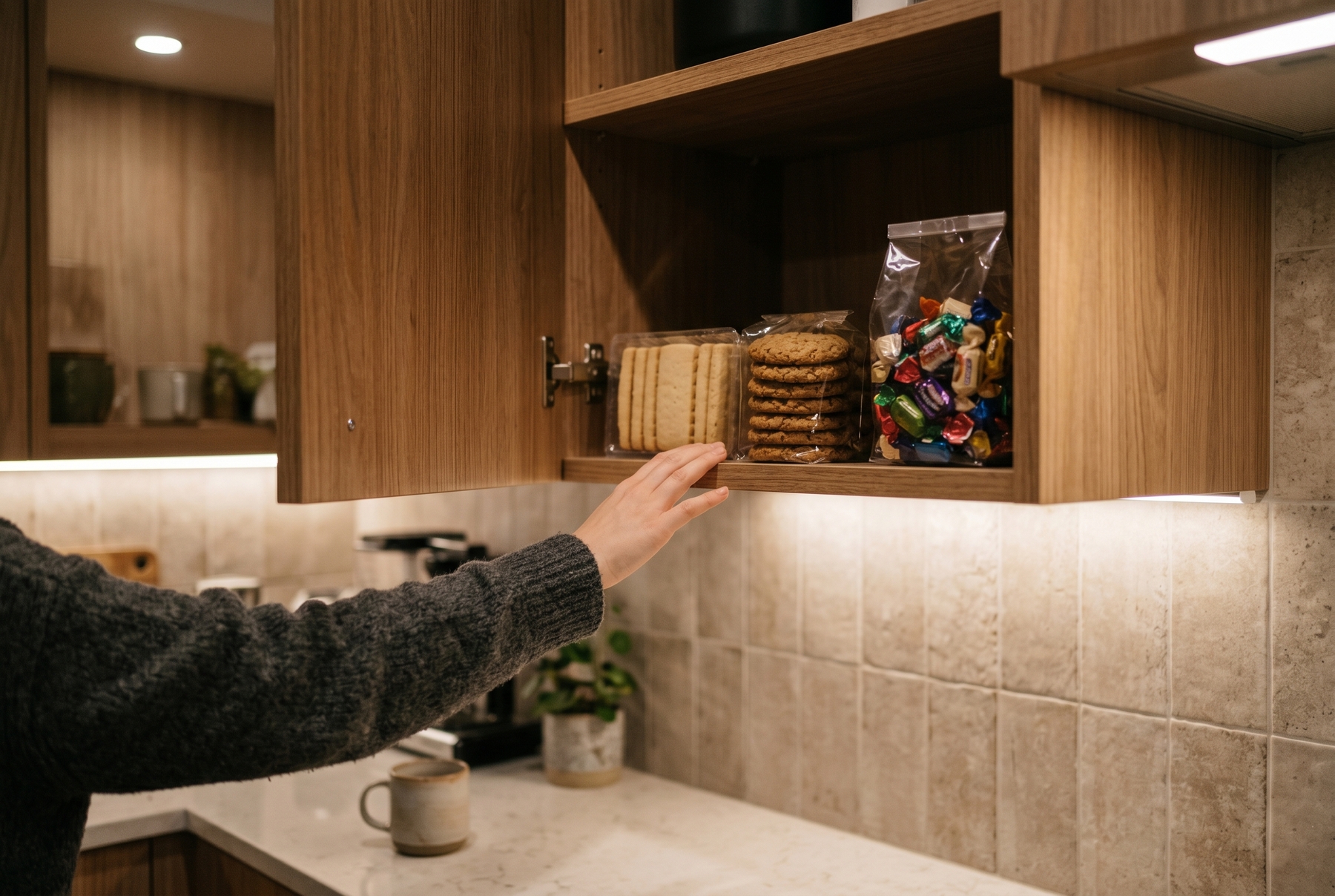
When the brain gets used to quick bonuses, the hand naturally finds its way to the sweet cabinet before we even have time to think.
The First Step: Separating Dessert From the Right to Rest
Replacing ‘I Earned This’ With the Truth
The phrase ‘I earned a treat’ is convenient but almost always inaccurate. Something else hides beneath it. Naming it directly changes the perspective: ‘I am tired,’ ‘I need a break,’ ‘I want some pleasure,’ ‘I want to feel that the day is finally over.’ It sounds unusual. Yet, it immediately reveals the true need, and a true need usually has other ways of being met besides eating cake.
Taking a Minute Pause Before Making a Choice
Giving yourself 30 to 60 seconds when your hand is already reaching for the cupboard is enough to override the autopilot.
- Stopping and taking one calm breath helps.
- Asking honestly whether food or a break is truly desired provides clarity.
- Listening to actual hunger cues is crucial.
- Deciding to eat the dessert now, postpone it for half an hour, or recover in another way puts you in control.
Sometimes the desire for sweets remains exactly the same after such a pause, which is perfectly normal. Other times, it becomes clear that simply sitting down and thinking about nothing for five minutes was the real goal.
Replacing Food Rewards Without Defaulting to ‘Drinking Water’
A replacement only works when it provides the same feeling of care and completion that a dessert did. This is why advice like ‘drink a glass of water’ always fails. Water does not offer comfort.
Warmth and relaxation can be returned to the body in other ways. Taking a hot shower, letting the water hit the shoulders and release muscle tension, works wonders. Going for a walk without a destination or route is incredibly freeing. Stretching on the floor, changing into comfortable home clothes instead of workwear, massaging tired feet, or simply going to sleep honestly provides immense relief. The body reads these actions as signals of care, not as a useful punishment.
The nervous system requires a different approach. Listening to music with headphones, taking a few minutes for calm breathing, or spending 10 minutes without a single screen can be highly effective. Calling a person around whom productivity is not required offers emotional release. Reading a book or watching a TV series attentively, rather than keeping it as background noise for work emails, restores focus and calm.
Sometimes, craving sweets stems from losing control over the day. In this case, a small proof of competence helps more than sugar. Completing one minor task makes a difference. Preparing breakfast for the next morning or organizing a single corner of the kitchen can restore order. Writing down three things that were actually accomplished today provides a sense of achievement. The feeling of ‘I handled this’ satisfies just as well as a dessert; it simply acts a bit slower.
Keeping Dessert in Life Without Making It a Problem
Eating Sweets as a Chosen Pleasure
Dessert comfortably exists in a normal life if it is chosen rather than grabbed. Reaching for a flavor that is genuinely desired, instead of just taking the first thing available, changes the experience. Putting the phone away makes it easier to catch the moment when enough is enough: the last third of a slice is often consumed without any pleasure at all.
Making Dessert a Part of a Meal Rather Than a Secret Post-Stress Ceremony
A hungry and tired brain gives terrible advice when choosing sweets. On an empty stomach, dessert disappears quickly, unnoticeably, and joylessly, often leading to a craving for seconds. Therefore, eating it after a proper dinner, when the body is already full and calm, is often wiser. Enjoying tea with a slice of pie after a meal, having good chocolate with coffee, or preparing a homemade dessert on a weekend without any feeling of failure changes the dynamic. In this form, sweets stop being a secret and lose their excessive power.
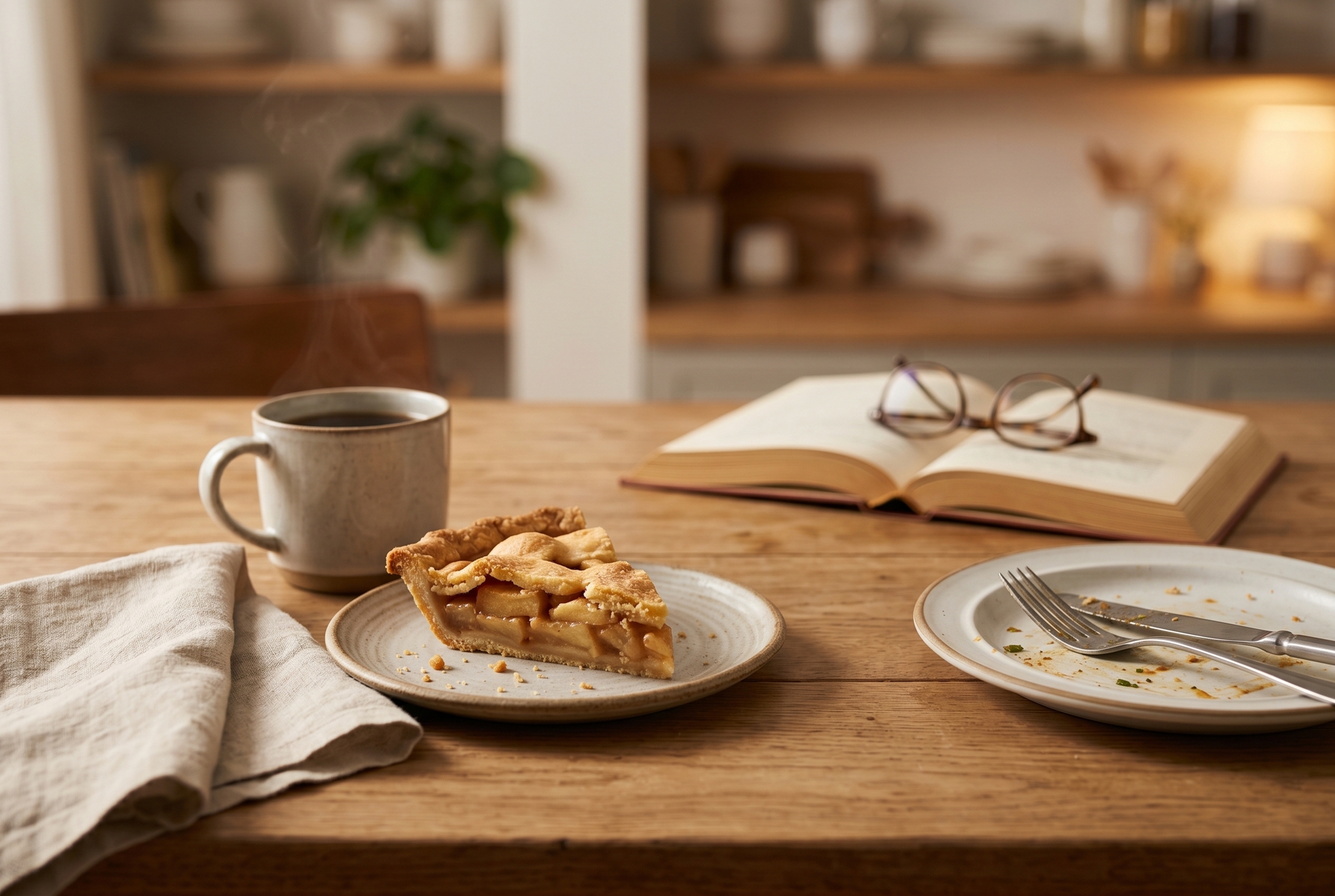
A dessert chosen calmly and eaten with attention brings true satisfaction and requires no excuses.
What to Do in the Evening When Your Hand Reaches for Sweets
If You Are Hungry
Eating real food comes first. Having protein, grains, vegetables, soup, dinner leftovers, or anything warm and substantial is essential. Allowing yourself to eat calmly before returning to the thought of dessert is key. Often, on a full stomach, that thought sounds much quieter.
If You Are Tired and Craving Sweets
Taking 10 minutes to recover without food is the initial step. Taking a shower, sitting in silence, changing into home clothes, lying down for five minutes, or stepping out onto the balcony to breathe can reset the mind. Asking honestly if the craving for sweets remains afterward reveals the true need. Sometimes the answer is yes. Other times, it turns out that lying down was the only actual desire.
If You Are Sad, Anxious, and Want Sweets
Food will not erase anxiety or fix sadness, no matter how much one wants to believe otherwise. Other methods help here: writing down the thoughts spinning in your head, calling a loved one, exhaling slowly several times, leaving the kitchen for another room, or allowing yourself to ask for support from a living person. If dessert is still chosen after this, eating it without self-humiliation is vital. One piece of cake does not make a person bad.
Why the Habit Returns
The habit returns for several reasons. Keeping only ‘forbidden’ items at home means binging on them, as nothing else is available. Replacing a favorite dessert with a tasteless ‘healthy’ version fails because the body understands the deception and demands the real thing. Expecting perfect discipline and considering a single slip a complete failure creates unnecessary pressure. Self-criticism follows every episode, and guilt triggers the same loop of tension and new binges. Furthermore, self-care is easily confused with constant indulgence, especially when ‘I am tired’ is used as an excuse five times a day.
A Gentle 7-Day Plan Without Fighting Yourself
There are no exams to pass and no grades to receive here. The only goal is to better understand your own evenings.
- Days 1–2. Observing the moments when the desire for sweets appears is the only task. Changing nothing, just noticing.
- Days 3–4. Naming the real need before having a dessert—tired, bored, anxious, needing a pause—brings awareness.
- Day 5. Choosing one non-food reward and testing it in practice provides an alternative.
- Day 6. Eating a favorite dessert consciously, slowly, and without guilt is part of the plan, not a violation.
- Day 7. Reviewing what worked and what felt artificial or alien helps refine the approach. Keeping only what genuinely helped is the final step.
Marathons and willpower are completely unnecessary. If a day is missed, simply continuing from the next one is the best approach.

Music, reading, and a cozy atmosphere act as signals of care for the body, helping to relax without unnecessary sugar.
When Sugar Cravings and Overeating Are a Reason to Seek Help
Sometimes it is no longer about the habit of rewarding oneself with a cake. It is worth paying attention if episodes of losing control over food happen regularly, if intense guilt hits after eating, or if life revolves between strict restrictions and overeating. Fearing ordinary foods and having obsessive thoughts about weight and eating that consume half the day are alarming signs. Working with a specialist, such as a psychotherapist or an eating disorder expert, rather than trying to ‘pull yourself together’ alone, is a much wiser path. This is not weakness, but the same common sense used when visiting a doctor for a persistent cough.
Exhaling is permissible simply because of fatigue, without needing a cake as a pass. Meanwhile, dessert calmly remains a part of life: a slice of pie with tea on Sunday, a square of dark chocolate with coffee, or the warm scent of vanilla coming from the oven on a weekend.
0 comments