
Two beliefs have circulated through kitchens for years. The first claims that buying fillets always saves time. The second insists that buying a whole fish always saves money. Both myths fall apart at the very first encounter with actual cooking.
A whole fish can be more expensive than a fillet if half of the carcass ends up in the trash. The true value lies not in the shape of the fish, but in what you plan to do with it tonight and two days from now. The exact same sea bass yields different results and costs different amounts depending on your kitchen strategy.
Here is an honest breakdown of what is more economical to buy—fillets or whole fish—along with what you are paying for, when each format wins, and how to calculate value by the plate rather than by the kilogram (lb).
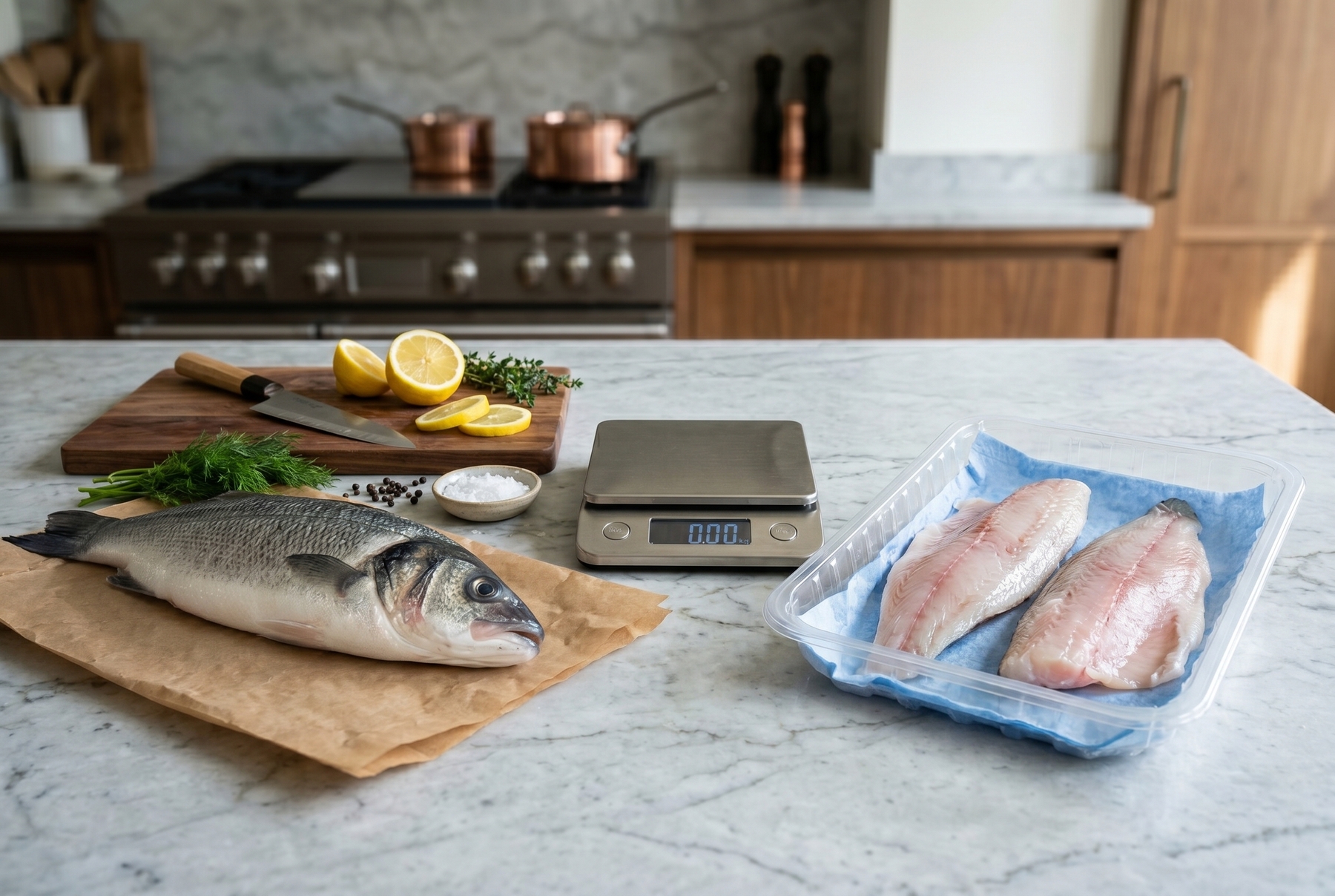
Which is more economical: buying a whole carcass or a ready-made fillet? The answer depends entirely on how effectively you plan to utilize the product.
Table of Contents
- What You Pay for When Buying Fillets or Whole Fish
- When Fillets Are Genuinely More Economical and Convenient
- When Whole Fish Is More Economical Than Fillets
- How to Calculate What Is More Economical: Fillet or Whole Fish
- Freshness: Where Mistakes Are Easiest to Make
- How to Choose Frozen Fish and Fillets
- Storage and Safety: Fish Does Not Forgive Optimism
- Which Format Fits Which Dish
- What to Choose at the Counter: Fillet or Whole Fish
- The Building Block: Zero-Waste Whole Fish
- The Final Verdict
What You Pay for When Buying Fillets or Whole Fish
Fish Fillets: You Purchase Speed and Clean Hands
The price of a fillet already includes the labor someone else performed for you. The fish was caught, gutted, deboned, skinned or left skin-on, and packaged. Each stage represents weight loss and human effort, and you are paying for all of it.
A hidden cost also exists. Fillets have a shorter shelf life than whole fish. The cut exposes the flesh to the air, increasing the contact area, which makes the product age faster. That beautiful pink slab under the plastic wrap might have been sitting in the display case longer than the whole carcass next to it. You gain speed in the kitchen, but you sacrifice a reserve of freshness.
Whole Fish: Meat Plus a Culinary Resource
Breaking down a whole fish is much like breaking down a chicken. A single carcass yields several different components, and this changes the entire purchasing math. The flesh serves as the main dish. The spine, head, and fins go into the broth. The trimmings turn into patties or fillings. The skin, if dried to a crisp, works as an appetizer or a textural accent in a dish.
All of this makes sense under only one condition: you actually put the leftovers to use. If the spine and head go straight into the bin after butchering, you have overpaid for bones and water. Every whole fish contains hidden resources. Hands-on preparation is what transforms them into flavor.
When Fillets Are Genuinely More Economical and Convenient
When Dinner Is Needed in 40 Minutes
During a busy weeknight with a hungry family and limited time, fillets are unmatched. Roasting them with vegetables on a single sheet pan, grinding them into patties, dipping them in batter, tossing them into pasta, assembling a bowl, or using them as pie filling takes only minutes instead of an entire evening with a knife and cutting board.
When Lacking a Knife and Skill
To be perfectly honest, proper butchering requires a sharp knife and a practiced hand. A dull blade tears the flesh, a beginner leaves half the meat on the spine, and the kitchen ends up covered in scales. All the supposed savings of a whole fish melt away in this struggle. Without a good knife and experience, fillets are the wiser choice.
When Precise Portions Are Crucial
For one or two diners, a child’s plate, or a work lunchbox, a whole fish is excessive. Fillets are easily portioned and counted, and they lack the bones that can turn a child’s dinner into a stressful inspection of every bite.
When the Dish Requires a Clean Cut
Steaks, roulades, fish dressed in sauce, elegant presentations, and recipes requiring brief cooking demand a clean cut. A smooth, boneless, and membrane-free piece behaves predictably: it sears evenly, holds its shape, and does not fall apart on the plate. A whole fish would have to be broken down for this anyway, making it pointless to pay for the excess.
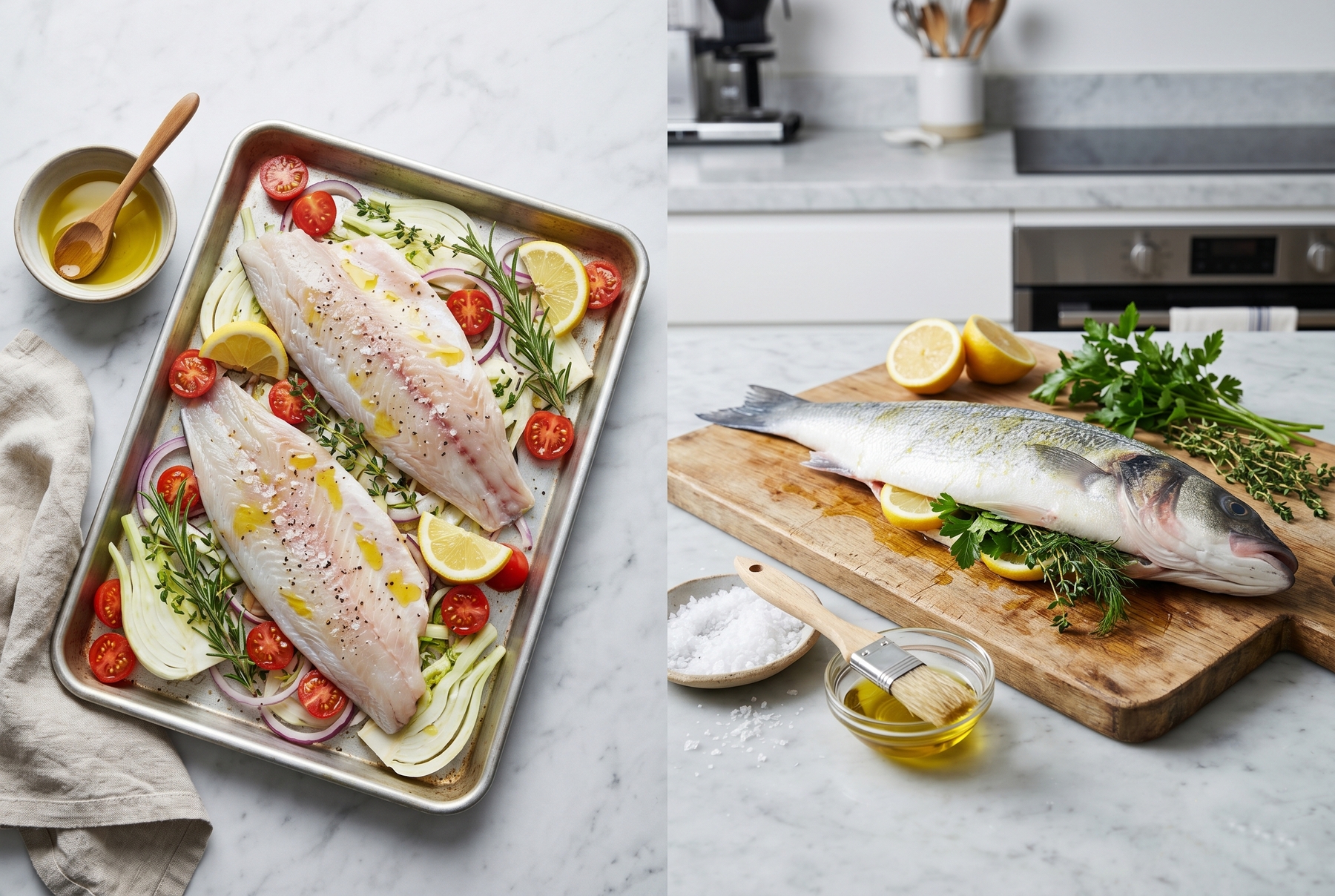
Fillets are perfectly suited for a quick dinner, whereas roasting a fish whole helps retain the maximum juiciness of the meat.
When Whole Fish Is More Economical Than Fillets
When Roasting the Fish Whole
During whole roasting, the skin traps moisture inside while the bones conduct heat more gently. The flesh near the spine remains juicy, whereas the thin edge of a solitary fillet would have dried out under the same heat. Furthermore, a whole fish on a platter creates a visual impact that no neat cut can match.
When Freshness Is Paramount
Quality is easily read on a whole fish. The eyes, gills, elasticity, aroma, and belly condition are all plainly visible. A cut fillet conceals half of these indicators. If freshness is critical for a dish (such as grilled or steamed fish with minimal spices), a whole carcass provides better odds of getting it right.
When Ready to Utilize the Whole Fish Without Waste
This is the ultimate culinary building block. Purchasing one fish provides a roadmap for several meals. The fillet serves as dinner today. The carcass goes into the stockpot tomorrow. The trimmings become fish cakes later. With this plan, the price per kilogram (2.2 lbs) ceases to matter because you are utilizing the entire product.
When Cooking for a Crowd
A large, whole roasted fish feeds a table much better than a pile of individual portions. It is easier to cook evenly, simpler to present impressively, and easier to monitor for juiciness. A thick carcass forgives a couple of extra minutes in the oven, while a thin fillet does not.
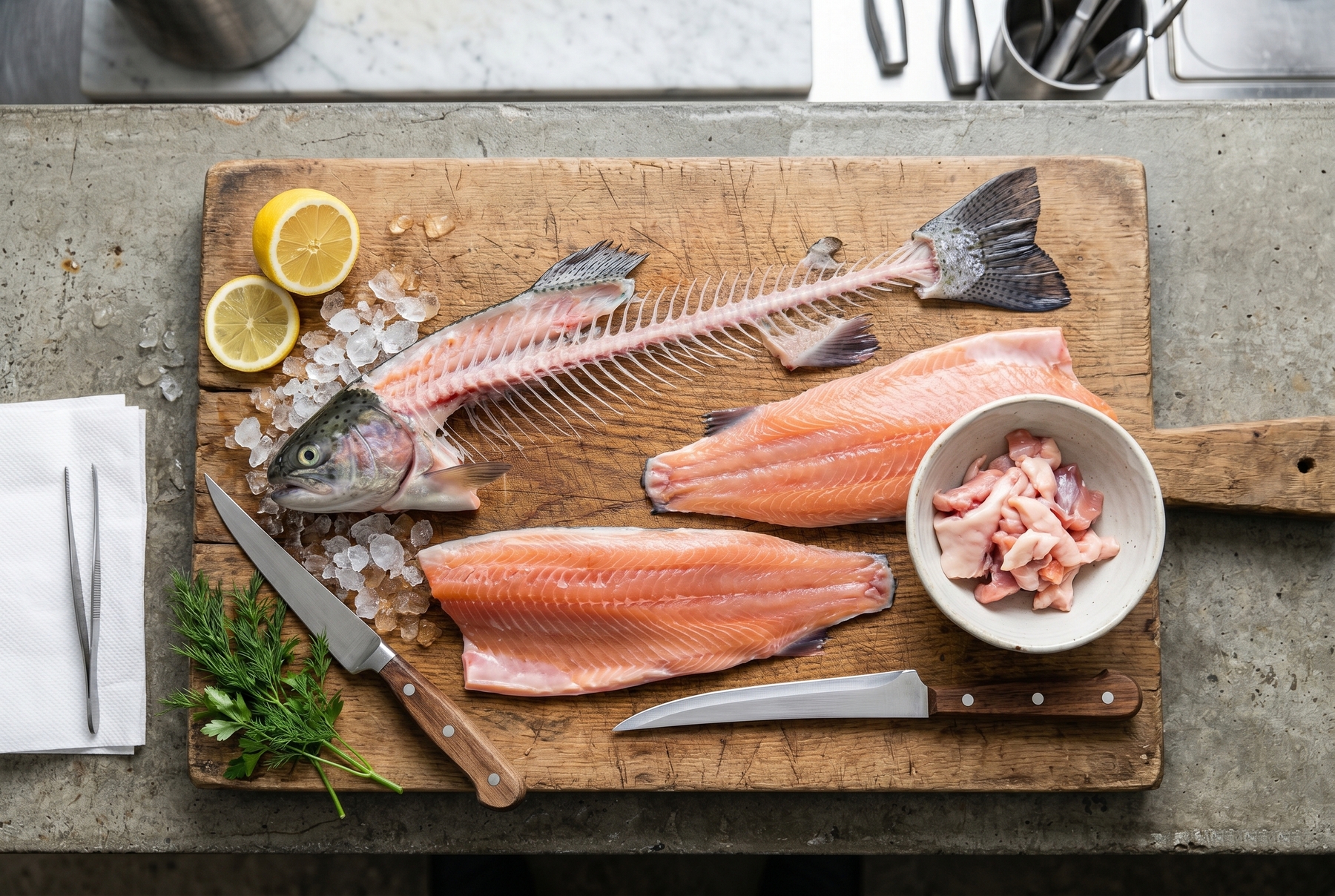
When purchasing a whole fish, you are paying not only for the fillet but also for a valuable culinary resource: the head and bones for a rich broth.
How to Calculate What Is More Economical: Fillet or Whole Fish
Why Two Kilograms Do Not Equal Two Kilograms
A kilogram (2.2 lbs) of fish fillet and a kilogram (2.2 lbs) of whole fish cannot be compared directly. A whole fish includes a head, spine, fins, and innards. The edible flesh yielded from it is noticeably less than its total weight (varying by species, but roughly half or sometimes less). Comparing price tags head-on is meaningless. The true metric is the price of the finished meat.
A Simple Calculation Right at the Counter
Mental math is useful here. Consider the price of the entire carcass. Estimate how much pure meat it will actually yield. Decide what you will do with the bones and head (broth holds value if calculated honestly). Finally, factor in the time required for butchering. Adding all this up allows for a fair comparison against a fillet. Often, the whole fish still wins. However, this is not a universal truth, and calculating it this way reveals the reality.
When “Cheaper” Turns Out “More Expensive”
A cheap whole fish becomes expensive under several circumstances. You lack a sharp knife. You lack time. The bones go into the trash instead of the pot. The fish was poorly gutted, allowing bile bitterness to seep into the flesh. Part of the meat is mangled during butchering. In each of these scenarios, you paid for weight but ate less than you would have with a ready-made fillet.
Freshness: Where Mistakes Are Easiest to Make
How to Select Fresh Whole Fish: What to Look For
The eyes should be clear and bulging, neither sunken nor cloudy. The gills must be red or pink, completely free of any sour or ammonia smell. The carcass should feel springy: an indentation from a finger press should bounce back immediately. The aroma should be oceanic or neutral, with nothing harsh. The skin must be moist and the scales intact. The belly needs to be firm, not deteriorating. These signs depend on the fish species and storage methods, so evaluating them comprehensively rather than relying on a single point is best.
How to Select Fish Fillets: Red Flags
A puddle of liquid in the tray is a bad sign. A sticky surface, gray or dried-out edges, or a sharp smell that hits immediately are all warnings. Mushy flesh that falls apart under a finger, or a suspiciously bright, almost dyed color, should also raise concerns. For frozen fillets, a thick armor of ice and glaze indicates trouble. Any of these signs is a reason to walk away.
Why Beautiful Fillets Can Be Spoiled
An even, pink cut looks reliable, but appearances deceive. Butchering increases the surface area exposed to air, demanding exceptionally strict cold chains and rapid turnover. A fillet display must be colder and rotate faster than a whole fish counter. The beauty of the cut reveals nothing about its freshness.
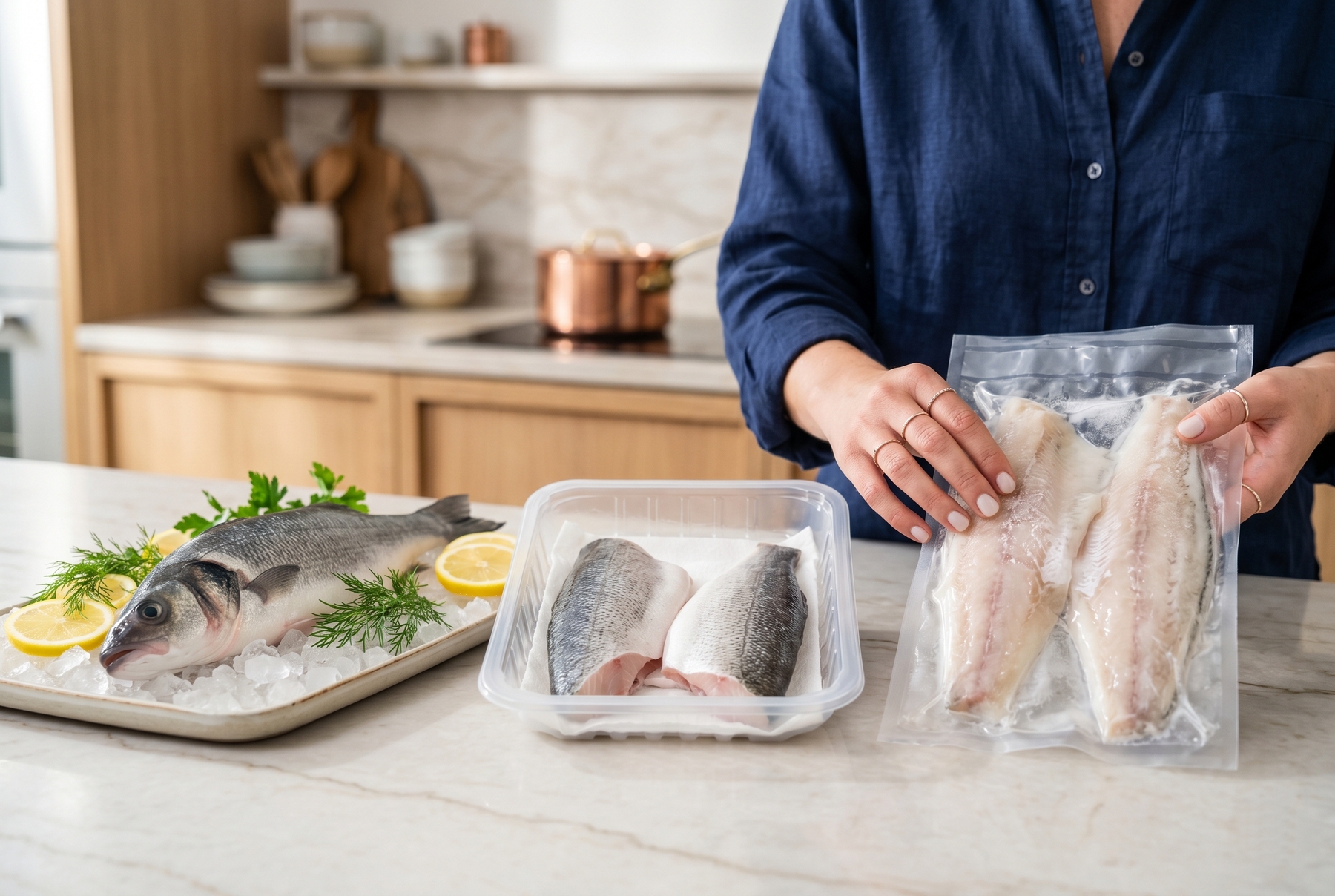
When choosing fillets or whole fish, pay close attention to the packaging and storage conditions, as this directly affects the freshness and flavor of your dish.
How to Choose Frozen Fish and Fillets
What to Read on the Packaging
The freezing date and expiration date are essential. Storage conditions matter. The net weight without glaze and the percentage of glaze (the ice crust) are usually listed, and your calculations should be based solely on the pure weight of the fish. Packaging integrity, country of origin, and species are critical details. Check for added water or stabilizers if the manufacturer lists them. Excess ice, frost, drips, and large crystals inside the package are reasons for concern, as they indicate improper storage or repeated thawing and refreezing.
When Frozen Fillets Are More Convenient Than Fresh
For weekday meals, frozen fillets often prove more practical than “fresh” ones from the display. Portion-controlled cuts, frozen individually, allow you to pull out exactly what you need. High-quality blast freezing frequently preserves fish better than sitting for 24 hours on melting ice in a store. For quick everyday dishes, this is a highly effective option with zero shame.
When a Whole Frozen Carcass Will Disappoint
A whole frozen fish demands much more effort. Defrosting is long and inconvenient. The belly might have sustained damage during freezing, but assessing this before purchase is impossible. Ice is often abundant. Most importantly, the true quality reveals itself only at home, when returning the fish is too late.
Storage and Safety: Fish Does Not Forgive Optimism
How Long Fish Lasts in the Fridge
Cooking chilled fish as quickly as possible is best, ideally on the day of purchase or the next. Keep it in the coldest zone of the refrigerator (near the back wall or in a zero-degree compartment if available), sitting on ice or on a plate covered with plastic wrap. Never leave it at room temperature longer than necessary. Exact timelines depend on the fish species, its initial freshness, and the refrigerator temperature, so relying on shelf life, temperature, and storage conditions is paramount. Smell and texture are not ways to determine if the fish can wait another day. They are spoilage signals: a sour or ammonia odor and mushy, cotton-like flesh mean the fish missed its chance at the stove.
Defrosting Without Heroics
Defrosting in the refrigerator, placed on the bottom shelf in a bowl to catch juices, is the slow but safe method. Radiators, microwaves on full power, or hot tap water cause the flesh to lose its juices and partially “cook” around the edges before even hitting the pan. Refreezing thawed fish is acceptable under only one condition: it thawed in the refrigerator and never left the safe cold zone. If it defrosted quickly (microwave, water, warm kitchen) or sat in warmth, a second freeze is out of the question; such fish must be cooked immediately. Even after a proper refrigerator thaw, secondary ice makes the texture crumbly, so freezing twice is best avoided unless absolutely necessary. Drying the carcass with a paper towel before searing is essential; otherwise, steam prevents a crispy crust from forming.
Raw Fish: A Separate Conversation
Sushi, ceviche, stroganina, or homemade lightly salted fish demand caution. Fish can harbor parasites, and standard home freezing rarely achieves the conditions required to reliably eliminate them (very low temperatures maintained for a specific time, which household freezers do not provide). For raw dishes, procuring fish specifically processed and labeled for this purpose is necessary. If a supplier recommends a fish, they must explicitly confirm it has been processed, stored correctly, and is suitable for raw consumption, rather than just calling it “fresh and good.” This is an area where consulting current health department recommendations is far wiser than hoping for the best.

Fresh fish must be kept in the coldest part of the refrigerator and cooked as quickly as possible to prevent quality loss.
Which Format Fits Which Dish
For Pan-Searing
Fillets are highly convenient: you just drop them in the pan. However, the skin helps the portion maintain its shape, making skin-on fillets easier to fry than bare flesh. Dense species (salmon, cod, zander) hold their structure much better than delicate fish, which tend to fall apart with a spatula’s movement.
For Roasting
Whole fish delivers incredible juiciness and a stunning presentation, whereas fillets win on speed. With an hour to spare and a desire for elegance, a whole carcass is ideal. When time is short, a fillet on a baking sheet with vegetables is the answer.
For Soups and Broths
Here, a whole fish or a bone set is vastly more logical than an expensive fillet. The broth’s profound flavor resides in the bones, head, and skin. Pure flesh contributes almost nothing. Buying a premium fillet just to make fish soup is wasteful, as you would discard the exact parts that create a rich stock.
For Patties, Pies, and Casseroles
Fillets are undeniably convenient. Yet, the trimmings from a whole fish, left over after the main dish, perform just as well in these applications. The resulting mince is firm, and you will notice no difference in taste compared to a premium cut.
For Children and the Bone-Averse
Fillets are clearly the more practical choice. Nevertheless, even a fillet requires a manual inspection for pinbones, which are frequently left behind. Running a finger against the grain, feeling for protruding tips, and extracting them with tweezers takes five minutes. That brief effort ensures a peaceful dinner, free from anxious inspections of every bite.
What to Choose at the Counter: Fillet or Whole Fish
Buy Fillets If…
- Speed is essential and dinner is for tonight;
- Precise portioning is required (one to two diners, a child, a lunchbox);
- You lack a sharp knife and butchering skills;
- The dish demands a clean, boneless cut (steak, roulade, fish dressed in sauce).
Buy Whole Fish If…
- You intend to roast it whole;
- You possess the skills and tools to butcher it;
- You prefer to assess freshness personally via the eyes, gills, and belly;
- You plan to utilize the bones and head;
- You are prepping multiple meals at once.
Walk Away Empty-Handed If…
- The smell is sharp or sour;
- The packaging is damaged and pools of liquid sit inside;
- The fish is resting in liquid;
- The eyes are cloudy and sunken;
- The belly is deteriorating;
- The seller evades simple questions about origin and storage.

The zero-waste culinary principle: a single fish can yield both a main dish of fish cakes and a rich foundation for soup.
The Building Block: Zero-Waste Whole Fish
Day One: The Main Course
Removing the fillets and preparing them as envisioned—roasted, pan-seared, or steamed—provides the primary dinner. Setting all remaining parts of the carcass aside preserves them for future use.
Day Two: The Broth
The spine, fins, and head (with the gills removed, as they impart bitterness and cloudiness) go into a pot with cold water, an onion, and a few peppercorns. A short simmer of 30 to 40 minutes is required; otherwise, the broth turns murky. The result is a foundational stock for chowder, fish soup, or a rich sauce.
Putting Leftovers to Work
The flesh scraps clinging to the bones and trimmings also find a purpose. Fish cakes, rillettes spread on crusty bread, fillings for crepes or savory pies, seafood pasta, or a rice bowl with vegetables are all excellent options. A single carcass easily stretches across three distinct meals, which is exactly when a “pricy” whole fish proves cheaper than any fillet.
The Final Verdict
Buying fillets is not merely a sign of laziness, and whole fish does not always guarantee savings. A genuinely smart purchase happens when everything aligns: the quality of the fish, the intended dish, the time available today, knife skills, and an honest utilization plan. A sea bass purchased whole and half-discarded costs far more than a fillet. A fillet bought for a stew you never cook rots in the refrigerator just like any whole carcass.
0 comments