
A fallen sponge cake is not a failure, but rather a piece of useful information. Something went wrong, and the system glitched. In restaurant kitchens, I have seen dozens of such stories: a pastry chef forgetting to turn off the convection, or an intern opening the oven door at the five-minute mark. Every time, the reason was specific, and every time, it could be explained.
A sponge cake relies not on luck, but on a precise chemical structure. Understanding what happens inside the batter allows you to control the result. Today, we examine the mistakes that turn an airy structure into a flat pancake, and we will learn how to avoid them. But first, we must explore what exactly happens in the oven while the sponge cake bakes and we peek through the glass.
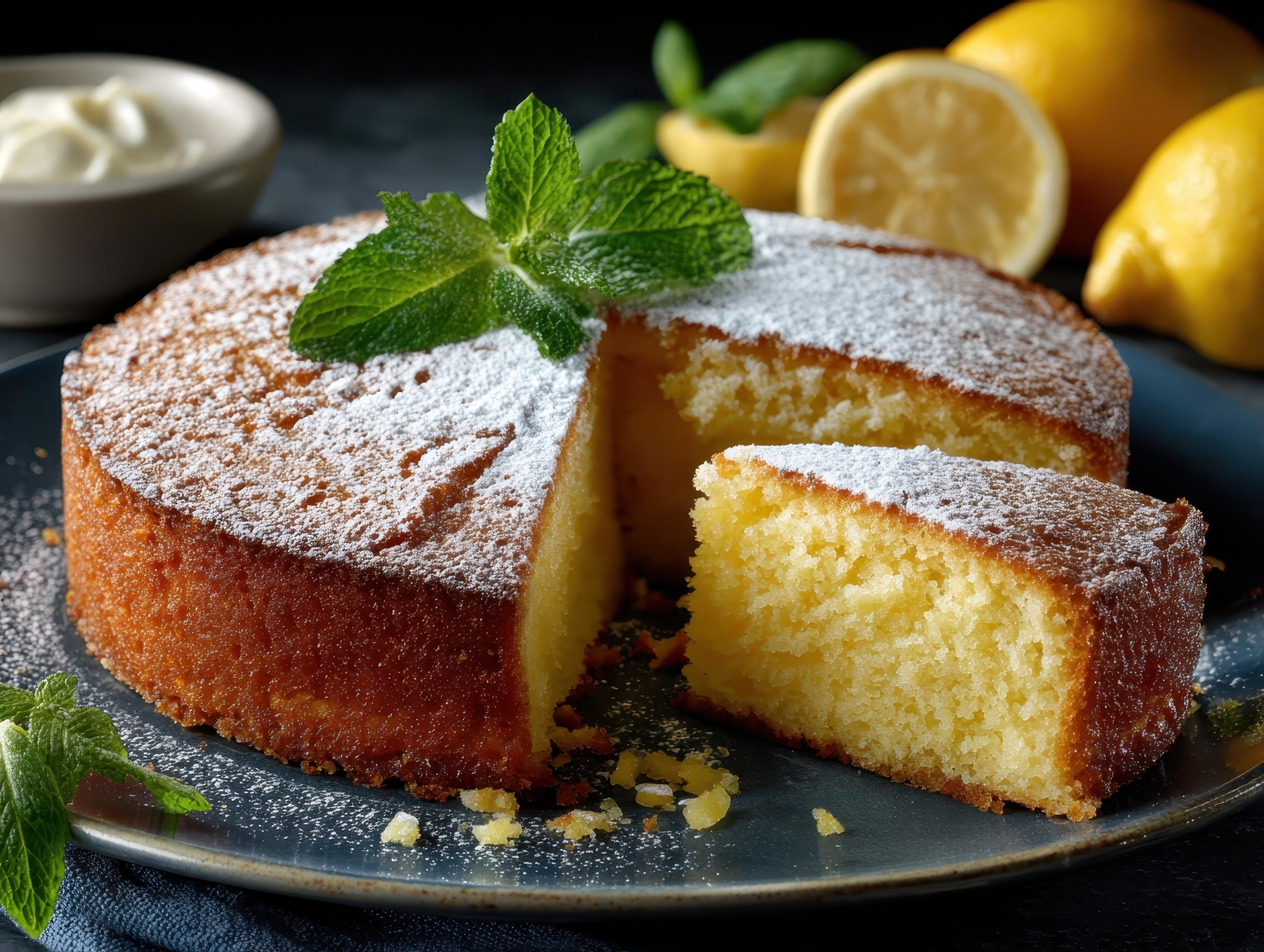
A perfect sponge cake—this is what the result looks like without any critical mistakes.
Table of Contents
What Happens Inside the Oven
While the sponge cake bakes, several parallel processes occur inside. The egg whites coagulate and form a framework—the very network that traps the air. The starch from the flour swells and reinforces the structure. Simultaneously, the heated air and water vapor expand, lifting the batter upward.
This is a highly fragile system. Until the proteins have fully set, any external interference can destroy the structure. Building a house of cards is a fitting analogy: until the upper tiers are secured, the slightest draft will bring everything down.
The starch in a sponge cake acts like cement. An adequate amount binds everything together. When there is too little, the structure remains weak, even if the protein framework looks decent. Therefore, proportions matter, which brings us to the first mistake.
Seven Main Mistakes
1. Under-Whipping
Whipping eggs with sugar serves the purpose of aerating the mixture and creating a stable emulsion. Stopping too early leaves the bubbles large and unstable. Such a foam cannot withstand the heat and will collapse right in the oven.
A properly whipped mixture should triple in volume, becoming thick and pale. Lifting the whisk should result in a ribbon that holds its shape for a few seconds. The focus here is not primarily on the mixer’s speed, but on the time: whipping usually takes 7 to 10 minutes on medium speed.
However, even a well-whipped mixture can fail if the eggs were at the wrong temperature.
2. Cold Ingredients
Eggs straight from the refrigerator whip poorly. Cold egg whites are less elastic, causing bubbles to form more slowly and unevenly. Consequently, the framework is weak, and the sponge cake fails to hold its shape.
Taking eggs out an hour before working is a standard practice. Forgetting this step can be remedied by submerging them in warm (not hot!) water for five minutes. Room temperature gives the egg whites the necessary fluidity, making the whipping process faster.
Speaking of fluidity, a common misconception is that more sugar guarantees a better rise. In reality, the exact opposite is true.
3. Excess Sugar
Sugar weighs down the batter. An excessive amount draws moisture out of the egg whites and prevents them from coagulating properly. The mixture becomes viscous and dense, allowing air to escape before the structure has time to set.
The classic proportion dictates about 30 grams (1 oz) of sugar per egg. Craving a sweeter dessert is better addressed by adding icing sugar (powdered sugar) to the icing or frosting rather than overloading the batter itself.
Even with perfect proportions, there is another detail that is easy to overlook.
4. Delaying the Bake
The whipped batter begins losing air the moment flour is folded in. The bubbles gradually burst, and the mixture deflates. Leaving the pan on the counter for 10 to 15 minutes will severely compromise the rise.
Preheating the oven in advance is crucial. Greasing the pan should happen before the whipping begins. Once the flour is incorporated, the pan must go straight into the oven. Pauses are simply not an option.
Now the batter is in the oven. The hardest part begins here: doing absolutely nothing.
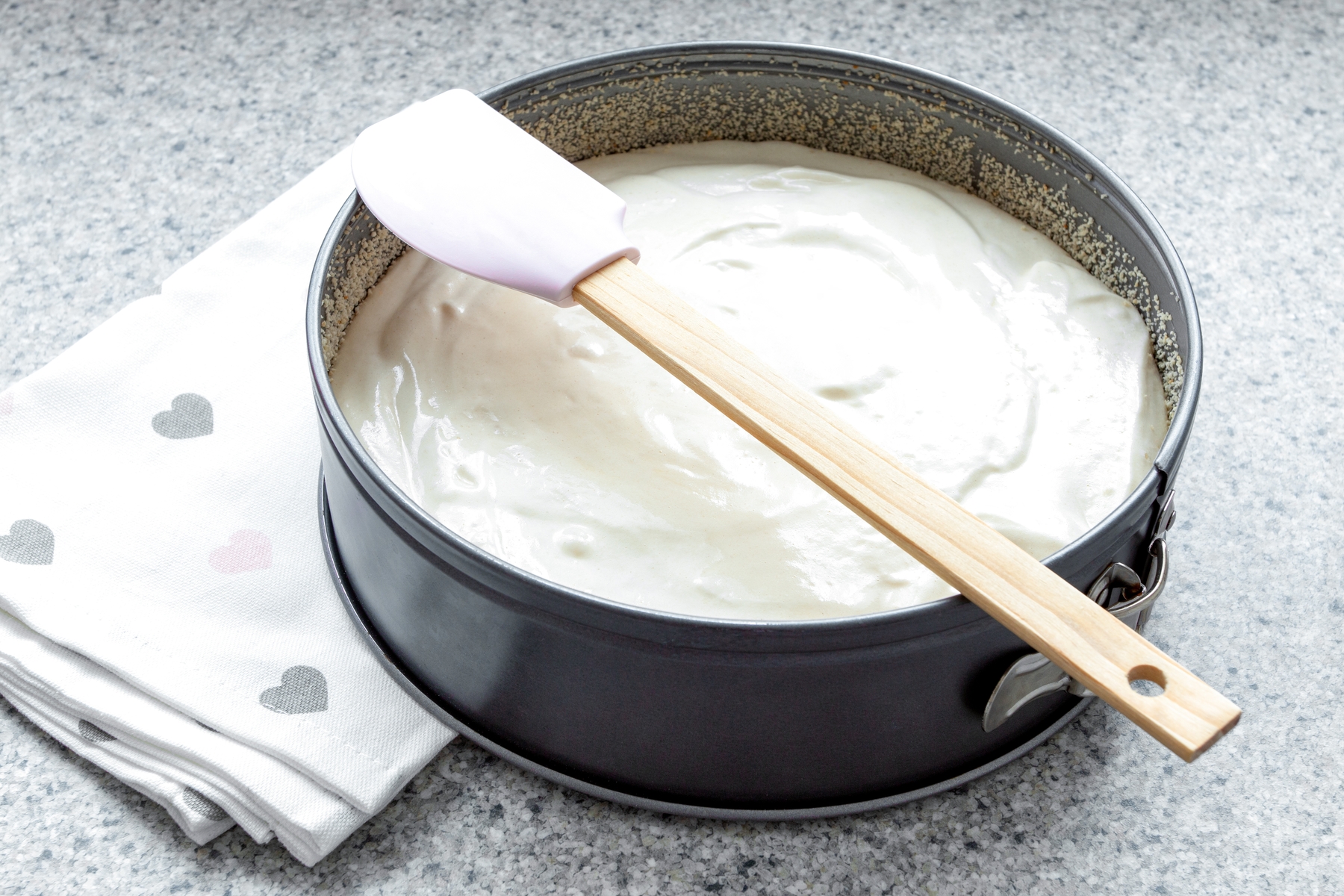
Sponge cake batter in a pan: skipping delays and sending it straight into the oven.
5. Opening the Oven Door Too Early
Until the proteins have set, the sponge cake relies entirely on hot air and internal pressure. Opening the door lets cold air in, causing the pressure to drop and the batter to collapse. It is elementary physics.
The oven door must remain untouched for the first 20 to 25 minutes, no matter how tempting it is to check. Utilizing the oven light is the best approach here. The door can only be opened to check for doneness once the surface has started to brown and no longer looks wet.
However, checking should be done methodically, not just by eye.
6. Baking by Eye
Cups and spoons perform poorly because ingredient densities vary. One cup of flour can weigh anywhere from 120 to 140 grams (4.2 to 4.9 oz) depending on how it was scooped. This variance is critical because it disrupts the balance between the protein framework and the starch, which was discussed earlier.
A kitchen scale resolves this issue completely. Weighing everything—eggs, flour, and sugar—guarantees a consistent result every single time. An internet recipe might be average, but precise measurements ensure accurate replication of the proportions.
Finally, there is one last thing that can ruin everything even after the sponge cake is fully baked.
7. Rapid Cooling
A freshly baked sponge cake is a structure that has not yet completely hardened. Removing it from the pan immediately or placing it on a cold surface can cause the structure to fail against the sudden temperature drop, leading to a collapse.
Taking the sponge cake out of the oven but leaving it in the pan for 10 minutes is the best practice. After that, it should be carefully transferred to a wire rack to cool gradually, without stress.
Now that it is clear where exactly things fall apart, it is time to discuss the numbers that help control the process.
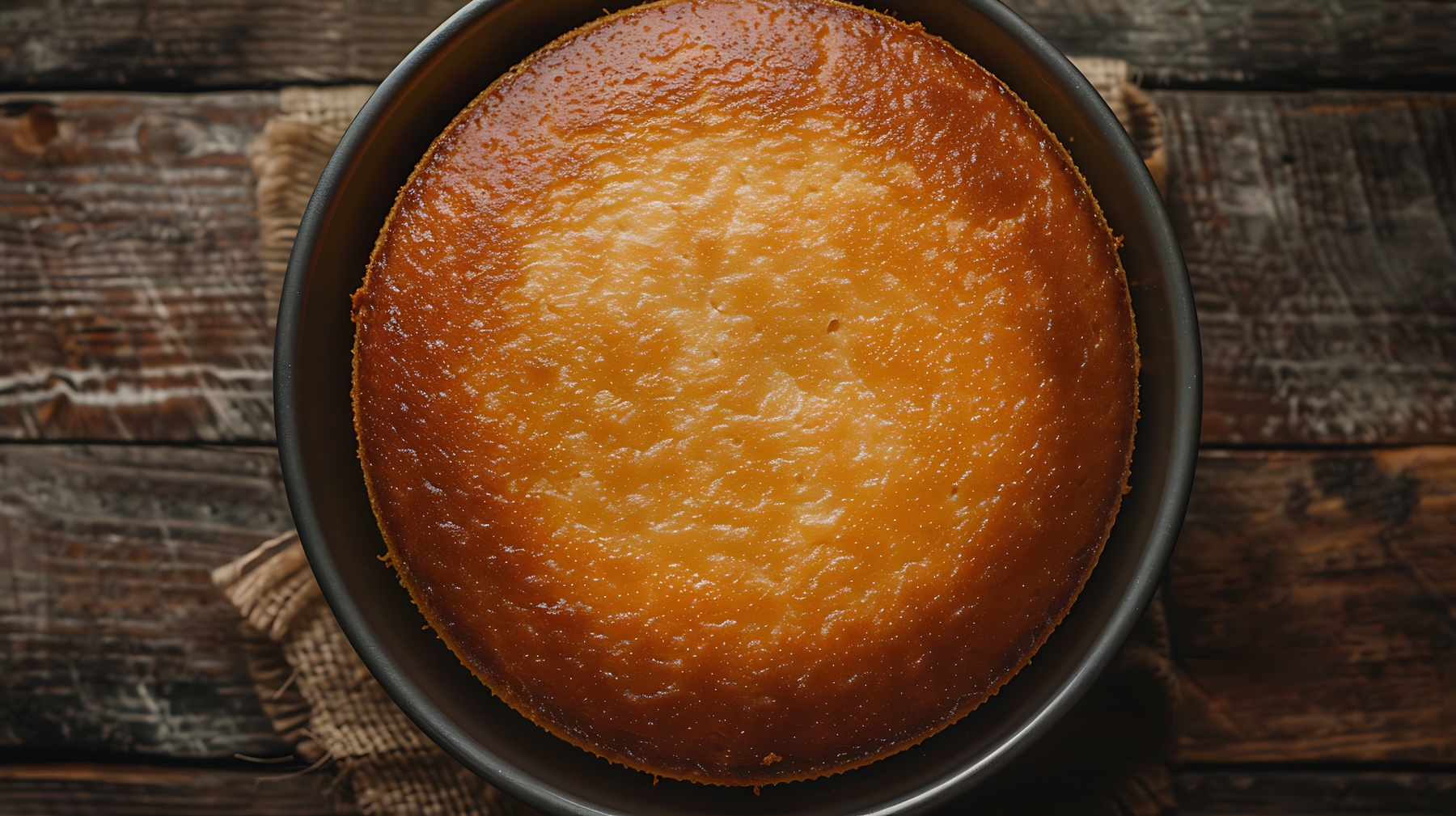
A fresh sponge cake is not fully stable yet: rapid cooling or early removal can lead to a collapse. Taking it out of the oven and leaving it in the pan for 10 minutes is essential.
Target Parameters
Sponge cake thrives on precision. Here are a few numbers that help keep the process under control.
Oven Temperature: 170–180°C (340–355°F). Since most home ovens heat unevenly, placing an oven thermometer inside and checking the real readings is highly recommended. Convection speeds up the process but can dry out the top while the center remains raw. Using the conventional top-and-bottom heat setting is generally more reliable.
Internal Temperature of a Baked Cake: 94–98°C (201–208°F). Utilizing a probe thermometer by inserting it into the center provides an exact reading. If it is below 94°C (201°F), the cake stays in for another couple of minutes. Anything above 98°C (208°F) means it is starting to dry out.
Visual Test: Gently pressing a finger into the center of the cake is a classic method. If the surface springs back, it is ready. If an indentation remains, it needs more time.
These parameters are linked to the processes discussed at the beginning. Proteins coagulate at a specific temperature, starches stabilize, and air expands. When all this happens in the correct order and under the right conditions, the sponge cake turns out perfectly. When something goes wrong, the table below will help diagnose the issue.
Troubleshooting: A Checklist
| Symptom | Possible Cause | How to Fix It Next Time |
|---|---|---|
| Sank in the center | Underbaked (internal temp < 94°C/201°F) | Use a probe thermometer |
| Collapsed right after baking | Weak protein framework | Whip eggs and sugar longer |
| Too dense | Flour mixed too aggressively | Use the folding technique |
| Crust is too dark, center is raw | Oven temperature above 180°C (355°F) | Lower the heat, increase baking time |
| Rose unevenly | Uneven oven heating | Rotate the pan only after the structure has set (around 20 to 25 minutes) |
If the Sponge Cake Still Fell
Throwing it away is completely unnecessary. A fallen sponge cake makes an excellent base for a trifle: dicing it into cubes, soaking it with syrup or liqueur, and layering it with cream and berries breathe new life into the dessert. Alternatively, crumbling it, mixing it with melted chocolate, and rolling it into cake pops works beautifully. Another option involves drying it in the oven at 150°C (300°F) until crisp and using it as an ice cream topping.
In a restaurant setting, “failed” prep components are almost never discarded. The purpose is simply shifted. This is not a compromise, but a different logic in utilizing the product.
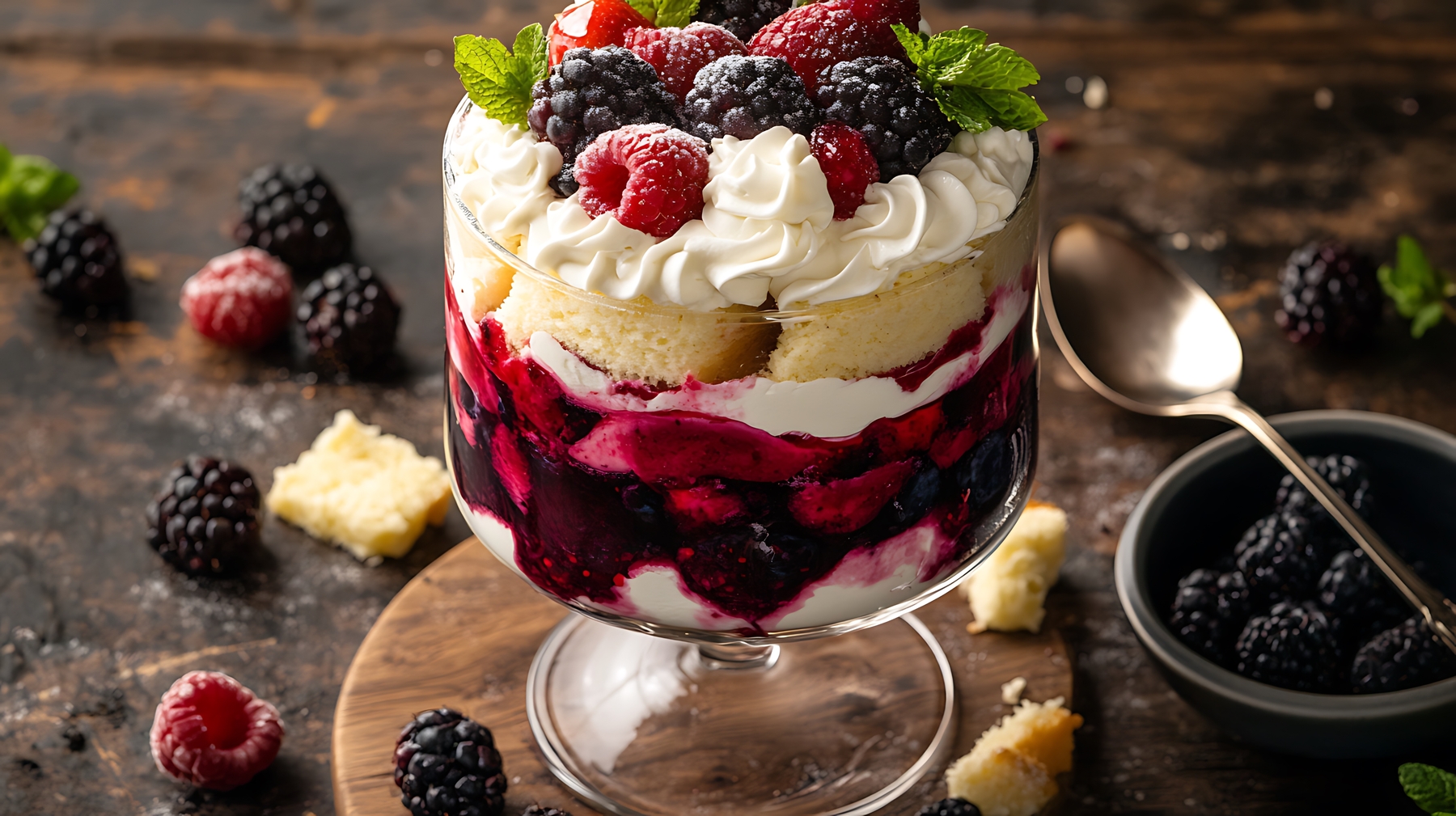
Transforming a fallen sponge cake into a trifle involves cutting it into cubes, soaking it with syrup or liqueur, and alternating layers with cream and berries.
How to Evaluate Sponge Cake Quality in a Restaurant
Ordering a dessert and evaluating the pastry chef’s work starts with looking at the texture of the slice. A sponge cake made with real eggs is always slightly uneven: the air bubbles vary in size, and the structure looks alive. Commercial mixes yield perfectly uniform pores, almost like a kitchen sponge. Neither is inherently better or worse; it just represents a different technology.
Another marker is moisture. A good sponge cake should never be dry, nor should it stick to the fork. Sensing a slight oiliness (even though there is no butter or oil in the recipe) usually means emulsifiers were used for stability. Again, this is a matter of approach rather than pure quality.
Baking a sponge cake stops being a lottery once the logic of the process is understood. Whipping, temperature, and timing are all manageable parameters. Mistakes happen, but they are entirely predictable. And every subsequent attempt makes the technique more precise.
0 comments