
Buying a jar of miso for a single bowl of soup, only to have it look at you sadly from the refrigerator door, is a common scenario. Rushing to throw it away is a mistake: this is not just a “soup base,” but a secret ingredient for quick flavor elevation. This umami concentrate turns an ordinary dinner into a dish with profound depth.
Realizing this a few years ago while roasting salmon changed everything. Finding myself without soy sauce, I simply brushed the fillet with leftover miso from a forgotten jar. The result was so successful that miso now occupies the most prominent spot in my kitchen. The fish emerged with a caramelized crust, tender inside, boasting that irresistible “just one more bite” flavor that previously required hours of marinating.
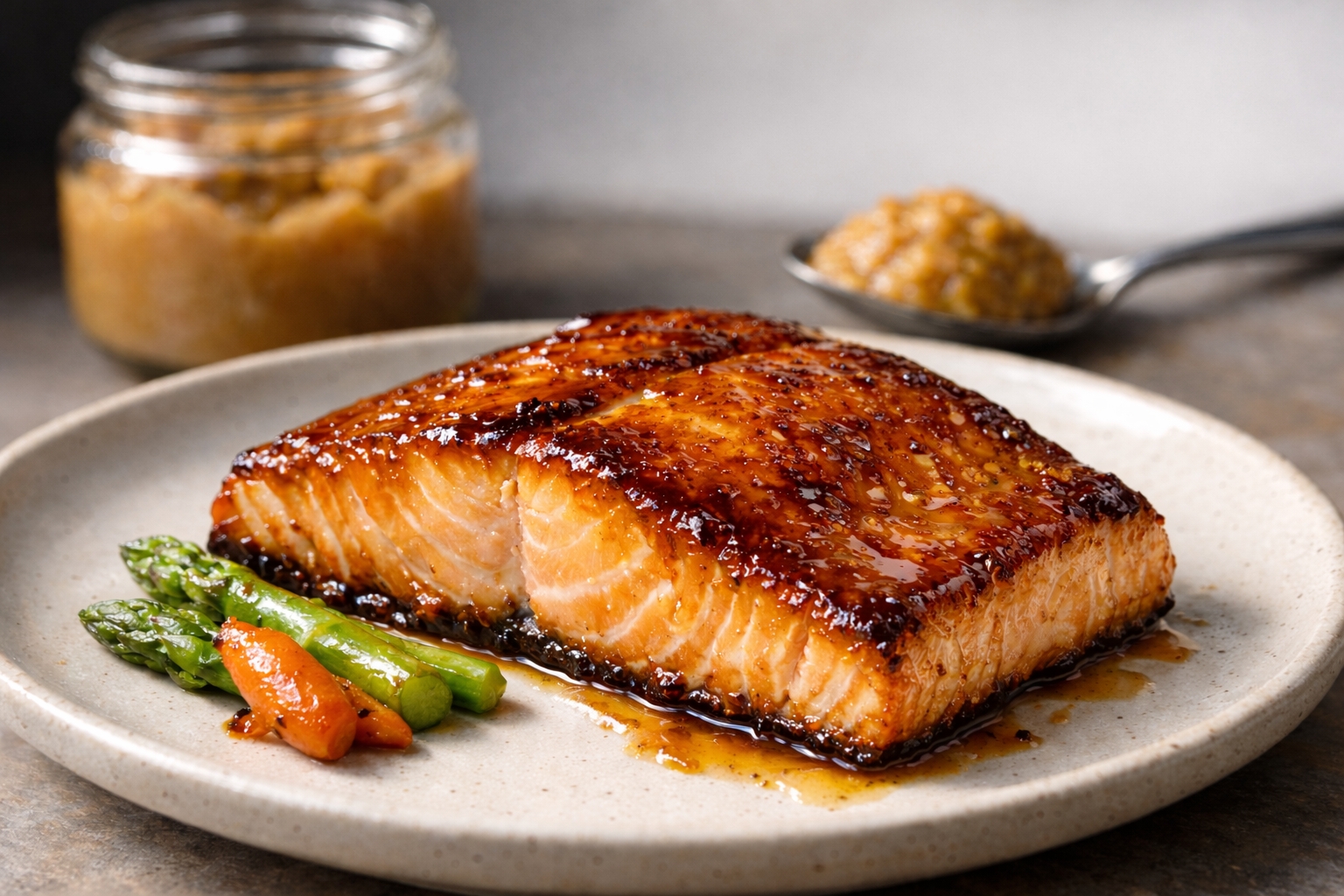
Miso provides that signature “lacquered” effect: the amino acids and sugars in the paste accelerate the Maillard reaction, yielding fish that is juicy inside and glossy outside.
The secret of miso paste lies in the months-long fermentation of soybeans with rice or barley. This process generates free amino acids, primarily glutamic acid, which is responsible for the umami flavor. This fifth basic taste makes food rich and complete. Adding natural saltiness, a slight sweetness, and the ability to amplify accompanying ingredients means one component solves three tasks simultaneously: salting, deepening flavor, and creating a crust when roasting.
Understanding how this paste works through flavor chemistry (without being boring), why boiling it is a bad idea, how to distinguish a quality product from a mediocre one, and what to do if the required type of miso is unavailable is essential. Exploring specific techniques from marinating to emulsifying sauces, and creating a substitution cheat sheet, will follow. Finishing this article means you will start incorporating miso into vegetable salads, meat glazes, and even caramel sauce for ice cream. Does it work? Absolutely.
The Physics of an Appetizing Crust: How Miso Replaces Salt and Sugar
The fungus Aspergillus oryzae, known in Japan as koji-kin (used to inoculate grains to make koji, a traditional fermentation starter), is responsible for miso’s flavor. It sounds suspicious, but it transforms plain boiled soybeans into a powerful umami bomb, functioning much like Parmesan, but in the legume world.
The process is fairly straightforward: the fungus secretes enzymes—proteases and peptidases—that break down long protein chains into short peptides and individual amino acids. Glutamic acid plays the main role here, providing that intense flavor impossible to replicate with ordinary salt. A finished paste can contain several percent of free glutamate by total weight, matching the levels found in aged Parmesan or sun-dried tomatoes.
Simultaneously, the fungus breaks down carbohydrates from rice or barley, resulting in simple sugars: glucose, fructose, and maltose. These impart a characteristic sweetness to the miso and, during cooking, trigger the next crucial process, known as the Maillard reaction.
The Maillard Reaction: Why Miso Glaze Yields the Best Crust
The Maillard reaction occurs when proteins meet sugars at high temperatures, initiating chemical magic. Recalling the smell of toasted bread or the crust on a steak perfectly illustrates this.
Brushing chicken with a miso glaze and sending it to the oven at 200°C (390°F) allows the amino acids from the paste to react with the sugars. Hundreds of new flavor and aromatic compounds form: melanoidins (providing color), pyrazines (nutty notes), and furans (caramel aroma). The entire kitchen fills with a mouthwatering scent before the dish is even ready.
Testing this dozens of times proves that chicken thighs with miso always develop a more pronounced lacquered crust than simply salted ones. The secret lies not in the sugar quantity (miso contains less than honey), but in the amino acids catalyzing the process. Roasting at 200-220°C (390-430°F) until the internal meat temperature reaches 74°C (165°F) guarantees juiciness inside and a crunch outside.
The same principle applies to vegetables. Eggplants (aubergines), pumpkins, or carrots, brushed with miso before roasting, acquire a depth of flavor that would otherwise require long caramelization or braising.
Umami Synergy: When One Plus One Equals Five
Interestingly, glutamate is amplified in the presence of other nucleotides, such as inosinate (found in meat and fish) and guanylate (in mushrooms). This perfectly explains why miso works so beautifully in combined dishes. Incorporating the paste into a pork marinade multiplies the meat’s umami with the miso’s umami. Creating a dressing for a mushroom salad produces the same effect.
The resulting flavor is not merely saltier, but voluminous and multi-layered, as if the dish acquired a depth of field. This works on a chemical level, not through intuition, and understanding this mechanism alters one’s approach to cooking.
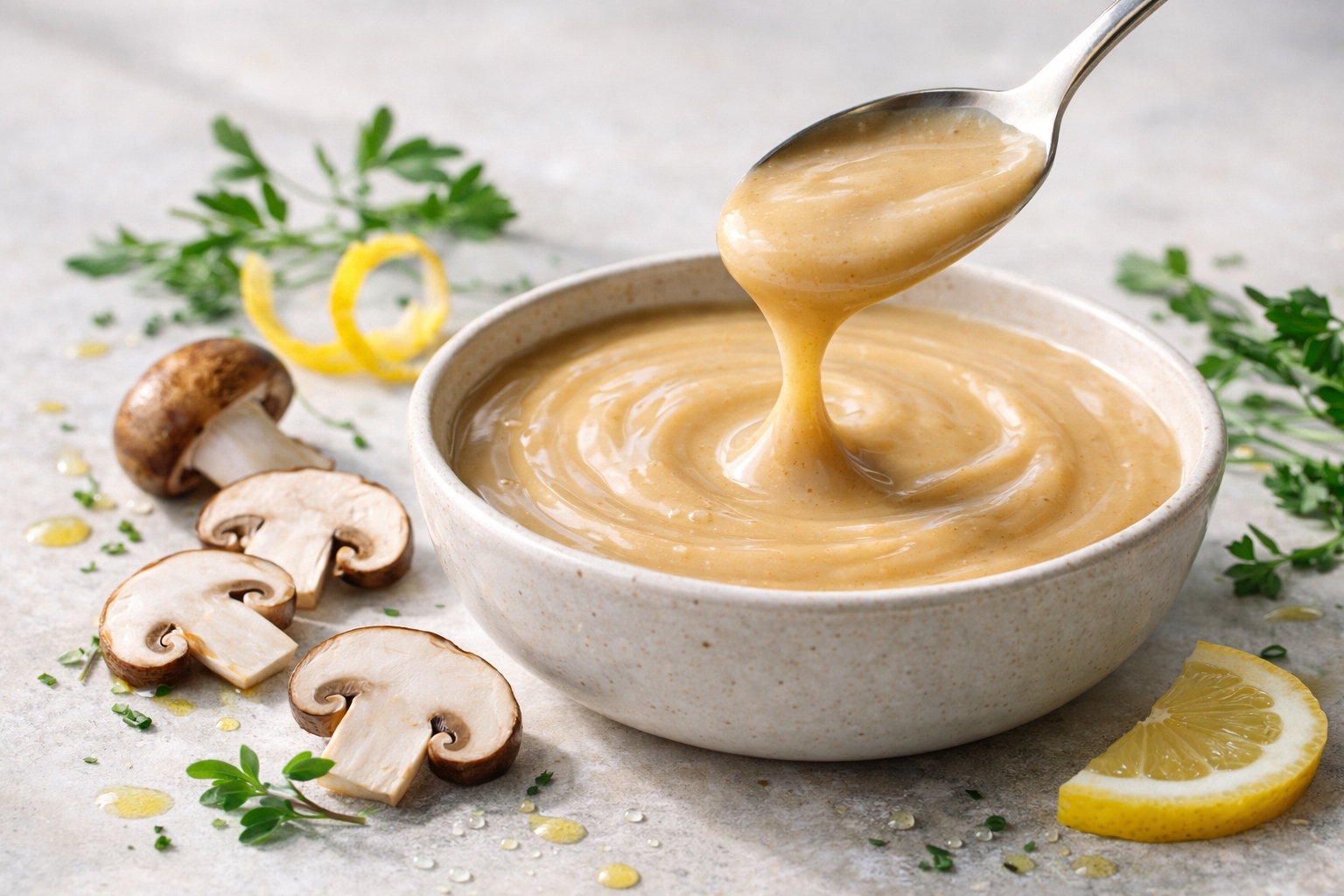
A cold miso dressing amplifies the umami of mushrooms: thinning the paste and incorporating acid and oil creates a thick sauce entirely distinct from “just salty” flavors.
How to Work With Miso: Rules That Cannot Be Ignored
Miso is a living product, meaning it requires careful handling to preserve both flavor and health benefits.
The Golden Rule: Do Not Boil
Boiling miso is highly discouraged. Temperatures exceeding 60-70°C (140-160°F) kill the live bacteria and yeast that continue to slowly transform the paste’s flavor even in the refrigerator. While the paste will not spoil, it will lose those subtle floral, fruity, or nutty notes that distinguish a quality miso from a mediocre one.
When making soup, dissolving the miso in a small amount of warm broth in a separate bowl is the best approach. Removing the pot from the heat once the main broth is ready, and only then adding the dissolved paste, preserves its qualities. For cold sauces and dressings, this issue naturally does not arise.
However, roasting operates on a different principle. Here, high temperatures are intentionally utilized for the Maillard reaction, and the loss of probiotics is compensated by the flavor gain, that caramel crust that makes the sacrifice worthwhile.
Accidentally boiling miso is not a disaster. The dish will not be ruined; it will simply become slightly more one-dimensional in taste. Taking the pot off the heat earlier next time easily solves this.
Visual Markers: How to Avoid Mistakes in the Store
Miso varies in color, texture, and fermentation time, and these parameters reveal much about its flavor.
Shiro Miso (White Paste) possesses an ivory or light buckwheat honey color. Fermented for a short period, from a few weeks to a couple of months, it contains more rice and less soy. The resulting flavor is mild, slightly sweet, with low saltiness. The texture is smooth, almost creamy, resembling thick sour cream. Utilizing it for light dressings or marinating white fish works perfectly when aggressive saltiness is unneeded.
Shinshu Miso (Yellow Paste) ranges from light brown to amber and represents a middle ground across all parameters: fermentation takes about a year, striking a balance between sweetness and saltiness. When a recipe simply calls for “miso” without specifics, it usually refers to this type. The texture may be slightly grainy due to partially undissolved soy particles, which is completely normal. It acts as a versatile workhorse for most culinary tasks.
Aka Miso (Red Paste) is colored like dark chocolate or mahogany. Fermentation lasts from one to three years, featuring a higher soy and lower rice content. The flavor is intense, salty, and almost meaty. The texture is dense, viscous, and sticky, pulling from the spoon like peanut butter. It suits dishes requiring a powerful flavor base: thick soups, beef glazes, and rich noodle sauces.
What to Look For in the Store
A high-quality paste does not have to be perfectly homogeneous. Slight graininess and darker patches serve as signs of traditional production. An overly smooth consistency, like cream from a tube, often indicates industrial processing with stabilizers.
Smell: Clean, fermented, but not harsh. A paste smelling like aged cheese with light notes of salted chocolate is a great sign. Detecting ammonia or mustiness indicates a defective product that should be avoided.
Ingredients: Classic miso contains three to four components: soybeans, grains (rice, barley, or wheat), salt, and koji starter. Sometimes water is added, and that is it. Finding more than five items on the ingredient list, especially preservatives, artificial colors, or flavor enhancers, points to a product of questionable quality. Authentic miso requires no preservatives because its high salt content and natural acidity inherently prevent spoilage.
Storage: Keeping miso in the refrigerator in a tightly sealed container is essential. The paste can be stored for months, slowly darkening and developing a deeper flavor, which indicates continuous fermentation rather than spoilage. The only taboo involves letting water inside the jar, so using a dry spoon prevents the development of unwanted bacteria.
Bonus: Miso stores excellently in the freezer, never freezing completely due to its high salt content, and remains pliable. Scooping it with a spoon straight from the freezer is convenient for infrequent use. Freezing does not sterilize the product: the microflora simply “falls asleep,” and the enzymes become nearly inactive.
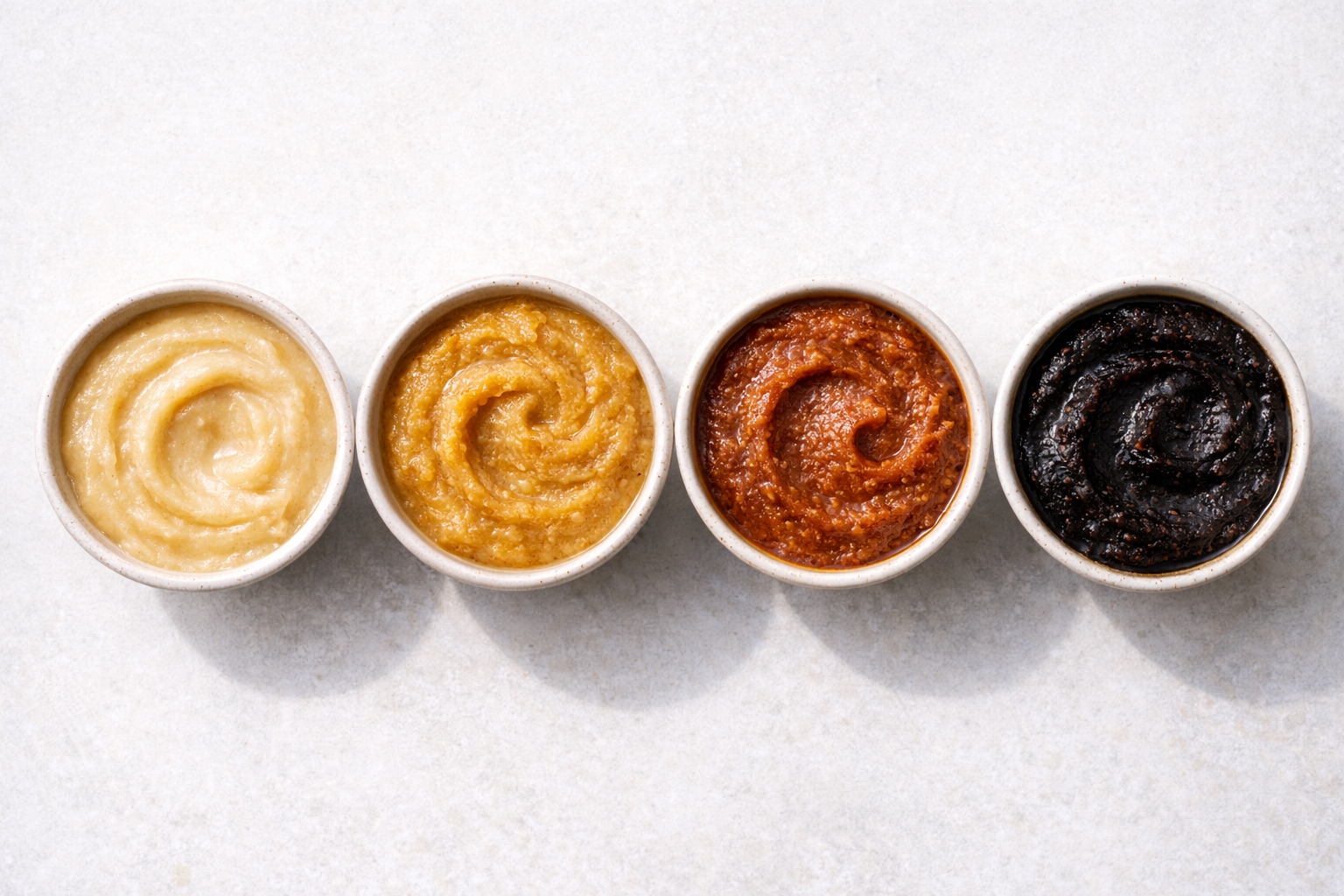
Color acts as a quick guide: a darker miso indicates a longer fermentation period and a more robust salty-umami flavor profile.
White, Red, Amber: Choosing Paste by Color, Not by Label
| Miso Type | Flavor and Application | Substitute |
|---|---|---|
| Shiro (White)
Color: Light buckwheat honey Fermentation: 2-8 weeks |
Sweet, low saltiness. For white fish, salads, light soups | Light soy sauce + honey, or white tahini + salt |
| Shinshu (Yellow)
Color: Amber Fermentation: 6-12 months |
Balanced, medium saltiness. For chicken, pork, root vegetables | Regular soy sauce + a spoonful of honey |
| Aka (Red)
Color: Dark chocolate Fermentation: 1-3 years |
Intense, high saltiness. For beef, mushrooms, thick broths | Soy sauce + anchovy paste or Worcestershire sauce |
| Hatcho (Soybean)
Color: Almost black Fermentation: 2+ years |
Very salty, slightly bitter. For braised meat, grill marinades | Red miso + a drop of balsamic vinegar |
This table serves as a guideline, not a strict law. In reality, the boundaries between types are blurred because Japanese manufacturers produce dozens of variations. However, understanding the basic logic suffices for everyday cooking: light miso works where delicacy is needed, while dark miso suits situations requiring robust power.
The Main Trick: Mixing different types of miso together is completely acceptable. Having only dark paste when a recipe requires a light one simply means diluting the aka miso with water and adding a pinch of sugar. It is not perfect, but it works. Conversely, if shiro seems too mild, incorporating a little soy sauce fixes it.
The substitutions in the table represent a compromise, not an exact match. Soy sauce provides saltiness and a bit of umami, but it will not replicate the complexity of a fermented product. Anchovy paste adds depth, although it shifts the flavor profile toward fish. Utilizing these options when miso is unavailable is fine, keeping in mind that the result will differ.
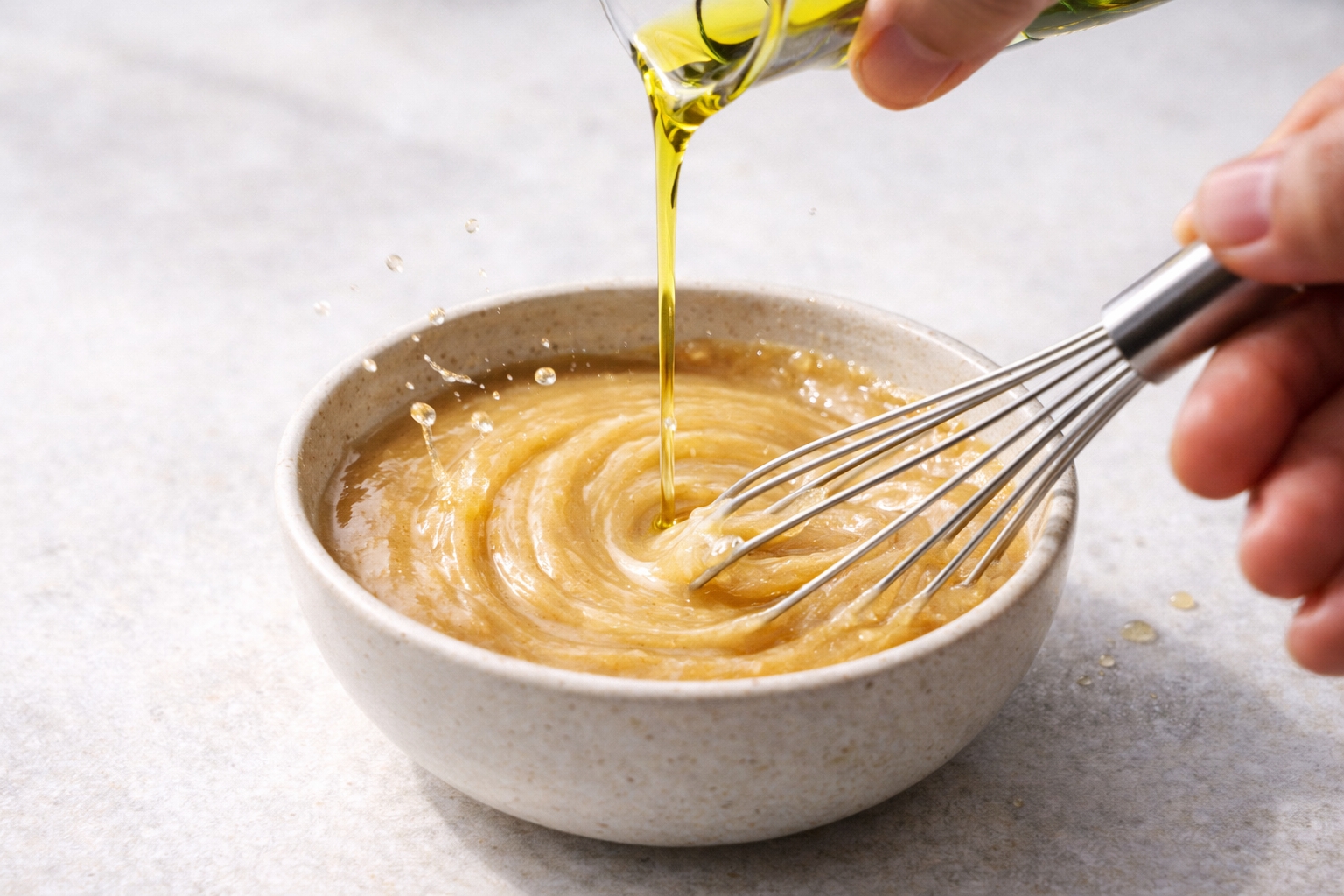
A reliable method: thinning the miso with a small amount of liquid first, then gradually whisking in the oil guarantees a stable, lump-free sauce.
Multifaceted Miso: From Smart Marinade to Salted Caramel
Miso ceases to be merely an ingredient once approached as a flavor builder. A few basic techniques transform this paste into the foundation for dozens of dishes, starting with the simplest one.
Miso Butter: The Universal Finish
The easiest way to expand miso’s application involves mixing it with fat. Taking softened butter at room temperature, adding one tablespoon of miso per 100 grams (3.5 oz) of butter, and mashing it with a fork until smooth creates a wonderful compound butter. Incorporating minced garlic, lemon zest, or finely chopped herbs adds extra dimension. Rolling it into a log, wrapping it in parchment, and chilling it in the refrigerator prepares it for use.
This serves as a universal finish: placing a piece on a steak, baked fish, boiled corn, or simply on a piece of toast works wonders. Fat dissolves the flavor molecules and distributes them evenly, while the miso’s umami combined with the butter’s dairy notes creates a richness unattainable with plain salt.
The exact same logic applies to olive oil. Mixing miso with oil, a splash of rice vinegar, and a drop of sesame oil yields a dressing that elevates any vegetable salad to a new level.
Emulsification Technique: Simply adding miso to oil causes the paste to remain undissolved and settle in clumps. Starting with a small amount of liquid (water, broth, or vinegar), thinning the miso to the consistency of runny sour cream, and then gradually pouring in the oil while constantly whisking with a fork prevents this. The resulting emulsion remains stable without separating.
The ratio goes like this: taking three to four parts oil to one part miso achieves a mild flavor, while a one-to-two ratio provides a more aggressive profile.
Marinades and Glazes: For Meat, Fish, and Vegetables
Miso becomes an excellent base for marinating proteins because the amino acids in the paste partially break down muscle fibers, rendering meat or fish more tender.
Basic Recipe: Two tablespoons of miso, one tablespoon of mirin (or white wine with a pinch of sugar), and a teaspoon of grated ginger. Coating chicken thighs or a salmon steak with this mixture, leaving it in the refrigerator for a couple of hours (or overnight), and then roasting it delivers great results.
Important Note: Avoiding extra salt on the meat is crucial because miso itself contains plenty of salt, and additional seasoning will ruin the dish. Utilizing light miso for marinades exceeding 12 hours is advisable, as dark miso imparts an overly intense flavor during prolonged contact.
Adding honey or maple syrup to the basic mixture creates a beautiful glaze. Sugars caramelize faster and provide a glossy crust. Applying the glaze 10-15 minutes before the dish is done ensures it sets without burning.
Reviving Ingredients
Miso functions perfectly as a quick brine for leftover vegetables. Reviving wilted carrots simply requires dissolving 1 tablespoon of miso in a glass of water and adding 1 teaspoon of vinegar. Submerging carrots, radishes, or cucumbers in the jar yields a fragrant, crunchy side dish within 24 hours. While not pickles in the traditional sense, they are quite impressive.
Leftover Hack: The miso stuck to the bottom of the jar can be utilized for a quick broth. Pouring boiling water over the paste, adding dried seaweed or mushrooms, and letting it steep for five minutes works perfectly. This creates a soup base or a cooking liquid for rice, as grains cooked in such broth acquire a light umami background, making them a fantastic side dish for simple proteins.
Furthermore, miso performs brilliantly in desserts. Incorporating half a teaspoon of light miso into caramel sauce (heavy cream (or double cream) + sugar + butter) transforms it. The saltiness highlights the sweetness, while the umami adds depth. Trying this reveals a true flavor explosion.
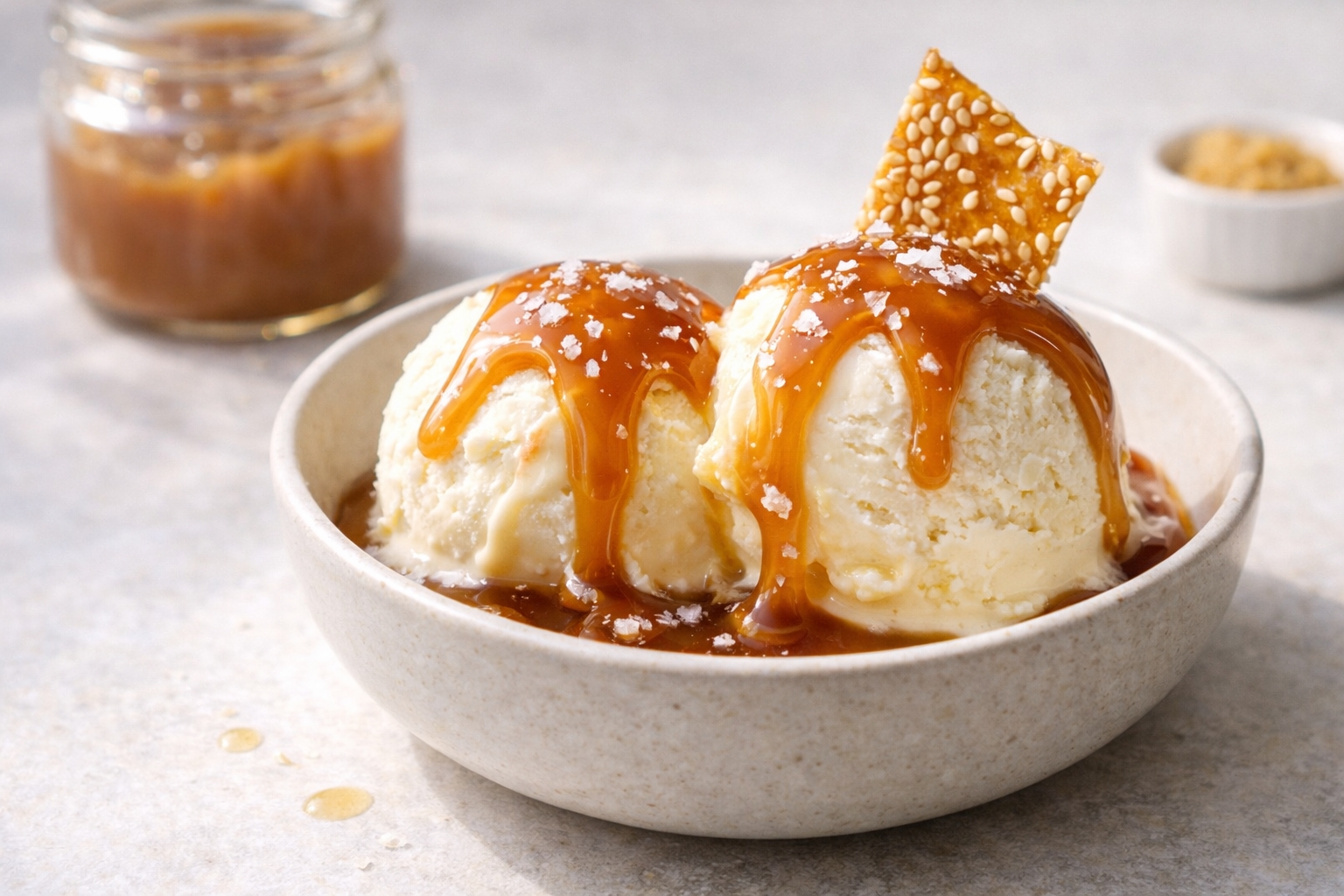
Adding half a teaspoon of light miso to caramel deepens the flavor: the saltiness accentuates the sweetness, while the umami provides a sophisticated complexity.
Miso Outside the Home: What to Look For in Store-Bought Sauces
Carefully reading the ingredient list when purchasing ready-made miso sauces or dressings at the supermarket is essential. Often, mixtures of soy sauce, sugar, and caramel coloring containing merely two or three percent of actual fermented paste are sold under the guise of miso sauce.
Looking for the words “fermented soybeans” or “koji” at the beginning of the ingredient list is key. Seeing water or sugar listed first indicates an imitation.
A similar story unfolds in restaurants because high-quality miso is expensive, prompting many establishments to cut corners. The hallmark of genuine miso lies in its flavor complexity. Discovering a dish that is merely salty, lacking multi-layered depth, likely points to plain MSG or soy sauce. Good miso simultaneously delivers saltiness, a slight sweetness, a barely perceptible tang, and nutty notes.
Miso is not an exotic novelty, but a practical tool for everyday cooking. Understanding the chemistry of the process, basic techniques, and visual quality markers transforms that “lonely jar” in the refrigerator into an ingredient utilized several times a week. From dressings to glazes, and marinades to quick broths, the paste accomplishes the task of creating deep flavor where previously hours of reducing broths or combining spices were required. Ready to try it?
0 comments