
Open the spice cabinet in an average home kitchen, and you will almost always find the same things. Cinnamon in a jar from 2019 with a petrified lump at the bottom. An ‘All-Purpose’ seasoning with a vague ingredient list where salt takes the first spot. Turmeric with a sun-bleached lid, bought once for a curry and never touched again. A bay leaf in a packet that has survived a move and two renovations.
Quantity is not the main priority here. Randomly accumulating jars serves little purpose. Every jar landed on the shelf for a reason: one was bought for a specific recipe, another brought from a market, a third grabbed at the supermarket on a whim. The spice collection exists, but it offers little real value.
On a functional shelf, every spice serves a distinct purpose: pepper provides heat, paprika brings color, cumin and coriander deliver a dry, warm aroma. Relying on seven spice jars you actually use is significantly better than keeping twenty random ones.
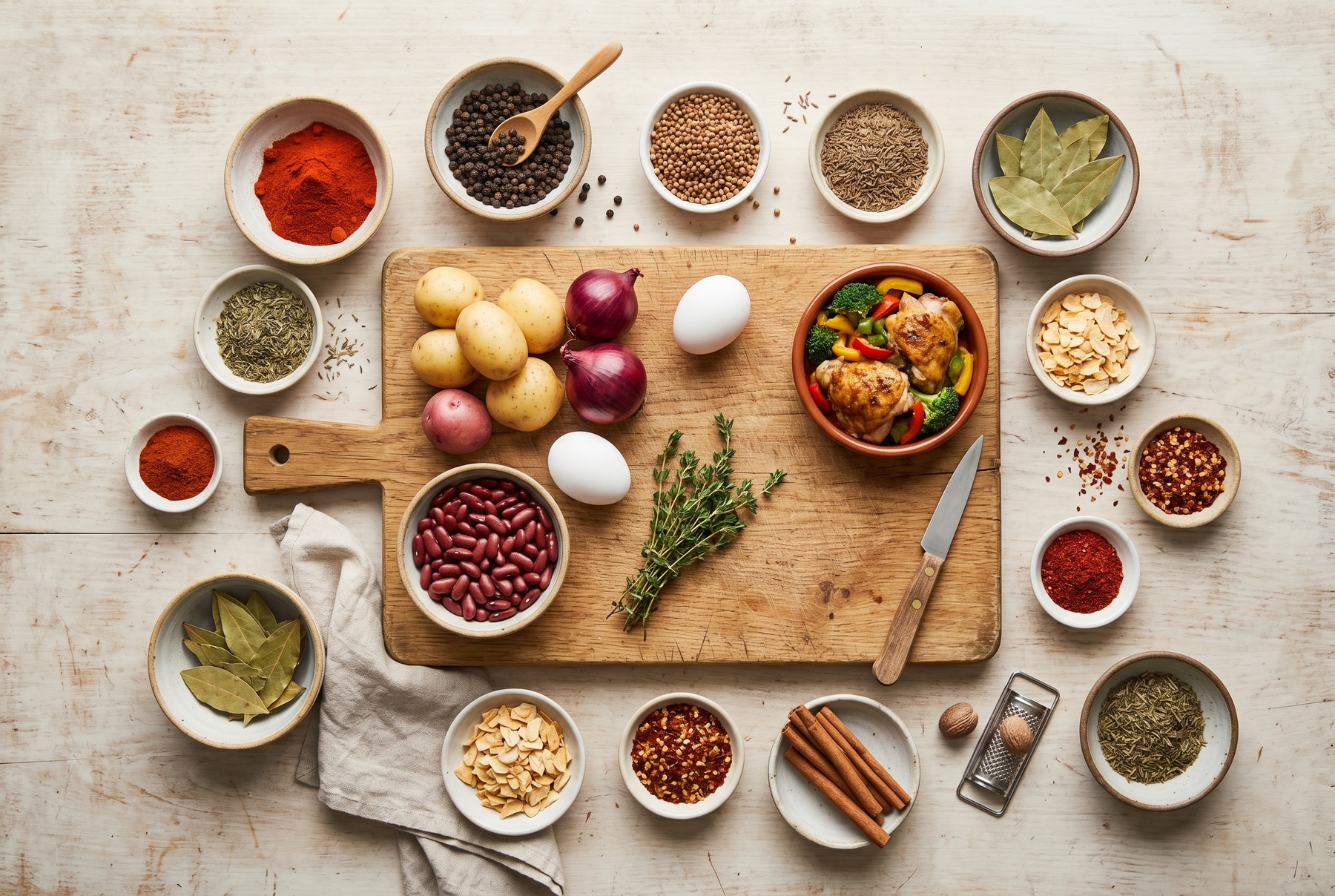
A thoughtfully curated spice collection forms the foundation for building deep, rich flavors in the simplest homemade meals.
Table of Contents
- Every Spice Has Its Job
- Determining If You Need a Spice at All
- 10 Essential Spices for Most Homemade Dishes
- The Second Tier: Additions to the Basic Set
- Pre-Made Blends: When They Help and When They Fail
- Curating a Spice Set for Your Real Kitchen
- Where Spices Perform Best
- Recognizing When a Spice Has Expired
- Storage Strategies to Prevent Throwing Spices Away Every Six Months
- The Minimal Spice Kit for a New Kitchen
- The Most Common Mistakes
- A Well-Stocked Spice Shelf Speeds Up Cooking
Every Spice Has Its Job
When recipes advise adding ‘spices to taste,’ the guidance is rarely helpful. Everyone’s palate differs, dishes demand specific profiles, and a pinch of oregano in borscht (a traditional Eastern European sour soup made with beetroots) will neither save nor ruin it. The flavor profile simply shifts in an unintended direction.
Black pepper delivers sharpness and a final accent. Paprika provides color, a mild sweetness, and the aroma of roasted peppers. Cumin releases a sharp, warm scent with a hint of bitterness that instantly brings pilaf, chickpeas, and lamb to mind. Cinnamon offers a warm, sweet aroma that belongs in far more than just baked goods. Nutmeg deepens the richness of creamy flavors.
Determining If You Need a Spice at All
Before purchasing, ask yourself: will you use it in at least three or four dishes you actually cook? It should pair well with everyday ingredients, rather than something you buy once for a single recipe. It must alter the flavor noticeably, not just exist in the recipe for show. It should not sit idle for months under the guise of ‘it might come in handy’.
If a spice fails to meet at least two of these criteria, it merely occupies shelf space.
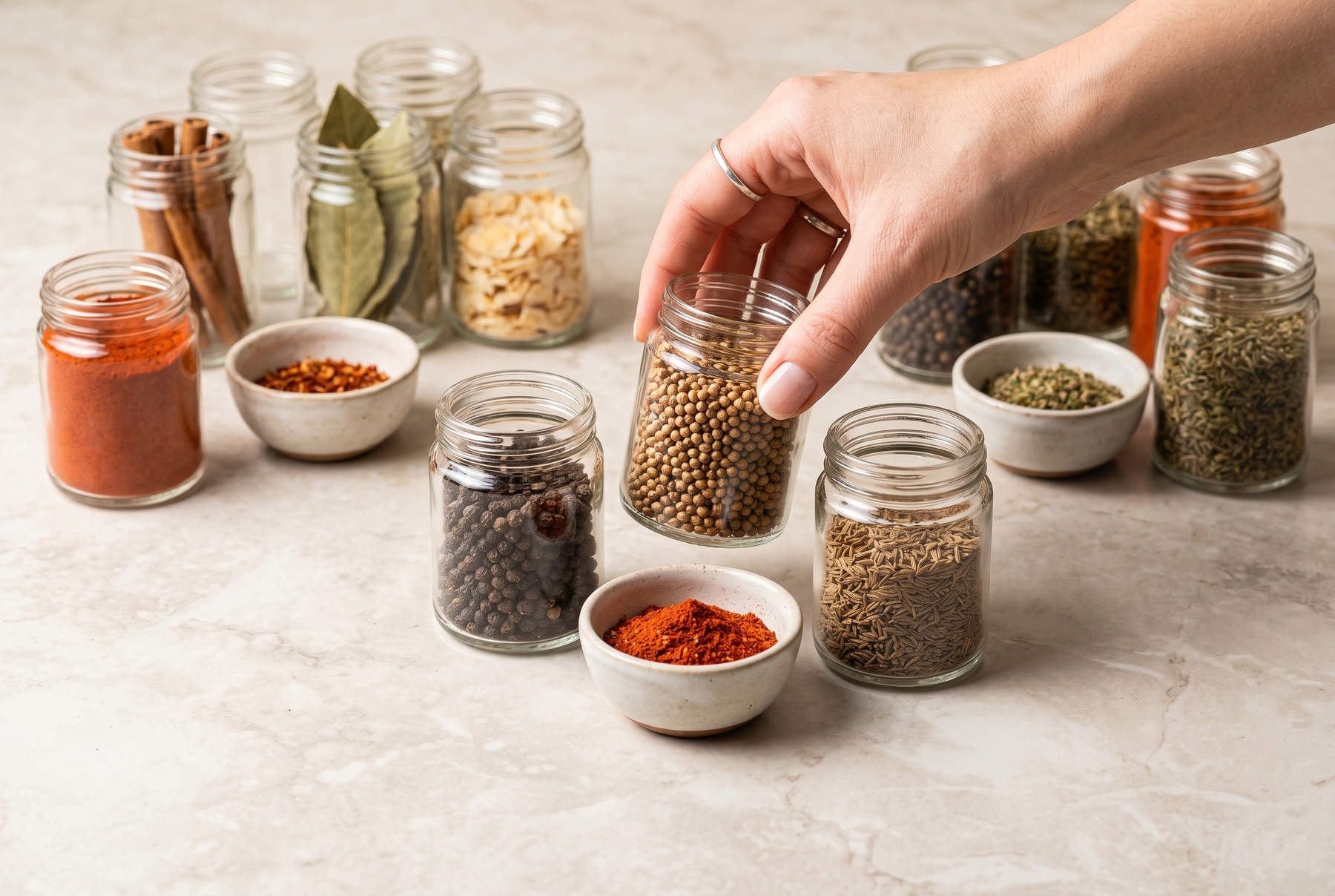
When selecting spices, prioritizing their aroma and how frequently they appear in your everyday cooking makes a profound difference.
10 Essential Spices for Most Homemade Dishes
1. Black Pepper: Heat, Aroma, and the Peppermill
Pre-ground pepper from a packet and freshly cracked pepper from a mill carry completely different aromas. Ground pepper loses its potency noticeably within a few months. Opening a newly bought packet often reveals a surprisingly weak scent. Peppercorns retain their freshness much longer. Grinding them right before use releases a sharp, slightly resinous aroma. Fried eggs, soup, meat, pasta, and roasted vegetables immediately become more expressive with it.
Keeping whole peppercorns on hand makes a significant difference. Even a basic peppermill intensifies the pepper’s aroma far beyond that of a ready-made powder.
Grinding pepper at the end of cooking or directly over the plate yields the best results: extended boiling diminishes the sharpness while leaving the bitterness behind.
2. Paprika: Color, Sweetness, and a Touch of Warmth
The word ‘paprika’ usually conceals at least three distinct products. Sweet paprika tastes mild and slightly fruity. Smoked paprika imparts a woody aroma, making dishes taste as if they touched a grill, even when cooked in a standard skillet. Hot paprika shares a similar flavor profile but introduces a pronounced fiery kick. Stocking all three at home is not mandatory, but confusing them leads to vastly different outcomes.
Paprika infuses potatoes, chicken, beans, stews, and homemade sauces with a warmer hue and a softly peppery aroma. It blooms best in fat: spending 30 to 40 seconds in hot oil allows it to release its color and fragrance before you add potatoes, onions, or meat. Tossing paprika onto a dry, scorching skillet without fat causes it to burn almost instantly and turn bitter.
3. Coriander: Unobtrusive Yet Indispensable
Ground coriander rarely takes center stage, yet without it, borscht, cabbage, or meat stews taste flatter and less refined. Cooks most often pair coriander with cumin or black pepper.
In borscht, braised cabbage, pork, chicken, and vegetable stews, coriander does not overpower the primary flavors but rather adds a dry, savory depth. In bread, coriander delivers the recognizable scent of Borodinsky bread (a dark Russian rye bread): dry, warm, and slightly nutty. Toasting the seeds lightly in a dry skillet until they crackle and then grinding them elevates their impact. After toasting, coriander smells more robust, revealing a citrusy bitterness and a subtle nutty aroma.
4. Cumin (Zira): Dry Warmth for Pilaf, Chickpeas, and Lamb
Cumin carries a dry, sharp aroma with a slight bitterness. In pilaf (a rice dish cooked in seasoned broth), cumin provides a distinct dry, warm fragrance. Without it, rice and meat lose their character. Cumin pairs beautifully with chickpeas, lentils, lamb, roasted carrots, and yogurt sauces, contributing sharpness and a gentle bitter note.
Starting with half a teaspoon for a large pot works best. Overusing cumin happens easily: an extra pinch can overpower meat, rice, and vegetables.
5. Bay Leaf: A Quiet Background for Broths and Braises
Bay leaf should not stand out on its own: it lends broths and stews a dry, slightly resinous background aroma. Bay leaves require time to infuse, making them perfect for broths, soups, braises, marinades, and boiled beans. Cooks add the leaf at the beginning and remove it at the end, as extended boiling makes it bitter.
Old bay leaves carry almost no scent. If a leaf turns yellow, becomes brittle, and yields no aroma when rubbed, it belongs in the trash. A quality leaf boasts a dark green color, a sturdy texture, and a characteristic resinous smell immediately upon opening the package.
6. Dried Garlic: Milder Than Fresh and Perfect for Dry Rubs
Dried garlic behaves quite differently from fresh garlic. Fresh garlic delivers a sharp aroma that immediately hits the nose. Dried garlic offers a milder scent without the intense sting of the fresh clove. It darkens more slowly in the pan and does not turn bitter as quickly.
It incorporates seamlessly into breading, dry marinades, minced meat for cutlets, quick sauces, or potatoes destined for the oven. For meat patties, granulated garlic often proves more convenient than fresh: it distributes evenly and prevents raw, biting chunks.
7. Cinnamon: Beyond Apple Pie
A modest dose of cinnamon works wonders in tomato sauces, meat stews, and pumpkin dishes. A pinch of cinnamon in coffee delivers a warm aroma without unnecessary sweetness. In rice pudding, oatmeal, and other porridges, it offers a soft fragrance that immediately steers the flavor profile in a sweet direction.
Going overboard makes the dish smell like a bakery, a mistake that cannot be undone. Savory dishes require particular caution: a single pinch suffices, nothing more.
8. Nutmeg: A Pinch of Depth
In a béchamel sauce, a pinch of nutmeg establishes a warm background. Without it, the sauce tastes fine but remains one-dimensional. In mashed potatoes, cheese casseroles, spinach, and creamy pastas, a touch of nutmeg eliminates the flatness of rich dairy flavors.
The tip of a knife or a couple of swipes on a grater provides enough flavor. Adding too much introduces a heavy, perfumed aroma that overpowers everything else. Buying whole nutmeg and grating it right before use guarantees the best results, as ground nutmeg loses its potency rapidly.
9. Hot Pepper: For Warming, Not Burning
Chili flakes, cayenne pepper, and ground hot pepper differ in both strength and character. Flakes offer a milder heat that builds gradually. Cayenne packs a sharper punch and requires only a tiny amount.
When the mouth burns so intensely that all flavor disappears, it ceases to be heat and simply becomes pain. Good heat highlights the food rather than erasing its taste. Adding a smaller amount, tasting, and adjusting gradually ensures a better balance.
Chili pairs exceptionally well with eggs, lentils, beans, Asian noodles, marinades, and tomato sauces.
10. Dried Herbs: Oregano, Thyme, Basil—But Not All at Once
Relying on one or two herbs with a vibrant aroma produces much better results than using five jars that smell like old paper. Oregano or basil generally suffices for pasta, pizza, and roasted vegetables. Poultry, potatoes, and meat typically call for thyme. Dumping everything into a single dish serves no real culinary purpose.
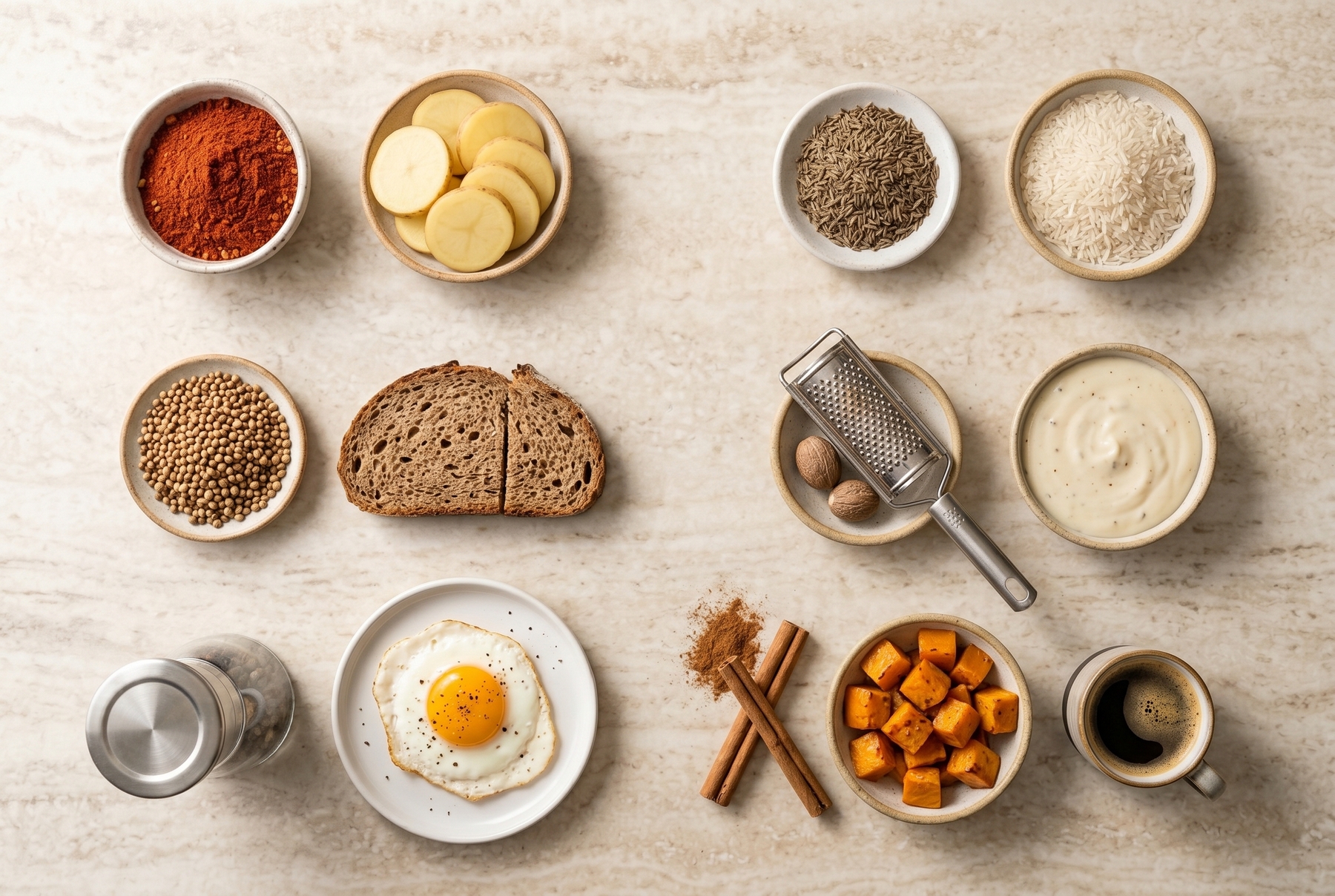
Every spice fulfills a distinct purpose, from injecting heat into meat to creating a warm aroma in morning coffee or baked goods.
The Second Tier: Additions to the Basic Set
Turmeric
Turmeric shines in rice, lentils, and vegetables, delivering a mild earthiness and a vibrant yellow hue. While not universally necessary, it disappears quickly if you frequently prepare rice, lentils, and vegetable stews.
Dried Ginger
Dry ginger and fresh ginger produce entirely different aromas. Fresh ginger tastes sharper and more ‘green’. Dried ginger feels warmer and sweeter. It excels in baking, marinades, and quick Asian-style meals. Swapping one for the other blindly rarely yields good results.
Curry Powder
Curry always represents a blend of several spices. Compositions vary drastically among brands: some blends smell intensely of complex spices, while others aggressively push turmeric and salt to the forefront. If the ingredient list reads vaguely or remains difficult to find, skipping that blend makes sense. Curry powder does not replace cumin, coriander, and turmeric individually, but it quickly ties together rice, vegetables, or chicken in a skillet.
Rosemary
Rosemary boasts a robust pine aroma and a slight bitterness. It pairs beautifully with potatoes, lamb, and bread. Using too much rosemary replaces its pleasant pine scent with an unpleasant medicinal bitterness.
Sumac, Khmeli Suneli, Garam Masala
Purchasing these makes sense only for specific, planned dishes: beans, kebabs, tart salads, or Indian curries. Khmeli suneli is a traditional Georgian spice blend whose composition varies by maker. Sumac provides a tart, berry-like acidity indispensable in Middle Eastern and Turkish cuisines. Garam masala serves as a warm, aromatic blend for Indian dishes, also varying significantly from brand to brand.
Pre-Made Blends: When They Help and When They Fail
Seasonings labeled ‘for chicken’, ‘for potatoes’, or ‘Italian herbs’ genuinely save time on occasion: you open the packet, sprinkle, and achieve a predictable flavor. The name matters less than the actual ingredients.
Salt in the Mix: The Primary Pitfall
Many blends list salt as the first or second ingredient. A cook might believe they are adding aromatics, while practically salting the dish a second time. If a blend contains salt, refraining from adding extra salt to the dish initially prevents over-seasoning. Tasting and adjusting later ensures a balanced flavor.
How to Read an Ingredient List
Check the first two or three ingredients. If spices lead the list, the blend passes the test. If salt or sugar takes the lead, the mixture functions primarily as flavored salt or sugar. Ignoring flavorings in the composition remains a mistake: they frequently mask a weak spice blend. Starch poses no danger on its own, but it signals something else: the packet contains more bulk and less actual aroma.
Curating a Spice Set for Your Real Kitchen
Spices for Russian and Traditional Home Cooking
Bay leaf, black peppercorns, coriander, paprika, dried garlic, dried dill or parsley, and nutmeg for creamy dishes. This combination streamlines the preparation of soups, cutlets, braised cabbage, potatoes, chicken, and fish.
Caucasian and Central Asian Dishes
Cumin, coriander, paprika, hot pepper, khmeli suneli and utskho suneli (a Georgian spice made from blue fenugreek), garlic, and bay leaf. This selection covers pilaf, kebabs, vegetable appetizers, beans, and meat stews.
Spices for Pasta, Pizza, and Mediterranean Vegetables
Oregano, basil, thyme, black pepper, paprika, garlic, and chili. Such a lineup elevates tomato sauces, roasted vegetables, chicken, and homemade pizza.
Asian-Inspired Dishes
Ginger, chili, garlic, and coriander. In many Asian-inspired dishes, dry spices alone fall short. Soy sauce, rice vinegar, sesame oil, and fresh aromatics frequently play a more crucial role than any dry spice collection.
Where Spices Perform Best
A spice often gets lost in a boiling soup, yet releases a far more potent aroma after thirty seconds in hot oil. Fat extracts spice aromas much faster: paprika smells fuller, cumin sharpens, and coriander becomes more pronounced.
Blooming in Oil
Using moderate heat for 20 to 40 seconds with constant stirring works best. The spice infuses the oil, which then distributes the flavor evenly throughout the dish. Overheating introduces an unpleasant bitterness. Trying this technique a few times quickly turns it into a habit.
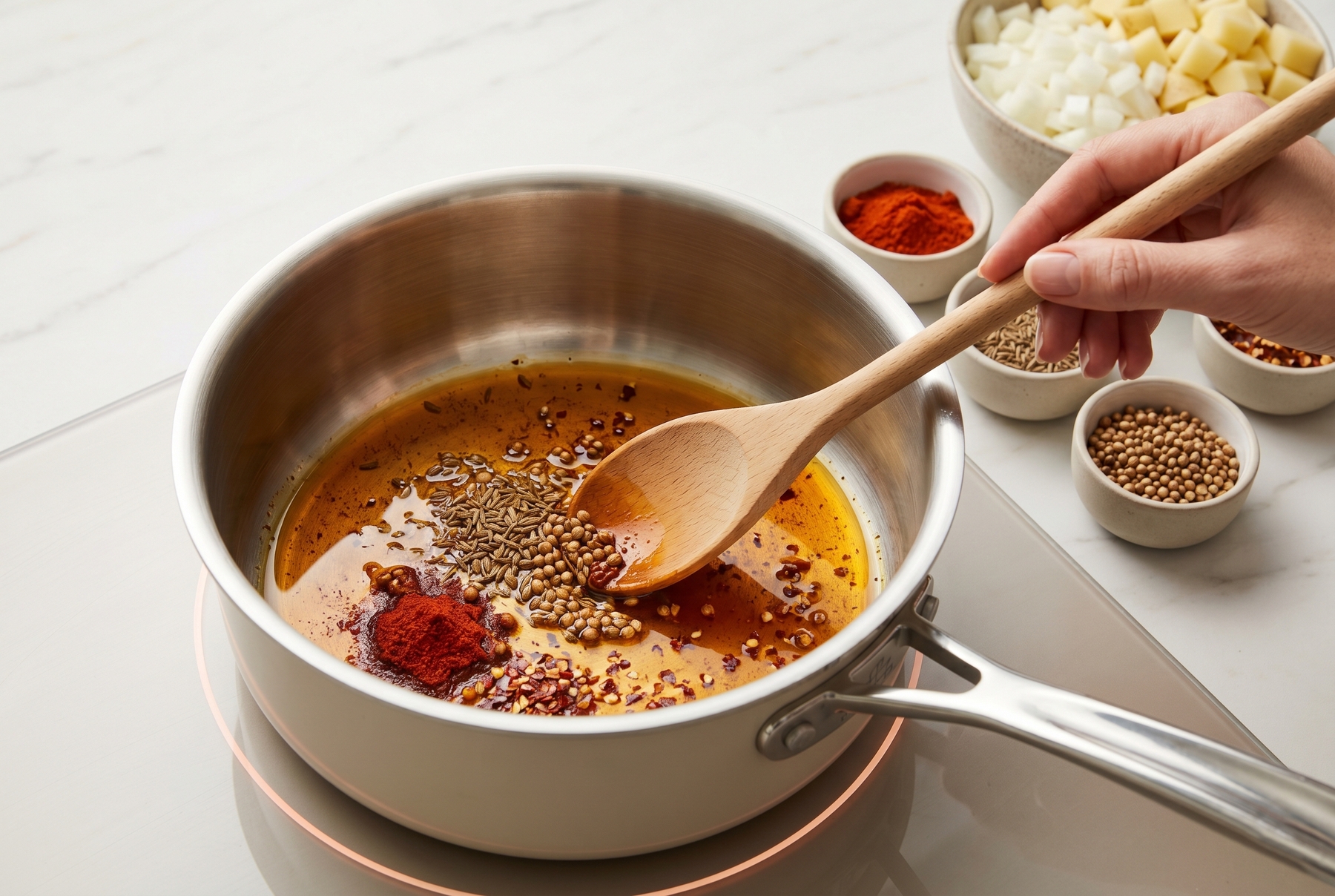
Fat serves as the ultimate flavor conductor. Just thirty seconds in hot oil forces spices to release a significantly stronger aroma.
When to Add: Beginning, Middle, or End
Bay leaf and cumin perform best at the beginning of a long cooking process. Black pepper shines at the end or directly on the plate: two hours of boiling strips its heat and replaces it with bitterness. Delicate herbs like basil and parsley fare poorly when boiled; adding them at the end or off the heat preserves their fresh character.
Whole Versus Ground
Whole spices preserve their aroma far longer: peppercorns, cumin seeds, and coriander seeds all benefit from this. Ground spices offer convenience but lose their vitality rapidly once the jar is open. A practical compromise looks like this: keep pepper and cumin whole, grinding them as needed. Paprika and turmeric remain ground, as their whole forms serve no real purpose in daily cooking. Whenever possible, keeping nutmeg as a whole nut guarantees the best flavor.
Recognizing When a Spice Has Expired
Opening a jar and taking a quick sniff tells you everything. If the aroma barely registers, it will do absolutely nothing for your dish.
The Palm Test
Rub a pinch between your fingers and wait about five seconds. A quality spice releases its aroma instantly: sharp, characteristic, and recognizable. If the scent feels weak or virtually nonexistent, the jar requires immediate replacement.
Color also indicates a spice’s quality. Paprika should boast a rich red hue rather than a pinkish-beige tint. Turmeric needs to look bright yellow, not dull and pale. A faded color almost always signifies a faded aroma.
Expiration Dates and Real Life
A spice within its expiration date remains perfectly safe to consume, yet it might offer almost no aroma. The expiration date guarantees safety but never promises a robust fragrance. Trusting your sense of smell provides far better guidance than reading a printed label.
Storage Strategies to Prevent Throwing Spices Away Every Six Months
Darkness, dryness, a tight lid, and a safe distance from the stove. Most kitchens fail to meet at least three of these four conditions.
The Spot Above the Stove
It offers convenience but ruins spices. Heat from burners and steam from pots accelerate the breakdown of essential oils and alter the texture: the spices clump together, darken, and lose their aroma much faster than they naturally would.
Practical Advice
Purchasing in small quantities makes a huge difference. Writing the opening date directly on the jar (the opening date matters far more than the purchase date) helps track freshness. Reaching into a jar with a wet spoon or damp fingers ruins the contents. Keeping spices ‘just in case’ clutters the kitchen: if an ingredient sits untouched for six months, it simply does not belong there.
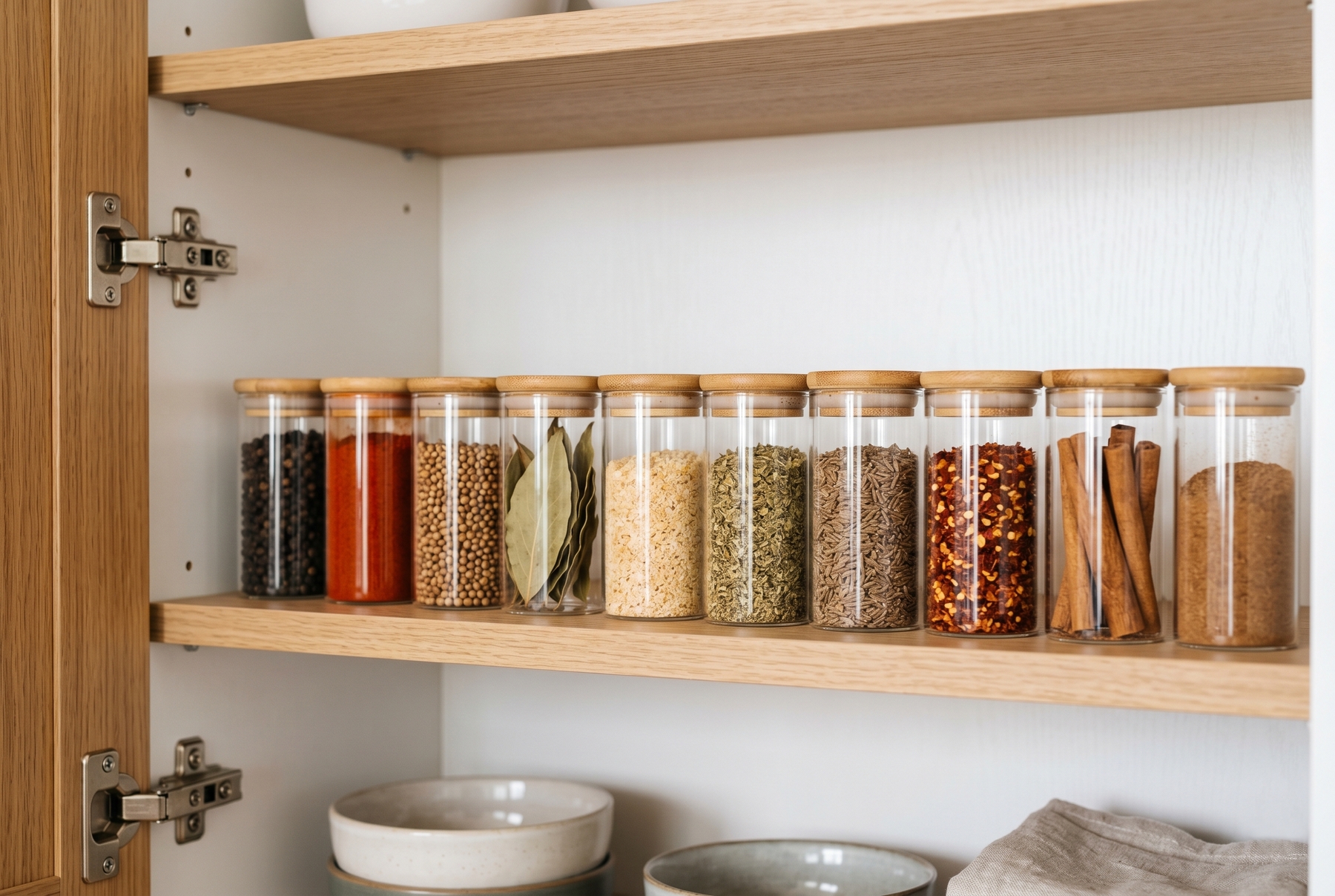
Storing spices in tightly sealed jars away from sunlight and steam ensures they retain their vital essential oils.
The Minimal Spice Kit for a New Kitchen
The Absolute Minimum of Six Items
- Whole black peppercorns
- Paprika (sweet or smoked)
- Ground coriander
- Bay leaf
- Dried garlic
- One dried herb of choice (oregano, thyme, or dill)
These six items confidently support soups, roasted meat, braised vegetables, sauces, and eggs. It may not represent perfection, but it provides a solid foundation.
The Optimal Set of 10 to 12 Items
Adding cumin, chili flakes, cinnamon, nutmeg, a second dried herb, and optionally turmeric elevates the collection. At this stage, the shelf begins functioning as a cohesive system rather than a random assortment of jars.
The Most Common Mistakes
Dumping Many Different Spices in Hopes of a Complex Flavor
When seven spices crowd a single dish, they frequently clash, and the flavor gains no real depth. Sometimes two thoughtfully chosen spices perform far better than emptying the entire cabinet.
Buying a Large Bag for the ‘Value’
The value exists only until the spice loses its aroma. Purchasing an enormous bag of paprika, only to use a third of it before it goes stale, saves absolutely no money.
Expecting Spices to Do the Work of Salt, Acid, and Fat
Spices cannot rescue an under-salted or flat-tasting dish. If the foundational flavors lack balance, no amount of cumin will fix the problem. Adjusting salt, acid (lemon, vinegar, tomatoes), and fat comes first; working with spices follows.
Adding Symbolic Amounts Out of Fear
Those who once over-salted or over-peppered a meal often develop a fear of seasoning. The solution lies in adding spices gradually and tasting the food after every single step.
A Well-Stocked Spice Shelf Speeds Up Cooking
Understanding why each jar sits on the shelf genuinely simplifies the cooking process. Yesterday’s chicken mixed with cumin and coriander transforms into a vibrant tortilla filling. Ordinary lentils spiced with paprika and smoked pepper become a dinner worthy of serving to guests. Potatoes tossed with thyme and dried garlic transcend their role as a simple side dish.
Sourcing rare spices from distant lands plays no part in this. What truly matters is ensuring that the ten small jars on your shelf actively work for you, rather than sitting idle as culinary museum exhibits.
0 comments