
The foam that rises to the top of a simmering pot of broth looks undeniably suspicious. Gray, clumpy, and clinging to the sides of the pot during the first few minutes of boiling, it practically begs for a slotted spoon. Generations of home cooks have skimmed it away as if fishing out something toxic. The logic makes sense: if it floats to the top and looks unappealing, it probably does not belong in dinner. However, the presence of this foam does not mean the meat is spoiled, low-quality, or pumped full of chemicals. So what actually changes in the pot if the skimmer stays in the drawer?
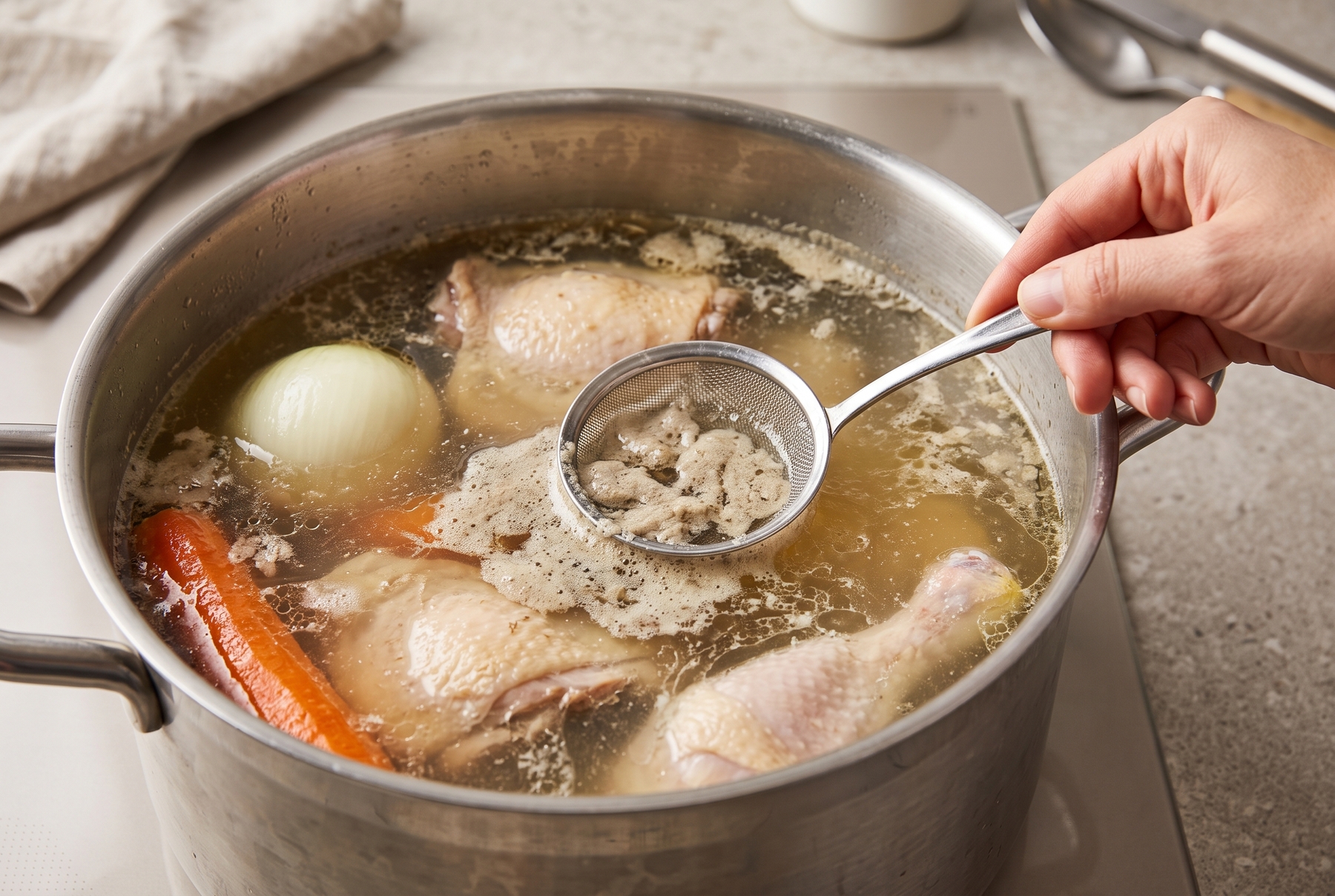
The foam that rises when simmering meat consists of harmless coagulated proteins, though it does affect the visual clarity of the finished broth.
Table of Contents
Why Foam Appears on Broth and What It Actually Is
When meat or poultry goes into a pot of water and begins to heat up, soluble compounds leach out into the liquid. These consist primarily of proteins, alongside microscopic tissue particles, a bit of fat, and traces of whatever remained on the surface of the cut after butchering. As long as the water remains cold, these compounds stay dissolved. At this stage, the liquid looks clear with just a faint pinkish hue from the meat.
Why the Flakes Float
Temperature soon changes the equation. As the water warms, those dissolved proteins alter their structure and begin to bond together. Invisible molecules transform into visible curds. Rising steam bubbles and convection currents catch these coagulated bits and carry them upward, where they gather into that familiar gray cap. The closer the pot gets to a boil, the faster this coagulation happens. Consequently, the heaviest layer of foam appears not during a rolling boil, but right at the threshold when the water is just preparing to bubble.
Many cooks mistake this scum for clotted blood, mysterious “toxins,” or residual antibiotics allegedly escaping the meat. The blood myth is easy to debunk: commercially butchered meat on a cutting board contains virtually no blood. The reddish liquid in the packaging and the pink tint of the muscle fibers come from myoglobin, an oxygen-binding protein found in muscle tissue. Actual blood is drained during processing. Chemically, the substance floating in a stockpot is closest to a poached egg white: denatured protein that has trapped tiny stray particles along the way. Calling it “dirt” or a concentrate of harmful substances misses the mark entirely. Foam is simply a natural byproduct of heating protein, not an indicator of bad meat.
What Happens If You Leave the Foam Alone
Leaving the foam untouched will not render the broth unsafe or spoiled. It will not make the soup sour or cause foodborne illness. The primary casualties are clarity and visual appeal.
The Broth Might Turn Cloudy
Unskimmed protein curds do not simply vanish. Some settle to the bottom, while others remain suspended in the liquid. If the pot boils aggressively, the turbulence shatters these larger clumps into a fine suspension, turning the broth noticeably cloudy.
An important caveat applies here. A slotted spoon is not the only tool that dictates clarity. Vigorous boiling ruins the appearance of a stock far more effectively than unskimmed foam ever could. A cook can ignore the foam entirely, maintain a gentle simmer, and still end up with a remarkably clear liquid. Conversely, one can skim the surface spotless, crank the burner to high, and churn the broth into a murky mess. Cloudy stock usually points to excessive heat rather than laziness with a skimmer.
What About the Flavor?
Conventional wisdom blames unskimmed foam for bitterness and off-flavors. In practice, this risk is heavily exaggerated. Coagulated protein is nearly flavorless on its own. Under normal circumstances, it will not impart any noticeable bitterness or strange aftertaste. Only when a massive layer of scum boils violently for hours might it develop a slightly stale, overcooked aroma.
Ultimately, murkiness is an aesthetic issue. Unskimmed foam affects the flavor far less than culinary folklore suggests. The quality of the raw ingredients and temperature control matter much more. Fresh meat gently simmered over low heat yields a clean, pure flavor even without obsessive skimming, whereas no amount of spoon-work will save a pot made from questionable poultry.
Aroma and the Perception of Cleanliness
When the goal is a pristine, crystal-clear broth with a delicate aroma, skimming the surface curds makes sense. Removing them early prevents them from breaking down and dispersing throughout the pot, keeping the aromatics sharp and clean. Still, this step performs no miracles. Skimming cannot fix meat that is past its prime; an off-putting smell will remain in the liquid no matter how thoroughly the surface is cleared.
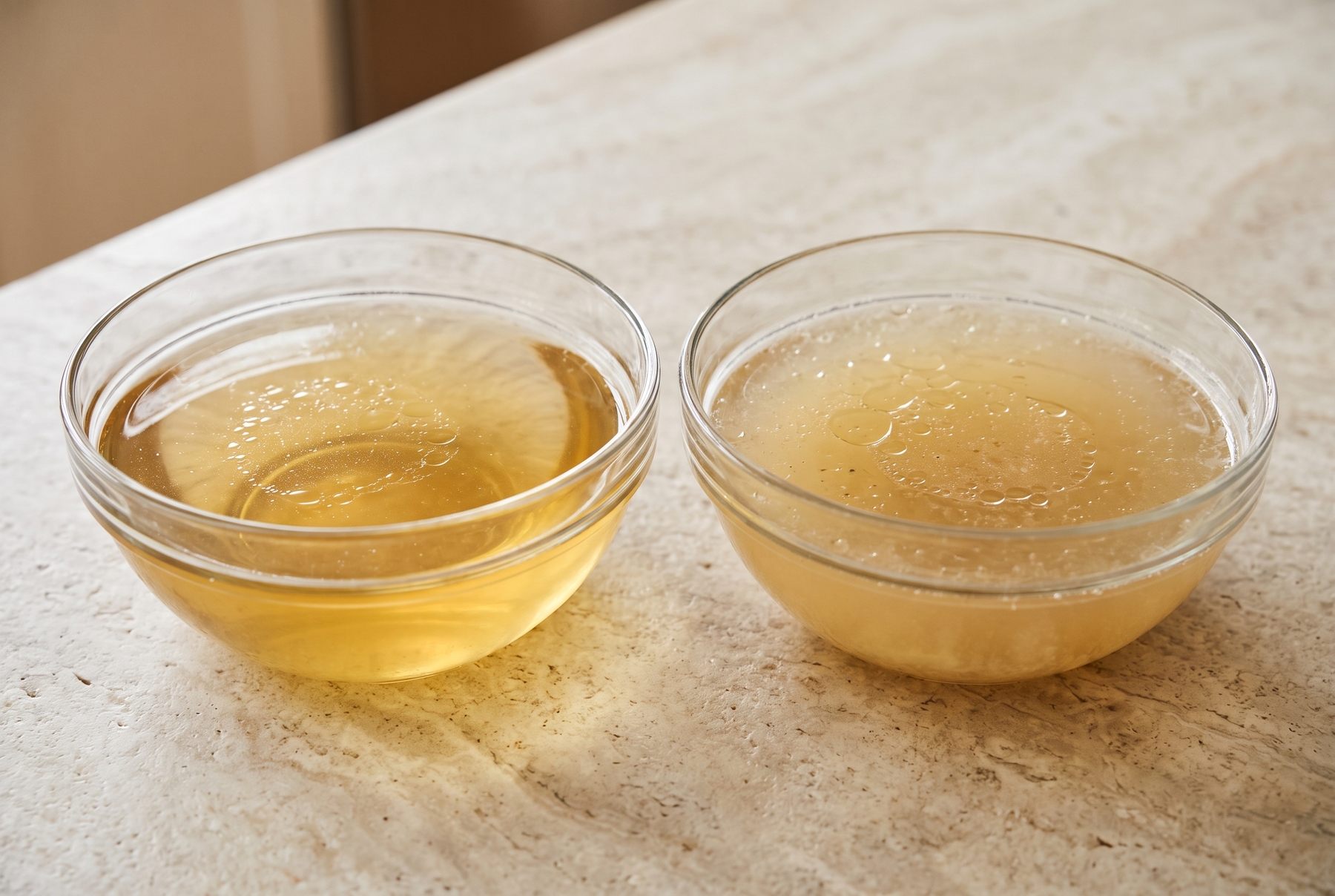
The visual difference between clear and cloudy broth comes down to heat control far more than skimming.
Why Professional Chefs Always Skim
If skimming is optional, why do restaurant cooks guard the surface of their stockpots so vigilantly? Professional kitchens usually simmer foundational stocks with specific applications in mind: a clear broth for plated service, a glossy pan sauce base, or a classic consommé where any hint of cloudiness is considered a flaw. In these scenarios, surface management directly impacts the final presentation of the dish.
Many rigid home-cooking rules exist simply because domestic cooks copied restaurant techniques without their original context. Professional chefs skim stock because they have a precise visual target and engineer the entire process to hit it. At home, this practice often morphs into a mindless ritual: cooks skim because they were told they must, even when making a thick, opaque stew where broth clarity is completely irrelevant.
A restaurant chef skims foam to achieve a translucent, golden liquid, systematically removing anything that threatens that clarity.
Why Broth Turns Cloudy: Heat Control Beats Skimming
Controlling the intensity of the boil matters far more than chasing foam.
The difference between a rolling boil and a gentle simmer is vast. At a hard boil, the surface churns violently, large bubbles erupt, and the liquid agitates like a kettle or a pot of pasta water. Over low heat, the surface barely moves: an occasional solitary bubble rises, creating a faint ripple, and nothing more. At times, the pot might scarcely look like it is cooking at all. That is the exact sweet spot.
The science behind this is straightforward. A vigorous boil acts like a blender. It whips fat globules, protein curds, and microscopic particles throughout the pot, shattering them into a permanent suspension that refuses to settle. Meanwhile, the agitation emulsifies the fat into the water, locking in an opaque, milky appearance. At a bare simmer, none of this turbulence occurs. Protein flakes float peacefully to the top—where they are easy to lift away—or settle quietly at the bottom, leaving the liquid clear.
Keeping the burner low does more for broth clarity than fifteen minutes of frantic skimming over high heat. A gentle simmer outperforms an aggressive spoon every time.
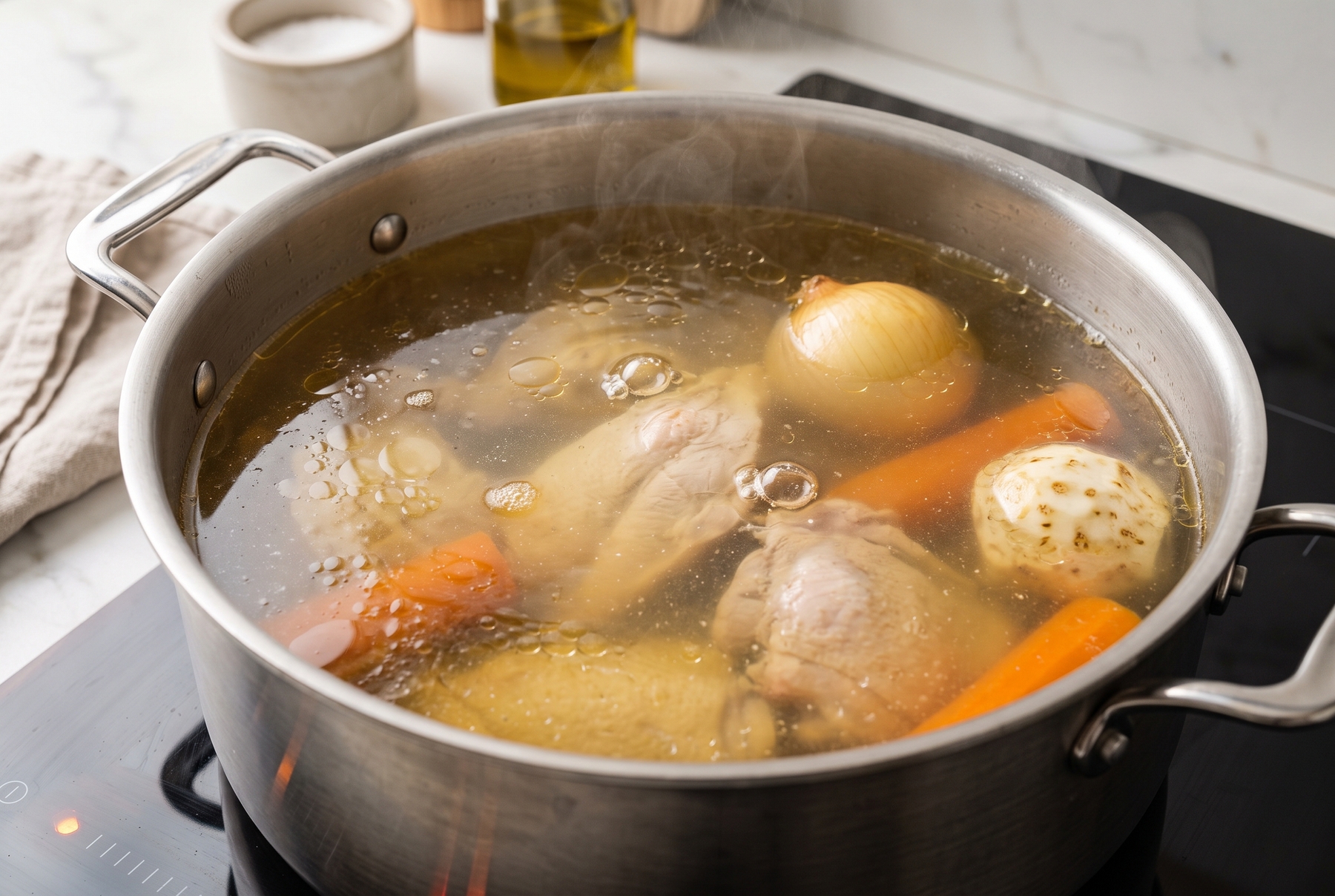
A gentle simmer prevents fat and protein particles from emulsifying, keeping the broth clear and bright.
How to Skim Broth Without Babysitting the Pot
Achieving a clear broth requires just a few strategic moves rather than a thirty-minute vigil at the stove.
- Wait for the first substantial layer of curds to gather at the surface. Hovering over cold water is pointless since nothing has coagulated yet.
- Sweep the surface once or twice using a fine-mesh skimmer or a shallow spoon, working gently along the edges of the pot where the foam collects most densely.
- Resist the urge to chase every last speck. Achieving absolute perfection in a single pass is impossible and unnecessary.
- Drop the heat to a bare simmer. Once the initial wave of foam is gone and the liquid settles into a gentle rhythm, the pot no longer needs supervision.
A quick note on fat: skimming protein foam and degreasing a stock are two entirely different steps. A moderate amount of surface fat carries flavor and aroma, so stripping it all away is counterproductive. If a leaner broth is preferred, it is much easier to chill the finished liquid later and lift off the solidified fat cap in one piece.
What If the Foam Boiled Back Into the Broth?
It happens to everyone: a cook steps away for a minute, the pot erupts into a hard boil, and the gray curds disperse throughout the liquid. The batch is far from ruined.
First, lower the heat immediately. Let the broth settle into a calm simmer; some of the suspended particles will naturally clump back together and either float to the top or sink to the bottom. Once the cooking is complete, pour the liquid through a fine-mesh strainer. For maximum clarity, line the strainer with several layers of damp cheesecloth, which will trap even the finest suspended sediment.
Managing expectations is key here. Straining removes visible debris and noticeably brightens the liquid, but it will not reverse a full fat emulsion or turn a milky stock into a restaurant-grade consommé. True consommé requires a separate clarification process using an egg white raft. For everyday home cooking, however, a cheesecloth-lined strainer is more than enough.
Missing that five-minute skimming window is never a reason to pour a good pot of broth down the drain.
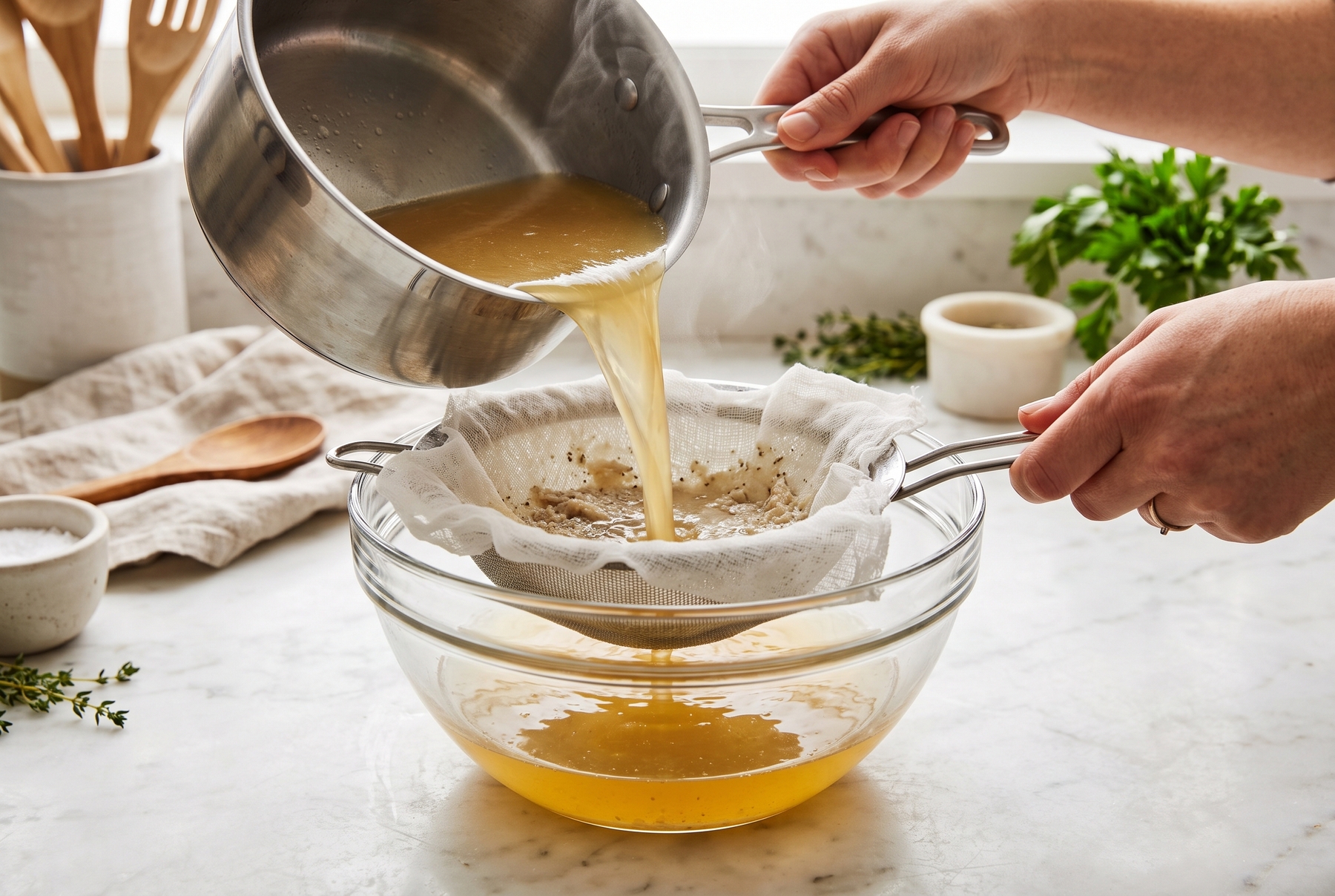
If protein curds disperse into the pot, pouring the broth through a fine-mesh sieve lined with cheesecloth restores its clean appearance.
When to Skim and When to Skip It
Skimming foam and monitoring the heat pays off whenever the broth itself is the star of the bowl. This applies to classic chicken noodle soup, brothy ramen, light consommés, and delicate pan sauces where murkiness is immediately obvious.
For thick, hearty soups, policing every flake of foam is a waste of energy. This holds true for Eastern European staples like borscht (beet soup), shchi (traditional cabbage soup), and solyanka (a thick, tangy meat and pickle soup), as well as rustic stews. In these dishes, the liquid gets packed with vegetables, herbs, and a zazharka—a flavorful base of sautéed onions, carrots, and sometimes tomato paste—before simmering into a rich, opaque meal. Initial broth clarity plays zero role here because it disappears entirely beneath the other ingredients. Cooks can skim out of habit or skip it altogether; against the backdrop of deeply browned aromatics and spices, any subtle difference in the finished borscht will be virtually undetectable.
A stray gray protein flake settling to the bottom of a hearty stew pot will never ruin dinner.
0 comments