
The Belgian coast smells of iodine and fries. I am seven years old. I have just swallowed a portion of mussels with bread and want only one thing: to get into the water. My grandmother holds my hand and stops me. ‘Sit on the towel. One hour. Otherwise, you will get stomach cramps and sink to the bottom.’ I sat. I watched the gray waves of the North Sea and digested someone else’s fear along with my lunch.
Now consider a picture from another world. A triathlete on the course squeezes an energy gel into their mouth, washes it down with an isotonic drink on the run, and enters the open water a couple of minutes later to conquer their kilometers. There are no towels and no waiting. And somehow, nobody drowns.
This seems rather strange. People who swim at their absolute limits eat right before the race and do not worry at all. Meanwhile, a regular person with a cheburek (a deep-fried meat pastry) still sits on the sand for an hour simply because their grandmother said so. The myth outlived both the grandmother and her grandmother. We will explore where the ban on swimming after eating came from and what actually happens in the stomach of a well-fed swimmer.

A boy sits on a towel by the sea after a portion of mussels—a classic childhood scene when grandmothers forbade going into the water.
Table of Contents
- The One-Hour Rule: The Legacy of Boy Scouts and Old Pamphlets
- Where the Blood Actually Goes in a Well-Fed Swimmer
- The Cramps That Will Not Happen: What Causes Muscle Spasms in the Water
- Cold Water and Heartburn: What You Really Need to Consider
- How Long to Wait After Eating Before Swimming and What to Eat Before a Swim
The One-Hour Rule: The Legacy of Boy Scouts and Old Pamphlets
The story traces back to the beginning of the last century. In 1908, ‘Scouting for Boys,’ the handbook for British scouts, was published. It contained a piece of advice: do not go into deep water sooner than an hour and a half after eating, otherwise you will get cramps, your body will fold in half, and everything will end badly. The wording was harsh. You would drown, and it would be your own fault.
Three years later, the warning crossed the ocean into the first American Boy Scout manual of 1911. The explanation looked scientific: the stomach is busy with food, blood rushes to do this work, and suddenly the swimmer demands something else from the body. The organs supposedly fail to readjust in time, leading to stagnation and then a spasm.
The early 20th century was generally obsessed with digestion. Sanatoriums, diets, and pamphlets about the dangers of hasty eating were everywhere. The idea that an undigested lunch is incompatible with swimming fit perfectly into this landscape.
Next, simple parental mathematics came into play. After lunch, it is a good idea to keep a child in the shade so they do not run around in the heat, allowing the food to settle. ‘Otherwise, you will drown’ sounds much more convincing than ‘please sit still.’ A reasonable precaution became a medical law that no one ever properly tested.
Where the Blood Actually Goes in a Well-Fed Swimmer
The foundation of the myth sounds plausible. After a meal, the body indeed directs more blood to the stomach and intestines. Physiologists call this splanchnic blood flow: the vessels of the digestive tract dilate, the flow increases, and nutrients enter the bloodstream faster. However, blood does not vanish from the rest of the body. There is simply a temporary increase in one specific area.
Now we add exercise. When you swim, the working muscles of your arms, legs, and back also need oxygen, which means they need blood. This is where the myth paints a disaster: the stomach and muscles fight for a single resource, someone loses, the swimmer weakens, and goes to the bottom.
In practice, there is no fight. The cardiovascular system knows how to handle multiple tasks at once, redistributing the flow flexibly and without causing fainting. During calm or moderate swimming (which is exactly how the vast majority of people swim at the beach), there is plenty of blood for both digestion and strokes. The body neither shuts down digestion nor drains power from the legs. It merely shifts the emphasis slightly, and that is all.
Even in athletes who push to their maximum, splanchnic blood flow decreases during heavy exertion, but a person does not drown from being full. The extreme case of rigorous exercise on a very full stomach results in nausea or vomiting. It is unpleasant, but it is not fatal.
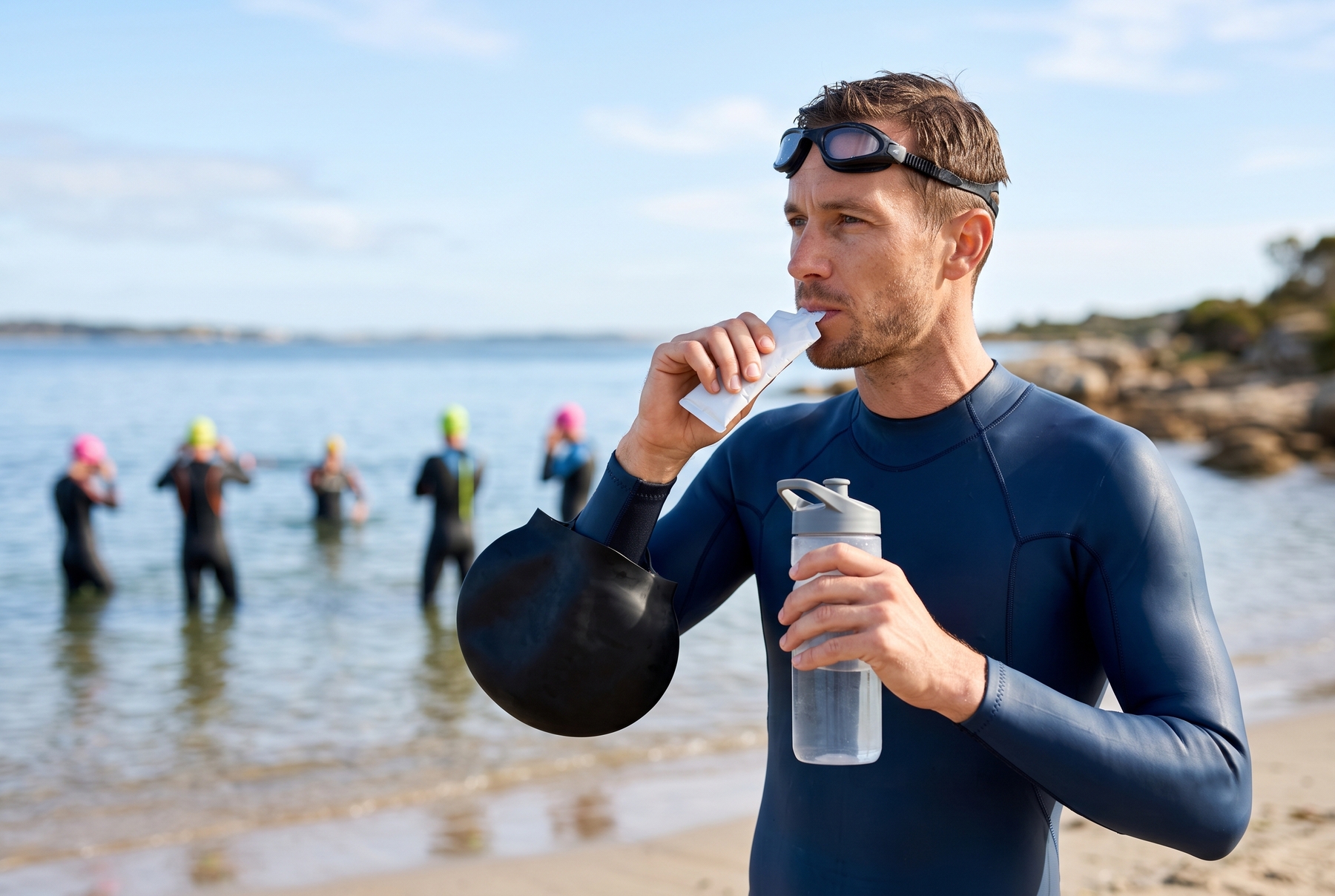
Triathletes consume energy gels right before entering the water, debunking the myth about the dangers of eating before swimming.
The Cramps That Will Not Happen: What Causes Muscle Spasms in the Water
Everything in this story relies on the fear that swimming after eating will cause a cramp, but muscle spasms are almost entirely unrelated to lunch itself. Muscle cramps in the water usually stem from other factors.
Most often, a muscle cramps from fatigue and overexertion. You swim longer and more vigorously than you are used to, and the muscle overloads and turns to stone. The second frequent cause is cold. A rapidly chilled muscle contracts poorly and is more prone to spasming. Researchers also debate the roles of dehydration and salt loss through sweat, although scientists still argue about this. All these causes share one common trait: a sandwich eaten before a swim is nowhere on the list.
And what about the side stitch that many remember from childhood? It has nothing to do with stomach cramps. The cause lies in the irritation of the diaphragm during active breathing and jolting movements. Sports doctors call this exercise-related transient abdominal pain. A full stomach can intensify this pain. It presses on the diaphragm from below, making breathing heavier, and the side catches slightly faster. Yet, the mechanism here involves breathing and movement, not the food itself.
What a stuffed stomach actually does during a swim is create heaviness and pressure. You feel like there is a brick under your ribs, experience slight nausea, and feel the desire to lie on your back rather than dive. Discomfort is real. Danger is not.
Cold Water and Heartburn: What You Really Need to Consider
Swimming after eating has genuine risks, but fullness-induced cramps are not among them.
The first risk involves a sharp temperature drop. When a sun-heated body plunges into cold water, cold shock is triggered. This causes an involuntary gasp, rapid breathing, and sometimes a spasm. This is the real reason people choke, and it correlates with temperature, not lunch. Dense, hot food adds contrast to the sensations: it feels warm and heavy inside, while the water outside is icy, making a cannonball jump much harder to endure. It is better to enter such water gradually, giving the body a second to adapt.
The second risk is linked to acid reflux. After a heavy meal, the valve between the esophagus and the stomach relaxes, the stomach is full, and its contents are acidic. The moment you lie horizontally and actively engage your abdominal muscles while swimming, the acidic contents easily travel back up. This results in heartburn, a burning sensation behind the breastbone, and sour burping right in the water. It does not lead to disaster, but it thoroughly ruins the swim.
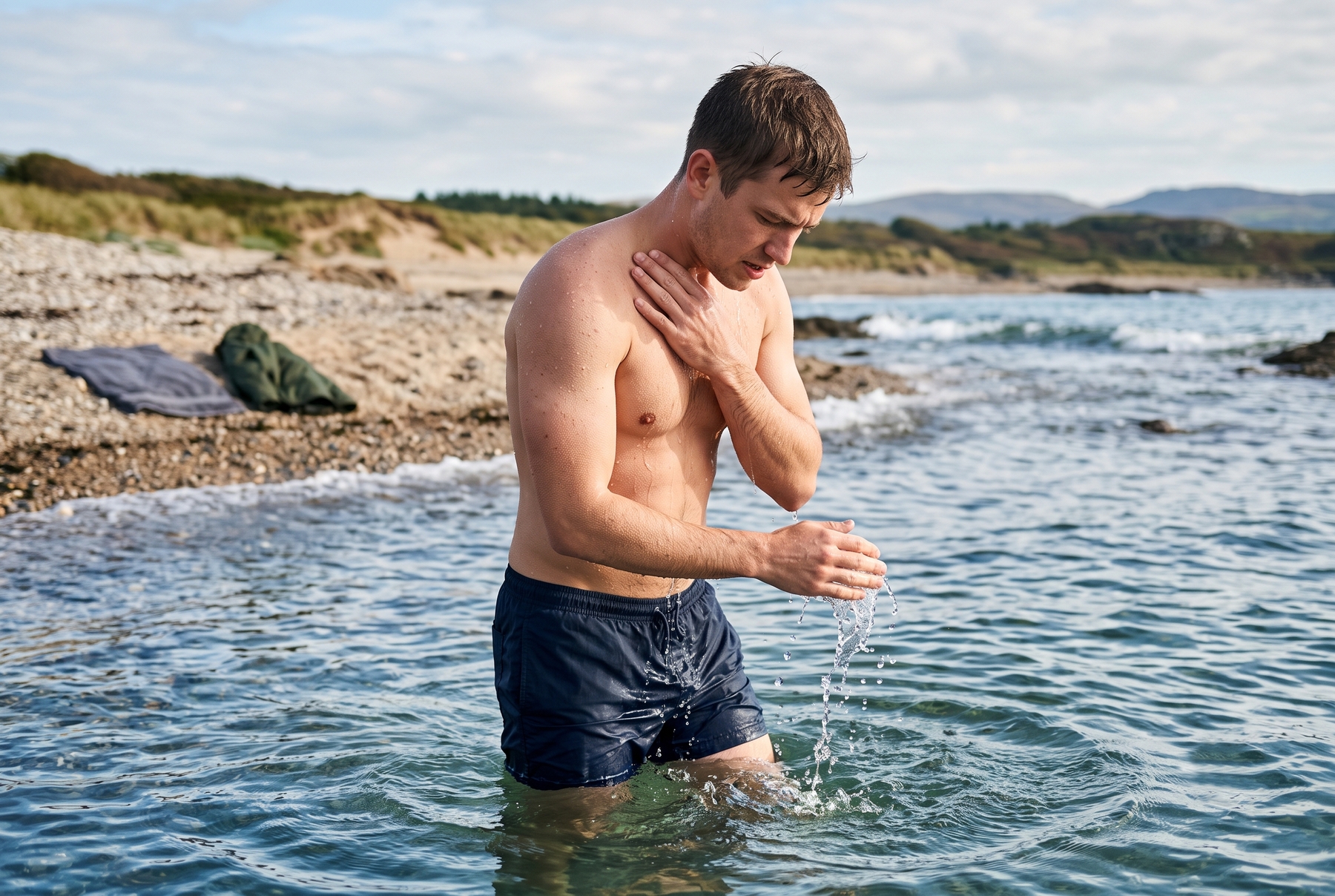
The sharp temperature contrast when entering cold water is more dangerous than a heavy lunch due to the risk of cold shock.
How Long to Wait After Eating Before Swimming and What to Eat Before a Swim
The speed of digestion depends on exactly what you ate. A rough cheat sheet looks like this:
- Light food: watermelon, melon, berries, or a glass of ayran (a savory yogurt-based beverage). These leave the stomach quickly and do not cause heaviness.
- Medium food: a sandwich, porridge, or pasta without a heavy, fatty sauce. After a couple of hours, the heaviness typically fades.
- Heavy and slow food: shashlik (meat skewers), fried potatoes, and anything fatty and abundant. Here, the stomach struggles longer, sometimes 3 to 4 hours or more.
A good beach snack is light and simple. A slice of watermelon, a handful of berries, a banana, or a bit of bread provide quick energy without leaving a brick in your stomach. Save the heavy, fatty lunch for the evening when the urge to swim has passed.
Staying on the shore is genuinely worthwhile in a few cases:
- After consuming alcohol: it dulls reactions and coordination, which is more dangerous than any lunch.
- After serious overeating, when heaviness and nausea prevent you from staying afloat comfortably.
- If the water is cold and you are overheated: you should enter the water slowly.
- If children are nearby: they need adult supervision regardless of what and when they ate.
Major water safety organizations analyzed the ban on swimming after eating long ago. The International Life Saving Federation states this plainly: there is no evidence that eating before swimming increases the risk of drowning, and restrictions on waiting times and food types are scientifically unfounded. The American Red Cross writes the same: swimming within an hour after eating does not increase the risk of drowning for children, adults, amateurs, or athletes. Medical literature reveals not a single documented case where eating before swimming was the cause of drowning.
Grandmother’s rule of waiting an hour after eating apparently relied not on physiology, but on shade, after-dinner rest, and a desire to keep her grandson from running in the heat. The mussels did not interfere with the swim. The only thing that interfered was the boredom on the towel.
0 comments