
It is a July morning. You have brewed a coffee that turned out exactly as it should be: full-bodied, slightly bitter, and still hot. Dropping a couple of ice cubes inside cools it down. Ten minutes later, the glass holds a cloudy brown liquid vaguely resembling what it once was. The ice did its job honestly by chilling the drink, but it also diluted half the flavor.
An ice cube tray sits in almost every freezer. Most of the time, it operates under capacity, simply filled with regular tap water. Yet, upon closer inspection, it proves to be one of the most underrated tools in the kitchen.
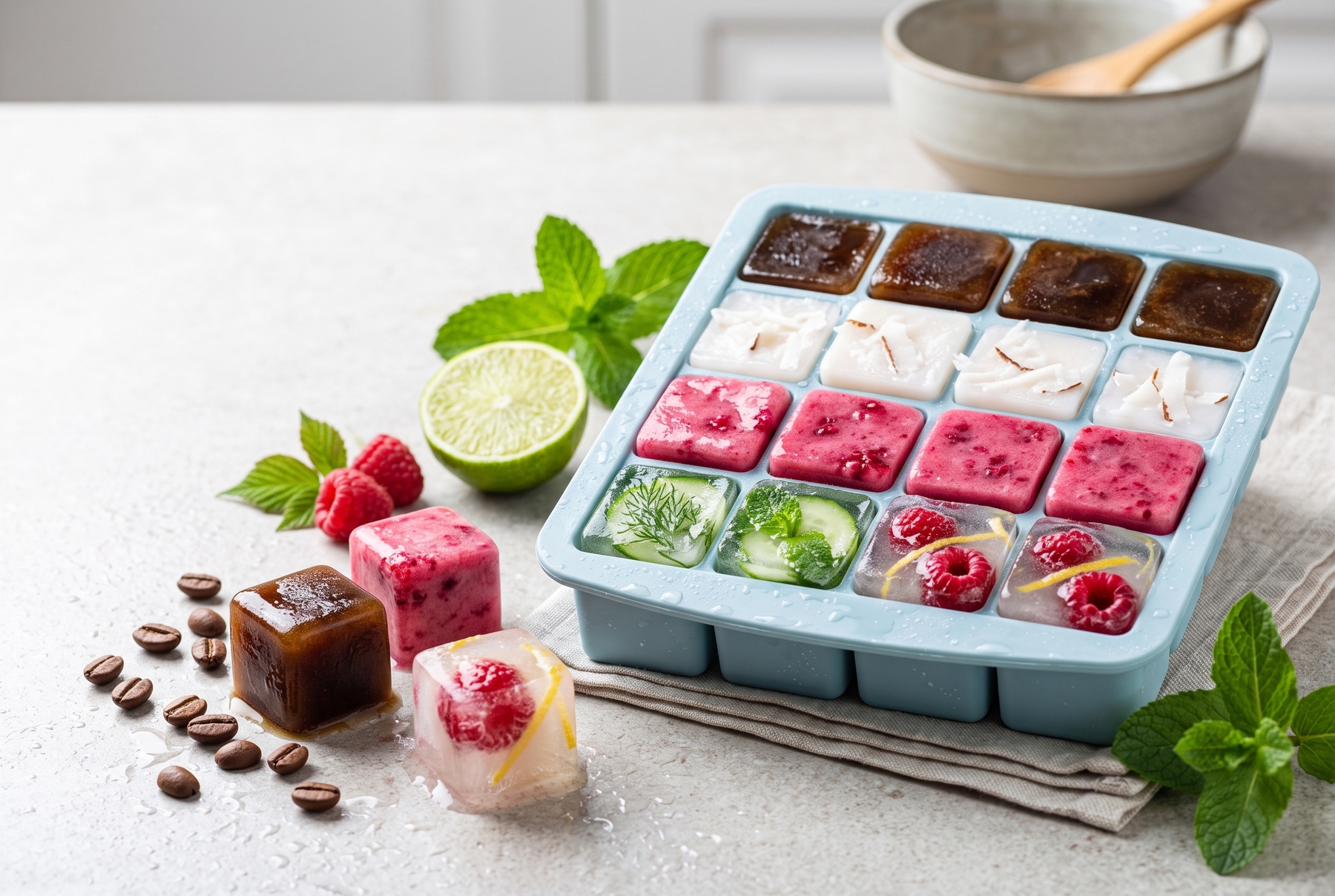
A silicone tray filled with prepared flavor ice: coffee, coconut, berry, and vegetable cubes help chill drinks without losing their intensity.
Table of Contents
Why Flavor Ice Beats Regular Water Cubes
An ice cube does two things simultaneously: it chills and it melts. The problem lies in the fact that it melts directly into the beverage. If it holds water, water goes into the glass. If it holds coffee, juice, broth, or puree, pure flavor goes into the glass.
This leads to a simple thought: freezing water is less effective than freezing the ingredients you do not want to sacrifice. This concept can be called flavor ice. It never dilutes a drink or a dish; as it melts, the flavor only deepens. Iced coffee gets more coffee, lemonade gets more berries, and pasta gets more broth.
There is another purely practical kitchen benefit. Everyone has leftover ingredients that are too scarce for a standalone dish but too good to throw away: a spoonful of coconut milk at the bottom of a can, half a cup of rich broth, a sprig of dill, or a quarter of a lemon. Individually, these items often end up in the compost bin. Placed in an ice cube tray, they transform into meal prep bases that wait for their moment for weeks.
Ice for Coffee and Tea: How to Preserve Beverage Flavor
Chill Without Losing Strength
Starting with the most frequent summer disappointment: watered-down iced coffee.
Brewing coffee as usual, letting it cool, and freezing it in a tray changes everything. An iced latte comes together in seconds: espresso, milk (or water), and coffee cubes. The drink chills, yet its strength remains exactly the same. By the bottom of the glass, it never turns into pale sludge; the concentrate melts, making the coffee slightly richer.
The reverse approach works beautifully with milk. Freezing milk and dropping those dairy cubes into hot espresso or cocoa offers a quick way to cool the beverage without watering it down. Plant-based milks behave slightly differently. Oat and almond milks sometimes separate mildly after thawing. While it barely affects the taste, stirring the cube in a transparent glass might reveal light flakes. In a frothy coffee, they remain completely invisible.
Coconut milk holds a special place in this technique. It freezes densely, melts slowly, and offers a rich, slightly sweet flavor. Dropping a single coconut cube into morning coffee provides that creamy body people usually pay extra for at a cafe. The same cubes perfectly enhance smoothies and tropical cocktails where a recipe calls for coconut, but opening a whole new can feels excessive.
Spices and Concentrates
Spiced ice allows for the advanced packaging of aroma.
Warming water with cinnamon, star anise, cardamom, and a strip of orange zest for about 10 minutes without boiling creates a fragrant infusion. Once cooled, strained, and frozen, these cubes elevate iced coffee, iced black tea, or punch. As they melt, they release their spice gradually, meaning the beverage avoids an immediate overpowering hit, allowing the complex notes to emerge toward the middle of the glass.
Ginger ice deserves a permanent spot in the freezer. Grating fresh ginger, extracting the juice, and mixing it with lime juice and a splash of water creates an excellent base. Dropping a single cube into a mug of boiling water instantly yields a hot ginger drink, entirely skipping the grater and sticky fingers. In homemade lemonade, this cube delivers a sharp, vibrant kick that dried powder simply cannot replicate.
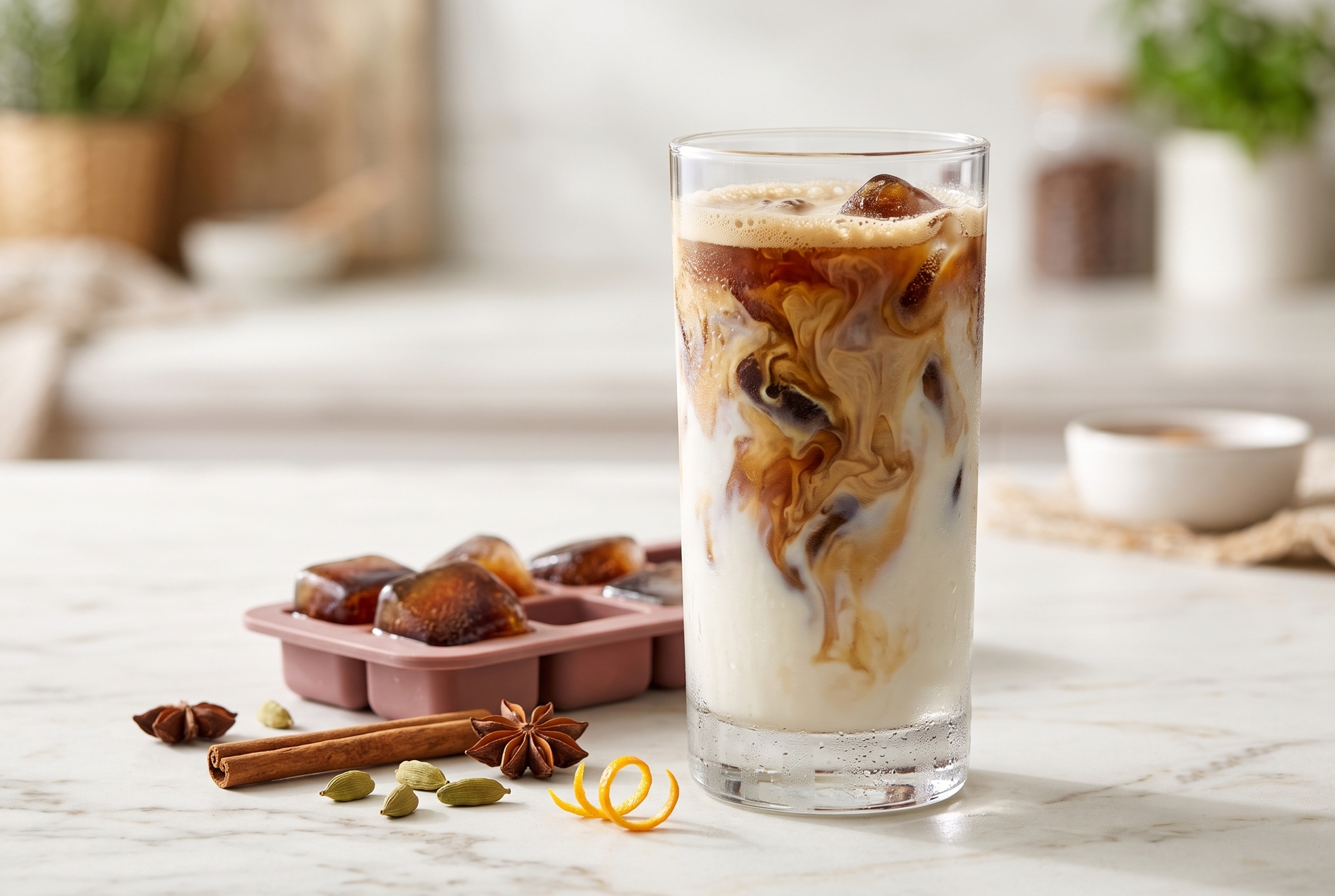
A cold iced latte made with coffee ice and garnished with spices. This drink maintains its strength until the very last sip.
Flavor Ice for Water and Homemade Lemonades
Vegetable Freshness
Not everything destined for the freezer needs to be sweet.
Blended cucumber poured into a mold makes mineral water colder, greener, and more refreshing, entirely without sugar. The same cucumber ice easily goes into a chilled soup or a savory cocktail, adding crispness without excess water. Chopped dill frozen in a bit of water works similarly; the frozen herbs never wilt or darken the way they do in the refrigerator.
Salted lemon ice stands in a league of its own. Mixing lemon juice, water, and a pinch of salt before freezing creates an excellent hydration tool. During peak heat, when constant thirst strikes and plain water becomes boring, this cube makes drinking significantly more enjoyable. The salt cuts the blandness, while the lemon refreshes. After a long walk or an outdoor workout, slightly salted water goes down much smoother. While it may not guarantee athletic records, experience shows that on a scorching day, such a glass is emptied much more willingly.
Fruit Ice and Berries for Drinks
This is where aesthetics come into play.
Whole berries, like raspberries, currants, or blueberries, frozen inside a clear cube, accomplish two things at once: they hold the chill and slowly release color and flavor. By the end of the glass, the raspberry tints the water a pale pink, creating a beautifully elegant effect.
Frozen grapes function differently. Washing large grapes, drying them, and placing them in the freezer scattered on a tray before transferring to a bag turns them into perfect ice substitutes. They chill a glass of white wine or water without diluting a single drop. Toward the end of the drink, these half-frozen grapes eat like tiny sorbets.
Watermelon puree poured into molds becomes a quick prep element for sweltering days. Blending the flesh, optionally straining out the seeds, and freezing it yields vibrant cubes. They drop beautifully into lemonade, sangria, or just cold water, painting it a summery pink.
For a truly festive look, layering the molds brings stunning results. Pouring strawberry puree, letting it set, followed by mango, and then kiwi creates a beautiful gradient. Freezing them one by one, layer by layer, produces a cube that looks like a miniature dessert in the glass and melts just as sequentially.
Beautiful Ice for Pitchers
Clear ice featuring a suspended mint leaf, a thin strip of zest, or a single berry looks spectacular in a table pitcher. Making perfectly clear ice at home presents a challenge. The cloudiness in the center of a cube arises from trapped air and dissolved minerals, which freeze last. Completely transparent ice requires directional freezing, where water freezes from top to bottom in an insulated container, pushing impurities into the lower layer. For a casual lunch pitcher, this is usually unnecessary fuss. Accepting a slight matte finish or using filtered water and freezing it slowly yields cleaner, if not totally flawless, results.
Large cubes offer a much more reliable solution. The bigger the piece of ice, the smaller its surface area relative to its volume, meaning it melts significantly slower. A large block embedded with a lemon slice or a rosemary sprig keeps a pitcher chilled for hours while serving as an elegant, built-in garnish.
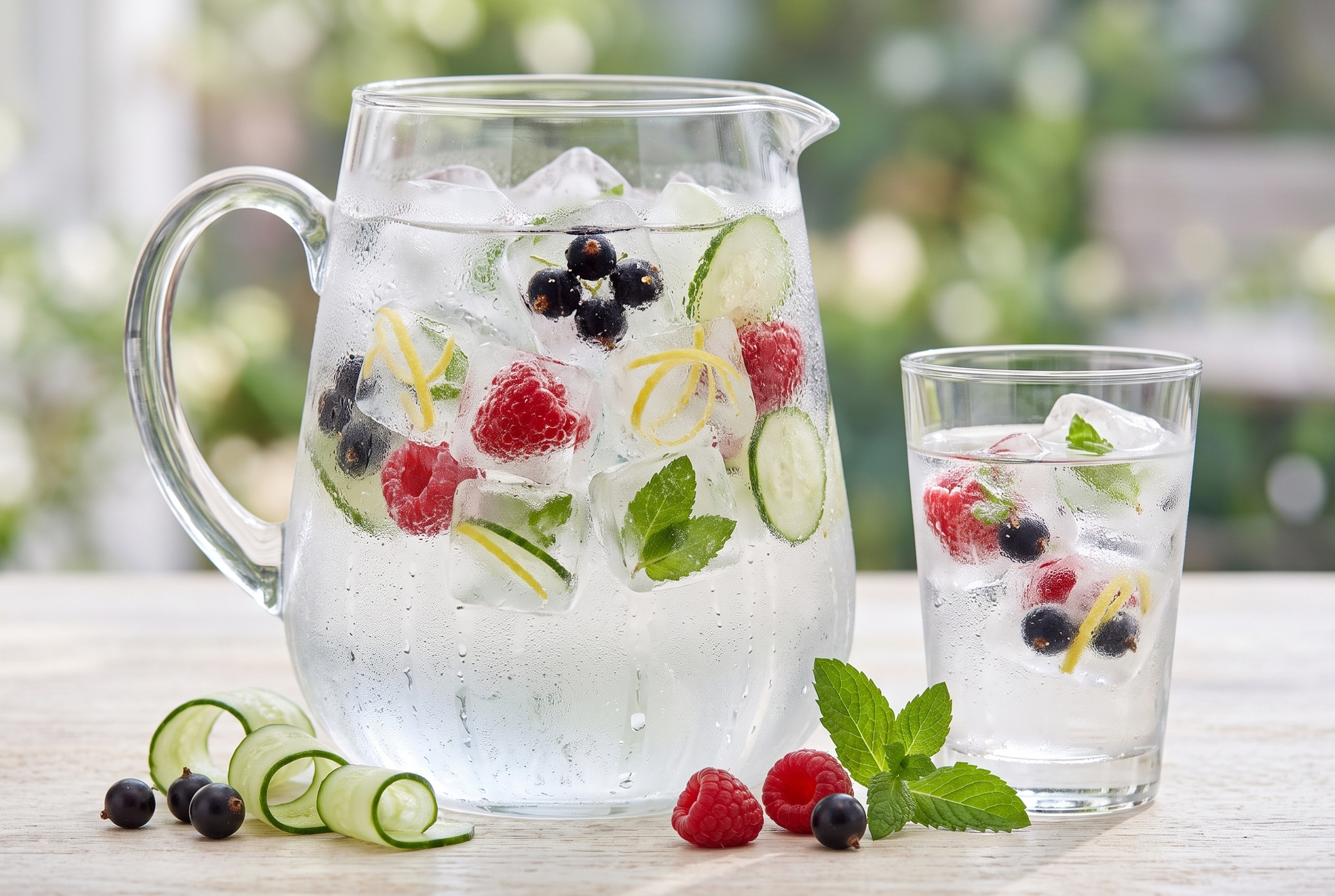
A transparent pitcher of water with large ice cubes containing frozen fresh berries, cucumber slices, and herbs—an aesthetic way to serve drinks on a hot day.
Culinary Ice: From Prep Bases to Sauces
For Spicy Cocktails and Soups
Pureeing ripe tomatoes, adding salt and a few drops of Tabasco, and freezing the mixture transforms it into tomato ice. It acts as the foundation for a quick gazpacho and an essential element of a Bloody Mary. It chills the cocktail and thickens its texture, rather than watering it down with melted ice.
Brine ice makes another fantastic addition to a Bloody Mary. Freezing leftover cucumber or olive brine, which is usually poured down the drain, into small cubes captures intense flavor. Dropping a couple of these into the glass delivers that punchy, savory acidity bartenders always chase.
Cubes made from lemon juice and zest prove useful daily. They excel far beyond a cup of tea. Tossing one into a pan with fish at the end of cooking, or into a sauce lacking acidity, brightens the dish precisely when needed, completely bypassing the hassle of zesters and juicers.
Prep Bases for Hot Dishes
The freezer easily functions as an extension of the saucepan.
When making a rich broth, the leftovers should never go to waste. Reducing it further, chilling it, and pouring it into molds creates authentic bouillon cubes far superior to store-bought versions packed with salt and MSG. These melt perfectly into sauces, risottos, or braised meats. A single cube instantly adds depth where plain water would only dilute the flavor. One crucial safety rule remains: broth must be cooled before freezing, as hot liquids never belong in the freezer.
Herb-infused olive oil freezes beautifully in mini molds, forming dense, aromatic blocks. Mixing the oil with minced garlic, thyme, or rosemary before freezing sets up a brilliant finishing touch. Tossing such a cube directly onto hot pasta or freshly roasted vegetables makes it melt instantly, spreading its aroma as if the herbs were just chopped. Interestingly, the oil does not turn into rock-hard ice but rather a soft mass, making it very easy to pop out of a silicone tray.

Culinary ice made of olive oil, garlic, and herbs melting over hot vegetable pasta, instantly releasing its aroma and elevating the finished dish.
How to Freeze Flavor Ice Properly
A few rules that save a lot of frustration.
Silicone trays perform far better than rigid plastic for flavored ice. A berry or herb cube pops out of silicone with a single push. Plastic trays often require chipping away at the cube, breaking both the ice and its contents.
Once the flavor cubes set, transferring them immediately into an airtight zip-top bag and labeling them prevents flavor contamination. Exposed ice quickly absorbs freezer odors. Within a week next to a fish fillet, coffee cubes will start smelling like fish, becoming entirely unsalvageable.
Keeping different flavor boosters separate is essential. Distinguishing frozen tomato ice from coffee ice visually proves difficult, and mixing them up at six in the morning happens more easily than one might think.
0 comments