
A spoonful of baking soda. A drop of vinegar. It fizzes, foams, and bubbles—and all this beauty goes right into the dough. It looks spectacular. It feels ceremonial. And it is completely pointless.
This ritual remains perhaps the most resilient culinary myth in our kitchens. Your grandmother did it this way. Your mother did it this way. You probably do it too. The problem lies elsewhere: the carbon dioxide designed to leaven your dough has just evaporated. Right above the bowl. Long before it reached the batter. The fizz was beautiful, but your cake will likely fail to rise as high as it could.
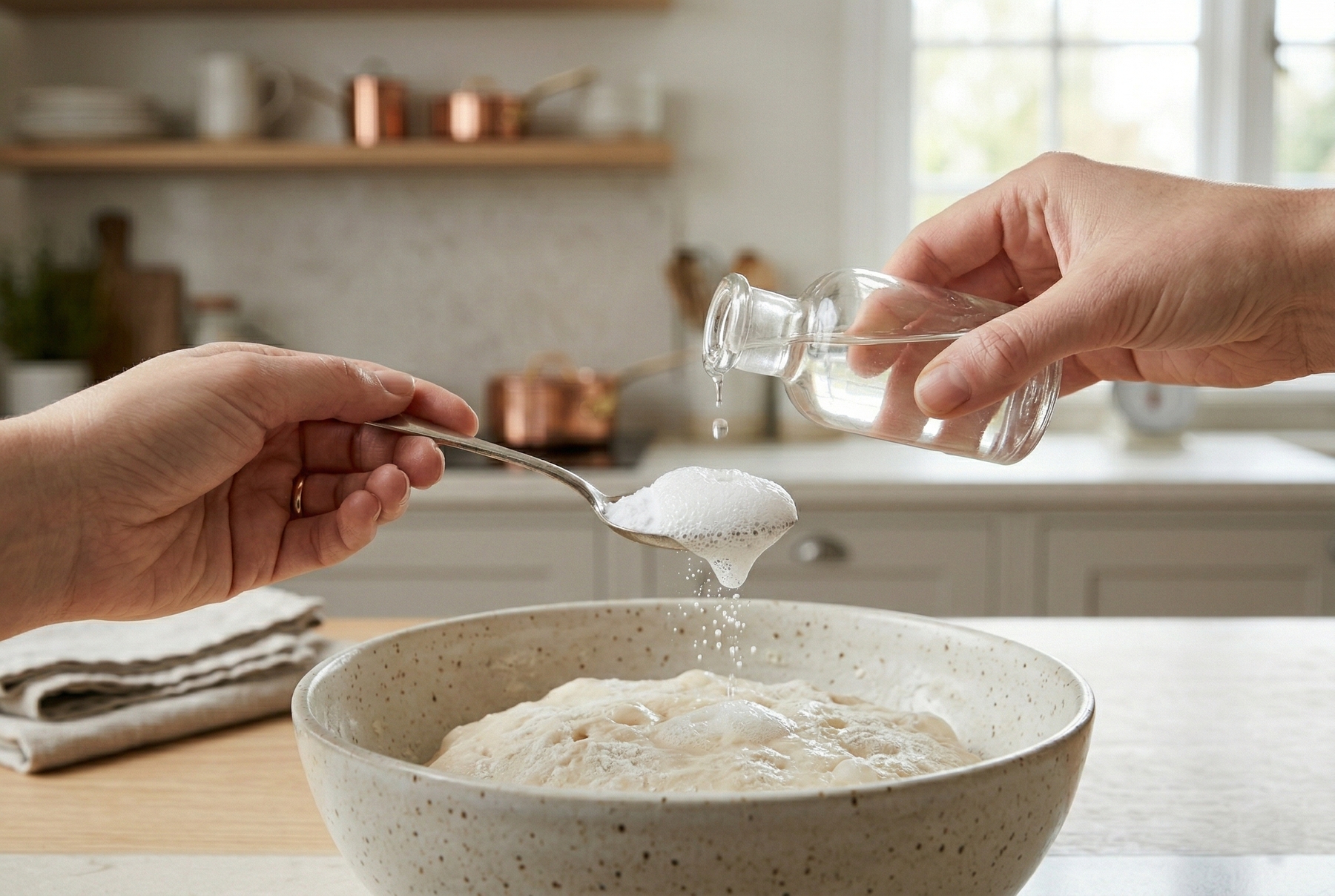
Activating baking soda with vinegar in a spoon remains a popular yet useless practice, as the carbon dioxide escapes into the air rather than lifting the batter.
Table of Contents
What the Difference Is, Beyond the Ingredients
Baking soda (sodium bicarbonate, NaHCO₃) is an alkali. By itself, it does nothing interesting. Without acid, the reaction will not occur. Only upon contact with acid does it release CO₂, filling the batter with airy bubbles. Acid does not mean a spoonful of vinegar; it means kefir (a fermented milk drink), sour cream, buttermilk, yogurt, or fruit purée (honey and brown sugar count too, though to a lesser extent). When baking soda meets these ingredients directly in the batter, the reaction happens exactly where it should. The bubbles remain trapped inside, and the dough rises.
Activating baking soda with vinegar before adding it to the batter means the reaction has already taken place. A watery solution of sodium acetate and leftover soda enters the bowl. The dough will not become airy because the gas has nowhere to come from; it vanished into the air above the table.
Baking powder works differently. Essentially, it is baking soda with a built-in acid (usually cream of tartar or sodium pyrophosphate) and starch, which absorbs moisture and prevents the reaction from starting prematurely inside the packet. It operates in two stages. First, as soon as the baking powder gets wet in the batter, a minor reaction begins at room temperature. Second, the main event happens during heating in the oven (starting around 60°C or 140°F), when the batter rapidly expands. The dough receives its main burst of gas at this exact moment. Bakers refer to this as “double-acting,” a label you frequently see on baking powder packaging.
This also means batter mixed with baking powder can rest briefly before baking without deflating. A batter relying solely on baking soda cannot wait. You mix it with the acidic component and send it straight into the oven.
Why Excess Baking Soda Makes Your Cake Darken and Smell Like Soap
When the batter lacks sufficient acid to neutralize all the added baking soda, the excess alkali remains in the baked goods. During heating, it accelerates the Maillard reaction. The cake darkens faster than it should, and the cake develops an unpleasant brown hue not just on the outside, but throughout the crumb. Furthermore, the leftover alkali leaves a soapy aftertaste.
Adding a little extra baking soda for reliability offers no safety net. It guarantees a ruined flavor.
Grams matter here. Given enough acid in the batter, the standard ratio for baking soda stands at ¼ teaspoon per 120 g (4.2 oz) of flour. Baking powder typically requires more: about 1 teaspoon for the same 120 g (4.2 oz). These amounts are not interchangeable.
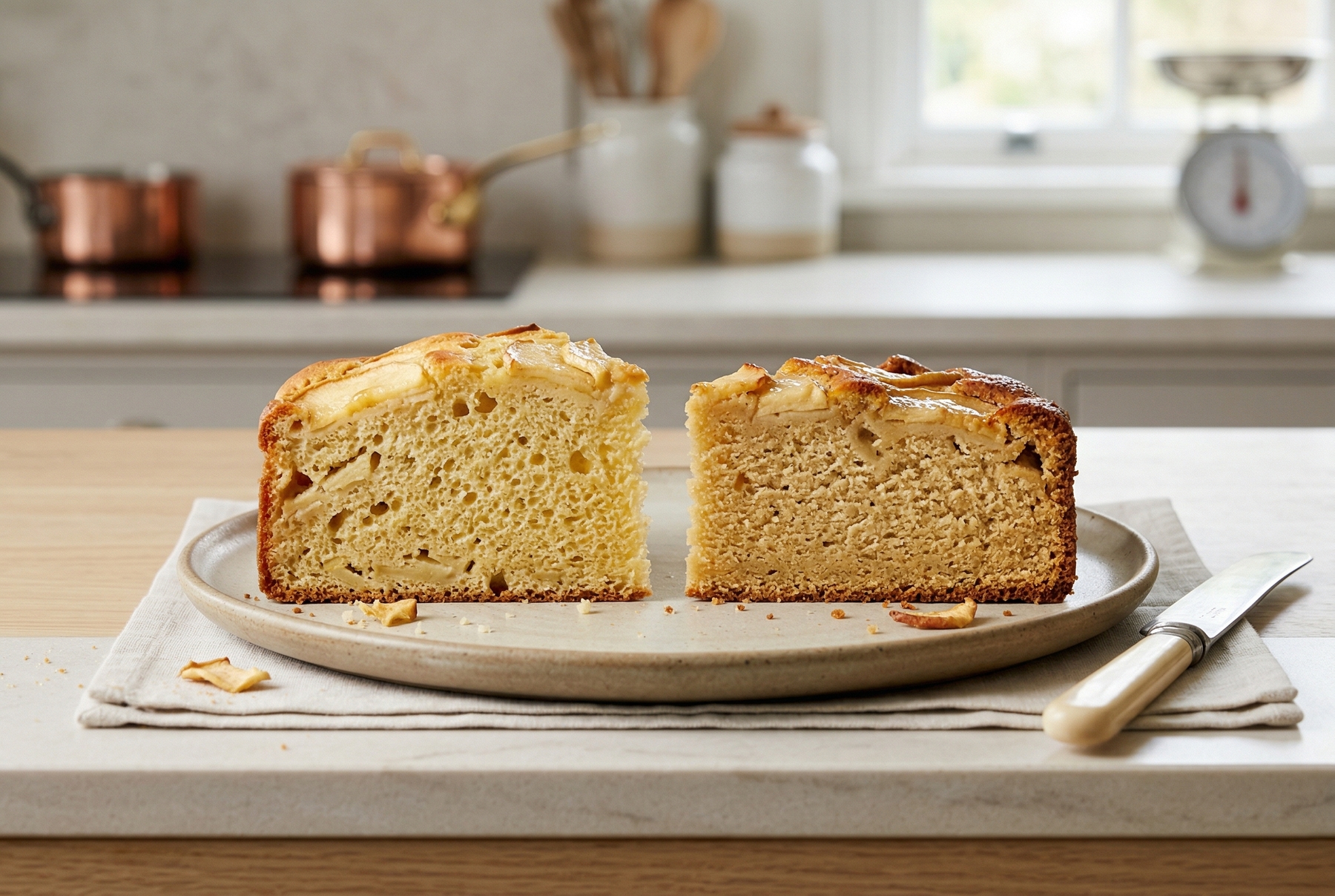
The left shows a cake with the correct dosage, while the right reveals the result of excess baking soda, which caused the crumb to darken and turn dense.
When to Use Which Leavener
For batters made with kefir, sour cream, yogurt, buttermilk, or soured milk, you reach for baking soda. The batter already contains acid, ensuring the reaction proceeds correctly. You whisk the baking soda directly into the flour (without pre-activating it separately), mix the batter, and put it straight into the oven.
If the recipe contains no acidic ingredients—using water, milk, or vegetable oil instead—you grab the baking powder. Lacking its own acid, the baking soda has nothing to react with.
Certain recipes demand both leaveners simultaneously. Consider a Medovik (Russian honey cake) made with kefir: the honey and kefir provide acid, but it might not suffice to lift a large batch of heavy dough. The baking powder then takes over the baking soda’s job, lifting the batter further while inside the oven.
If the Recipe Calls for Baking Powder but You Only Have Baking Soda:
1 teaspoon baking powder = ¼ tsp baking soda + ½ tsp cream of tartar + ¼ tsp starch.
You mix the baking soda, cream of tartar, and starch separately while dry, and then incorporate them into the flour. Mixing them individually directly into the wet batter causes the reaction to start prematurely. The starch acts merely as a buffer here. If you mix the batter and bake it immediately, you can skip the starch entirely.
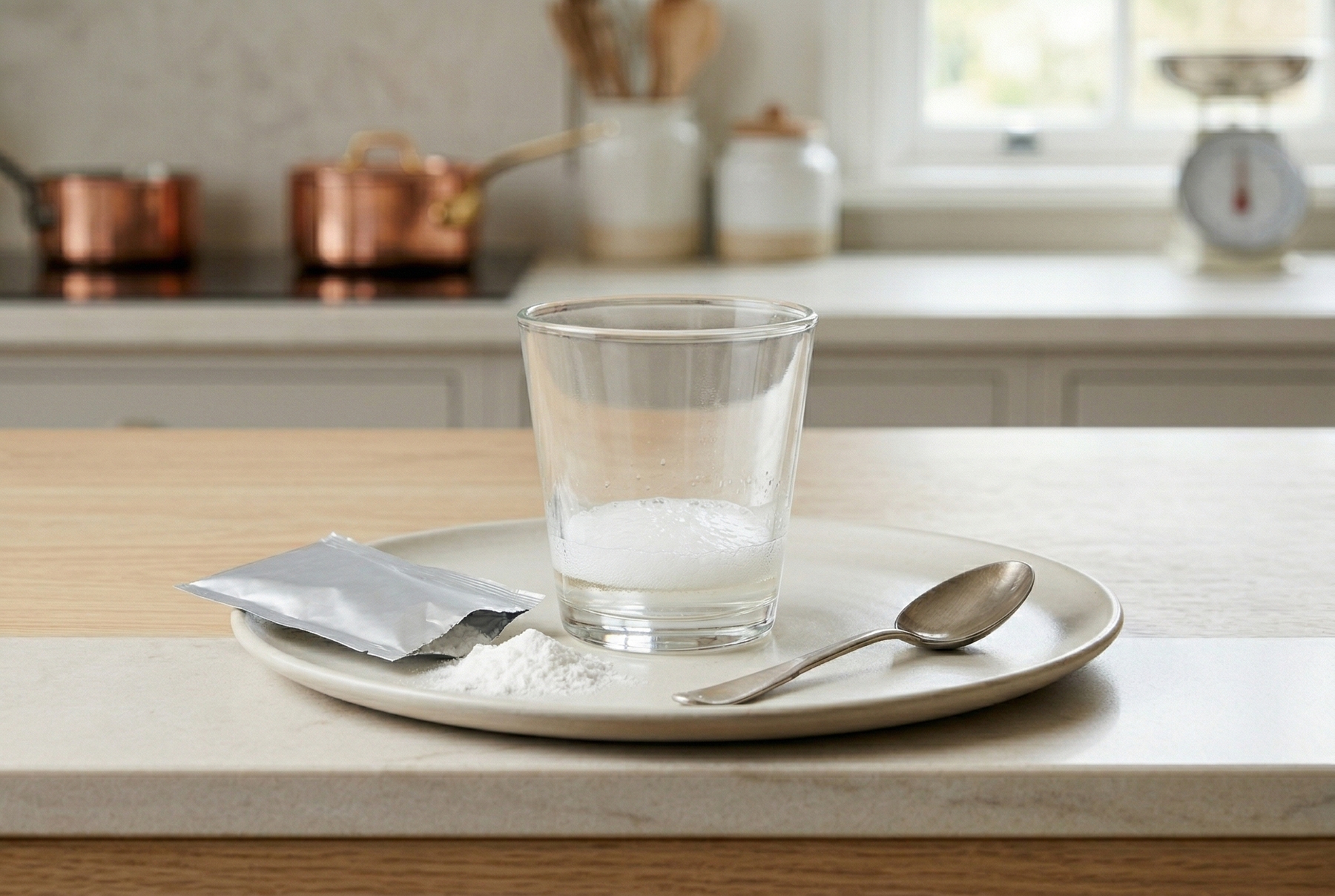
To test the viability of baking powder, pour hot water over it: vigorous fizzing indicates the leavening agent is fresh.
How to Test Baking Powder That Has Been Gathering Dust Since Last Year
Baking powder loses its potency. It does not happen instantly, but it fades—especially if the packet sat open or in a humid cupboard next to the stove. The expiration date on the packaging holds true: after a year or eighteen months, its activity drops noticeably.
The test takes five seconds. You drop half a teaspoon of baking powder into a cup and pour two tablespoons of freshly boiled water over it. It should bubble vigorously—fast, with a loud fizz and visible foam. If the reaction seems sluggish or barely exists, the baking powder will fail to lift your dough.
Crucially, you must use hot water. Cold water produces a reaction so weak that you might misinterpret the results completely.
I spent countless hours trying to understand why the same recipe yielded different results. At some point, I realized the oven, the flour, and even my mood had nothing to do with it. The baking powder in my cupboard had quietly died six months prior. Since then, I test my leavener before every baking session.
0 comments