
Adults expect a child to show respect for food at the table. Not throwing bread, not smearing porridge, and eating properly are standard expectations. The logic of an adult is clear: groceries cost money, cooking takes energy, and the floor requires scrubbing on hands and knees after dinner. There is a second side, however, and forgetting it in a moment of irritation is easy. For a little person, a plate acts as more than just a source of flavor. They explore the world through it, touching, squishing, smelling, and testing what happens when a pea is pushed to the edge with a finger.
This is where two interests collide. A parent needs a calm dinner and relative order. A child needs to understand how this strange substance on the plate works, while figuring out who is in charge at the table. Having three children means going through the smeared porridge phase three times. The main question is not whether playing with food is acceptable or not. The real issue is identifying where normal childhood exploration ends and disruptive behavior begins. Learning to distinguish between these two things is entirely possible.
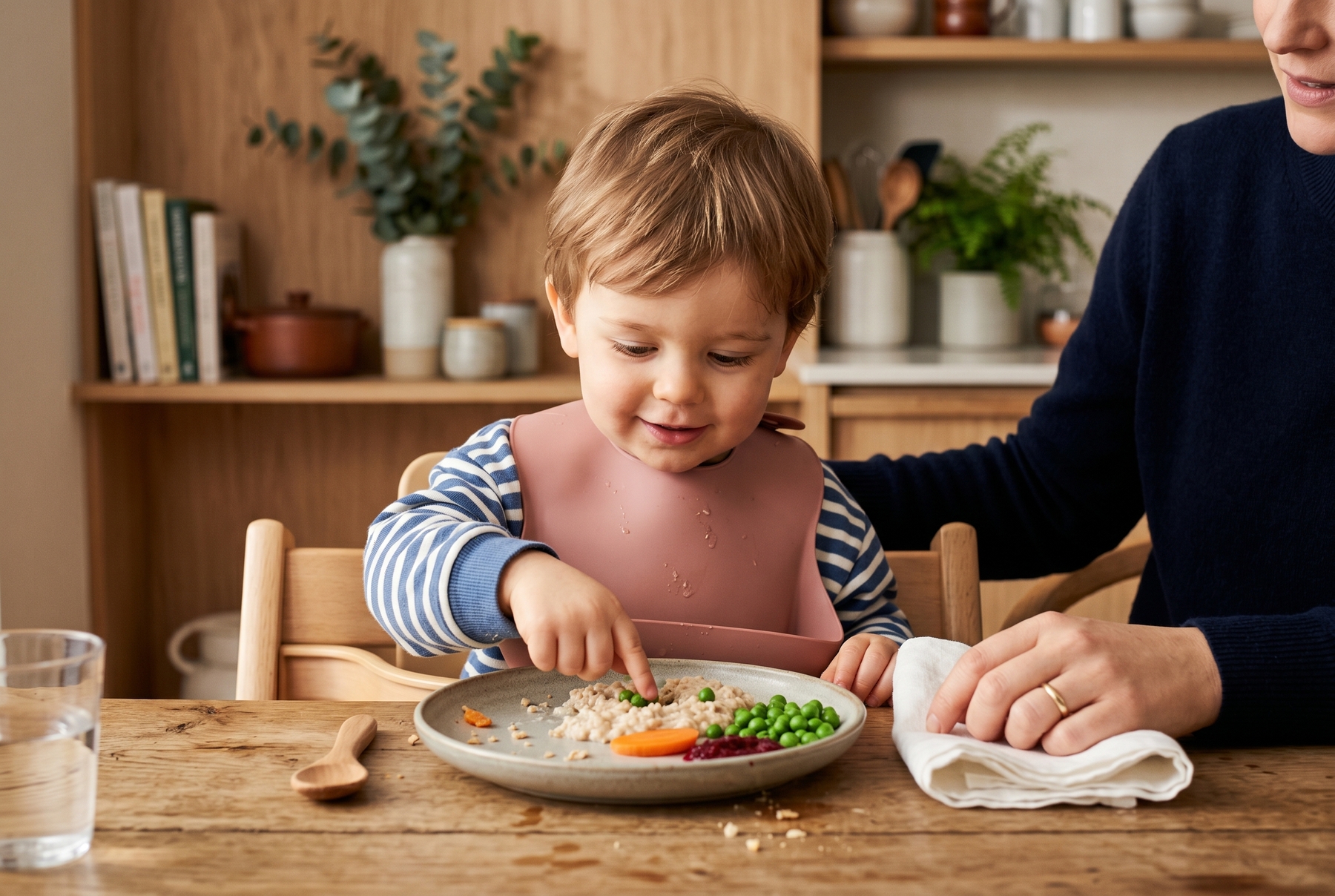
Playing with food provides a young child with a natural way to explore the surrounding world through tactile sensations.
Table of Contents
- Why A Child Plays With Food And What Lies Behind It
- Is It Okay For A Child To Play With Food And When To Forbid It
- Age Changes The Rules
- How To Explain Rules Without Scandal And Shame
- What To Do If A Child Plays With Food At The Table
- Where The Boundary Lies: What To Permit And What To Stop
- Carefulness Without Moralizing
- Handling Intentional Provocation
- Grandmothers, Guests, And Different Rules
- 7 Phrases Instead Of 'Do Not Play With Food': How To Stop Smoothly
- How To Provide Legal Food Play For A Child
- Common Parenting Mistakes When A Child Plays With Food
Why A Child Plays With Food And What Lies Behind It
The Plate As A Way To Explore The World
A child gets acquainted with food using their entire body at once. Hands, nose, tongue, and sometimes even a cheek are involved. Understanding how food feels, whether it is warm or cold, its color, and its behavior is important to them. Carrots crunch and resist the teeth. Porridge sticks to a spoon and stretches into a thread. A pea rolls away. Soup spills if the bowl is tilted slightly further, which happens to be a physics discovery. This has absolutely nothing to do with malice or poor upbringing.
Adults see all of this as a mess that requires cleaning. For a young child, this represents a stream of information that is impossible to obtain otherwise. Reading the ingredients on a jar is not an option for them. Touching is their method of learning.
Sometimes Playing Helps With Getting Used To New Things
An unfamiliar food is not always immediately sent straight into a child’s mouth. Touching a piece, smelling it, breaking it apart, licking it, and setting it aside often come first. Placing it next to the plate is common. Smearing it along the rim and looking again happens frequently. This looks like a mockery of a mother’s soup from the outside. In reality, this is a scouting mission before eating a new food, testing whether it is safe, familiar, and trustworthy.
Pressuring a child at this moment ruins the introduction. Broccoli goes onto the suspicious list and stays there for a long time. My middle child experienced this with braised cabbage; one scandalous dinner at age three turned it into a lifelong enemy.
Sometimes It Is Not About Food, But Boundaries
Honestly separating two different scenes is helpful here. A one-year-old baby silently squishing cottage cheese with their fingers and watching it squeeze through is one thing. An older child defiantly throwing bread on the floor, spitting soup, or smearing puree on the table while looking directly into your eyes to check the reaction is completely different.
One scenario is exploration. The other is testing boundaries. Lecturing about starving children proves useless here. Maintaining a calm boundary without yelling is what actually helps.
Is It Okay For A Child To Play With Food And When To Forbid It
A Total Ban Makes Food An Anxious Topic
Hearing only constant commands to stop touching, sit up straight, and eat properly turns a meal into an exam. A child eats under surveillance, reads the tension, and waits for a reprimand. Claiming that this leads to terrible consequences is unnecessary, and diagnosing anything is definitely not the goal. The everyday logic remains simple, however: tighter control over every movement leaves less room for peace at the table. Dinners end in tears over nothing much more frequently.
Total Freedom Does Not Help Either
The opposite extreme offers no salvation either. Throwing food, smearing it on walls, grabbing from shared bowls with bare hands, and disturbing others prevents a child from acquiring social cues. A family dinner is not a barracks, but it is also not a playroom with zero rules.
Forbidding Actions Is Better Than Forbidding Interest
Actions fall under bans, while curiosity remains free. Looking at food, smelling it, touching it within reason, breaking a personal portion, and dipping bread into sauce are all perfectly acceptable. Throwing, spitting, ruining someone else’s portion, and preventing others from eating are forbidden. The difference is immense, yet it sounds almost identical, which makes saying it out loud essential.
Age Changes The Rules
Toddlers: Touching Is More Important Than Sitting Straight
Younger children have a stronger need to touch and grab food. Doing this at a year or eighteen months is a normal developmental stage rather than mere indulgence. The boundaries of safety and cleanliness must remain simple and unbreakable, however: hot food is restricted, small and hard pieces are removed, and knives stay off the table. Fighting for a clean t-shirt at this stage makes absolutely no sense.
Preschoolers: Negotiating Becomes Possible
A foundation for rules emerges around three or four years old. Food stays on the plate. Placing unwanted items on the edge instead of the floor is a solid rule. Using hands for foods designed to be eaten by hand is fine, but throwing is not. A preschooler grasps short, specific conditions when they are repeated calmly and consistently. Keeping rules independent of an adult’s mood is the main priority.
Schoolchildren: The Conversation Shifts To The Shared Table
Discussing mutual comfort at the table becomes possible with a school-aged child. The topic of general culture appears here: not disturbing those sitting nearby, avoiding ruining food for a laugh, and cleaning up plates and crumbs. A seven-year-old handles this perfectly well. A nine-year-old handles it even better, although mine occasionally pretends napkins were invented yesterday.
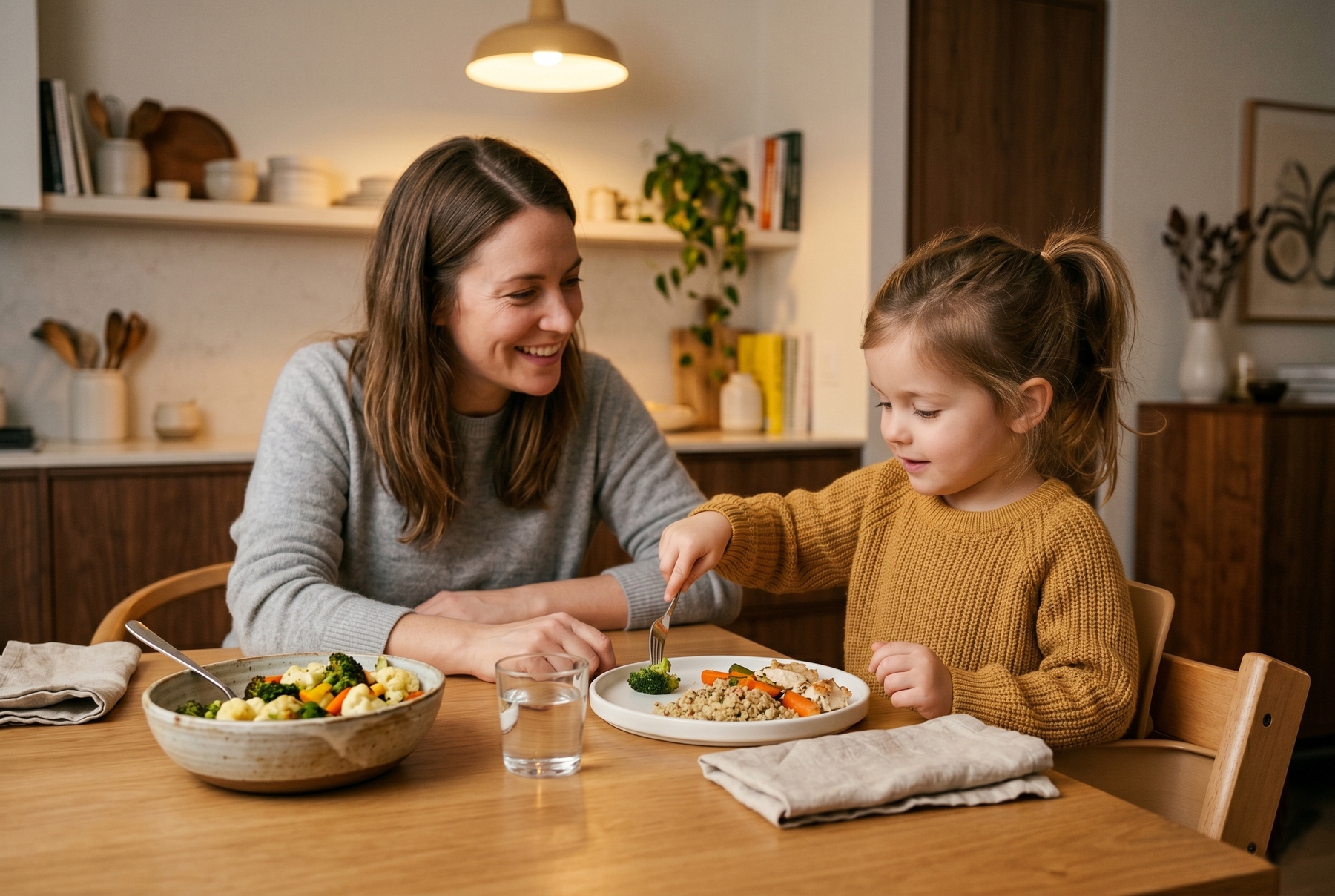
Introducing table manners gradually helps a child master cutlery without experiencing stress or pressure.
How To Explain Rules Without Scandal And Shame
Speak Briefly And To The Point
Lengthy moralizing at the table misses the mark. A child registers the intonation while the meaning of the words slips by entirely. Short phrases work much better: ‘We do not throw food. Put what you do not want on the edge of the plate.’ ‘Looking at pasta is fine, but spreading it across the table is not.’ ‘Say when you are full. Torturing food is unnecessary.’ ‘Spit it into a napkin if you dislike it; spitting on the table is forbidden.’
Avoid Shaming With Food, Poverty, And Others’ Hunger
Phrases about starving children somewhere else or failing to appreciate hard work rarely teach carefulness. They induce guilt, and guilt fails to guide a child’s immediate physical actions. A specific rule provides much more clarity: we avoid throwing food, we keep dirty hands out of shared dishes, and we clean up leftovers. Guilt paralyzes, whereas a rule suggests exactly what to do with one’s hands right now.
Connect Rules To Consequences Rather Than Threats
A consequence differs from a punishment by remaining calm and predictable. ‘Throwing food means the plate goes away for a minute.’ ‘Food stays on the plate if you want to keep eating.’ ‘We clean up when you are done.’ A child sees the connection between an action and its consequence. Doing this calmly, without acting in the heat of the moment, works best. Children quickly read the logic when it remains independent of whether you got enough sleep.
What To Do If A Child Plays With Food At The Table
Thinking time vanishes once the porridge starts flying. Keeping a short sequence of actions in mind proves convenient.
- Understand what is happening. Assess whether the child is hungry or already full. Determine if the food is new or familiar. Observe whether they are exploring or provoking. Consider if they are tired or have been sitting at the table longer than they can handle.
- Name the action calmly. Providing a simple description without moralizing works best: ‘You are smearing porridge on the table.’ ‘You are throwing bread.’ ‘You are spitting water.’ Naming the action often proves sufficient to make a child stop independently.
- Offer an acceptable substitute. ‘Touch a piece on your own plate if you want to explore.’ ‘Put it here if you dislike it.’ ‘We will get the playdough out after dinner if you want to play.’ ‘Mix the salad in the bowl if you want to help.’
- End the meal if playing takes over. Children often play because their hunger has already passed. Pleading for just one more bite proves useless and simply angers everyone involved. Closing the topic calmly is the best approach: ‘It looks like you are finished. We are clearing the plate.’
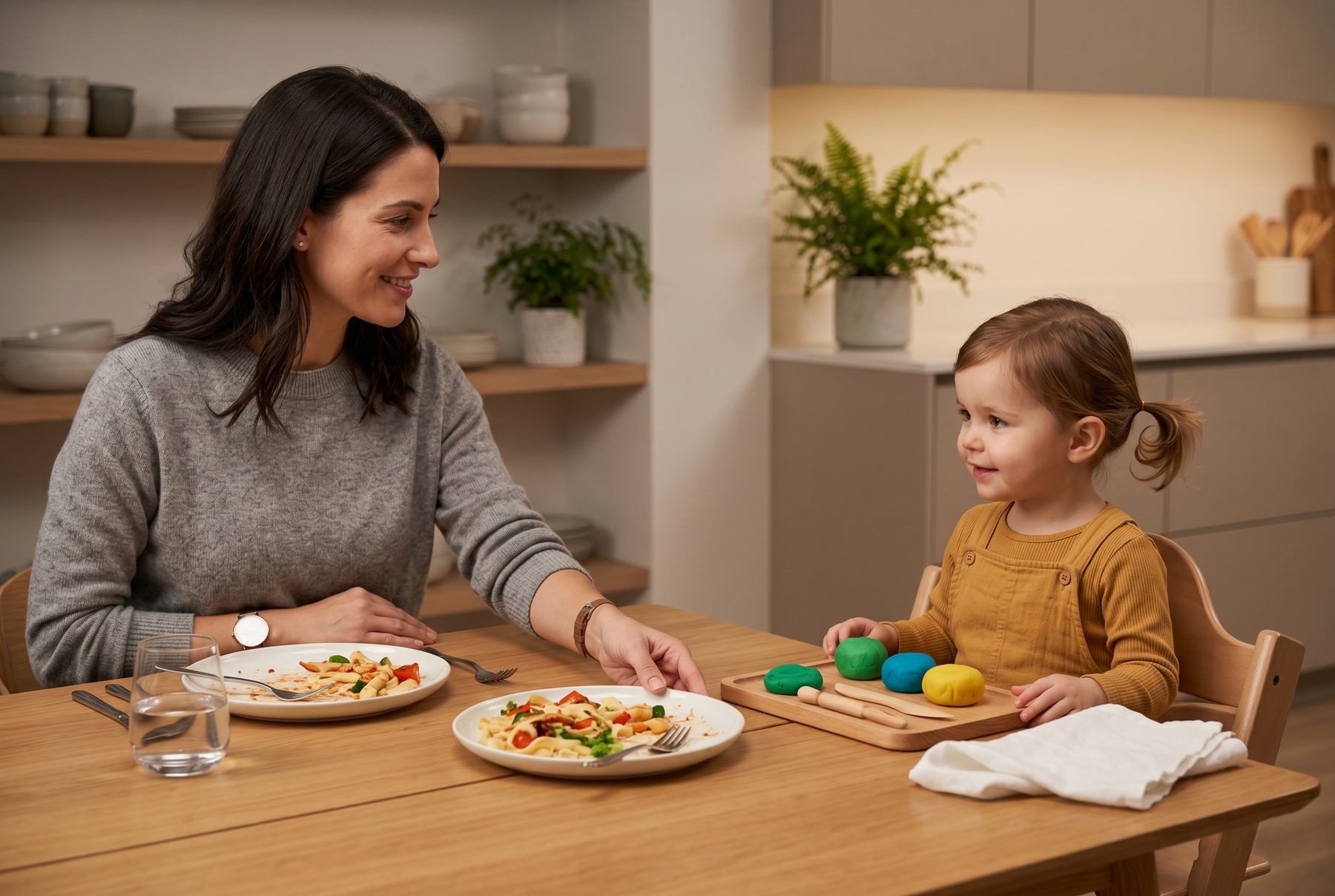
Offering playdough or modeling clay separate from the family dinner satisfies a child's urge to squish and sculpt.
Where The Boundary Lies: What To Permit And What To Stop
Keeping a rough guide of what falls into the norm and what requires gentle intervention prevents having to make new decisions every dinner.
Generally acceptable actions include:
- Touching a new food, smelling it, or breaking off a piece;
- Dipping bread into sauce or eating finger foods by hand;
- Making a face out of vegetables on a personal plate;
- Helping to set the table or choosing what to eat first.
Actions better stopped include:
- Throwing food and spitting;
- Smearing food on furniture, clothing, and walls intentionally;
- Putting hands in shared dishes and ruining someone else’s portion;
- Playing with sharp utensils and hot food.
Safety Remains A Separate Issue
Negotiations have no place here. Hot soup, boiling water, knives, and glassware stand outside the play zone, leaving zero room for debate with a two-year-old. Giving toddlers small, hard foods that present choking hazards, such as whole nuts, large chunks of raw carrot, or whole grapes, is strictly avoided. Frightening the child during this process is unnecessary. Removing dangerous items from the table while maintaining a calm, steady tone is entirely sufficient.
Carefulness Without Moralizing
Participation Teaches Better Than Any Lecture
A child begins to value food through active involvement rather than listening to stories about the price of bread. Washing apples under running water, selecting cucumbers at the store, placing bread on plates, setting the table, and helping to gather leftovers teach genuine appreciation. Throwing food that required personal effort onto the floor becomes much harder. Testing this repeatedly in a home kitchen confirms its truth.
A Clean Plate Is Not A Cult
Carefulness and the obligation to force-feed oneself are entirely different concepts. A child reaching satiety early or disliking zucchini is normal. Wanting less today than yesterday is also fine. Ruining food for entertainment when eating is no longer the goal remains unacceptable. Holding this specific boundary is what matters. Achieving an empty plate at any cost is not the objective.
Ending A Meal Is Also A Skill
Learning how to end a meal properly is a useful skill that rarely gets enough attention. Putting leftovers in a container, throwing away uneaten scraps without drama or lamentation, brushing off crumbs, and carrying a cup to the sink are all valuable actions. These simple routines give a child a far better understanding of food’s value than a dozen conversations about times of famine.
Handling Intentional Provocation
Avoid Putting On A Show
An adult’s dramatic reaction frequently reinforces bad behavior. A child instantly realizes that one thrown meatball turns the entire kitchen upside down, makes mom blush, and makes dad jump up. Controlling parents through the dinner plate proves far too exciting to abandon. Maintaining a calm face immediately devalues the trick.
Fewer Words, More Consistency
Stopping the hand, stating the rule once, and giving one chance is an effective strategy. Removing the food or moving the child if the behavior repeats works best. Doing this without shouting, but also without endless ten-minute negotiations, is key. Children sense perfectly well when words carry no weight and test this with a persistence worthy of a better cause.
Check The Background
Playing with food sometimes has absolutely nothing to do with food itself. A child experiencing a lack of attention simply uses the plate because it is within reach. Feeling overexcited after a noisy day, experiencing exhaustion, harboring jealousy toward a younger sibling, or sitting at the table for too long for their age are all common triggers. Looking beneath the surface of this behavior proves incredibly useful before declaring war on it.
Grandmothers, Guests, And Different Rules
Dealing with unfamiliar rules at your own table creates a distinct headache. Discussing household agreements calmly beforehand, prior to dinner, is much easier: ‘We do not force anyone to finish everything, but we avoid throwing food.’ ‘Placing unwanted food on the edge of the plate is fine.’ ‘Teaching gentle tasting of new things is our current goal, so we avoid applying pressure.’
The standard may be higher when visiting, and explaining this honestly to a child before leaving the house is important. Touching broccoli with bare hands at home is fine, while asking or using a fork is better as a guest. Double standards do not exist here: certain rules apply at home, while different ones apply in someone else’s house. Distinguishing between them benefits the child.
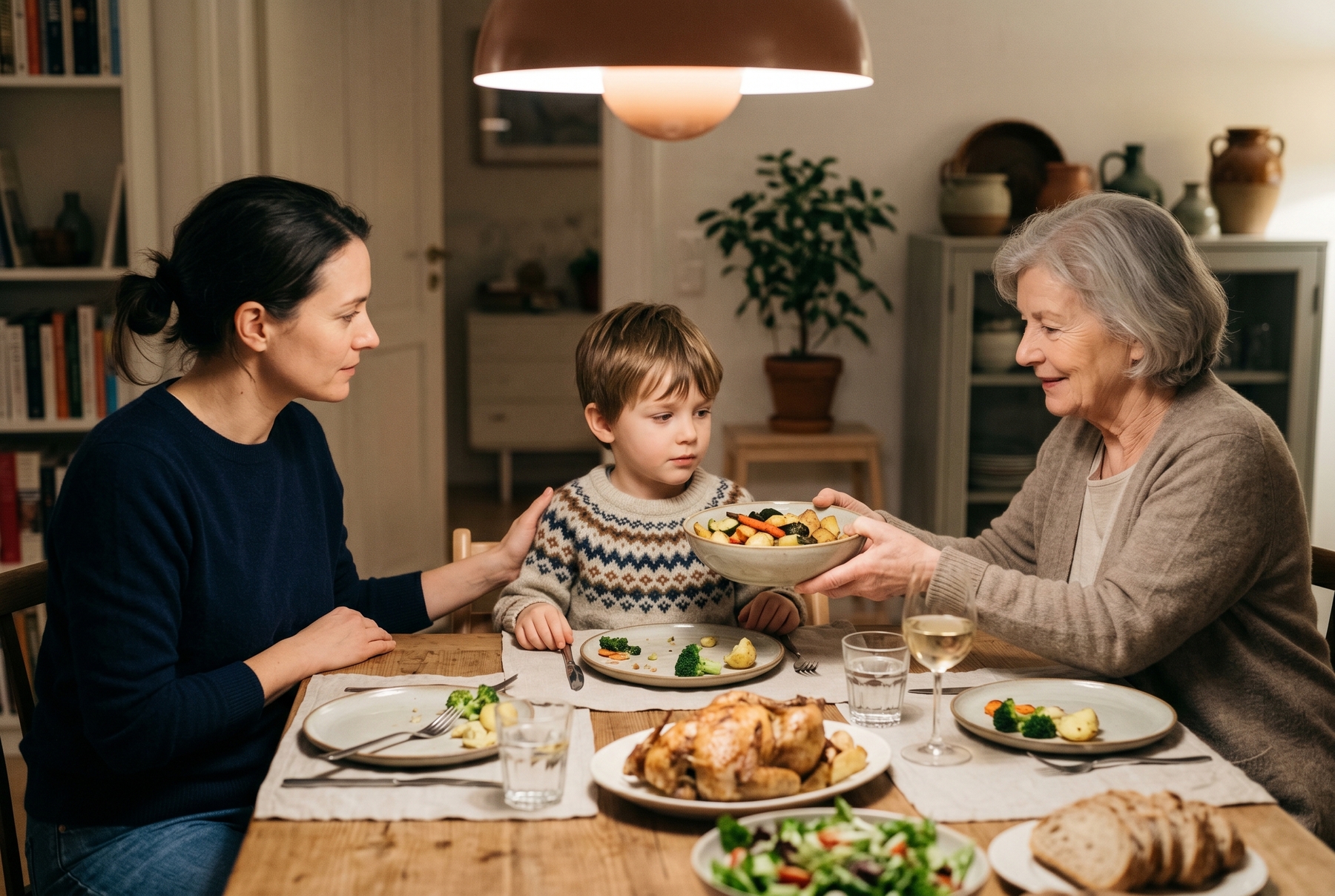
Table manners at a grandmother's house or as a guest may differ from those at home, making prior agreements essential.
7 Phrases Instead Of ‘Do Not Play With Food’: How To Stop Smoothly
Keeping a short cheat sheet in mind proves highly convenient. These phrases remain calm, specific, and avoid placing guilt on the child.
- ‘Food stays on the plate.’
- ‘Take one piece if you want to explore.’
- ‘Leaving food is fine if you dislike it, but throwing it is not.’
- ‘Spitting is forbidden. Spit it into a napkin.’
- ‘Playing means the food is finished.’
- ‘We will clean this up and play after dinner.’
- ‘Keeping the table calm for everyone is important to me.’
How To Provide Legal Food Play For A Child
Kitchen Tasks Instead Of Chaos At The Table
The urge to squish, tear, and sculpt never disappears completely, making a legitimate outlet the best solution. Shaping cottage cheese pancakes with messy, happy hands works wonders. Washing vegetables, tearing lettuce leaves, decorating porridge with a berry pattern, assembling a personal sandwich, or arranging vegetables in neat rows on a plate channel energy productively. The bread stays securely on the table as a result.
Playful Presentation Without Turning Dinner Into A Circus
A funny face made of tomato halves or a rainbow plate of colorful vegetables occasionally works miracles for an appetite. Turning every dinner into a grand performance just to secure one extra bite remains unnecessary and quickly leads to exhaustion. Doing this saves a difficult day. Making it a daily routine is unneeded.
Sensory Play Separate From Eating
Setting aside dedicated time helps toddlers who feel a physical need to squish and pour things. Playdough, a bowl of grain under supervision, water, and soft, safe foods offer great outlets. Doing this as an independent activity with a clear beginning and end, rather than while the whole family attempts to eat dinner, is the right approach.
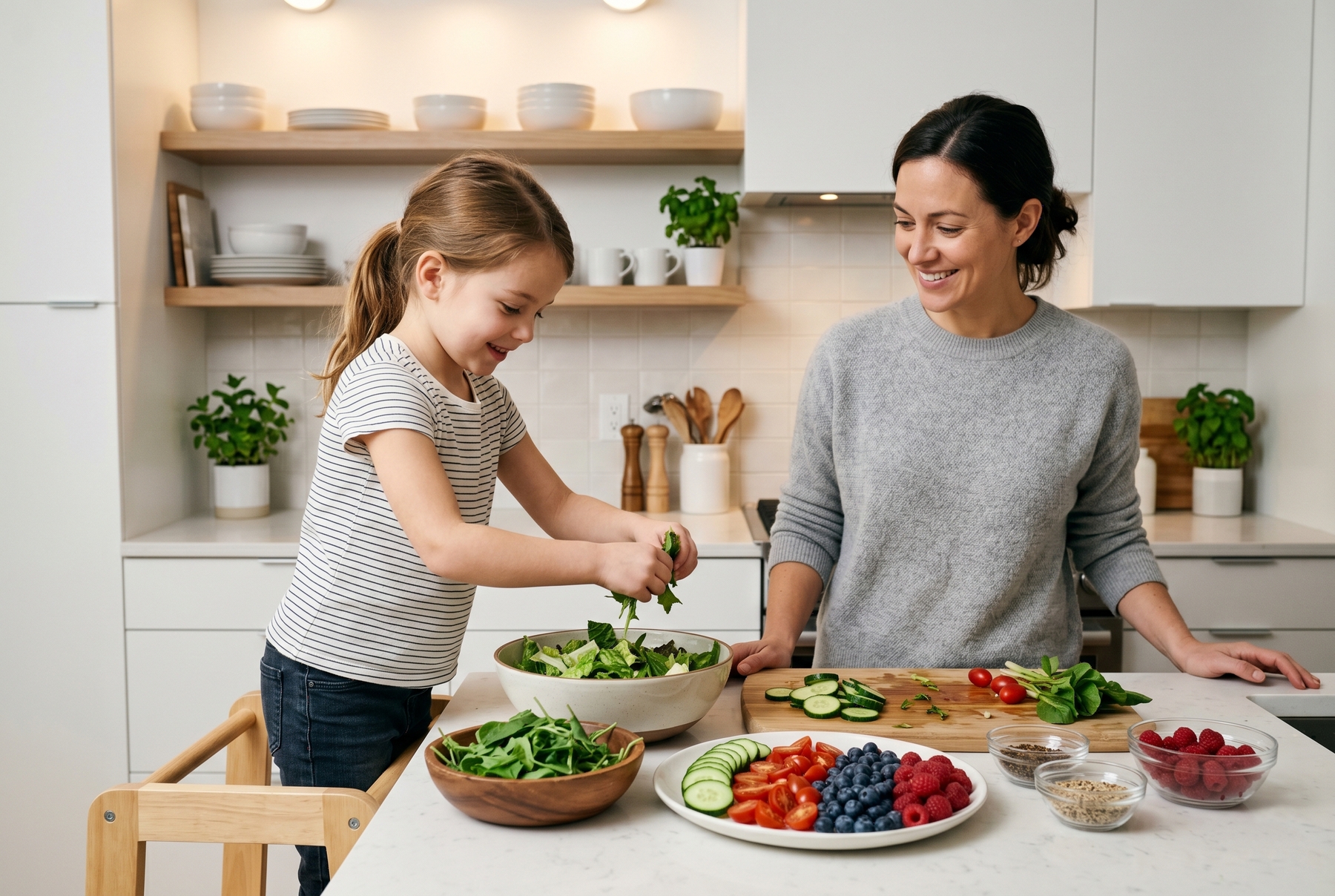
Involving a child in the food preparation process serves as an excellent way to channel their interest in ingredients constructively.
Common Parenting Mistakes When A Child Plays With Food
Recognizing the few common errors is quite easy. Issuing too many simultaneous commands to sit straight, stop touching, stop fidgeting, eat faster, and stop talking completely overwhelms a child, causing them to stop listening entirely. Relying on one or two key rules works far better. Pleading with a child to eat after they have already started playing ignores a clear signal: hunger has passed and boredom has begun. Laughing at a thrown spoonful of porridge today and harshly scolding for the exact same action tomorrow represents a separate trap. Understanding why something appeared cute yesterday but terribly rude today is genuinely difficult for a child.
The final and most comforting point deserves mention. A mess causes irritation, and arguing with that is impossible. It rarely signifies a poorly raised child, however. Passing through this phase is something almost everyone experiences, and doing so goes much faster when rules remain clear and the adult nearby stays calm. Seeing my youngest put a macaroni noodle on a fork and raise it above her plate like a flag tomorrow is entirely expected. Putting my phone away, looking at her, and saying that the exploration is over and it is time to eat will be my response.
0 comments