
There is a culinary superstition that if onions and carrots have not met the skillet, the soup will turn out flat. Truthfully, this rule does not always apply. Sautéing certainly does its job. It extracts sweetness from the onion, dissolves aromatic compounds into the fat, and gives the soup a warm, slightly caramelized tone. However, there are soups where these effects are unnecessary. Sometimes, sautéing genuinely interferes with the flavor.
A soup without sautéing, or sofrito, relies on different foundations: clear broth, precise vegetable cuts, acidity, fresh herbs, spices, and fat added at the very end. When all these elements are in place, the skillet remains dry, and the flavor shines. After dozens of trials, a simple truth emerges: sometimes the best move is to skip the extra steps.
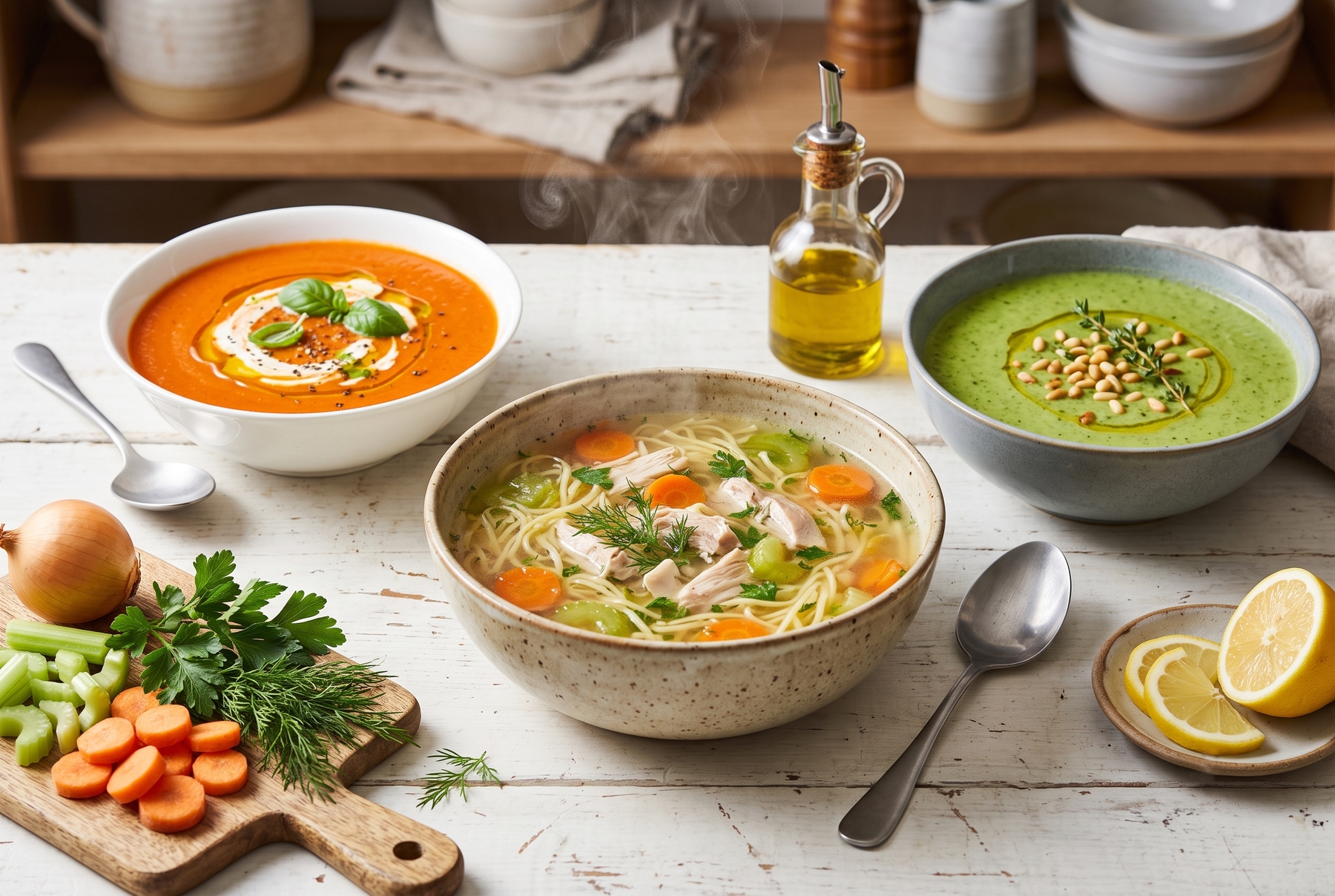
Appetizing homemade soups made without sautéing: a light chicken noodle soup, a vibrant tomato puree soup, and a delicate green cream soup.
Table of Contents
- When You Can Skip the Sauté: 3 Scenarios and One Caveat
- Soup No. 1: Chicken Noodle Soup
- Soup No. 2: Ukha and Fish Soups
- Soup No. 3: Sorrel Soup
- Soup No. 4: Meatball Soup
- Soup No. 5: Tomato Soup
- Soup No. 6: Miso and Asian Variations
- Soup No. 7: Cauliflower, Broccoli, or Zucchini Cream Soup
- How to Replace Sautéing in Soup: 7 Ways to Build Flavor
- Where Sautéing Truly Belongs
When You Can Skip the Sauté: 3 Scenarios and One Caveat
If the Soup Relies on a Great Broth
Chicken, fish, mushroom, or meat broth already provides a strong foundation, meaning you can simmer the soup without any pre-frying. The test is simple: remove the lid and smell. The broth should smell like chicken, fish, or mushrooms, rather than boiling water with salt. The color might be light, almost transparent, which is perfectly fine. The aroma must be clear. If the aroma is present, a sautéed base is no longer mandatory.
If the Soup Contains Acidity or Fermented Ingredients
Tomatoes, sorrel, sauerkraut, lemon, cucumber brine, yogurt, or miso paste all make the broth brighter and denser without needing oil in a skillet. The acid tightens the other flavors: the broth feels brighter, vegetables taste sweeter, and the salt strikes the perfect balance.
If Lightness is the Goal
Summer soups, fish soups, quick weeknight meals, and soups for children all fall into this category. Fried onions weigh down their taste and overpower the aroma of the broth. Here, it is best to leave the broth light and delicate.
Where You Might Go Wrong
Simply crossing out the sauté step from any recipe and expecting the same result does not work. The missing aroma must be compensated with bay leaf, garlic, fresh herbs, spices, or a high-quality broth instead of plain water.
Soup No. 1: Chicken Noodle Soup
This is where the skillet is truly unnecessary: chicken noodle soup turns out perfectly without sautéed vegetables. The flavor comes from the chicken, root vegetables, and a gentle simmer. Slicing the carrots into thin rounds or small cubes ensures they soften and release their sweetness in the broth over 15 to 20 minutes without any frying. Tossing the onion in whole or in large halves allows you to easily remove it before serving.
A good sign is a transparent broth that smells of chicken and celery, with tender carrots and springy noodles. Common mistakes include adding noodles too early so they boil into mush, boiling the soup too vigorously so the broth turns cloudy, and dumping all the salt in at the beginning. Salting in two stages works best: a little at the start, bringing it to perfection at the very end.
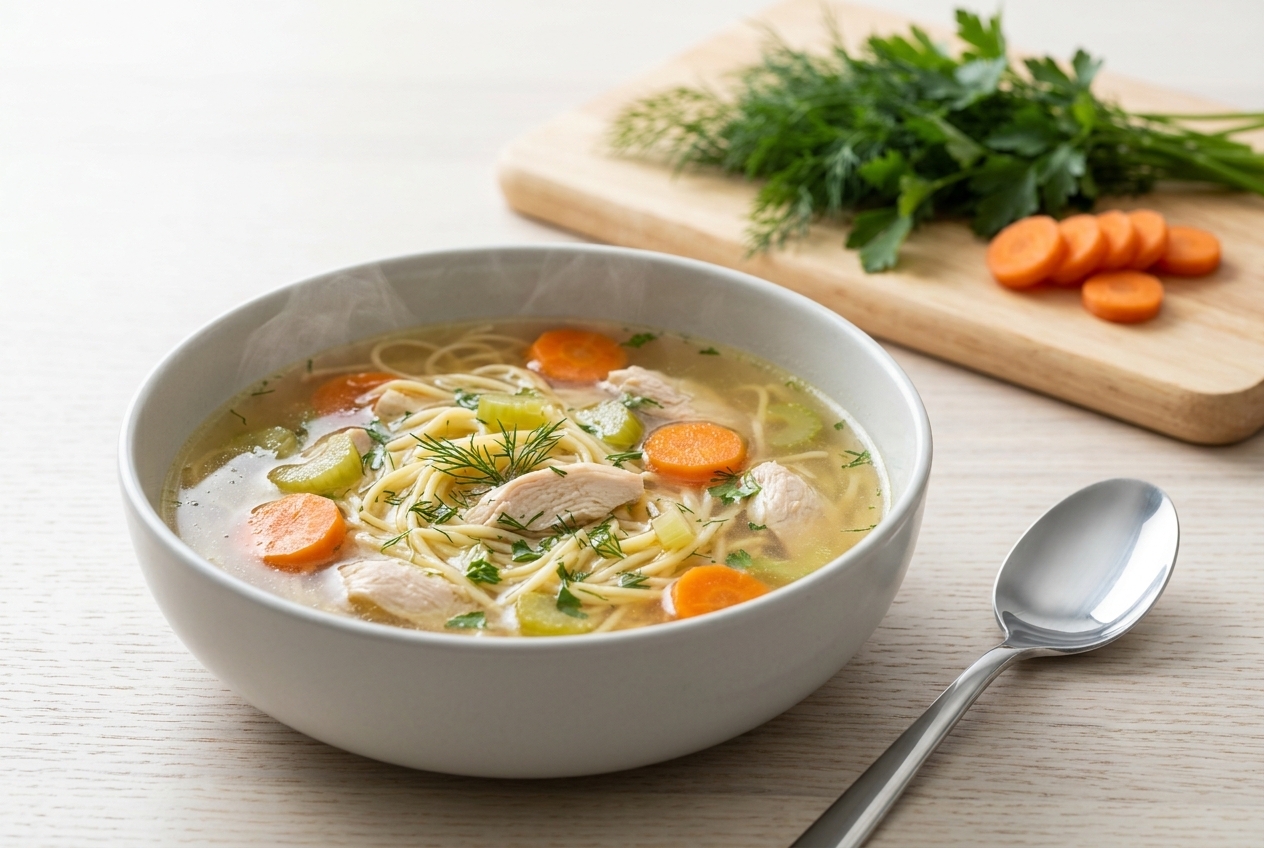
Clear chicken noodle soup with carrot rounds—a light and satisfying dish prepared without a drop of excess fat.
Soup No. 2: Ukha and Fish Soups
In ukha (a traditional Eastern European fish soup) and other clear fish soups, sautéing often does more harm than good. Fried onions overpower the delicate scent of the fish, which is the main attraction in ukha. The foundation remains simple: fish, raw onion, potatoes, black pepper, bay leaf, and fresh dill added at the very end.
Zander, cod, hake, pink salmon, or fish heads with backbones work perfectly. Boiling the fish briefly—roughly 10 to 15 minutes after coming to a boil, depending on the size of the pieces—ensures the flesh easily flakes apart and loses its glassy interior. A properly finished broth smells of fresh fish, whether river or sea, without any heavy, muddy odors. If the smell feels heavy and the broth is cloudy, it usually indicates fish that is not fresh or that the pot boiled too violently. Skimming the foam and keeping the heat low yields the best results.
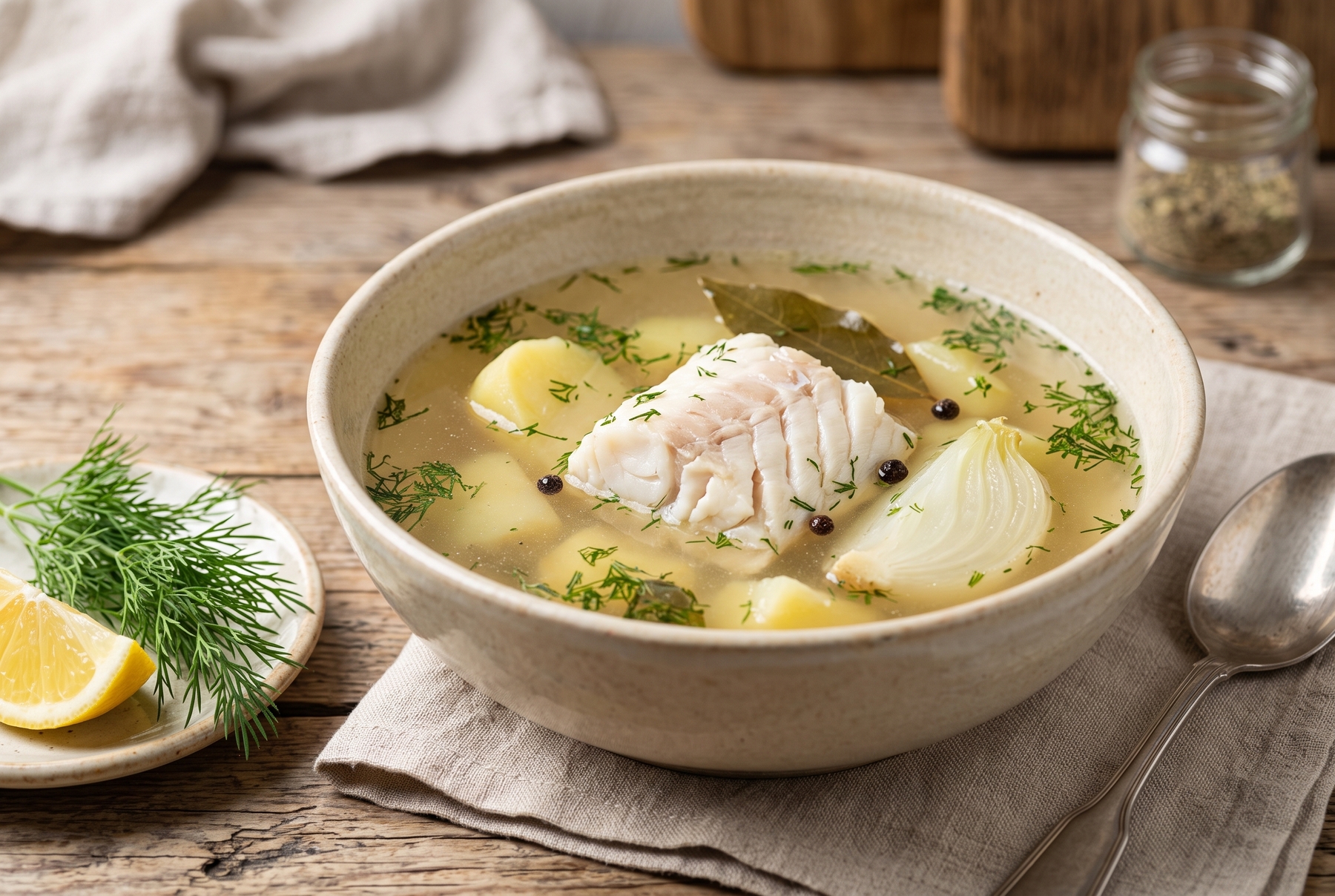
Traditional fish soup featuring tender white fish, potatoes, and fresh dill. The broth offers a pure flavor without fried onions.
Soup No. 3: Sorrel Soup
Sorrel soup (a traditional spring green soup) without sautéing is a springtime affair where acidity does all the heavy lifting. Sorrel, egg, fresh herbs, and a light broth or even water provide everything it needs. Fried onions only make the soup heavier and mute the exact freshness that makes sorrel so appealing in the first place.
Great options include adding potatoes, a handful of rice, an egg poured into the boiling soup in thin ribbons, or simply placing half a boiled egg in the serving bowl. The main practical guideline involves adding the sorrel just two or three minutes before the soup is done. Overcooking turns the bright leaves into a dull, swampy mass. While the taste remains, the visual appeal disappears.
Sorrel contains oxalic acid, so people with kidney issues or a tendency to form kidney stones should consult a doctor before consuming it. For a healthy individual, a bowl of this vibrant soup rarely poses a problem.
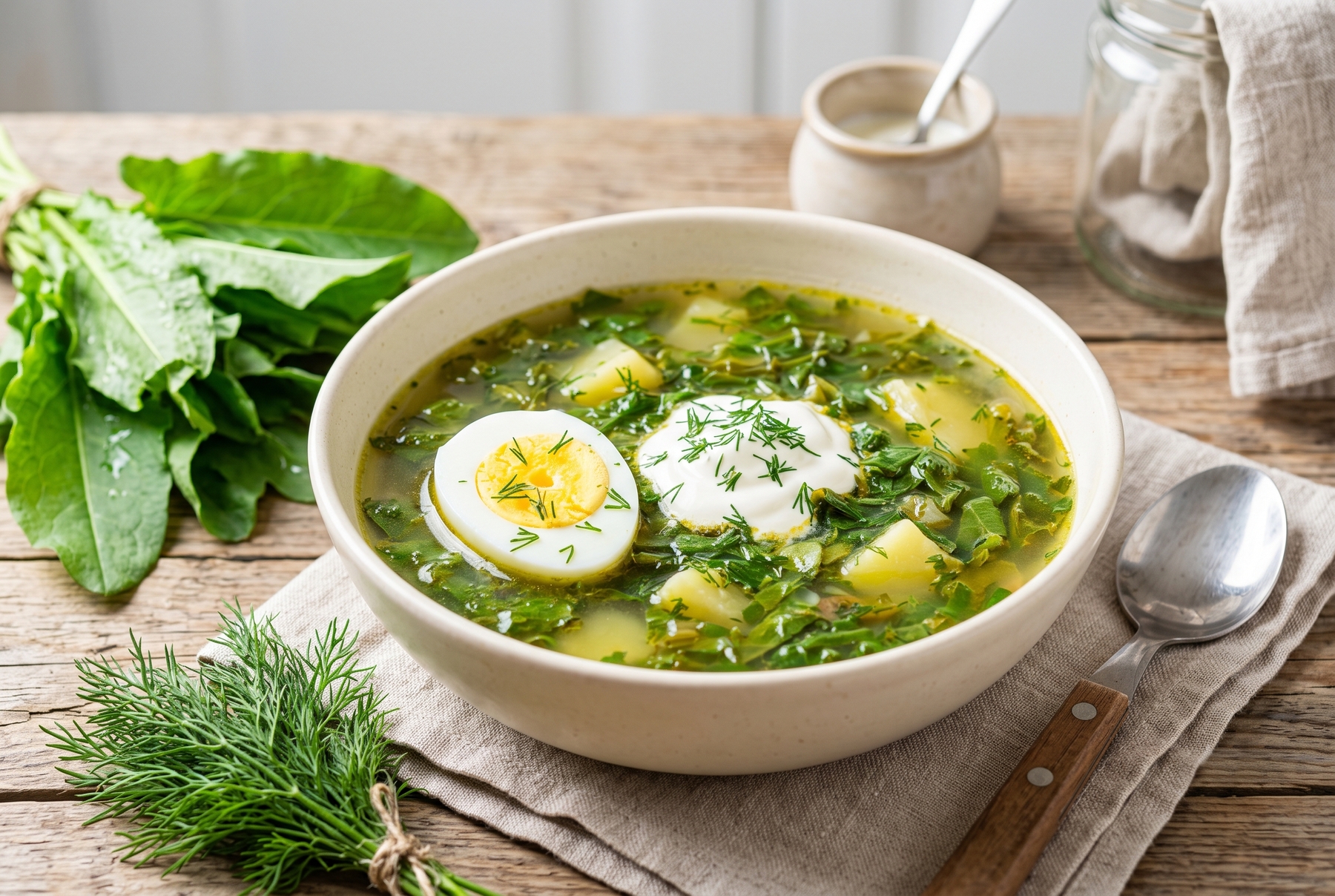
Refreshing sorrel soup with fresh herbs, potatoes, a boiled egg, and a spoonful of thick sour cream makes a perfect light lunch.
Soup No. 4: Meatball Soup
Meatball soup without sautéing is an everyday lifesaver that spares you from extra kitchen maneuvers. The meatballs themselves provide the flavor: meat juices infuse the broth and often work better than any fried base. The rest requires only potatoes, a handful of grains or small pasta, and fresh herbs.
Three practical tips make this foolproof. Salting the minced meat about ten minutes in advance binds the proteins, preventing the meatballs from falling apart. Shaping them into small, walnut-sized portions ensures they cook in 7 to 10 minutes. Keeping the soup from a rolling boil prevents the meatballs from becoming as tough as rubber balls. Finely dicing the vegetables allows them to soften quickly without the skillet. Ultimately, this soup saves the evening when everyone needs a quick meal and washing an extra pan sounds completely unappealing.
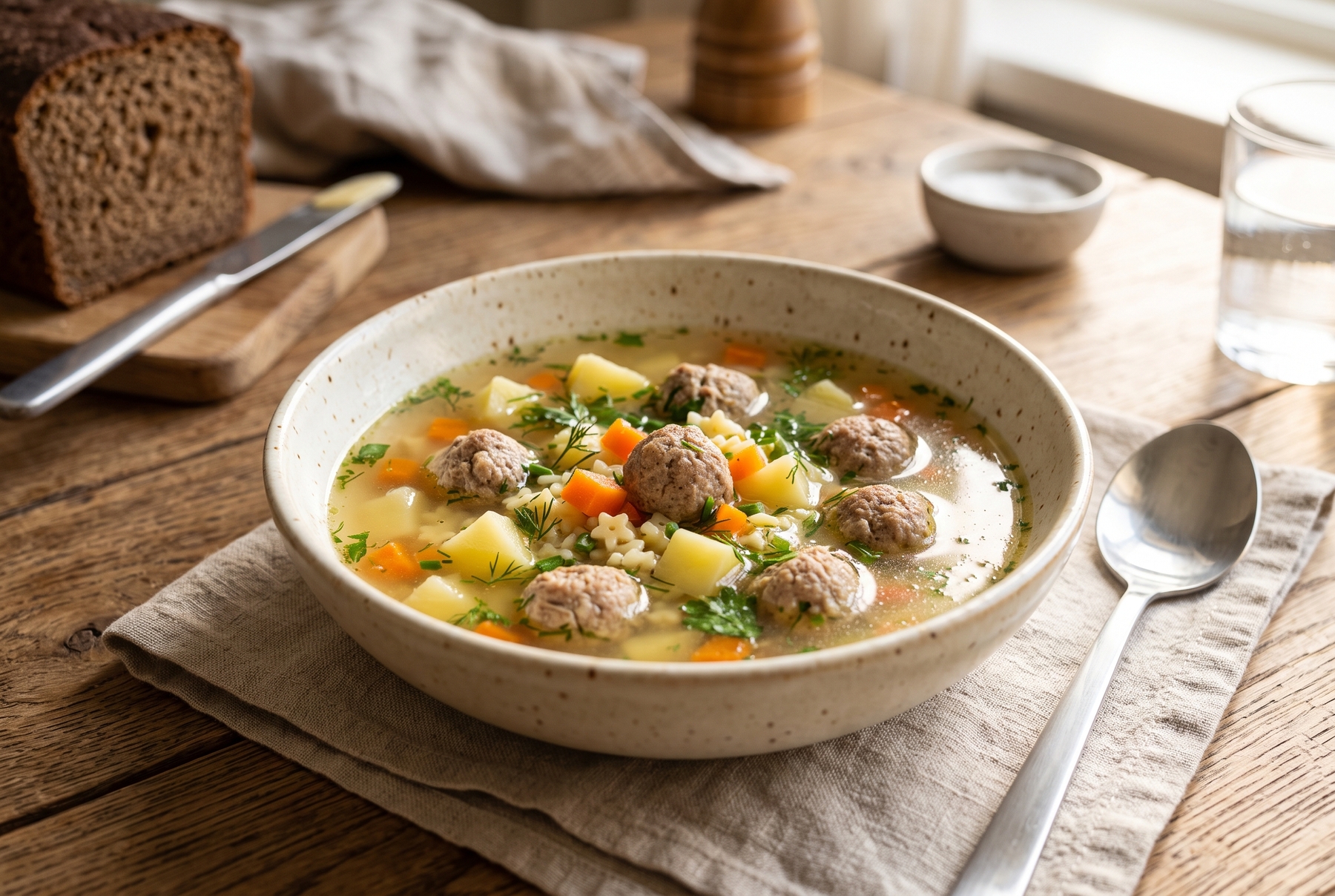
Hearty homemade soup with juicy meatballs, potatoes, and small pasta, simmered in a clear broth without a sautéed base.
Soup No. 5: Tomato Soup
Tomato soup without sautéing works brilliantly because tomatoes already boast acidity, sweetness, and density. High-quality canned whole peeled tomatoes, passata, or roasted fresh tomatoes create an excellent base. Instead of sautéing, warming crushed garlic directly in the pot with a spoonful of olive oil for one minute is entirely sufficient. If the soup goes straight into the blender anyway, one can skip the oil during cooking entirely and add a fresh drop straight into the bowl.
Checking the flavor balance is essential: salt, acid, and sweetness should harmoniously blend rather than stand out individually. A pinch of sugar easily corrects excessive tartness. If the texture feels watery, reducing it for another ten minutes uncovered concentrates the flavors. From there, you can choose the soup’s character: basil or thyme, a splash of heavy cream, grated cheese, white beans, or croutons. As for lycopene, tomatoes certainly contain it, and heat treatment makes it more bioavailable, though it is best enjoyed for its taste rather than medical promises.
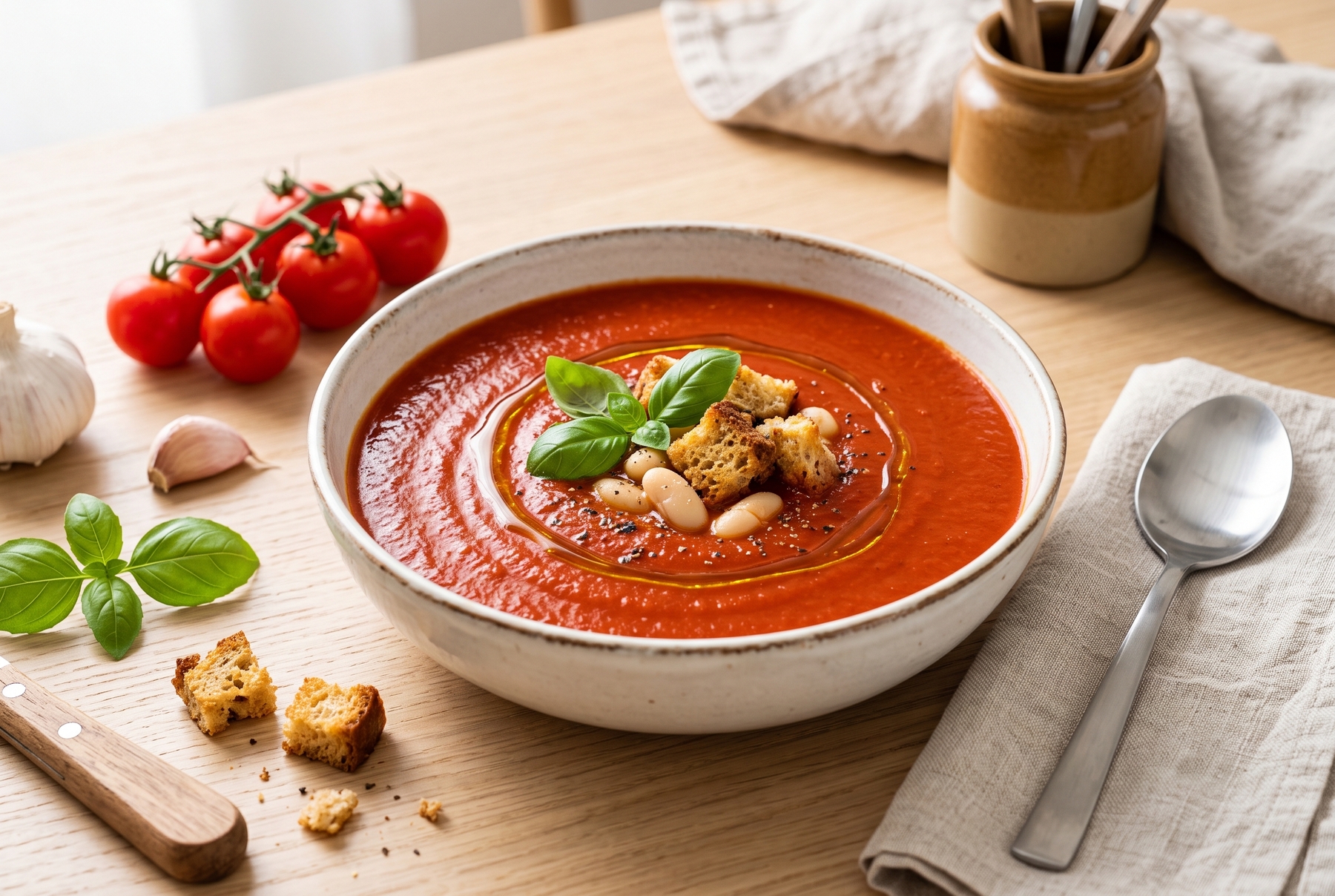
Rich tomato puree soup garnished with crispy croutons, fresh basil leaves, and droplets of aromatic olive oil.
Soup No. 6: Miso and Asian Variations
In miso soup, the absence of sautéing does not feel like a compromise at all. Japanese miso soup contains zero fried elements, and no one misses them. The flavor profile builds differently: dashi broth made from kombu seaweed and dried bonito flakes, miso paste, tofu, wakame, and scallions. Salinity and fermentation provide deep flavor without a single onion hitting a pan. Miso soup follows its own rules; it is not simply a traditional Western soup minus the sauté.
Two practical rules apply here. Miso paste dissolves at the very end and should never boil: a vigorous boil destroys the delicate aroma. Gentle ingredients like tofu, fresh herbs, and thinly sliced mushrooms go in during the final minutes. It is also wise to avoid throwing Japanese, Korean, and Chinese elements into one pot: each cuisine has its own broth logic and specific seasonings. Miso soup with kimchi might result in a tasty experiment, but it is fairer to simply call it an experiment.
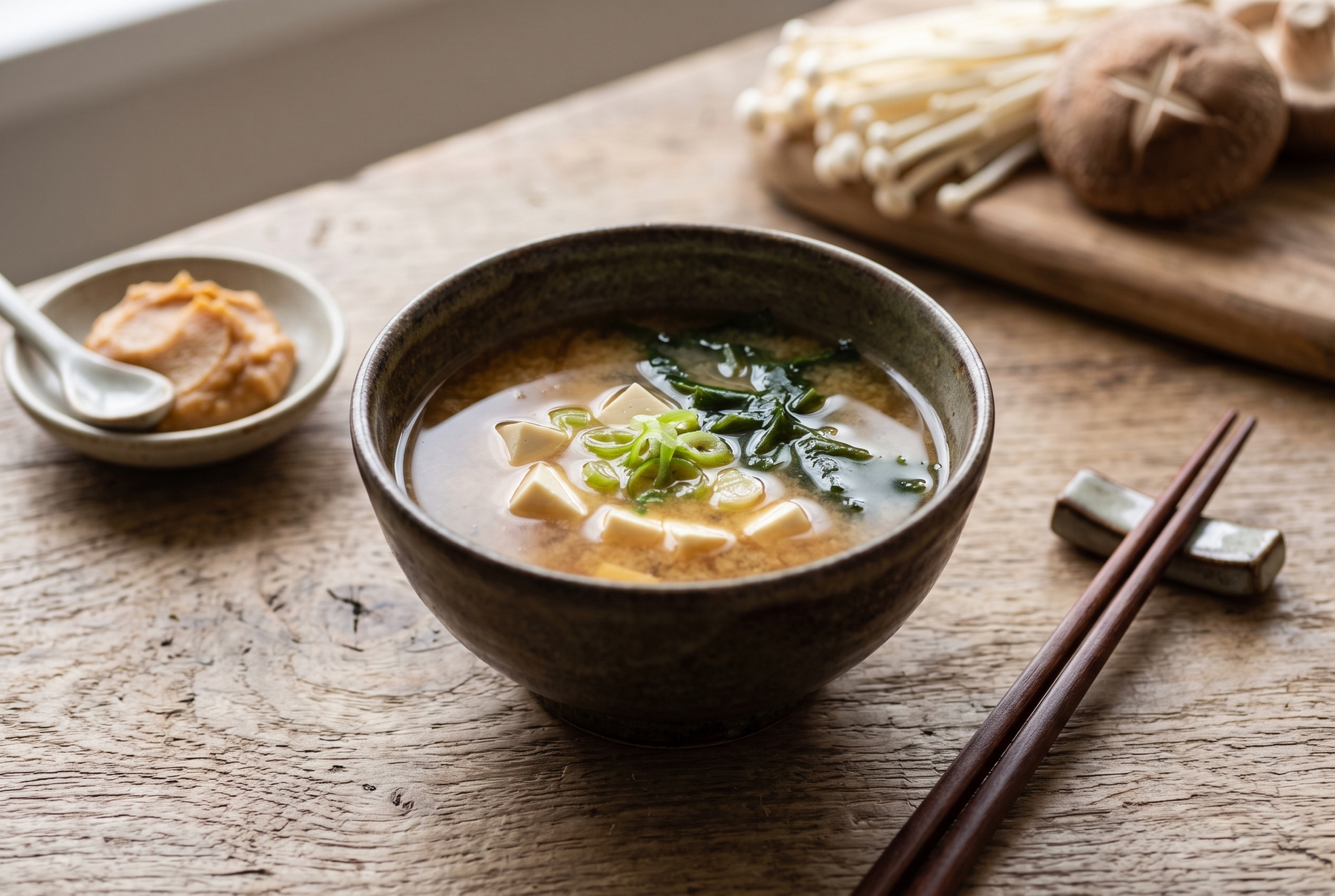
Classic miso soup made with dashi broth, silky tofu, scallions, and seaweed—a prime example of an Asian soup without sautéing.
Soup No. 7: Cauliflower, Broccoli, or Zucchini Cream Soup
In a creamy vegetable soup without sautéing, the post-blender texture matters far more than the skillet. Vegetables give the soup its density, while heavy cream or yogurt softens the flavor, which is then fine-tuned with precision: salt, nutmeg, garlic, a few drops of lemon juice, and fresh herbs. A drizzle of high-quality olive oil poured directly into the serving bowl offers much more character than a fried onion base.
Vegetable doneness is easy to spot: a knife glides through without resistance, but the color remains vibrant. Broccoli must stay bright green, never gray. The cardinal sin of cream soups involves boiling vegetables into wet mush and trying to rescue the disaster with cream. Cream cannot fix overcooked vegetables. Over-boiled cabbage smells exactly like a school cafeteria, and nothing masks that scent.
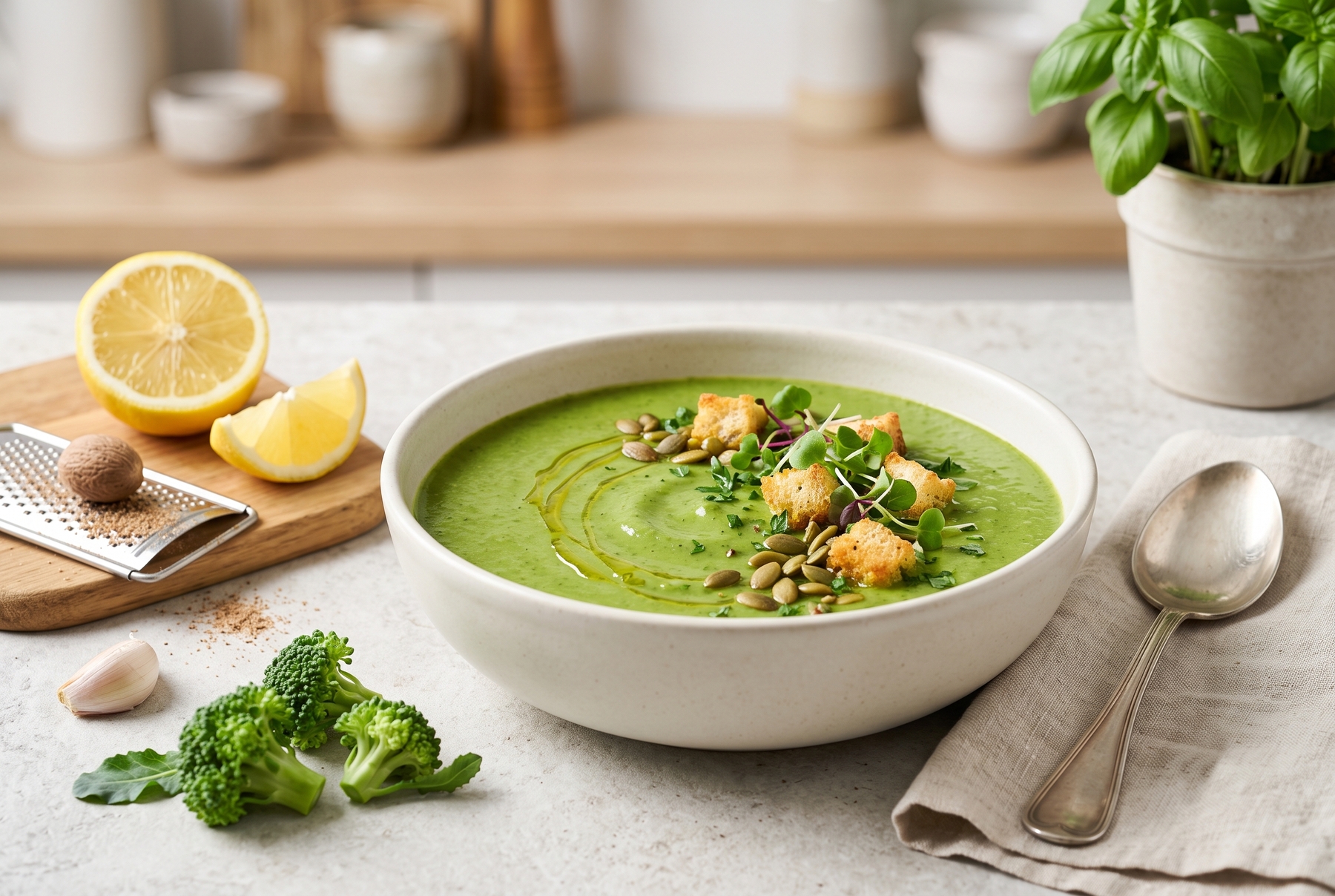
Velvety broccoli and cauliflower cream soup topped with crunchy croutons, pumpkin seeds, and microgreens.
How to Replace Sautéing in Soup: 7 Ways to Build Flavor
- Salt in multiple stages: a portion at the beginning, followed by final adjustments before serving. Timely salting helps vegetables and meat release their flavors into the broth rather than just making the water salty.
- Cook minimalist soups using real broth, not plain water. This accounts for half the flavor.
- Dice vegetables smaller than usual: without frying, they need to soften and release their sweetness directly into the broth.
- Add acid (lemon, vinegar, or brine) at the very end, otherwise it cooks off.
- Treat fresh herbs as a core ingredient, not mere decoration: a handful of dill transforms a fish soup, while three sprigs on top change nothing.
- Let the finished soup rest covered for 10 minutes. The flavors will settle and meld beautifully.
- Match the finishing fat to the soup: a pat of butter for chicken soup, sour cream for sorrel soup, olive oil for tomato soup, and a drop of toasted sesame oil for Asian broths.
Where Sautéing Truly Belongs
It is best to avoid culinary theory just for the sake of it. Certain soups inherently rely on a fried base for their character: borscht, split pea soup with smoked meats, kharcho, many thick bean and lentil stews, and classic versions of rassolnik (pickle soup). Cooking them without a sofrito is certainly possible; no one forbids it. However, the resulting flavor profile changes: it becomes lighter, quieter, and lacks that deep, caramelized richness that fat and onions provide. Sometimes this lighter version is interesting, but it remains a fundamentally different experience.
Sautéing remains a tool, and like any tool, it is not required everywhere. On a Monday evening, when a chicken broth is already gently steaming, the carrots are sliced into rounds, and the dill waits on the cutting board, the skillet can peacefully stay in the cupboard. The soup will succeed beautifully without it.
0 comments