
Every kitchen harbors a dozen rules and culinary myths that cooks repeat without a second thought. People sear steaks over high heat to lock in the juices. They avoid washing mushrooms for fear they will become waterlogged. They leave a pot of hot soup on the counter until it cools completely, and check chicken doneness by the color of the juices near the bone. Some of these habits yield edible, or even excellent, results. The catch lies elsewhere: the reasoning used to justify them is almost always wrong.
I studied food technology in Belgium, and ever since, I have viewed the kitchen as a space where physics, chemistry, and microbiology operate simultaneously. This perspective makes it much easier to see where sound observation ends and fabricated rules begin. Below are 30 brief breakdowns of popular kitchen myths. Each examination covers three points: why the advice sounds convincing, what actually happens to the food, and how to handle it at your own stove.
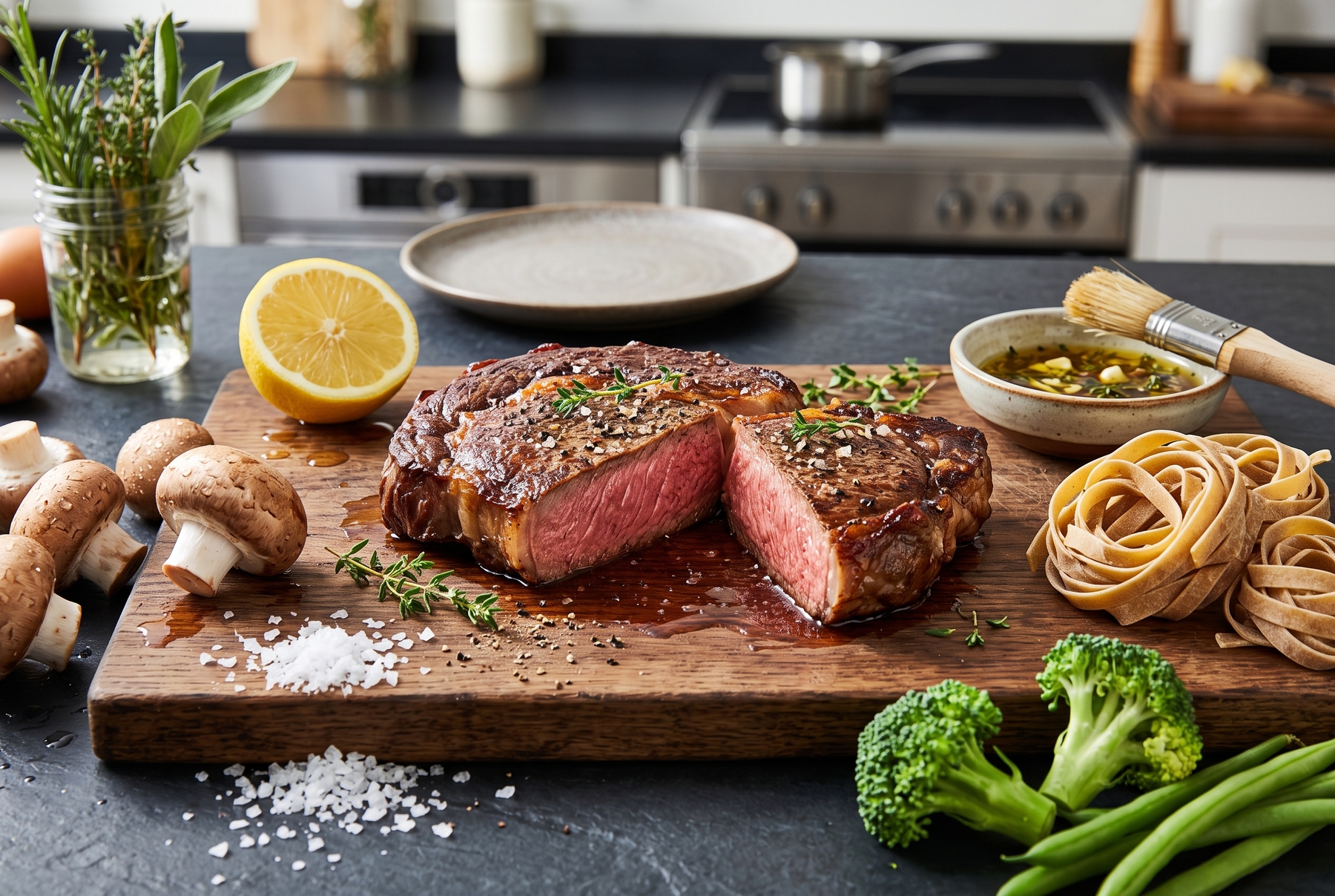
Searing meat over high heat builds a flavorful crust through the Maillard reaction, while internal temperature and resting time control juiciness.
Table of Contents
How a Good Technique Acquires a False Explanation
At the stove, temperature, time, humidity, salt concentration, acidity, protein and starch structures, evaporation, and microbiology all work at once. Yet human nature prefers a single cause: someone sees a browned crust and a juicy interior, links the two, and a rule is born. The culinary result may be spot-on, even when the connection between the action and the explanation is entirely fictional.
The point of a food-science perspective is not to ban old habits. Rather, it separates a working technique from an invented explanation.
Meat and Poultry Myths
Myth 1. Searing Meat Seals in the Juices
In cross-section, a browned crust looks like a tight barrier, inviting the obvious conclusion that moisture is locked inside. In reality, the crust is porous, allowing juices to escape freely—as evidenced by the puddle on the cutting board beneath even the most impeccably seared steak. High surface heat serves a different purpose: it triggers the Maillard reaction, which develops roasted aromas and a deep brown color. Juiciness depends on the internal temperature of the cut, time over the heat, and resting after cooking. An overcooked steak with a dark crust will always turn out drier than a properly cooked piece with no crust at all.
Myth 2. Piercing Meat with a Fork Drains All the Juices
A cut of meat is not a water balloon. Moisture resides within and between thousands of microscopic muscle fibers rather than sloshing freely beneath an outer skin. One or two punctures release a few surface drops at most. Excessive heat causes far greater moisture loss: as proteins contract, they wring out water like a twisted sponge. An extra minute in the skillet steals much more juice than a few pokes with a fork. Turning meat with tongs is gentler, of course, but using a fork is no reason to panic.
Myth 3. The Longer You Braise, the More Tender the Meat
Long, moist heat works wonders for tough cuts rich in connective tissue: collagen melts into gelatin, and the meat separates into succulent fibers. However, this process does not improve indefinitely. When braised too long, the individual muscle fibers continue losing moisture, leaving the meat dry and crumbly. Softening collagen should not be confused with an “anything goes” timeline. Simmering a beef shank for hours makes culinary sense, whereas subjecting a lean tenderloin to the same treatment ruins it.
Myth 4. Meat Must Come to Room Temperature Before Cooking
Leaving meat on the counter for half an hour changes very little. A thick cut warms up slowly; during that window, only a thin outer layer approaches room temperature while the center remains cold. Cut thickness, pan or oven heat, and monitoring internal temperature with a thermometer have a far greater impact on cooking. The real benefit of a brief rest lies elsewhere: the surface has time to dry out, which promotes much better browning.
Myth 5. Salting Meat Before Cooking Dries It Out
Timing dictates everything here. When salted meat hits the pan after just five minutes, moisture has been drawn to the surface through osmosis but has not yet been reabsorbed, causing the cut to lose juice and steam rather than brown. Giving the salt an hour—or better yet, several hours in the refrigerator—allows the brine to diffuse inward, dissolve certain muscle proteins, and help the fibers retain water. By cooking time, the exterior dries out again. A short ten-to-twenty-minute window is the worst option; seasoning works best either well in advance or right before the meat hits the skillet.
Myth 6. Chicken Is Only Safe at 74 °C (165 °F), Not a Degree Lower
The 74 °C (165 °F) benchmark was not pulled from thin air: at this temperature, dangerous pathogens like Salmonella die almost instantly, and a single number is easier for home cooks to remember than a chart. Yet microbiological safety relies on a combination of temperature and time rather than a single magic threshold. The exact same bacterial reduction occurs at lower temperatures if held for a longer period. However, low-temperature pasteurization requires precise calculations regarding meat thickness, exact heat, and holding time. For everyday home cooking, aiming for 74 °C (165 °F) in the thickest part of the bird remains the most foolproof strategy. Remember that this refers to the internal temperature of the meat, not the air inside the oven.
Myth 7. Raw Meat and Poultry Should Be Washed
Running water does not sterilize meat; bacteria cling tightly to the surface, and a tap stream cannot dislodge them. Instead, splashing water carries pathogens tens of centimeters (up to a couple of feet) around the sink, contaminating countertops, sponges, and nearby ingredients. Thorough heating is the only reliable way to eliminate bacteria on meat. Moving chicken straight from the package to the pan or oven—and then washing hands, cutting boards, and knives with hot, soapy water—is far safer. Besides, wet poultry browns poorly, while patting the skin dry with paper towels yields a superior crust.
Myth 8. Lemon, Vinegar, or Salt Sanitizes Raw Chicken
Acid and salt alter flavor, slightly dry the surface, and create a sensory impression of cleanliness. They do not, however, neutralize serious pathogens: household concentrations and brief contact times cannot reliably destroy Salmonella or Campylobacter. A bright, citrusy aroma and a firmer texture reveal nothing about microbiological safety. Rinsing with lemon juice remains a matter of culinary tradition and flavor, never a substitute for proper thermal cooking.
Myth 9. An Overnight Marinade Penetrates Meat Completely
Most aromatic molecules are relatively large and get stuck near the exterior, traveling only a couple of millimeters (less than 0.1 inch) even after several hours. Slicing into a chicken breast after twenty-four hours in a marinade reveals noticeable color and aroma changes along the edges, while the core remains nearly untouched. Salt is the major exception: its small ions migrate deep inside and season the entire cut, which explains why wet brines and dry rubs succeed where herb pastes stall. On a thick roast, a marinade primarily flavors the crust, whereas salt and time do the deep work.
Myth 10. Longer Time in an Acidic Marinade Means Softer Meat
Acid denatures surface proteins, initially creating a pleasant tenderness. Left too long, however, the outer layer turns mushy, mealy, and chalky as the unraveled proteins tighten back up and squeeze out moisture—all while the tough center remains unaffected. An acidic marinade simply cannot penetrate deeply enough to restructure a whole roast. A tough cut benefits from an appropriate cooking method, such as slow braising or low-temperature roasting, rather than an extended vinegar bath.
Myth 11. The Red Liquid in Raw Meat Is Blood
Nearly all blood is drained from the carcass during processing, long before the meat reaches the butcher counter. The reddish liquid pooling on a plate consists of water and myoglobin, an oxygen-binding protein inside muscle tissue that turns red when exposed to air. What collects in a steak package is pigmented meat juice, not blood. Myoglobin levels also explain why beef looks much redder than chicken breast: the more active the muscle, the more myoglobin it requires.
Myth 12. Pink Meat Inside Always Means Raw and Unsafe
Visual color alone cannot determine the internal temperature of meat. The hue depends on the animal species, pigment concentration, pH levels, and even the heat source: nitrogen dioxide from gas ovens can leave fully cooked poultry with a persistent pink ring. Young chicken often shows pinkness near the bone due to pigments leaching from the porous marrow, even when completely safe to eat. Conversely, prematurely brown ground beef is not guaranteed to have reached a safe temperature. For food safety, an instant-read thermometer is always more reliable than judging the shade of the slice.
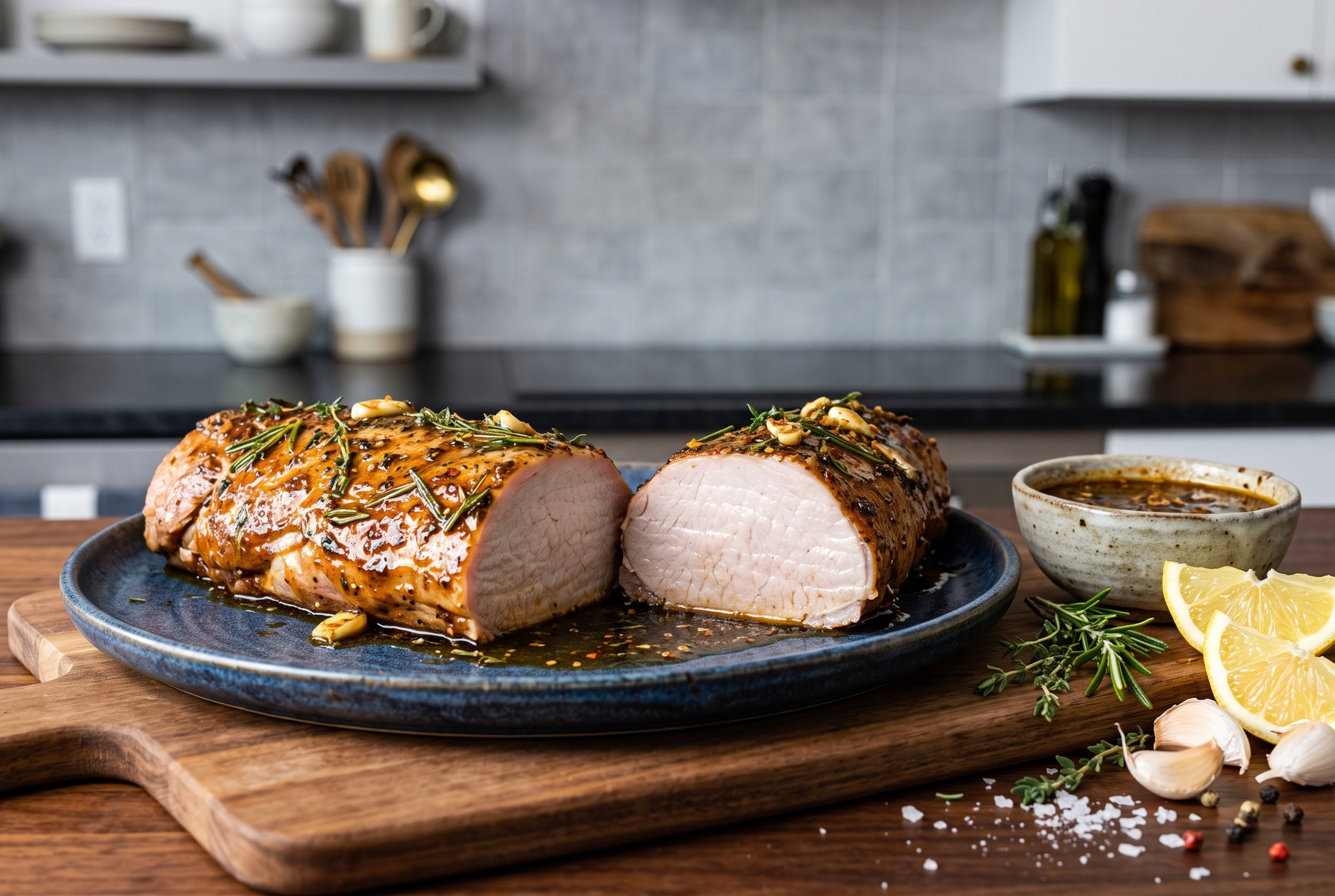
Marinades penetrate only a few millimeters into the surface of meat, whereas proper temperature control ensures even juiciness and tenderness throughout.
Pasta, Salt, and Boiling Water Myths
Myth 13. Oil in the Cooking Water Prevents Pasta from Sticking
Oil is less dense than water and floats in a slick on the surface while the pasta cooks at the bottom of the pot. It barely interacts with the swelling starch granules that actually cause noodles to clump. Sticking happens during the first couple of minutes after submerging dry pasta; stirring immediately and cooking in sufficient water solves the problem entirely. Worse yet, floating oil coats the pasta as you drain it, creating a slick barrier that prevents sauce from clinging.
Myth 14. Cooked Pasta Should Be Rinsed with Cold Water
Rinsing washes away surface starch—the very adhesive film that helps sauce emulsify and cling to every strand. For a hot pasta dish, rinsing is counterproductive. The step makes sense in only two scenarios: preparing a cold pasta salad or halting the cooking process immediately when no sauce is ready. Otherwise, transferring drained pasta straight into the pan with a few tablespoons of starchy cooking water binds the dish into a cohesive, glossy whole.
Myth 15. Good Pasta Requires a Massive Pot of Boiling Water
Using plenty of water is convenient because it returns to a boil quickly after adding pasta and dilutes starch so the liquid stays thin. Still, there is no magical water-to-pasta ratio required for success. Cooking in a smaller volume of water yields a much more concentrated starchy liquid, which is actually an advantage when emulsifying sauces like cacio e pepe or carbonara. Using a smaller pot simply demands slightly more frequent stirring during the first few minutes.
Myth 16. Salt Makes Water Boil Faster
Dissolved salt does raise the boiling point of water slightly, and lowers its specific heat capacity, but in culinary quantities the effect is microscopic: a tablespoon of salt in a pot shifts the boiling point by mere fractions of a degree. Using a lid, adjusting water volume, and cranking up the burner output influence heating speed far more. Cooks salt the water to season the pasta or vegetables from within, not to save sixty seconds.
Myth 17. Potatoes and Beans Must Never Be Salted at the Start
Salted water does not ruin potatoes; they soften effortlessly while absorbing evenly distributed seasoning. Beans present a more interesting case. For decades, cooks blamed salt for tough, “woody” beans, though sodium is rarely the culprit. Acidic ingredients (like tomatoes, wine, or vinegar added too early) and hard water rich in calcium and magnesium ions actually prevent cell walls from softening, as does the age of the legumes—very old beans stay firm no matter how long they simmer. Moderate salting during soaking and early cooking actually improves bean texture by displacing calcium and magnesium in the skins. Acidic ingredients simply belong in the pot at the end, once the beans are already tender.
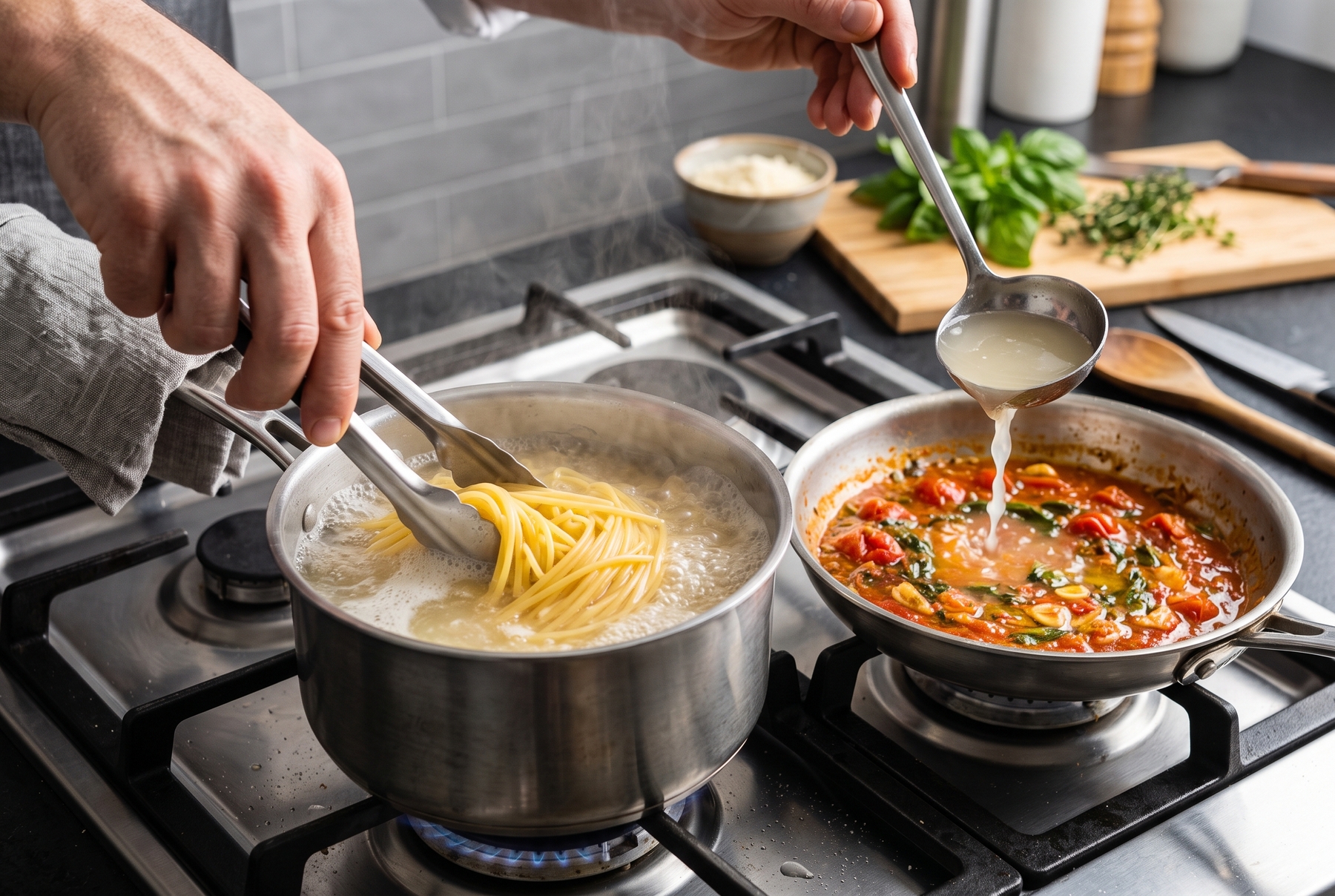
Starchy pasta cooking water helps create a silky emulsion that binds the sauce seamlessly to the noodles.
Vegetable and Mushroom Myths
Myth 18. Mushrooms Absorb Water Like a Sponge If Washed
A quick rinse under the tap adds only a tiny fraction to a mushroom’s weight—typically around two percent. The cap gets wet on the outside, yet thirty seconds of water contact will not turn it into a soggy sponge. Soaking mushrooms for an hour is another story and should be avoided. The real reason mushrooms stew in a gray puddle instead of browning usually comes down to crowding a lukewarm pan. Mushrooms are roughly 90 percent water, so piling them high traps steam and forces them to boil in their own juices. Arranging them in a single layer in a hot skillet and leaving them undisturbed for the first minute allows surface moisture to evaporate so browning can begin.
Myth 19. Tomatoes Should Never Go in the Refrigerator
Cold temperatures do mute tomato aroma: chilling halts the enzymatic production of certain volatile flavor compounds and can make the flesh slightly mealy. Yet for fully ripe tomatoes, the refrigerator is sometimes kinder than the counter. Underripe tomatoes belong at room temperature so they can finish ripening. However, when peak-season tomatoes risk rotting on a warm kitchen counter within a day or two, chilling pauses decay. Allowing a refrigerated tomato to warm back up to room temperature before slicing restores a surprising amount of its sweetness and aroma.
Myth 20. Green Vegetables Need a Giant Pot of Salted Water to Stay Bright
Vibrant green color survives or fades based on temperature, cooking time, and pH: heat and natural plant acids degrade chlorophyll, turning bright greens olive-drab. Cooking vegetables rapidly and chilling them immediately matters far more than pot size. A massive pot of water simply recovers its boil faster after cold vegetables are dropped in, reducing the time broccoli or green beans spend in sub-boiling water. Steaming or boiling in a modest amount of water works just as well, provided the heat is high, the cooking time is brief, and an ice bath stops the carry-over heat when serving cold.
Myth 21. Wet Vegetables Will Never Brown in the Oven
The underlying physics makes sense: until surface water evaporates, evaporative cooling keeps the vegetable’s exterior near 100 °C (212 °F), well below the threshold required for the Maillard reaction and caramelization. Still, a bit of residual moisture from washing merely delays browning by a few minutes rather than preventing it outright. Far more critical factors include avoiding an overcrowded baking sheet (which traps steam), leaving space between pieces, preheating the oven thoroughly, and coating the vegetables generously with oil. Patting produce dry helps, but a damp surface is hardly fatal.
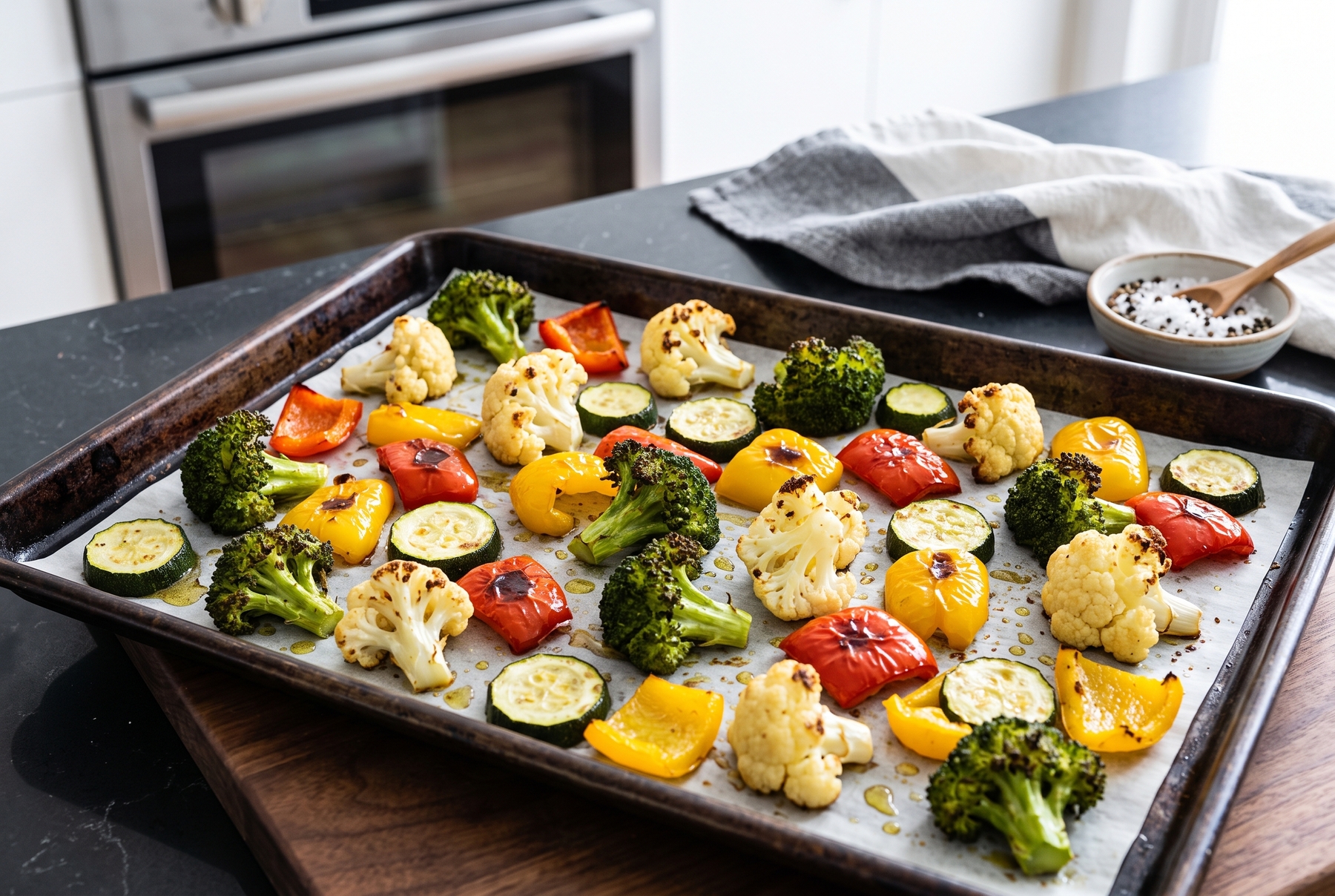
Arranging vegetables in a single layer with space between pieces prevents steam buildup on the baking sheet and promotes even browning.
Microwave Myths
Myth 22. Microwaving Destroys Almost All Vitamins in Food
Nutrients degrade primarily from three factors: high heat, prolonged cooking times, and leaching into cooking water. Because microwave ovens heat food rapidly using minimal liquid, they actually excel at nutrient retention. Broccoli steamed in the microwave for a couple of minutes with a splash of water retains water-soluble nutrients like vitamin C and folate just as well as—and often better than—broccoli boiled in a pot. Nutrient loss depends on heat exposure and water volume; microwave radiation itself does not destroy vitamins in any unique way.
Myth 23. Microwaves Cook Food from the Inside Out
Microwaves penetrate food to a depth of only about 2 to 3 centimeters (roughly 1 inch), agitating water molecules primarily in those outer layers. From there, heat travels to the center through ordinary thermal conduction, just as it does in an oven or skillet. That explains why a thick casserole or dense piece of meat often comes out bubbling at the edges while remaining icy in the middle. Stirring midway through heating and letting the dish rest for a minute afterward allows trapped heat from the outer layers to conduct evenly into the core.
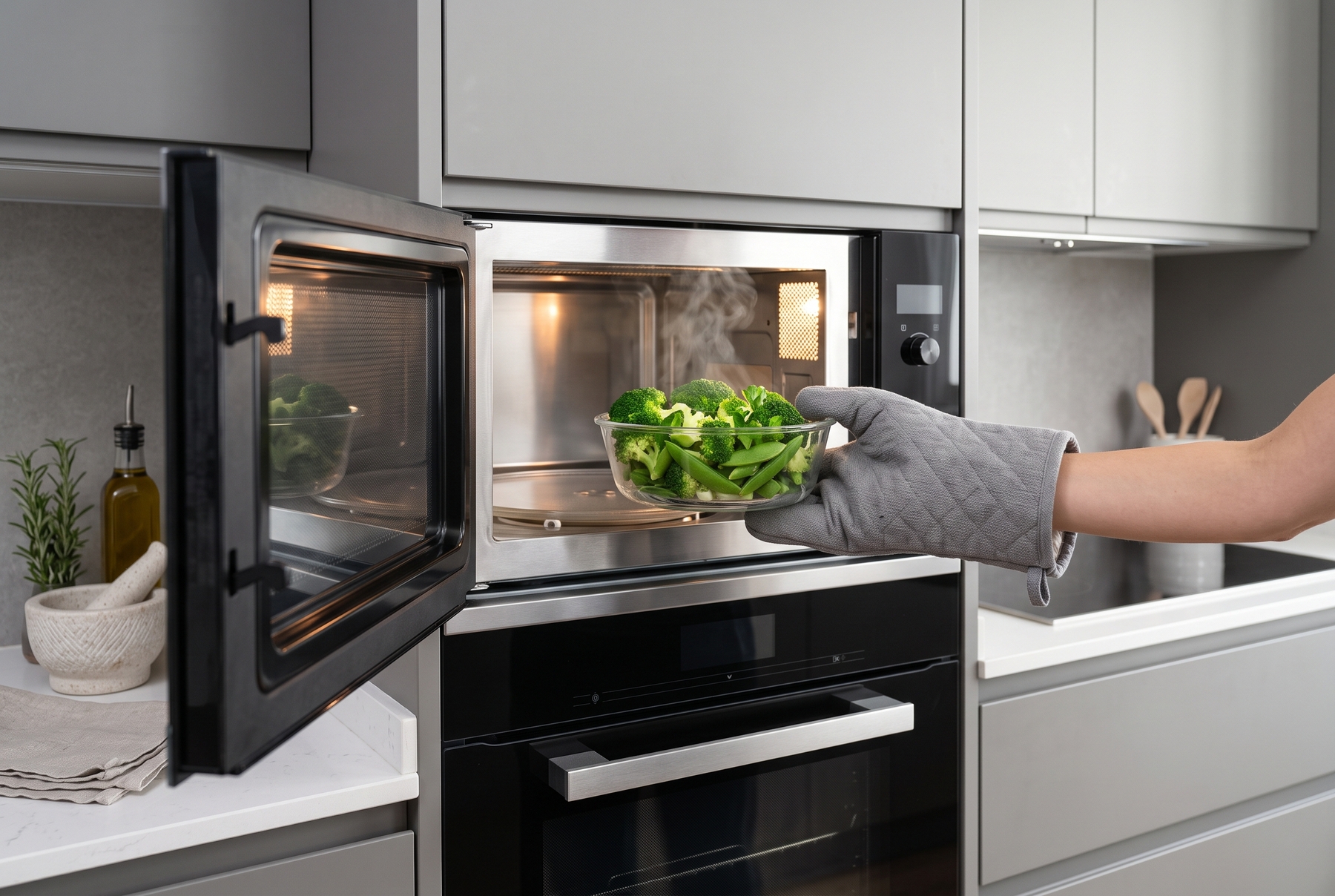
Cooking vegetables quickly in the microwave with minimal water preserves water-soluble vitamins and vibrant green color.
Freezing, Storage, and Reheating Myths
Myth 24. Frozen Meat Must Always Be Thawed Before Cooking
For many cuts, thawing is completely optional. Thin steaks, pork chops, or burger patties cook remarkably well straight from the freezer—they simply require extra time—and culinary pros often recommend cooking thinner frozen fish fillets without thawing to prevent moisture loss. Quality and food safety remain separate considerations, of course. Even a whole frozen turkey or chicken roasts safely in the oven without prior thawing, provided you adjust the temperature, extend the cooking time by roughly fifty percent, and verify the internal temperature with a thermometer. As long as the cooking method brings the geometric center to a safe temperature, starting from frozen is entirely safe.
Myth 25. Thawed Meat Can Never Be Refrozen
This rule conflates culinary quality with microbiological safety. Refreezing raw meat does degrade texture: expanding ice crystals puncture cell membranes, causing the cut to weep more moisture the next time it thaws. From a safety standpoint, however, the thawing method dictates everything. Meat thawed slowly inside a refrigerator and kept at or below 4 °C (40 °F) can be safely refrozen raw. Cuts thawed faster in cold water or a microwave must be cooked thoroughly before returning to the freezer, since freezing merely puts bacteria into dormancy rather than killing them. Meanwhile, meat left at room temperature beyond safe limits cannot be rescued by cooking or freezing and must be discarded. Food safety agencies set the cutoff at two hours at normal room temperature, or just one hour when ambient temperatures exceed 32 °C (90 °F).
Myth 26. Hot Food Must Cool on the Counter Before Going in the Fridge
With a large pot of hot soup, following this advice creates a genuine hazard: sitting on a warm counter, a deep vessel holds its core within the bacterial “danger zone”—between 4 °C and 60 °C (40 °F and 140 °F)—for hours, providing ideal conditions for pathogens like Clostridium perfringens to multiply. Slow cooling of large batches remains one of the most common causes of home and restaurant foodborne illness. Leaving cooked food out for hours is unnecessary and risky. Instead, dividing a big batch of hot stew or stock into shallow containers allows it to cool rapidly within minutes, or you can chill the pot in an ice-water bath before refrigerating. Small portions of warm food can go straight into a modern refrigerator without significantly raising the ambient cabinet temperature. The golden rule remains: never leave cooked perishables at room temperature for more than two hours.
Myth 27. If Food Looks and Smells Fine, It Is Safe to Eat
The human nose detects spoilage brilliantly: sour milk, rotting fish, and moldy bread announce themselves through unmistakable odors and visual cues. Yet spoilage microbes and pathogenic bacteria belong to different categories. Pathogens like Salmonella, Listeria, and pathogenic E. coli multiply to dangerous levels without altering the smell, color, or flavor of a dish. Cooked chicken left on a warm stove overnight may smell entirely appetizing the next day while harboring enough bacteria or heat-stable toxins to cause severe illness. Sensory checks reliably catch spoilage, but they cannot guarantee food safety.
Myth 28. Reheating Food Multiple Times Is Inherently Dangerous
Counting the number of reheats misses the real issue. A dish’s thermal history between servings matters far more: how quickly it was chilled, how long it lingered on the dinner table, what temperature the refrigerator maintained, and whether it reached a full 74 °C (165 °F) during reheating. One disciplined cycle—rapid chilling, cold storage, and thorough reheating—is vastly safer than three careless ones. Still, every time an entire pot is pulled from the fridge, warmed up, left on the table, and put back, the cumulative time spent in the temperature danger zone grows. Reheating only the portion you plan to eat right then solves both safety and quality problems.
Myth 29. Raw Eggs Are the Only Danger in Raw Dough; Flour Is Safe
Flour looks harmless because it is dry and shelf-stable. In reality, raw flour is a minimally processed agricultural product that undergoes no kill-step treatment before packaging. Grain growing in the field comes into contact with soil, wildlife, and water, which can introduce Salmonella or Shiga toxin-producing E. coli; milling the kernels into powder does not eradicate these pathogens. Dryness does not kill them either: bacteria remain dormant in flour for months and reactivate as soon as liquid is mixed into the bowl. Following numerous documented outbreaks linked to commercial flour, food safety agencies strongly advise against tasting raw cookie dough or cake batter, even in egg-free recipes. Only baking, frying, or boiling renders flour completely safe.
Myth 30. Alcohol Completely Evaporates After a Few Minutes of Cooking
Ethanol cooks off much more slowly than kitchen lore suggests. Because alcohol and water form an azeotropic mixture, they evaporate together rather than sequentially. According to USDA nutrient retention data, simmering a dish with wine or spirits for 15 minutes leaves roughly 40 percent of the original alcohol behind. After a full hour of braising, about 25 percent remains, and it takes 2 to 2.5 hours of simmering to reduce the alcohol content to around 5 percent. Brief heating removes very little: splashing wine into a pan sauce right before serving leaves most of the alcohol intact, and even a dramatic tableside flambé burns off only about a quarter of the spirit. Surface area, stirring, and whether a lid is used all influence evaporation rates. When cooking for children, pregnant guests, or anyone avoiding alcohol completely, a quick boil will not make an alcohol-laced dish alcohol-free.
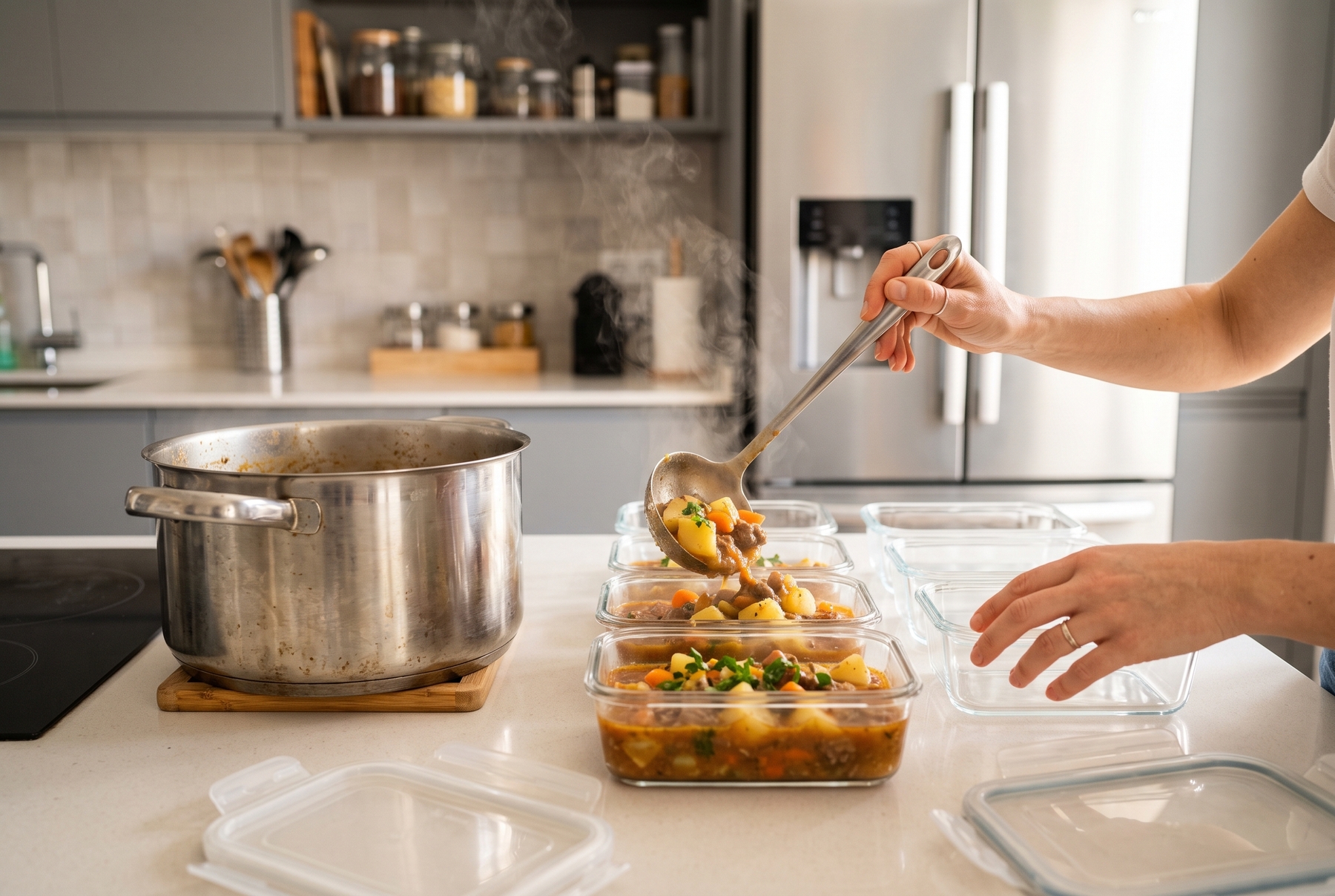
Dividing hot soups and stews into smaller, shallow containers allows food to cool rapidly and prevents bacterial growth.
What All 30 Kitchen Myths Have in Common
Across all thirty pieces of kitchen lore, four logical flaws appear again and again.
First, cooks tend to reduce a complex physical process to a single, dramatic cause: “the crust sealed the juices,” “the mushrooms soaked up water,” “the microwave killed the vitamins.” In reality, heat transfer, time, moisture movement, and cellular structure almost always operate together.
Second, a situational tip gets elevated into a universal law. Rinsing pasta works well for cold salads yet ruins a hot marinara; a huge pot of water is convenient for blanching greens, though hardly mandatory. Just because a technique solves one specific problem does not mean it belongs in every recipe.
Third, people rely on visual cues to judge invisible phenomena—evaluating microbiological safety by smell, internal doneness by meat color, or core temperature by a wall clock. Sight, aroma, and taste tell us whether food is delicious, not whether pathogens have been destroyed.
Finally, culinary quality is constantly confused with food safety. Refrozen steak loses moisture and texture yet remains completely safe to eat; conversely, an unrefrigerated chicken dish may smell wonderful while posing a serious health risk. Poor texture does not equal danger, and a pleasant aroma does not guarantee safety.
Whenever a rigid kitchen rule comes up, running through five quick questions clears the fog: What is heat doing here? How does timing change the outcome? Where is moisture moving? How is the structure of the food reacting? And are we talking about flavor and texture, or actual microbiological safety?
Understanding food science does not mean approaching the stove in a lab coat with a calculator in hand. On the contrary, it liberates you from half the arbitrary rules in your repertoire. Once you grasp the underlying process, you can immediately tell which traditional habit is genuinely helpful, which is harmless ritual, and which belongs in the dustbin of culinary superstition. Ultimately, a thermometer probe in the center of a roast chicken tells you far more about safety than the color of the juices near the bone.
0 comments