
Pulling a perfect piece of meat off the grill is a triumph. The juices bubble under a charred crust, and the meat springs perfectly under a finger. Smothering it in sweet store-bought ketchup collapses all that hard work into a flat flavor reminiscent of a roadside stand. Tending the coals for an hour only to kill the taste with a single spoonful is a true culinary tragedy.
A good barbecue sauce serves a higher purpose than just adding moisture. Its real job is keeping the flavor profile in check. It brings what the meat inherently lacks: acid for the fat, a cooling touch for the heat, herbal freshness for the smoke, sweetness for the salt, and a fruity tartness for the charred edges. In the restaurant kitchens where I spent seasons at the sauce station, this was called ‘bringing the plate together.’ The meat is already done, but the sauce dictates exactly how you will remember it.
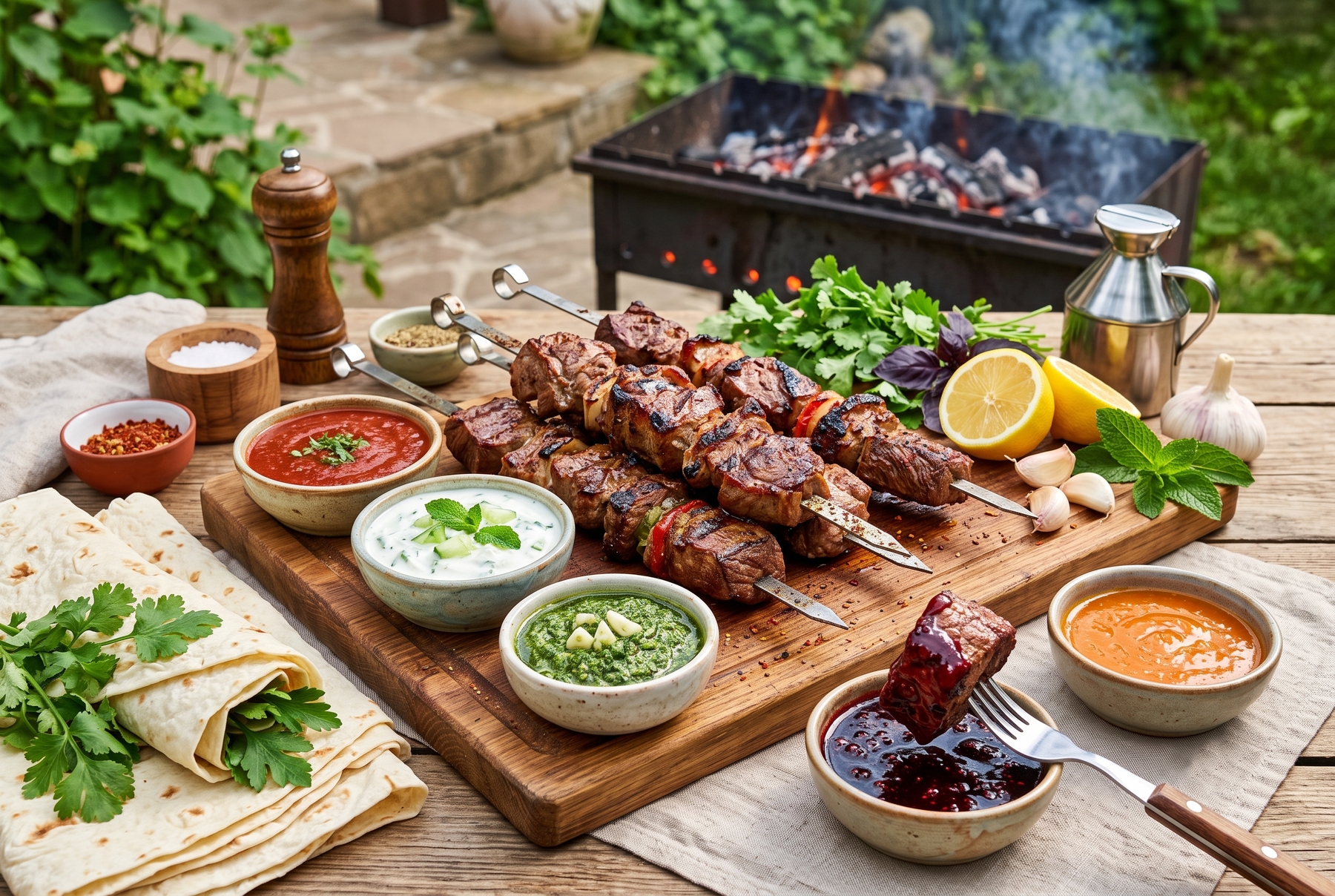
A properly chosen sauce elevates the flavor of the meat, ranging from classic tomato to refreshing yogurt and deeply savory berry.
Table of Contents
- Building a Grill Sauce: A Four-Variable Formula
- Tomato Grill Sauces Beyond the Ordinary
- The Caucasian Direction: Greens, Acidity, and Garlic
- Yogurt and Creamy Kebab Sauces: When Coolness Is Needed
- Berry and Fruit Kebab Sauces: Acidity and Depth Instead of Dessert
- Hot Sauces Without the Overkill
- Green Sauces: Freshness Against the Smoke
- Sauces for Vegetable Skewers, Mushrooms, and Cheese
- Matching the Right Sauce to Different Skewers
- What to Prepare Ahead and What to Mix Before Serving
- 5 Mistakes That Ruin a Sauce
- 6 No-Recipe Sauce Formulas
- A Great Sauce Never Argues With the Meat
Building a Grill Sauce: A Four-Variable Formula
A great sauce relies on simple mechanics. Body, acidity, salt paired with sweetness and heat, and texture form the foundation. Understanding these variables eliminates the need for recipes, allowing anyone to build a homemade barbecue sauce from whatever sits in the fridge.
The Base Determines Body and Mouthfeel
The base dictates how the sauce hits the tongue and whether it coats the meat or runs off onto the plate. Tomato provides a dense base with built-in acidity, pairing beautifully with pork and lamb. Yogurt introduces coolness and creaminess, claiming its rightful place next to chicken and vegetables. Berries act as a sour counterweight to rich fats. Nuts create a hearty, thick sauce ideal for poultry and eggplants. Oil binds everything into a smooth emulsion, coming to the rescue when the meat runs a little dry.
Acidity: The Element That Awakens Flavor
Acidity wakes the palate up. Lemon, wine or apple cider vinegar, pomegranate, cherry plum, berries themselves, and fermented products like yogurt all do the trick. The rich fat and heavy smoke on the meat tend to mute acidity. A sauce tasted from a spoon should feel slightly more tart than comfortable. Placed next to a fatty cut, that sharpness mellows and balances out perfectly. Pushing it too far in the other direction makes the mouth dry and pucker, much like biting into an unripe persimmon.
Salt, Sweetness, and Heat: Three Easily Derailed Settings
Salt does not just add saltiness; it pulls all the other flavors forward. A pinch of coarse salt right into the finished sauce opens up both the tomato and the berry notes. Sweetness rounds out the acidity and softens its sharp edges. Heat adds length, stretching the aftertaste and making the meat feel more expressive. The primary mistake in homemade sauces is collapsing into a sticky sweet-and-spicy glaze. One such sauce on the table works beautifully. When all three options turn into variations on the barbecue theme, the spread loses its contrast, leaving the palate unable to distinguish flavors by the third skewer.
Texture: Smooth, Chunky, Thick, or Viscous
Texture decides the eating experience. A smooth, blended sauce is perfect for dipping whole chunks of meat. A chunky cut, like salsa or satsebeli, lies over the meat in patches, offering a lively contrast. Flatbreads and roasted vegetables beg for a thick spread. Viscous emulsions save dry poultry by coating the muscle fibers and eliminating any hint of blandness. Curating at least two different textures for one table keeps the meal physically engaging, even when the flavor profiles vary.
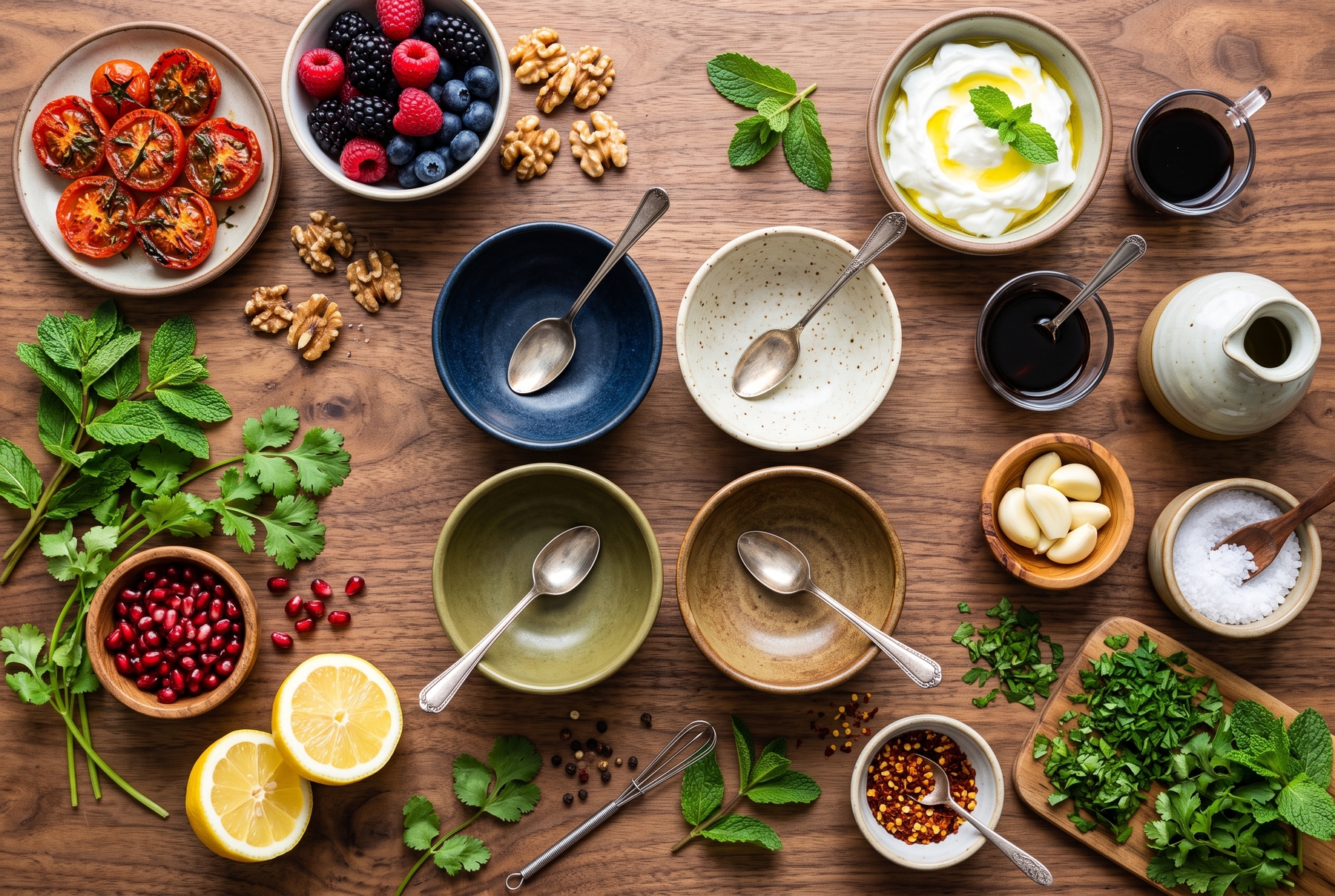
The foundational elements of a perfect sauce include a dense base, bright acidity, a careful balance of salt and sweetness, and diverse textures.
Tomato Grill Sauces Beyond the Ordinary
Roasted Tomato With Garlic and Cilantro
Raw tomatoes lean toward being watery and overly acidic. Roasting or charring them over coals turns them sweet and dense with a deeply smoky undertone. Blistering the tomatoes until the skins blacken and burst allows you to peel them easily, mashing the pulp with garlic, cilantro, salt, and a splash of vinegar. The resulting flavor stands smoky and gently sweet, completely free of that cloying canned taste. Catching a hint of basic ketchup simply means it needs more vinegar and salt to pull the sauce back toward the savory meat profile.
Spicy Tomato With Ajika and Plum
This sauce cuts straight through rich pork and lamb. It features a tomato base, a spoonful of ajika (a fiery Caucasian chili paste), sour plum or prepared tkemali, and garlic. The plum does the heavy lifting here; its sharp acidity slices through the fat, ensuring a heavy cut of lamb does not sit like a rock in the stomach. Skipping the plum leaves the sauce merely spicy, but adding it brings everything into sharp focus.
Tomato With Smoked Paprika and Honey
This tomato-based barbecue sauce pairs flawlessly with chicken, ribs, and vegetables. It combines tomatoes, smoked paprika, garlic, and a touch of honey. Handling the honey requires caution: half a teaspoon for a small bowl is plenty. Any more pushes the profile toward commercial barbecue sauce, masking the genuine grill smoke with a fake sweetness. The paprika delivers a robust smokiness without the extra sugar, serving as the true anchor of the dish.
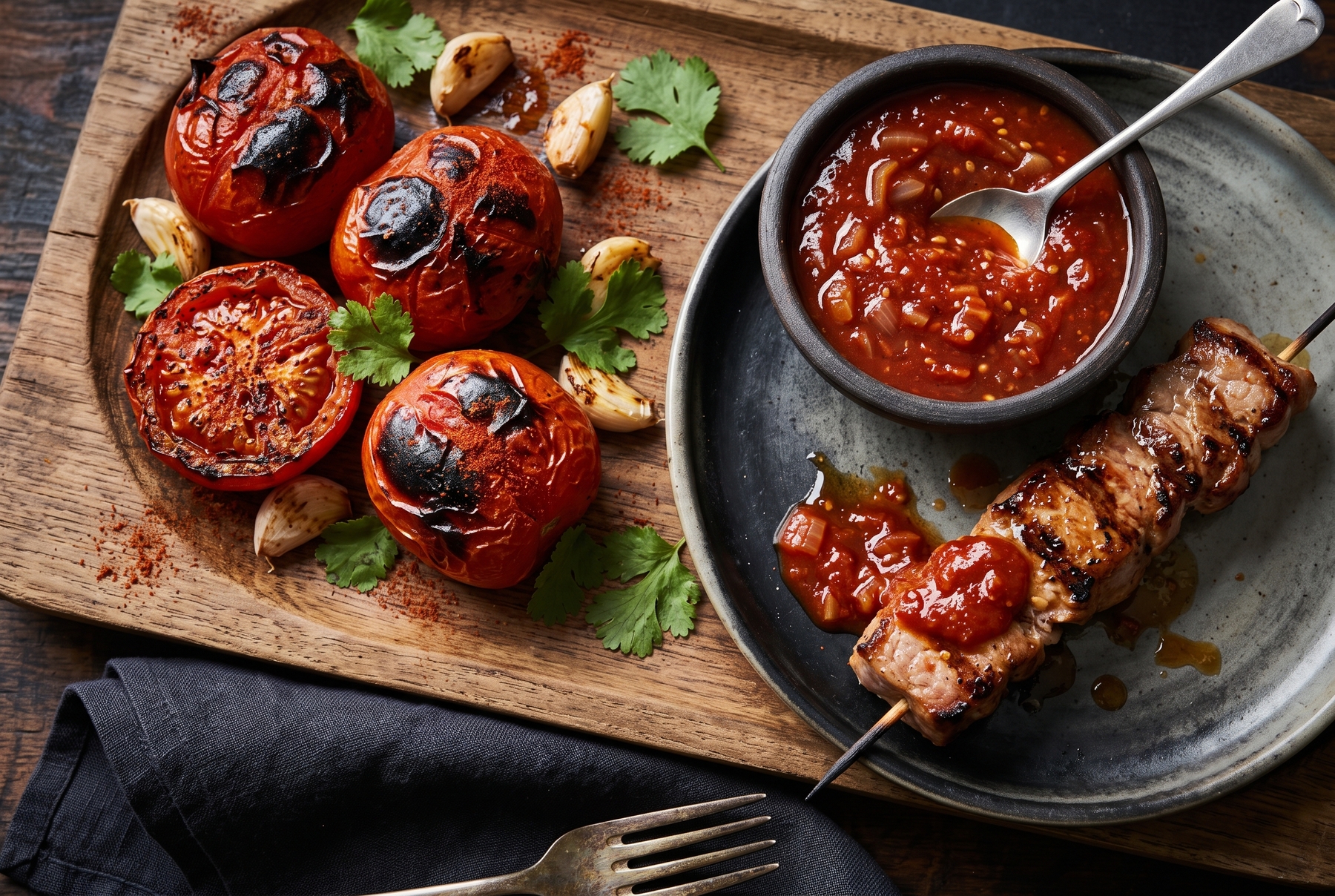
Roasting tomatoes over live coals gives the sauce a natural sweetness and deep smoky aroma that easily outshines any store-bought ketchup.
The Caucasian Direction: Greens, Acidity, and Garlic
Green Sauce in the Style of Satsebeli
Cilantro, parsley, green hot peppers, garlic, vinegar or lemon juice, and a splash of water or tomato juice come together beautifully. Pulsing the greens into a gray mush ruins the appeal. Chopping them by hand leaves recognizable leafy fragments, ensuring the sauce looks alive and rustic rather than resembling a uniform paste from a tube. The coarse texture delivers the actual flavor experience here.
Homemade Cherry Plum Tkemali
Authentic tkemali (a Georgian tart plum sauce) requires a specific plum variety and specially dried herbs, with every Georgian family guarding their own unique recipe. Making it at a summer house is best called an honest adaptation, as it strays far from the strict canon. Boiling cherry plums or tart plums until soft, pressing them through a sieve, and mixing in garlic, chopped greens, plenty of coriander, and hot peppers creates magic. The resulting sauce stands dense, tart, and deeply herbaceous. It complements grilled meat without any hesitation.
Walnut Sauce With Pomegranate
Walnuts, pomegranate juice or narsharab (pomegranate molasses), garlic, fresh herbs, and water create a stunning blend. Grinding the walnuts as finely as possible and thinning them with juice to a sour cream consistency yields a rich, velvety sauce. It pairs exceptionally well with chicken, turkey, and vegetable skewers. Serving it alongside fatty pork feels overwhelmingly heavy, as fat layered on fat quickly becomes cloying. Saving this masterpiece for lean meats and roasted eggplants is a much smarter move.
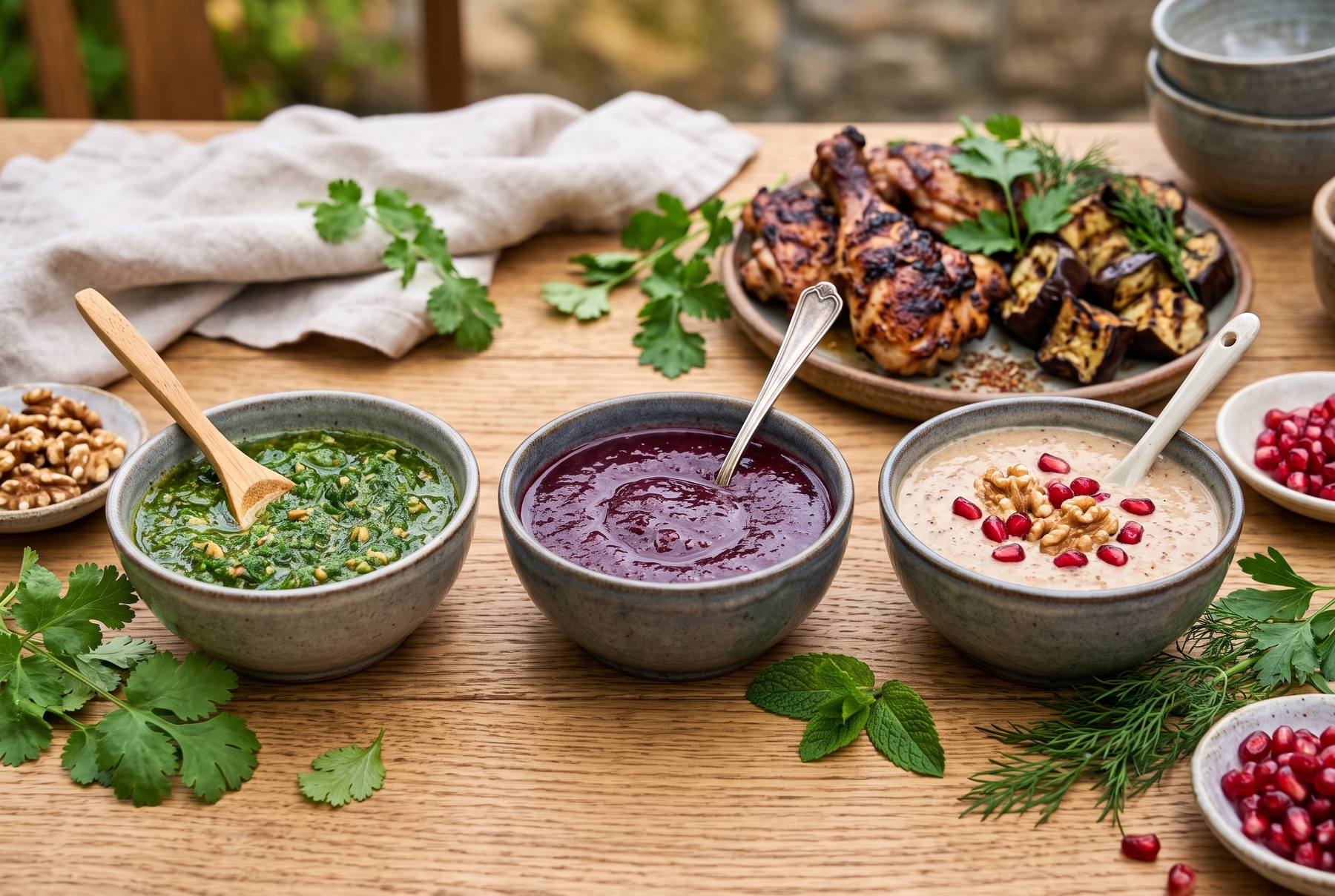
Traditional Caucasian sauces heavily emphasize fresh herbs, the sharp acidity of cherry plums, and the velvety, rich texture of walnuts.
Yogurt and Creamy Kebab Sauces: When Coolness Is Needed
Smoked Yogurt With Cucumber and Mint
Thick plain yogurt, grated cucumber (squeezing out the excess liquid by hand prevents a watery mess), mint, garlic, lemon, and a pinch of smoked paprika create a brilliant cooling agent. The yogurt’s chill dampens the heat, while the paprika catches the grill smoke, tying the sauce to the meat. Pairing this with spicy chicken or lamb works with incredible precision: the palate burns, a spoonful of sauce cools it down, and the craving for the next bite hits immediately.
Sour Cream Sauce With Horseradish and Scallions
A familiar flavor gets an adult upgrade. Sour cream, grated horseradish, scallions, and salt combine perfectly. The horseradish provides a sharp, cold heat that hits the nose and instantly dissipates. It should not burn everything in its path. Adding it gradually and tasting along the way prevents the sauce from turning into a culinary punishment. This blend works beautifully with pork, baked potatoes, and grilled mushrooms.
Yogurt Aioli
This is a lighter take on a garlic kebab sauce. Yogurt, a touch of mayonnaise or oil for body, garlic, lemon, and salt come together nicely. Raw garlic carries the main risk here: mashing it with salt into a paste and letting it sit with lemon for a few minutes works wonders. The acidity neutralizes that sharp, almost metallic garlic note that would otherwise dominate and linger in the mouth. One large clove per bowl remains the absolute limit.
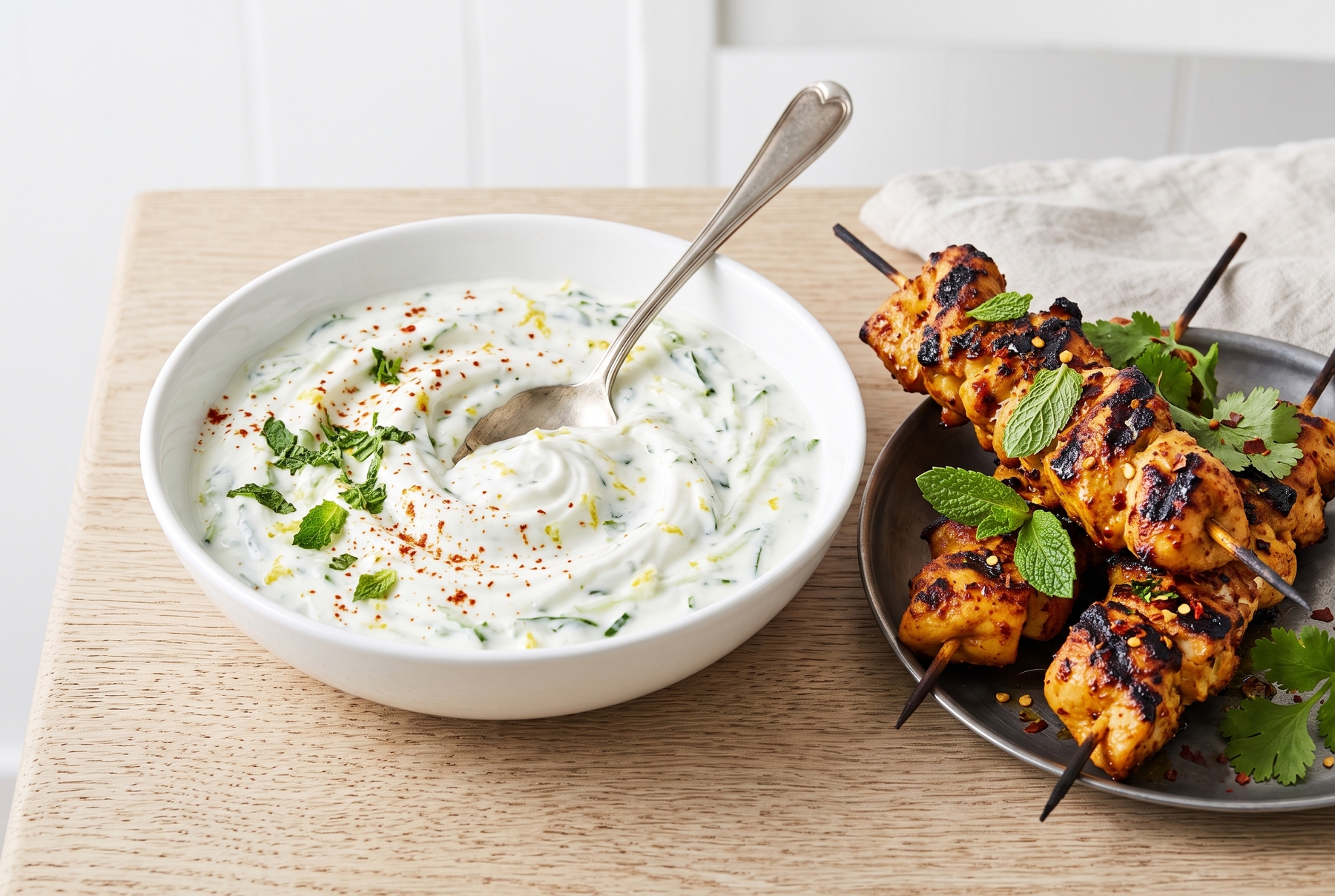
A cooling plain yogurt sauce perfectly balances the aggressive heat and rich fat of hot meat pulled straight off the grill.
Berry and Fruit Kebab Sauces: Acidity and Depth Instead of Dessert
Cherry Sauce With Black Pepper
Cherries, a hint of sugar, vinegar or lemon, freshly ground black pepper, and salt form a sophisticated profile. The pepper drives the aftertaste, providing a warm, spicy length without intense heat. The sharp acidity of the cherry cuts straight through heavy fats, making this sauce a perfect companion for lamb, duck, and fatty pork. Reducing it until it falls from the spoon in a continuous ribbon rather than droplets ensures the ideal consistency.
Currant Sauce With Rosemary
Black or red currants, rosemary, a spoonful of honey, salt, and pepper create a vibrant mix. The currants deliver a bright, almost aggressive acidity, which the honey smoothly rounds out. Rosemary requires careful dosing. Dropping a single short sprig into a small pot is entirely sufficient; crossing that line gives the sauce a medicinal, piney aroma that easily overpowers the berries. Tossing the sprig into the hot sauce to infuse and then removing it remains the best technique.
Apricot Sauce With Chili and Ginger
Tailored for chicken, turkey, and pork. The apricot brings a mellow sweetness, the chili delivers a sharp bite, fresh ginger adds a spicy spark, and lemon keeps everything strictly balanced. Blending or cooking down ripe apricots and introducing the remaining ingredients gradually allows for constant tasting. The final sauce must sit perfectly on the razor’s edge between sweet and spicy, ensuring neither side wins.
Pomegranate Sauce With Onions and Cilantro
Narsharab (pomegranate molasses) or pomegranate juice, thinly sliced red onions, cilantro, and lemon make a brilliant condiment. Store-bought narsharab often leans too sweet. Balancing it with lemon juice and salt restores the sharp, acidic bite that makes pomegranate so appealing in the first place. Marinating the onions in this acidic base for ten minutes removes their raw bite, leaving behind a delightful, crisp freshness.
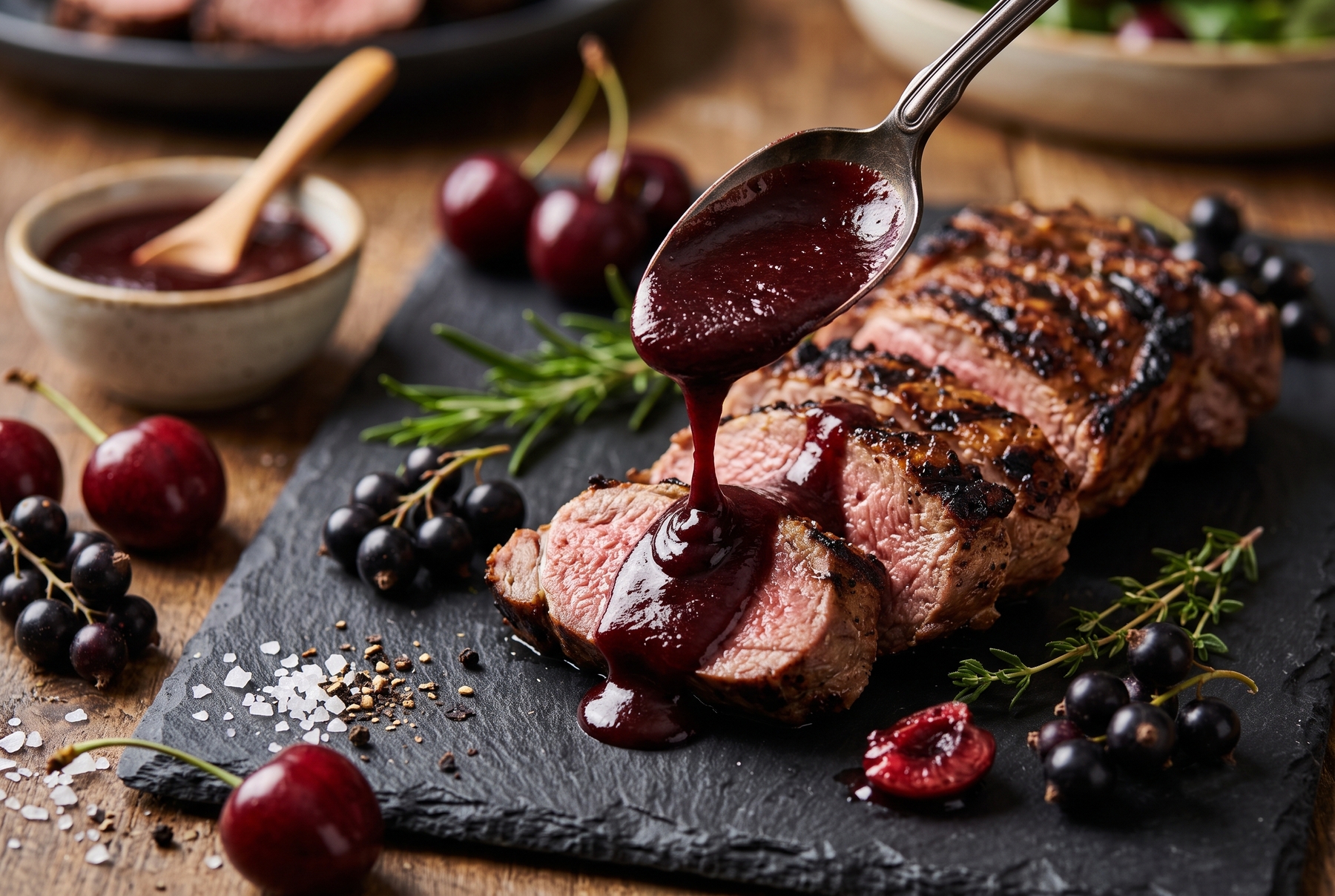
Tart and slightly sweet berry sauces made from cherries or currants create a sophisticated contrast for fatty meats like pork and duck.
Hot Sauces Without the Overkill
Building a hot sauce is about enhancing flavor, not setting an endurance record. Heat should open up the palate before it completely numbs the receptors.
Pepper Sauce With Roasted Chili
Hot peppers, bell peppers, garlic, oil, and vinegar form a robust base. Roasting the peppers until they turn soft and develop dark charred spots allows for easy peeling. A roasted pepper loses its raw aggression and gains a deep, smoky sweetness. The resulting sauce boasts a thick texture and a warm tone, with a pleasant heat that stays in the background rather than punching the palate upfront.
Harissa and Yogurt Sauce
Harissa, a fiery paste hailing from North Africa, usually relies on dried hot peppers and a blend of spices. Thinning prepared harissa with yogurt creates a Mediterranean-inspired sauce perfect for chicken, vegetables, and lamb. The yogurt mellows the intense heat and adds a cooling touch, while the harissa imparts a spicy depth and the color of aged copper. Starting with a small amount of paste is wise; adding more is always easier than trying to tone it down later.
Honey Chili Sauce With Lime
Ideal for wings, chicken skewers, and shrimp. Honey, chili, lime juice, and a pinch of salt create a sticky, glossy sauce with a bright, sharp heat. The sugar introduces a tricky trap: honey burns in seconds over high heat, leaving a bitter taste. Brushing this sauce onto already cooked meat right before serving, or applying it at the very end of cooking, prevents ruining a raw chicken wing on a blazing hot grate.
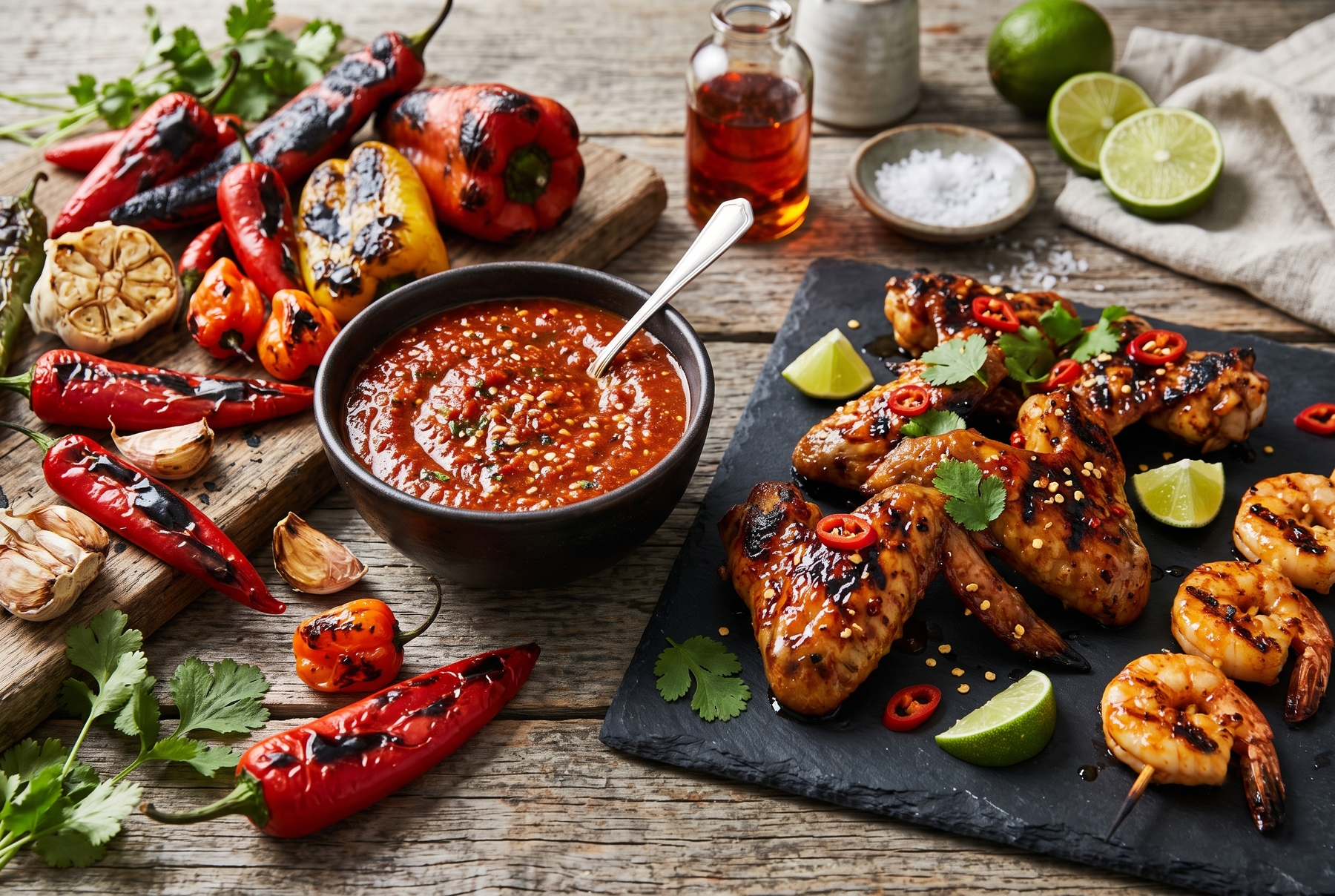
The carefully moderated heat of roasted chili peppers opens up the flavors of meat and seafood without completely numbing the palate.
Green Sauces: Freshness Against the Smoke
Chimichurri as a Kebab Sauce
This sauce draws inspiration from Argentine chimichurri without strictly adhering to the canon. Finely chopped parsley, oregano, garlic, wine vinegar, olive oil, and chili flakes create a vibrant mix. Skipping the blender and working strictly with a knife keeps the chimichurri authentic, as it thrives on a coarse chop and oil packed with floating herbs. Letting it rest for half an hour allows the garlic and dried oregano to infuse the oil fully. It complements beef and pork so perfectly it feels as though they were invented specifically for each other.
Mint and Cilantro Sauce With Lemon
Mint, cilantro, garlic, lemon, and a splash of oil and water come together beautifully. The mint delivers a cooling sensation that feels like a crisp breeze in the mouth, while the cilantro brings a deep, herbaceous spice. It pairs wonderfully with lamb, chicken, and vegetables. The sauce relies on pure contrast: placing hot, smoky meat right next to icy, herbal freshness.
Scallion, Oil, and Vinegar Sauce
This minimalist approach caters perfectly to those who despise cilantro (a much larger group than generally assumed). Scallions, oil, vinegar, and salt are all it takes. Bypassing blenders and kitchen gadgets, this sauce comes together effortlessly on a cutting board at a summer house while the meat finishes on the coals. The sharp bite of the fresh onions and the acidity of the vinegar slice through heavy fats just as effectively as the most complex recipes.
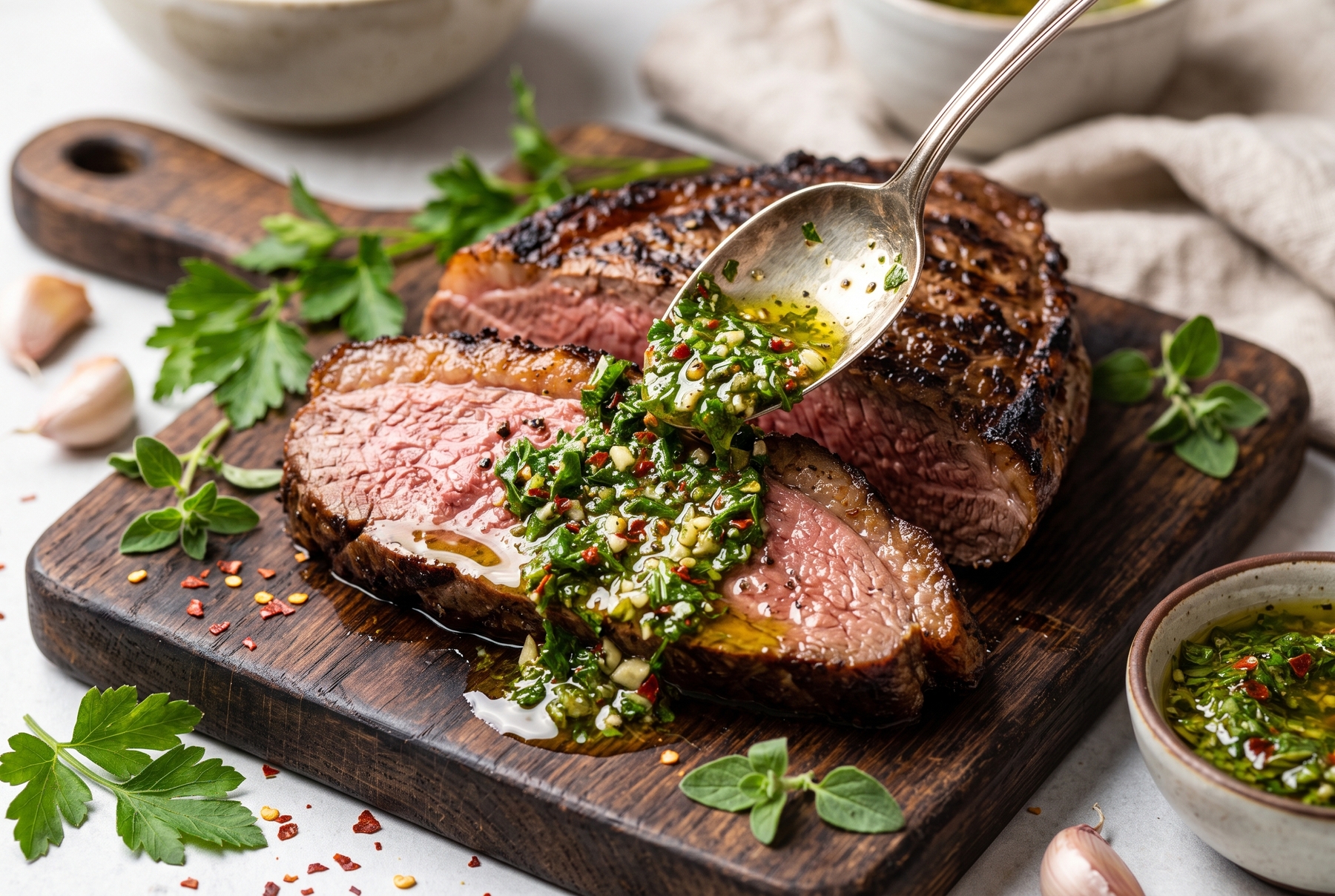
Coarsely chopped sauces made from fresh greens, oil, and vinegar introduce a bright herbaceous freshness that beautifully cuts through the fat of heavy steaks.
Sauces for Vegetable Skewers, Mushrooms, and Cheese
Tahini With Lemon and Garlic
A fantastic match for eggplants, zucchini, button mushrooms, and cauliflower. Tahini behaves quite unexpectedly: reacting to lemon and water, it initially seizes and becomes clumpy before suddenly blooming into a smooth, pale cream. Adding water gradually, a spoonful at a time while stirring constantly, ensures the right texture. Garlic and salt go in to taste. The finished sauce offers a nutty, creamy profile with the subtle bitterness of sesame.
Roasted Pepper and Walnut Sauce
Roasted bell peppers, walnuts, garlic, vinegar, and oil make a stunning combination. Blending everything into a thick paste allows it to serve a double purpose: working as a dipping sauce and doubling as a spread inside flatbreads holding vegetables and cheese. It boasts a rich, brick-red color and a deeply satisfying, grainy texture from the walnuts.
Basil Sauce With Yogurt
Perfect alongside grilled halloumi and sulguni, chicken, and vegetables. Basil, yogurt, lemon, a touch of oil, and salt create a refreshing profile. It stands bright and slightly tart, featuring a clear, herbaceous basil note without the heavy push of garlic. Garlic here either appears in microscopic doses or gets skipped entirely; otherwise, it easily overpowers the delicate basil aroma that forms the entire point of the sauce.
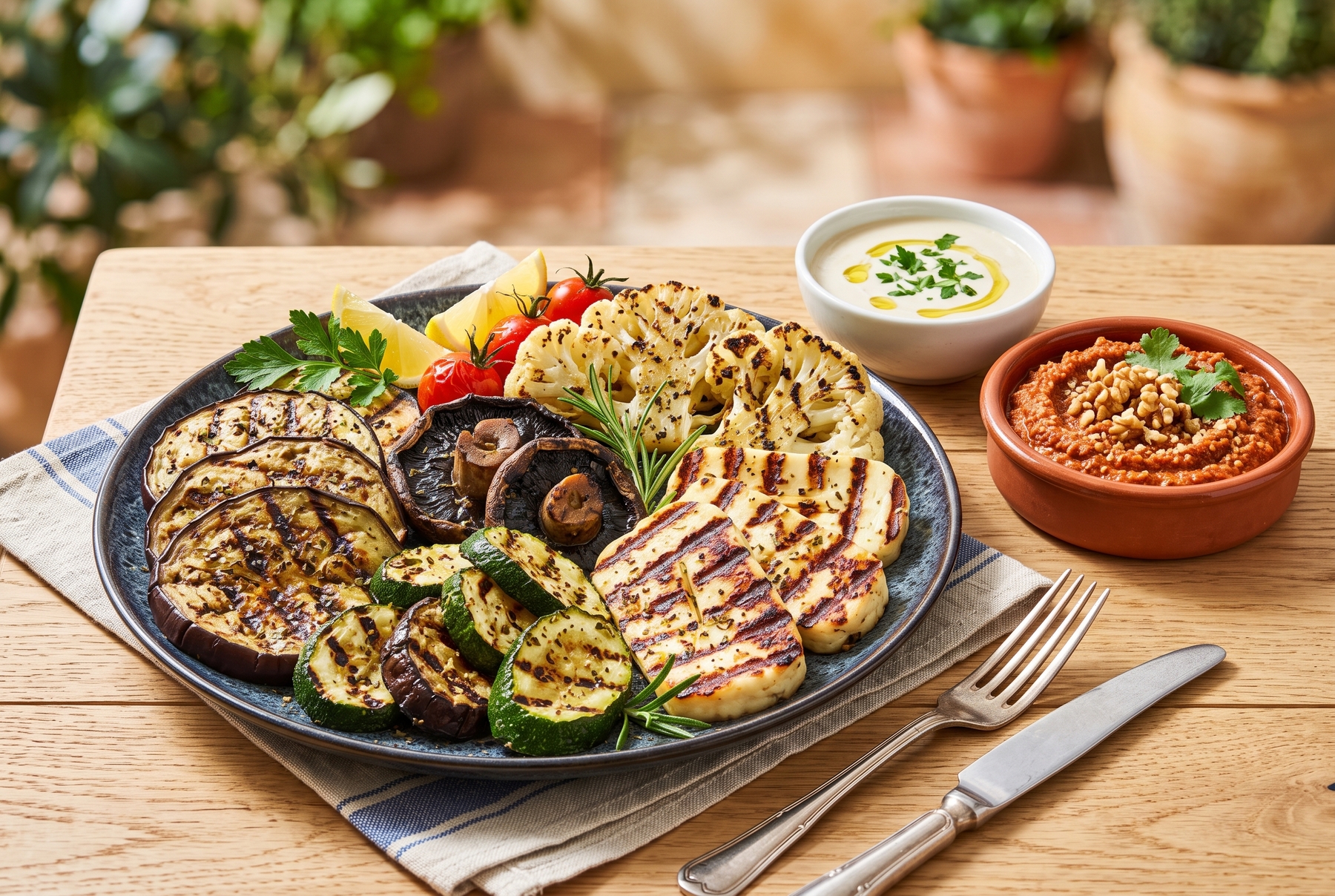
Vegetable skewers and mushrooms desperately need dense, rich sauces like tahini or walnut paste to compensate for the absolute lack of meat fat.
Matching the Right Sauce to Different Skewers
Pork
Fatty meat demands acidity and heat. Reaching for spicy tomato with plum, cherry sauce, horseradish with sour cream, or chimichurri makes a massive difference. Anything that aggressively cuts the fat prevents the cut from feeling overly heavy.
Lamb
The classic companions for lamb include mint, pomegranate, cilantro, yogurt, garlic, and sour plum. Smoked yogurt with mint and the mint-cilantro sauce work almost flawlessly. Sweet sauces remain strictly forbidden near lamb: they turn the meat cloying, much like an overly sweetened pilaf.
Chicken and Turkey
Poultry runs drier than other meats and desperately needs a rich or creamy sauce to restore a sense of juiciness. Yogurt sauces, aioli, apricot with chili, and honey-chili are perfect choices. A smooth emulsion beautifully coats the dry muscle fibers and effectively masks them.
Fish and Seafood
Lightness rules this category. Lemon, fresh herbs, yogurt, careful heat, and a strict minimum of sweetness work best. A heavy walnut paste or a dense tomato sauce completely smothers the fish, leaving none of its natural flavor behind. The more delicate the fish, the more restrained the sauce must be.
Vegetables, Mushrooms, and Cheese
Vegetable skewers do not need a ‘diet’ sauce; they require a rich, satisfying texture to compensate for the lack of meat fat. Tahini, roasted pepper with walnuts, basil yogurt, and vibrant green sauces fill that gap perfectly. Pairing a charred eggplant with a thick, nutty paste creates a culinary duo worth firing up the grill for, even without a single piece of meat.
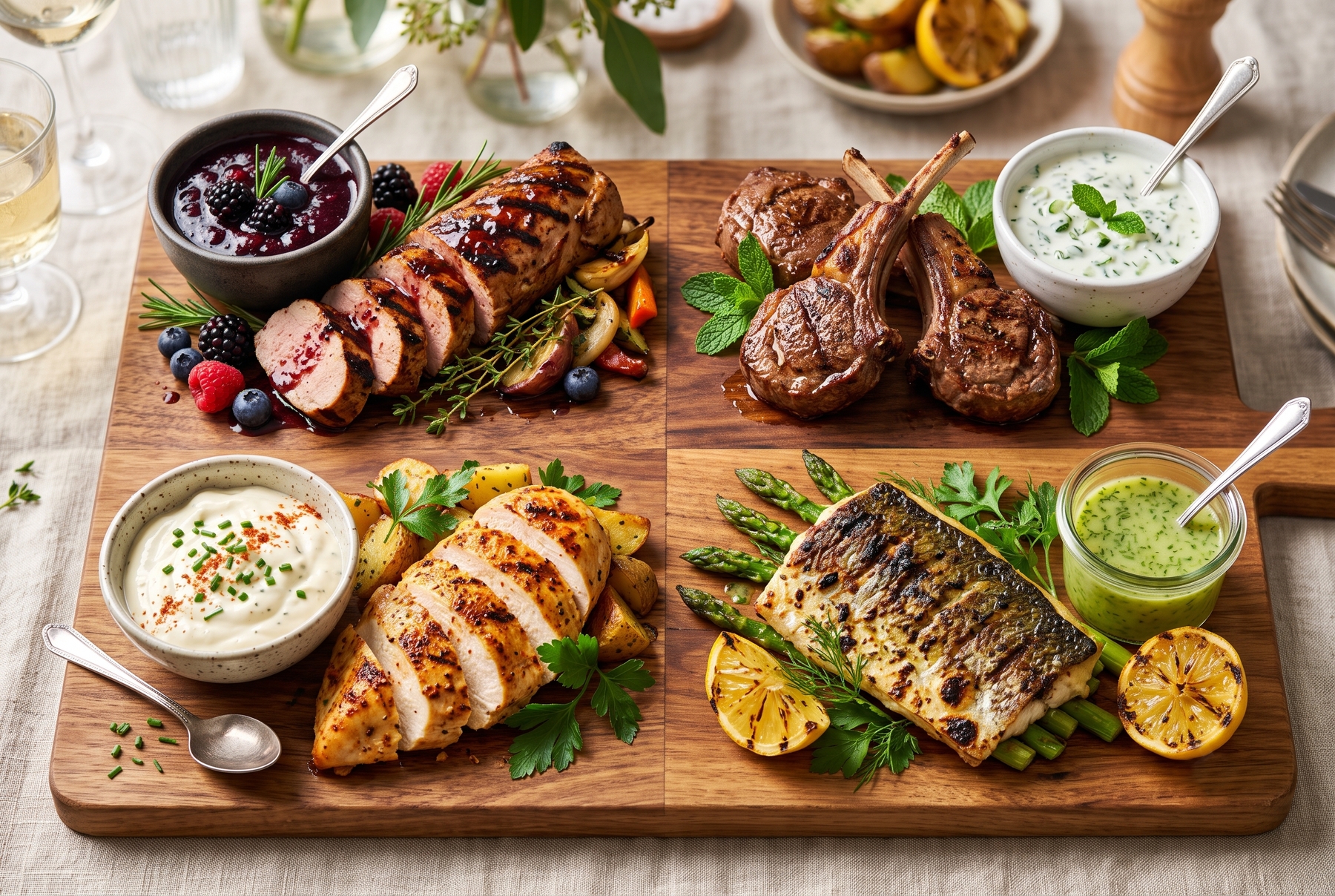
Every type of barbecue demands a specific sauce: fatty pork needs sharp acidity, poultry begs for creaminess, and seafood requires the delicate touch of lemon and herbs.
What to Prepare Ahead and What to Mix Before Serving
The more fresh herbs and raw garlic a sauce contains, the worse it handles waiting around. Tomato and berry sauces hold up beautifully when made a day ahead; resting in the fridge actually rounds out their flavors and softens any sharp edges. Assembling green sauces right before hitting the table is crucial: chopped cilantro and parsley darken and wilt within a few hours, losing their bright aroma completely.
Handling dairy, egg, and garlic-based sauces at a picnic requires strict discipline. Perishable food despises the ‘danger zone’ between 4 °C (40 °F) and 60 °C (140 °F), where bacteria multiply at terrifying speeds. Leaving such sauces out in the open air for more than two hours is a huge mistake, and in heat exceeding 32 °C (90 °F), that safety window shrinks to about an hour. Transporting yogurt sauces in a cooler bag, keeping the bowl in the shade or on ice, and refusing to leave them out in the sun ‘for later’ prevents disaster. A garlic sauce left sitting in the heat poses a real danger precisely because it will not taste spoiled at all.
5 Mistakes That Ruin a Sauce
Overdoing the Sugar
The sauce turns sticky, pulls into syrupy threads from the spoon, and completely masks the meat with aggressive sweetness. The beautiful smoke and charred crust simply vanish under a heavy glaze.
Too Much Raw Garlic
Garlic introduces a harshness and bitterness, especially after sitting for a few hours: that raw note refuses to fade, growing stronger by dinner time and leaving a distinct metallic taste.
Zero Acidity
Skipping the acid leaves a sauce flat and dull, particularly next to a rich, fatty cut. Fat absolutely demands contrast, and without acidity, the palate tires incredibly fast.
The Blender Averages Everything
Not every sauce needs blending into a silky smooth mass. A chunky, hand-chopped texture often tastes livelier and more engaging: salsa, chimichurri, and satsebeli heavily rely on a coarse chop.
One Sauce for the Entire Table
It gets boring quickly. Assembling two or three contrasting options—spicy, fresh, and creamy—allows every bite to be dipped differently, ensuring the palate remains engaged well past the middle of the meal.
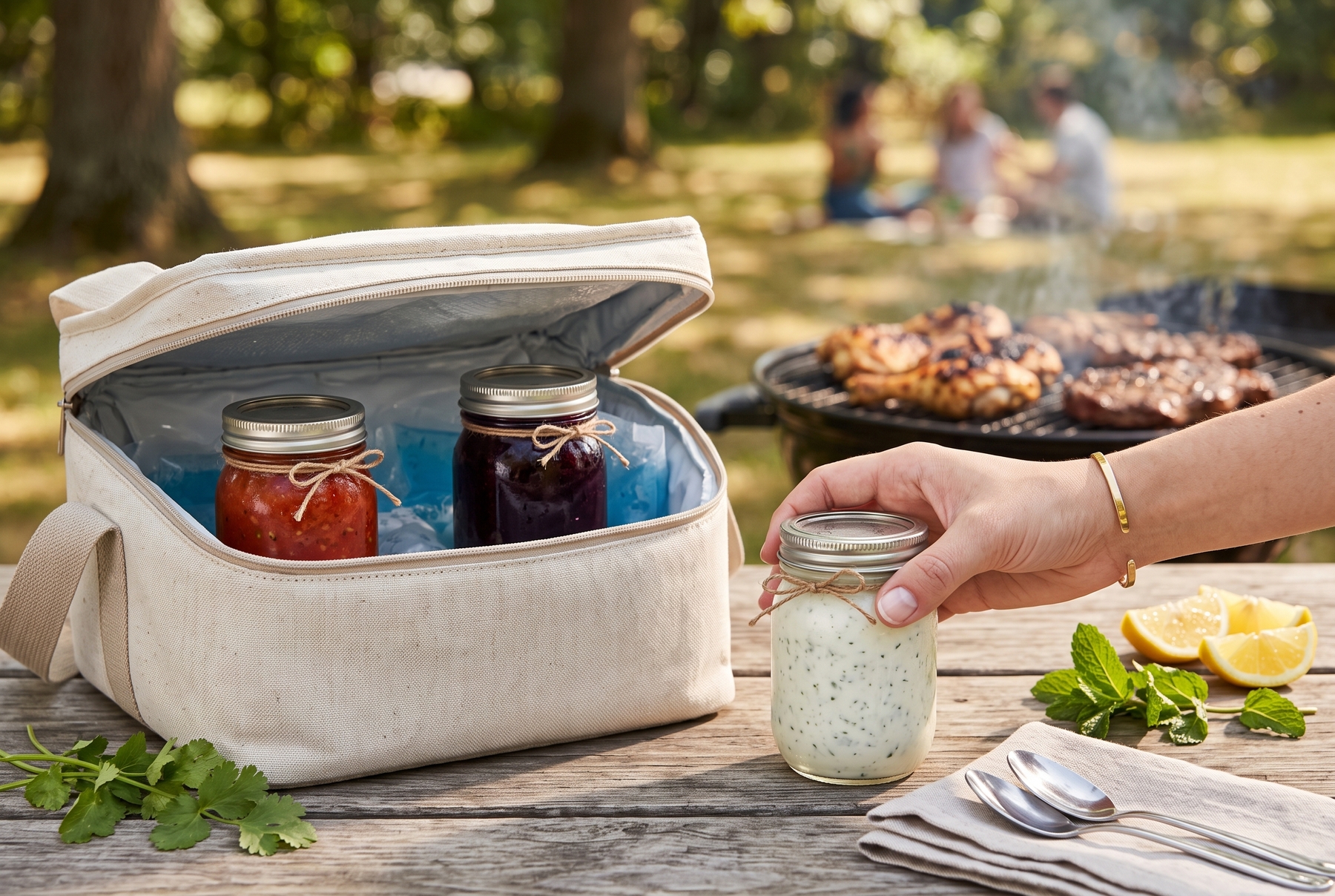
Transporting highly perishable yogurt or sour cream sauces in a cooler bag is vital, ensuring they never sit in the sun for more than two hours.
6 No-Recipe Sauce Formulas
Consider this a construction kit rather than a strict set of proportions. Pulling one element from each row, mixing them together, tasting, and adjusting with salt and acid works every time.
- Tomato + Acid + Garlic + Greens
- Yogurt + Lemon + Herbs + Cold Heat
- Berries + Vinegar + Black Pepper + Salt
- Walnuts + Pomegranate + Garlic + Water
- Greens + Oil + Vinegar + Chili
- Roasted Vegetable + Nuts or Oil + Acid
Keeping this logic in mind guarantees a great sauce built purely from whatever is already sitting in the fridge.
A Great Sauce Never Argues With the Meat
The originality of a sauce does not stem from a rare ingredient sourced from a specialty shop. It all comes down to balance. The most fascinating sauce on the table might consist solely of a roasted tomato, garlic, and a drop of vinegar, provided those three elements are perfectly aligned. Conversely, ruining an expensive narsharab by failing to balance it with salt and lemon takes almost no effort.
Testing a sauce alongside the meat, rather than directly from a spoon, reveals its true character. The sauce behaves entirely differently on the tongue when paired with a fatty, smoky bite. Providing two or three contrasting barbecue sauces—spicy, fresh, and creamy—keeps the meal exciting. It guarantees that every single piece can be dipped in a new way, preventing the spread from feeling monotonous halfway through. Yet, the absolute best moment remains unchanged: wiping the bottom of the plate with a warm piece of flatbread, picking up the very last remnants of the sauce, and leaving behind only a yellow-orange streak of paprika.
0 comments