
A perfectly ordinary mix rests in the bowl: a cucumber, two tomatoes, half a bell pepper, a bunch of radishes, and a handful of salad greens. These ingredients are available in any corner store even in February, looking equally uninspiring everywhere.
Now, imagine passing this very bowl into different hands.
A chef in Tokyo grinds toasted sesame seeds into an oily paste, thinning it with soy sauce and rice vinegar, rendering the vegetables richly nutty and almost creamy without a drop of actual cream. A market vendor in Bangkok squeezes a lime, adding fish sauce, crushed chili, and a pinch of sugar: that same bowl rings with acidity and burns the tongue. A French cook reaches for red wine vinegar, a spoonful of Dijon mustard, and olive oil, and the salad suddenly comes together as if its posture has been corrected. In Istanbul, dark pomegranate molasses cascades over the tomatoes, followed by a dusting of burgundy sumac, leaving a tart, sweet-and-sour film on the palate that demands another bite.
The vegetables remained identical throughout. What completely transformed them were just three tablespoons of salad dressing.
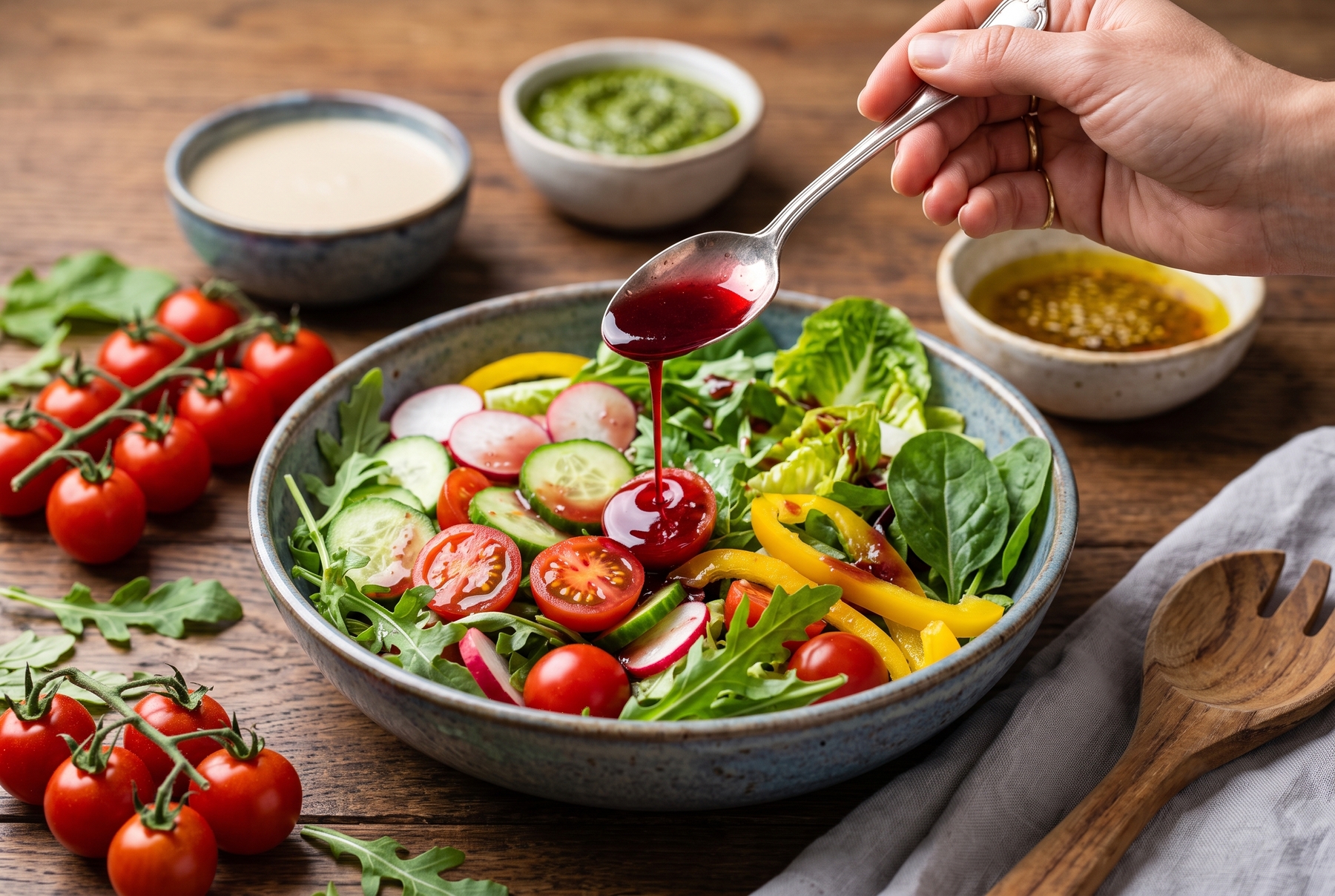
A vibrant salad dressing instantly transforms the flavor of familiar fresh vegetables.
Table of Contents
- One Vegetable Mix and 20 Different Dishes
- The Anatomy of a Delicious Salad Dressing
- Europe and the Mediterranean: Oil, Acid, Herbs, and Mustard
- The Caucasus, Turkey, and the Levant: Nuts, Pomegranate, Cultured Milk, and Spices
- East and Southeast Asia: Sesame, Soy, Lime, and Fermented Condiments
- South Asia: Spices, Acidity, and Cool Dairy Bases
- The Americas: Fresh Chili, Herbs, and Rich Creamy Sauces
- Where to Start and How to Avoid Buying the Entire Store
- A Home Experiment: 1 Salad and 3 Countries
- 7 Reasons Why Homemade Dressings Disappoint
- A New Way to Look at the Bowl
One Vegetable Mix and 20 Different Dishes
Salad dressing binds disparate pieces into a cohesive dish: a tomato ceases to exist separately from a cucumber, a lettuce leaf from a radish. Salt draws sweetness out of the tomato, while fat mutes the bitterness of arugula and endive. Acidity refreshes cabbage, and heat sustains interest until the very last bite. Even the perception of texture shifts: a thin, acidic dressing makes vegetables crisper, whereas a thick, nutty sauce seemingly lends them softness.
This guide explores 20 salad dressings from various global cuisines. Preparing all 20 is unnecessary and, frankly, pointless. A much more practical approach involves creating a control bowl: cucumber, tomatoes, bell pepper, radish, salad greens, and occasionally thinly shredded cabbage. This accessible mix boasts a neutral flavor profile, ensuring the vegetables never compete with the sauce. Testing two or three dressing variations sequentially on this base helps identify personal flavor preferences.
Why Dressings Evolved Differently Across the Globe
Sauces almost universally develop from local, shelf-stable ingredients. In regions dominated by centuries-old olive groves, olive oil became the foundation, with acidity provided by lemon and grape vinegar. Sesame and peanut producers developed thick, nutty sauces that simultaneously turn simple food into a filling meal. In the tropics, flavors are built around lime, chili, palm sugar, and fermented fish or bean condiments. Northern climates, lacking abundant fresh greens but rich in cabbage and root vegetables, rely on mustard, vinegar, dill, and dense fermented milk bases.
The Anatomy of a Delicious Salad Dressing
6 Pillars of Flavor
Dissecting almost any salad dressing reveals six fundamental components.
Fat Base carries flavor and coats the vegetables: olive or neutral oil, tahini, yogurt, sour cream, or nut paste.
Acidity awakens everything else: vinegar, lemon, lime, pomegranate molasses, or cultured milk.
Salt dictates not only saltiness but also whether the sweetness of a tomato shines through; its role is frequently played by soy or fish sauce, anchovies, or cheese.
Sweet Element smooths the sharp edges of acidity and heat: a half spoonful of sugar, honey, syrup, or sometimes simply roasted peppers.
Aromatics provide recognizable character: garlic, shallot, ginger, dill, cilantro, oregano, cumin, or sumac.
Finally, the Textural Accent adds intrigue: sesame seeds, chopped nuts, chili flakes, or grated citrus zest.
Not every dressing must contain all six elements. Vietnamese nước chấm thrives entirely without fat, while Greek ladolemono requires only three components. However, when a flavor profile feels incomplete, this framework offers the easiest troubleshooting method.
- Harsh and overly acidic: incorporating oil, yogurt, or tahini helps, and if that fails, a quarter spoonful of sugar works wonders.
- Bland and flat: checking the salt first, followed by the acidity, usually reveals a lack of acid.
- Greasy and heavy: amplifying the lemon, fresh herbs, or spice provides balance.
- The sauce pools separately: mixing more vigorously or adding a drop of mustard creates a stable emulsion.
- Delicious on the spoon but lost in the salad: making the dressing noticeably bolder than seemingly necessary solves this issue.
Why a Sauce Always Tastes Weaker in a Salad
Vegetables dilute dressings with their natural water content, a trait especially prominent in cucumbers, tomatoes, and freshly chopped cabbage. A sauce that tastes perfect on a spoon often turns into pale moisture once mixed into the bowl.
A better testing method involves dipping the edge of a lettuce leaf or a cucumber slice into the dressing, eating it, and paying attention to the aftertaste. If nothing remains on the palate after a few seconds, incorporating more salt and acid is essential.
Consistency requires attention as well. A thin dressing should flow from a spoon in a continuous stream, coating vegetables in a fine, glossy film. A thick dressing (nut-based, sesame, or yogurt) flows like a ribbon, resting on the vegetables and adhering to them without gluing the salad into a paste. A spoon standing straight up in the sauce indicates a dip, which needs thinning.
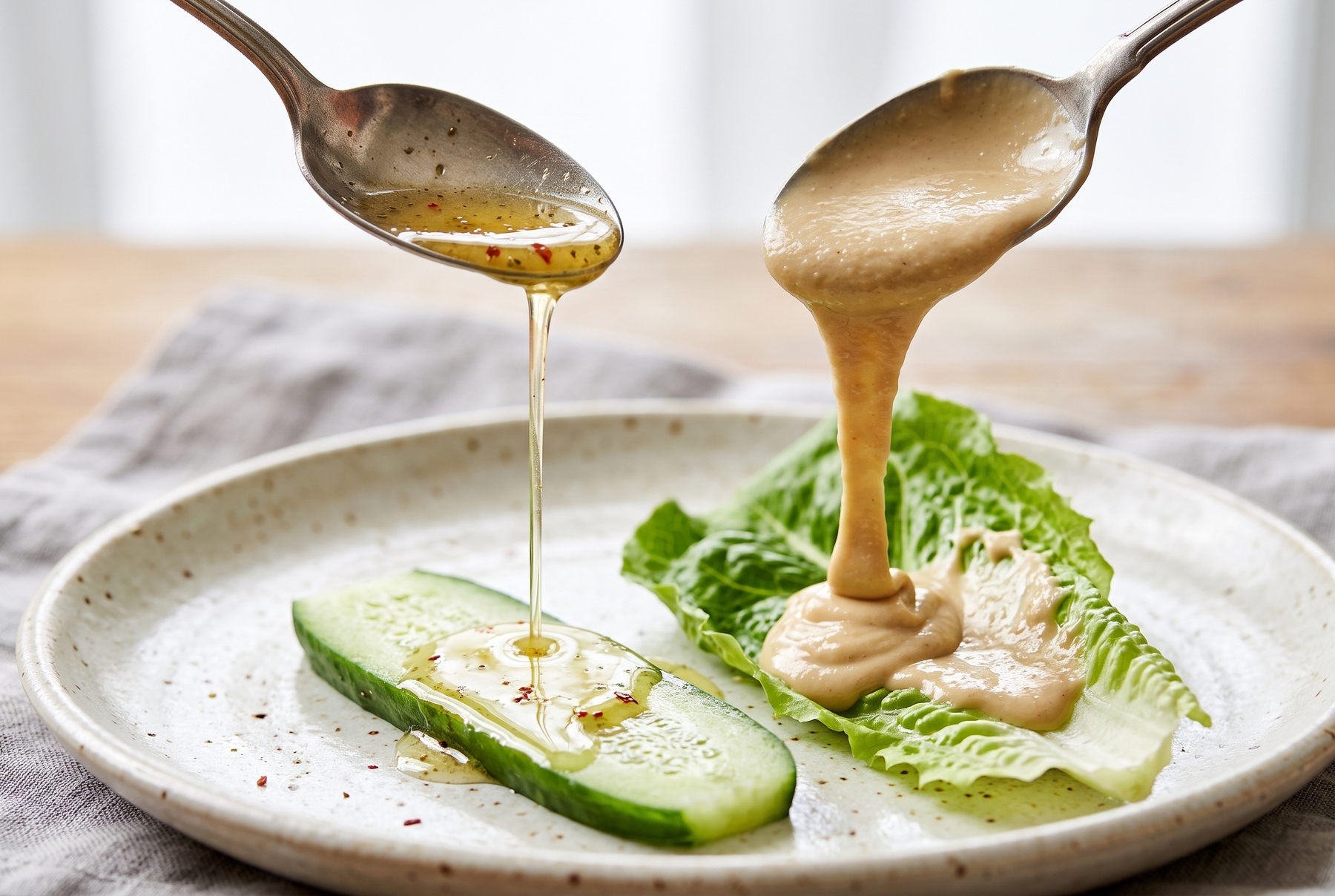
A thin dressing gently coats vegetables in a fine layer, while a thick sauce clings tenaciously to the leaves.
Europe and the Mediterranean: Oil, Acid, Herbs, and Mustard
The overarching logic of this region is straightforward: high-quality oil paired with distinct acidity and a single aromatic detail. Yet, the vast differences between Lyon, Athens, and Tarragona mean they cannot be reduced to a single tradition.
1. French Dijon Vinaigrette
The initial sensation is a sharp vinegar prick, followed by a mild mustard heat that settles on the middle of the tongue and slowly fades. Dijon mustard operates on two fronts here: it delivers flavor and holds the emulsion, ensuring the sauce becomes matte and creamy-cloudy rather than separated. Shallots steeped in vinegar lose their harshness within five minutes, turning subtly sweet.
This vinaigrette unifies tough and diverse ingredients into a single dish: leafy greens, radishes, boiled beans, beets, roasted carrots, and green peas.
- 1 tsp Dijon mustard
- 1 tbsp white wine vinegar
- 3 tbsp olive oil
- 1 small shallot
- Salt, freshly ground black pepper
- Finely mince the shallot and soak it in the vinegar for 5 minutes.
- Stir in the mustard and salt until completely dissolved.
- Pour in the oil in a thin stream, whisking continuously with a fork, until the sauce becomes smooth and slightly opaque. Finish by incorporating freshly ground black pepper.
Lacking a shallot, a quarter of a small red onion works perfectly. If white wine vinegar is unavailable, apple cider vinegar serves as a softer, slightly sweeter substitute. Pouring the oil in a thin stream ensures the emulsion forms faster and remains more stable.
2. Italian Citronette
A sunnier relative of the vinaigrette. Lemon replaces vinegar, resulting in a transparent flavor lacking acidic causticity, finishing with the subtle, bitter echo of high-quality olive oil.
The juice provides the acid, while the zest delivers the aroma: the citrus oils carry a fresh, resinous scent that lingers longest in the salad. A citronette pairs exceptionally well with tomatoes, fennel, arugula, young zucchini, and artichokes.
- 3 tbsp extra virgin olive oil
- 1 tbsp lemon juice
- Zest of a quarter lemon
- Salt, pepper
- Grate the zest using a fine grater, ensuring the bitter white pith remains untouched.
- Dissolve the salt in the lemon juice, then stir in the zest.
- Whisk the mixture with the oil using a fork until homogeneous, incorporate freshly ground pepper, and let it rest for a couple of minutes.
Substituting lime for lemon introduces a sharper, more perfumed tone—a different but entirely functional approach. A common beginner mistake involves grating the zest too deeply into the pith, which imparts a bitterness that no amount of sweetness can fix.
3. Greek Ladolemono
An emulsion of olive oil and lemon, frequently elevated with dried oregano. The flavor is salty-lemon and herbaceous, featuring a dry mountain aroma that emerges when the oregano is crushed between the palms before entering the bowl.
In Greek cuisine, this sauce extends far beyond the famous tomato and feta salad: it dresses roasted eggplants, green beans, fish, and boiled horta greens. At home, it complements cucumbers, tomatoes, bell peppers, and red onions perfectly.
- 4 tbsp olive oil
- 2 tbsp lemon juice
- 0.5 tsp dried oregano
- Salt
- Rub the oregano between your palms directly over the bowl.
- Mix the lemon juice with salt, then incorporate the oregano.
- Whisk with the oil until a slight thickening occurs, which happens almost instantly.
Without a robust olive oil, using a standard variety requires halving the oregano to prevent the herb from dominating the flavor. A notable mistake is preparing this in advance and forgetting to whisk it again before dressing the salad. Ladolemono separates quickly and always requires a vigorous re-whisking right before serving.
4. Catalan Romesco in a Lighter Version
Romesco encompasses a family of thick Catalan sauces based on roasted peppers, nuts, and bread, traditionally served with fish, meat, and grilled vegetables. For salads, it takes a significantly thinner form, representing a domestic adaptation rather than the sole traditional recipe.
The flavor profile is dense: opening with the sweetness of roasted pepper, transitioning into almond richness, followed by the smokiness of paprika, and concluding with a vinegar acidity that prevents the sauce from becoming cloying. The color is a brick-orange, and the texture remains slightly grainy. On white cauliflower, boiled potatoes, green beans, and roasted vegetables, it functions almost as a main course rather than a simple condiment.
- 1 roasted sweet bell pepper (or 100 g / 3.5 oz canned)
- 30 g (1 oz) toasted almonds
- 1 small peeled tomato
- 1 garlic clove
- 1 tbsp sherry or red wine vinegar
- 3 tbsp olive oil
- A pinch of smoked paprika, salt
- Blend the nuts and garlic in a food processor, then incorporate the pepper and tomato.
- Pour in the vinegar and oil, add the paprika, and season with salt.
- Thin the mixture with 1–2 tbsp of cold water until it reaches the consistency of thin sour cream.
Hazelnuts can easily replace almonds, and standard wine vinegar substitutes well for sherry vinegar. Leaving the sauce as thick as the jarred version is a mistake, as it forms clumps on the salad, leaving half the vegetables entirely dry.
5. Northern Europe: Mustard, Dill, and a Touch of Sweetness
A familiar profile emerges: mustard, vinegar or lemon, oil, generous amounts of chopped dill, and a half spoonful of honey. Its closest recognized relative is the Swedish sauce for gravlax, where sweet mustard is mashed with vinegar and dill. Similar combinations thrive across the Baltics and northern Germany, making it a stretch to attribute the formula to a single country.
The sugar functions solely to neutralize the mustard’s sharp bite, leaving no dessert-like sweetness behind. This sauce is designed for dense vegetables: white and red cabbage, cucumbers, boiled beets, potatoes, and radishes.
- 1 tbsp mustard (Dijon or sweet)
- 1 tsp honey
- 1 tbsp apple cider vinegar
- 3 tbsp neutral oil
- 2 tbsp finely chopped dill
- Salt, pepper
- Whisk the mustard, honey, and vinegar until completely smooth.
- Gradually pour in the oil while whisking continuously until a creamy texture forms.
- Season with salt and pepper, then fold in the dill.
Sugar easily substitutes for honey, and dried dill works in winter, though only a third of the amount is necessary. Pre-chopping the dill finely in a blender is a mistake, as it darkens and releases a bitter, grassy flavor, whereas knife-chopped dill stays vibrant green and smells like a freshly snapped stem.
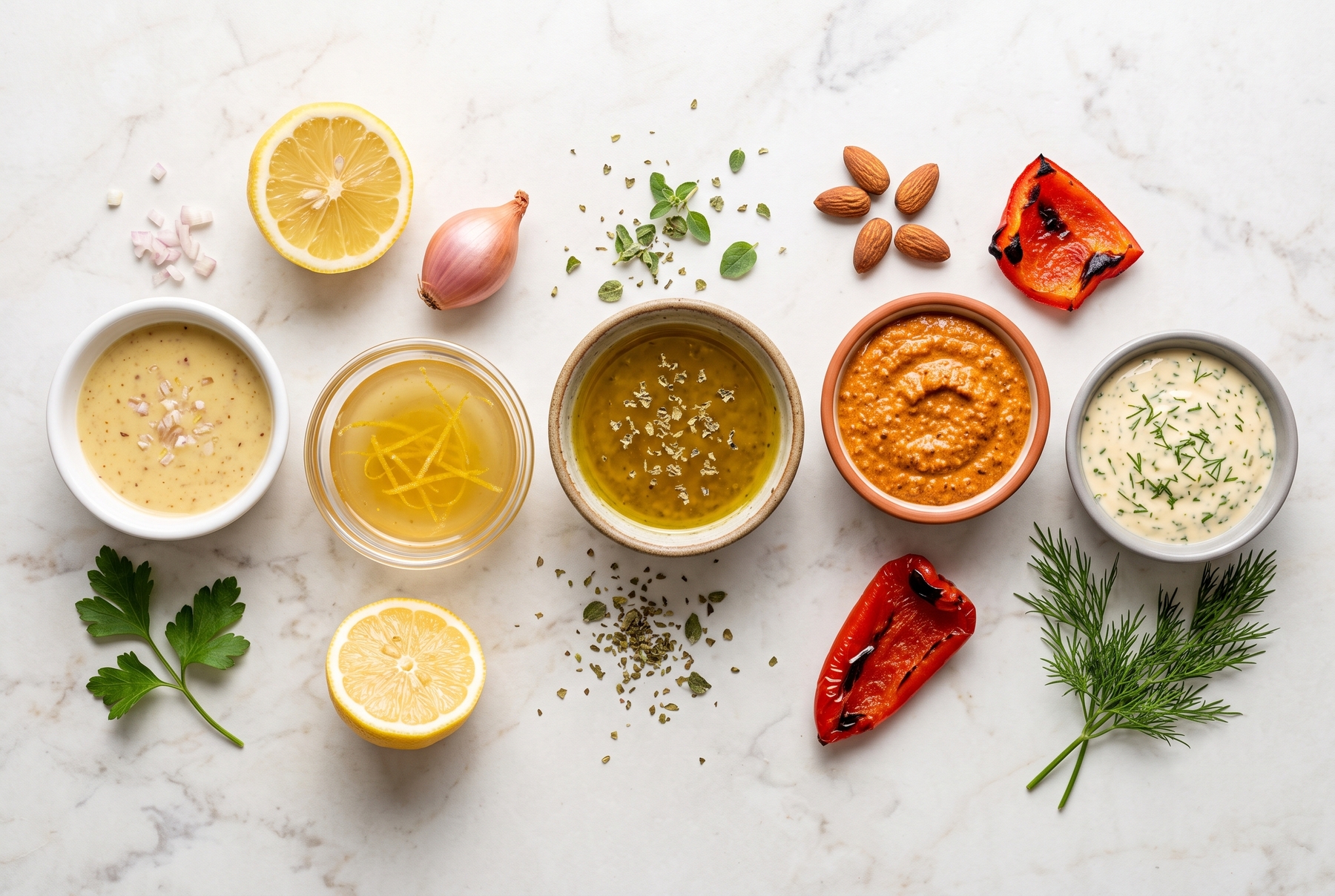
Classic European dressings are built upon high-quality oil, citrus, mustard, and fragrant herbs.
The Caucasus, Turkey, and the Levant: Nuts, Pomegranate, Cultured Milk, and Spices
In these culinary traditions, the sauce frequently transcends liquid form to become a substantial part of the dish: rich with nuts, sesame, or cultured milk. The vegetables resting beneath it transform into a standalone meal rather than a simple side for meat.
6. Georgian Walnut-Garlic Dressing
In Georgia, a thinned walnut base is known as baje, typically served with poultry and fish; in pkhali, walnuts and herbs function as a dense mass rather than a sauce. The following is a domestic variation adapted specifically for fresh salads.
The aroma is instantly recognizable: walnuts, garlic, and utskho suneli (blue fenugreek) with its dry, hay-like scent. The flavor is thick, slightly astringent from the walnut skins, finishing with a tart trail of wine vinegar. It coats beets, boiled cabbage, roasted eggplants, green beans, and carrots beautifully.
- 60 g (2 oz) shelled walnuts
- 1 garlic clove
- 0.5 tsp utskho suneli
- A pinch of ground coriander
- 1 tsp wine vinegar
- 80–100 ml (2.5–3.5 fl oz) cold water
- Salt
- Process the walnuts, garlic, and salt until they form a moist paste and oil begins to show on the sides.
- Incorporate the spices and vinegar.
- Gradually add water, stirring constantly, until the mixture achieves the consistency of light cream.
Substituting khmeli suneli for utskho suneli is not recommended, as they are entirely different spice blends. Utskho suneli has no exact replacement. Undermilling the walnuts is a mistake, causing the sauce to scratch the tongue with grit and fail to adhere to the vegetables.
7. Levantine Tahini with Lemon
Observing the physical transformation here is fascinating. Adding lemon juice to tahini immediately causes the paste to seize, becoming clumpy, dense, and seemingly ruined. However, whisking in ice water a spoonful at a time yields, within half a minute, a smooth, silky, light-beige sauce that flows from the spoon in a perfect ribbon.
The flavor profile opens with sesame creaminess, followed by a distinct bitterness from the seed skins, then lemon, and finally raw garlic. This pairs immaculately with tomatoes, cucumbers, and cabbage, and especially with roasted cauliflower and carrots, where the vegetables’ sweetness balances the sesame’s bitter notes.
- 3 tbsp tahini
- 2 tbsp lemon juice
- 1 small garlic clove
- 3–5 tbsp cold water
- Salt
- Mash the garlic with salt, then mix it into the lemon juice.
- Stir in the tahini and wait for the mixture to thicken and lighten in color.
- Add ice-cold water one tablespoon at a time, whisking until completely smooth.
High-quality, unsweetened sesame paste serves as a perfect substitute for tahini. A nearly universal mistake occurs when the mixture seizes: people panic and add oil. Cold water is the actual requirement. Furthermore, a new jar of tahini requires thorough stirring right down to the bottom; otherwise, only oil is scooped from the top, leaving a dry rock below.
8. Turkish Dressing with Pomegranate Molasses and Sumac
Pomegranate molasses (nar ekşisi) is thick, almost inky, carrying an enveloping, fruity acidity. Sumac contributes a dry tartness that slightly puckers the inside of the cheeks. Together, they create a flavor that lingers longer than any other on this list.
Tasting two different bottles back-to-back at a market in Gaziantep once revealed a contrast as stark as lemon versus jam. Authentic pomegranate molasses delivers acidity first, with sweetness following later, boasting the consistency of liquid honey. If a product tastes immediately sweet, it is merely a dessert syrup, which will yield a cloying dressing.
This pairs perfectly with tomatoes, cucumbers, red onions, parsley, cabbage, and roasted peppers.
- 1.5 tbsp pomegranate molasses
- 1 tbsp lemon juice
- 3 tbsp olive oil
- 1 tsp sumac
- Salt
- 2 tbsp chopped parsley
- Combine the pomegranate molasses, lemon juice, sumac, and salt.
- Whisk vigorously with the olive oil.
- Fold in the parsley right before serving.
Without pomegranate molasses, reducing 100 ml (3.5 fl oz) of pomegranate juice down to 2 tbsp and adding a drop of lemon juice works well. Pouring pomegranate molasses by eye is a mistake; it packs a stronger punch than expected, and an extra spoonful will completely overpower the vegetables.
9. Yogurt Dressing with Mint, Garlic, and Cumin
Cool and dense, with a cultured milk freshness followed by mint and the warm, smoky scent of toasted cumin. This sauce extinguishes heat and amplifies sweetness, making carrots, beets, roasted pumpkin, and cucumbers taste noticeably sweeter.
Similar combinations thrive across multiple cuisines: Turkish cacık, Iranian mast-o-khiar, and Indian raita. Proportions, thickness, and herb selections vary, making it impossible to crown a single version as the canonical original.
- 150 g (5.3 oz) thick plain yogurt
- 1 tbsp lemon juice
- 1 small garlic clove
- 1 tbsp chopped mint
- 0.5 tsp cumin seeds
- Salt, 2–3 tbsp cold water
- Toast the cumin in a dry skillet for 30–40 seconds until fragrant, then crush it.
- Mix the yogurt with lemon juice, salt, grated garlic, and the toasted cumin.
- Thin with water to the consistency of heavy cream, then fold in the mint.
A mixture of equal parts sour cream and kefir serves as an excellent yogurt substitute. Preparing this sauce in advance with raw garlic is a mistake; its pungency intensifies over an hour, turning a mild dressing into a burning one.
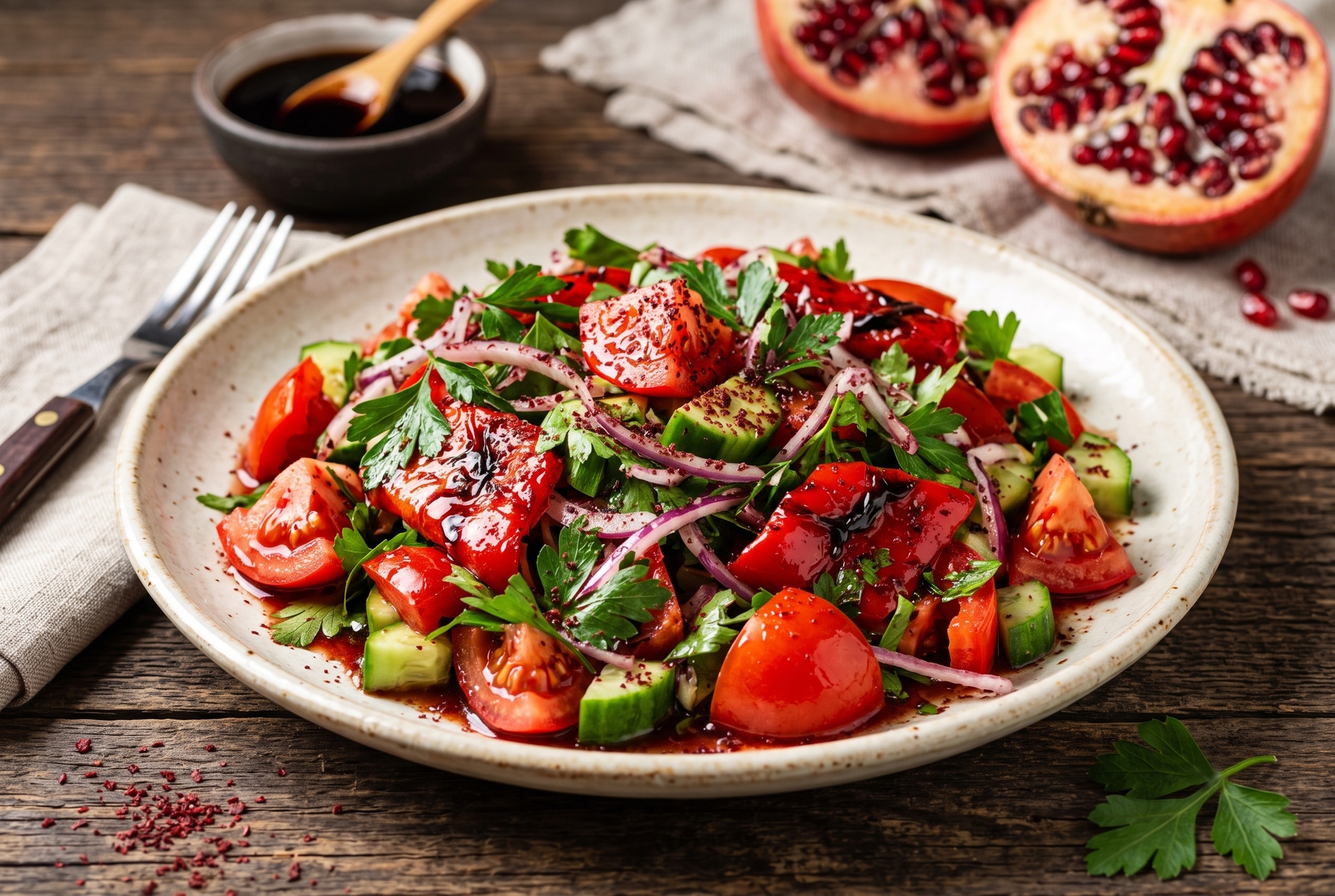
Dark pomegranate molasses and sumac impart a deep, tart, sweet-and-sour flavor to the salad.
East and Southeast Asia: Sesame, Soy, Lime, and Fermented Condiments
In this region, voluminous flavor profiles are constructed almost entirely without oil. Fermented products—soy, fish sauce, and chili pastes—shoulder the responsibility of creating depth. They deliver that essential sensation of richness and completeness, suddenly making simple cabbage feel like a substantial dish.
10. Japanese Sesame Goma-dare
A thick, creamy sauce holding a creamy beige color, achieved entirely without cream. Toasted sesame leads the palate, followed closely by the saltiness of soy and a gentle sweetness. It coats the mouth in a dense, nutty layer.
The contrast between freshly ground sesame seeds and pre-made paste is striking. Seeds toasted in a dry skillet and crushed a minute before serving boast twice the aroma. Ready-made Japanese neri goma paste utilizes heavily roasted seeds, appearing darker than tahini, which carries a different style of bitterness. Serve this with cabbage, carrots, cucumbers, broccoli, green beans, and leafy greens.
- 3 tbsp white sesame seeds (or 2 tbsp sesame paste)
- 1 tbsp soy sauce
- 1 tbsp rice vinegar
- 1 tsp sugar
- 1 tsp toasted sesame oil
- 2–4 tbsp water
- If using whole seeds, toast them in a dry skillet until fragrant and grind them in a mortar into a moist paste. Pre-made sesame paste requires no toasting.
- Stir in the soy sauce, vinegar, sugar, and sesame oil, then thin with water until pourable.
Over-toasting the sesame seeds is a fatal error. They darken in a matter of seconds and develop a profound bitterness that renders the sauce completely inedible.
11. Japanese Wafu Dressing
The exact opposite of the previous entry: light, transparent, salty-tart, and practically devoid of sweetness. It contains very little oil, leaving the salad crisp and glistening with juices rather than slick with fat.
A single aromatic element is selected: grated ginger, grated daikon, or finely grated onion. Mixing all three is unnecessary. It performs brilliantly with cucumbers, radishes, leafy salads, tomatoes, and sautéed mushrooms.
- 2 tbsp soy sauce
- 2 tbsp rice vinegar
- 2 tbsp neutral oil
- 0.5 tsp sugar
- 1 tsp grated ginger (or 2 tbsp grated daikon)
- Dissolve the sugar in the vinegar and soy sauce.
- Incorporate the grated ginger or daikon, including all expressed juices.
- Pour in the oil and shake vigorously in a sealed jar.
A mixture of three parts apple cider vinegar and one part water adequately replaces rice vinegar. Dressing the salad in advance is a mistake. Soy sauce extracts water from cucumbers, resulting in a noticeable puddle at the bottom of the bowl within ten minutes.
12. Korean Cho-gochujang Dressing
Fermented chili paste, thinned with vinegar and lightly sweetened, delivers an unmistakable flavor: spicy, sweet-and-sour, anchored by a deep fermented weight and crowned with sesame warmth. The color is a vibrant red, and the consistency mirrors a thin ketchup.
Heat is controlled by adjusting the paste and vinegar quantities, rather than substituting the product entirely. Mixing ketchup with chili powder creates a sweet tomato dressing that shares nothing but color with the original. Serve with cucumbers, cabbage, green onions, radishes, and soybean sprouts.
- 1 tbsp gochujang
- 1 tbsp rice vinegar
- 1 tsp sugar or syrup
- 1 tsp toasted sesame oil
- 1 small garlic clove, finely grated or pressed
- 1 tsp sesame seeds
- Mash the gochujang with vinegar until completely smooth to prevent clumps.
- Stir in the sugar, garlic, and sesame oil.
- Sprinkle the sesame seeds directly over the dressed salad.
Being overly generous with the sesame oil is a mistake. Its intense aroma quickly overpowers the chili paste if usage exceeds a teaspoon.
13. Thai Yam Salad Dressing
This dressing balances perfectly on four pillars: sour, salty, sweet, and spicy. Lime delivers a sharp top note, while fish sauce contributes saltiness with fermented depth. Palm sugar smooths the sharp edges, and fresh chili provides a clean, fleeting burn.
A universal ratio for Thai salads does not exist; it shifts from dish to dish and chef to chef. Tasting after every addition remains a golden rule. A cook at a Chiang Mai market demonstrated this by dipping a finger into the bowl five times in a single minute.
It pairs beautifully with cucumbers, tomatoes, cabbage, celery, and green beans.
- 2 tbsp lime juice
- 1.5 tbsp fish sauce
- 1–2 tsp palm or cane sugar
- 1 small red chili
- 1 small garlic clove
- Crush the chili, garlic, and sugar into a paste using a mortar and pestle.
- Pour in the fish sauce and lime juice, stirring until the sugar completely dissolves.
- Taste and adjust the balance: if it lacks depth, add fish sauce; if it tastes too salty, add more lime.
Skipping the fish sauce is possible by using light soy sauce and a pinch of salt. The resulting flavor is cleaner and simpler, lacking that fermented depth—a compromise worth noting in advance. Failing to dissolve the sugar completely is a common mistake; it sinks to the bottom, leaving the dressing simultaneously harsh and cloying.
14. Vietnamese Nước Chấm
The lightest dressing on the list. It appears almost transparent and watery, dotted with floating garlic bits and red chili flecks. The flavor hits quickly and lightly: sweetness, lime acidity, salt, and a barely perceptible fermented finish, all arriving almost simultaneously.
Thickening this sauce defeats its purpose: the liquid should pool at the bottom of the plate, leaving the vegetables crisp and nearly dry. Dress shredded cabbage, carrots, cucumbers, radishes, and fresh herbs right before serving.
- 2 tbsp fish sauce
- 2 tbsp lime juice
- 2 tbsp sugar
- 5 tbsp warm water
- 1 garlic clove
- Half a small chili
- Dissolve the sugar in the warm water.
- Incorporate the fish sauce and lime juice.
- Fold in the finely chopped garlic and chili, then let it rest for 10 minutes.
Rice vinegar mixed with a drop of lemon juice serves as a substitute for lime. Chopping the garlic in a blender is a mistake; it sinks and releases a harsh bite, whereas knife-chopped garlic floats and imparts a softer flavor.
15. Indonesian Gado-Gado Style Peanut Sauce
Strictly speaking, gado-gado is a dish composed of boiled and blanched vegetables, egg, and tofu, rather than a simple dressed salad. However, the peanut dressing stands perfectly on its own, elevating everything it touches.
The flavor profile is warm and substantial: roasted peanuts, sweetness, the acidity of tamarind or lime, chili heat, and a garlic-spice backdrop. Consistency is easily adjusted with hot water, ranging from a thick paste to a pourable sauce. It works exceptionally well with blanched cabbage, green beans, carrots, sprouts, and boiled potatoes.
- 3 tbsp unsweetened peanut butter
- 1 tsp soy sauce
- 1 tsp brown sugar
- 1 tbsp lime juice
- 1 small garlic clove
- Chili to taste
- Salt
- 60–100 ml (2–3.5 fl oz) hot water
- Grind the garlic, chili, and salt into a paste.
- Mix thoroughly with the peanut butter, soy sauce, sugar, and lime juice.
- Gradually whisk in hot water until the sauce flows easily from a spoon.
Selecting a peanut butter containing only peanuts and salt is crucial. Sweetened pastes containing vegetable oils introduce a dessert-like flavor that cannot be balanced later. Adding water gradually is highly recommended to prevent clumping. If the sauce separates, continuous vigorous stirring will restore the emulsion.
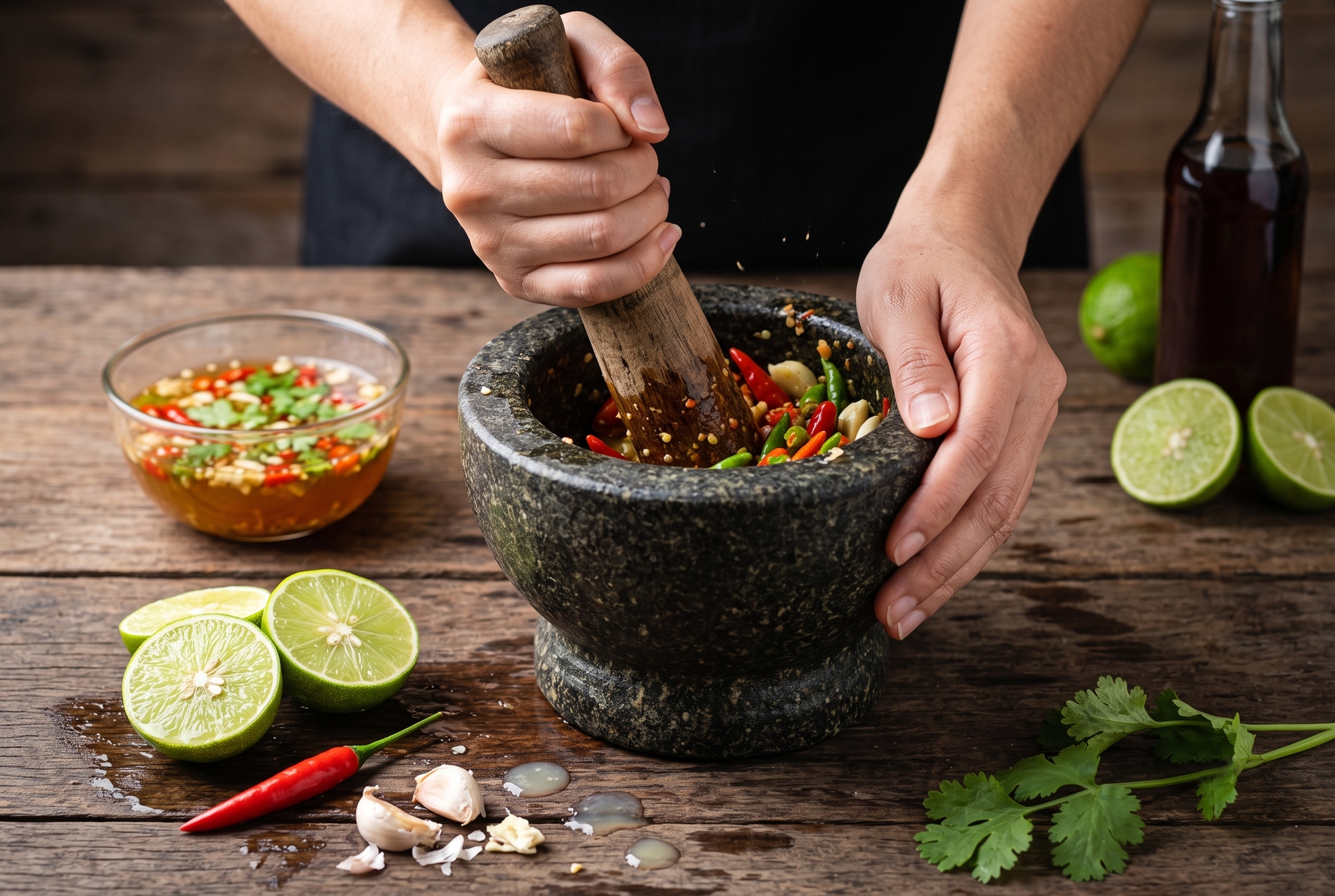
In Asian dressings, the vibrant balance of spicy chili, acidic lime, and fish sauce is created directly in the mortar.
South Asia: Spices, Acidity, and Cool Dairy Bases
16. Indian Lime and Cumin Dressing for Kachumber
Kachumber consists of a simple blend of finely diced cucumbers, tomatoes, and onions, relying entirely on its dressing to shine. Recipes shift drastically across regions and households, meaning no single canonical ratio exists.
Cumin drives the primary aroma: a brief dry roasting transforms it from a simple spice into a warm, nutty, slightly smoky scent that echoes in every bite. Lime acidity follows, backed by salt, green chili, and abundant cilantro. The classic version frequently omits oil entirely, resulting in a light, intensely juicy salad.
- 2 tbsp lime or lemon juice
- 0.5 tsp cumin seeds
- 1 small green chili
- 2 tbsp chopped cilantro
- Salt
- A pinch of black kala namak salt (optional)
- Dry-roast the cumin seeds in a skillet until fragrant, then crush them in a mortar.
- Combine with the lime juice and salt.
- Incorporate the chili and cilantro, pouring over the vegetables immediately before serving.
Swapping cilantro for mint introduces a cooler flavor profile. Salting the vegetables in advance is a mistake. Within ten minutes, cucumbers and tomatoes release so much water that the dressing completely vanishes into it.
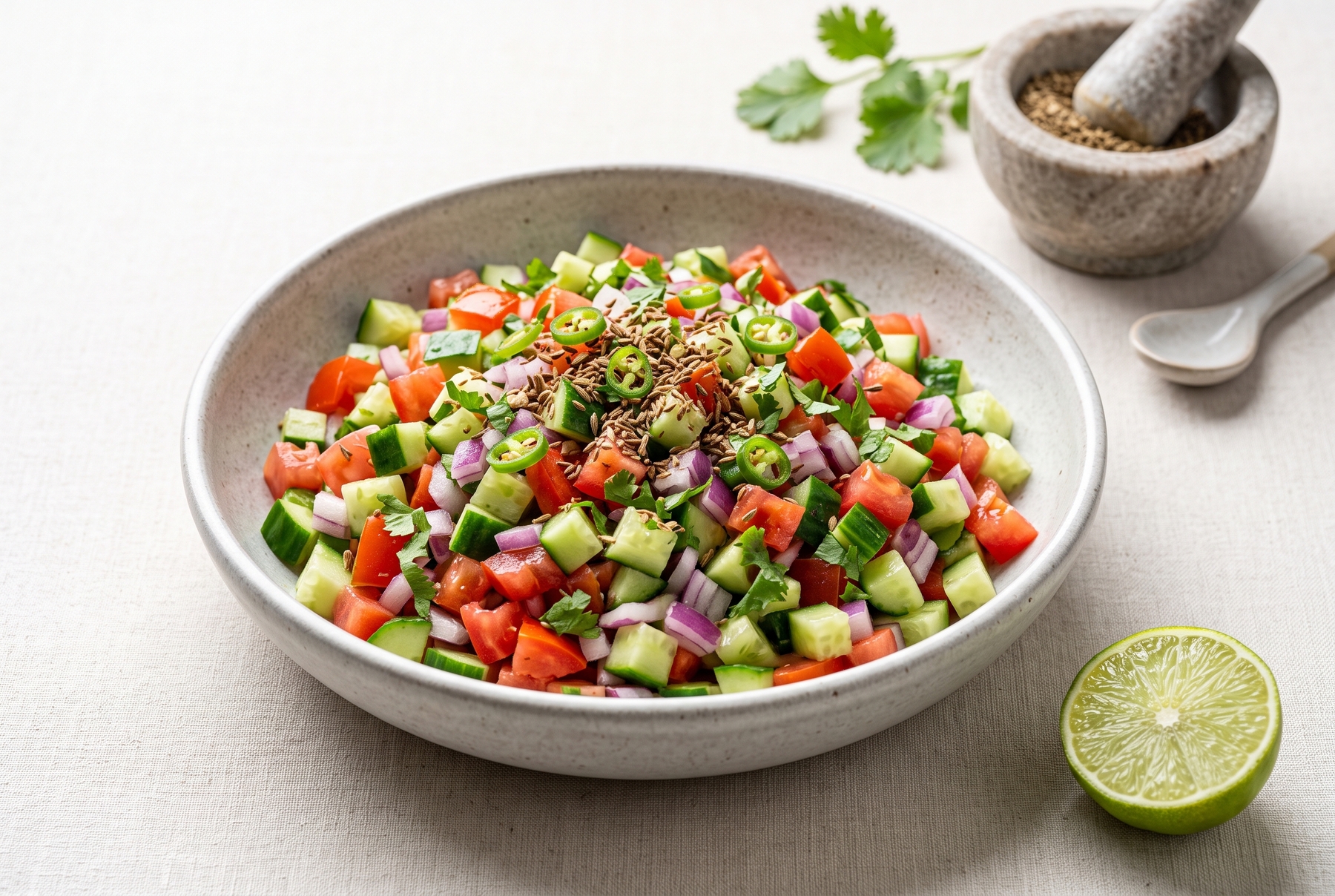
Toasted cumin and lime juice elevate the fresh flavors of finely diced vegetables in the Indian Kachumber salad.
The Americas: Fresh Chili, Herbs, and Rich Creamy Sauces
17. Mexican Lime, Chili, and Cilantro Dressing
This lacks a singular canonical name; it acts more as a staple household combination, intimately familiar to anyone who has eaten street food in Mexico City. Lime strikes first, sharp and brief, followed by the herbaceous, almost soapy aroma of cilantro (for the uninitiated). The heat arrives last.
This matches brilliantly with corn, tomatoes, cucumbers, radishes, cabbage, and avocados. Regarding oil: if the salad includes avocado, adding extra oil is mostly unnecessary, as the fruit provides ample richness. Citrus juice and salt are perfectly sufficient.
- 2 tbsp lime juice
- 2 tbsp neutral oil
- Half a small serrano or jalapeño pepper
- 2 tbsp chopped cilantro
- A pinch of ground dried chili
- Salt
- Dissolve the salt in the lime juice.
- Stir in both the finely chopped fresh chili and the ground dried chili.
- Whisk in the oil, folding in the cilantro at the very last moment.
Adding the fresh chili without tasting it first is a gamble. Heat levels within a single variety vary wildly, and one pepper might pack three times the punch of its neighbor.
18. Argentine Chimichurri in a Liquid Salad Version
In Argentina, chimichurri primarily serves as a condiment for grilled meats. However, when thinned with a bit more oil and vinegar, it performs beautifully with vegetables. Labeling this version a thoughtful adaptation is more accurate than calling it a strict tradition.
The flavor profile is green and punchy: parsley, raw garlic, dried oregano, red wine vinegar acidity, and the sting of chili flakes. After resting for half an hour, the garlic mellows, and the herbs release their color into the oil. Serve with roasted peppers, tomatoes, boiled potatoes, beans, and eggplants.
- 20 g (0.7 oz) fresh parsley
- 1–2 garlic cloves
- 1 tsp dried oregano
- 0.5 tsp chili flakes
- 2 tbsp red wine vinegar
- 5 tbsp olive oil
- Salt
- Finely chop the parsley and garlic with a knife, avoiding turning them into mush.
- Combine with the oregano, chili, salt, and vinegar.
- Pour in the oil, stir well, and let it rest for 20–30 minutes.
Using a blender is a nearly universal mistake. Puréeing everything into a uniform green paste strips away the texture, introduces bitterness, and creates an herbal cream rather than a true chimichurri.
19. Caesar Dressing
The origins of this dressing are widely attributed to Caesar Cardini’s restaurant in Tijuana during the 1920s, yet the specifics remain heavily debated. The exact original ingredients, including whether it utilized anchovies or relied on Worcestershire sauce, differ depending on the storyteller. Thus, the charming history is best served with a disclaimer.
The flavor profile is unmistakably iconic: a salty, fermented depth from the anchovies, backed by garlic, lemon, cheese, and a thick emulsion that clings to the leaves, leaving a matte trail. Romaine lettuce is not strictly mandatory: this sauce elevates white cabbage, roasted broccoli, and green beans effortlessly.
- 2 anchovy fillets (or 1 tsp anchovy paste)
- 1 small garlic clove
- 1 tbsp lemon juice
- 1 tsp Dijon mustard
- 2 tbsp thick yogurt or mayonnaise
- 3 tbsp neutral oil
- 20 g (0.7 oz) grated Parmesan or Grana Padano
- Black pepper
- Mash the anchovies and garlic into a smooth paste.
- Stir in the mustard, lemon juice, and chosen base (yogurt or mayonnaise), then slowly stream in the oil while whisking.
- Fold in the cheese and black pepper; additional salt is rarely necessary.
The historical version utilized a slightly coddled whole egg, while many modern adaptations rely on a raw egg yolk. If opting for the yolk, source eggs from a trusted supplier or use pasteurized ones; raw eggs are generally discouraged for vulnerable groups, making the yogurt base a fantastic, safe alternative. Being overly generous with the cheese is a mistake. Parmesan carries substantial salt on its own, and an over-salted dressing becomes completely unsalvageable.
20. American Ranch
Cool and creamy, featuring a cultured milk tang and an herbaceous backdrop of dill and green onions. The garlic and onion notes are intentionally muted, sounding almost muffled, which is the entire point: the sauce must remain gentle.
The inception of Ranch dressing is tied to Steve Henson’s Hidden Valley Guest Ranch in California during the 1950s, after which the seasoning blend exploded into mass production. A homemade version, skipping the commercial packet, tastes noticeably fresher and more vibrant.
It pairs wonderfully with crisp cabbage, carrots, celery, radishes, and leafy greens. However, a light hand is required: the dressing is heavy and quickly overwhelms delicate vegetables.
- 100 g (3.5 oz) thick yogurt or sour cream
- 2–3 tbsp buttermilk or kefir
- 1 tbsp mayonnaise
- 1 tsp lemon juice
- 1 tbsp chopped dill
- 1 tbsp chopped green onions
- 1 small garlic clove
- Salt, plenty of black pepper
- Mash the garlic with salt and combine it with your chosen base (yogurt or sour cream) and mayonnaise.
- Thin the mixture with kefir or buttermilk until it slowly pours from a spoon.
- Stir in the herbs, lemon juice, and pepper, letting it rest for 15 minutes.
A base that feels too dense is easily lightened with additional kefir, buttermilk, or plain yogurt. Dressing delicate greens and leaving the bowl on the counter is a mistake. Within ten minutes, the salad will collapse and turn limp.
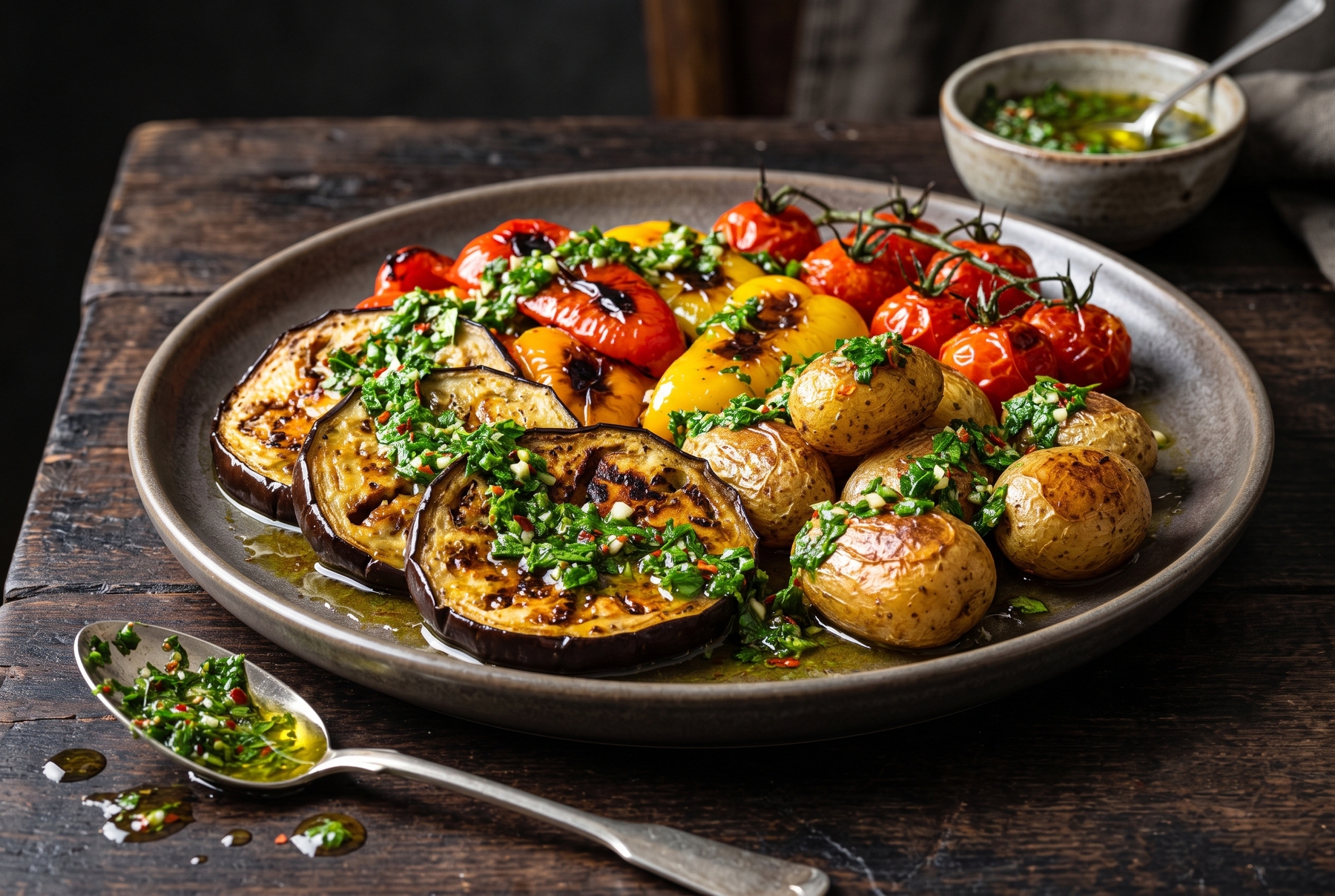
The herbaceous and punchy chimichurri pairs perfectly not only with meat but also with grilled vegetables.
Where to Start and How to Avoid Buying the Entire Store
Categorizing all twenty dressings into flavor profiles drastically simplifies the process.
- Craving bright acidity: Citronette, Ladolemono, Wafu
- Preferring rich, nutty profiles: Tahini, Goma-dare, Georgian Walnut, Peanut
- Leaning toward heat: Cho-gochujang, Thai Yam, Mexican
- Seeking familiar but elevated flavors: Dijon Vinaigrette, Mustard-Dill, Ranch
- Serving roasted vegetables frequently: Romesco, Chimichurri, Pomegranate
Review the ingredient lists once more. The foundations are incredibly repetitive: lemon or vinegar, oil, mustard, garlic, soy sauce, yogurt, sesame, nuts, and fresh herbs. Half of these items are likely sitting in your refrigerator right now.
The most sensible approach involves purchasing a single new flavor base and utilizing it repeatedly until its character becomes familiar. Tahini, gochujang (Korean chili paste), pomegranate molasses, or fish sauce: any one of these provides enough material for a month of culinary experiments. Buying everything at once is counterproductive, as half the jars will simply dry out.
A Home Experiment: 1 Salad and 3 Countries
The fastest method for uncovering your personal flavor preferences takes about twenty minutes.
Prepare a control bowl of chopped vegetables and divide it into three portions. Dress the first with a light, acidic sauce (Citronette or Wafu), coat the second in a thick, nutty paste (Tahini or Goma-dare), and drench the third in something bright and spicy (Mexican or Thai). Taste them sequentially, taking a bite of plain bread between rounds to cleanse the palate.
Incorporate the dressing gradually: pour in half, toss the salad, taste it, and only then decide if more is necessary. Roughly 300–400 grams (10–14 oz) of vegetables generally require 3–4 tablespoons of a liquid dressing or 2–3 tablespoons of a thicker sauce.
Timing demands attention as well. Delicate greens require dressing immediately before serving to prevent them from wilting. Conversely, robust vegetables (cabbage, carrots, radishes, beets) benefit greatly from resting with the sauce for 5–10 minutes: they absorb the flavors and yield a softer bite.
This side-by-side comparison reveals precisely which flavor profile truly resonates with you. Searching for a definitive ‘best’ salad dressing becomes entirely irrelevant. Following a similar experiment, I surprisingly discovered that my affinity for acidic dressings was much lower than anticipated, while my appreciation for rich, nutty sauces was significantly higher.
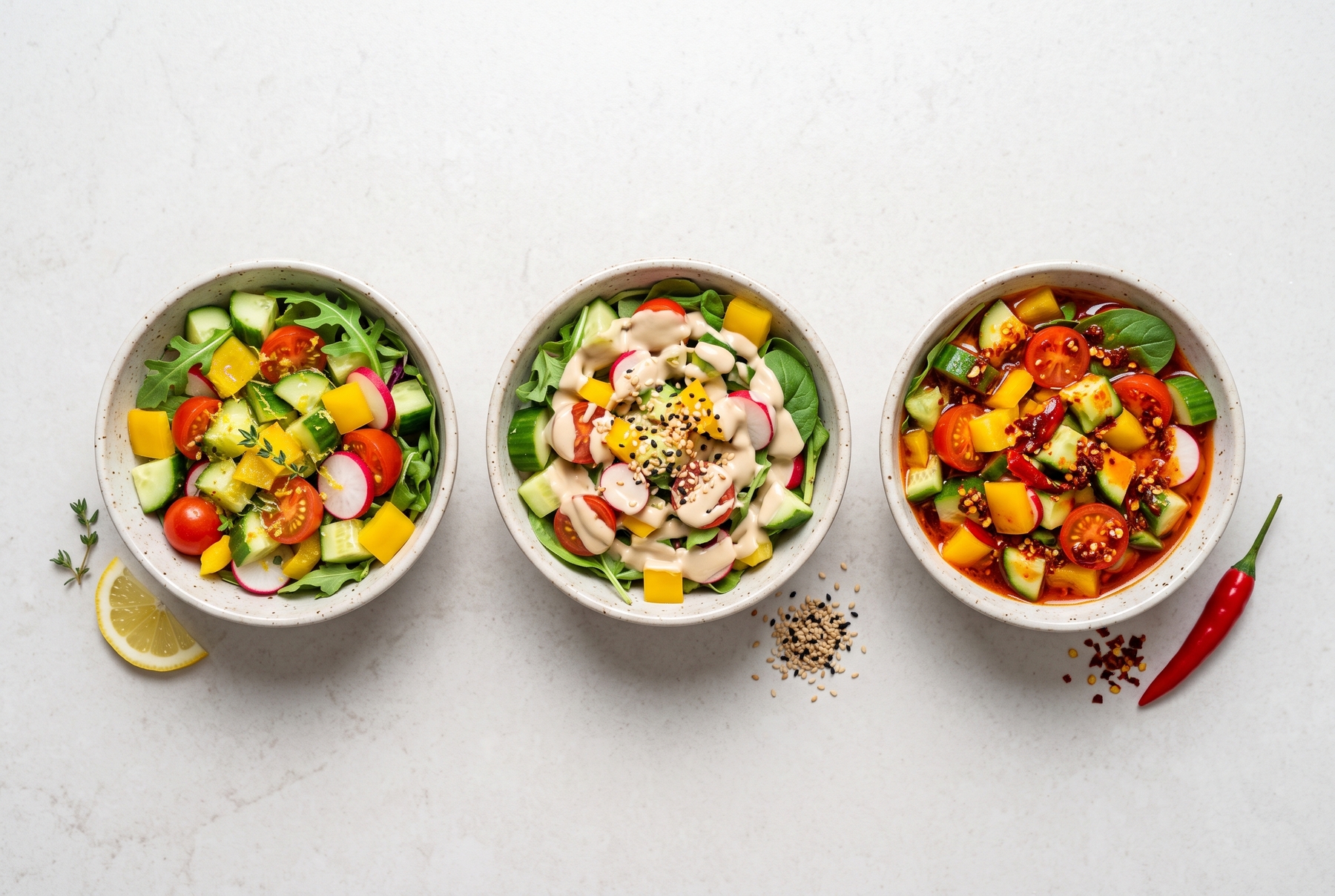
The identical mix of vegetables completely changes character when tossed with different types of salad dressings.
7 Reasons Why Homemade Dressings Disappoint
Acidity overpowers everything. The salad makes your jaw clench, and the vegetables are entirely masked. Incorporating a spoonful of oil, yogurt, or tahini usually fixes this, supplemented by a quarter teaspoon of sugar if necessary.
The sauce seems to vanish after mixing. Vegetable juices naturally dilute the salt content. Correct this by adding a pinch of coarse salt directly to the dressed salad and tossing it once more.
A thick paste forms clumps. Tahini, walnut, and peanut bases demand thinning: cold water for sesame, hot water for peanuts. Pour the water in one tablespoon at a time, whisking until perfectly smooth after each addition.
The greens collapse and turn soggy. They were dressed far too early. While rescuing this batch is difficult, remember next time to add the sauce merely a minute before the bowl hits the table.
The vegetables are drowning in sauce. The quantity was vastly misjudged. Drain the excess liquid, toss in a handful of freshly chopped vegetables, and mix again. In the future, pour in half the intended amount and adjust as needed.
An aromatic, unrefined oil aggressively dominates. Mustard, sesame, pumpkin seed, and intensely robust olive oils easily overpower delicate seasonings. Diluting them with a neutral oil in a one-to-one ratio creates harmony.
Raw garlic, onion, or chili hit harder than anticipated. Their potency fluctuates wildly, demanding a quick taste test before they enter the sauce. A dairy base or an extra spoonful of oil rescues an already finished dressing. For future batches, briefly soaking minced fresh garlic in vinegar or lemon juice significantly mellows its bite.
A New Way to Look at the Bowl
Return to the starting point: a cucumber, two tomatoes, half a pepper, a few radishes, and greens. The exact same ingredients, purchased from the exact same store.
Breaking the cycle of repetitive home-cooked meals does not require endlessly hunting for obscure ingredients or overly complex recipes. Sometimes, simply swapping a standard oil-and-salt dressing for sesame richness, pomegranate tartness, mustard heat, or a sharp lime kick is all it takes. Reach for the dressing that seems the most unfamiliar, the one that makes you hesitate.
Then, glance at the bottom of your bowl. If a solitary spoonful of sauce remains, practically begging to be scooped up with a piece of bread, you have executed it perfectly.
0 comments