
Efficient home cooking usually conjures a grim image: spending half of Sunday at the stove, only to end the evening with a regiment of identical plastic containers lining the refrigerator shelf. By Wednesday, palate fatigue sets in. By Thursday, half of that food lands in the trash, accompanied by the frustrating sense of wasted effort.
True kitchen efficiency begins elsewhere: ensuring that the same culinary labor never happens twice.
Tossing two extra bell peppers and half a squash onto a sheet pan requires roughly one additional minute of knife work and zero extra attention at the oven. Eliminating the need to preheat the oven again tomorrow, pull out the cutting board, peel the same vegetables, scrub the roasting pan, and wipe grease from the oven door saves an entire evening of labor.
This approach boils down to a simple formula: Shared Base → Split Point → Two Distinct Dishes.
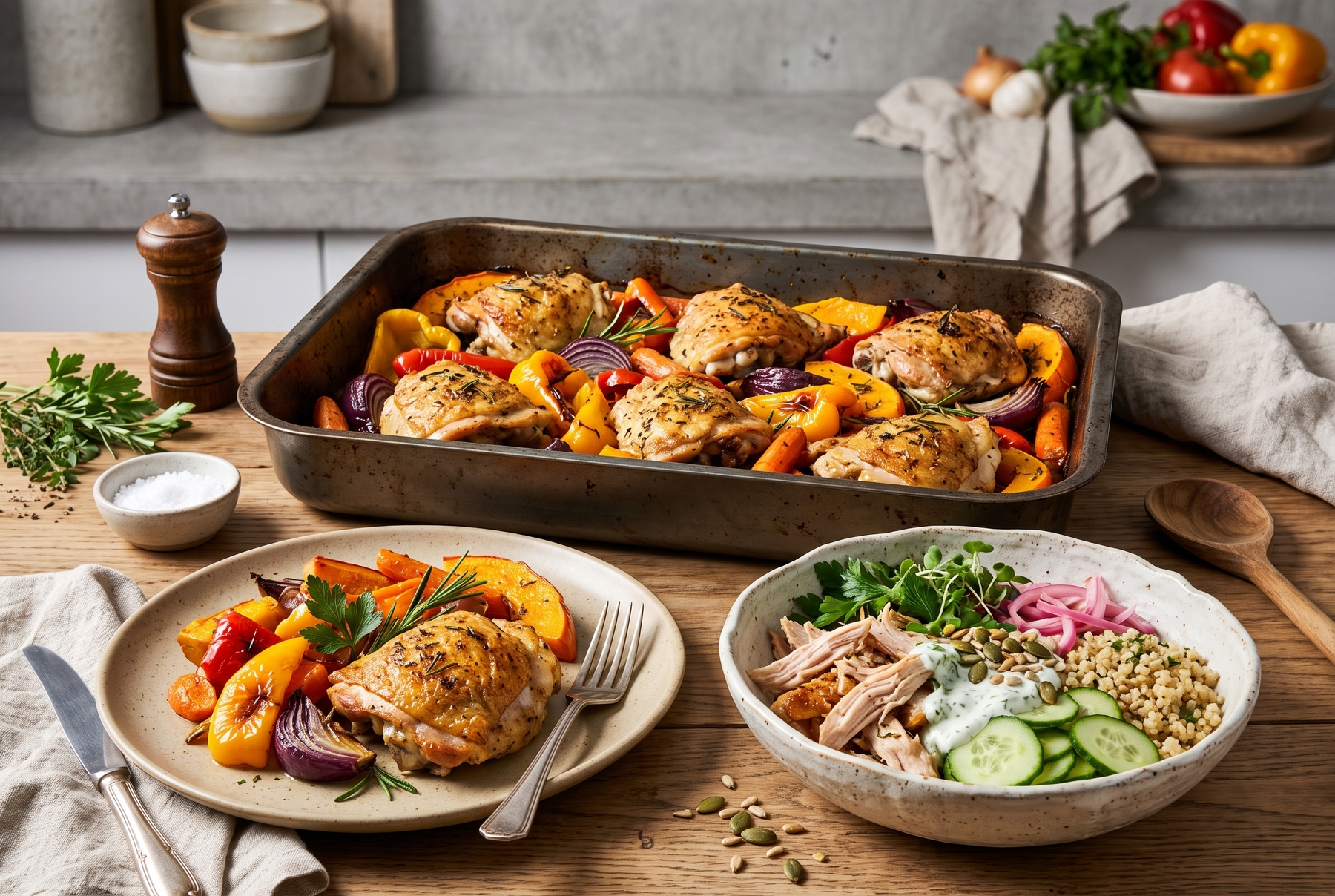
One base yields two distinct dinners: hot sheet-pan chicken and vegetables tonight, followed by a vibrant, herb-packed grain bowl tomorrow.
Table of Contents
- Skip Batch Cooking and Spot the Culinary Fork in the Road
- 1. Chicken Thighs and Vegetables: Hot Sheet-Pan Dinner Tonight, Warm Grain Bowl Tomorrow
- 2. One Batch of Ground Meat: Braised Meatballs in Tomato Sauce and Crispy Spiced Crumbles for Flatbreads
- 3. A Sheet Pan of Roasted Vegetables: Savory Side Dish Tonight, Velvety Pureed Soup Tomorrow
- 4. Boiled Potatoes: Classic Side Dish Tonight, Pillowy Gnocchi or Crisp Potato Cakes Tomorrow
- 5. Steamed Rice: Fluffy Side Dish on Night One, Wok-Charred Fried Rice on Night Two
- 6. Buckwheat: Buttered Side Dish Tonight, Savory Mushroom and Jammy Egg Grain Bowl Tomorrow
- 7. Roasted Fish: Flaky Fillets Tonight, Crispy Fish Cakes or Creamy Rillettes Tomorrow
- 8. Lentils: Thick Braised Ragout and Velvety Spiced Soup from a Single Pot
- 9. Crushed Tomato Base: Classic Pasta Marinara and Spiced Shakshuka
- 10. Large Roast: Carved Meat Tonight, Stacked Sandwiches or Steaming Noodle Bowls Tomorrow
- 11. Whole Roast Chicken: Sunday Dinner and Rich Homemade Noodle Soup from the Carcass
- 12. One Batch of Yeast Dough: Blistered Pizza and Dimpled Rosemary Focaccia
- 13. Cooked Chickpeas: Fragrant Coconut Curry and Ultra-Smooth Hummus
- 14. Braised Beans: Smoky Chili Tonight, Crispy Cheese Quesadillas Tomorrow
- 15. Browned Mushrooms: Silky Pasta Tonight, Savory Tart or Omelet Filling Tomorrow
- 16. Caramelized Onions: Bistro Onion Soup and Savory Onion Tart
- 17. Braised Cabbage: Tender Side Dish Tonight, Savory Hand Pie Filling Tomorrow
- 18. Slow-Simmered Meat Ragù: Rigatoni on Monday, Bubbling Baked Pasta on Wednesday
- 19. Roasted Beets: Crumbled Goat Cheese Salad and Vibrant Tahini Beet Dip
- 20. Homemade Stock: Restorative Noodle Soup and Glossy Risotto
- How to Spot a Successful Meal Pair: 4 Essential Questions
- 4 Core Formulas for Turning One Base Into Two Dinners
- The Biggest Meal-Prep Trap: Turning Time-Saving Tricks Into Extra Chores
- Don't Cook More Food—Cook With a Fork in the Road
Skip Batch Cooking and Spot the Culinary Fork in the Road
A two-day meal pair succeeds when the dishes share the most time-consuming steps. Butchering poultry. Peeling root vegetables. Simmering grains or dried legumes. Long roasting, slow braising, kneading dough, reducing a sauce, or simmering stock. These foundational stages devour weeknight hours, whereas final plate assembly rarely takes more than 10 minutes.
The second condition is non-negotiable: the finished meals must feel genuinely different. Serving chicken and rice on a plate tonight, followed by the exact same chicken and rice scooped from a container tomorrow, does not constitute a pair. That is simply yesterday’s dinner delayed by twenty-four hours.
Texture, serving temperature, and flavor profiles separate the dishes. Warm, shredded meat served in a grain bowl with fresh herbs, a bright, acidic dressing, and crisp cucumber registers as an entirely different meal than the same meat served hot and whole alongside roasted potatoes. Even though the protein remains identical, the brain never reads these two plates as repetitive leftovers.
This is where the split point becomes essential. Up to this moment, the base remains intentionally neutral; beyond it, each half takes a sharp turn toward its own flavor profile. Salt, onions, garlic, cooking fat, and black pepper belong to the shared base. Smoked paprika, tahini, heavy cream, fish sauce, cilantro, and lemon zest enter strictly after the fork in the road.
A classic mistake involves seasoning a massive pot of food for one specific dish right from the start. Cooks then attempt to disguise two-thirds of that batch the next day with new spices, yet the original flavor profile stubbornly dominates.
Below are 20 meal pairs designed to cook together, all built on this single principle but utilizing different split points.
1. Chicken Thighs and Vegetables: Hot Sheet-Pan Dinner Tonight, Warm Grain Bowl Tomorrow
Bone-in, skin-on chicken thighs share a baking sheet with coarsely chopped vegetables, seasoned simply with salt, pepper, and a drizzle of oil. Honey glazes and bold marinades stay on the shelf for now.
Loading the pan with roughly one and a half times the food needed for a single dinner adds zero active labor: it uses the same hands, the same knife, and the same oven cycle.
The chicken reaches perfection when the juices in the thickest part of the thigh run clear and an instant-read thermometer registers 74 °C (165 °F). By this point, the skin tightens and darkens to the color of strong brewed tea, leaving rich pan drippings and rendered fat across the metal. The vegetables develop dark, charred edges while retaining a slight bite in the center.
Half the batch goes straight to the table hot. The remaining half stays bare—free of pan juices, sauces, or extra spices. Cooling it rapidly in a shallow container before refrigerating keeps the meat safe for 3 to 4 days (cooked poultry should never sit at room temperature for more than two hours).
The next day, the meat pulls easily from the bones by hand, shredding into bite-sized pieces over a bowl of warm grains. Fresh elements that were absent the night before now take center stage: pickled red onions, crisp cucumber, chopped herbs, and toasted seeds. A dressing built on acid and fat—such as garlicky lemon yogurt, thinned tahini, or a sharp mustard vinaigrette—completes the transformation. That bright acidity cleanly separates the grain bowl from yesterday’s roast.
2. One Batch of Ground Meat: Braised Meatballs in Tomato Sauce and Crispy Spiced Crumbles for Flatbreads
Dividing ground meat before it hits the skillet allows half to become tender meatballs while the rest cooks into crispy crumbles.
Mixing the entire batch with salt, finely grated onion, garlic, and black pepper establishes the baseline. One half gets rolled into meatballs, while the second half remains loose.
Browning the meatballs until a firm crust forms, then simmering them in tomato sauce until they no longer feel spongy beneath a spoon, yields the first meal. The second half hits a blazing-hot skillet in an even layer: leaving the meat undisturbed for the first couple of minutes ensures a deep sear before a spatula breaks it into small crumbles. Properly browned ground meat smells deeply savory and roasted, never steamed or boiled.
Once browned, the loose meat absorbs ground cumin, chili powder, smoked paprika, a dab of tomato paste, and a splash of water. Warm flatbreads or tortillas, shredded cabbage, fresh herbs, and a tangy cheese or yogurt sauce turn it into an effortless second dinner.
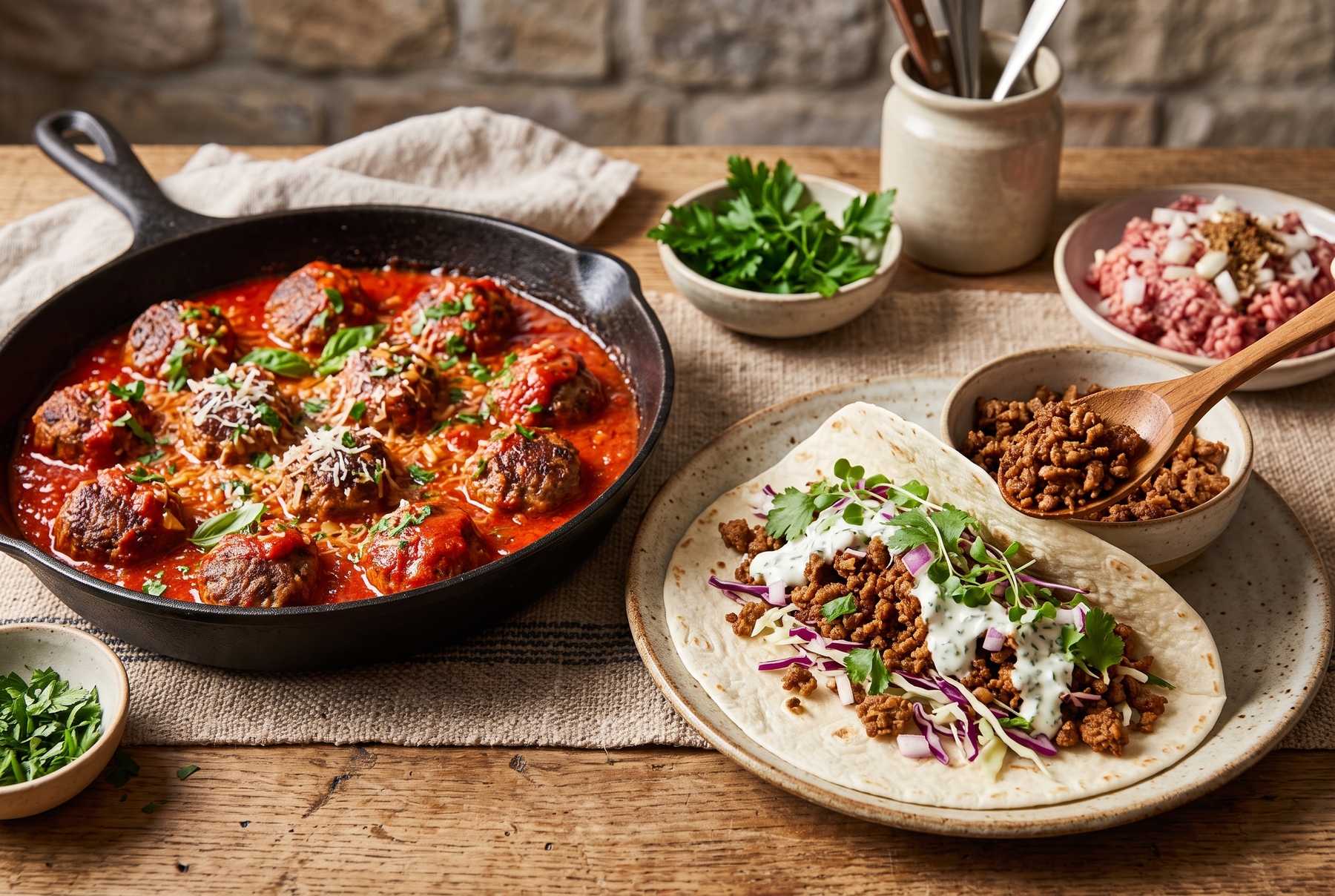
Dividing one batch of ground meat before cooking yields braised meatballs in marinara and crispy spiced crumbles for flatbreads.
3. A Sheet Pan of Roasted Vegetables: Savory Side Dish Tonight, Velvety Pureed Soup Tomorrow
Butternut squash, carrots, sweet bell peppers, onions, cauliflower, and celeriac all work beautifully here. Seasonal, reasonably priced produce dictates the mix.
Cutting the vegetables destined for the soup into larger chunks—and pulling them from the oven slightly earlier than the rest—prevents overcooking. Parched, shriveled carrots impart a dry, faintly bitter aftertaste to a puree, a flaw that requires heavy cream to mask.
Roasting unlocks the Maillard reaction and caramelizes natural sugars: whereas boiled squash tastes watery and flat, roasted squash develops deep notes of toasted nuts and burnt sugar. The visual cues are unmistakable: darkened edges, a matte surface, and flesh that yields effortlessly to a knife tip while still holding its shape.
Half the pan serves as a hot side dish on night one. The next day, the reserved vegetables whirl in a blender with hot broth or water, balanced at the end with salt, a splash of acid (lemon juice or apple cider vinegar), and a swirl of fat. Adjusting the final consistency happens last, as vegetable purees naturally thicken further as they cool.
4. Boiled Potatoes: Classic Side Dish Tonight, Pillowy Gnocchi or Crisp Potato Cakes Tomorrow
Boiling roughly a third more potatoes than needed sets up tomorrow’s meal. The portion reserved for day two gets mashed dry, without milk and with minimal butter (wet mashed potatoes demand heavy amounts of flour to bind, which turns gnocchi tough and rubbery). Complete cooling is essential.
As cooked potato starch cools, it retrogrades and firms up, making day-old mashed potatoes vastly superior for shaping gnocchi and pan-seared cakes.
The following evening, the cold mash absorbs an egg, a light dusting of flour, salt, and perhaps a handful of finely grated hard cheese. The dough remains soft and slightly tacky against the palm; if it stops sticking entirely, too much flour has entered the mix. Rolling the dough into ropes, cutting it into pillows, and boiling them until they float takes minutes, followed by a quick sear in butter until golden blistered spots appear.
Skipping the egg and folding chopped herbs and scallions into that same cold potato base yields crisp pan-fried potato cakes. They develop a crackling crust outside while staying creamy within. Dinner comes together in 15 minutes because the tedious steps—boiling, mashing, and cooling—happened yesterday.
5. Steamed Rice: Fluffy Side Dish on Night One, Wok-Charred Fried Rice on Night Two
Tipping freshly cooked, steaming-hot rice into a skillet results in mush: the grains are soft, surface starches remain gummy, and the batch clumps together. Chilling rice dries the exterior of each grain, allowing them to separate cleanly and dance across a searing-hot pan rather than smearing.
Rice demands strict storage protocols, far tighter than most kitchen staples. Raw rice frequently harbors *Bacillus cereus* spores, which survive boiling water and multiply rapidly at room temperature. Food safety authorities, including the UK’s Food Standards Agency, advise cooling cooked rice as quickly as possible—ideally within one hour—refrigerating it for no longer than 24 hours, and reheating it only once until steaming hot throughout.
Executing this safely at home is straightforward: never leave rice sitting in a covered pot on the stove. Spreading it in a thin layer across a wide, shallow container lets the steam escape rapidly before covering and chilling. Smaller, shallower portions shed heat fastest.
Night two requires a smoking-hot skillet or wok, a slick of neutral oil, beaten egg, crisp vegetables, mushrooms, or shrimp. The rice goes into the pan cold and cooks with minimal stirring at first, allowing a portion of the grains to toast and crisp slightly. Soy sauce, toasted sesame oil, and sliced scallions finish the dish right before serving.
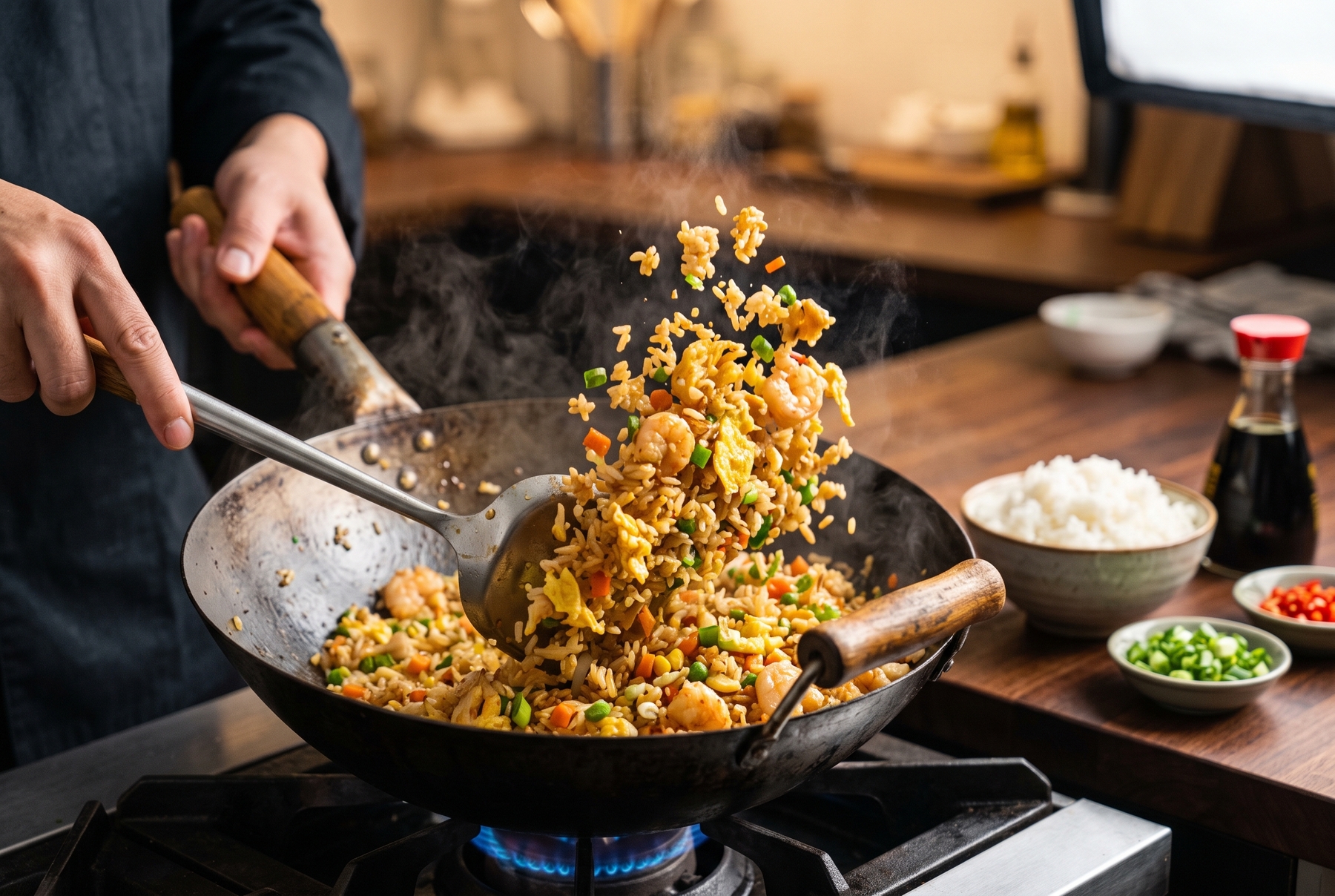
Chilled day-old rice dries out slightly on the surface, making it ideal for high-heat wok frying without clumping.
6. Buckwheat: Buttered Side Dish Tonight, Savory Mushroom and Jammy Egg Grain Bowl Tomorrow
Leftover toasted buckwheat groats (*kasha*) usually suffer the fate of a quick microwave reheat, yet this nutty grain excels as the foundation for a textural grain bowl. Buckwheat holds its distinct pyramid shape overnight without turning soggy, standing up effortlessly to meaty mushrooms, sharp cheese, pickled vegetables, and punchy dressings.
Cooking the initial batch neutrally—just water, salt, and a knob of butter at the end—preserves its versatility. Complex aromatics only get in the way at this stage.
On the first evening, the steaming grains accompany roasted meat or braised vegetables. The next night, the remaining batch anchors a composed bowl: deeply browned mushrooms, a jammy soft-boiled egg, finely grated aged cheese, handfuls of fresh herbs, and diced sour pickles. A bright, acidic dressing ties it together.
Serving temperature changes the entire experience. Warm (never piping hot) buckwheat paired with cool, crisp toppings reads as a modern café dish, miles away from yesterday’s hot side dish.
7. Roasted Fish: Flaky Fillets Tonight, Crispy Fish Cakes or Creamy Rillettes Tomorrow
This pairing requires specific seafood. Only firm-fleshed fish that separates into substantial, sturdy flakes without disintegrating into paste will survive the second act: pink or chum salmon, Atlantic cod, pike-perch (zander), and mackerel are ideal candidates.
Roasting the entire batch with restraint—just salt, pepper, lemon slices, and a brush of oil—keeps options open. The fish is done the moment the flesh turns opaque and flakes easily under a fork, reaching an internal temperature of 63 °C (145 °F). Overcooked fish turns cottony and dry in a second-day dish, so pulling it from the heat slightly early pays dividends.
One portion goes straight to the dinner plates. The remaining fillets get flaked by hand while discarding skin and pin bones, then go into the refrigerator (cooked fish keeps for 3 to 4 days, though a cold spread tastes best within 24 hours).
Day two offers two distinct culinary paths. For fish cakes, the flakes bind with sautéed onions, milk-soaked bread or mashed potato, an egg, and fresh dill before pan-frying. For French-style rillettes, a fork mashes the cold fish with softened butter or cream cheese, lemon juice, briny capers, and finely sliced scallions. The mixture becomes spreadable and rich while retaining pleasant fibrous texture.
Assertive seasonings like smoked paprika, capers, Dijon mustard, and extra lemon zest belong exclusively to day two.
8. Lentils: Thick Braised Ragout and Velvety Spiced Soup from a Single Pot
Both iterations of this meal originate in the exact same Dutch oven.
Simmering brown or green lentils with diced onion, carrot, garlic, a bay leaf, and a touch of tomato creates the foundation. Keeping the seasoning restrained and the consistency noticeably thicker than a standard soup is crucial: thinning a dense base takes seconds, whereas reducing a watery pot takes ages.
Half the batch finishes as a hearty ragout: a few extra minutes on the burner, a generous glug of extra-virgin olive oil, a splash of red wine vinegar or lemon juice, and chopped parsley. The mixture should mound heavily on a spoon rather than pour.
The reserved half stretches with broth or water and pivots to a new flavor profile: toasted cumin and coriander instead of Mediterranean herbs, rich coconut milk instead of olive oil, and fresh cilantro in place of parsley. Blitzing half the soup with an immersion blender creates a velvety body while leaving plenty of whole lentils for texture.
Adjusting viscosity, acidity, aromatics, and garnishes invents an entirely new meal without changing the core protein.
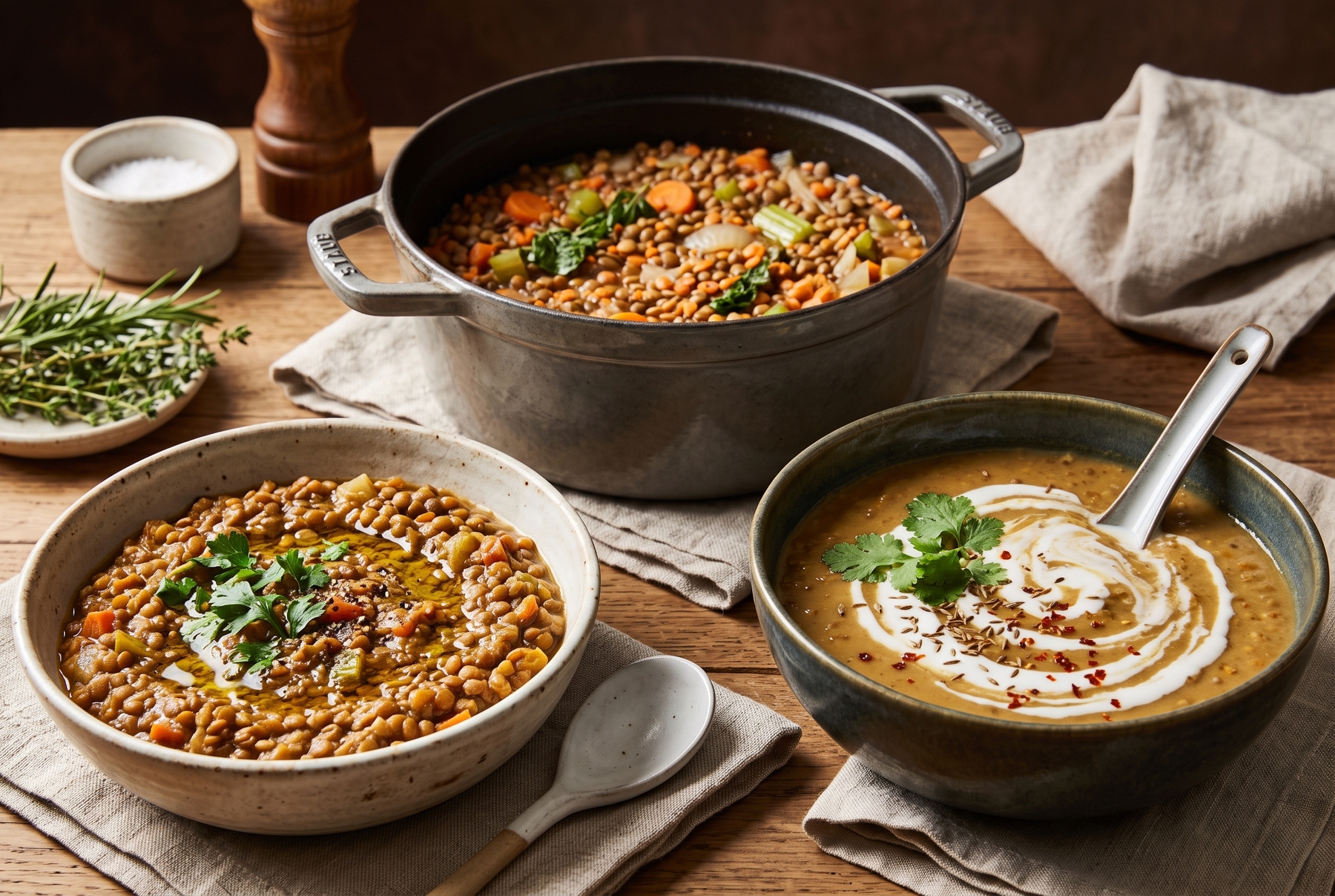
A single pot of simmered lentils splits easily into a hearty ragout and a velvety spiced coconut soup.
9. Crushed Tomato Base: Classic Pasta Marinara and Spiced Shakshuka
A wide skillet brimming with sautéed onions, garlic, tomatoes (ripe summer fruit in season, quality canned whole tomatoes in winter), olive oil, salt, and a pinch of sugar forms the backbone. Simmering the mixture until the watery pool evaporates and dragging a wooden spoon across the pan leaves a clean trail signals readiness.
Stopping before the entire skillet turns into a finished Italian marinara preserves the split point. For tonight’s pasta, half the base warms through with torn basil or oregano, meeting grated Parmesan, a splash of cream, or red pepper flakes in the serving bowl.
A day or two later, the remaining tomato base returns to a skillet over medium heat, blooming ground cumin, sweet paprika, and diced bell peppers before eggs are cracked directly into shallow wells in the sauce. Covering the pan over low heat sets the whites while keeping the yolks runny. Scattered feta, cilantro, and a drizzle of chili oil finish the pan.
One round of simmering tomatoes yields two meals—dinner and a weekend brunch—that share zero sensory overlap.
10. Large Roast: Carved Meat Tonight, Stacked Sandwiches or Steaming Noodle Bowls Tomorrow
Pork shoulder, beef brisket, or a whole leg roast thrive under this strategy. While intact cuts of pork and beef reach food-safe temperatures at 63 °C (145 °F) followed by a 3-minute rest, tough, collagen-rich braising cuts follow a different rule: they are ready only when a fork slides into the center with zero resistance and the muscle fibers surrender.
Half the roast serves hot alongside classic sides. The remaining half deliberately skips any final lacquer: glazing the whole piece in honey-mustard, smoky barbecue sauce, or a sticky soy-caramel locks the meat into a single flavor profile, dooming tomorrow’s meal to taste like a repeat.
Chilled roast meat slices paper-thin without shredding, making next-day prep ideal for deli-style cuts.
A stacked sandwich takes 5 minutes: crusty bread, garlicky mayo or sharp mustard, thinly shaved meat, pickled onions, crisp cucumber, and leafy greens. A more dramatic transformation involves laying those thin slices over bowls of steaming noodles, pouring boiling broth over top to warm the meat instantly, and garnishing with cilantro, sliced chilies, and lime wedges. Crusty bread versus aromatic broth sends the exact same roast into two completely different culinary worlds. The cooked meat holds safely in the fridge for 3 to 4 days.
11. Whole Roast Chicken: Sunday Dinner and Rich Homemade Noodle Soup from the Carcass
Buying a whole bird costs significantly less per pound than pre-cut breasts or thighs, yet shoppers often bypass it because it looks like a single, overwhelming meal. In reality, one chicken delivers a hot roast dinner, shredded meat for a second dish, and a roasted frame for liquid gold.
Roasting the bird whole and carving off the breast and leg meat secures tonight’s dinner plus reserves for tomorrow. What remains on the cutting board is the carcass: the back, ribcage, wing tips, cartilage, and stray bits of roasted skin. That frame is already paid for, and it holds all the gelatinous collagen needed for a deeply savory stock.
Snapping the carcass into 3 or 4 pieces by hand allows it to fit snugly in a stockpot and maximizes extraction. Covering the bones with cold water by about 5 cm (2 inches), then tossing in an unpeeled onion (the papery skin imparts a gorgeous amber hue), a carrot, celery stalks, a bay leaf, and black peppercorns sets the stage. Bringing the pot just to the first rising bubbles, then dropping the heat so the surface barely trembles, is vital. A rolling boil emulsifies fat into the liquid, turning the broth cloudy and greasy on the palate.
Food safety applies strictly to bones as well as meat: if stock-making waits until tomorrow, the carcass goes straight into the refrigerator immediately after carving, never sitting out on the stove for three hours to “cool down.” Once simmered, straining and chilling the broth rapidly in a shallow bath keeps it fresh for 3 to 4 days in the fridge, or 4 to 6 months in the freezer.
Ninety minutes to two hours of hands-off simmering yields a rich soup base, with pre-cooked chicken meat already waiting in the fridge to join the noodles. The bones came free with the bird; turning them into dinner requires only gentle heat and time.
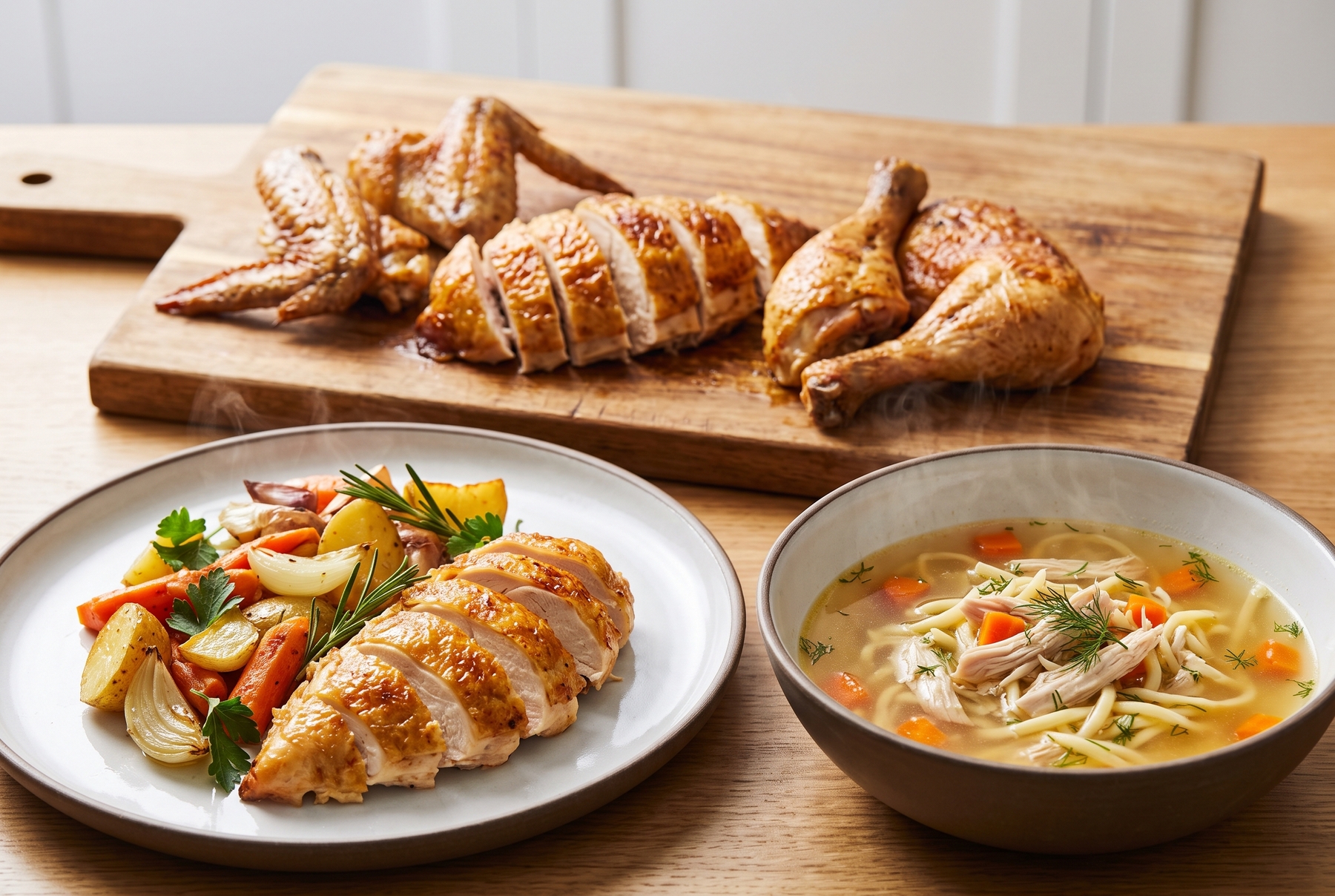
A whole roasted bird delivers a hot dinner on night one, while the leftover carcass simmers into a rich broth for tomorrow's soup.
12. One Batch of Yeast Dough: Blistered Pizza and Dimpled Rosemary Focaccia
Consolidating kitchen labor applies to long fermentation processes just as much as physical ingredients. Mixing and kneading yeast dough takes roughly ten minutes, followed by hours of passive rising. Doubling the flour and water in the mixing bowl costs almost nothing in effort; repeating the entire mixing, proofing, and cleanup cycle tomorrow costs an evening.
This dual-purpose trick relies on a medium-hydration wheat dough using standard fermentation: a base dough at 60% to 70% hydration adapts seamlessly to both pan pizza and focaccia, and thrives during a cold overnight ferment in the fridge. Conversely, a hyper-specialized dough engineered for thin, charred Neapolitan crusts or an ultra-wet 85% hydration artisan focaccia cannot pull double duty, and claiming otherwise sets the baker up for frustration.
Once fermented, the batch divides cleanly. One half gets shaped into tight boules for pizza: skipping the rolling pin and stretching the dough gently outward from the center by hand preserves the trapped gas bubbles along the outer rim. The second half settles into a generously oiled baking pan, proofs until puffy, takes deep dimples from oiled fingertips, and bakes under a shower of flaky sea salt, olive oil, and fresh rosemary needles.
One mixing bowl and a single waiting period produce two baked goods with entirely different geometry, crumb structure, and dining occasions.
13. Cooked Chickpeas: Fragrant Coconut Curry and Ultra-Smooth Hummus
Dried chickpeas demand an overnight soak followed by a long simmer—precisely the kind of project that makes zero sense to execute for a single meal. Cooking a double batch until the legumes squish effortlessly between two fingers is essential: al dente chickpeas yield gritty, stubborn hummus that no amount of tahini or high-speed blending can rescue.
Half the pot dives into a hot skillet filled with sautéed onions, garlic, grated ginger, toasted spices, tomatoes, and coconut milk or stock. Here, the whole chickpeas maintain their shape and provide meaty texture.
The second half transforms into hummus, whirling in a food processor with tahini, fresh lemon juice, garlic, ice-cold water, and olive oil. Because warm chickpeas emulsify into a silkier puree much more easily than cold ones, blitzing the hummus while the pot is still warm from the stove is a smart move.
When soaking dried beans feels like a chore, two cans of quality chickpeas rinsed under cold water accomplish the exact same split in 5 minutes. Leaving debates over strict culinary authenticity aside—hummus boasts far too many brilliant regional variations across the Levant for any single home kitchen version to claim absolute authority—this pairing delivers massive rewards for minimal effort.
14. Braised Beans: Smoky Chili Tonight, Crispy Cheese Quesadillas Tomorrow
Kidney, pinto, or black beans follow a similar trajectory, though this pairing relies on a thick, rich braising liquid.
Simmering the beans until tender enough to mash between two fingers without bursting their skins sets the baseline. Braising them further with onions, garlic, crushed tomatoes, cumin, and smoked paprika builds the flavor foundation. Because this slow simmering eats up the bulk of the clock, doubling the pot is effortless.
Night one features bowls of thick, smoky bean chili topped with cool sour cream, sliced scallions, and fresh chilies. Night two takes a structural turn: mashing the leftover beans directly in a skillet with the back of a fork creates a thick, refried-style paste (which prevents loose beans from spilling out of the tortilla), ready to sandwich between tortillas with melting cheese and pan-toast until blistered and crisp.
Both chili con carne and bean-filled tortillas carry deep regional histories and fierce culinary defenders. Treating them here as adaptable, deeply satisfying weeknight staples honors their practicality without claiming historical orthodoxy.
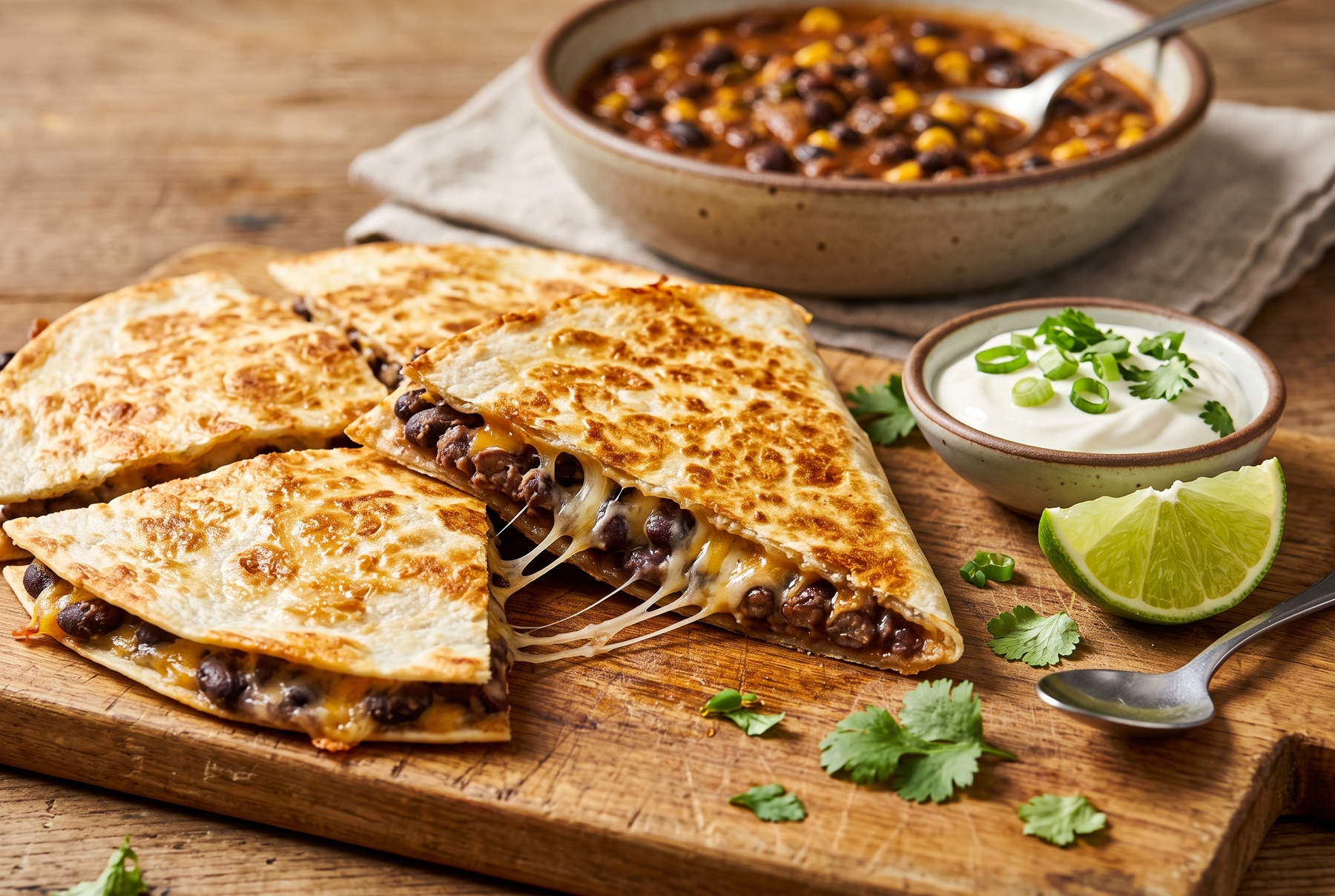
Braised beans serve hot as a smoky chili on night one, then mash into a thick filling for cheesy, pan-toasted quesadillas.
15. Browned Mushrooms: Silky Pasta Tonight, Savory Tart or Omelet Filling Tomorrow
Mushrooms are biological sponges packed with water, and proper cooking technique revolves entirely around managing that moisture.
Arranging sliced mushrooms in a single layer across a hot skillet—and holding back the salt initially—prevents steaming. Within minutes, they release a flood of liquid, turning gray and bubbling noisily in their own juices. Patience is key. Once that liquid evaporates completely, the sound in the pan shifts from a wet bubble to a dry sizzle; the mushrooms shrink to a third of their raw volume and take on a deep bronze sear. Only then do butter, salt, minced garlic, and fresh thyme hit the pan.
Evaporating that water and achieving true caramelization takes real time, making mushrooms a prime candidate for batch cooking. Searing a massive pile in two or three uncrowded batches pays off immediately.
Now comes the split. The first portion tosses with hot pasta, glossy from an emulsion of butter, starchy pasta cooking water, grated Parmesan, and cracked black pepper. The reserved portion stays dry, ready to fold into a French omelet, scatter across a savory galette, bake into a rich cream gratin (*julienne*), or wrap inside thin crepes.
Pouring heavy cream into the entire skillet on night one is a trap: a wet, dairy-bound mushroom mixture limits tomorrow’s options and turns pastry crusts soggy and pale.
16. Caramelized Onions: Bistro Onion Soup and Savory Onion Tart
Few kitchen tasks illustrate time-saving math better than caramelizing onions: true browning demands 40 to 50 minutes over the stove, and cranking the burner to high only burns the sugars rather than speeding the chemistry.
The process follows a predictable arc. A skillet piled high with thinly sliced onions initially looks absurdly full. Over medium heat with butter and a pinch of salt, the mountain collapses, sheds its water, and turns translucent. Then the slow alchemy begins: the color shifts from pale straw to amber, then to the deep brown of an old copper penny. The volume shrinks fivefold, and the sharp, pungent bite mellows into a jammy, deeply savory sweetness. By the end, the onions slump into a soft marmalade under the spoon. Because this transformation takes nearly an hour regardless, cooking a single onion is a terrible return on time invested.
Filling the widest skillet to the brim yields enough for two showstopping meals. Half the jammy onions simmer in rich beef or chicken stock to anchor bowls of toasted-cheese onion soup. The remaining half spreads across pastry dough, baked under a savory custard of eggs, cream, and Gruyère for a classic tart or quiche.
Classic French onion soup carries centuries of Parisian bistro tradition and strict culinary rules. A weeknight version built on homemade chicken stock, topped with a toasted baguette slice and broiled cheese, nods affectionately to that heritage without pretending to be a canonical restaurant specimen.
17. Braised Cabbage: Tender Side Dish Tonight, Savory Hand Pie Filling Tomorrow
Turning braised cabbage into both a side dish and a pastry filling requires managing moisture at two distinct levels.
Braising shredded cabbage with sautéed onions and grated carrots until tender, seasoning moderately with salt, and stirring in crushed tomatoes or tomato paste near the end produces the base. Stopping while the mixture remains juicy and glistening yields a classic Eastern European side dish.
Tomorrow’s pastry dough, however, despises moisture. Spoon juicy cabbage into yeast dough for *pirozhki* (baked or fried hand pies) or thin pasta dough for *vareniki* (boiled dumplings), and the liquid will soak the starch, causing pies to leak and dumpling seams to burst in the boiling water. Returning the reserved cabbage to an uncovered skillet over medium heat evaporates every drop of excess liquid until dragging a spatula leaves the pan bone-dry. Folding in chopped hard-boiled eggs or browned mushrooms enriches the mix.
Wrapped inside golden, blistered dough, yesterday’s humble vegetable side transforms into a rich, savory filling that bears no resemblance to a reheated leftover.
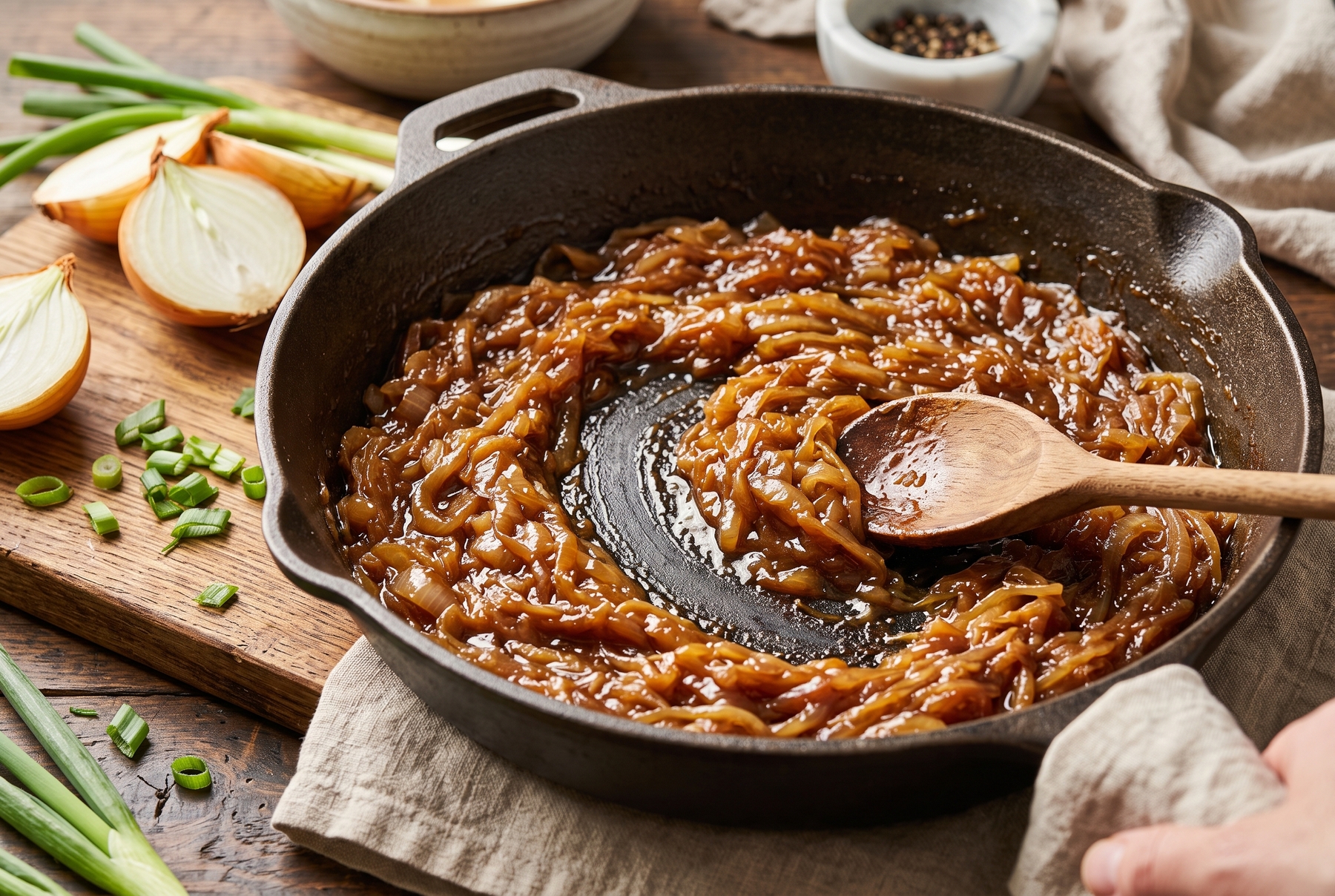
Properly caramelizing onions takes at least 40 minutes, making it smart to cook a double batch for both soup and a savory tart.
18. Slow-Simmered Meat Ragù: Rigatoni on Monday, Bubbling Baked Pasta on Wednesday
A proper Bolognese-style meat sauce simmers gently for hours, though active hands-on prep rarely exceeds 20 minutes. Firing up the stove for three hours just to dress a single bowl of pasta wastes both fuel and effort.
Doubling the batch in a heavy Dutch oven is the sweet spot (tripling it often overwhelms residential burners). On Monday night, the glossy, saucy ragù coats ridges of rigatoni or ribbons of tagliatelle. The remaining half cools and waits for Wednesday’s baked pasta.
The secret to making the second meal taste freshly made lies in preparing the structural components right before baking. Whisking a fresh batch of béchamel takes minutes (reheated white sauce splits and turns grainy), grating the cheese fresh ensures a smooth melt, and choosing between dried or fresh lasagna sheets depends on how thick the chilled ragù has become. With the labor-intensive meat sauce already waiting in the fridge, assembling the casserole takes 15 minutes before the oven does the rest.
19. Roasted Beets: Crumbled Goat Cheese Salad and Vibrant Tahini Beet Dip
Both iterations of this earthy root vegetable shine at room temperature or chilled.
Wrapping several whole, unpeeled beets in foil to roast—or simmering them in water—takes an hour of passive time. They are ready when the tip of a paring knife slides to the center without resistance. Roasting concentrates the natural sugars and deepens the earthy flavor, while boiling shaves minutes off the clock.
Once slipped out of their skins, half the beets get cut into wedges or cubes, tossed with peppery greens, toasted walnuts, creamy goat cheese or feta, and a sharp vinaigrette built on olive oil and balsamic or apple cider vinegar.
The reserved beets drop into a food processor with garlic, lemon juice, nutty tahini or cream cheese, and salt, spinning into a dense, velvety puree the color of deep burgundy wine. It spreads effortlessly across toasted sourdough, anchors a Mediterranean grain bowl, or sits alongside roasted meats.
A simple shift in blade—from chef’s knife to food processor—separates a textural salad from a rich, creamy spread.
20. Homemade Stock: Restorative Noodle Soup and Glossy Risotto
Home cooks rarely treat stock as a standalone meal-prep component, yet a single simmering pot quietly powers half a week of superior dinners.
Neutrality is the golden rule here. Dumping heavy salt, raw garlic, cumin, or soy sauce into the stockpot immediately slams the door on half of tomorrow’s culinary options. Leaving the base completely unsalted—or barely seasoned—is critical: when reducing stock for a pan sauce or risotto, an already-salty broth concentrates into an inedible brine.
Portioning the strained liquid strategically saves headaches later: 1-liter (1-quart) containers for soup bases, 250 ml (1-cup) jars for risotto or pan sauces, and silicone ice cube trays for tossing a quick gloss of collagen into a hot skillet. Freezing stock in the exact measurements used in daily cooking eliminates waste.
Rapid cooling keeps bacterial growth at bay: dividing the hot liquid into shallow containers or setting the stockpot in an ice-water bath in the kitchen sink while stirring brings the temperature down fast. Standard food safety timelines apply: 3 to 4 days in the refrigerator, and 4 to 6 months in the freezer (where time affects flavor quality rather than safety).
Half the batch becomes a clean, restorative soup. The rest hydrates Arborio rice for risotto, deglazes a roasting pan, or braises winter greens—applications where the liquid carries the entire dish. In these stripped-down recipes, the gulf between a salty bouillon cube and gelatin-rich homemade stock is unmistakable.
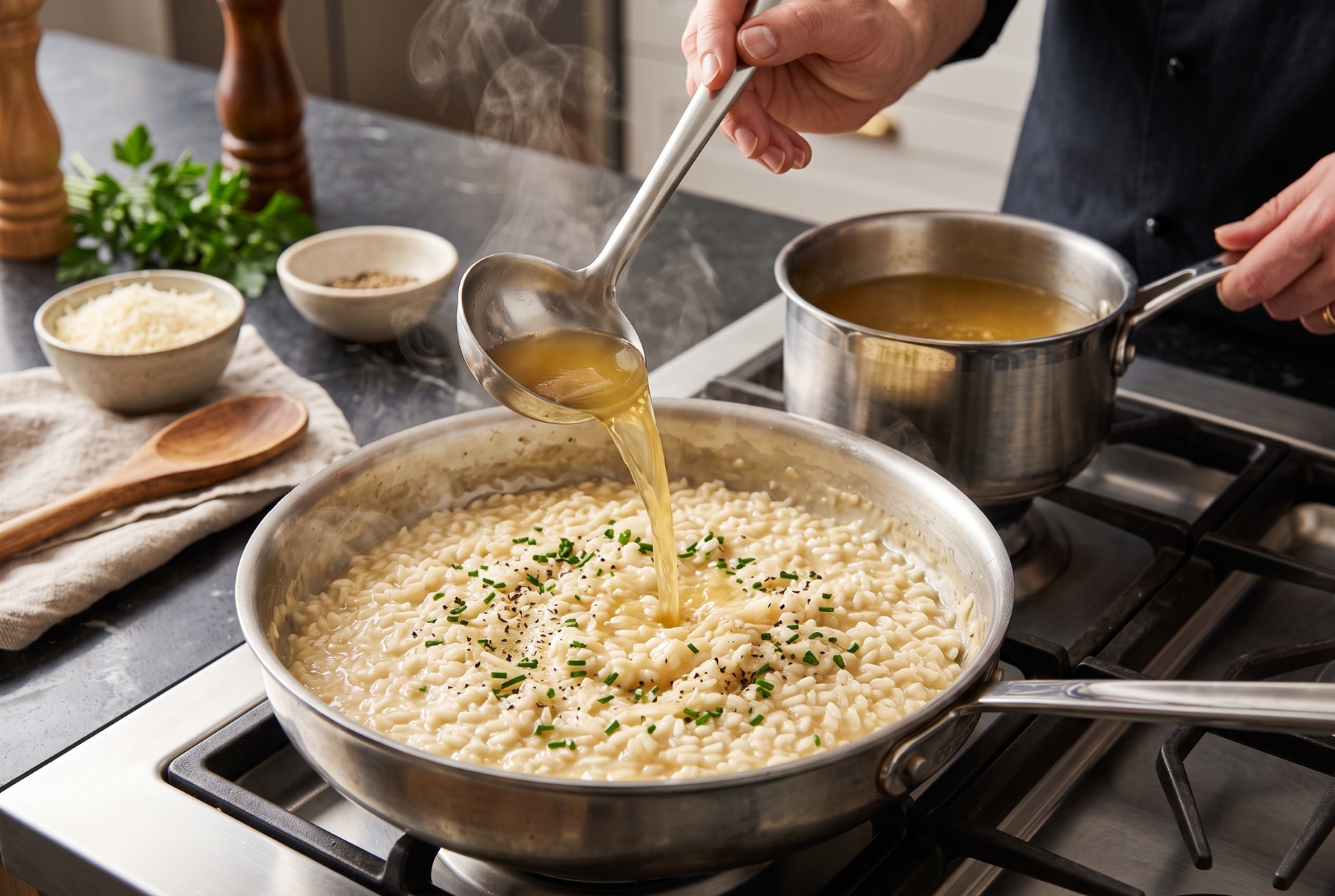
Simmering a neutral stock ahead of time makes weeknight creamy risotto or homemade soup effortless.
How to Spot a Successful Meal Pair: 4 Essential Questions
A curated list of 20 pairs works wonders until a cook wants to invent a custom combination from whatever sits in the crisper drawer. Evaluating a potential pairing requires asking four blunt questions before turning on the stove:
- Do the two dishes share the most labor-intensive step? Focus on the physical work—butchering, boiling, long roasting, braising, or kneading—rather than just a shared ingredient.
- Can the base be divided before assertive spices and sauces lock in a single flavor profile?
- Will the finished plates offer genuinely different textures, serving temperatures, or flavor profiles?
- Does this strategy actually reduce total active cooking time and dirty dishes?
A “no” to any of these questions means the pairing is an illusion. Deciding to cook two recipes together simply because “both use carrots” saves zero time: peeling two extra carrots takes sixty seconds, offering nothing worth consolidating.
4 Core Formulas for Turning One Base Into Two Dinners
| The Single Effort | Night One | Night Two |
|---|---|---|
| Roast a full sheet pan | Hot roasted main and side dish | Pureed soup, grain bowl, or savory filling |
| Boil grains or dried legumes | Warm side dish for a protein | Wok stir-fry, cold grain bowl, or blended dip |
| Simmer a large neutral base | Dish finished with Flavor Profile A | Dish finished with Flavor Profile B |
| Run one long passive process | Stock → soup; Dough → pizza; Onions → soup; Ragù → pasta | Risotto; Focaccia; Savory tart; Baked pasta casserole |
The Biggest Meal-Prep Trap: Turning Time-Saving Tricks Into Extra Chores
Blindly multiplying recipe quantities backfires quickly. Tripling a skillet recipe demands a pan three times wider—which doesn’t exist in a home kitchen—and triples the time required to evaporate liquid, turning seared food into steamed mush. Doubling a batch is almost always the ceiling.
Cooking a massive batch of a “versatile base” without a concrete plan for its second act guarantees food waste. An unidentified tub of beige food will sit on the middle shelf until Friday before sliding into the trash alongside a dose of kitchen guilt.
Tossing the entire batch of protein or vegetables in the final sauce on night one ruins the illusion. Once glazed or dressed, tomorrow’s meal will taste like leftovers no matter how many fresh herbs get scattered on top.
Dirtying six storage containers, a food processor, and three saucepans just to prep two weeknight dinners defeats the purpose. Washing dishes will devour every minute saved at the stove.
Both halves of the pair must be meals the household genuinely craves. If nobody at the table enjoys pureed vegetable soups, roasting extra squash just to be “efficient” makes zero sense.
Finally, stretching food safety timelines out of a noble desire to “waste nothing” is a dangerous game. Cooked dishes last 3 to 4 days in the refrigerator, cooked rice gets 24 hours, and no clever kitchen hack overrides microbiology.
Rational home cooking loses the plot the exact moment a cook spends a sunny Sunday afternoon hunched over a vacuum sealer, fifteen labeled containers, and an Excel spreadsheet just to rescue two lonely carrots.
Don’t Cook More Food—Cook With a Fork in the Road
Overhauling kitchen habits doesn’t require adopting a rigid seven-day meal-planning matrix. That level of logistics is a separate hobby entirely, and most home cooks neither need nor want it.
Mastering a single pair is enough to start. Tossing extra root vegetables onto tonight’s roasting pan knowing half will whirl into tomorrow’s soup. Or measuring an extra cup of raw rice into the pot, fully aware that its next destination is a smoking-hot wok rather than the microwave.
Smart cooking never starts with a refrigerator crammed with plastic tubs. It begins 30 seconds before igniting the burner, with the simple realization of which kitchen chore can be done once today instead of twice tomorrow.
Before starting dinner tonight, look at the main ingredient on the cutting board and ask: what second meal is already hiding inside this? With a whole chicken, the answer is effortless: a roasted carcass, a heavy pot, 2 liters (2 quarts) of cold water, and an unpeeled onion.
0 comments