
The kettle whistles, the youngest is looking for a sock, the oldest announces he won’t eat oatmeal, and the adults’ brains haven’t quite clicked into gear since the alarm went off. The fridge is open, but it’s unclear what to grab. There is bread, eggs are hiding somewhere, and cheese sits wrapped in foil. What can actually be made from this?
With children around, breakfast often comes together on the fly while everyone is already running late. Inventing a new menu every morning is exhausting. Cooking a separate dish for everyone is unrealistic, and there are already too many recipes out there. What’s missing is a simple foundation: how to assemble a quick breakfast for the whole family from whatever happens to be available.
Breakfast is easier when it isn’t invented from scratch, but rather assembled from a few basic components. You need a base, a protein, something fresh, and a small flavor addition. From there, the details change based on mood, fridge contents, and kids’ whims.
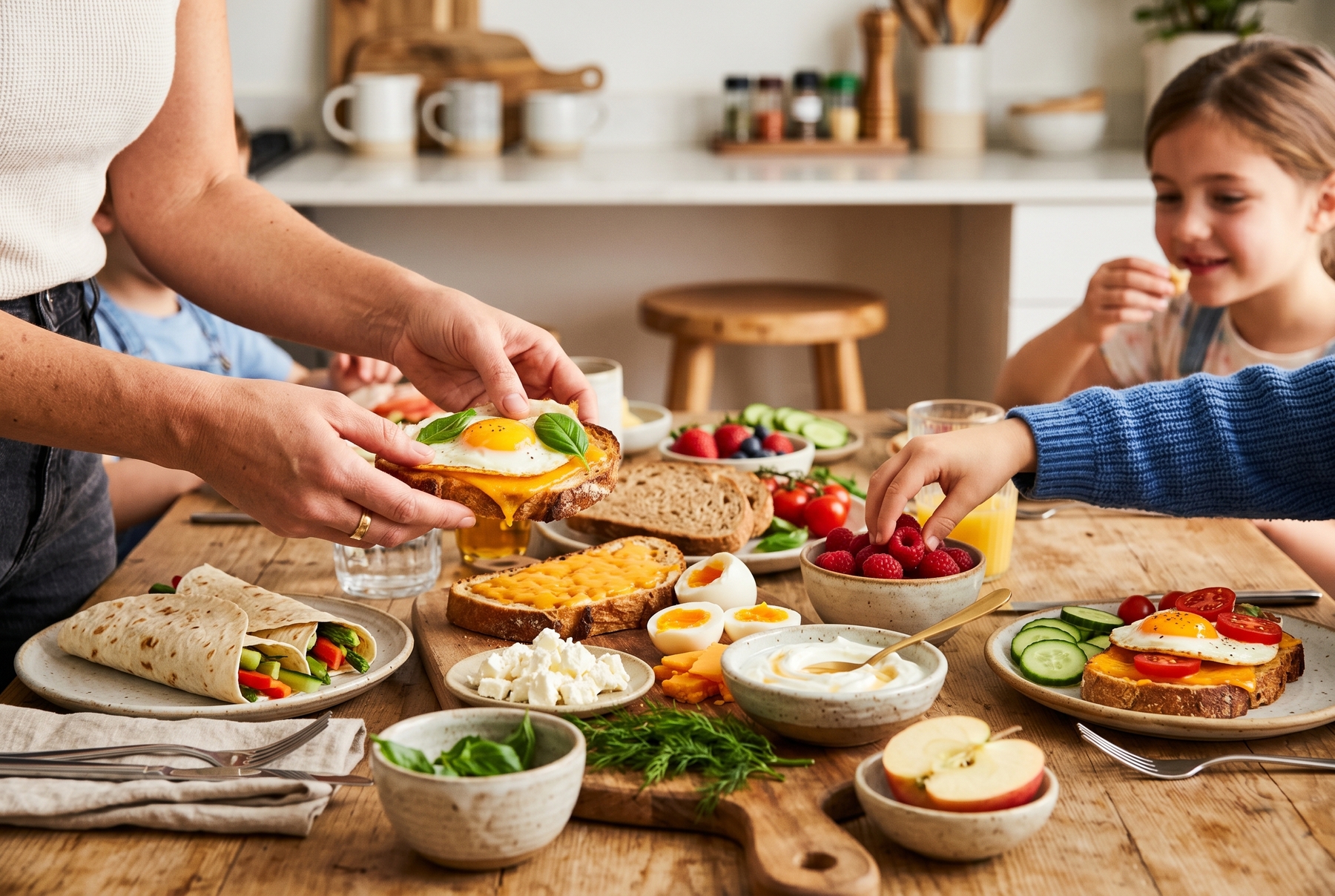
A shared breakfast is an excellent way to start the day with the whole family, free from rush and stress.
Table of Contents
- How to Stop Searching for Breakfast Ideas Every Morning
- Weekday Breakfast Options
- A Hot Sandwich With Proper Filling
- Oatmeal Without the Hospital Food Vibes
- An Egg and Whatever is Found Nearby
- A Cottage Cheese Bowl Without the Coaxing
- Yesterday's Dinner as Real Food
- How Not to Cook Four Different Breakfasts
- What to Keep at Home for Quick Breakfasts
- How to Fit Everything into 15 Minutes
- By Age and Situation
- If Everything Goes Wrong
- Cheat Sheet: 12 Quick Breakfasts from One Formula
How to Stop Searching for Breakfast Ideas Every Morning
It is easier to keep a simple formula in mind: base + protein + something fresh + flavor addition. At the stove, this looks much simpler: you take a base, add protein, and put something fresh or crunchy next to it.
The base provides satiety and keeps the breakfast from turning into a random snack. Bread, lavash (thin flatbread), tortillas, oatmeal, buckwheat, rice, potatoes, pancakes, frozen syrniki (quark pancakes), or pasta from last night’s dinner all work. The base doesn’t have to be traditionally meant for mornings. Rice works just as well in the morning as it does in the evening, especially if there is an egg or cheese nearby.
Protein is necessary so you aren’t reaching for cookies or a chunk of fridge cheese an hour later. Eggs in any form, cottage cheese, cheese, or plain yogurt do the trick. Chicken, turkey, fish, beans, hummus, or peanut butter (if there are no allergies) are also great options. For children under three and those with specific dietary needs, it is best to check with a pediatrician. The goal here isn’t to prescribe a diet, but to show how to build a plate.
Something fresh goes next to the main food: cold, juicy, or crunchy. You don’t have to drag a cucumber onto the plate against someone’s will. It can be fruits, berries, vegetable sticks, herbs, salad greens, tomatoes, an apple, or a banana. You can put everything next to each other, in a separate pile, and let them choose themselves. No battling over every bite.
A flavor addition brings the plate to life. This can be a sauce, a spoonful of jam, nuts, seeds, or herbs. Cinnamon, cocoa, a crispy cheese crust, or a pat of butter also work beautifully. Sometimes properly melted cheese gets the job done better than coaxing.
This approach makes it easier to survive whims, fridge leftovers, and three different appetites at the same table. One wants sweet, another salty, and the third just pokes with a fork saying they aren’t hungry. You change the details, but a proper breakfast still ends up on the table.
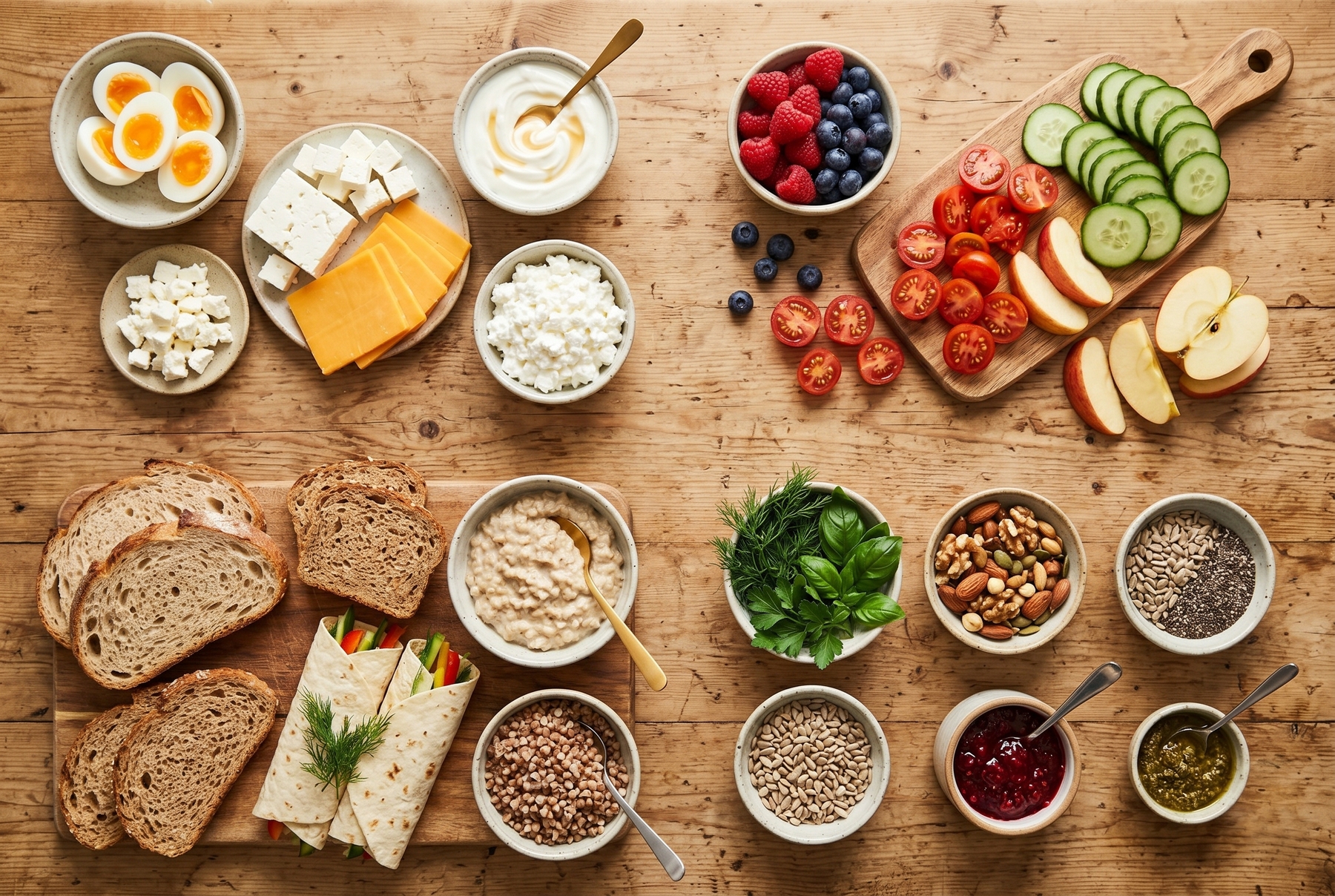
Keeping basic products on hand—a base, a protein, and fresh vegetables or fruits—allows for quick plate assembly.
Weekday Breakfast Options
A Hot Sandwich With Proper Filling
You grab whatever comes to hand first: bread, lavash, or a bun. You place cheese, egg, chicken, or cream cheese on top. It heats up in a skillet under a lid: about three minutes over medium heat. A toaster or oven yields roughly the same result. The cheese melts, the bread crisps up, and the filling doesn’t run. It’s ready to serve. You tuck a cucumber or tomato inside, and leave an apple on the side.
If using an egg, beating it with a fork and a pinch of salt before pouring it into a hot skillet in a thin layer works best. Letting it set before placing it on the bread creates a thin omelet layer instead of a standard fried egg: it stays inside the sandwich and doesn’t slide onto the plate after the first bite.
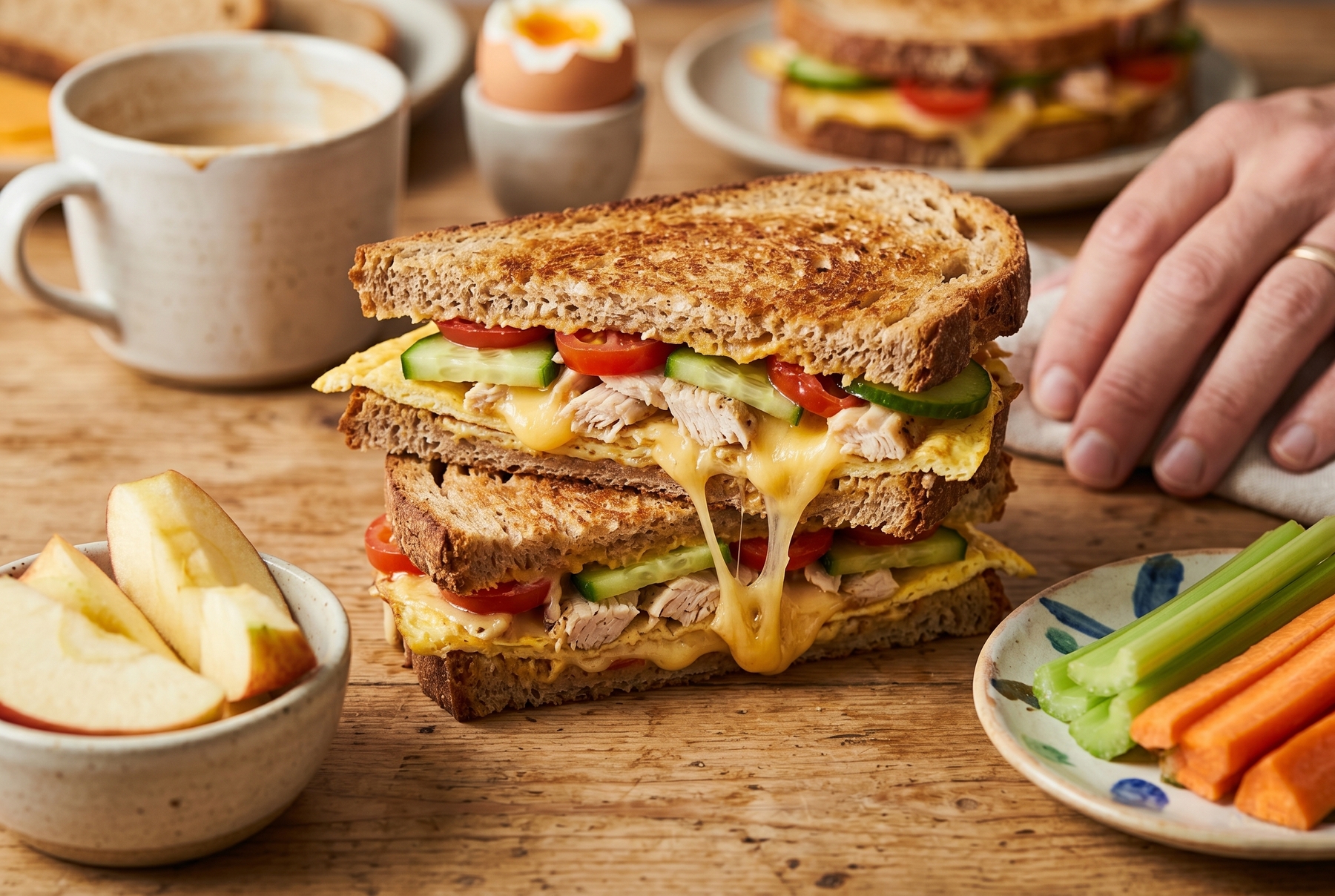
A hot sandwich with cheese and egg cooks in 5 minutes and keeps hunger away for a long time.
Oatmeal Without the Hospital Food Vibes
Oatmeal cooks easily in milk, water, or a mix of both. It can be prepped in the evening and left in the fridge: the classic overnight oats with yogurt that thickens by morning. For a sweet porridge: banana and cocoa, apple and cinnamon, or berries and cottage cheese. Savory oatmeal takes well to cheese, herbs, a pinch of salt, and an egg on top.
A common mistake is pouring in too much liquid. For 50 g (about 1.7 oz) of oats, 120–150 ml (about 4–5 fl oz) is enough. The porridge will thicken if left to stand for a minute after cooking. Even sweet porridge needs a small pinch of salt, otherwise the flavor falls flat. Crunch often makes the porridge more pleasant: adding nuts, seeds, or toasted granola on top is a great finishing touch.
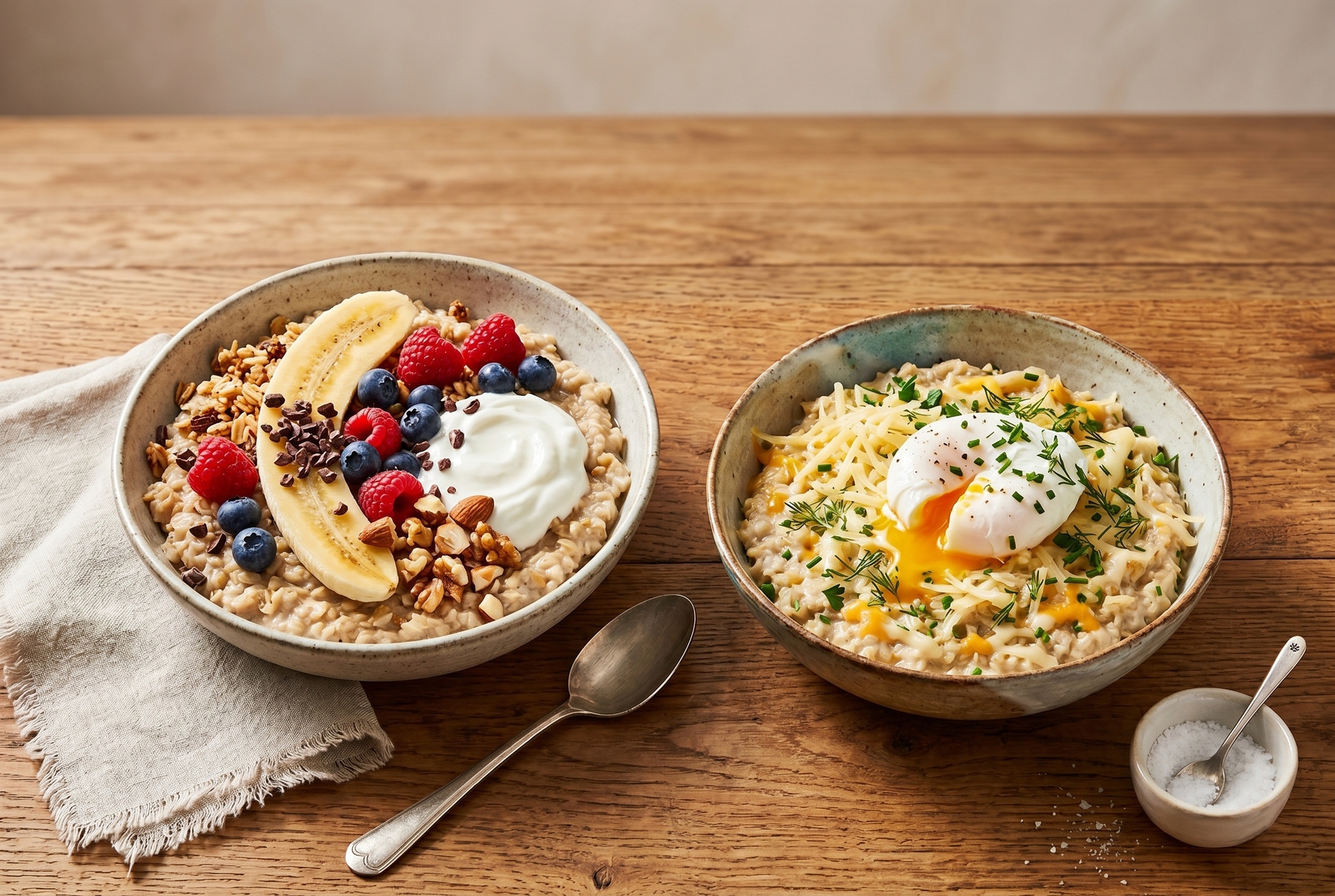
Oatmeal can be either sweet or savory; adding cheese or an egg brings wonderful variety.
An Egg and Whatever is Found Nearby
Eggs quickly turn into an omelet, a scramble, a lavash breakfast, or a skillet meal with leftover vegetables, cheese, and grains. It is best not to overcook the egg. Keeping the heat medium and taking it off slightly earlier than seems necessary allows the egg to finish cooking from residual heat. If fried until a rubbery crust forms, it will never become tender again.
A scramble is perfect for mornings when hands move faster than the brain. Beating the eggs with a fork and pouring them into a skillet with heated oil takes just moments. Stirring with a spatula and removing from the heat while the eggs are still glossy and wet ensures a perfect texture.
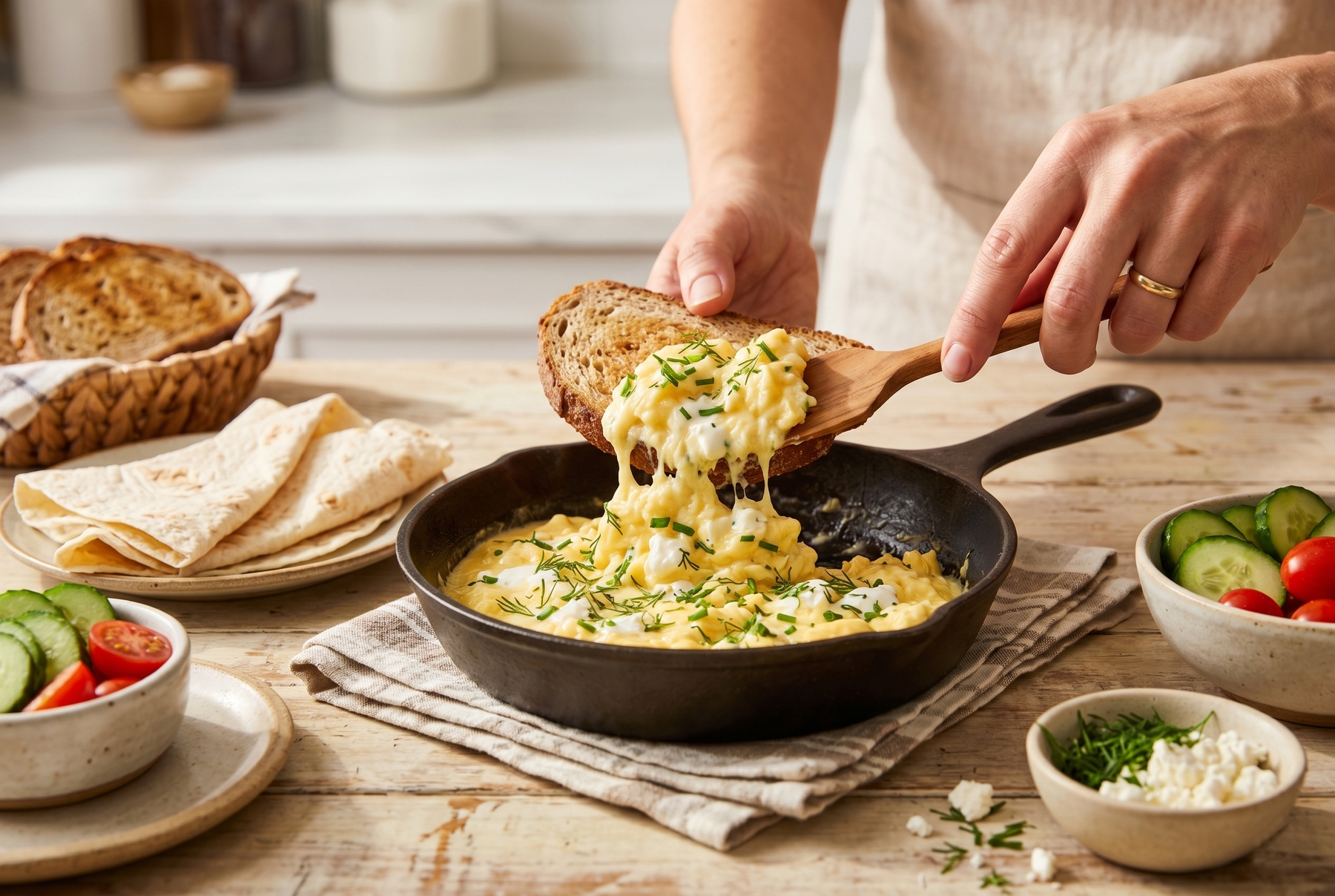
Removing the eggs from the heat while they are still slightly wet creates the perfect scramble.
A Cottage Cheese Bowl Without the Coaxing
The base can be cottage cheese (tvorog) or thick yogurt. Fruits, berries, granola, nuts, honey, jam, or cocoa can be added. For a savory version, herbs, cucumber, salt, and a drop of olive oil are enough.
Children often find it easier when everything is separate and they can assemble it themselves. Instead of a bowl of mixed cottage cheese, presenting a plate where everything is laid out individually—cottage cheese, berries, nuts, a spoonful of jam—works wonders. The child decides what to mix with what, leading to fewer arguments over the plate.
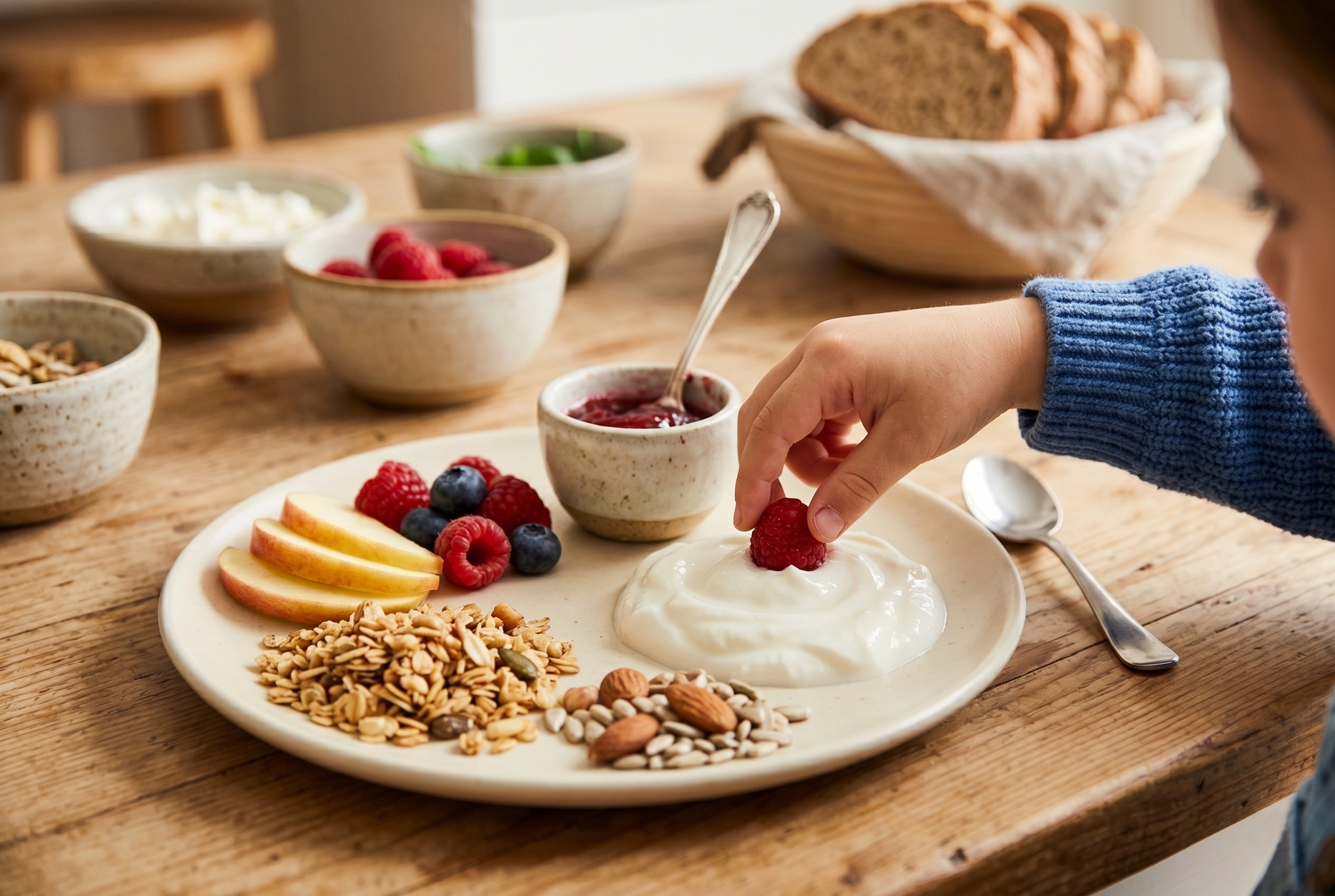
Children often enjoy it when all the ingredients are separate, allowing them to mix everything themselves.
Yesterday’s Dinner as Real Food
The fridge often holds leftover buckwheat, rice, potatoes, chicken, vegetables, pancakes, syrniki, or pasta. These are prep items that save the morning. Adding an egg, cheese, sauce, or herbs transforms them. Wrapping it in lavash and toasting it in a skillet like a flatbread makes a great meal.
Rice with an egg and soy sauce (if suitable for the family) cooks in three minutes. Buckwheat can be reheated with cheese and herbs. Mashing potatoes with a fork, mixing in an egg, forming a patty, and frying until crispy creates a new dish. Instead of feeling like “eating yesterday’s leftovers,” a hot flatbread with a crust and cheese stretching off the fork ends up on the plate.
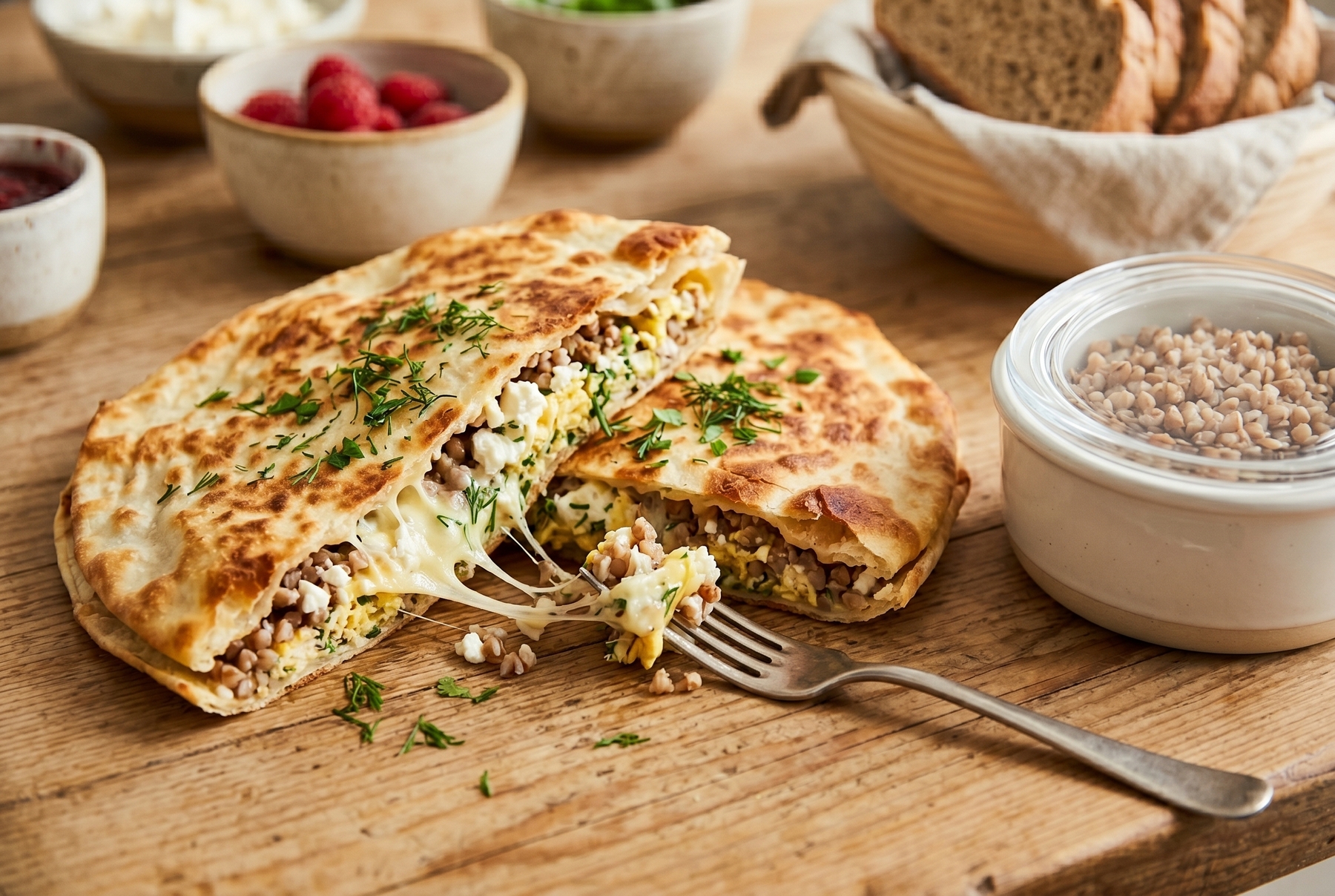
Yesterday's porridge turns into an appetizing breakfast when wrapped in lavash with cheese and toasted.
How Not to Cook Four Different Breakfasts
The easiest way is to keep one common base and change the additions for everyone. Everyone gets lavash, but one has cheese, another has egg, and the third gets cottage cheese and berries.
Kids need a bit of choice. Offering two bases and one addition to choose from, like “cucumber or apple,” works well. Breakfast shouldn’t turn into a forty-minute negotiation. Two options are usually enough in the morning. Ten only cause decision paralysis.
Adults need proper food too. A parent also eats breakfast, not just clears away others’ plates. Preparing something that can be eaten one-handed or taken on the go is crucial. A sandwich wrapped in paper, cottage cheese in a container, or a lavash egg wrap all fit the bill. Breakfast on the run can also be a real meal: warm lavash, dense filling, and paper wrapped around it.
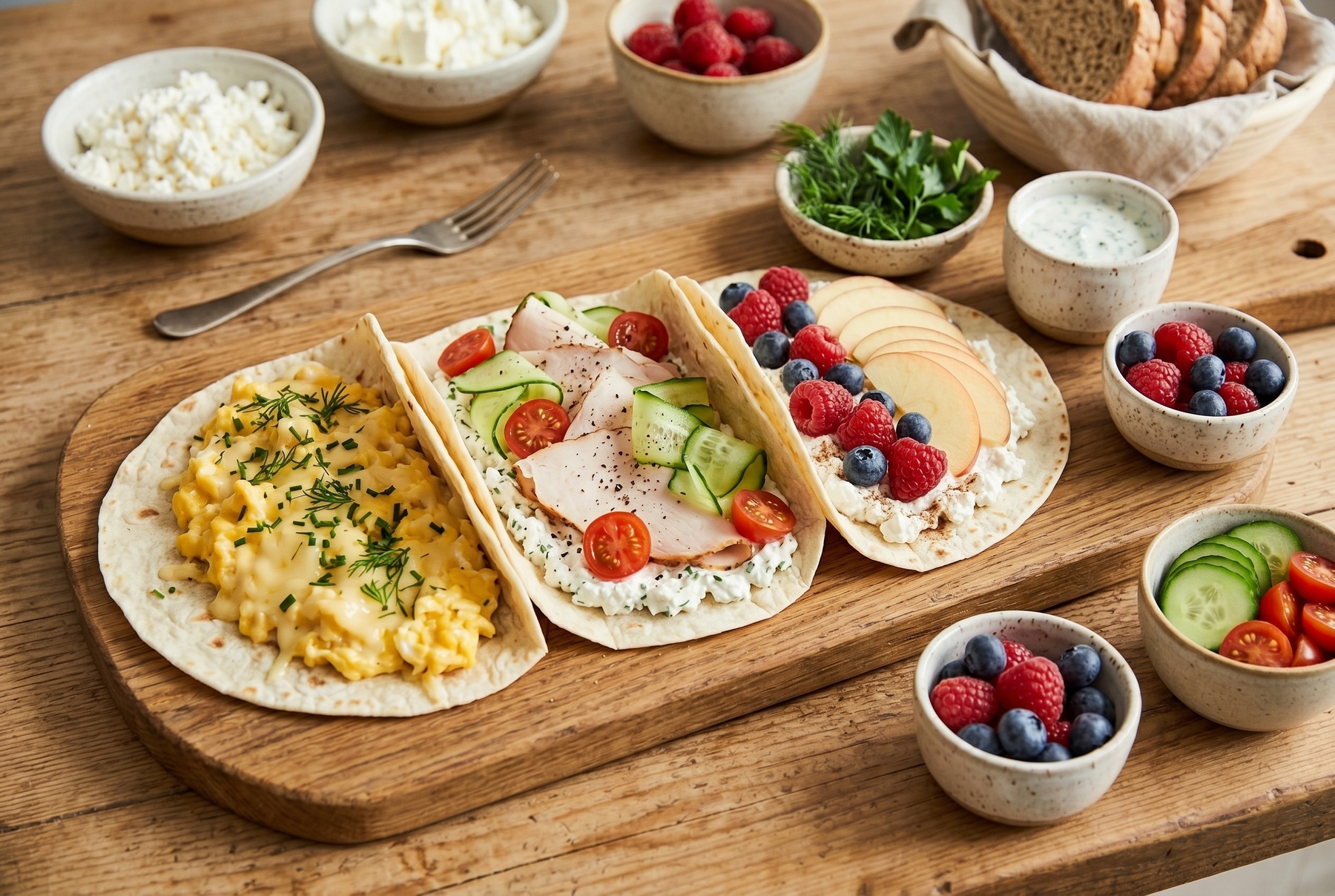
Using a single base for everyone while changing the fillings caters to the preferences of each family member.
What to Keep at Home for Quick Breakfasts
This is more of a kitchen cheat sheet than a weekly shopping list.
Basic products for a quick breakfast: bread (lasts for months in the freezer), lavash, quick-cooking or pre-cooked grains, eggs, cottage cheese, yogurt, cheese, frozen berries, vegetables, fruits, nuts or seeds, and cooked chicken or fish if your household eats that in the morning.
Small details that elevate the flavor: sauces (tomato, sour cream, or any store-bought favorite), soft cheese, herbs, spices, cinnamon, cocoa, jam, honey, tahini, or nut butters. Care must be taken with nuts, peanuts, and honey for children under one year, keeping age and allergies in mind. Medical recommendations are not being made here.
Prep items that save the day: sliced cheese in a container, washed vegetables, boiled eggs (they keep in the fridge for three days), portioned porridge in jars, dough or pre-made syrniki in the freezer, sliced bread, and homemade granola. Prep work is necessary for mornings when twenty-five consecutive decisions no longer fit in the brain.
How to Fit Everything into 15 Minutes
Turning on the kettle or heating the skillet comes first. While it heats, pulling out the base is next. Simultaneously slicing a cucumber or washing an apple saves time. Assembling the plates happens next. Finally, adding the flavor accents finishes the job.
Heating only one thing is key. If everything needs heating, 15 minutes turns into a myth. Let the toast, egg, porridge, or flatbread be hot. The rest stays cold.
Placing everything on the table works well. Every plate doesn’t need to be styled like a restaurant dish. Sometimes it’s easier to put bread, cheese, fruits, and yogurt on the table and let the family assemble their own versions. There are fewer arguments, less time is spent, and the choice remains.
Where minutes are lost: searching for container lids, washing vegetables in the morning (better done the night before), trying to invent a menu from scratch, arguing over who will eat what, overly complicated chopping, or trying to plate everything beautifully on a day when everyone is late.
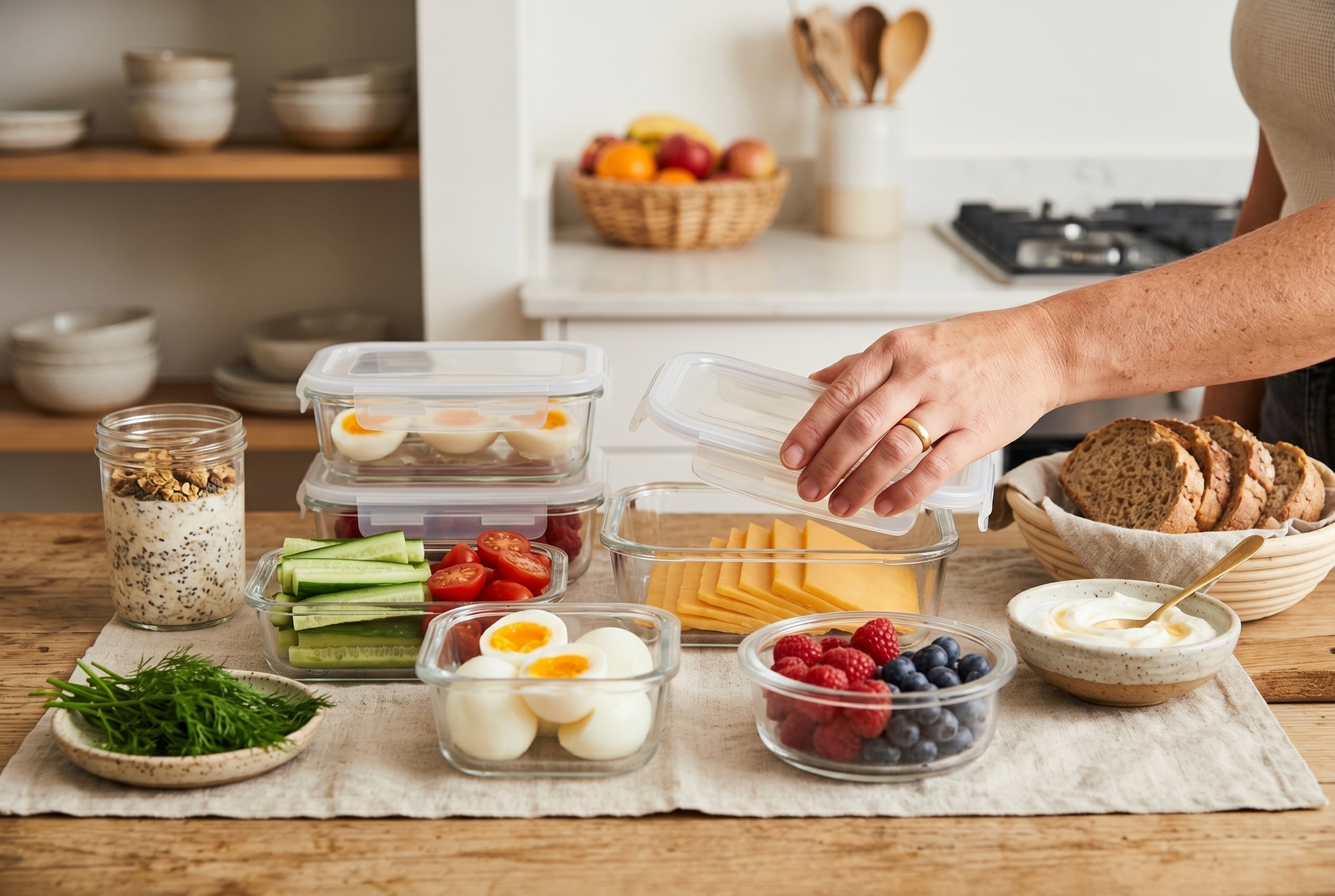
Pre-prepped products stored in containers save valuable time during the busiest of mornings.
By Age and Situation
Children’s needs depend on age, health, allergies, and specialist recommendations. This is written not as a doctor, but as someone who has put these breakfasts together many times.
Preschoolers: small portions, finger foods, separate elements, soft textures, and a minimum of complex mixed dishes. Mini-toasts, a cottage cheese bowl, omelet strips, and banana pancakes from a pre-made batch are perfect.
Schoolchildren: more filling options, and the ability to take it with them. A lavash roll, an egg with toast, yogurt with toppings, a hot sandwich, or porridge in a thermal mug.
Adults on the run: a sandwich in paper, cottage cheese in a container, a lavash egg wrap, overnight oats, or leftover grains with cheese and vegetables.
If Everything Goes Wrong
No bread: porridge, leftover grains, a potato flatbread, an omelet, a cottage cheese bowl, or rice with an egg.
No eggs: cottage cheese, cheese, yogurt, beans, chicken, hummus, fish, nuts, or seeds (where appropriate).
The child refused everything: skipping the drama is best. Offering something small from the usual set—a banana, yogurt, toast, cheese, or porridge—often works. Breakfast is not a battlefield.
The breakfast is too sweet or lacking substance: adding cottage cheese, yogurt, an egg, cheese, nuts or seeds, whole-grain bread, vegetables, or fruits balances it out. Often one addition is enough: a spoonful of cottage cheese, an egg, some cheese, or a handful of seeds.
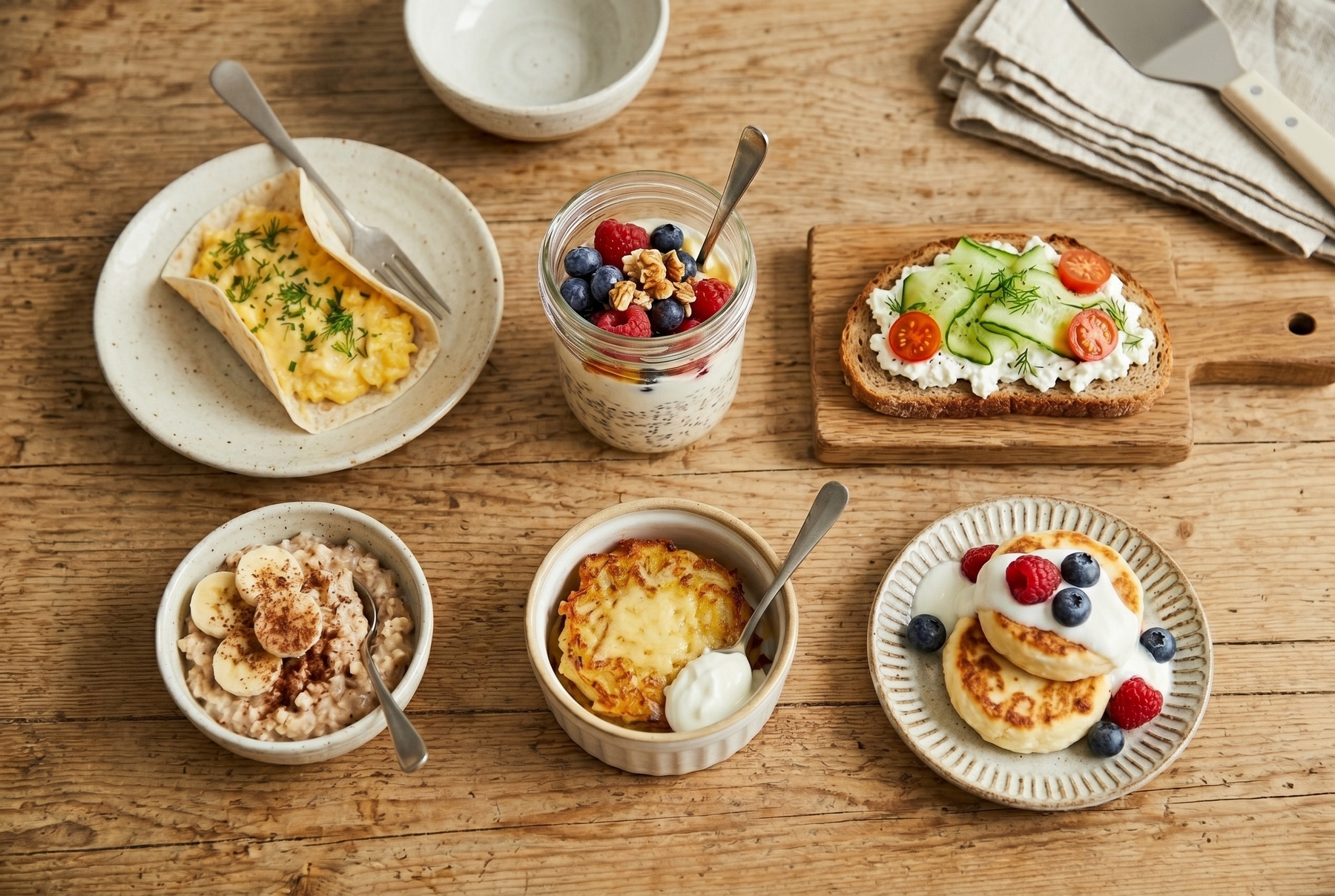
Having a few simple ideas in stock guarantees you can always quickly feed the family a wholesome breakfast.
Cheat Sheet: 12 Quick Breakfasts from One Formula
- Lavash, egg, cheese, tomato.
- Oatmeal, banana, cocoa, yogurt.
- Toast, cream cheese, cucumber, turkey.
- Buckwheat, egg, cheese, herbs.
- Yogurt, berries, granola, nuts.
- Cottage cheese, apple, cinnamon, a spoonful of jam.
- Rice, egg, vegetables, soy sauce (if suitable for the family).
- Hot sandwich, vegetable sticks.
- Frozen syrniki, yogurt, berries.
- Omelet, lavash, herbs.
- Pancakes, cottage cheese, fruits.
- Potato flatbread, cheese, sour cream sauce.
These are less like breakfast recipes and more like options for quick assembly.
A quick breakfast relies on simple supplies: bread in the freezer, eggs on the shelf, cheese in a container, and a few options that everyone already knows. If everyone leaves the house full and without drama, breakfast has done its job.
0 comments