
Canned fish often carries a second-rate reputation. Opening a tin, dumping it next to mashed potatoes, eating, and forgetting it is a familiar routine. Yet, inside that tin lies an almost complete dish: protein, salt, fat, dense savory flavor, and sometimes tomato sauce or aromatic oil. The manufacturer has already done half the work. The fish is cooked, salted, and brought to a tenderness that would otherwise require an hour of braising at home.
The tin itself is rarely to blame; more often than not, canned fish simply lacks the right partners. It does not require complex techniques. It requires acidity, freshness, crunch, and a starchy base. Giving a sardine some lemon and green onion elevates it from being just a side to mashed potatoes. Tossing tuna into hot pasta with garlic creates a dinner that one can be truly proud of.
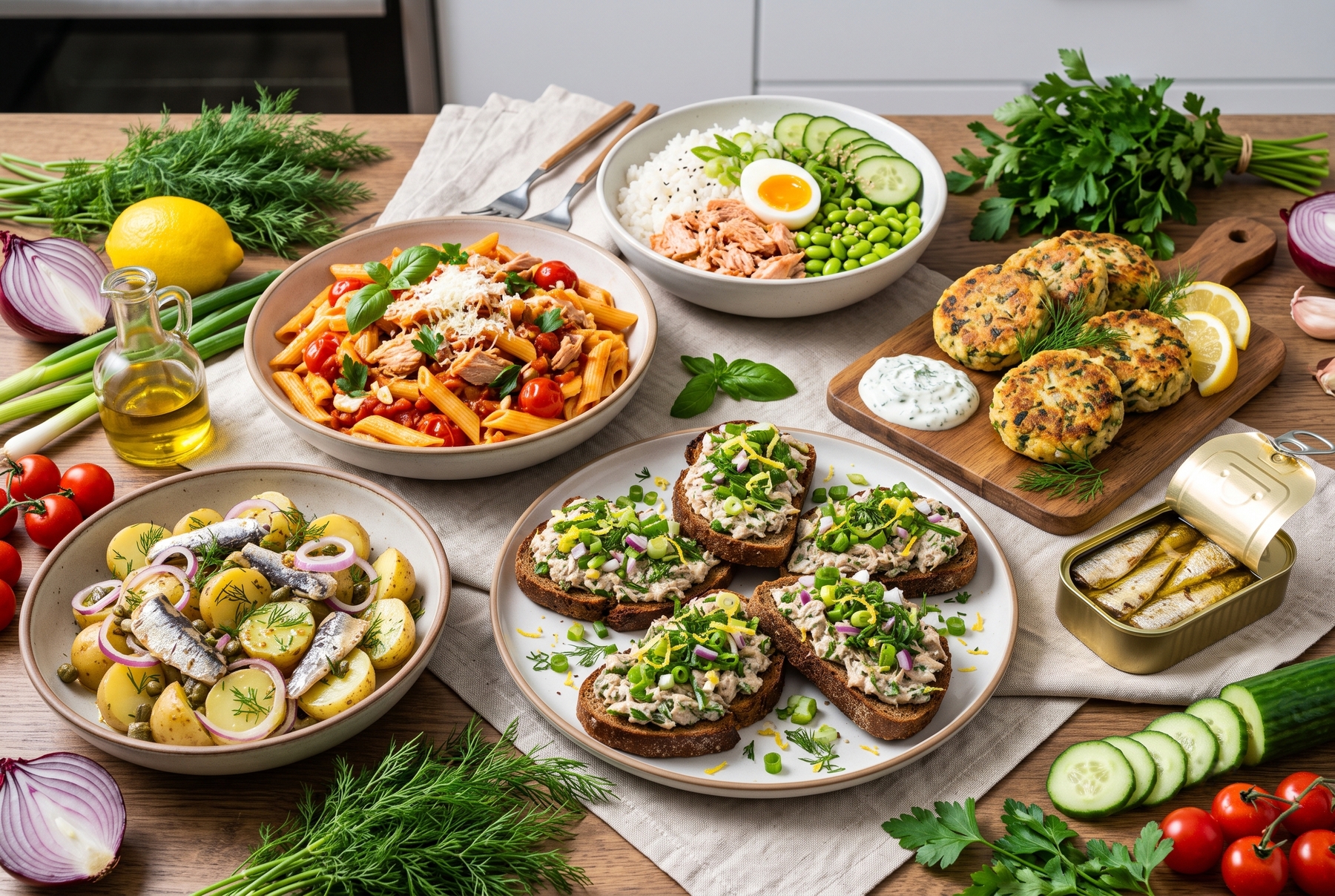
True culinary diversity: from hearty salads and pasta to elegant spreads and golden fish patties.
Table of Contents
Which Canned Fish Suits Which Purpose
The tins on the shelf differ far more than they appear. Confusing saury with sprats in a recipe is akin to confusing butter with smoked lard.
Saury, Sardine, and Mackerel: For Salads, Spreads, and Hot Dishes
These are fatty fish with a dense, rich flavor. They pair exceptionally well with potatoes, eggs, onions, dill, mustard, lemon, and rye bread. The fat here is highly beneficial, as it binds spreads, prevents patties from drying out, and enriches soups. Sardines are slightly softer and more delicate, mackerel is sharper and more intensely fishy, while saury sits comfortably in the middle. If there is only one tin available and a versatile choice is needed, saury is the best option.
Tuna: For Pasta, Rice Bowls, and Sandwiches
Tuna is notably drier than the rest, especially when packed in its own juices (water). Its fibers are dense, and when mixed, it flakes neatly rather than turning into a pâté. This means tuna always requires a rich or moist partner, such as olive oil, yogurt, mayonnaise, tomato sauce, or cream. On its own, without a sauce, it remains somewhat uninspiring. Introducing oil, tomatoes, or yogurt makes it noticeably livelier. The classic trio for tuna includes tomatoes, garlic, and something briny from a jar. A second excellent approach involves yogurt or mayonnaise mixed with celery or cucumber, making it perfect for sandwiches and cold salads.
Pink Salmon and Salmon: For Patties, Soups, and Casseroles
Canned red fish demands delicate handling. It is easy to dry it out with reheating and equally easy to overpower it with sharp spices. In patties and casseroles, it performs beautifully when paired with moisture from mashed potatoes, eggs, or a creamy sauce. The resulting broth is clean and light, which means a pink salmon soup does not require a long simmering time.
Sprats, Kilka (Sprat/Herring), and Anything With an Anchovy Character: As an Accent, Not a Base
Sprats and spiced salted kilka act as flavor enhancers, delivering salt, smokiness, and concentrated fish taste. They serve as a seasoning in fish form. Two or three small fish on toast provide far more impact than half a tin of saury in a salad. Treating them as a direct substitute for regular fish is a mistake, as they will oversalt the dish and overpower everything else. However, a couple of mashed kilkas in a dressing for warm potatoes work just like anchovies in a Caesar salad, simultaneously salting and deepening the flavor profile.
A few words about the packing liquid and storage are necessary, as this is where mistakes most frequently happen. Fish packed in oil remains moist longer and provides a ready-made base for dressings. When packed in water or its own juice, it tastes lighter and cleaner but requires added fat. Tomato sauce packing is already halfway to being a complete sauce, making such tins a logical addition to soups, stews, and pasta. Storing an open tin is not an option, as the metal begins to oxidize once exposed to air. Transferring leftovers to a glass or plastic container with a tight lid, keeping them in the refrigerator, and consuming them within a day or two is the safest approach. If the smell changes, it is better to discard it without regret.
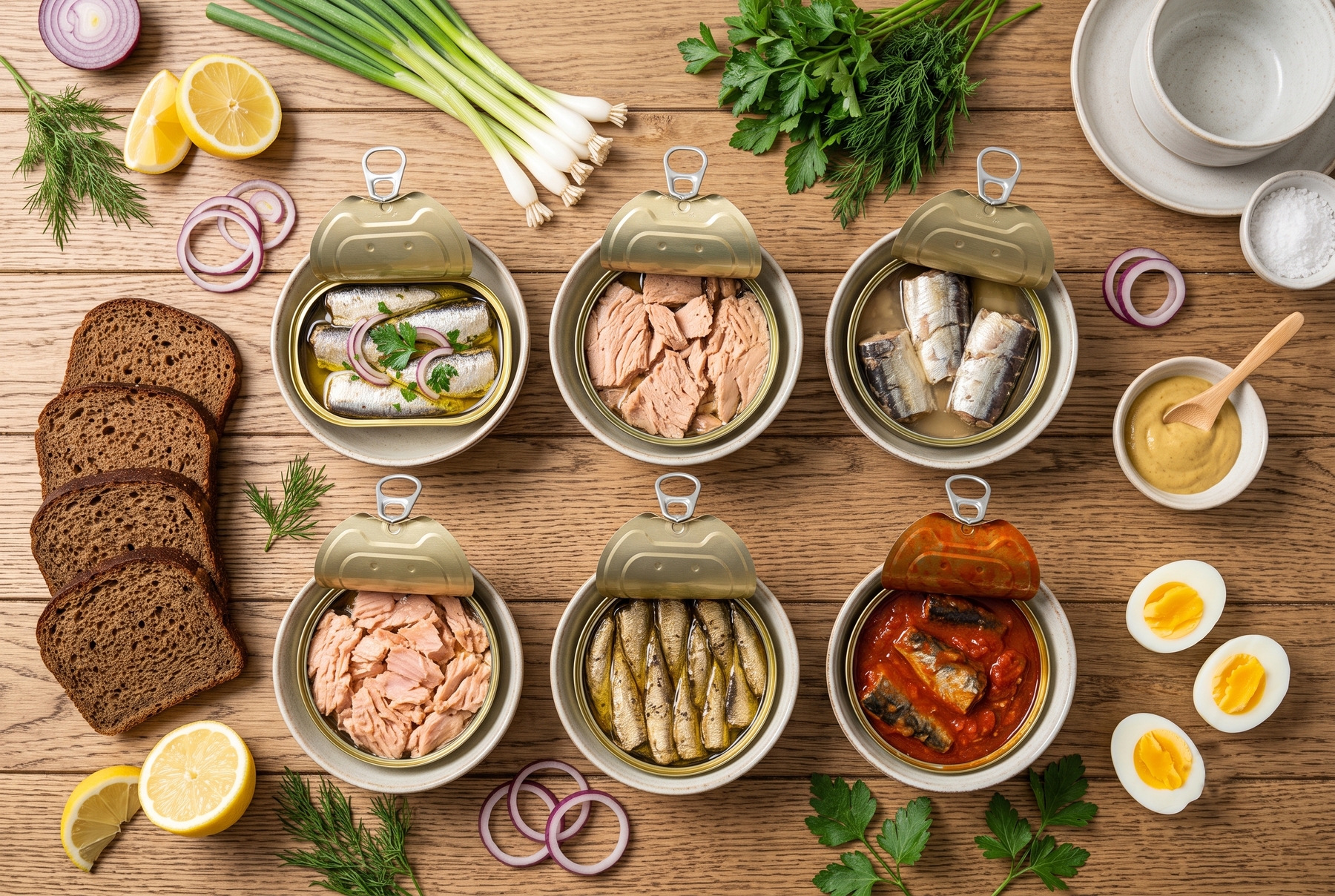
Each type of canned fish possesses its own character, ranging from dense saury to delicate pink salmon and spiced sprats.
The Secret of a Canned Fish Dish: 4 Elements
Almost any successful canned fish dish is built around a single framework: a base, a fresh accent, a sauce, and texture. Understanding this framework makes it easier to identify what a specific tin is missing. All 12 dishes below are constructed exactly like this, merely featuring different details. Once this pattern is clear, assembling personalized versions from whatever is available in the pantry becomes second nature.
The Base
This provides volume and satiety. Potatoes, rice, pasta, bread, eggs, beans, flatbread, dough, and roasted vegetables all serve this purpose. The base absorbs the salt and fat from the fish, distributing them evenly throughout the dish.
The Fresh Accent
This brings a refreshing quality. Cucumbers, radishes, green onions, parsley, dill, apples, pickled onions, and capers fit perfectly. Without this element, any canned food dish tends to feel heavy and overly utilitarian.
The Sauce or Acidity
Mayonnaise, sour cream, yogurt, mustard, lemon juice, tomatoes, or even the oil from the tin itself play a crucial role. Acidity is more important than fat here, as lemon or vinegar effectively cuts through the canned heaviness.
The Texture
The all-important crunch comes from croutons, toasted bread, seeds, fresh vegetables, or the golden crust of a casserole. Combining soft fish with a soft base without any textural contrast quickly turns the meal into a monotonous mush.
Five things typically ruin these dishes: adding mayonnaise by the ladleful, a complete lack of acidity, mashing the fish into a uniform paste where chunks are needed, salting before tasting (the tins are already salty), and prolonged heating that turns the fish into dry fibers.
12 Canned Fish Recipes
1. Canned Sardine Spread With Egg, Mustard, and Green Onion
Five minutes of effort yields a hearty toast spread featuring chunks of fish, egg, and sharp green onions.
- 1 tin of sardines in oil (about 240 g / 8.5 oz)
- 2 hard-boiled eggs
- 1 tsp Dijon mustard
- Juice of half a lemon
- 3–4 stalks of green onion
- Black pepper
Draining most of the oil while leaving about a spoonful is the first step. Coarsely mashing the sardines with a fork ensures that small, nail-sized pieces remain; a pâté-like smoothness is unnecessary here. Chopping the eggs and finely slicing the onions follows. Mixing everything with mustard and lemon juice, then finishing with black pepper, completes the preparation. The mustard and lemon cut through the fatty heaviness, while the onion provides a fresh crunch. Served on toasted rye bread, this spread effortlessly stands in for a full dinner.
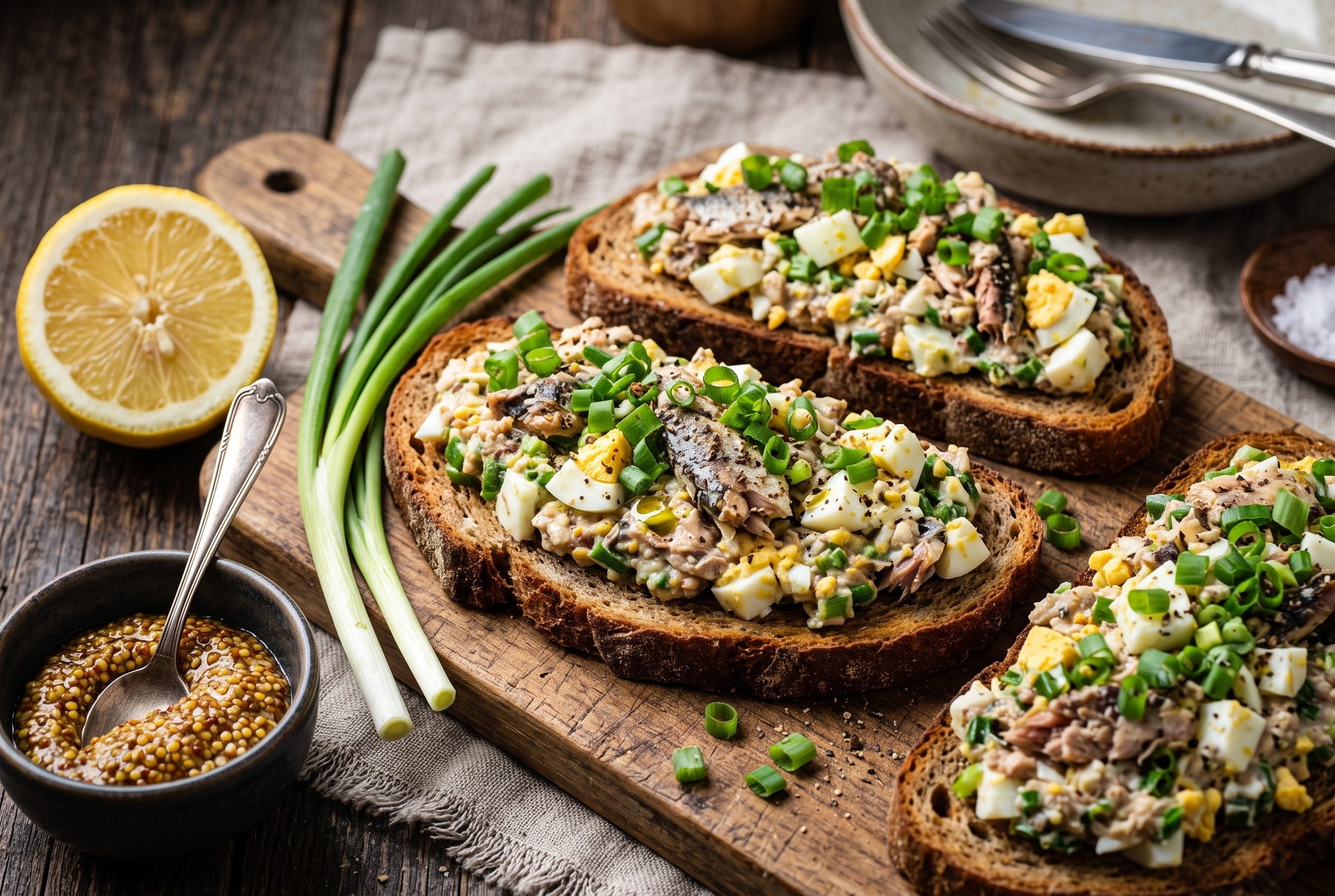
A quick and simple spread made from sardines, egg, mustard, and fresh green onions served on rye bread.
2. Hot Toasts With Sprats, Cheese, and Pickled Onion
Three components balance each other beautifully here: the smoky fish, the acidic onion, and the creamy cheese. Removing the onion makes it excessively rich, while omitting the cheese leaves it too sharp.
Soaking thinly sliced red onion for ten minutes in a mixture of vinegar, water, and a pinch of sugar prepares the accent. Spreading cream cheese or grating hard cheese onto the bread sets the base, followed by arranging two or three sprats on top. Baking this in the oven at 200 °C (400 °F) for 5 to 7 minutes works perfectly (a covered skillet or an air fryer also yields great results). Topping the hot toasts with the pickled onion and pepper finishes the dish. The onion plays a more vital role than a second layer of cheese, as its acidity cuts through the smokiness and prevents the toast from feeling too heavy.
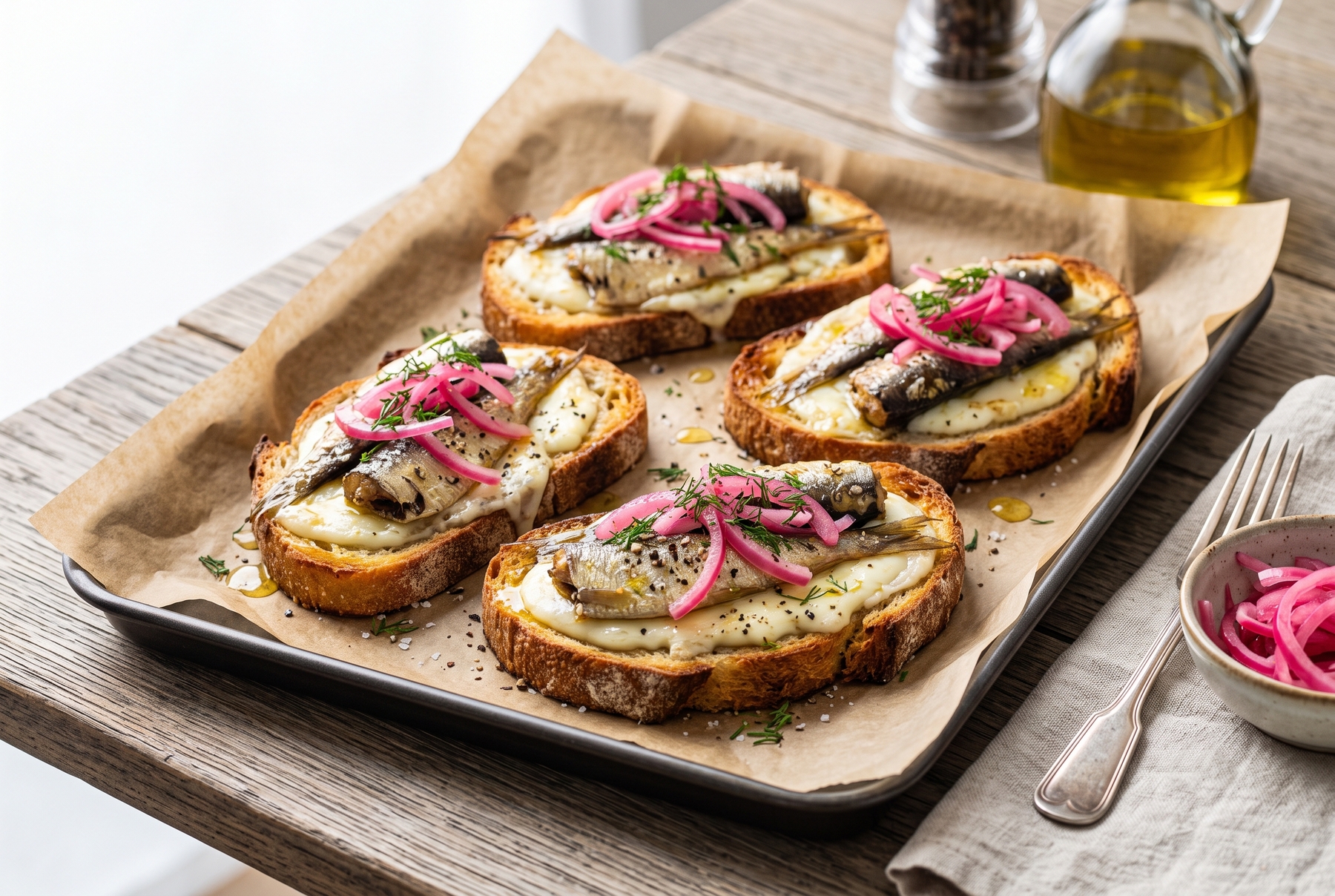
Crispy toasts featuring sprats and soft cheese, complemented by vibrant pickled onions for flavor balance.
3. Pink Salmon and Potato Patties
Yesterday’s mashed potatoes are vastly superior to freshly made ones, as they are denser and hold their shape better. Leftovers are nothing but an advantage in this recipe.
- 400 g (14 oz) mashed potatoes
- 1 tin of pink salmon (about 240 g / 8.5 oz)
- 1 egg
- 2 tbsp flour, plus extra flour or breadcrumbs for coating
- A bunch of dill
Draining the liquid from the fish and mashing it with a fork, removing any large bones that might be a nuisance, is the starting point (the small ones have long since softened). Mixing it with the mashed potatoes, egg, flour, and dill forms the base. The mixture needs to hold together without running. The primary mistake is creating an overly wet mixture, which causes the patties to fall apart in the skillet. If it feels too loose, incorporating an extra spoonful of flour or breadcrumbs helps. Shaping the patties, coating them, and frying them over medium heat for 3 to 4 minutes on each side produces a crust the color of burnt caramel. The inside is already fully cooked; the skillet’s only job is to provide that essential crunch.
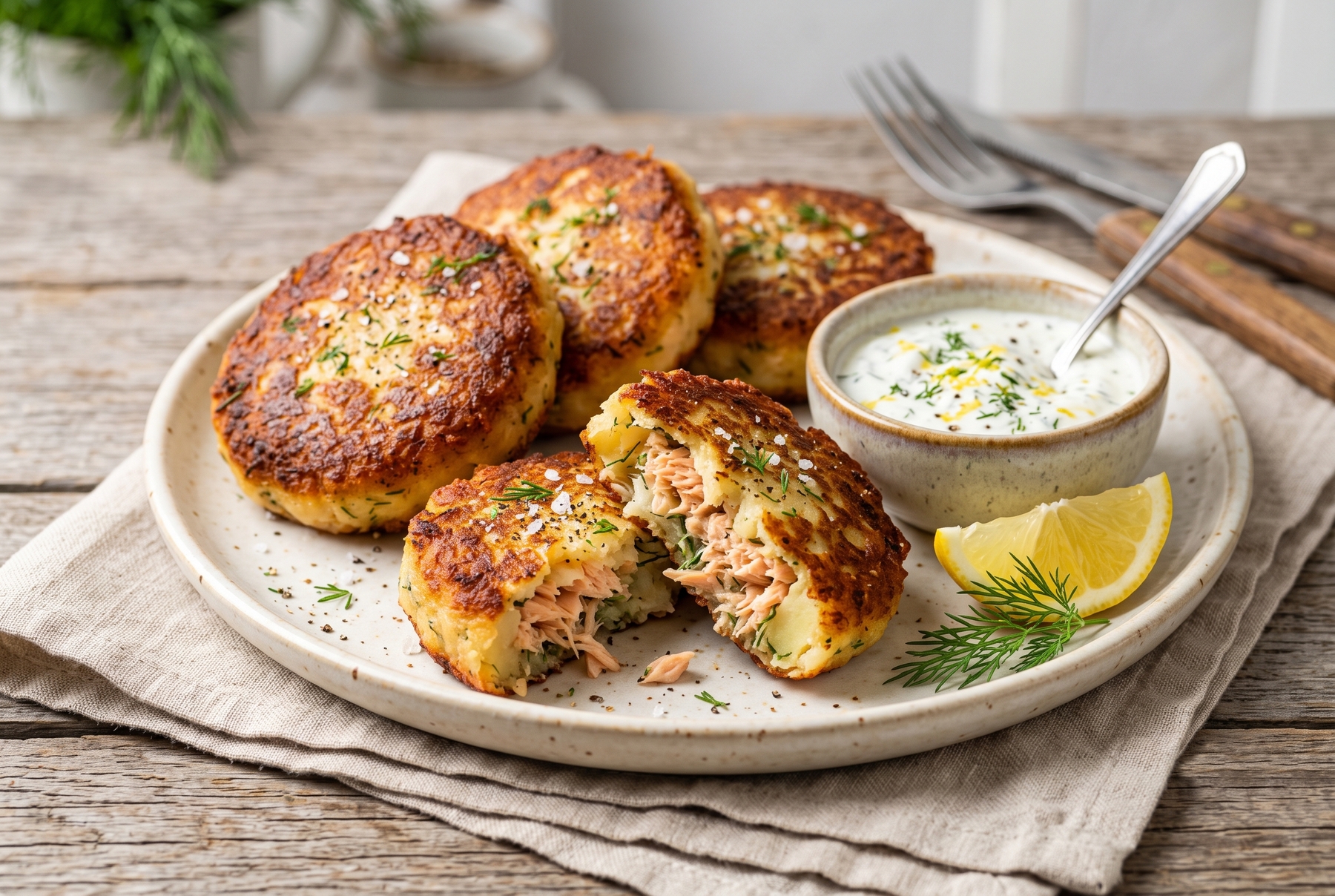
Tender potato patties with a juicy pink salmon filling, pan-fried to a perfect crispy crust.
4. Saury, Rice, and Herb Soup in 20 Minutes
This is a familiar soup featuring potatoes, rice, a vegetable base, and a tin of saury added at the very end. It is usually ruined by a single misstep: dumping the fish into the pot right at the beginning and boiling it into oblivion.
A better approach looks like this. Boiling three diced potatoes and 3 tablespoons of rice in two liters (about 2 quarts) of water sets the stage. After about ten minutes, sautéed onions and carrots are introduced. The fish makes its entrance at the very end. Gently placing large chunks of saury into the pot, along with a spoonful of the oil from the tin, allowing the soup to return to a gentle simmer, and turning off the heat after two minutes is all it takes. The oil from the tin imparts richness and aroma to the soup, but pouring the entire amount is unnecessary; one or two spoonfuls are perfectly sufficient. Adding the dill directly into the bowls rather than the pot preserves its freshness. The resulting broth is fragrant without requiring a long cooking time, as the saury only needs to be warmed through, not disintegrated into dry threads. For a thicker consistency, mashing a couple of potato pieces directly in the pot with a spatula thickens the soup without the need for flour or cream.
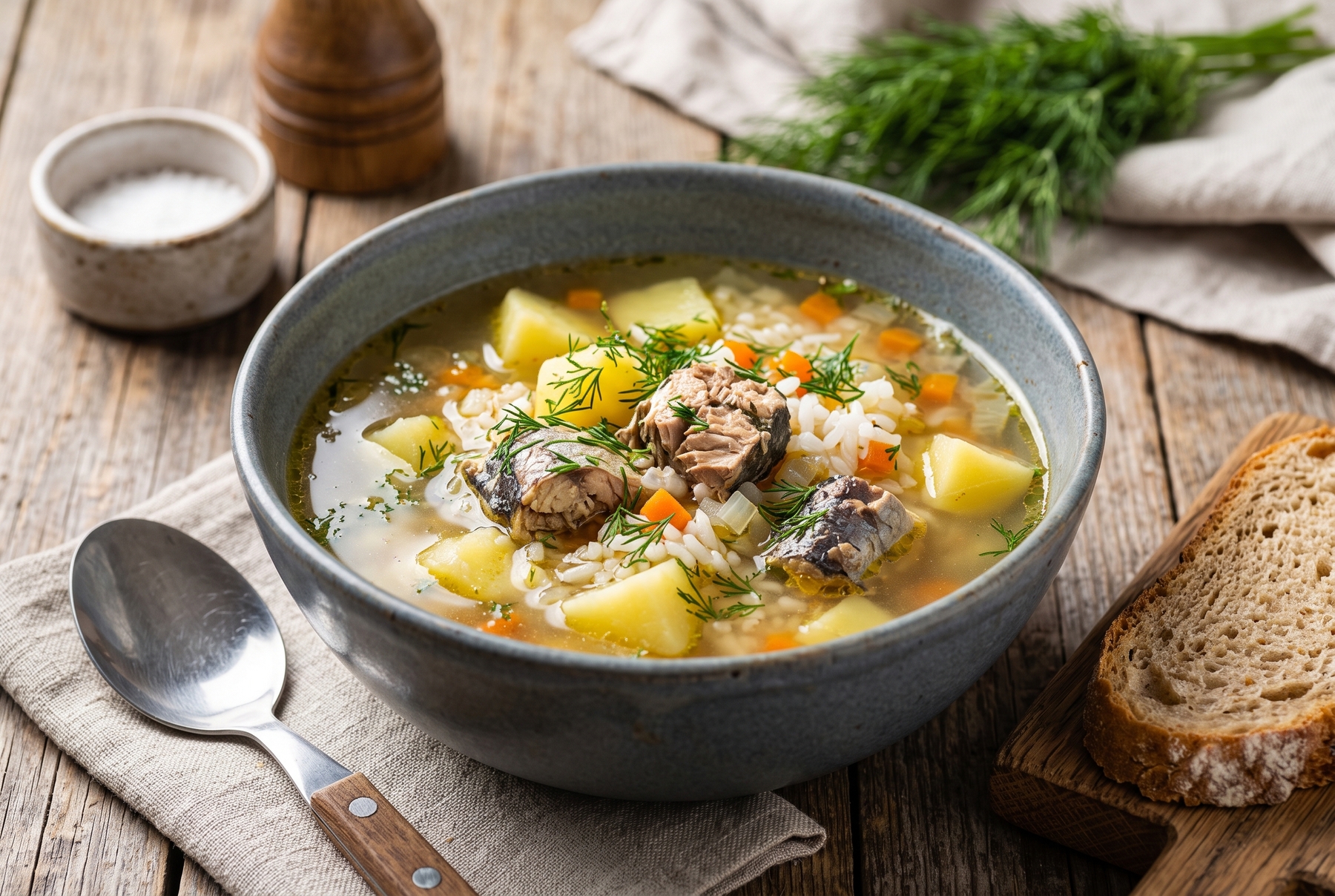
A fragrant homemade soup with saury and rice forms a hearty first course that takes only 20 minutes to prepare.
5. Pasta With Canned Tuna, Tomatoes, and Garlic
A 15-minute dinner, with 10 of those minutes spent boiling the pasta.
- 250 g (8.8 oz) spaghetti or penne
- 1 tin of tuna
- 400 g (14 oz) canned crushed tomatoes
- 2 cloves of garlic
- Olive oil, capers, or chopped pickled cucumber
While the pasta boils, sautéing crushed garlic in oil until fragrant begins the sauce. Pouring in the tomatoes, breaking them down with a spatula, and letting the sauce bubble for 5 to 7 minutes builds the flavor base. The tuna does not need to be fried; it is already cooked and would only dry out in a hot skillet. Folding it gently into the sauce in flakes one minute before adding the pasta, alongside the capers, warms it perfectly. Combining this with the cooked pasta and a half-ladle of pasta water creates a cohesive dish. Using a salty pickled cucumber instead of capers works exceptionally well as a reliable alternative.
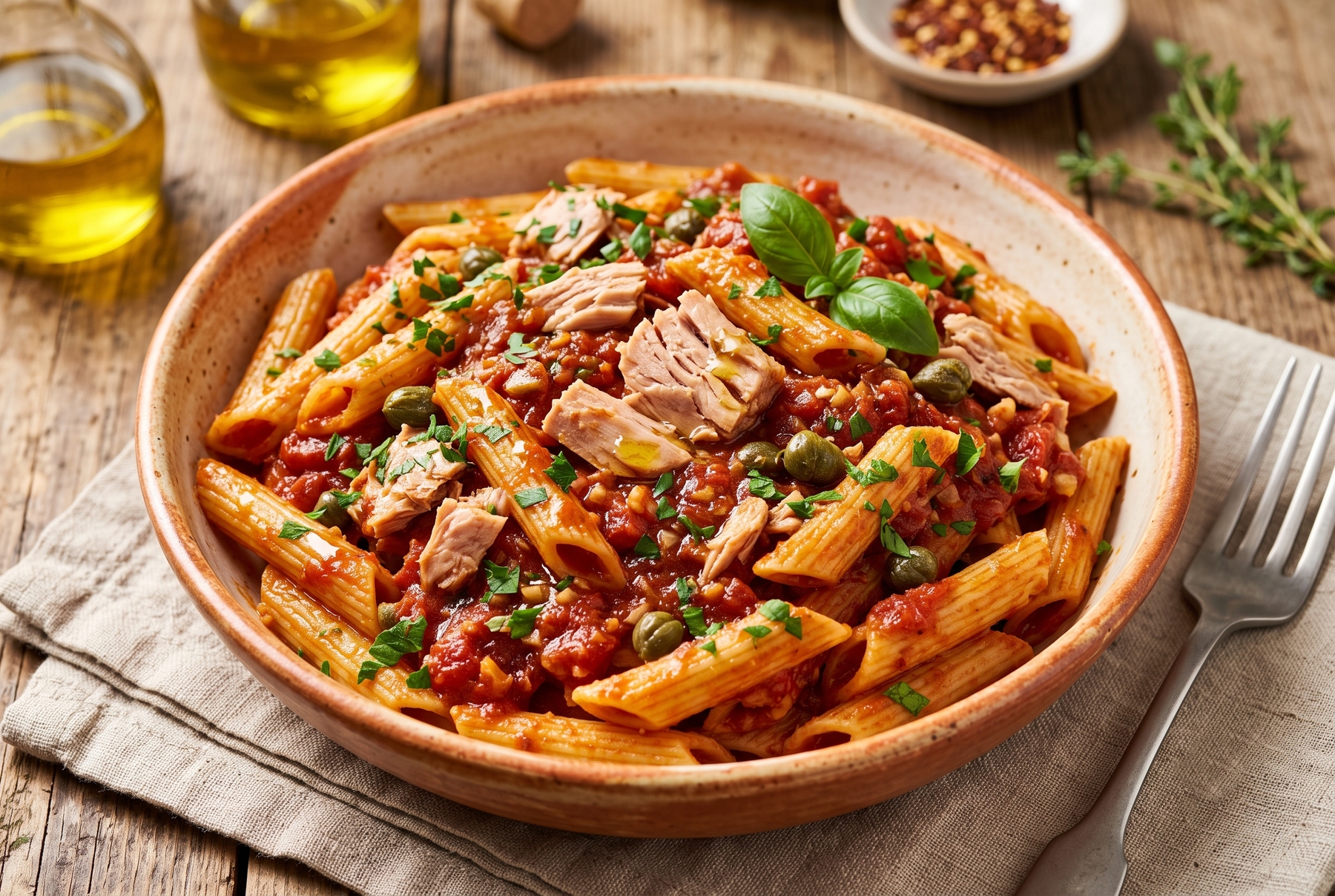
Classic Mediterranean pasta featuring canned tuna in a rich tomato and garlic sauce.
6. Canned Fish, Cucumber, and Egg Rice Bowl
The precise ingredients matter less than the order here: rice at the bottom, fish and fresh vegetables on top. Placing warm rice in a bowl establishes the foundation, followed by large chunks of fish (saury, tuna, or mackerel work nicely), halved boiled eggs, and thinly sliced half-moons of fresh cucumber. A dressing made from a spoonful of soy sauce, a teaspoon of lemon juice, and a spoonful of oil from the tin or sesame oil ties it together. For a presentation closer to Asian cuisine, adding sesame seeds and a sprig of green onion elevates the aesthetic. The rice absorbs the salt, the cucumber provides a cooling effect, and the egg binds the flavors. Once the rice is warm, lunch is practically ready.
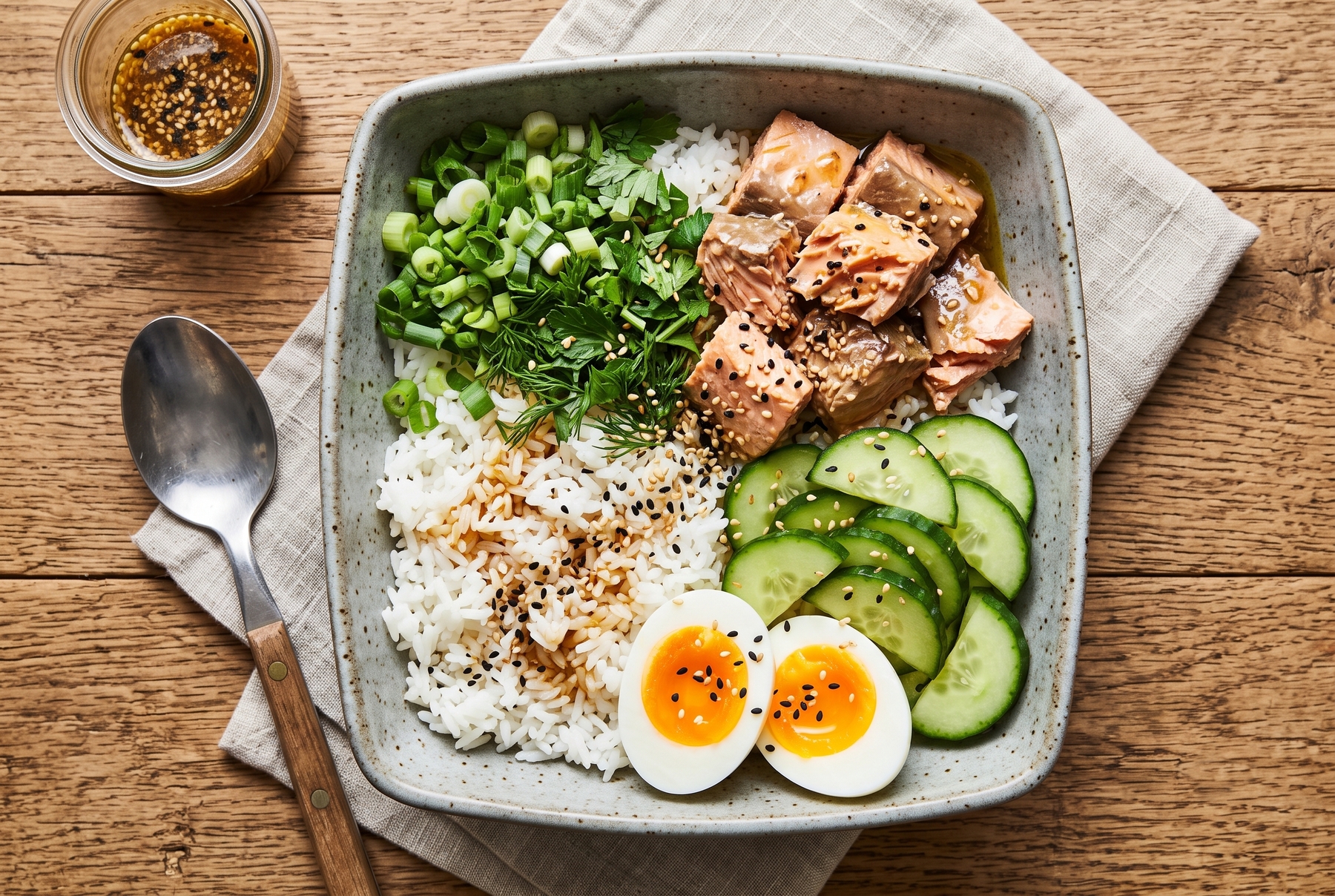
A healthy, fast bowl combining warm rice, canned fish, crispy cucumber, and a boiled egg.
7. Mackerel, White Bean, and Red Onion Salad
A satisfying salad that skips the potatoes and heavy mayonnaise. It relies on a rinsed and drained tin of white beans, a tin of mackerel in chunks, half a red onion sliced into the thinnest of feathers, and an abundance of parsley. The dressing consists of 2 tablespoons of olive oil, 1 tablespoon of lemon juice, and a teaspoon of mustard. The beans serve as a soft, neutral base, the onion delivers sharpness, and the parsley brings freshness. Scalding or marinating the onion beforehand softens its bite if the raw flavor is too aggressive. Salting should only happen after tasting, as the mackerel already provides plenty.
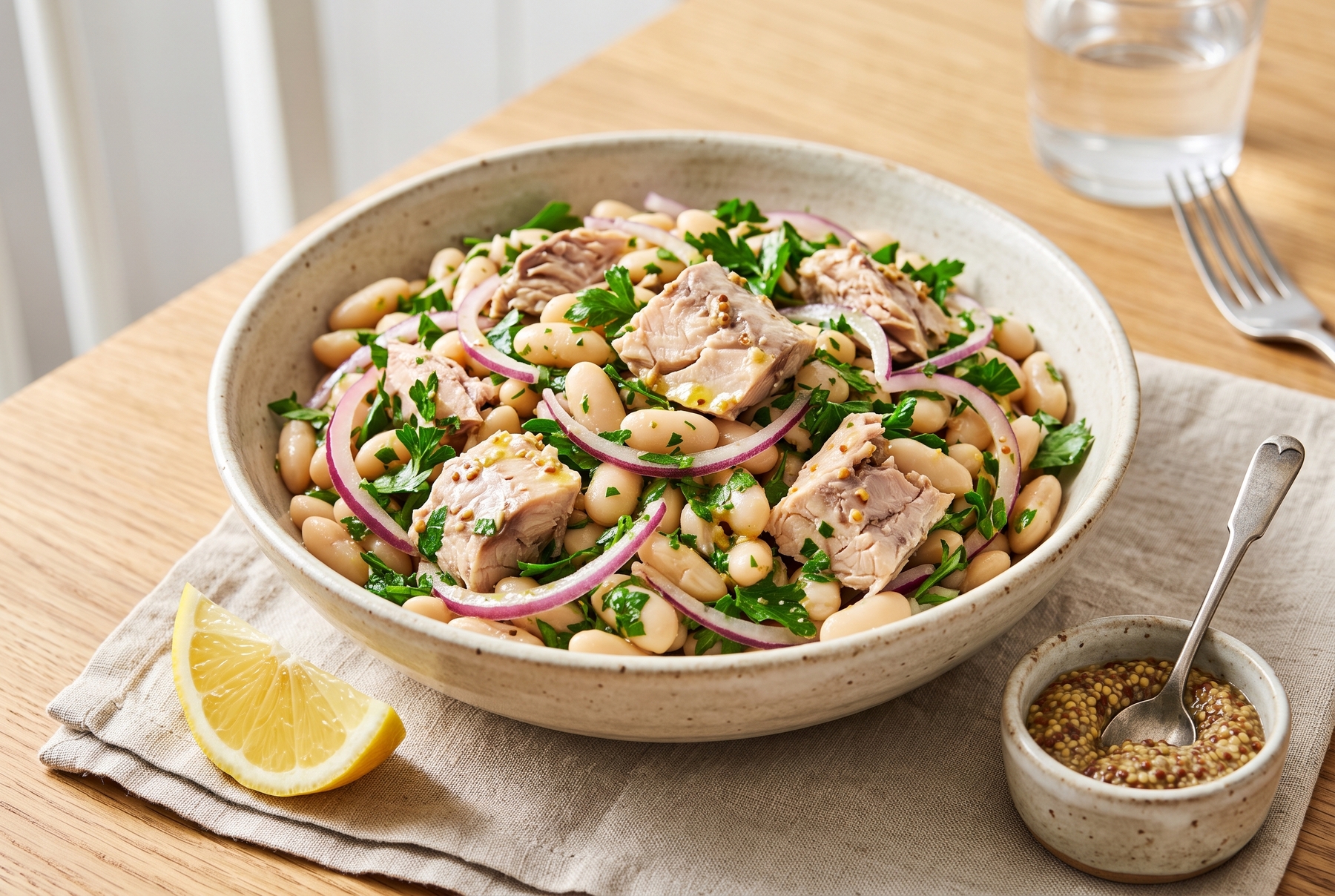
A nutritious, light salad featuring white beans, tender mackerel, and zesty red onions.
8. Tuna and Crunchy Vegetable Flatbread Roll
An excellent recipe for a packed lunch. The main enemy of a wrap is a soggy flatbread (lavash) that falls apart by midday.
Draining the liquid from the tuna and mixing it with a spoonful of yogurt or mayonnaise and mustard begins the process. Placing lettuce leaves on the flatbread establishes a barrier between the sauce and the dough, followed by spreading a thin layer of the fish mixture, chopped egg, and julienned cucumber and carrots. A thin layer of sauce is essential, as it must bind the ingredients rather than make them soggy. Rolling it tightly, pressing it down, and slicing it in half completes the roll. In a lunchbox, this wrap stays firm and appetizing until noon. The vegetables can easily be swapped for bell peppers, radishes, or cabbage.
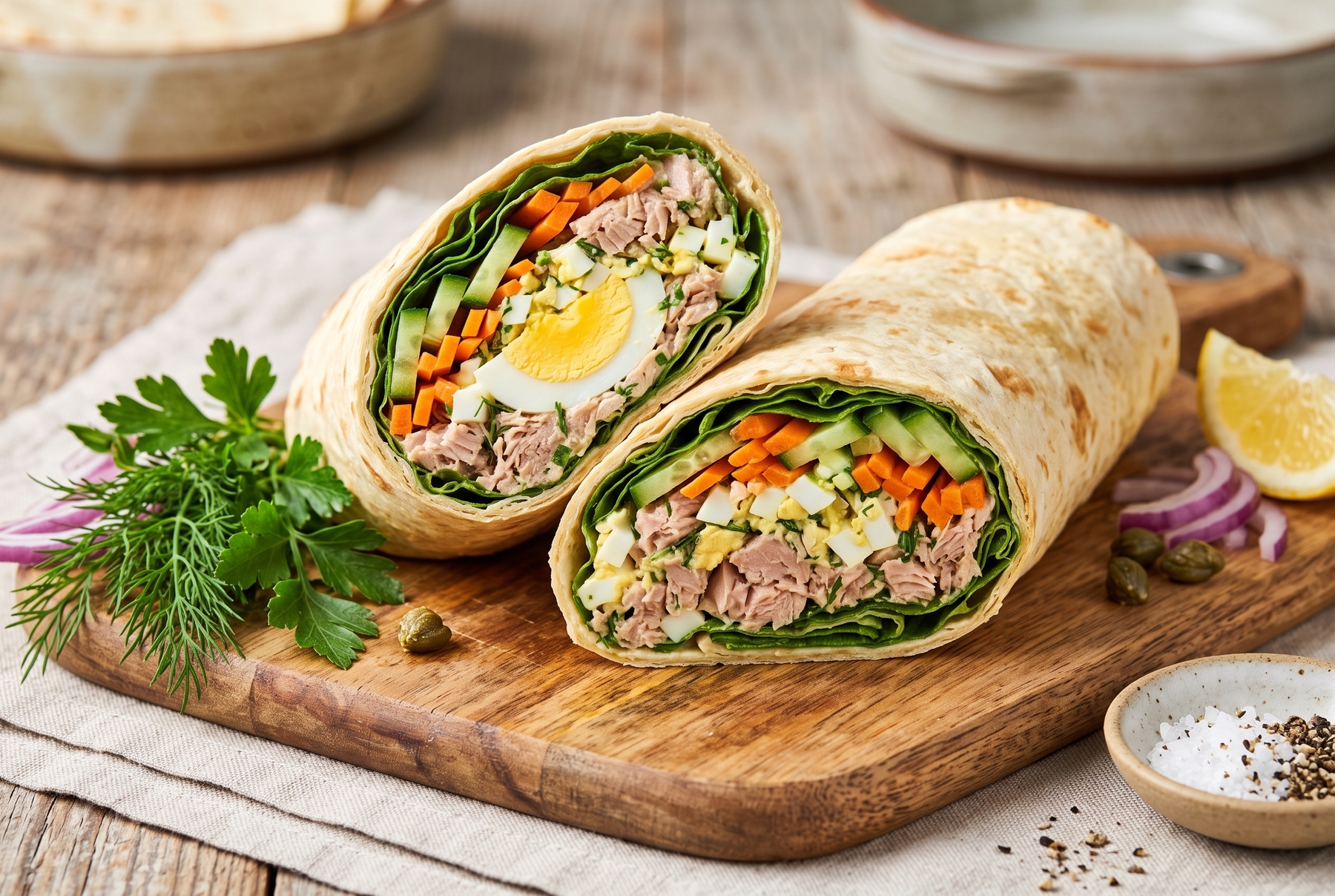
A convenient flatbread roll packed with juicy tuna and crunchy fresh vegetables, perfect for a hearty lunch on the go.
9. Potato and Fish Casserole With a Creamy Custard
Here, the tin disappears between layers of potatoes, shedding any impression of being a backup option.
- Boiling 700 g (1.5 lb) of potatoes until almost tender and slicing them into rounds starts the preparation.
- Slicing an onion into half-moons and sautéing it until soft provides the aromatic base.
- Layering the baking dish follows: half of the potatoes, large chunks of fish (saury or pink salmon, thoroughly drained), the sautéed onions, and the remaining potatoes.
- Pouring over a mixture of 200 ml (6.8 fl oz) of cream or sour cream whisked with two eggs, then sprinkling with cheese or breadcrumbs finishes the assembly.
- Baking at 180 °C (350 °F) for about 25 to 30 minutes yields a beautifully browned crust.
Excess water usually ruins a casserole, stemming from undercooked potatoes and leftover liquid from the tin. Pre-cooking the potatoes almost to completion and using well-drained fish ensures the custard sets evenly without leaving puddles at the bottom.
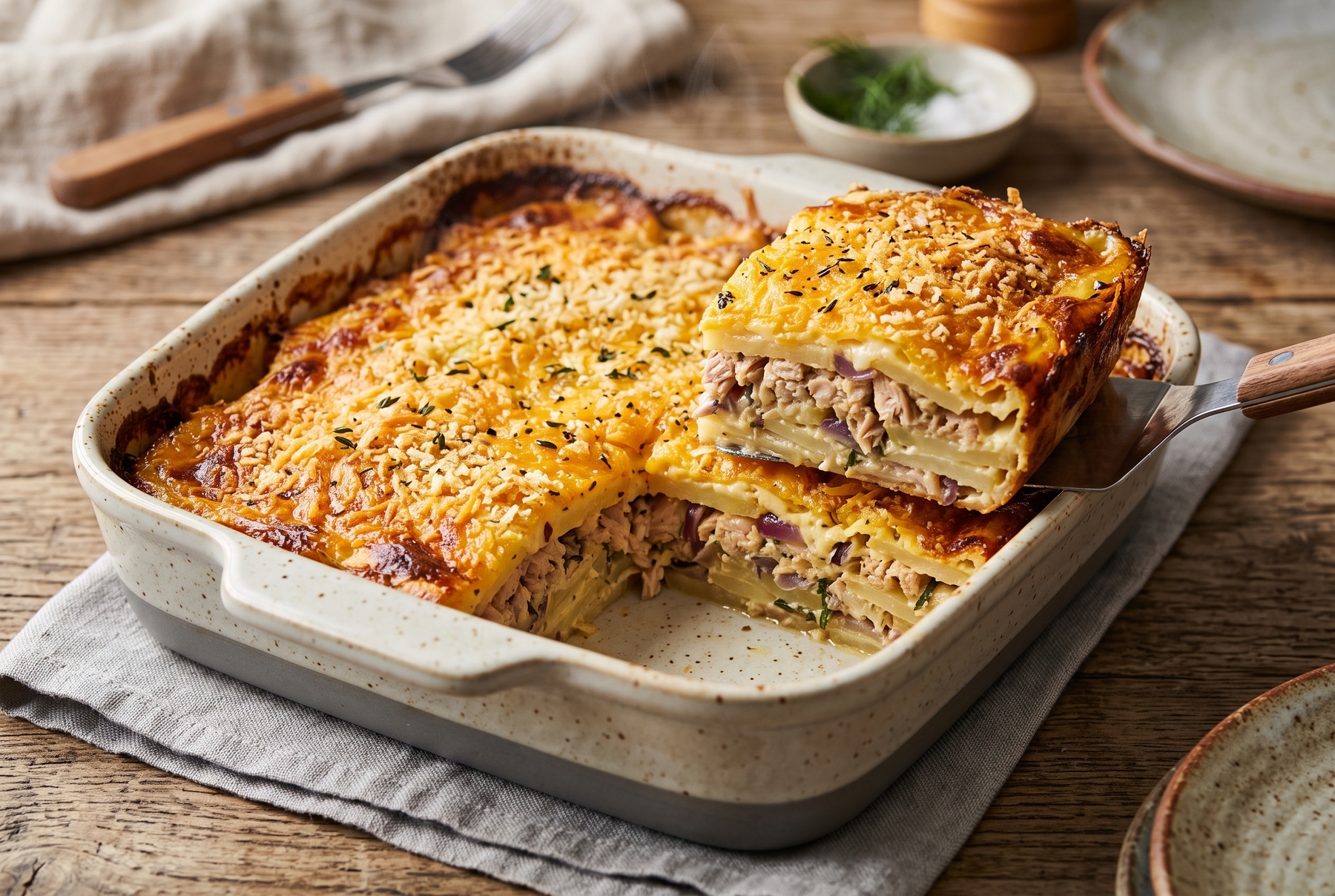
A satisfying potato casserole layered with canned fish and a delicate creamy sauce.
10. Quick Batter Pie With Fish and Green Onion
This is a rapid batter dough requiring a cup each of sour cream and flour, 2 eggs, a teaspoon of baking powder, and a pinch of salt.
The filling consists of a drained tin of saury or pink salmon, coarsely mashed, alongside a large bunch of chopped green onions and a couple of chopped boiled eggs. Tasting the filling before assembly is crucial, as the canned fish provides ample salt, often making additional seasoning unnecessary.
Pouring half the batter into a mold, layering the filling evenly, and topping with the remaining batter sets the pie up for the oven. Baking at 180 °C (350 °F) for 35 to 40 minutes results in a matte golden top, with a toothpick emerging clean from the dough. The eggs and green onions provide the necessary moisture. Adding the entire bunch of onions is highly recommended, as it seamlessly melts into the filling. Fatty fish like saury and sardines perform best in a batter pie; if using pink salmon, adding a spoonful of sour cream directly into the filling is a wise adjustment. Ready-made puff pastry follows the same pattern but bakes even faster.
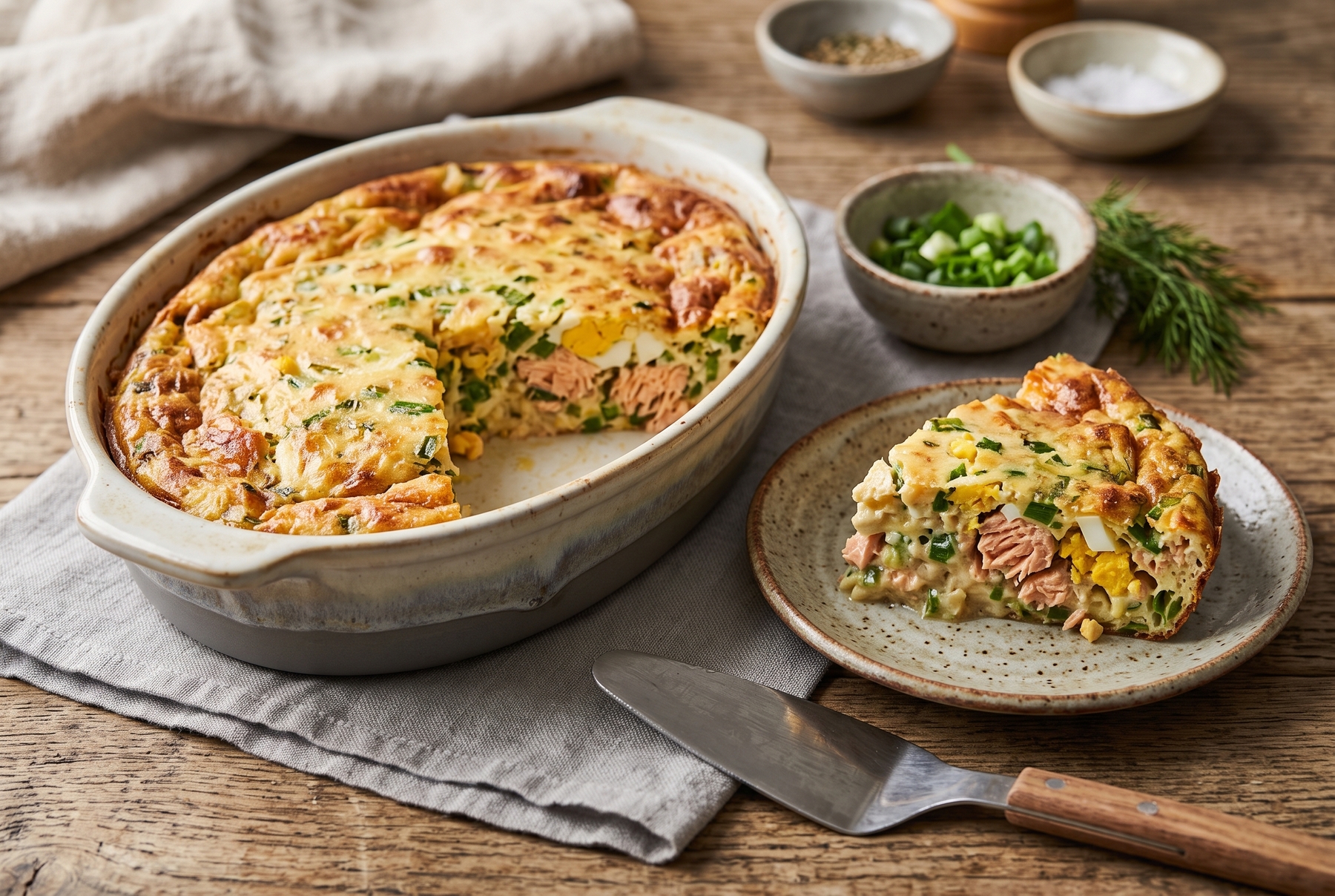
A fragrant batter pie filled with canned fish, boiled eggs, and plenty of fresh green onions.
11. Deviled Eggs Stuffed With Fish and Pickled Cucumber
Deviled eggs often carry a dated buffet reputation, but introducing pickled cucumber and mustard quickly modernizes them. Mashing the yolks of six boiled eggs with half a tin of sardines or tuna, a spoonful of sour cream, a teaspoon of mustard, and finely chopped pickled cucumber creates the filling. The cucumber acts as a working element rather than a garnish, offering crunch and acidity to counteract the rich smoothness of the yolk. Filling the egg whites and serving them on a bed of lettuce leaves, garnished with paprika, herb oil, or store-bought crispy fried onions, transforms them. The result is not a museum piece appetizer, but a lively addition to a festive dinner spread.
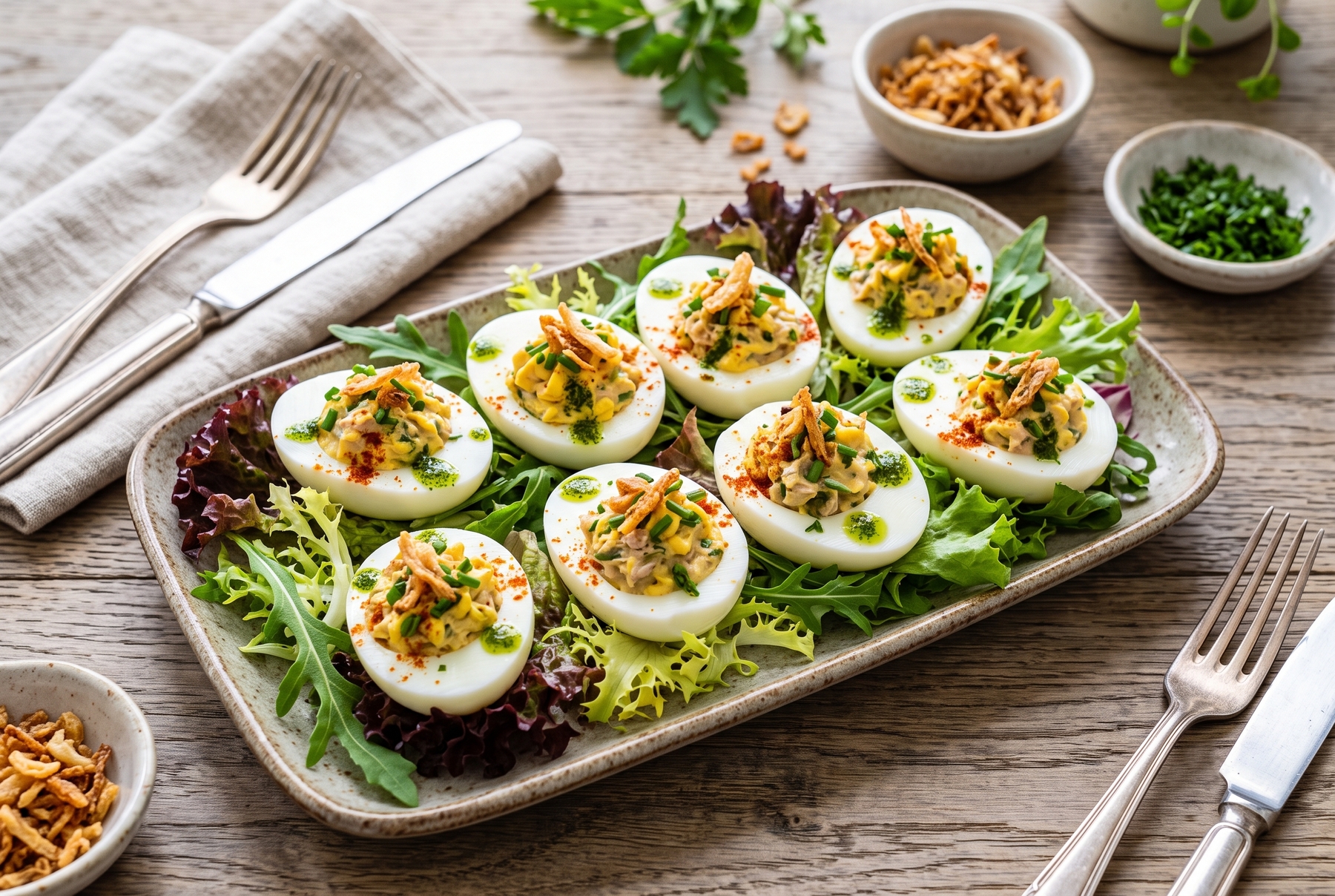
A festive appetizer of deviled eggs filled with a canned fish and crunchy pickled cucumber mixture.
12. Warm Potato Salad With Sardines and Mustard Dressing
Boiling the potatoes in their skins yields the best texture for this salad. Cooking 500 g (1.1 lb) of young or small potatoes in their jackets and quartering them while still warm is the first step. The dressing requires 2 tablespoons of the oil from the tin or olive oil, 1 tablespoon of lemon juice, and a teaspoon of whole-grain mustard.
The secret lies in the temperature. Warm potatoes absorb the dressing like a sponge, whereas cold ones simply slide around in the oil. Therefore, assembling the salad immediately, while the potatoes are still steaming, is imperative. Topping it with chunks of sardines, pickled onions, dill, and pickled cucumbers or capers completes the dish. It can be enjoyed warm or at room temperature, but it must be dressed while warm.
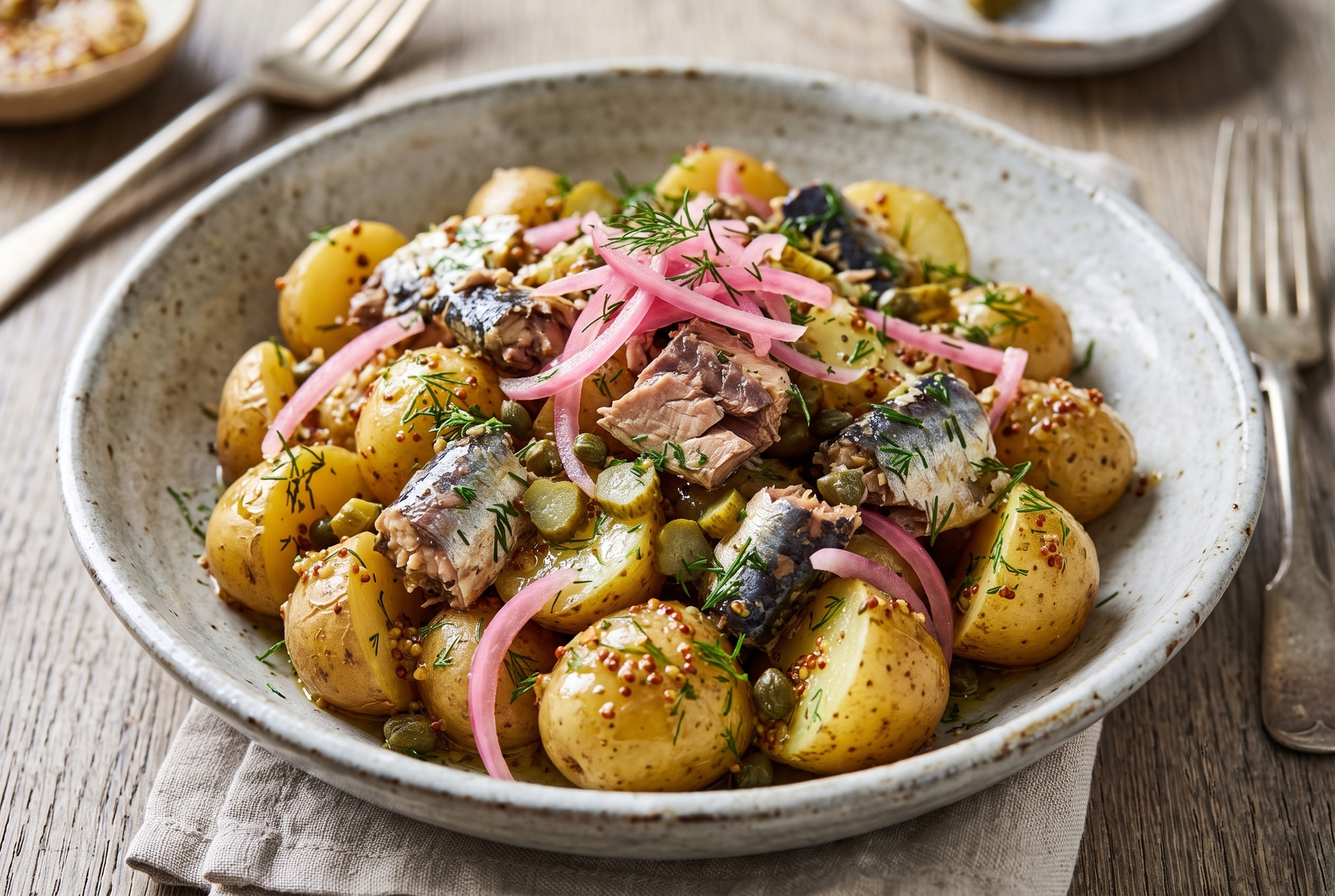
A savory warm potato salad mixed with canned sardines, pickled onions, and a zesty mustard dressing.
How to Adapt a Canned Fish Recipe to the Tin Already in the Pantry
The tin sitting in the cupboard rarely matches the exact tin called for in a recipe, and that is perfectly fine. A culinary framework exists precisely so that details can be swapped on the fly. Focusing on the packing liquid and the flavor profile rather than the specific name of the fish dictates the right approach.
If the Fish is Packed in Oil
The oil from the tin serves as a ready-made part of a dressing or a flavorful base for sautéing onions. However, pouring it entirely into a dish automatically is a mistake; dosing it by the spoonful prevents the fat from overpowering everything else.
If the Fish is Packed in Water or Its Own Juice
This fish lacks fat. Incorporating a rich or creamy element such as butter, sour cream, yogurt, eggs, or cheese is essential. Otherwise, the resulting dish will taste unpleasantly lean and dry.
If the Fish is Packed in Tomato Sauce
This acts as a semi-prepared sauce base. Logical destinations include soups, vegetable stews, rice, pasta, and beans. It is best to avoid routing tomato-packed fish into salads or spreads.
If the Flavor is Too Intense
Mackerel or kilka should be diluted with a neutral base like potatoes, eggs, bread, or beans. A squeeze of lemon cuts through the richness, while fresh herbs help tame the heavy, fishy aroma.
The Pantry of Salvation: What to Keep Alongside the Tins
This is not a doomsday stockpile, but rather a toolkit for a rapid weeknight dinner. Eggs, potatoes, rice, pasta, a tin of beans, flatbread, mustard, lemons (or bottled juice), pickled cucumbers, green onions growing on the windowsill, and croutons or breadcrumbs form the foundation. Half of this list already resides in most refrigerators; the rest can be purchased once a month and has a long shelf life. With such a pantry, any tin of canned fish transforms into a soup, salad, pasta, roll, or spread within 15 to 20 minutes. This shelf rescues an ordinary evening: pulling out a tin and adding potatoes, eggs, or bread immediately points toward a delicious direction.
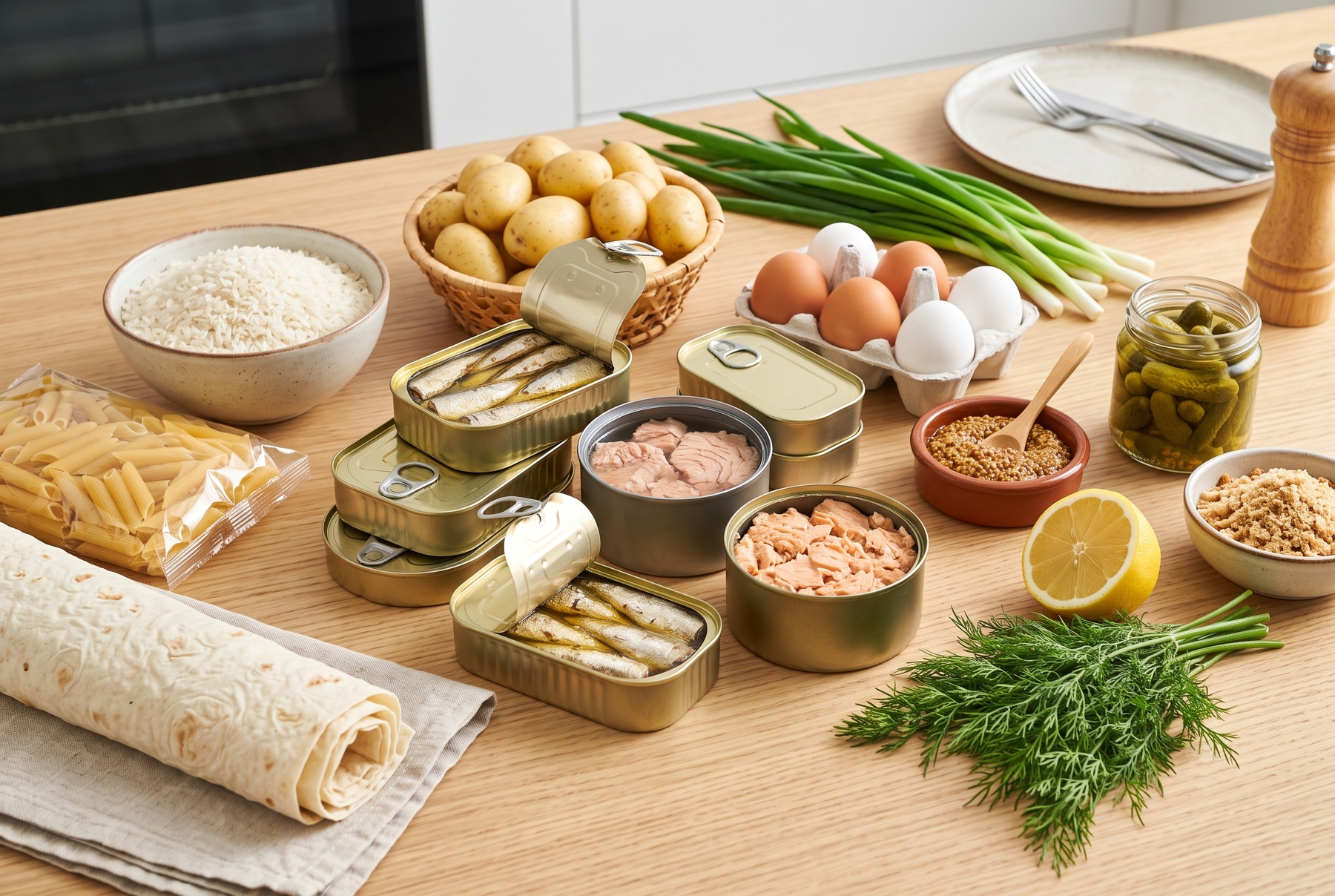
The "pantry of salvation": basic ingredients that help quickly turn a tin of canned fish into a complete dinner.
6 Mistakes That Ruin Canned Fish Dishes
- The fish is added to a hot dish too early and boils until it turns into dry fibers. It should be added at the very end, just to warm through.
- The fish is mashed into a uniform paste where chunks are required. Two or three gentle motions with a fork are sufficient.
- Acidity is entirely forgotten. Lemon, vinegar marinades, or mustard are mandatory almost everywhere.
- The dish is salted before tasting. Canned goods already bring their own salt, often with a surplus.
- Mayonnaise is added by the ladleful, suffocating the fish. One spoonful of sauce binds; three spoonfuls bury.
- Leaving leftovers in an open tin or storing them for too long. They must be transferred to a lidded container and consumed within one to two days.
Canned fish is not a capitulation in front of the stove, but rather a convenient assistant offering minimal effort for a highly noticeable result. The very same tin of saury can feature as a breakfast spread on Monday, a soup on Wednesday, and a pie filling on Saturday. Sitting on the edge of a plate next to mashed potatoes remains just one of dozens of scenarios, and certainly not the most interesting one. The next time a tin is opened, reaching for the potato masher immediately is unnecessary. Smelling the oil and looking at the distinct chunks reveals that the center of the plate, not its edge, is already waiting inside.
0 comments