
In a standard diet, protein appears effortlessly. Breakfast features eggs or cottage cheese, lunch brings cheese, yogurt, cutlets, or broth-based soups, and dinner centers around chicken, fish, or meat with a side dish. Even if a person has never read a single nutritional article and has no idea how many grams of protein they need daily, they likely consume enough. Meat, fish, and dairy products take the center of the plate by default, ingrained in our cultural automation.
Transitioning to a vegan diet eliminates this automation. Removing meat, fish, eggs, and dairy means adding more vegetables, grains, fruits, bread, and nuts. The plate looks vibrant, colorful, and “right.” Yet, hunger returns within two hours despite eating a seemingly sufficient meal. One of the most common reasons lies in the absence of a stable protein center. The food volume seems large, the plate looks beautiful, and fiber is abundant, but the satiating ingredient remains missing.
A vegan plate becomes balanced the moment a new protein center takes its place.
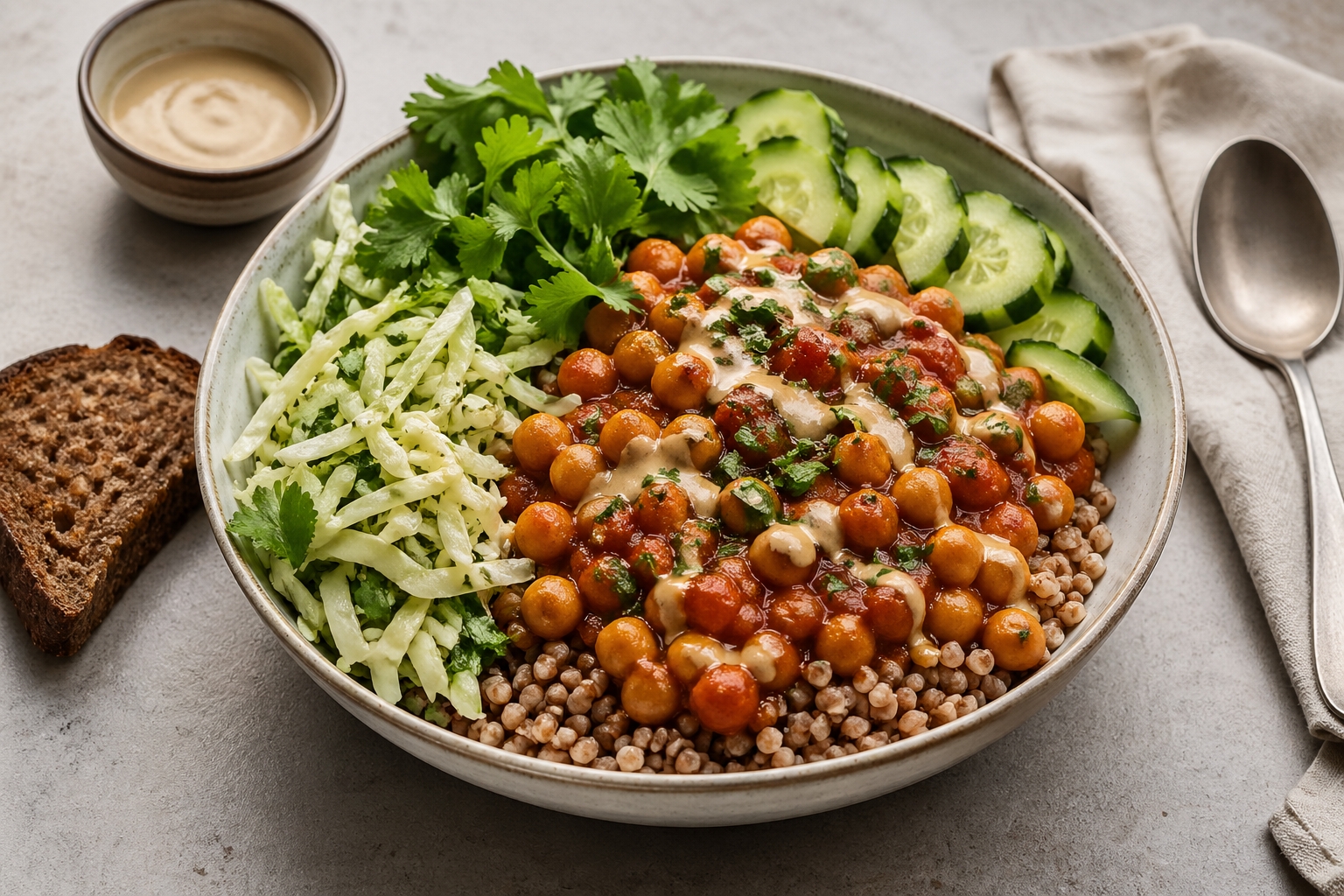
A balanced vegan plate: legumes in a rich sauce serve as the primary protein center, perfectly complemented by complex carbohydrates and fiber.
Table of Contents
- How Much Protein Do You Need a Day
- The Main Principle: Every Meal Needs a Protein Anchor
- Plant-Based Protein: A Team, Not a Single Superfood
- Affordable Protein Sources: Building Your Diet
- The Vegan Plate Builder
- Breakfast: Where Vegans Often Lose Protein
- Lunch and Dinner: Making Plant-Based Meals Satiating
- Simplifying Legume Prep
- Soy Products
- Nuts, Seeds, and Peanut Butter: Healthy But Insufficient
- Vegan Protein for the Lazy: Quick Formulas
- Sample Vegan Daily Menus
- Common Pitfalls in a Vegan Diet
- Beyond Protein: What Else to Keep in Mind
- The Final Cheat Sheet: How to Audit Your Plate
How Much Protein Do You Need a Day
Official guidelines recommend about 0.8 g of protein per kilogram (0.36 g per pound) of body weight daily. This does not mean you need to weigh every spoonful of beans before eating it, but understanding the general numbers proves useful.
For reference:
- At 60 kg (132 lbs) — roughly 50 g of protein per day;
- At 70 kg (154 lbs) — about 58 g;
- At 80 kg (176 lbs) — about 66 g.
Evaluating what actually provides protein in a typical vegan diet makes the picture clearer. A bowl of water-based oatmeal with an apple and a spoonful of honey offers roughly 4–5 g of protein. A large leafy green salad with tomatoes and cucumbers adds another 2–3 g. A plain avocado toast yields 4–5 g. Ultimately, breakfast plus a snack leaves us hovering around 11–13 g, against a daily requirement of 50+ g.
The numbers offer a sobering reality: a mountain of vegetables and grains does not guarantee your protein quota.
Who Should Avoid Guesswork
Certain groups should not build their diets solely based on articles, no matter how good they are. This includes pregnant and nursing women, children and teenagers, the elderly, high-performance athletes, people with chronic illnesses, and those who abruptly transition to a plant-based diet while losing weight rapidly. Consulting a doctor remains the best approach here.
The Main Principle: Every Meal Needs a Protein Anchor
What Is a Protein Anchor
It is the ingredient that anchors the plate and ensures satiety for three to four hours instead of just an hour or an hour and a half. It transforms a pretentious snack into a fulfilling lunch.
The best plant-based protein sources for these anchors include lentils, beans (white, kidney, black, or pinto), chickpeas, peas, tofu, tempeh, seitan (a protein product made from wheat gluten, unsuitable for celiac or gluten-free diets), textured soy protein, edamame, bean and lentil pâtés, and hummus.
Hummus deserves a special mention: it offers a solid protein contribution, especially with a generous portion. A thin spread on a cracker works more as a flavorful condiment than a full-fledged protein center. A substantial meal requires pairing it with extra chickpeas, lentils, beans, or tofu.
Registered dietitians support this approach, unlike esoteric bloggers.
What Should Not Count as a Primary Protein Source
A handful of almonds in your pocket, avocado on toast, oat milk in your coffee, a leafy salad with tomatoes, mushrooms in any quantity, or grains without legumes—these are all wonderful foods with numerous benefits, but they do not serve as protein anchors. They either contain too little protein, are consumed in portions that are too small, or fail to meet your daily amino acid requirements.
Avocado makes toast more delicious but does not fulfill your protein quota.
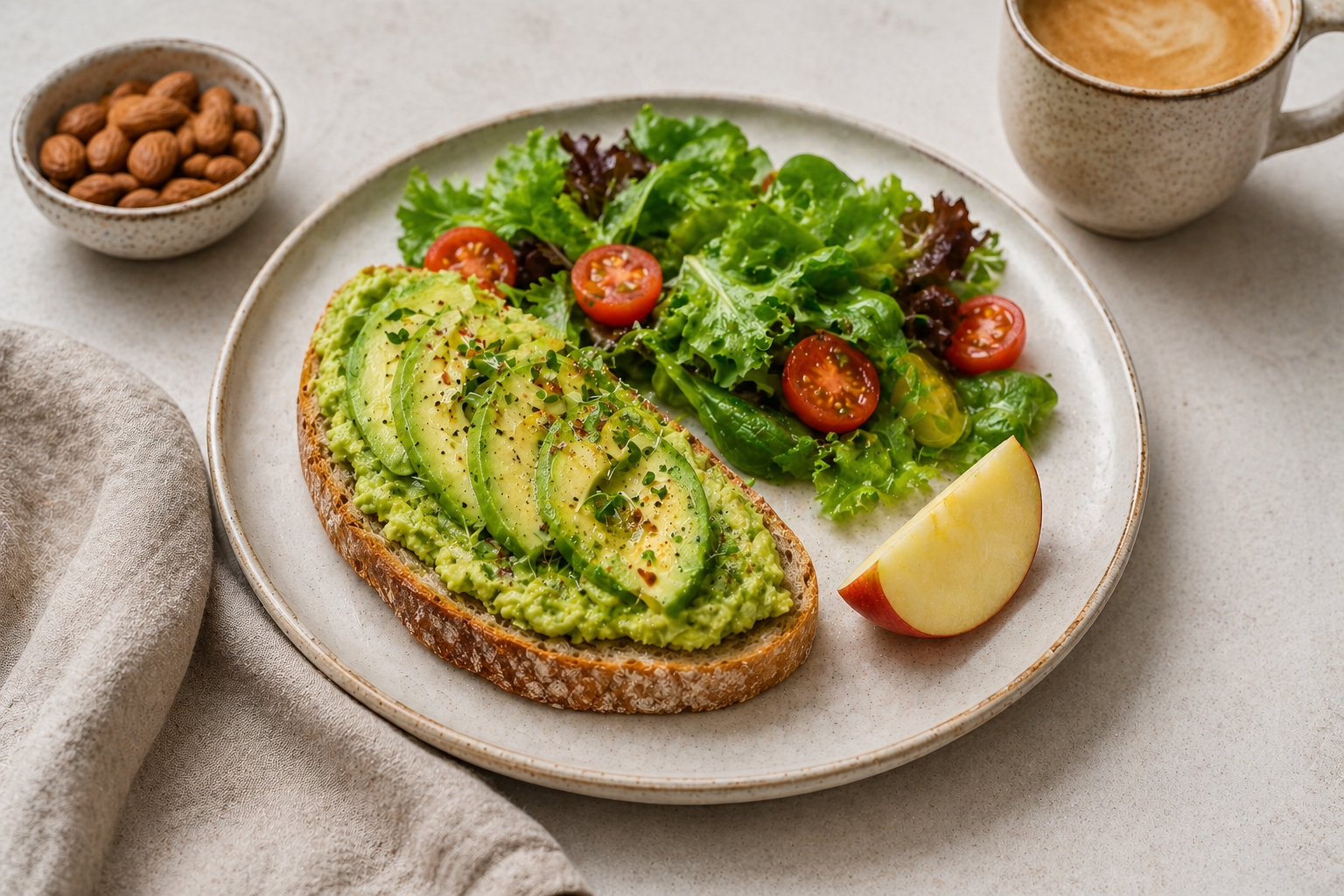
Avocado toast provides healthy fats and a delicious addition, but it lacks the necessary protein anchor to sustain long-term satiety.
Plant-Based Protein: A Team, Not a Single Superfood
Why You Should Stop Searching for the Ideal Meat Substitute
Many people begin their transition to plant-based eating by searching for one perfect ingredient to handle everything: taste, protein, familiarity, and satiety. They seek a single product to replace the traditional cutlet once and for all. Such a product does not exist. A plant-based diet functions as a system where different ingredients accomplish different tasks.
A single day easily comes together from various sources. Morning brings oatmeal made with soy milk and peanut butter, yielding 10–12 g of protein. Afternoon features lentil stew, adding another 15–18 g. Evening centers on rice and beans or pasta with soy mince. A snack consists of hummus with crackers. By nighttime, everything balances out without a single gram of meat or fish.
Amino Acids
Protein consists of amino acids. Different plant foods offer distinct amino acid profiles, which holds significant importance. In practice, however, this does not mean rice and beans must occupy the same plate precisely on schedule.
Dietitians abandoned the idea of “perfect combining on a single plate” as a rigid rule long ago. The overall daily picture matters more: if the diet is diverse—including legumes, grains, soy, seeds, and nuts—the amino acid profile forms naturally over 24 hours.
Affordable Protein Sources: Building Your Diet
The Budget-Friendly Foundation
Forget quinoa. Forget Himalayan pea powder. Forget the “buckwheat-based protein bar” that costs as much as a small bicycle.
Peas, lentils, beans, and chickpeas populate the standard grain aisle in local stores. Buckwheat, oatmeal, pearl barley, and millet reside right alongside them. Peanuts cost less than many other protein sources. Peanut butter sits on regular supermarket shelves, or you can blend it yourself in five minutes. Sunflower seeds, sesame seeds, and flaxseeds serve as inexpensive pantry staples with an excellent protein contribution. Textured soy protein is no longer exotic; it frequently appears in major supermarket chains, health food sections, and online marketplaces.
This foundation has existed for ages and requires no special trip to a niche health food boutique.
Ingredients Becoming Mainstream
Tofu now appears in many chain supermarkets, though availability and pricing vary. Tempeh proves more elusive, often requiring a visit to a specialty store or a homemade fermentation project. Plant-based yogurts, fortified soy milk, and ready-to-eat vegan foods remain highly accessible in major cities.
However, building a diet entirely around tofu and tempeh remains unrealistic for many. Maintaining a foundation of legumes, grains, and textured soy protein is far more practical: they are cheaper, widely available, and perform their job perfectly.
Canned Goods: A Convenient Tool
Canned beans, chickpeas, and lentils offer a perfectly acceptable way to assemble the protein portion of your dinner in seven minutes. Rinsing them under cold water removes excess sodium. From there, you toss them into soup, add them to pasta, mix them with buckwheat, wrap them in flatbread, or blend them into a rich pâté with garlic, lemon, and olive oil.
A can of beans provides a shortcut to dinner without the overnight soak.
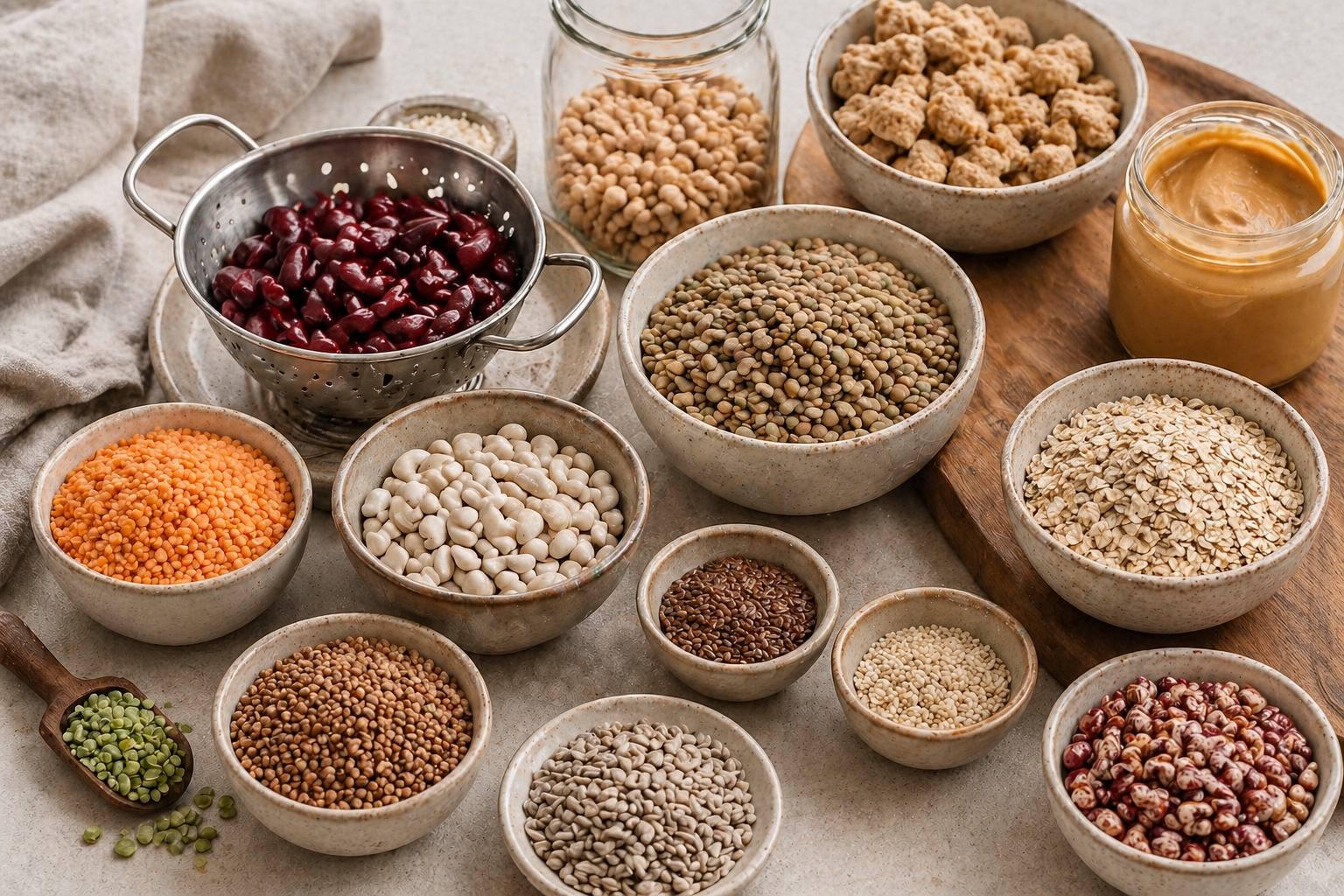
The budget-friendly foundation of a vegan diet: lentils, beans, chickpeas, and seeds provide the body with essential protein and amino acids.
The Vegan Plate Builder
The Formula: Base + Protein Hero + Vegetables + Fat + Sauce
A simple framework you can easily keep in mind:
- Base: buckwheat, rice, potatoes, bulgur, pearl barley, pasta, bread, flatbread.
- Protein Hero: lentils, beans, chickpeas, peas, tofu, textured soy protein, seitan.
- Vegetables: cabbage, carrots, cucumbers, tomatoes, beets, leafy greens, frozen broccoli, peppers—whatever you have on hand.
- Fat: oil, tahini, seeds, nuts, avocado, peanut butter.
- Sauce: lemon, mustard, soy sauce, tomato paste, garlic, vinegar, spices.
When a plate features all five elements, it usually hits the mark. Skipping fat and sauce leaves you choking on dry food. Forgetting the protein hero sends you back to the refrigerator two hours later.
Examples of Familiar Plates
These are not abstract, photogenic grain bowls, but rather everyday homemade meals. Buckwheat with lentil gravy and a vinegar-dressed cabbage salad; rice with beans in tomato sauce and pickled cucumbers; potatoes with chickpea cutlets and a beet salad; pasta with soy mince in tomato sauce; flatbread with hummus, cucumbers, and greens; split pea soup with rye bread; pearl barley with mushrooms and beans; a hearty vegan borscht loaded with beans.
Much of this reflects traditional, comforting cuisine that has always embraced meatless cooking.
Breakfast: Where Vegans Often Lose Protein
Why Water-Based Porridge Is Not Always a Complete Breakfast
Oatmeal cooked in water with an apple and a teaspoon of honey looks light, beautiful, and “healthy.” Without additions, it provides a mere 4–5 g of protein. For a person weighing 65–70 kg (143–154 lbs) with a daily requirement of 55–58 g, this represents just one-tenth of their quota. Satiety will vanish by 10 AM.
How to Boost Your Breakfast
Porridge makes a solid foundation. The real magic lies in what accompanies it.
Using soy milk instead of water instantly adds 3–4 g of protein per 100 ml (3.4 fl oz). A tablespoon of peanut butter contributes another 4 g. A generous handful of pumpkin seeds brings an extra 5 g. Soy yogurt proves a worthy choice, but only if it actually packs protein: some plant-based yogurts rival dairy in protein content, while others act more like sugary desserts. Checking the label remains essential. A tofu scramble (tofu cooked with turmeric, paprika, and onions in a skillet) serves as a formidable alternative to scrambled eggs—slightly crispy outside, soft inside, radiating the aroma of sautéed onions and spices. A sandwich layered with bean pâté or hummus and fresh vegetables provides a proper breakfast with substantial protein.
Porridge provides an excellent base, but you must introduce protein separately.
Lunch and Dinner: Making Plant-Based Meals Satiating
Soups
A vegan soup without legumes acts as a lovely starter, but it fails to deliver a complete protein meal. A puréed carrot ginger soup tastes wonderful, yet lacks a solid anchor.
Soups that actually bring protein to the table include split pea (a classic unfairly dismissed as too heavy), lentil (which needs no soaking, cooks in 25–30 minutes, and easily adapts to any spice profile), bean soup, vegan borscht packed with beans, pearl barley and bean stew, and vegetable soup fortified with chickpeas.
Quality spices entirely transform the character of a legume-based soup. Cumin, smoked paprika, coriander, bay leaves, onions, and garlic, sautéed in olive oil until deep golden, elevate a boring broth into a masterpiece.
Main Courses
A rich lentil gravy over buckwheat comes together faster than you might think. Beans in tomato sauce—a breakfast staple in the UK—offer incredible versatility. A robust chickpea curry absorbs spices beautifully, satisfies deep hunger, and keeps well in the fridge. Soy mince paired with pasta mimics a classic Bolognese flawlessly. Bell peppers stuffed with rice and lentils, cabbage rolls packed with mushrooms and beans, or creamy mashed potatoes ladled with a thick lentil ragù provide familiar formats that transition into vegan territory with zero struggle.
Spreads and Pâtés
Spreads serve as highly functional components for quick meals: thick slices of bread, hearty sandwiches, on-the-go snacks, and effortless dinners.
Chickpea hummus. Bean pâté with caramelized onions and roasted garlic—the aroma of sautéed onions fills the kitchen before the skillet even cools. Lentil pâté brightened with lemon and paprika. Split pea spread. Tofu cream blended with fresh herbs and garlic. All of these come together rapidly, stay fresh for days, and pack a respectable amount of protein.
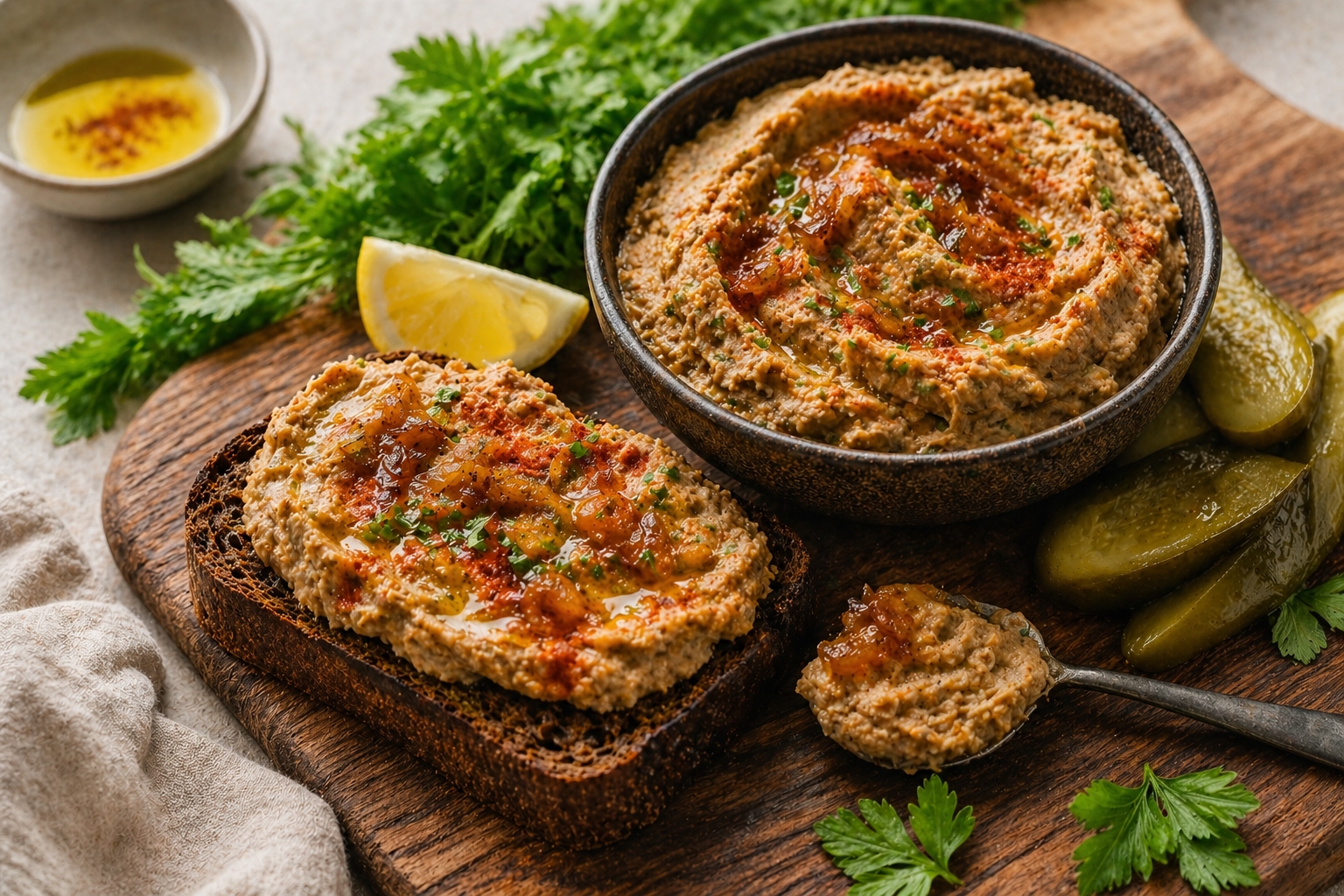
Pâtés crafted from beans or chickpeas offer an excellent way to transform a simple snack or breakfast into a truly satiating, protein-rich meal.
Simplifying Legume Prep
Soaking, Rinsing, and Spicing
Beans and chickpeas benefit greatly from an overnight soak; they cook faster and digest more easily afterward. Lentils present a different story entirely. Red lentils dissolve into a creamy base in 15–20 minutes, while green lentils hold their shape and finish in 30–40 minutes, demanding zero soaking time. This very trait makes lentils the ultimate weeknight savior.
Canned legumes require a thorough rinse under cold water, as the canning liquid carries excess sodium that disrupts the balance of your dish.
The beans themselves do not dictate the flavor. That magic comes from onions sweated down to a sweet, translucent caramel, soft garlic devoid of any harsh bite, smoked paprika, cumin, and coriander. A hit of acidity at the end—a squeeze of lemon juice or a splash of vinegar—pulls the entire flavor profile into sharp focus. Quality olive oil adds luxurious richness. Without aromatics, beans remain just boiled beans. With them, they transform into an exquisite meal.
Managing Legume-Induced Heaviness
Starting with small portions prevents discomfort while your digestive system adapts. Lentils generally digest more easily than beans or split peas, making them the perfect entry point. Thoroughly cooked legumes, especially when puréed into smooth dips and pâtés, prove far gentler on digestion than whole intact beans.
Canned legumes often outperform undercooked homemade batches in this regard: rinsed and gently heated, they cause significantly less discomfort.
Legumes demand a gradual introduction. Throwing a chickpea festival for your digestive system on day one rarely ends well.
Soy Products
Tofu: The Neutral Protein Canvas
On its own, tofu offers virtually no flavor—a faint bean note, a touch of blandness, and a texture entirely dictated by its firmness. This acts not as a flaw, but as its greatest asset. Tofu functions as a sponge, eagerly soaking up marinades and vibrant sauces.
Making tofu delicious requires a simple technique. Pressing out the excess liquid (wrapping it in a kitchen towel and placing a heavy plate on top for 15–20 minutes) primes it for flavor. Dicing it, marinating it in soy sauce spiked with garlic, paprika, and a splash of lemon juice, tossing it lightly in cornstarch, and searing it over high heat yields a magnificent crust the color of old copper. Crispy on the outside, custardy within, radiating savory depth—it stands as a satisfying, remarkable meal.
Textured Soy Protein: A Reliable Mince Substitute
Textured soy protein arrives dry. Rehydrating it in hot water or savory broth, squeezing out the excess liquid, and searing it aggressively with chopped onions unlocks its potential. Its texture mimics ground meat flawlessly, while its protein content easily rivals beef or pork.
It shines in a rich Bolognese sauce instead of ground beef, works beautifully stuffed inside bell peppers or cabbage rolls, fortifies braised cabbage, bulks up savory pies and casseroles, and anchors a hearty gravy ladled over buckwheat or potatoes. It remains a deeply reliable pantry staple, increasingly easy to source in major supermarkets and online, all while costing a fraction of the price of meat.
Soy Milk: Always Choose Fortified
Plant-based milks vary wildly. Oat milk froths gorgeously for lattes. Almond milk tastes fantastic. Rice milk brings a subtle, pleasant sweetness. Yet, in the protein department, most pale in comparison to soy milk: delivering a mere 0.5–1 g per 100 ml compared to soy’s robust 3–4 g.
Vitamin B12 cannot be reliably sourced from standard plant foods. Fortified products or supplements act as mandatory pillars of a vegan diet, not merely “safety nets.” Thus, reading the label when choosing plant milk proves vital: always seek fortification with calcium, vitamin D, and B12.
Nuts, Seeds, and Peanut Butter: Healthy But Insufficient
Why You Cannot Base Your Diet Solely on Nuts
Nuts and seeds deliver protein, healthy fats, magnesium, zinc, and a spectrum of robust flavors. However, their high caloric density makes them an impractical primary protein source. A 30 g (1 oz) serving of walnuts provides about 4 g of protein. A 30 g portion of sunflower seeds offers roughly 5 g. They remain excellent additions, but they do not serve as reliable anchors.
How to Use Them Smartly
Swirling a spoonful of peanut butter into your morning oatmeal presents one of the easiest ways to boost your breakfast protein. Tossing toasted seeds over a salad brings essential crunch and a modest protein bump. Whisking tahini (sesame paste) into a noodle dressing or blending it into hummus yields rich fats, deep flavor, and vital minerals. Stirring ground flaxseed into porridge contributes a small protein kick alongside essential Omega-3s. Folding crushed walnuts into a rustic bean pâté transforms its texture and deepens its savory complexity.
Nuts offer a spectacular supplement, but they will never satisfy your entire protein requirement alone.
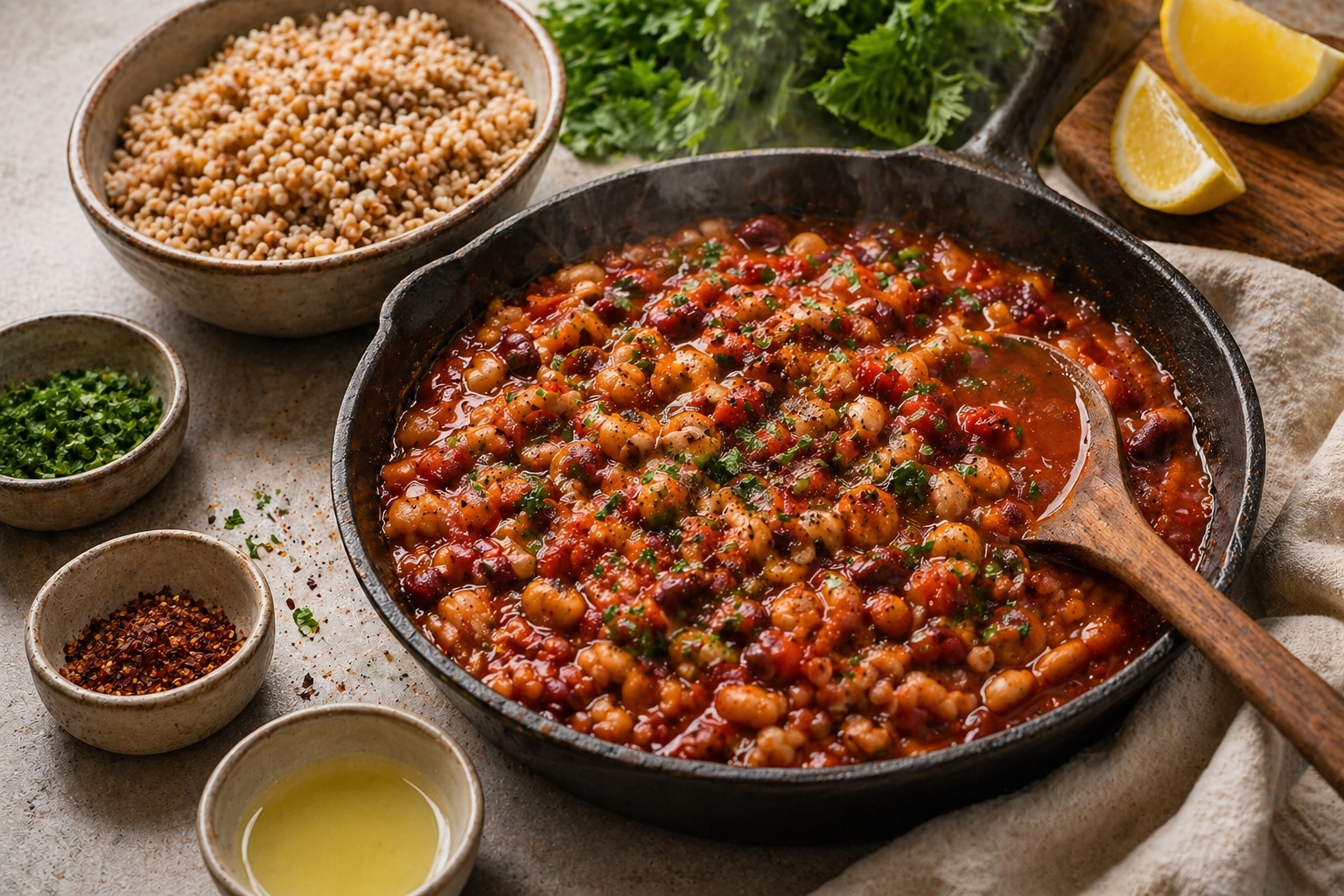
Beans simmered in a robust tomato sauce serve as a quick, accessible protein center that pairs flawlessly with any side dish.
Vegan Protein for the Lazy: Quick Formulas
Formula 1. A Can of Beans + Tomato Paste + Grains
Rinse the beans thoroughly. Sauté a chopped onion in olive oil until deeply golden, toss in minced garlic and paprika, and follow a minute later with a dollop of tomato paste and a splash of water. Add the beans, a pinch of salt, and a dash of vinegar. Let it bubble and heat through for 7–8 minutes. Serve over fluffy buckwheat, steamed rice, or roasted potatoes.
Formula 2. Lentils + Vegetables + Spices
Red lentils demand zero soaking and collapse into a rich, velvety purée in just 15–20 minutes. Adjusting the water volume and spice profile yields a vibrant soup, a fragrant dal, a silky gravy, or a robust stew. Cumin and coriander impart a warm, Middle Eastern flair. Smoked paprika and a few bay leaves steer it toward rustic, smoky braise territory.
Formula 3. Textured Soy Protein + A Hot Skillet
Pour boiling water over the soy crumbles, let them steep for 10 minutes, and squeeze out the excess moisture. Searing them aggressively in a hot pan with diced onions ensures they fry properly, rather than steam in their own juices. Stirring in tomato sauce and bold spices creates an instant, hearty base ready to crown pasta, buckwheat, potatoes, or stuff inside a warm flatbread.
Formula 4. Hummus + Good Bread + Crisp Vegetables
The ultimate effortless snack or lazy dinner. Hummus merges chickpeas and tahini, delivering protein and rich fats in a single swipe. Pair it with thick-crusted artisan bread, crunchy cucumbers, ripe tomatoes, and vibrant fresh herbs. If deep hunger strikes, fold in a scoop of warm, cooked lentils.
Sample Vegan Daily Menus
Option 1. Deeply Comforting and Homemade
Breakfast: Oatmeal cooked in soy milk, swirled with a tablespoon of peanut butter, topped with crisp apple slices, and finished with a teaspoon of ground flaxseed. Lunch: A steaming bowl of lentil soup, a thick slab of rustic rye bread, and a crunchy cabbage slaw dressed with vinegar and oil. Dinner: Nutty buckwheat crowned with beans simmered in a rich tomato sauce, served alongside fresh cucumbers and parsley. Snack: Creamy hummus with crackers or toasted bread slathered with savory lentil pâté.
This relies on zero tofu, tempeh, or exotic superfoods. Utilizing everyday staples and classic culinary techniques, every main meal secures a solid protein anchor.
Option 2. The Fast-Paced Urbanite
Breakfast: Golden, spiced tofu scramble piled high on toasted sourdough. Lunch: Al dente pasta tossed in a robust soy mince and tomato ragù. Dinner: Fluffy rice studded with tender chickpeas, roasted root vegetables, and a generous drizzle of creamy tahini sauce. Snack: A cup of protein-rich soy yogurt or crispy roasted chickpeas dusted with smoked paprika and sea salt.
Option 3. The Budget-Friendly Standard
Breakfast: Warm buckwheat porridge fortified with toasted sunflower seeds and a spoonful of peanut butter. Lunch: Thick, rib-sticking split pea soup with a slice of bread. Dinner: Boiled potatoes alongside deeply savory braised cabbage and plump beans. Snack: A slice of dark bread smeared with rich lentil pâté.
Three distinct days, representing three levels of accessibility and budget—yet every single main meal features an undeniable protein anchor.
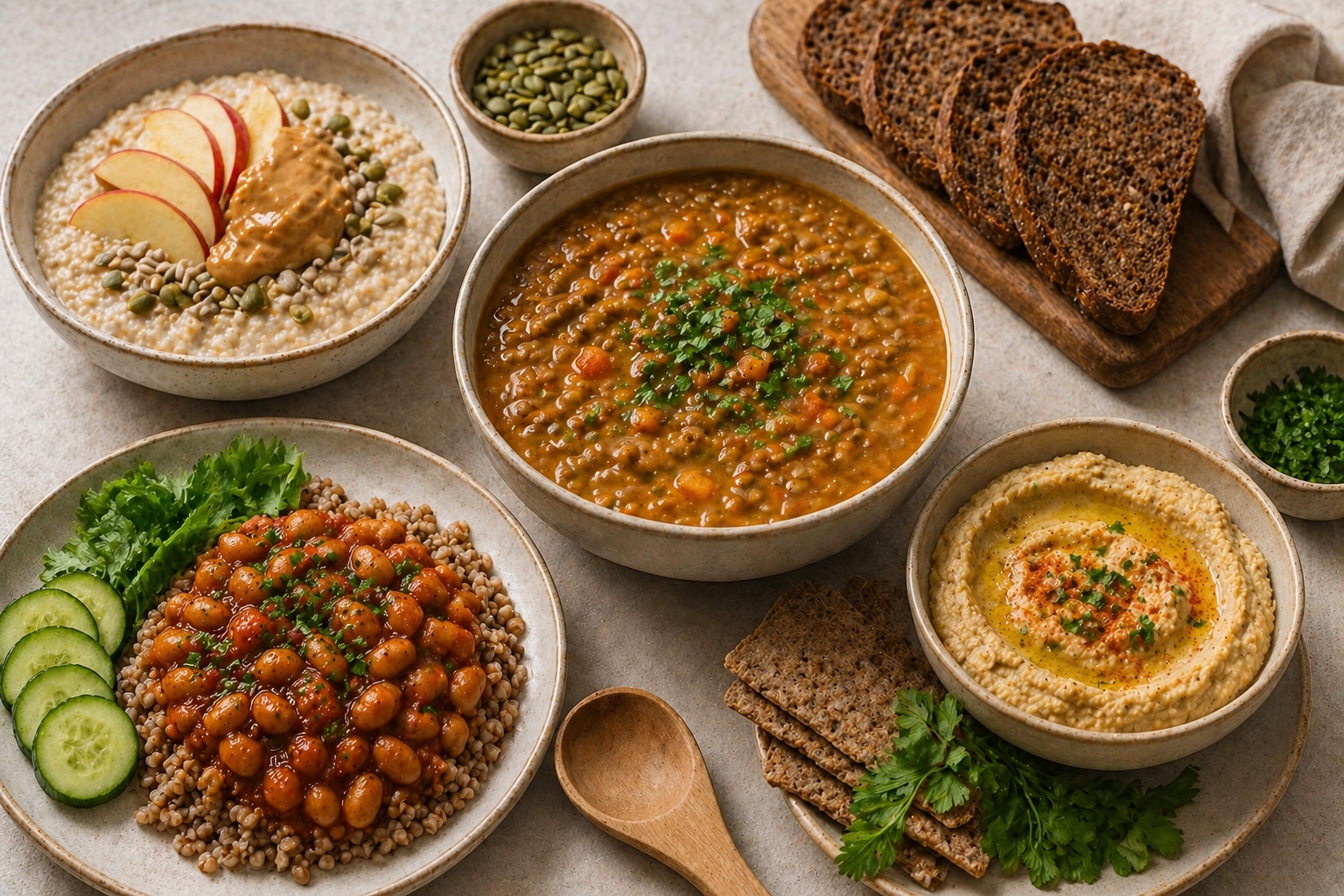
An example of a complete daily diet, where every meal features a distinct protein anchor for sustained energy throughout the day.
Common Pitfalls in a Vegan Diet
Mistake 1. Eating “Plant-Based” but Omitting Protein
Salads, fruits, rustic bread, porridge, and delicate vegetable soups can all find a place in an excellent diet. Yet, without a foundation of legumes, soy, tofu, tempeh, seitan, or another clearly defined protein source, overall protein intake will plummet. This shortfall reveals itself not through complex spreadsheets, but via relentless hunger, lingering fatigue, and the frustrating sensation of eating massive volumes without ever feeling full.
Mistake 2. Relying on Trendy Plant Milks for Protein
Oat, almond, and rice milks frequently slip into grocery carts as direct replacements for cow’s milk, despite containing three to five times less protein. Inspecting the label remains crucial: checking the protein per 100 ml (3.4 fl oz) and verifying fortification levels. Soy milk stands as the closest rival to cow’s milk in the plant-based arena.
Mistake 3. Keeping the Diet Too “Clean”
Surviving strictly on vegetables, fruits, leafy greens, smoothies, and plain grains sounds idyllic and looks magnificent on camera, but it fails spectacularly at sustaining satiety. A vegan diet requires zero asceticism. Legumes, rich olive oil, deeply savory sauces, lush pâtés, and aggressively seared tofu belong at the table—not as guilty compromises, but as the very backbone of great eating.
Mistake 4. Neglecting B12 and Essential Nutrients
Nutrition extends far beyond protein. While a meticulously varied plant-based diet can achieve near-perfect balance, vitamin B12 remains the absolute exception. It does not exist reliably in any standard plant food. Fortified products or dedicated supplements represent the non-negotiable standard of vegan eating, not an optional upgrade.
Beyond Protein: What Else to Keep in Mind
Vitamin B12
This stands as the ultimate mandatory requirement. Seaweed and fermented cabbage act as dangerously unreliable sources; relying on fortified foods or supplements is the only secure path.
Iron
Plant-based (non-heme) iron absorbs less efficiently than its animal-based counterpart. Vitamin C acts as a brilliant catalyst: pairing legumes or buckwheat with bell peppers, fresh cabbage, a squeeze of lemon juice, vibrant greens, or sauerkraut dramatically enhances absorption. Conversely, drinking tea or coffee immediately after a meal actively suppresses it.
Calcium
Fortified soy milk, calcium-set tofu (always check the packaging), sesame seeds, velvety tahini, and dark leafy greens all contribute valuable calcium. Gauging adequacy through vague “feelings” or generic charts proves notoriously difficult. When in doubt, a blood test and a consultation with a physician easily outclass any DIY calculations.
Iodine, Vitamin D, and Omega-3s
Iodine levels fluctuate wildly in a plant-based diet: seaweed offers it, but in violently unpredictable amounts, making iodized salt a far more reliable, controlled option. Vitamin D remains nearly impossible to source exclusively from food, and relying solely on sunlight in northern latitudes is a losing battle. For Omega-3s: flaxseed, chia seeds, and walnuts supply ALA, which the body partially converts to EPA and DHA—though at incredibly low efficiency. Algal supplements (derived from microalgae) deliver essential EPA and DHA directly.
The Final Cheat Sheet: How to Audit Your Plate
Before diving in, taking a moment to ask a few simple questions changes everything:
- Is there a protein anchor here (legumes, soy, tofu, or another dense protein source)?
- Is there a reliable base: grains, hearty bread, potatoes, or pasta?
- Are vegetables or fresh greens present?
- Are fat and sauce included—guaranteeing flavor rather than a dry, joyless health exercise?
- Is the entire day leaning too heavily on porridge, fruit, and light salads?
- Do I have a secure source of B12 (a supplement or daily fortified products)? And regarding Vitamin D, iodine, calcium, iron, and Omega-3s: do I genuinely understand where they fit into my meals?
A phenomenal diet does not demand obsessively weighing every morsel on a digital scale. It simply requires the instinct to build every meal around an undeniable protein source. It means eating not just “meatless,” but securing a powerful, savory center of the plate that delivers extraordinary flavor and a profound, lasting sense of satiety.
0 comments