
In an average supermarket, the olive oil aisle boasts dozens of bottles. Sourced from different countries with varying labels, prices range from a few dollars to premium tiers. Almost every bottle claims the same thing: Extra Virgin. Eyes glaze over, time is short, and whatever is on sale or features an attractive bottle ends up in the basket.
A week later, you open it, and something feels off. The aroma is flat. The palate registers almost nothing. A strange bitterness lingers. You pour it into a skillet, fry with it, and forget about it.
A beautiful label offers no guarantee of quality. Understanding how to choose cold-pressed oils—and knowing what to look for first—makes all the difference.
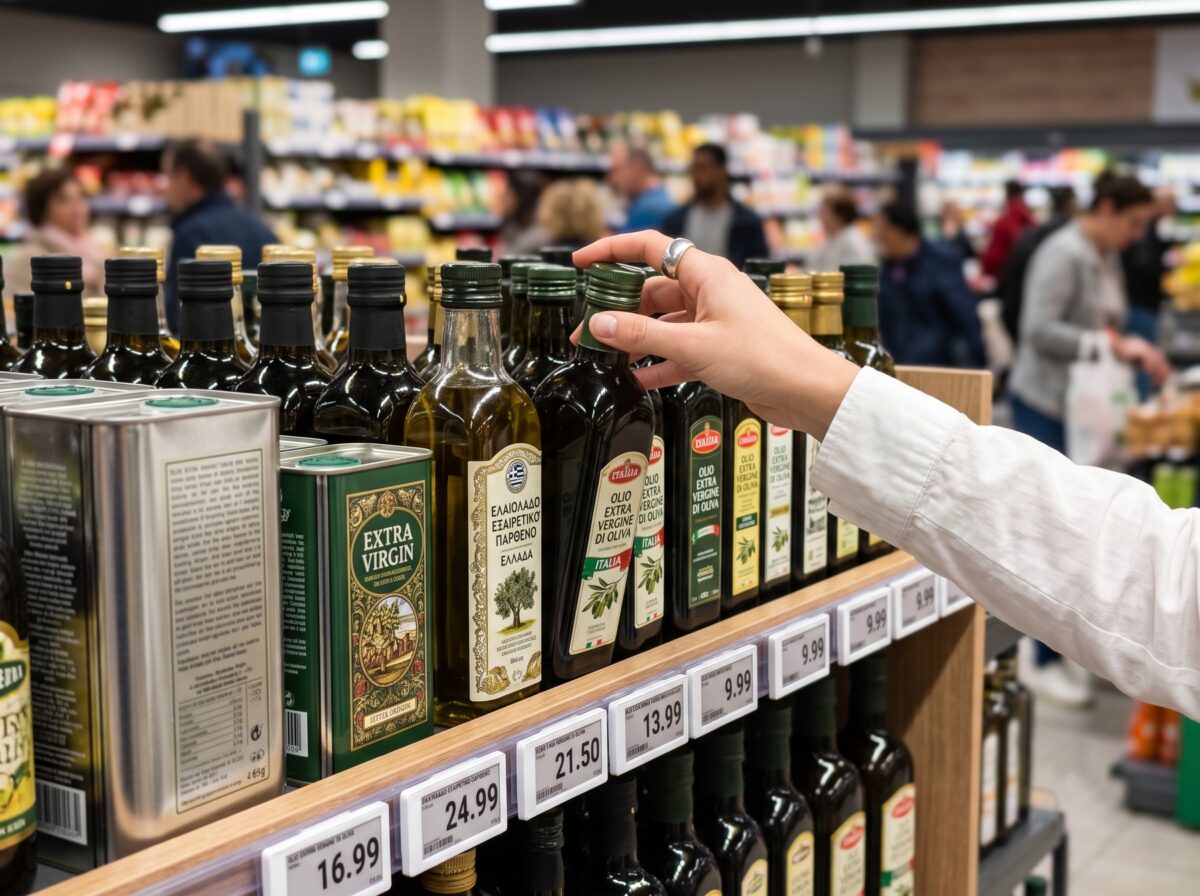
The vast selection of olive oil in supermarkets requires careful label reading to find a truly high-quality product.
Olive Oil Is Fresh Olive Juice
It is not a sauce. It is not jarred fat designed to sit in a pantry for years. This is freshly squeezed olive juice: alive, unstable, and highly sensitive to heat, light, and air.
While wine opens up over time, olive oil fades. Every month of storage strips something away: first the aroma, then the polyphenols (the primary antioxidants), and finally the flavor. By the end of its second year, even a stellar oil becomes a mere greasy liquid devoid of merit.
This changes the entire approach. You are buying highly perishable food, not canned goods. It demands quick consumption and proper storage.
An open bottle begins oxidizing immediately. Storing it on a windowsill or next to the stove accelerates this process. Heat and light affect olive oil similarly to milk: leaving it in the warmth makes it spoil faster.
This is why cold-pressed oil is best kept in the refrigerator for long-term storage. The cold causes it to thicken, turn cloudy, and form flakes—much like clarified butter or honey. This is completely normal. Suspicion should arise if the oil remains clear and liquid in the fridge. Once brought back to room temperature, good oil becomes transparent and liquid again.
The warmest spot in the kitchen is the cabinet above the stove. Unfortunately, this is exactly where most people store their oil. It remains the worst possible option. A cool, dark place away from the stove and windows is ideal, and it is best to use an open bottle within four to six weeks.
A Label Without a Translator: What It Says and What It Means
Extra Virgin (Italian extra vergine, Spanish virgen extra) denotes oil extracted exclusively through mechanical means, free from refining and chemical processing. The acidity level sits below 0.8%. This serves as a fixed standard.
While it sounds definitive, regulations vary globally, and the term “Extra Virgin” alone guarantees nothing about a specific bottle’s quality. The surrounding text provides the real context.
Acidity (Italian acidità, Spanish acidez) represents the first parameter to check. A lower number indicates better olive condition at the time of pressing. Oil from healthy, timely harvested fruit yields an acidity of 0.2–0.4%. Anything above 0.8% fails the Extra Virgin standard and falls into the Virgin category. While listed acidity offers a helpful benchmark, its absence does not inherently make the oil bad.
Refined olive oil (Italian olio di oliva raffinato, Spanish aceite de oliva refinado) undergoes a process similar to standard sunflower oil. Heat or chemical treatments strip away raw material defects. Labels might simply read “refined” or “olive oil,” dropping the Extra Virgin prefix.
Pomace (Italian sansa, Spanish orujo) refers to oil extracted from olive residue, undergoing industrial processing and refining.
Both refined and pomace oils remain honest products designed for different purposes. They handle high-heat frying better than Extra Virgin, boasting a higher smoke point and neutral flavor. Frying pancakes or searing meats in expensive cold-pressed oil simply wastes money on flavors that vanish in the pan.
Regional Standards: DOP and IGP
In the EU, look for DOP (Italian Denominazione di Origine Protetta, Spanish Denominación de Origen Protegida) and IGP (Italian Indicazione Geografica Protetta, Spanish Indicación Geográfica Protegida).
DOP mandates a stricter connection to the origin: raw materials must come from the designated region, and all major production stages must happen there. IGP offers more flexibility, requiring at least one stage—production, processing, or preparation—to occur within the region.
Terms like Selección or Premium lack protected status. They serve as marketing jargon for specific producers and signify very little.
Whether DOP justifies the premium price depends on the intended use. Dressing a vibrant salad or finishing a velvety soup makes it worthwhile. Daily braising and roasting do not.
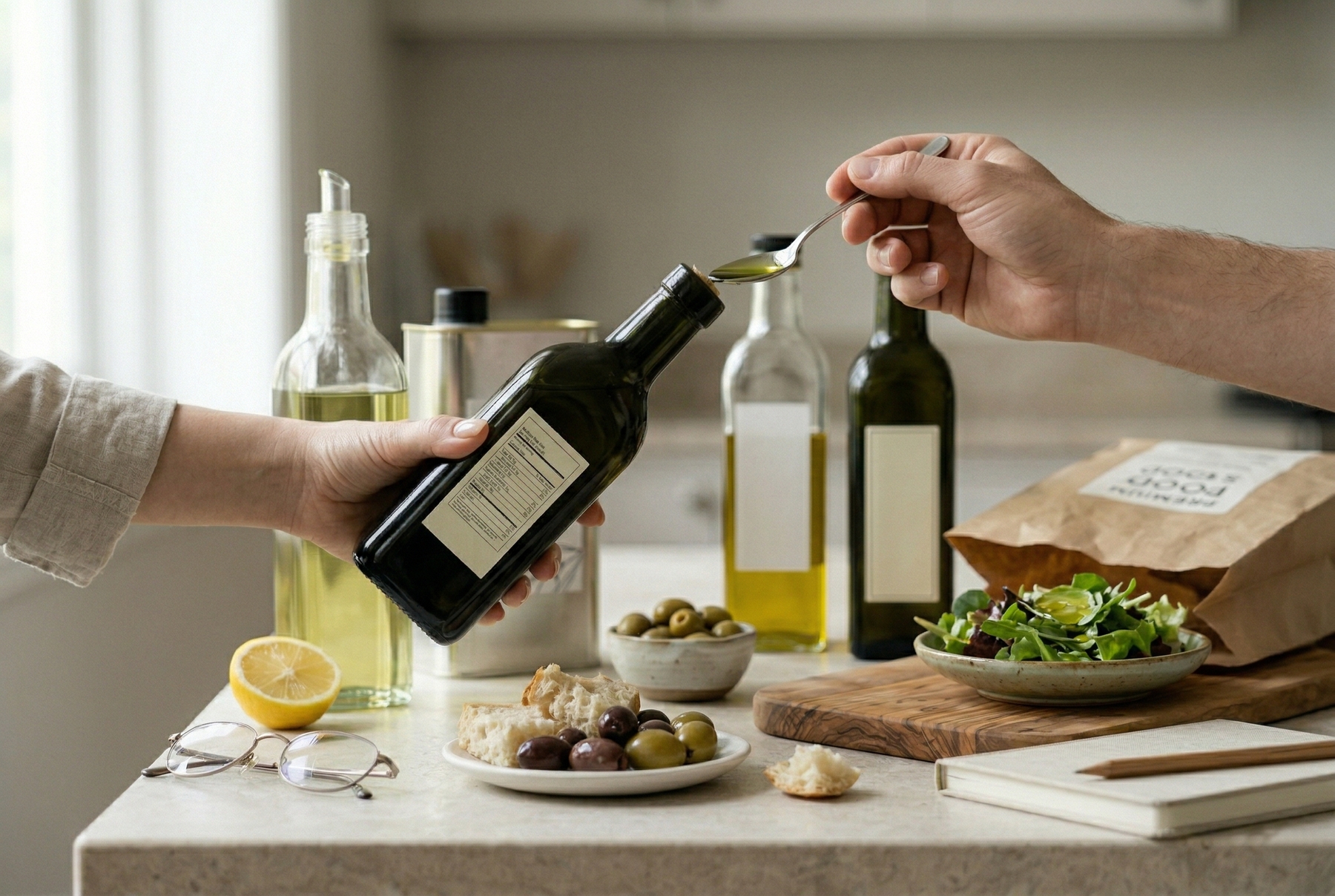
Testing the oil for taste and aroma helps distinguish a fresh, cold-pressed product from cheap alternatives.
Navigating the Real-World Supermarket
In Italy or Spain, buying directly from farmers or trusted local shops remains the best approach. There, you can smell, taste, inquire about the harvest, and receive answers from the very people who pressed the olives. Such oil often lacks certificates or elaborate labels, arriving in a simple jug bearing the farm’s name and harvest year scrawled in pencil. It represents the finest oil money can buy.
Finding this kind of oil internationally often proves difficult. Consumers must navigate available options: major importers from Spain and Greece frequently deliver more predictable quality than obscure Italian brands sporting flashy labels.
Packaging. Dark glass or tin cans remain preferable; clear bottles are less ideal. Light destroys polyphenols faster than anything else.
Dates. Seek the harvest date (Italian data di raccolta, Spanish fecha de cosecha) rather than just the bottling date. They are entirely different metrics. An oil bottled last month could originate from a two-year-old harvest. Reputable producers proudly display the harvest year. A label stating “shelf life: 18 months” without a harvest reference leaves the buyer guessing.
Country of Origin. Spain, Greece, Italy, Portugal, and Tunisia all produce exceptional oils, yet their flavor profiles vary dramatically. Spanish oils often skew fruity, while Greek varieties feel denser with a pronounced bitterness. Italian oils span the widest spectrum, ranging from delicate Ligurian styles to fiery Tuscan pressings.
Price. High-quality olive oil cannot be cheap, given production costs. Hand-harvesting olives, rapid pressing (ideally within 24 hours), and storing in inert, oxygen-free tanks demand resources. A deeply discounted Extra Virgin oil suggests corners were cut along the way.
A Bitter Throat Catch Indicates Quality, Not a Flaw
A fresh olive oil that causes a slight tickle in the throat and delivers a bitter kick signals an excellent product. Oleocanthal and other polyphenols cause this reaction, providing the exact anti-inflammatory benefits that make the oil so desirable. The bitterness intensity depends on the olive varietal, ripeness, and pressing time. Oil from underripe fruit tastes significantly more bitter, while mature olives yield softer, sweeter notes.
A bad bitterness presents quite differently. Rancid oil smells like stale fat or wax crayons—a dull, musty odor that lingers. The flavor echoes this staleness, often carrying a metallic aftertaste. If a newly opened bottle smells like this, the oil has already spoiled.
The Vanilla Ice Cream Test
If you have a bottle of good, fresh olive oil at home, try a simple experiment. Drizzle a spoonful over a scoop of vanilla ice cream. Finish it with a pinch of flaky sea salt.
While it sounds unorthodox, the combination works surprisingly well. The bitter, slightly peppery oil beautifully contrasts the cold, sweet background. Tuscans have enjoyed this pairing for years, simply because it tastes incredible.
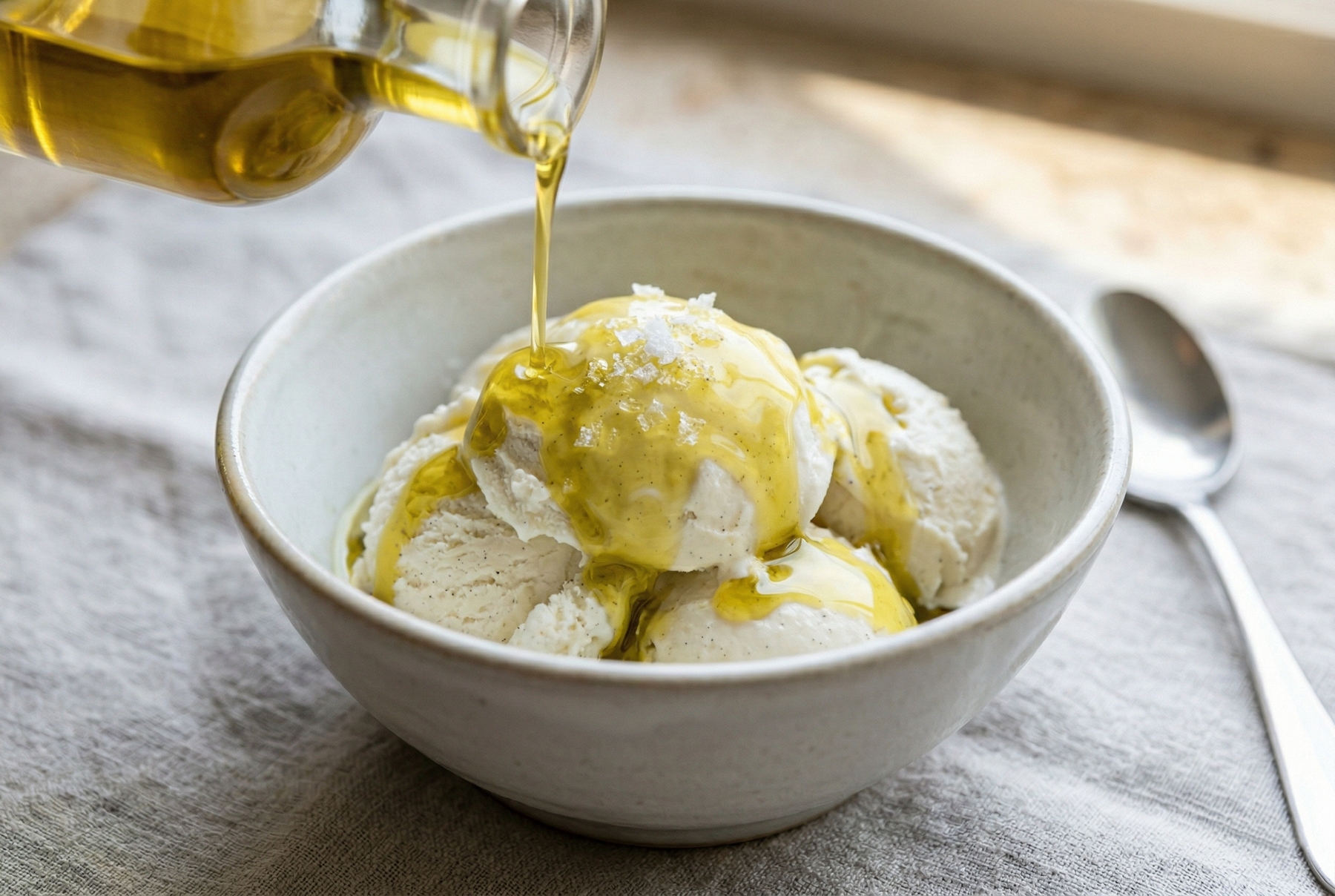
The ice cream test provides an excellent way to evaluate the rich flavor and characteristic bitterness of authentic Extra Virgin olive oil.
An oil with a flat, lifeless flavor fails this test completely. The ice cream immediately reveals exactly what kind of oil you purchased.
0 comments