
Navigating the tuna aisle in a supermarket is a quest that most people fail on their first try. The shelf presents forty cans featuring anchors and palm trees, with widely varying prices. Every label promises a “natural product,” “the ocean,” and “health benefits.” Discovering what lies inside requires opening the tin.
Consumers usually grab whatever is cheapest or most visually appealing. Sometimes, reaching for a familiar brand becomes a habit. This approach makes sense, but it remains unreliable: identical attractive labels can hide decent, firm fillets or a fishy mush packed with flavor enhancers.
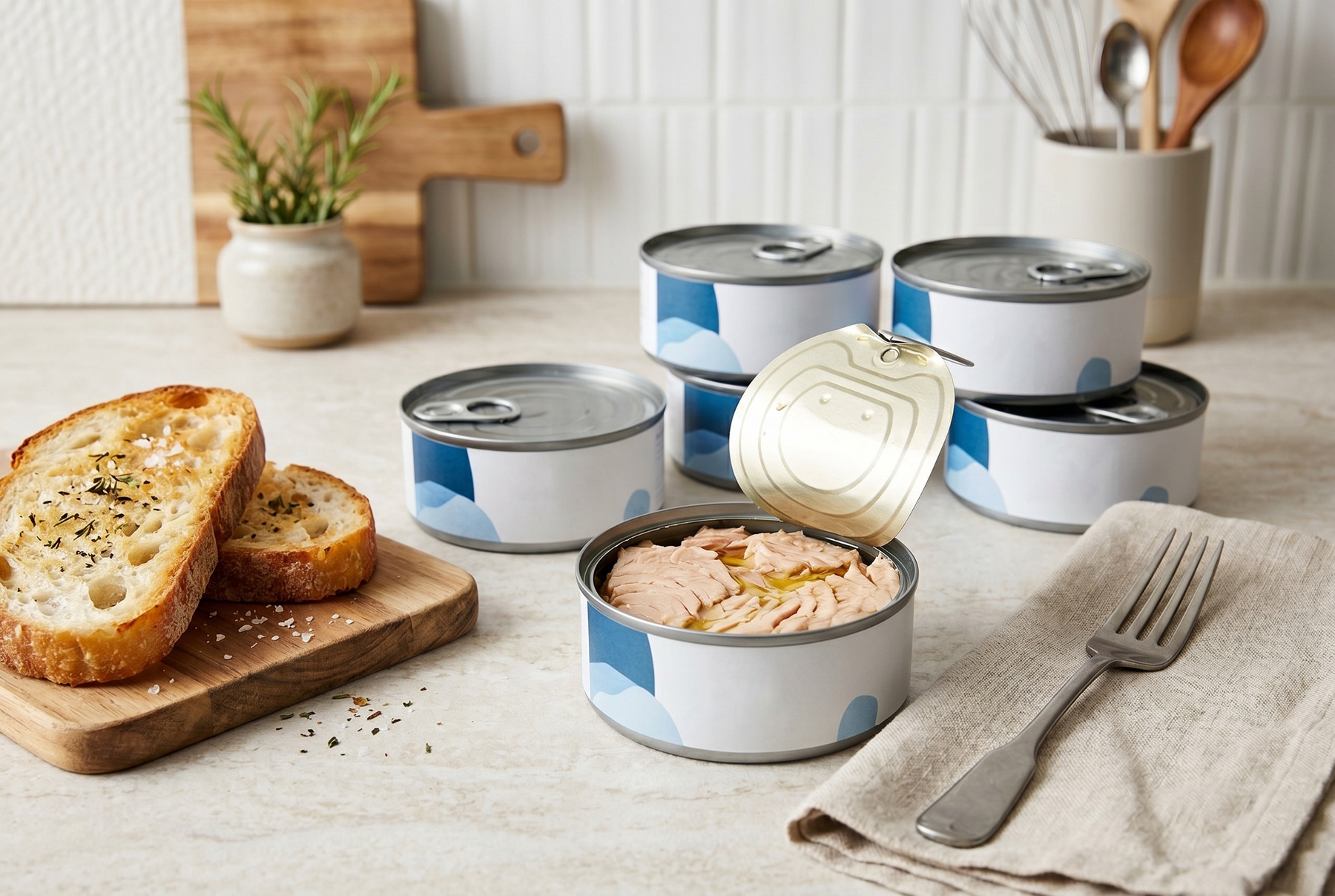
The main secret to a successful purchase involves choosing cans labeled ‘solid’ or ‘fillet,’ which preserve the natural texture of the fish.
Table of Contents
In Oil or in Water?
Tackling the most common misconception is essential: “Tuna in oil is fattier, which means it contains more omega-3s and is healthier.”
This is generally false. Omega-3s are fat-soluble lipids. When tuna is packed in oil, the fish oil gradually leaches into the packing liquid—spending months in a warehouse and then more time in your pantry. Pouring that oil down the drain means washing away a portion of the omega-3s that made the fish appealing in the first place. Water-packed tuna offers more predictability in this regard: the fish fats have nowhere to migrate, remaining locked inside the fibers. This results in less waste and a straightforward ingredient list.
Spotting an “Extra Virgin” label guarantees nothing on its own: the ingredient list on the back tells the real story. Explicitly listing “extra virgin olive oil” is a good sign. Vague ingredient lists or omissions of olive oil render that beautiful front label meaningless. Even genuine olive oil will extract those precious omega-3s from the fish. Paying a premium for this illusion makes little sense.
What to Look for on the Label
Examining the cut type is the first step.
“Solid,” “Fillet,” or “Chunk” means the can contains real fish with a proper texture. This tuna works beautifully on toast or tossed into a salad where structure matters, easily flaking into substantial pieces with a fork.
“Flaked,” “Salad Cut,” or “Grated” tells a completely different story. Technically, this is not a deception: producers honestly indicate that the tin contains trimmings and parts of the fish that did not make the “solid” or “fillet” grade. All of this gets ground up, pressed, and appears as a dense, grayish-pink mass in the can. It remains edible, certainly. Expecting a beautiful salad with distinct chunks of fish, however, will lead to disappointment.
Moving to the ingredients, the ideal formula is simple: tuna, water, and salt. Just three items.
Shorter and clearer ingredient lists make it easier to understand what your money buys. Starches, plant proteins, flavor enhancers, and “fish broth” from concentrate all signal a highly processed product. While not toxic, it ceases to be just fish in a can.
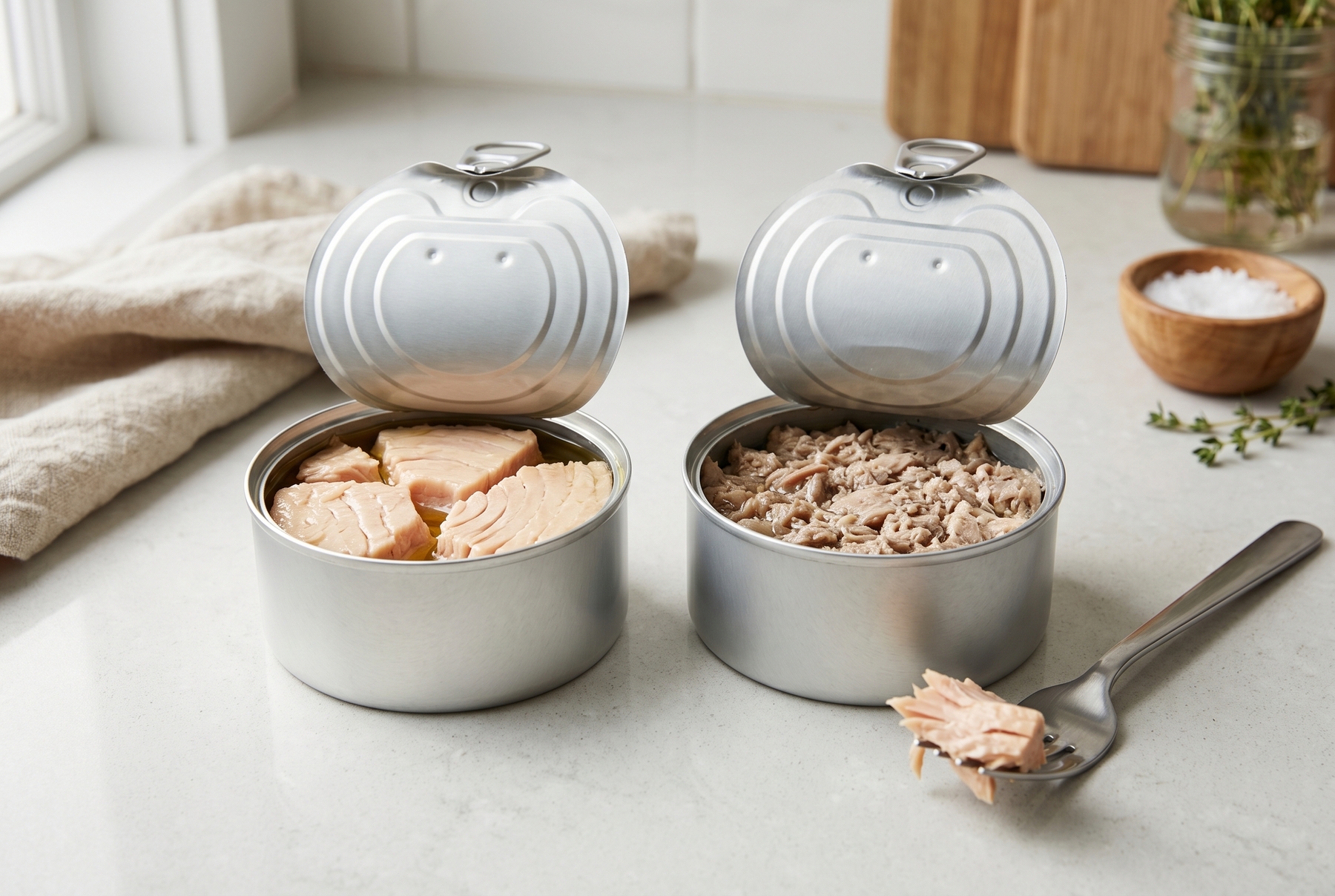
Chunk tuna on the left provides the ideal texture for salads and toast. Flaked tuna on the right usually consists of finely ground fish trimmings.
Where Was This Tuna Caught?
Tuna species differ significantly from one another. Albacore tuna is a large fish with a long lifespan, meaning it accumulates noticeably more mercury. Skipjack tuna is smaller and has a shorter lifespan, making it safer regarding mercury content. The majority of affordable cans simply labeled “tuna” contain skipjack, and in this case, “affordable” does not mean “inferior.” Eating tuna frequently makes skipjack an even better choice.
Checking the label for an FAO (Food and Agriculture Organization of the United Nations) code or a catch zone indicates transparency. The zone number shows the producer has nothing to hide regarding the fish’s origin. Pacific skipjack (FAO zones 71 or 77) represents a solid choice. Listing the tuna species alongside the zone is excellent, and independent certification is ideal. A complete lack of information about the catch is a perfect reason to pick up a different can.
Regarding the MSC (Marine Stewardship Council) label: a blue fish on the packaging means the fishery passed an independent audit for sustainable fishing standards. Calling it a strict requirement might be an overstatement, but it serves as an excellent bonus for those concerned about the environment.
How Much Tuna Can You Eat?
Tuna serves as an affordable and accessible source of protein and omega-3s. A 100-gram (3.5 oz) serving of water-packed tuna yields about 25–26 grams of protein with almost no fat. Official guidelines often recommend eating fish at least twice a week, but fatty species like sardines, mackerel, herring, and salmon hold the highest value for omega-3 intake. Tuna functions best as a regular protein source rather than a replacement for fatty fish.
Keeping FDA and EPA guidelines in mind regarding mercury is worthwhile: they place skipjack in a category safe to consume two to three times a week, while albacore should be limited to one serving. Pregnant women and children must take these restrictions more seriously, relying on official mercury content tables rather than general advice.
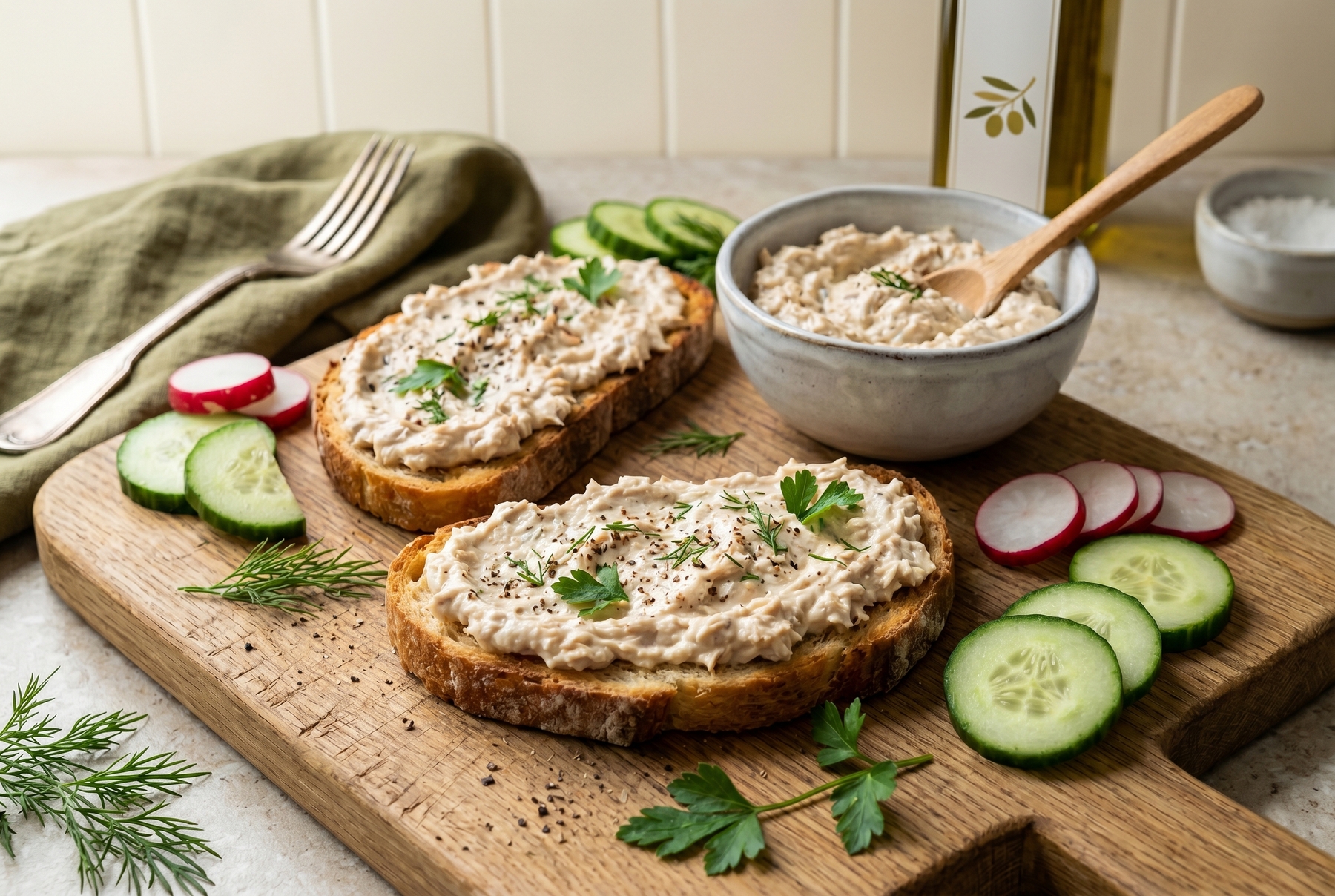
Transforming even flaked tuna into an exquisite dish requires only preparing delicate rillettes with cream cheese and fresh herbs.
How to Save a Disappointing Purchase
Imagine picking up some “salad cut” tuna on sale—three cans for a dollar, looking like a real steal. Opening it reveals mush.
Throwing it away is unnecessary.
Taking the contents of the can, draining the excess liquid, and mixing it with a soft cream cheese in a one-to-one ratio works wonders. Adding half a teaspoon of lemon juice, a pinch of garlic, and some fresh dill or parsley elevates the flavor. Mixing it with a fork rather than a blender maintains a slightly chunky texture instead of a purée. Letting it rest in the fridge for twenty minutes finishes the process.
The result is rillettes. This proper rillettes tastes fantastic spread on toasted bread, paired with cucumbers or radishes. French bistros charge good money for this exact preparation without hesitation.
A second option involves pasta. Boiling spaghetti or rigatoni until it reaches a firm al dente texture sets the base. Heating a spoonful of olive oil (which is completely appropriate here) in a pan with a couple of garlic cloves and a can of crushed tomatoes builds the sauce. After five minutes, introducing the tuna, a splash of pasta water, and black pepper brings it together. Three more minutes of cooking completes the dish. Serving four portions takes twenty minutes and costs practically nothing. A decent café charges triple for this dish, and nobody there specifically uses “fillet” grade tuna either.
So Which Can Should You Buy?
Opting for water-packed tuna is best. Choosing solid cuts or fillets ensures quality. The ingredient list should read: tuna, water, salt. Frequent consumers should look for skipjack and an FAO code. Those craving dense, white meat can enjoy albacore, provided it is not an everyday occurrence.
Everything else on the label is just marketing.
0 comments