
Imagine a typical evening: you pull a cucumber from the fridge, tear off a few iceberg lettuce leaves, slice some radishes, and feel like someone who truly cares about their health. The bowl looks right, crunches convincingly, and contains almost no calories. Everything is perfect, right?
Almost. Your gut microbiome looks at this plate and sees nothing edible. A cucumber consists of 95% water. Iceberg lettuce is only slightly better. Per 100 grams (3.5 oz) of such a salad, there is at most 1 gram of fiber, whereas your microbiome requires 25–38 grams daily to function properly. For comparison, 100 grams (3.5 oz) of cooked lentils contain about 8 grams of fiber. The difference is massive, even though the volume on the plate might appear roughly the same.
Why Your Salad Is Not Working: An Honest Guide to Fiber
Table of Contents
The Anatomy of a Salad: Why Cucumbers Are Mostly Water
Cucumbers, cherry tomatoes, radishes, and iceberg lettuce are wonderful ingredients. They are unparalleled for hydration, freshness, and crunchy texture. However, expecting them to provide the fiber that truly feeds the microbiome will likely lead to disappointment. A quick look at the numbers makes this clear:
| Vegetable | Fiber per 100g (3.5 oz) | What to Add | Additional Fiber |
| Cucumber | 0.5 g | Broccoli, green beans | 2.6 / 3.0 g |
| Iceberg lettuce | 1.1 g | Collard greens, arugula, spinach | 3.8 / 1.6 / 2.2 g |
| Radish | 1.6 g | Turnip, daikon, raw beet | 1.8 / 1.6 / 2.8 g |
| Cherry tomatoes | 1.2 g | Artichokes, avocado | 5.4 / 6.7 g |
| Romaine | 2.1 g | Chickpeas, black beans, lentils | 7.6 / 8.7 / 7.9 g |
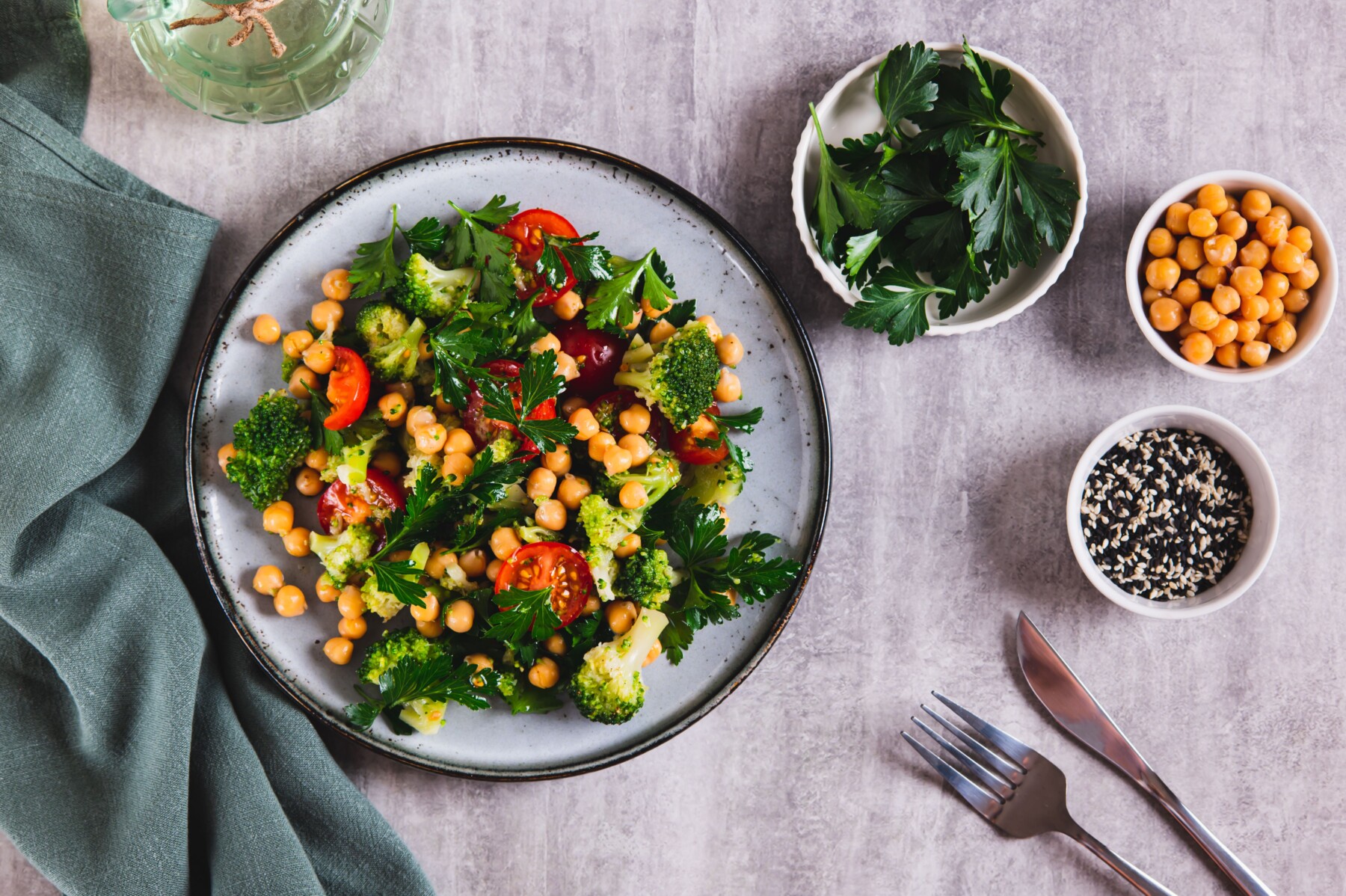
The practical takeaway from these figures is straightforward: watery vegetables work well as part of a salad, but they should not form its foundation if the goal is to increase fiber intake. A beneficial bowl is usually assembled differently: roughly 80% of the volume comes from dense, fibrous ingredients—root vegetables, legumes, and cruciferous plants—while the remaining 20% is reserved for freshness, juiciness, and texture. Therefore, a few cucumber slices or a handful of cherry tomatoes are perfectly in place, but they require the support of roasted carrots, chickpeas, broccoli, avocado, and a proper dressing. A plate built this way easily delivers 10–12 grams of fiber per meal, without feeling like a clinical diet.
How Fiber Actually Works
Fiber comes in two distinct types, and they are not interchangeable.
Insoluble fiber serves as the rigid framework of plant cells. It does not digest or transform into anything else; it simply passes straight through the digestive tract. Acting like a sponge, it gathers volume, creates pressure, and keeps the intestines moving. This is a crucial part of digestion, but it is not the most convenient food source for the microbiome.
The true food for bacteria is soluble fiber. Pectins and beta-glucans swell in water, forming a soft gel. This gel slows the absorption of sugars and fats, and most importantly, it is what beneficial gut bacteria process. This fermentation produces butyrate. Butyrate is literally the fuel for the cells lining the colon. Without it, the intestinal wall weakens, leading to issues that require long and unpleasant treatments.
The richest sources of soluble fiber are not trendy superfoods. They are legumes, oats, apples, carrots, and onions—everyday ingredients that cost less than a latte in any grocery store.
This is where not only the choice of ingredients matters but also the cooking method. Prolonged boiling breaks down pectin bonds, washing the soluble fibers straight into the water. Boiling broccoli for fifteen minutes and discarding the water means a significant portion of the nutritional value is lost. Insoluble cellulose holds up better, but it also suffers during overcooking. A vegetable offering slight resistance to the bite is healthier than a mushy one, which is less about aesthetics and more about retaining what is inside.
The same principle applies to vitamin absorption. Beta-carotene from carrots and vitamin K from leafy greens are fat-soluble, meaning they absorb poorly without fat. A carrot salad served without dressing provides fiber, but some of the benefits will bypass the body entirely. Olive oil paired with Dijon mustard and lemon juice is not just a delicious dressing; it forms a working emulsion that aids in the absorption of these nutrients. A fat-free yogurt rarely accomplishes this task.
Against this backdrop, the Soviet *vinegret* (a traditional Russian winter salad made of boiled beets, potatoes, carrots, pickles, and sauerkraut, generously dressed with oil) emerges as a much wiser choice for the microbiome than many modern ‘healthy’ salads consisting solely of leaves, a cucumber, and a token spoonful of quinoa. It just so happens that in the past, nobody referred to it using the word ‘butyrate’.
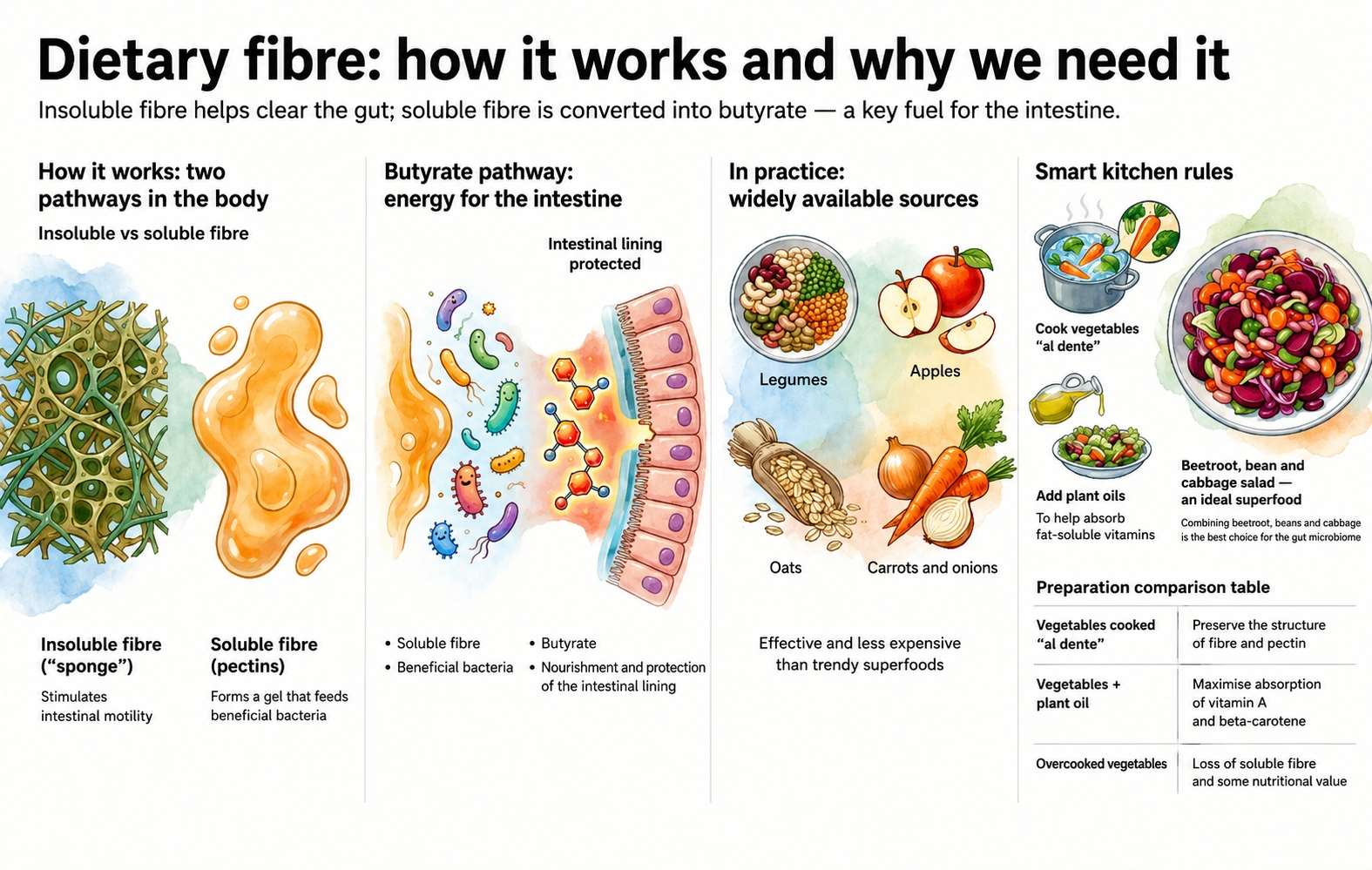
How insoluble and soluble dietary fibers support intestinal function, butyrate production, and a healthy gut microbiota.
Beyond Ingredients: Why the Cooking Method Matters Too
Therefore, for a salad to truly work, simply selecting fiber-rich ingredients is not enough. Preparing them in a way that preserves flavor, texture, and nutritional value is equally vital. This is precisely where the difference lies between a dismal plate of boiled vegetables and a meal that invites returning for more.
Boiled broccoli turns gray and slimy not due to poor cooking skills, but because boiling water never exceeds 100°C (212°F). The golden crust, nutty aroma, and signature sweetness of roasted carrots develop at much higher temperatures. Dry heat accomplishes what water physically cannot.
Root vegetables like carrots, beets, parsnips, and sweet potatoes seem designed for the oven. Their natural sugars concentrate and caramelize on the outside under high heat, while the flesh inside turns tender without falling apart. As a result, the vegetable remains nutritious while becoming genuinely delicious.
Roasting is simpler than it seems: Dicing vegetables into 2–3-centimeter (about 1-inch) cubes and tossing them with olive oil, coarse salt, thyme, or cumin is highly effective. The oil is necessary not only for flavor but also because it helps the surface heat evenly and drives caramelization. The oven should be set to 200–210°C (390–410°F), ideally with convection, for 25–35 minutes. Beets usually require time closer to the upper limit, whereas young carrots finish faster. The guideline is simple: the edges should be browned, and a knife should meet slight resistance rather than sliding straight through. These roasted vegetables easily last up to four days in the refrigerator, readily serving as the base for a quick salad or bowl.
A completely different logic applies to green vegetables. Broccoli, asparagus, and green beans do not require prolonged heat; they demand brief, precise processing. A plunge into generously salted boiling water for two to three minutes, followed immediately by an ice bath, is essential. Without this ‘shock,’ the vegetables continue to cook from their residual heat, losing both color and texture. Properly blanched broccoli remains vibrant green and slightly springy in the center—no longer delivering a raw crunch, but far from a lifeless boiled mass.
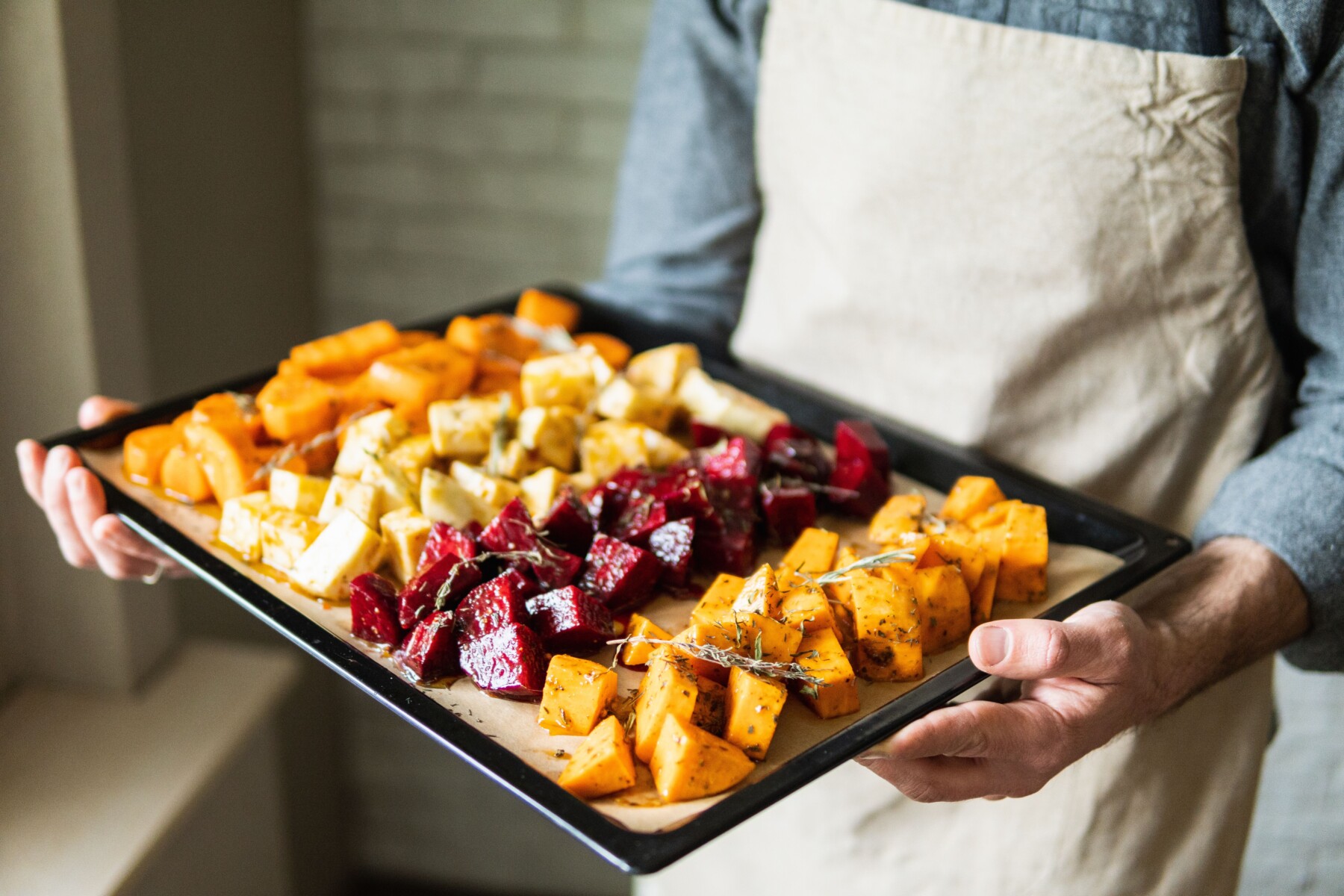
Roasting root vegetables is straightforward: 2–3-cm (1-inch) cubes, olive oil, salt, thyme, or cumin. Bake at 200–210°C (390–410°F) for 25–35 minutes. The oil enhances heating and triggers caramelization, preserving texture and flavor. They are ready when the edges are browned and a knife meets slight resistance.
Rescuing Stalks: Zero-Waste Recipes for the Lazy Gourmand
The most fibrous parts of vegetables are frequently discarded into the trash, which is a missed opportunity. A broccoli stalk is often richer in fiber than the florets. Carrot tops pack more nutrition than many realize. The skins of beets and parsnips are denser than the flesh and can actively contribute to a dish’s flavor and texture.
Broccoli Stalk Carpaccio. Trimming away the tough exterior reveals a dense, pale-green core. Slicing it on a mandoline or with a very sharp knife into thin, translucent rounds works best. Transferring the slices to a bowl, adding a splash of lemon juice, seasoning with salt, and resting for ten minutes softens them beautifully. Finishing with a drizzle of olive oil, grated Parmesan, and pine nuts yields a surprisingly delicate texture with a nutty flavor profile.
Carrot Top Pesto. Plucking the leaves from the stems of young carrot tops—roughly 100 grams (3.5 oz)—is the first step. Toasting 30 grams (1 oz) of pine nuts or walnuts in a dry skillet until lightly golden enhances the flavor. Processing the tops, nuts, a garlic clove, 40 ml (1.3 fl oz) of olive oil, the juice of half a lemon, and salt in a blender until smooth creates a vibrant paste. If the mixture is too thick, adding a splash of pasta cooking water helps. This pesto stores in the refrigerator for up to five days and functions seamlessly anywhere a classic pesto would.
Crispy Root Vegetable Skins. An important caveat applies here: the skin truly concentrates everything present on the vegetable’s surface during growth and storage. Therefore, sourcing reliable root vegetables and scrubbing them thoroughly with a brush under hot water is non-negotiable. The rest is straightforward: tossing the skins with olive oil, paprika, garlic powder, and salt, spreading them in a single layer on a baking sheet, and roasting at 200°C (400°F) for 12–15 minutes. The result is a batch of thin, aromatic chips perfect for soups, salads, or simply snacking.
Fiber in the Big City: Hitting the Daily Quota at the Office and in Restaurants
When dining out, paying closer attention to the side dishes rather than the main course often proves beneficial. Lentils, roasted chickpeas, roasted root vegetables, and warm grain bowls typically outperform a standard mixed salad in fiber content by several times. Even starting with hummus and bread easily provides 3–4 grams of fiber before the main dish arrives.
At the office, a simple combination of hummus and carrot sticks works exceptionally well. A 100-gram (3.5 oz) serving of hummus packs about 4–5 grams of fiber. Adding 100 grams (3.5 oz) of carrots contributes almost 3 more grams. The total reaches roughly 8 grams—nearly a third of the daily requirement achieved in a single snack.
Canned chickpeas, lentils, and beans represent a perfectly viable solution. Rinsing them thoroughly to remove the brine prepares them for immediate addition to almost anything: eggs, soups, pasta, or warm salads. Their nutritional profiles differ minimally from those cooked from scratch at home, rendering any culinary snobbery entirely unnecessary.
For those aiming to cover a third of the daily quota before noon, breakfast provides a prime opportunity. A bowl of whole-grain oatmeal topped with chia seeds and an apple delivers roughly 8–10 grams of fiber. Following such a robust start, obtaining the remaining balance throughout the day becomes significantly easier.
A very simple adjustment can be made at lunch today: swapping the usual ‘healthy’ salad for a bowl featuring chickpeas and roasted vegetables. Alternatively, opting for a side of hummus instead of the breadbasket is a smart move. Sometimes, a subtle shift is all it takes to change the entire picture: the microbiome finally receives proper nourishment, and the plate begins to function not just visually, but fundamentally.
0 comments