
When I first encountered intermittent fasting in practice, most people came with the exact same question: “I maintain my fasting window correctly, but I am still hungry. What am I doing wrong?” The answer almost always lies in the contents of the plate, not the eating schedule.
Intermittent fasting gained popularity precisely because it avoids calorie counting and complex restrictions. But a trap hides here: individuals focus on the clock, forgetting about food quality. Ultimately, the eating window turns into a sprint to get full quickly, leaving the body deprived of what it actually needs.
For those hearing about this for the first time: intermittent fasting is a dietary pattern where you cycle between periods of eating (the eating window) and fasting. The most popular protocol is 16/8: 16 hours without food, followed by an 8-hour eating window. For instance, you eat between 12:00 PM (noon) and 8:00 PM, and from 8:00 PM to 12:00 PM (noon) the next day, you consume only water or unsweetened tea. A milder variation exists, such as 14/10. The method dictates when to eat, not what to eat. And this is exactly where the problems begin.
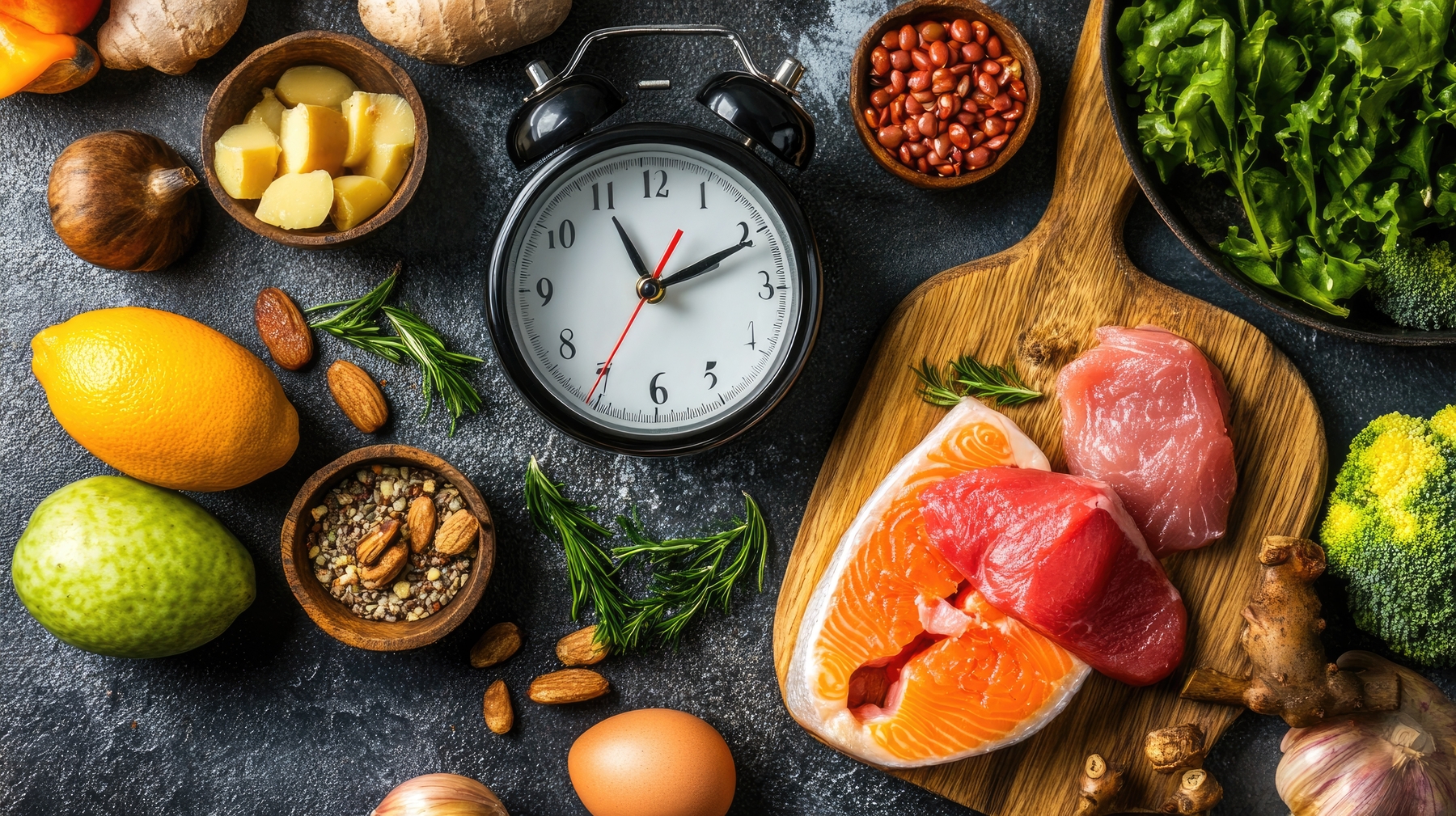
Intermittent Fasting: What to Put on Your Plate to Make It Work
Table of Contents
- Why You Stay Hungry Despite Following the Schedule
- Nutrient Density Matters More Than Calories
- The Plate Builder: What to Include and Why
- Timing and Temperature: The Details That Work
- Meal Prep: How to Avoid Derailment Due to a Lack of Ready Food
- How to Choose Food Outside the Home
- What to Do After a Setback
- Who Should Avoid This Method
- Intermittent Fasting Remains a Tool, Not a Goal
Why You Stay Hungry Despite Following the Schedule
Imagine opening your eating window at noon after a 16-hour fast. The natural instinct is to satisfy hunger rapidly. Many opt for quick fixes: sweet yogurt, a croissant, or juice. Half an hour later, the hunger returns, even though a meal technically happened.
The issue stems from the insulin response. Consuming simple carbohydrates (pastries, sweets, white rice) causes blood glucose levels to spike dramatically. The pancreas releases insulin to process this sugar. Glucose rushes into the cells, blood sugar levels drop, and the brain receives an urgent signal: “Food is needed immediately.” Hunger strikes again.
This does not make carbohydrates the enemy. It simply means that during a restricted eating timeframe, selecting foods that provide steady energy is crucial. Buckwheat, quinoa, whole-grain bread, and legumes digest much slower. Insulin rises smoothly, glucose enters the bloodstream gradually, and the feeling of satiety lasts for hours.
I usually explain it this way: simple carbohydrates act like pouring gasoline on a dying fire. A dangerous and hot flash occurs, dying out before it can actually provide warmth. Complex carbohydrates resemble dense oak logs, offering steady, even heat throughout the entire evening.
However, carbohydrates represent only part of the story. Even with the right grains, a plate lacks the power to keep you full without the other essential components. This brings us to what people frequently overlook.
Nutrient Density Matters More Than Calories
With only 8 hours to eat (on the 16/8 schedule), every meal requires not just energy, but a wealth of micronutrients. Magnesium, zinc, iron, and B vitamins directly affect how the metabolism functions, the quality of sleep, and the speed of recovery.
A classic example from my practice involves a client eating twice during their window, consuming macaroni and cheese both times. Technically, the calories suffice, but within a week, fatigue sets in, irritability spikes, and the skin looks dull. The body lacks iron from meat or legumes, magnesium from green vegetables, and omega-3s from fish.
Therefore, shifting the focus from “how much to eat” to “what to eat” changes everything. A plate featuring protein (chicken, fish, tofu), fiber (vegetables, leafy greens), healthy fats (avocados, nuts, olive oil), and complex carbohydrates (grains, legumes) fulfills the body’s needs and delivers lasting satiety.
This sounds like basic nutrition, and it is. Yet, within the context of intermittent fasting, these principles become absolutely critical. The opportunity to “catch up” on missing nutrients with a snack a couple of hours later simply vanishes—the next meal might happen in 4 to 6 hours, or even the next day. Consequently, every single plate requires maximum balance.
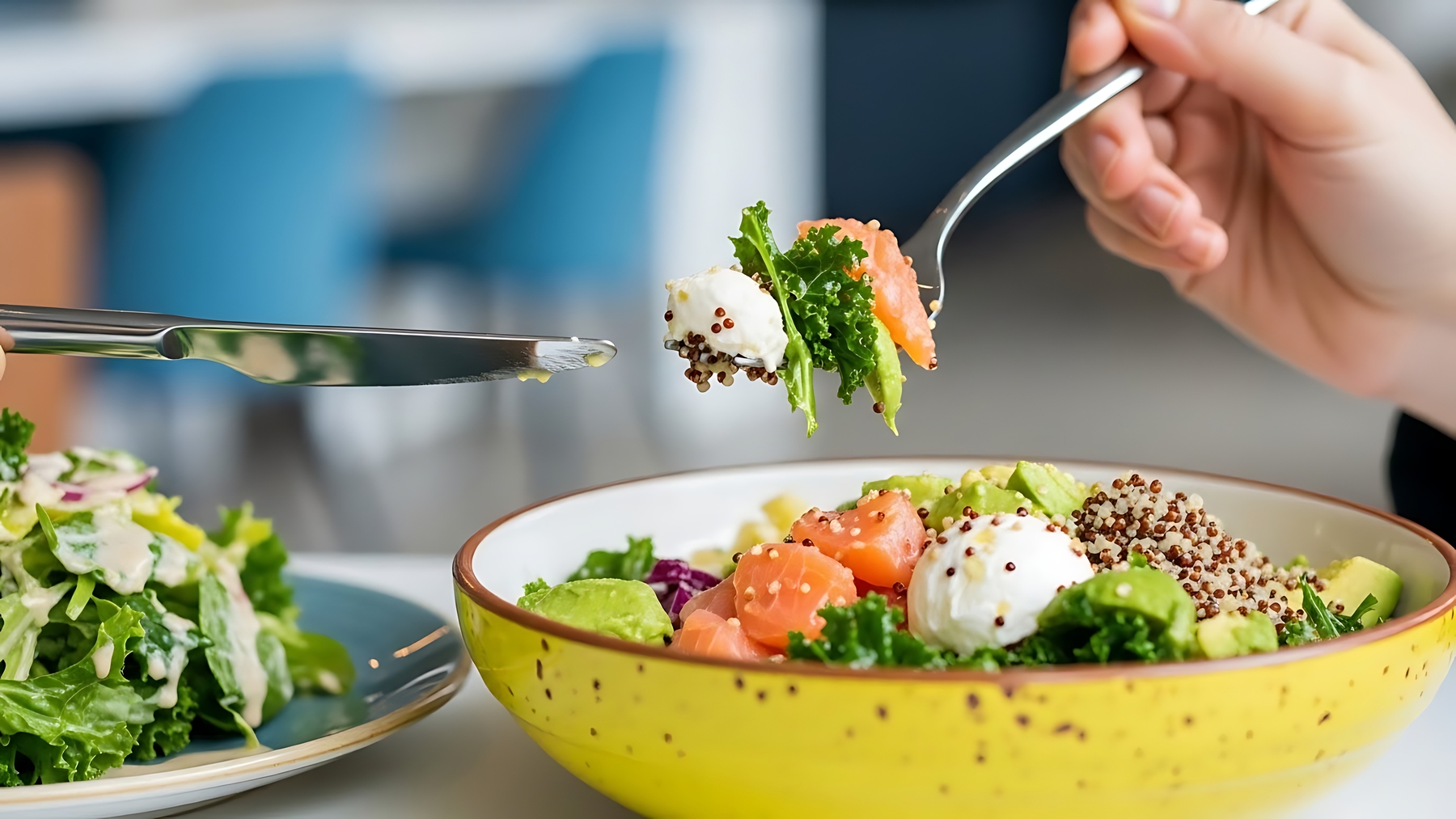
A balanced bowl featuring salmon, avocado, fresh greens, and grains serves as a perfect example of what to eat for lasting satiety and complete nourishment during your eating window.
The Plate Builder: What to Include and Why
I generally avoid rigid lists of allowed and forbidden foods, but a foundational formula works for the vast majority. This serves as a guideline, not a strict set of proportions, helping to assemble a meal that prevents hunger from returning an hour later.
Protein (30% of the Plate)
This forms the foundation of satiety. Protein digests slowly and helps preserve muscle mass, which remains critical during any caloric restriction.
Primary sources: chicken breast, turkey, fish (especially fatty varieties like salmon or mackerel), eggs, cottage cheese, tofu, and legumes.
For a tighter budget: eggs, chicken thighs (more affordable than breasts but richer in fat), canned tuna, and lentils.
Fiber (40% of the Plate)
Vegetables offer volume without excess calories, alongside essential vitamins and minerals. Fiber slows the absorption of carbohydrates, successfully preventing those sharp glucose spikes mentioned earlier.
Primary sources: broccoli, cauliflower, spinach, arugula, bell peppers, zucchini, cucumbers, and tomatoes.
For added variety: sweet potatoes, pumpkin, and carrots (they contain more carbohydrates, but boast high levels of beta-carotene).
Complex Carbohydrates (20% of the Plate)
This provides the essential energy demanded by the brain and muscles.
Primary sources: buckwheat, quinoa, brown rice, bulgur, whole-grain bread, and oatmeal.
A textural benchmark: cooking grains until slightly firm, “al dente,” ensures slower digestion. Overcooked grains digests quickly and offers less lasting fullness.
Fats (10% of the Plate or as an Addition)
Fats remain necessary for the absorption of vitamins A, D, E, and K, as well as for hormone synthesis.
Primary sources: olive oil, avocados, nuts, seeds (flax, chia), and fatty fish.
For a tighter budget: sunflower seeds, walnuts, and unrefined sunflower oil.
This formula acts as a flexible framework. Occasionally, protein takes up a bit more space, or carbohydrates slightly increase. The primary goal requires all components to be present. Their specific combination delivers the effect of lasting satiety and stable energy. However, even a perfectly composed plate can fail if the eating window begins incorrectly. Several frequently forgotten nuances play a role here.
A Quick Cheat Sheet for Lasting Satiety
| Component | Why It Is Needed | What to Include (Options) |
| Protein (30%) | Foundation of satiety and muscle protection. | Chicken, turkey, fish, eggs, cottage cheese, tofu, or lentils. |
| Fiber (40%) | Volume without calories and blood sugar control. | Broccoli, spinach, peppers, cucumbers. Plus: pumpkin or carrots. |
| Carbohydrates (20%) | Energy for the brain and muscles. | Buckwheat, quinoa, bulgur. Marker: cook to an al dente state. |
| Fats (10%) | Hormones and absorption of vitamins A, D, E, K. | Olive oil, avocados, any nuts or seeds. |
Timing and Temperature: The Details That Work
The classic regimens usually involve 16/8 (16 hours fasting, 8 hours eating) or 14/10. Starting with a 14/10 schedule provides more comfort and easily fits into a regular daily rhythm.
An essential detail: breaking the fast with warm food makes a difference. This relies on physiology, not esoteric beliefs. Warm food stimulates the production of digestive juices, allowing the stomach to accept meals more easily after a long pause. Consuming a cold salad or drinking ice water right away can lead to heaviness or discomfort.
Excellent options for the first meal include a warm soup, roasted vegetables with protein, an omelet, or porridge with nuts. If time runs short, sipping warm broth or tea before the main meal helps.
Another frequently overlooked point involves avoiding coffee on a completely empty stomach at the start of the window. Many break their fast with a cup of coffee, assuming it causes no harm. However, caffeine on an empty stomach triggers a sharp cortisol spike and can lead to a drop in blood sugar levels. The result brings intense, ravenous hunger just an hour after eating, regardless of portion size. Drinking coffee after the first meal, or at least alongside a small portion of protein (like an egg or a handful of nuts), prevents this issue.
Physical well-being during the fasting hours deserves a separate mention. Experiencing weakness, headaches, or dizziness often points to a lack of electrolytes rather than a lack of food. During prolonged pauses (16 hours or more), the body actively flushes out water and sodium. A simple solution involves dissolving a pinch of salt in a glass of water and drinking it. People frequently miss this nuance, yet it significantly alleviates discomfort. If symptoms persist regularly, reconsidering the duration of the fasting periods or consulting a physician becomes necessary.
These details might seem minor, but in practice, they dictate whether the experience feels comfortable. Comfort ensures long-term adherence rather than quitting after a week. Speaking of comfort, the frequent problem of having absolutely no time to cook also requires attention.
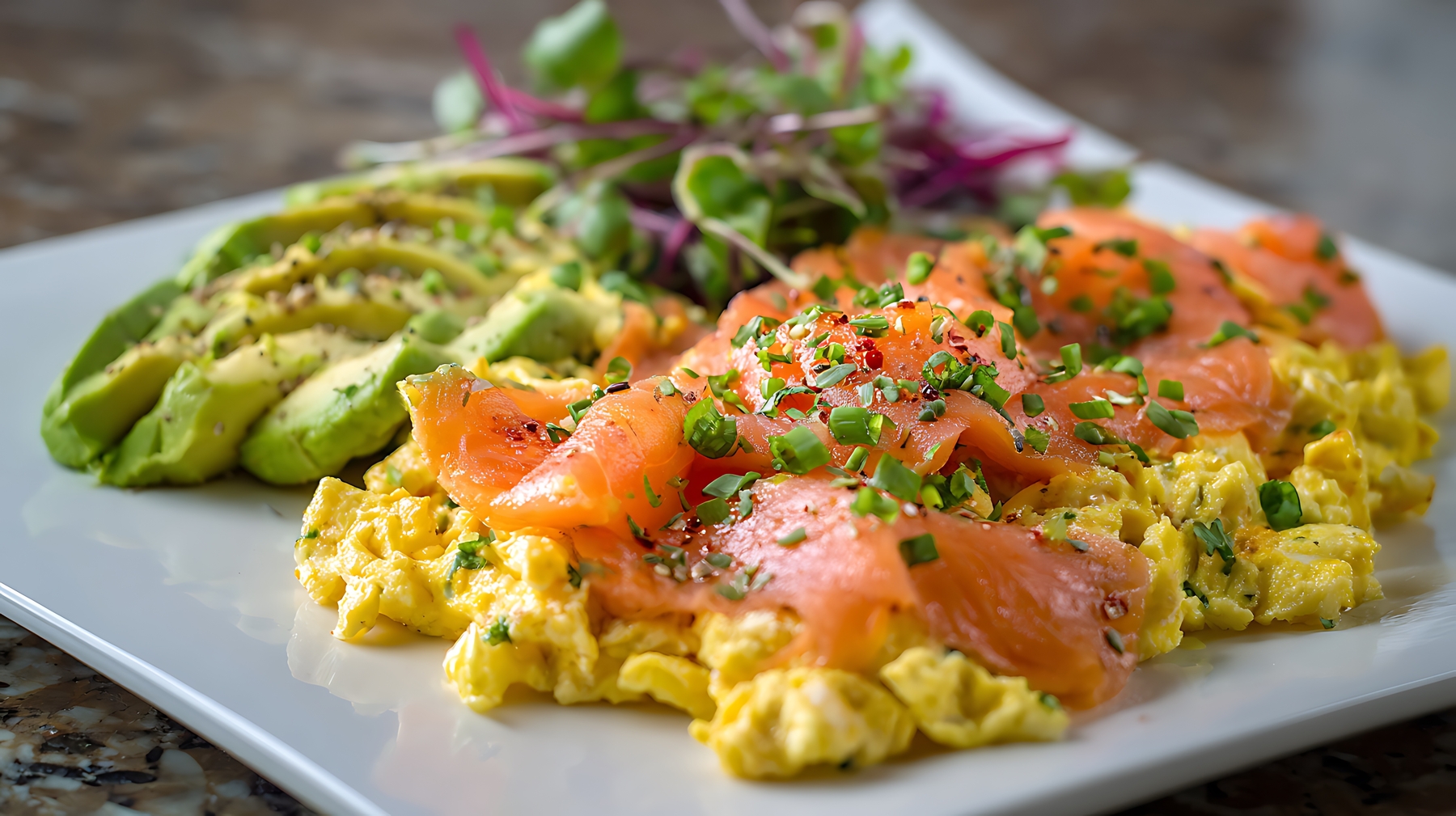
A warm omelet with salmon, avocado, and greens offers a comfortable first meal after a fast. It digests easily and gently restarts the digestive process.
Meal Prep: How to Avoid Derailment Due to a Lack of Ready Food
The most common reason for breaking the regimen happens when the window opens, but no time exists for cooking. People end up grabbing whatever lies around: a sandwich, cookies, or a pizza delivery.
The solution lies in preparing ahead without going overboard. Spending an hour twice a week on basic meal prep suffices.
What to prepare in advance:
- Roasted meat or fish (chicken, turkey, salmon). These stay fresh in the refrigerator for 3 to 4 days.
- Boiled grains (buckwheat, quinoa, brown rice). They reheat in just two minutes.
- Chopped vegetables for salads or roasting.
- Broths made from vegetable scraps (carrot peels, herb stems, onion skins). Sipping this broth during fasting hours provides warmth and slightly dulls the appetite while containing almost zero calories.
The process is straightforward: pull the prepared protein from the fridge, warm up the grains, add fresh or roasted vegetables, and dress with oil. A complete plate comes together in 10 minutes, containing everything discussed earlier: protein, fiber, carbohydrates, and fats.
But life extends beyond the home kitchen. Sometimes the eating window catches you at the office, in a cafe, or on the road. Navigating these situations requires its own set of rules.
How to Choose Food Outside the Home
If the eating window closes in an hour and a restaurant or delivery is the only option, a simple rule applies: protein plus fiber.
What to look for on the menu:
- Grilled items (chicken, fish, steak) accompanied by a vegetable side.
- Bowls featuring quinoa, vegetables, and protein.
- Broth-based soups (avoiding cream soups, which frequently contain heavy cream and flour).
What to avoid:
- Deep-fried battered foods (packed with hidden fats and simple carbohydrates).
- Dishes smothered in mayonnaise or cream-based sauces (high in calories, low in satiety).
- Pasta made from refined wheat (digests rapidly).
If a dessert feels absolutely necessary, eating it after the main meal rather than on an empty stomach makes a difference. The fiber and protein from the main dish slow down sugar absorption, successfully avoiding a sharp glucose spike.
This strategy works perfectly in most scenarios. But what happens when things go completely off script? What if a window gets missed, the wrong food gets eaten, or the schedule simply falls apart?
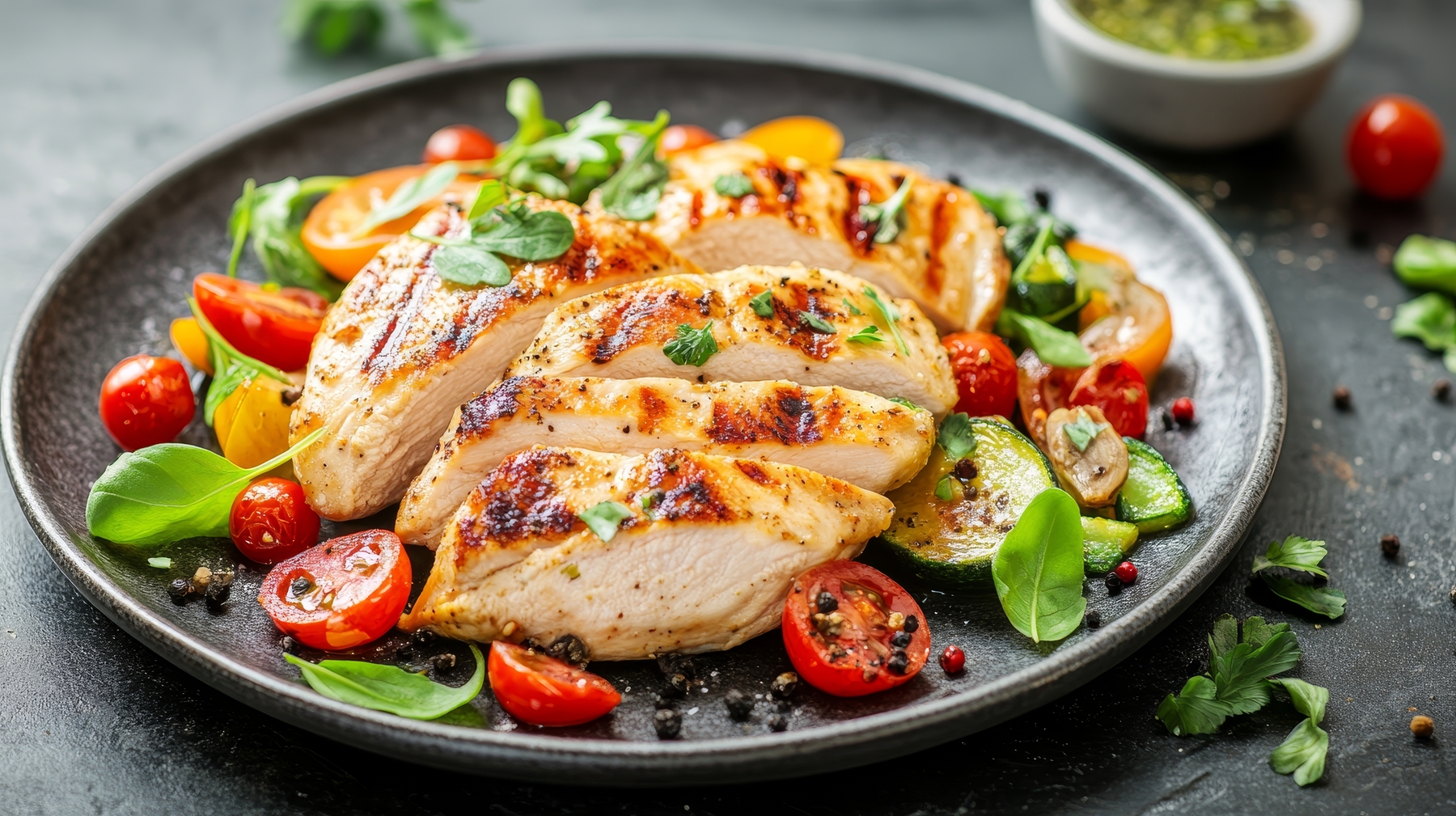
When eating out with limited time, rely on the basics: a solid protein source like grilled chicken paired with fiber-rich vegetables and greens. It delivers pure satiety without the excess.
What to Do After a Setback
Schedules occasionally break down: a window gets missed, overeating happens, or meal prep falls behind. This is entirely normal. Intermittent fasting serves as a tool, not a religion, and a single setback does not ruin the entire process.
Avoiding extremes remains the primary goal. Resorting to extreme fasting the next day, or conversely, giving up on the method entirely, achieves nothing. Simply returning to the regular schedule at the very next meal is the best approach.
People often turn intermittent fasting into a profound source of stress. They fear eating the “wrong” thing, worry over every minor deviation, and experience intense guilt. Yet, stress itself directly impacts the metabolism and can completely negate all the benefits of the method. If the approach triggers anxiety rather than comfort, rethinking the strategy or abandoning it completely makes sense.
Ultimately, any dietary method functions merely as an instrument. An instrument should genuinely simplify life, rather than complicate it.
Who Should Avoid This Method
Intermittent fasting does not offer a universal solution, and certain situations demand avoiding it altogether.
Individuals with a history of eating disorders should steer clear. Strict timeframes can easily trigger binge-and-restrict cycles, where a person consumes significantly more than necessary during the window out of a sheer fear of not feeling full enough. For anyone who has experienced anorexia, bulimia, or binge eating disorder, intermittent fasting risks reviving destructive patterns.
Pregnant and breastfeeding women must also avoid this method. During these critical periods, the body requires a stable, continuous influx of nutrients throughout the entire day, and prolonged fasting pauses can harm both the mother and the child.
Another risk group involves individuals dealing with gallstones. Extended breaks between meals can provoke bile stagnation and severe flare-ups. Consulting a physician before attempting intermittent fasting remains absolutely mandatory for anyone with gallbladder issues.
Generally speaking, anyone managing chronic conditions or taking regular medications must discuss this method with a healthcare professional. What proves effective for healthy individuals does not always guarantee safety for specific medical diagnoses.
Intermittent Fasting Remains a Tool, Not a Goal
Any dietary approach must stem from a clear understanding of why it is being utilized. If intermittent fasting successfully helps control appetite, brings a sense of lightness, and saves valuable time, it works perfectly. However, if every single day turns into a relentless battle against hunger and obsessive thoughts about food, this method fails to serve its purpose.
The contents of the plate always matter, regardless of whether a person eats three meals a day or fits everything into a strict eight-hour window. Protein ensures lasting satiety and muscle preservation, fiber aids digestion and stabilizes blood sugar, fats support hormone production, and complex carbohydrates deliver essential energy. This forms a foundational baseline that operates effectively across any dietary approach.
Intermittent fasting can significantly amplify results when combined with a well-structured diet. Yet, if a plate relies heavily on random, low-quality ingredients, no schedule on earth will save the situation. Therefore, starting with a deep understanding of exactly what goes onto the plate and why proves infinitely more valuable than starting a timer. Everything else simply comes down to technique.
0 comments