
Turmeric occupies a rare category: scientists actively study its health benefits, yet it simultaneously ranks among the most overhyped ingredients in the kitchen when wellness comes into play. Hundreds of clinical papers and dozens of comprehensive scientific reviews examine this golden spice. This same body of research fuels a massive supplement marketing machine promising support for joints, heart health, liver function, immunity, and cancer protection. However, a vast chasm separates a promising result in a petri dish from what a teaspoon of spice actually accomplishes on a dinner plate.
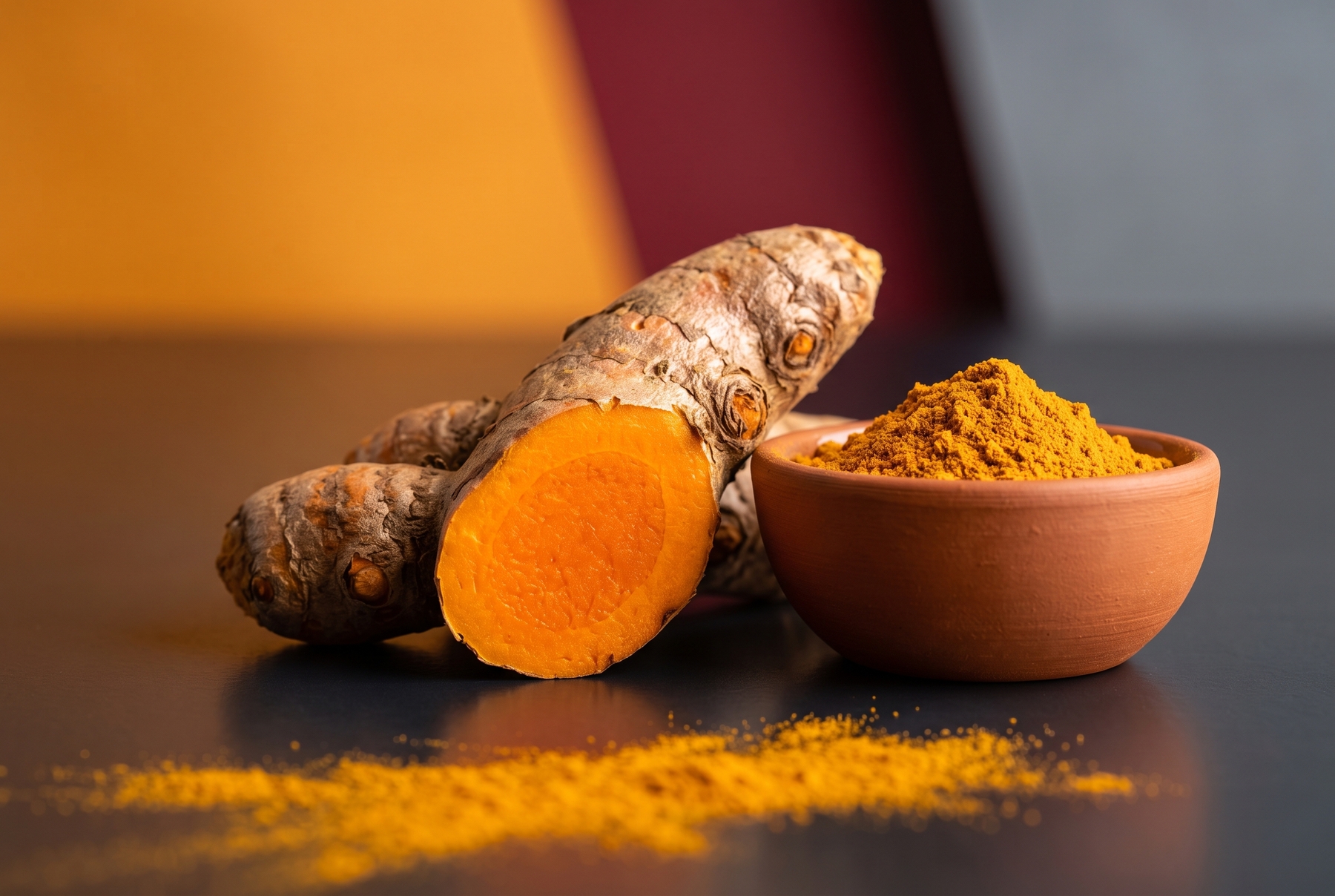
Fresh turmeric root and ground powder serve as the natural source of the active compound curcumin.
Table of Contents
- Turmeric and Curcumin: Why the Difference Matters
- Where the Evidence for Curcumin Looks Strongest
- What Remains a Promise Rather Than Proven Fact
- Why Curcumin Research Does Not Apply to a Pinch in Your Pilaf
- Turmeric in the Kitchen: A Spice, Not a Medicine
- Curcumin Supplements: Why Safety Outweighs the Hype
- The Honest Verdict in 2026
- Sources
Turmeric and Curcumin: Why the Difference Matters
Clarifying this distinction is the essential starting point, as people frequently confuse the two. Producers make culinary turmeric by grinding the rhizome of the Curcuma longa plant, yielding the familiar vibrant yellow spice that anchors curry powders. Curcumin gives the spice its signature golden hue, and researchers attribute almost all of turmeric’s purported health benefits to this specific compound. Yet curcumin represents just one component of turmeric; the culinary spice itself contains a very modest amount of curcuminoids (with curcumin as the primary one), accounting for only 2 to 5% of its total weight according to various estimates.
Scientific studies almost never test standard ground turmeric from a grocery store shelf. Instead, researchers use concentrated extracts, isolated curcumin, specialized formulations engineered for superior absorption, and doses reaching hundreds or thousands of milligrams (0.004 to 0.04 oz). This creates an entirely different substance in a vastly different quantity. Consequently, results achieved with a specific pharmaceutical-grade supplement simply do not translate to a pinch of spice stirred into a meal.
Where the Evidence for Curcumin Looks Strongest
Knee Pain in Osteoarthritis
Knee osteoarthritis develops when the protective cartilage inside the joint gradually wears down, leaving the joint aching, stiff, and notoriously rigid in the morning. Curcumin boasts one of its most convincing bodies of evidence in this exact area, specifically regarding pain relief for knee osteoarthritis. Comprehensive reviews and clinical trials [1] demonstrate that turmeric extracts reduce knee pain more noticeably than a placebo (an inactive dummy pill), and in short-term studies, their pain-relieving effects rival familiar over-the-counter painkillers like ibuprofen.
However, the quality of these studies varies significantly. A major critical review published in 2026 [2] evaluated seven such systematic reviews on knee osteoarthritis and concluded that nearly all of them suffered from methodological flaws too severe to inspire absolute confidence. The individual trials remain brief (typically lasting just a few weeks or months, with virtually no long-term data) and involve small participant groups. Furthermore, the tested preparations and dosages differ wildly across studies, and those specialized, bio-enhanced formulations consistently deliver the best results rather than plain powder from a spice jar.
In practical terms, the evidence genuinely points toward moderate pain relief. Conversely, no evidence suggests that curcumin cures osteoarthritis itself (meaning it does not halt joint deterioration) or replaces treatments prescribed by a physician. Separating symptom management from disease reversal remains crucial.
Blood Sugar, Cholesterol, and Blood Pressure
A similar narrative unfolds regarding metabolism. A large-scale data analysis [3] involving individuals with prediabetes and type 2 diabetes revealed that curcumin slightly lowers fasting blood sugar and glycated hemoglobin (HbA1c, a marker reflecting average blood sugar levels over the preceding three months). Separate meta-analyses also note a modest reduction in triglycerides and “bad” LDL cholesterol [8].
These reductions remain small, representing a slight improvement on a lab report rather than proven protection against heart attacks, strokes, or diabetic complications. Moreover, results across different studies diverge sharply. Outcomes depended heavily on the specific supplement formulation and participant characteristics, yet researchers could not establish a consistent dose-response relationship. Regarding blood pressure, the collective data appears largely neutral: most meta-analyses found no consistent drop in either systolic or diastolic blood pressure.
Inflammatory Markers in Lab Tests
Curcumin genuinely shifts laboratory markers of inflammation. An umbrella review examining 54 scientific reviews [4] confirms that the majority of studies showed a decrease in blood inflammation indicators, such as C-reactive protein.
Still, improving a number on a blood test and preventing an actual disease represent two very different outcomes. A blood marker can drop while the real-world risk of a heart attack or cancer remains unchanged. Current data does not yet establish a direct causal link showing that a lower inflammatory marker from curcumin translates to a longer lifespan.

Curcumin demonstrates its most convincing clinical results in relieving pain associated with knee osteoarthritis.
What Remains a Promise Rather Than Proven Fact
Marketing promises diverge most dramatically from clinical data in several high-profile areas. Cancer serves as a prime example. A review of clinical trials [5] identified benefits in only two narrow scenarios: curcumin (administered as mouthwashes and supplements) slightly eased oral mucositis (painful inflammation of the mouth’s lining) in patients undergoing chemotherapy and radiation therapy, and helped them experience less weight loss. These findings reflect supportive care during conventional treatment, not evidence that turmeric cures tumors.
Even less data supports other heavily advertised effects and purported benefits of turmeric. Clinical evidence regarding Alzheimer’s disease and memory remains sparse; researchers have conducted no trials on dementia prevention, and early studies in patients with established Alzheimer’s showed no improvement. While clinical trials and meta-analyses exist for depression and weight loss, the observed effects are minor or inconsistent, making it impossible to recommend curcumin as a reliable treatment for either condition based on current science. Claims surrounding “liver detoxification,” “immune boosting,” and universal anti-inflammatory action currently rest primarily on appealing theories, animal studies, and small, fragmented human trials. While this warrants further scientific exploration, it falls entirely short of justifying medical promises.
Why Curcumin Research Does Not Apply to a Pinch in Your Pilaf
Bioavailability presents the primary hurdle here. This term describes the fraction of an ingested substance that actually enters the bloodstream to perform active work. Curcumin struggles immensely in this regard: the gut absorbs it poorly, and the body rapidly metabolizes and excretes it, leaving only trace amounts to reach the circulation. Consequently, clinical trials rely on concentrated extracts, lipid-based and micellar delivery systems, nanoparticles, absorption enhancers, and massive doses impossible to obtain through normal home cooking.
Black pepper, the most famous enhancer, works through an active compound called piperine. In substantial, concentrated doses, piperine inhibits the body’s rapid breakdown of curcumin, which some data suggests can multiply its absorption severalfold. This mechanism sparked the popular culinary rule of always pairing turmeric with black pepper. However, a casual grind of pepper over dinner and concentrated piperine inside a capsule differ vastly in dosage. When taking supplements or substantial doses of piperine, consumers must exercise caution: the exact same mechanism interferes with prescription medications, potentially amplifying or weakening their effects. Furthermore, high-bioavailability formulations and products containing piperine have appeared repeatedly in documented cases of liver injury (though scientists cannot definitively name piperine as the sole culprit).
Turmeric in the Kitchen: A Spice, Not a Medicine
In the kitchen, cooks look to turmeric for entirely different qualities: vibrant color, aroma, and a subtle bitterness. Turmeric offers a warm, earthy fragrance and a deep ochre hue that stains rice, wooden cutting boards, and fingers alike. It forms the backbone of curries, lentil soups, braised vegetables, rice dishes like pilaf (a seasoned rice dish cooked in broth), and sauces, lending a gentle bitterness and golden warmth to dishes that might otherwise feel flat and pale.
From a nutritional perspective, the philosophy is simple: an ingredient does not need to be a miracle superfood to earn its place on the spice rack. A diverse, balanced diet matters far more than any single root or powder.
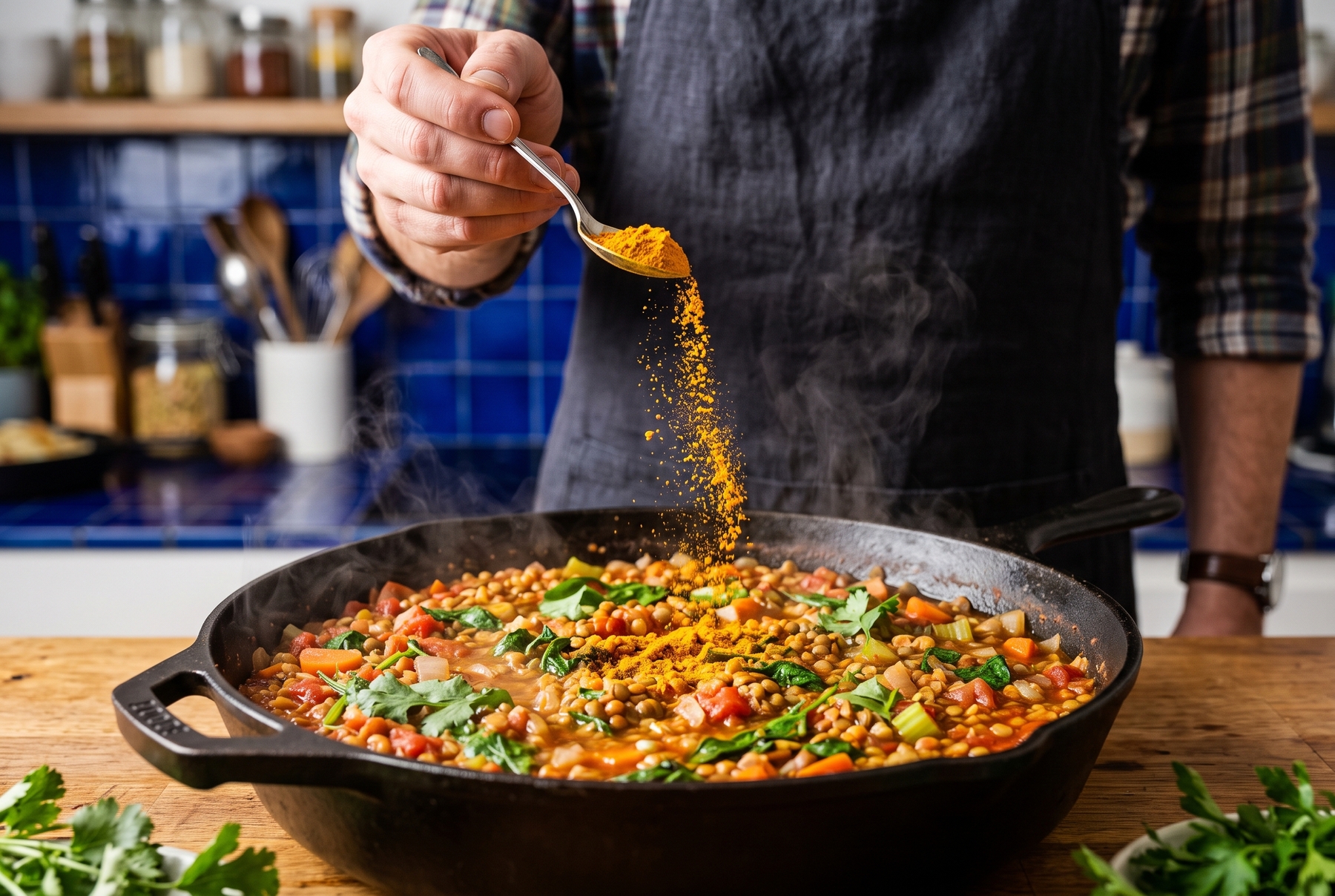
In the kitchen, cooks prize turmeric for its warm, earthy flavor and rich golden hue, treating it primarily as a culinary spice rather than medicine.
Curcumin Supplements: Why Safety Outweighs the Hype
Culinary turmeric and concentrated curcumin supplements differ significantly, especially regarding safety profiles and contraindications. According to assessments by the U.S. National Center for Complementary and Integrative Health (NCCIH) [6], turmeric in standard culinary amounts is completely safe, and conventional turmeric or curcumin products (those not chemically engineered for hyper-absorption) are likely safe for short-term use of up to 2–3 months, though mild side effects like nausea, heartburn, or stomach upset can occur.
Supplements present a more complex picture. In recent years, medical literature has recorded a notable number of cases where concentrated turmeric preparations caused liver damage. The Drug-Induced Liver Injury Network (DILIN) documented 10 such patients [7], prompting regulatory agencies in Australia, Canada, and several European nations to issue warnings and implement safety measures regarding liver risks (though no unified pan-European mandate currently exists). This adverse reaction remains rare and appears tied to individual susceptibility, with researchers identifying a specific genetic variation in several affected patients that elevates their risk. Nevertheless, anyone taking curcumin supplements who develops yellowing of the eyes, dark urine, nausea, or unexplained fatigue must stop taking the product immediately and consult a doctor. Individuals with pre-existing liver conditions, those taking blood thinners or diabetes medications, and pregnant women require particular caution.
The Honest Verdict in 2026
Sorting the current evidence by reliability reveals a clear picture. The most compelling scientific data applies not to culinary turmeric as a whole, but to specific extracts and bio-enhanced formulations of curcumin. Several of these specialized products show genuine promise, most notably for relieving joint pain in knee osteoarthritis. Yet the overall quality of the research still prevents scientists from declaring curcumin a universal panacea; while hints of benefit exist, definitive proof of a cure does not. Ultimately, home cooks should appreciate standard ground turmeric for what it has always been: a flavorful, vibrant spice that turns rice golden and rounds out the flavor of a great sauce.
Sources
- Feng J. et al. “Efficacy and safety of curcuminoids for pain and functional impairment in knee osteoarthritis: a systematic review and meta-analysis of RCTs.” BMC Complementary Medicine and Therapies, 2022.
- Chen J. et al. “A critical umbrella review of systematic reviews and meta-analyses of curcumin in knee osteoarthritis.” Frontiers in Pharmacology, 2026.
- Bahari H. et al. “Curcumin, turmeric, and glycemic control in prediabetes and type 2 diabetes: a dose-response meta-analysis.” Food Science & Nutrition, 2026.
- Lee Y.-M., Kim Y. “Curcumin in chronic inflammatory-metabolic diseases: an umbrella review of meta-analyses of RCTs.” Nutrients, 2024.
- Gutsche L. C., Dörfler J., Hübner J. “Curcumin as an adjunct to oncological therapy: a systematic review.” European Journal of Clinical Pharmacology, 2025.
- NCCIH (National Center for Complementary and Integrative Health, U.S. NIH). “Turmeric: Usefulness and Safety,” 2025.
- Halegoua-DeMarzio D. et al. “Liver Injury Associated with Turmeric: 10 Cases from the DILIN Network.” The American Journal of Medicine, 2023.
- Bahari H., Malekahmadi M., Shahraki Jazinaki M., Asadi Z., Soltaninejad K., Golafrouz H. “Effects of curcumin and turmeric supplementation on lipid profile in prediabetes and type 2 diabetes: a systematic review and meta-analysis.” Lipids, 2026.
0 comments