
In the popular hierarchy of side dishes, everything has long been decided: potatoes are ‘pure starch,’ pasta provides ’empty calories,’ and rice is almost automatically considered a healthy choice that raises few questions. This scheme is convenient, but it has little to do with your actual plate. Composition-wise, polished white rice is much closer to that ’empty’ pasta than commonly thought. Ordinary boiled potatoes provide better satiety than many foods typically deemed healthier, and a bowl of pasta with vegetables and fish can easily become the most balanced dinner of the week. The debate over a winner is best postponed. First, we need to agree on exactly what we are comparing.
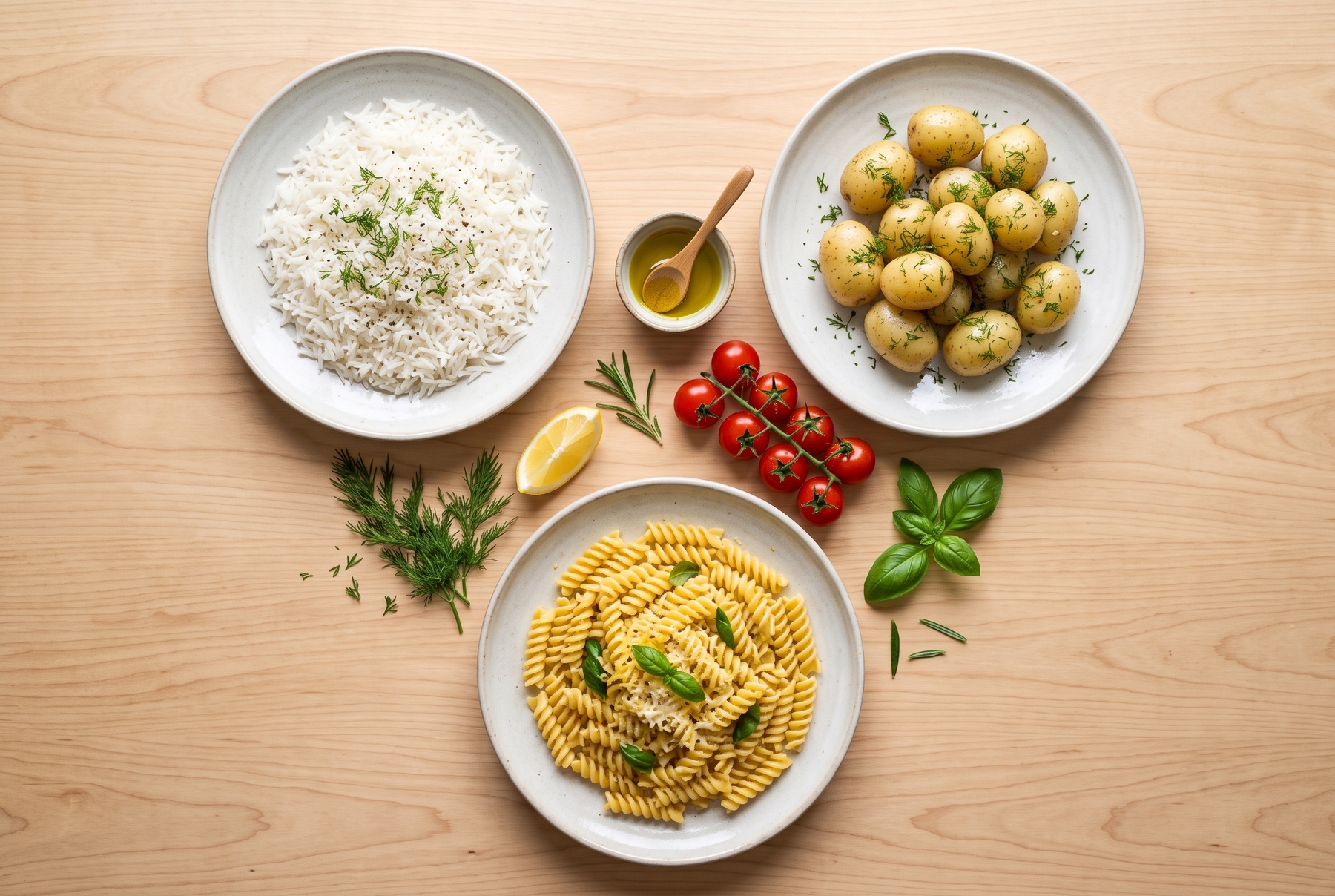
Three classic side dishes in one kitchen: white rice, boiled new potatoes with dill, and spiral pasta. Each brings its own unique advantages.
Table of Contents
- Why There Is No Single Answer To Which Side Dish Is Healthier
- Potatoes: The Cooking Method Decides Everything
- Which Rice Is Healthier: It Depends On The Variety, And Even More On The Portion
- Is Pasta Healthy: Pasta Has Nothing To Apologize For
- Why Numbers Are Easily Misread
- Which Side Dish To Choose: Each Has Its Strength
- Health Is Created On The Plate, Not In The Pot
- How To Choose A Side Dish For The Task
- Mistakes That Ruin Any Side Dish
- So, Which Is Actually Healthier?
Why There Is No Single Answer To Which Side Dish Is Healthier
A single number in a nutritional table is rarely enough for a side dish. Comparing rice, potatoes, and pasta seriously requires looking beyond mere calories. The typical portion size, protein and fiber content, the degree of grain or tuber processing, how long satiety lasts after eating, and the composition of the rest of the plate all matter. One comparison puts potatoes ahead, while another favors rice or pasta. The answer turns out to be less elegant: stating definitively which side dish is universally healthier is simply impossible.
Social media calorie tables often overlook one crucial nuance: they compare foods in different states. Dry pasta and raw rice absorb water during cooking, making the finished portion weigh more, while potatoes already contain this water. Thus, comparing ‘hundreds of calories in pasta versus dozens in potatoes’ is like comparing a crouton to soup. At home, comparing cooked portions makes more sense. Once boiled, rice, pasta, and potatoes end up being much closer to each other than the numbers on the dry packaging suggest. Exact values for calories, protein, and fiber depend on the variety and brand, so any figures here are best read as general guidelines.
Potatoes: The Cooking Method Decides Everything
People often consider potatoes heavy, ‘starchy’ food, although the issue rarely lies with the tuber itself. Boiled or baked potatoes contain relatively few calories (roughly 80–90 kcal per 100 g / 3.5 oz of cooked product), offer potassium, some fiber (especially in the skin), and a bit of vitamin C. Vitamin C is tricky: its content decreases with prolonged storage and heat treatment, so a February potato is not quite the same as a September one in this regard. However, potatoes excel at satisfying hunger. Despite their modest caloric footprint, they stand as one of the most filling everyday foods. A warm, dense portion of potatoes cooked in their jackets often provides deeper satiety than expected.
Problems usually start right in the kitchen. Potatoes boiled in their jackets, peeled boiled potatoes, mashed potatoes enriched with heavy cream and butter, baked wedges, pan-fried potatoes, and French fries all technically originate from the exact same product. Yet, for a daily diet, they represent entirely different dishes. Butter, cream, cheese, the degree of mashing, and portion size dramatically alter the nutritional picture. Diners consume a tender, buttery puree much faster and in larger quantities than the same weight of solid potato chunks, while French fries absorb so much fat that this ‘side dish’ quickly catches up to the main course in calories. Mashed and fried potatoes do not belong on a blacklist. They simply represent versions not meant for everyday consumption, best enjoyed in smaller portions alongside protein and vegetables, without unnecessary panic over the plate.
For busy weekdays, a simple guideline works best: the potato remains solid, does not float in fat, and occupies the space of a side dish rather than taking over the entire plate. New potatoes lightly tossed with dill and a massive serving of French fries both stem from the same plant, but they place a completely different metabolic load on your body.
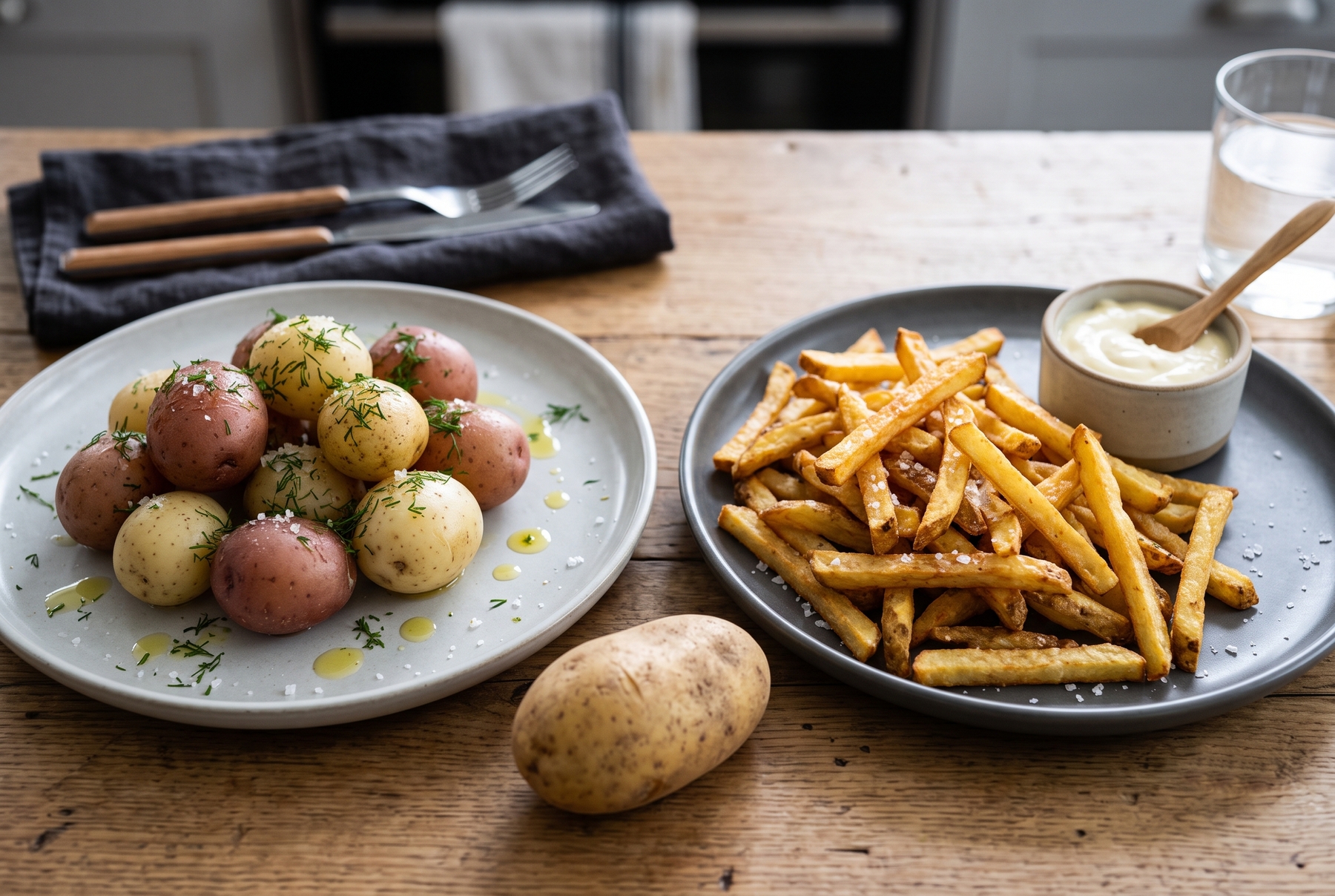
The cooking method determines everything: simple boiled potatoes retain their nutritional value and satisfy hunger perfectly, whereas French fries carry a significant excess of fat.
Which Rice Is Healthier: It Depends On The Variety, And Even More On The Portion
The word ‘rice’ encompasses wildly different products. White polished rice has its bran and germ removed, meaning it cooks quickly and rarely clashes with other foods, but it notably lacks fiber and certain vitamins. Brown, or unpolished, rice retains its bran layer, keeping its fiber and a distinct nutty flavor intact, though it requires a significantly longer cooking time. Parboiled rice lands somewhere in the middle: the steam treatment forces some nutrients from the bran into the grain’s endosperm, resulting in fluffy and highly predictable rice.
On paper, brown rice appears ‘better.’ At home, taste and available cooking time take precedence. If its flavor does not appeal to you, and boiling it for forty minutes after a long workday feels exhausting, your actual diet benefits far more from white rice served with vegetables and fish than from a bag of brown rice you cook twice and abandon. Dietary advice that ignores personal taste and daily routines is usually discarded very quickly.
Rice possesses another distinct trait: it easily acts as a mere canvas for sauce, allowing portion sizes to grow unnoticed. An extra spoonful ‘to round out the plate,’ another ‘so the sauce does not go to waste,’ and suddenly the side dish covers half the plate. Furthermore, rice served with fish, plov (a traditional Central Asian pilaf rich in meat and fats), vegetable rice, and sweet milk rice porridge represent four dishes with completely different dietary roles, even though the base ingredient remains identical. This distinction is especially clear in Russia and the CIS countries: round-grain rice is purchased for porridges, parboiled for a quick side, and a special variety for plov. There is solid logic here: when choosing rice, paying attention to the grain’s processing level, its accompaniments, the amount of added oil or sauce, and the presence of vegetables, legumes, or whole-grain bread on the menu that day is essential.
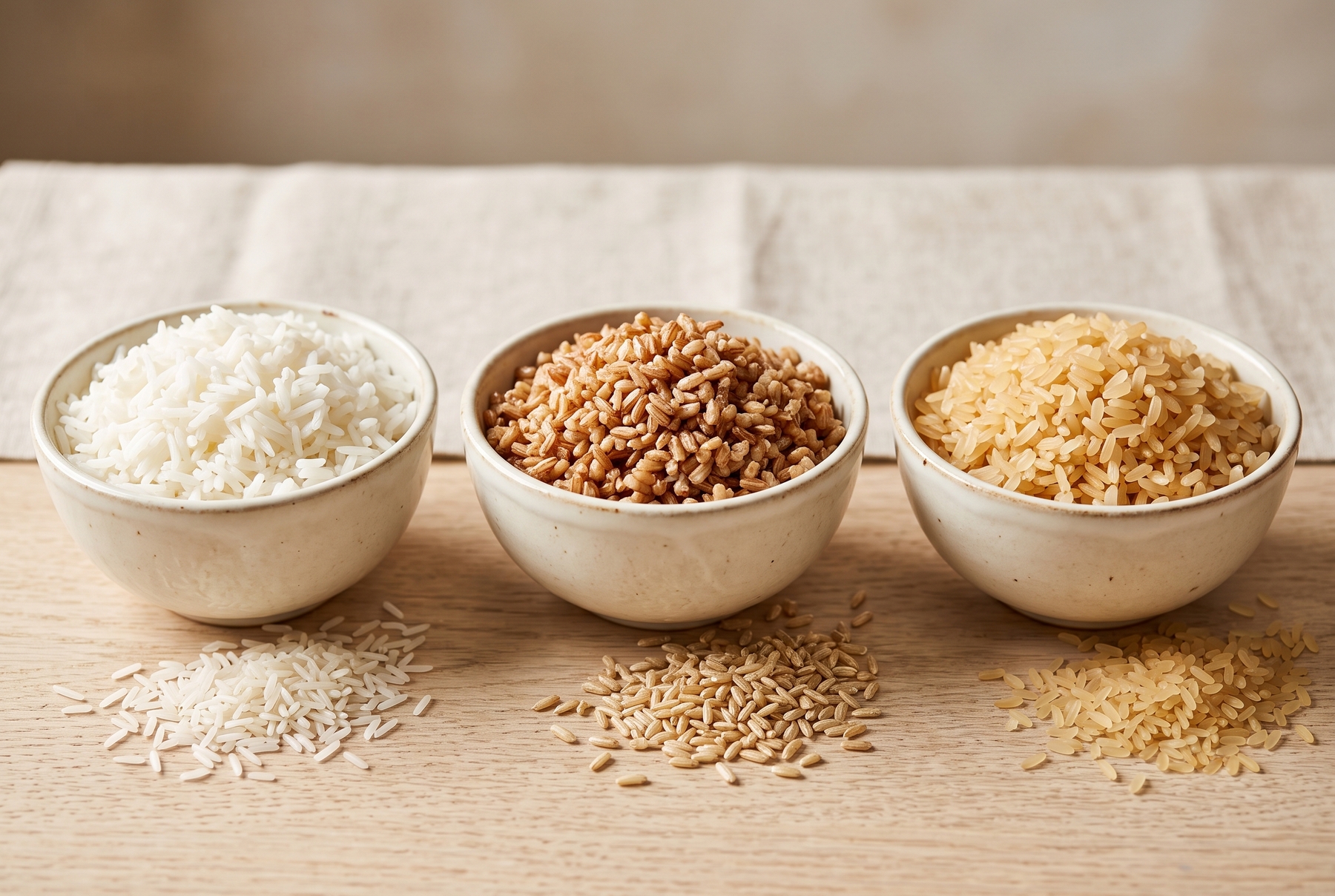
White, brown, and parboiled rice undergo different levels of grain processing, which directly impacts their fiber content and overall cooking time.
Is Pasta Healthy: Pasta Has Nothing To Apologize For
Out of the trio, pasta endures the most criticism, which is largely unjustified. The ingredient profile is a great starting point: pasta made from durum wheat contains noticeably more plant-based protein than people typically expect, often surpassing both rice and potatoes (exact amounts should be checked on specific brand packaging, as they can vary). Pasta does not replace meat, fish, or legumes, but it absolutely does not equate to ’empty calories.’ Macaroni made from soft wheat quickly turns mushy in the pot and fails to hold its shape well, whereas whole-grain pasta introduces valuable fiber, albeit accompanied by a coarser texture that, frankly, not everyone enjoys.
The degree of doneness impacts more than just flavor. Diners consume firm, slightly chewy pasta at a slower pace and chew it longer. Pasta boiled until entirely soft requires almost no chewing, making it much easier to overeat. While one should not expect a magical healing effect from an al dente preparation, the texture remarkably alters the eating pace and the resulting feeling of satiety.
Growing up in Bologna, I lived in a household where the Italian cult of pasta met the Eastern European love for hearty potatoes. Not once did I encounter pasta served as a ‘mountain of carbs.’ Everything relied on balance: the pasta shape was carefully matched to the sauce, the sauce adapted to the rest of the meal, and the portion size was noticeably smaller than what social media images often depict. A delicate pasta with tomatoes, vegetables, and seafood stands in stark contrast to a massive bowl of macaroni smothered in heavy cream and a mountain of cheese. They do not constitute a single ‘unhealthy product.’ They are two completely different meals. More often than not, the issue lies in the proportions, not the pasta itself.
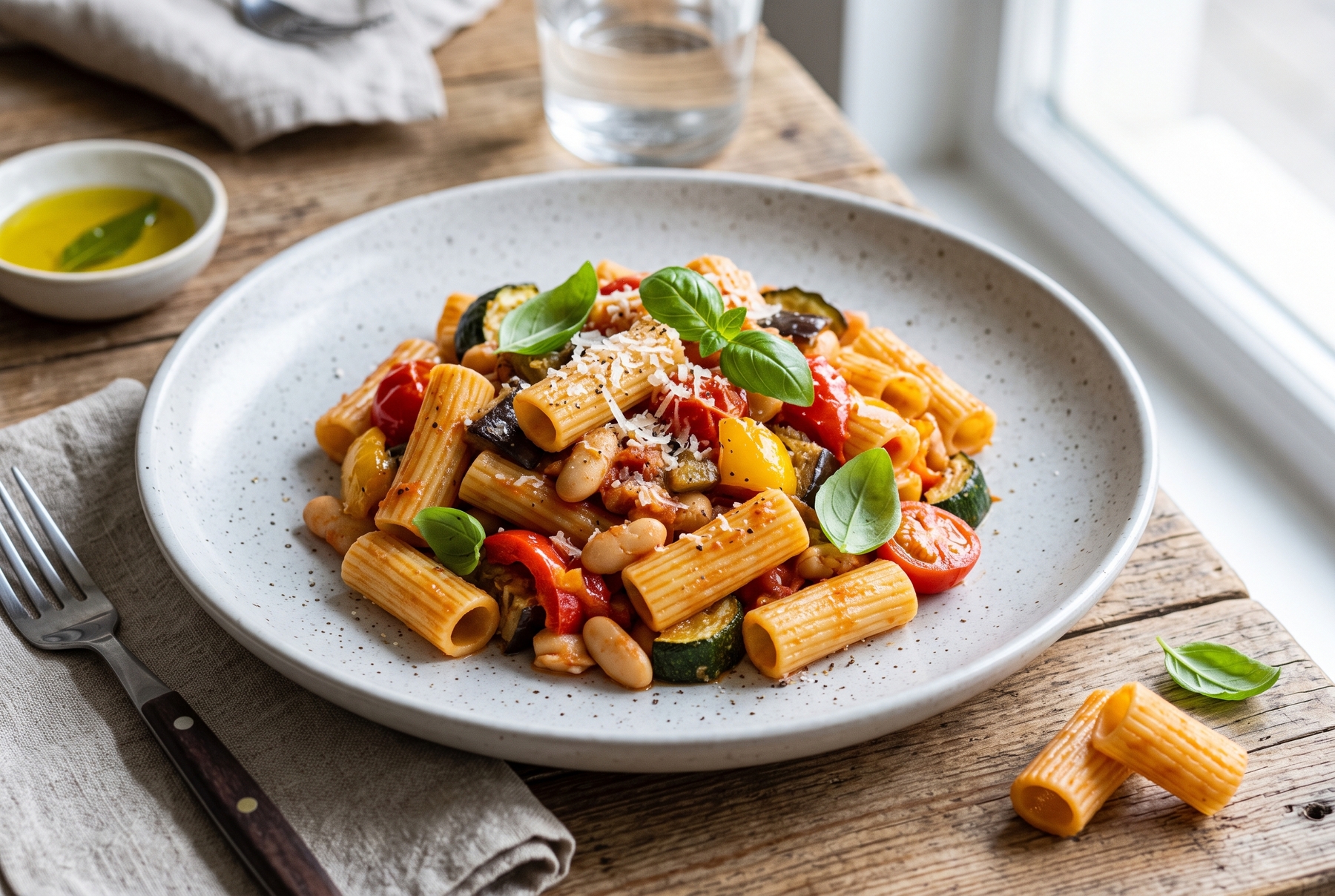
Properly cooked al dente durum wheat pasta paired with fresh vegetables and legumes creates a filling, delicious, and perfectly balanced dinner.
Why Numbers Are Easily Misread
We have already discussed calories per 100 grams (3.5 oz): without adjusting for water weight, it compares the incomparable. The glycemic index (GI) introduces a similar confusion. The GI is measured for an isolated food under standard conditions, but a real plate rarely contains just one ingredient. Protein, fat, fiber, cooking time, portion size, and individual metabolic responses collectively alter the picture so drastically that turning the GI into a definitive ranking of ‘good’ and ‘bad’ foods is ultimately pointless. People managing diabetes or other carbohydrate metabolism disorders rely on their physicians to structure their diets; universal internet tables make for terrible advisors in such cases.
Finally, there is the trendy topic of cooled side dishes. When chilled, some of the starches in rice, potatoes, and pasta do alter their structure, and the proportion of so-called resistant starch, which behaves much like fiber, can increase slightly. The operative word here is ‘slightly.’ Yesterday’s pasta does not magically transform into a diet food, nor does a heavy potato salad become the equivalent of fresh greens. Something else matters far more: cooked rice handles careless storage poorly. It needs to be chilled rapidly, kept in the refrigerator, never left at room temperature for long periods, and reheated thoroughly. Basic food safety proves much more beneficial here than any dietary hacks.
Which Side Dish To Choose: Each Has Its Strength
Keeping score ultimately yields a distribution of roles rather than a strict leaderboard. Potatoes excel when a hearty, inexpensive side without excessive caloric density is needed; boiled or baked, they work beautifully alongside fish, meat, legumes, and vegetables. Rice acts as an indispensable, neutral base for dishes featuring strong, flavorful sauces. Furthermore, white rice is easily tolerated by many with sensitive digestion, though this remains highly individual and should not replace medical advice. Pasta wins when a complete meal needs to be assembled quickly: combining pasta, a vegetable-based sauce, and a protein source means dinner is ready in roughly the time it takes to boil the water.
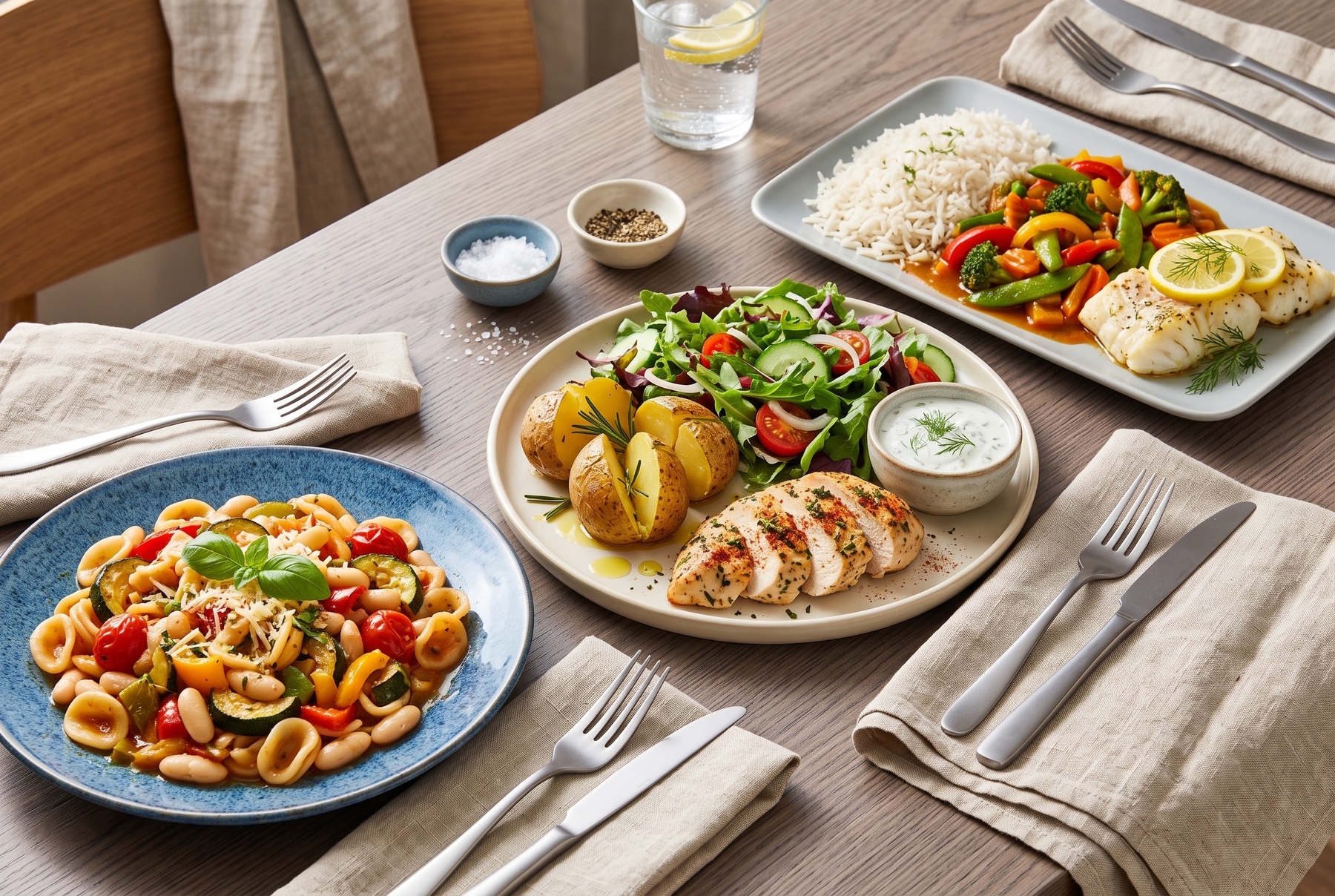
Every side dish plays a specific role: pasta mixed with vegetables, baked potatoes paired with chicken breast and salad, and rice served alongside fish and steamed greens.
Health Is Created On The Plate, Not In The Pot
The core principle here is remarkably simple. The healthfulness of a side dish is determined less by choosing among rice, potatoes, or pasta, and more by what accompanies them. Instead of a rigid scheme defined by percentages, a flexible construction works best: a protein source, vegetables or leafy greens, a moderate portion of the side dish, and a touch of appropriate fat like oil, sauce, or dressing. In such a meal, the side dish stops being the main character and becomes exactly what it should be: a dependable foundation that makes the food satisfying, convenient, and deeply delicious.
How this looks in practice translates to three plates sharing the exact same logic:
- Rice accompanied by braised vegetables, an egg or fish, and a moderate amount of sauce.
- Baked potatoes served with chicken, a generous green salad, and a light yogurt dressing.
- Pasta tossed with tomato sauce, vegetables and beans, poultry, or seafood.
Within this formula, everything easily adapts to personal habits and the assortment at the local grocery store. Canned fish seamlessly replaces fresh seafood, frozen vegetables substitute for fresh ones, and sour cream with herbs can stand in for a yogurt dressing. The overall construction matters far more than the specific ingredients.
How To Choose A Side Dish For The Task
Staying full longer requires choosing denser textures: cubed potatoes instead of a puree, al dente pasta instead of soft-boiled, and fluffy, separate grains of rice rather than a sticky porridge. Adding protein and vegetables is essential, as demanding a miracle from a single ingredient is unrealistic. Satiety is generated by the entire meal, and individual responses to that meal will always vary.
A quick dinner calls for pasta paired with a ready-made vegetable sauce and a can of tuna, or pre-cooked rice or potatoes that transform into a complete meal after ten minutes in a skillet. Preparing a side dish over the weekend saves far more stress during busy weekdays than any modern kitchen gadget.
Securing a side dish with high fiber content involves looking toward whole-grain pasta, unpolished rice, and skin-on potatoes, provided the tuber quality allows. However, remembering that fiber does not have to be squeezed out of the side dish itself is crucial. Vegetables and legumes placed next to any starchy base solve the dietary equation much more easily and deliciously.
Feeding a family with diverse tastes highlights the beauty of the modular principle: one neutral side dish accompanied by several additions like vegetables, a protein main, sauce, and fresh herbs. Everyone assembles their own plate, and no one is forced to eat ‘healthy food’ against their will.
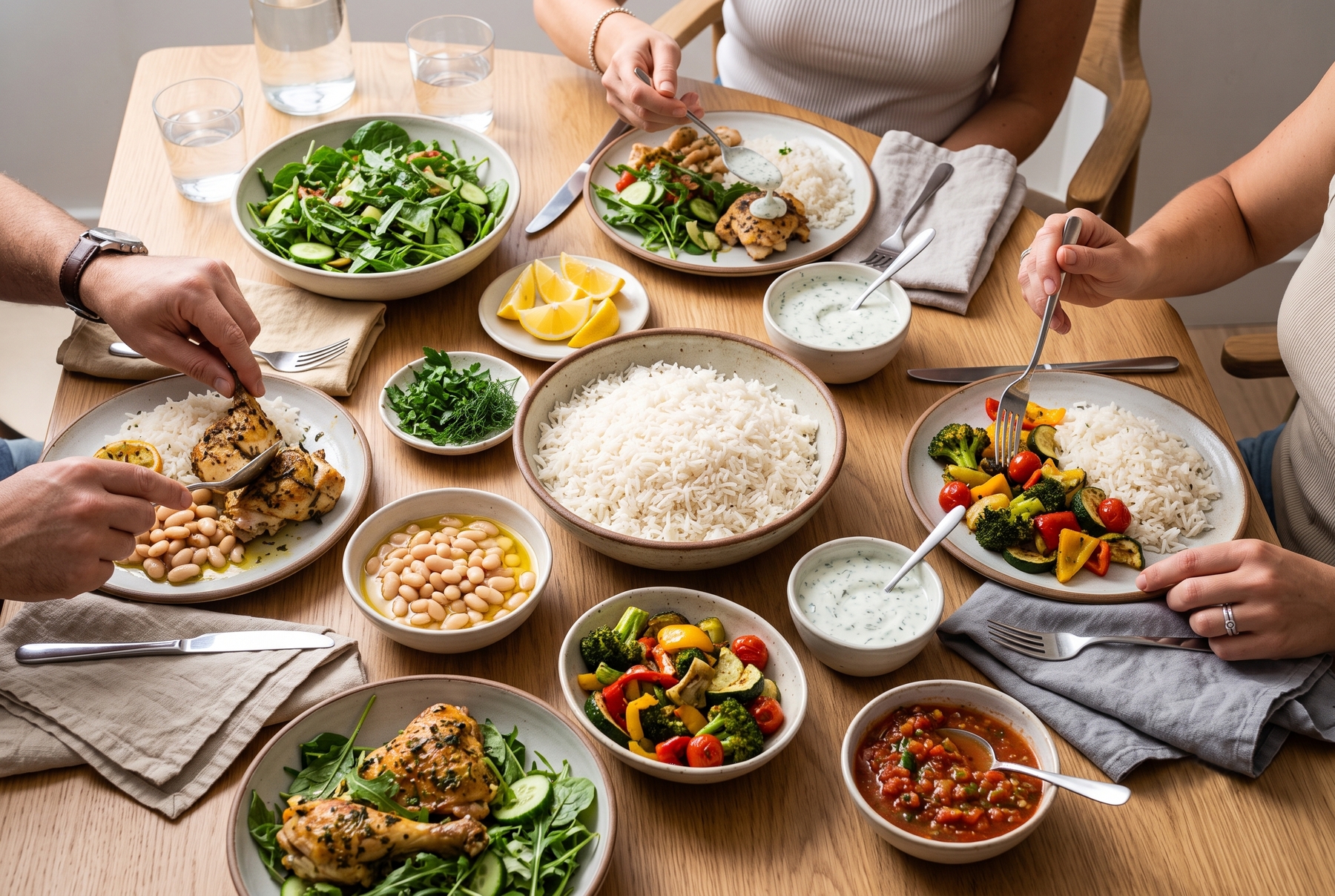
The modular principle at work: offering a variety of additions to a neutral side dish allows everyone at the table to build a healthy meal suited to their own taste.
Mistakes That Ruin Any Side Dish
Finally, a brief list of situations where even a great product starts working against a balanced diet:
- Serving an enormous portion of a side dish alongside merely symbolic amounts of vegetables and protein;
- Failing to count sauce as food, even though it often calorically outweighs the side dish itself;
- Consuming only highly refined grains day after day while experiencing an overall fiber deficit;
- Overcooking starches into a shapeless mass, leading directly to unnoticed overeating;
- Attempting to ‘fix’ a diet by completely eliminating carbohydrates;
- Believing that one ‘correct’ variety of rice or pasta will instantly solve all healthy eating goals.
And a touch of gentle irony is warranted: a healthy diet rarely collapses over a plate of macaroni. A habit of eating every side dish seasoned heavily with guilt destroys it much more reliably.
So, Which Is Actually Healthier?
The question of ‘what is healthier: rice, potatoes, or pasta’ lacks a universal answer, and that is excellent news. Potatoes serve as a wonderfully satiating and voluminous side when boiled or baked without excess fat. Rice provides a convenient, neutral base whose properties depend heavily on the variety and even more on the portion size. Pasta constitutes a perfectly wholesome part of any diet, especially in the company of vegetables and a solid protein source. The most sensible strategy abandons the search for one ideal side dish, choosing instead to rotate all three while closely monitoring the construction of the entire plate. Potatoes, rice, and pasta coexist peacefully in a single healthy diet. The real focus belongs on portion sizes, cooking methods, and what sits right next to them on the plate.
0 comments