
Asking a random shopper in a Moscow supermarket what ayran is often yields a simple answer: salted kefir (a fermented milk drink), enjoyed in the summer. In Istanbul, the same question is met with bewilderment. There, ayran sits on the table next to a kebab as naturally as bread. In Bishkek, it is poured alongside plov (a hearty rice pilaf), and in Nalchik, it is served with khychin (stuffed flatbreads). Nobody views it merely as a hot-weather beverage. It is simply food, a part of the meal as essential as flatbread.
The longer I study nutrition, the clearer it becomes that ayran’s popularity and benefits rely on more than just taste. The climate and the local cuisine, which required a balancing element, play a more significant role.
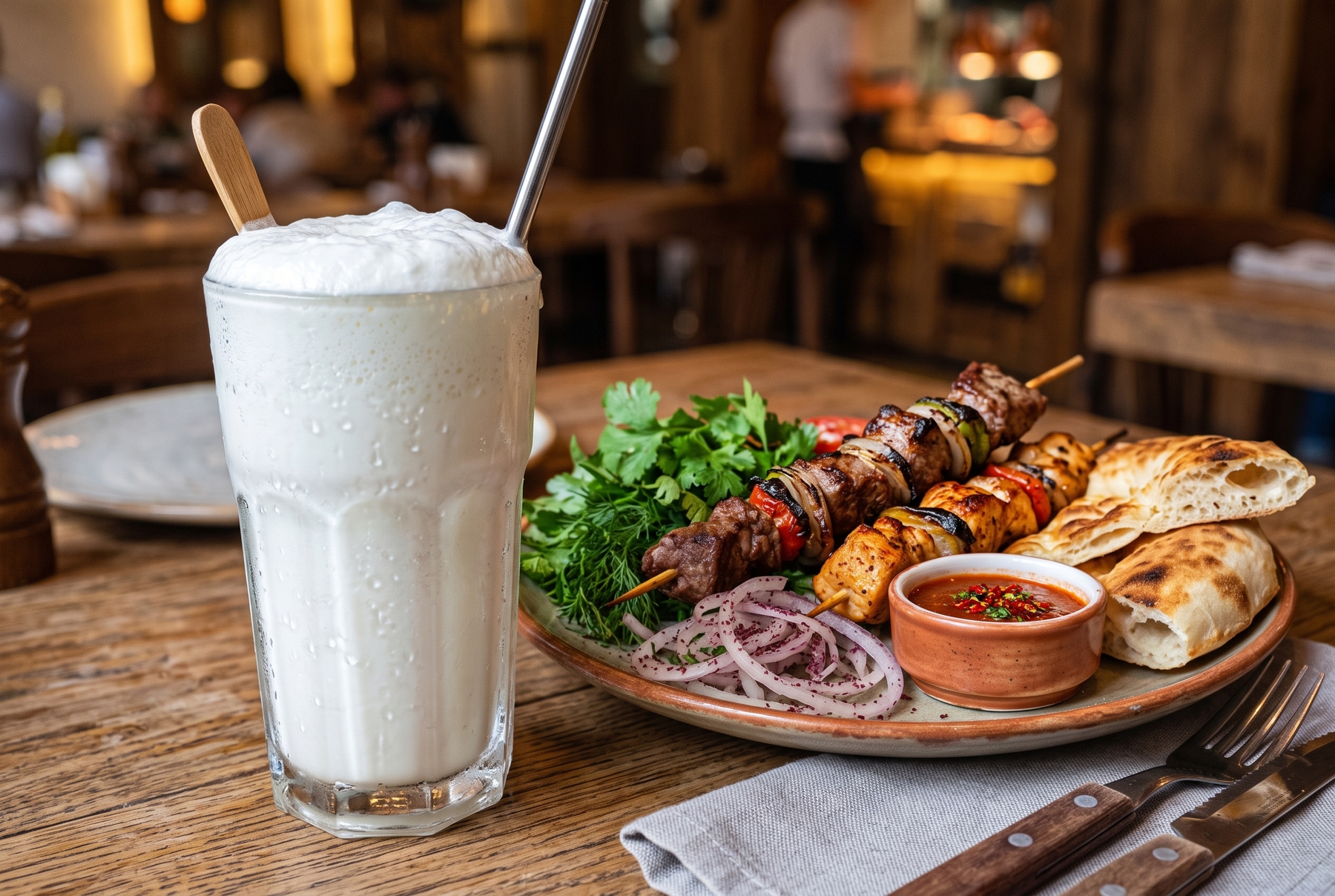
A traditional presentation of ayran paired with hot meat skewers and fresh herbs offers an ideal gastronomic combination, where the acidic beverage pleasantly refreshes the palate between bites of rich meat.
Table of Contents
Why Ayran Found Its Home in These Countries
The Geography of One Beverage and Its Dozen Relatives
Ayran is consumed in Turkey, Azerbaijan, Kazakhstan, Kyrgyzstan, Uzbekistan, throughout the Caucasus, and the Balkans. Its close relatives live nearby: Armenian tan, Turkic katyk (a thick fermented milk product), Georgian and Armenian matsoni (fermented milk similar to yogurt), and Central Asian chalap (a diluted yogurt drink). Confusing them is not advised. The traditions are similar, but the recipes vary: some bases are thicker, some beverages are carbonated, and others feature noticeably more salt. The general principle remains the same: ayran is fermented milk diluted with water, most often with added salt.
A single “correct” ayran does not exist. Turkish ayran from a cafe aerator (foamy, light, and bone-chillingly cold) and a thick homemade version from a Caucasian village are crafted using the same logic, but they taste like two entirely different beverages.
Heat, Salt, and the Logic of Climate
In hot regions, sweet drinks work poorly. Drinking a glass of sugary kompot (fruit preserve beverage) often leaves a person thirstier than before. Sour and slightly salty flavors are perceived differently: the mouth is refreshed, there is no heaviness, and a gentle saltiness makes the beverage a gastronomically fitting companion to food. Additionally, ayran is more satiating than water, containing protein and a bit of fat. For a person working in the sun from dawn until dusk, this held direct practical significance.
Milk That Needed Saving
Before refrigerators, fresh milk lasted only a few hours, especially in summer. Fermentation helped: the acidic environment prevented the milk from spoiling indiscriminately and granted it an extra day or two. Nomadic and rural peoples relying on dairy farming accumulated their fermentation methods over centuries. Pinpointing exactly who “invented” ayran and when is impossible, as precise records simply do not exist. However, the practical reason is clear: milk was abundant, storage was nonexistent, and a water-diluted fermented milk product was convenient to drink on the road and in the fields.
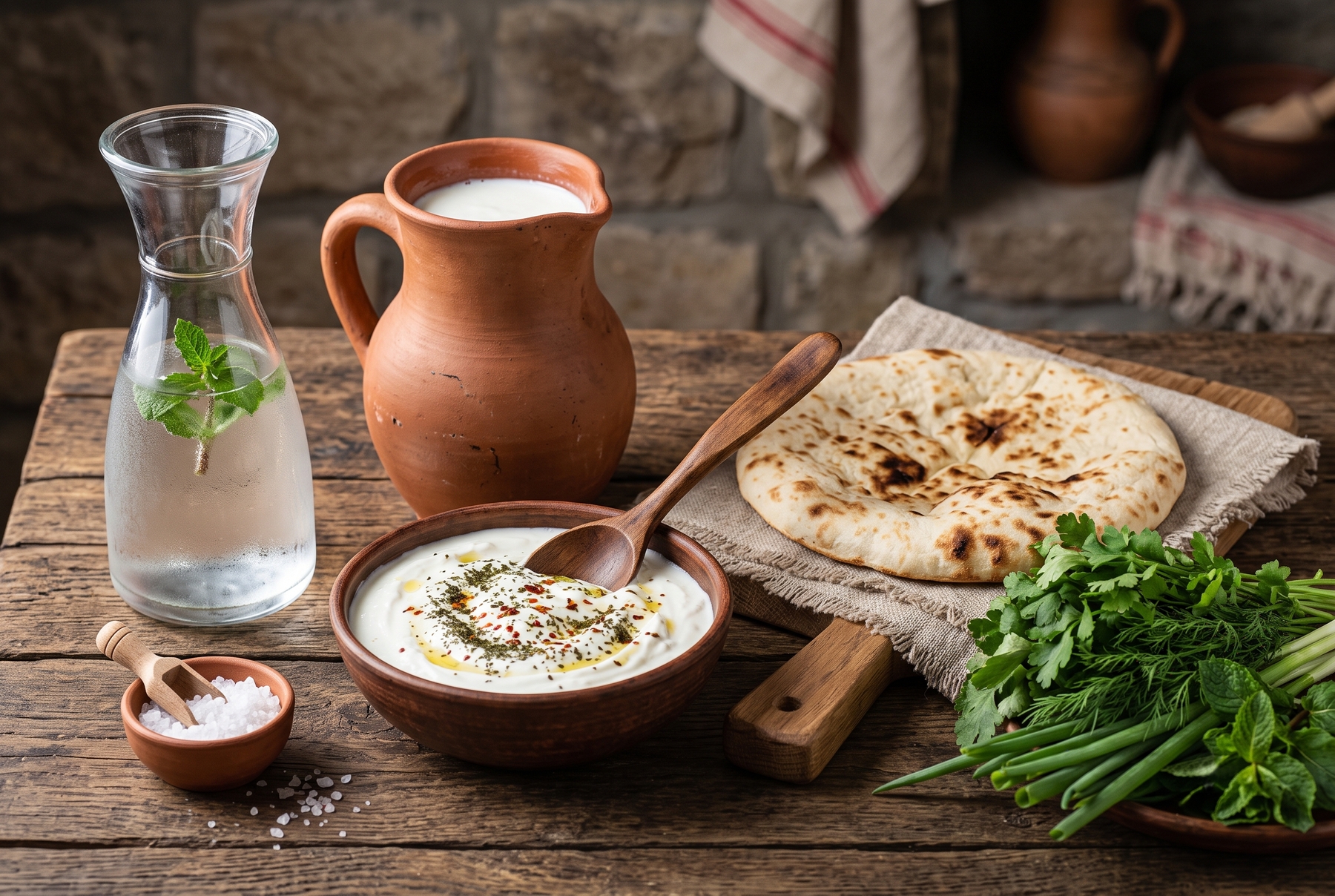
Historically, ayran was crafted from simple, accessible ingredients: fermented milk (katyk or matsoni), pure cold water, and salt, which allowed the milk's benefits to be preserved in a warm climate.
A Flavor That Complements the Meal
Attempting to describe ayran to someone who has never tasted it reveals a soft dairy acidity, just enough salt to be noticed, and a refreshing chill. Sometimes it features foam if the beverage has been whipped. Overwhelming boldness is never expected from it.
Ayran does not overpower the dish; it works between bites. Taking a sip after rich lamb washes the film of fat from the tongue, ensuring the next bite tastes just as vibrant. When paired with plov, shashlik (meat skewers), lagman (pulled noodles), manti (steamed dumplings), samsa (savory pastries), and dolma (stuffed grape leaves), it has a single task: to restore freshness to the palate. It also works beautifully with spicy foods, as the milk fat and protein soothe the burn much better than water.
In Bologna, a glass of prostokvasha (clabbered milk) used to save my aunt after a heavy lasagna, a habit from her childhood. In Almaty, ayran plays that same role, while in Tbilisi, it is matsoni. Hearty cuisines almost everywhere have an acidic counterbalance, even if it goes by different names.
What Ayran Is Made Of
The basic formula is brief:
- Fermented milk base (yogurt, katyk, or cultured milk)
- Water
- Salt
From there, variations begin: thickness, fat content, saltiness levels, carbonation, fresh herbs, and occasionally spices.
Ayran differs from kefir in both its starter culture and presentation, making it somewhat inaccurate to consider it merely “salty kefir.” Kefir is usually consumed as a standalone product; it is neither diluted nor salted. Tan is the closest relative to ayran, often being thinner and sometimes carbonated, though the boundary between them is blurred and depends entirely on the country and manufacturer.
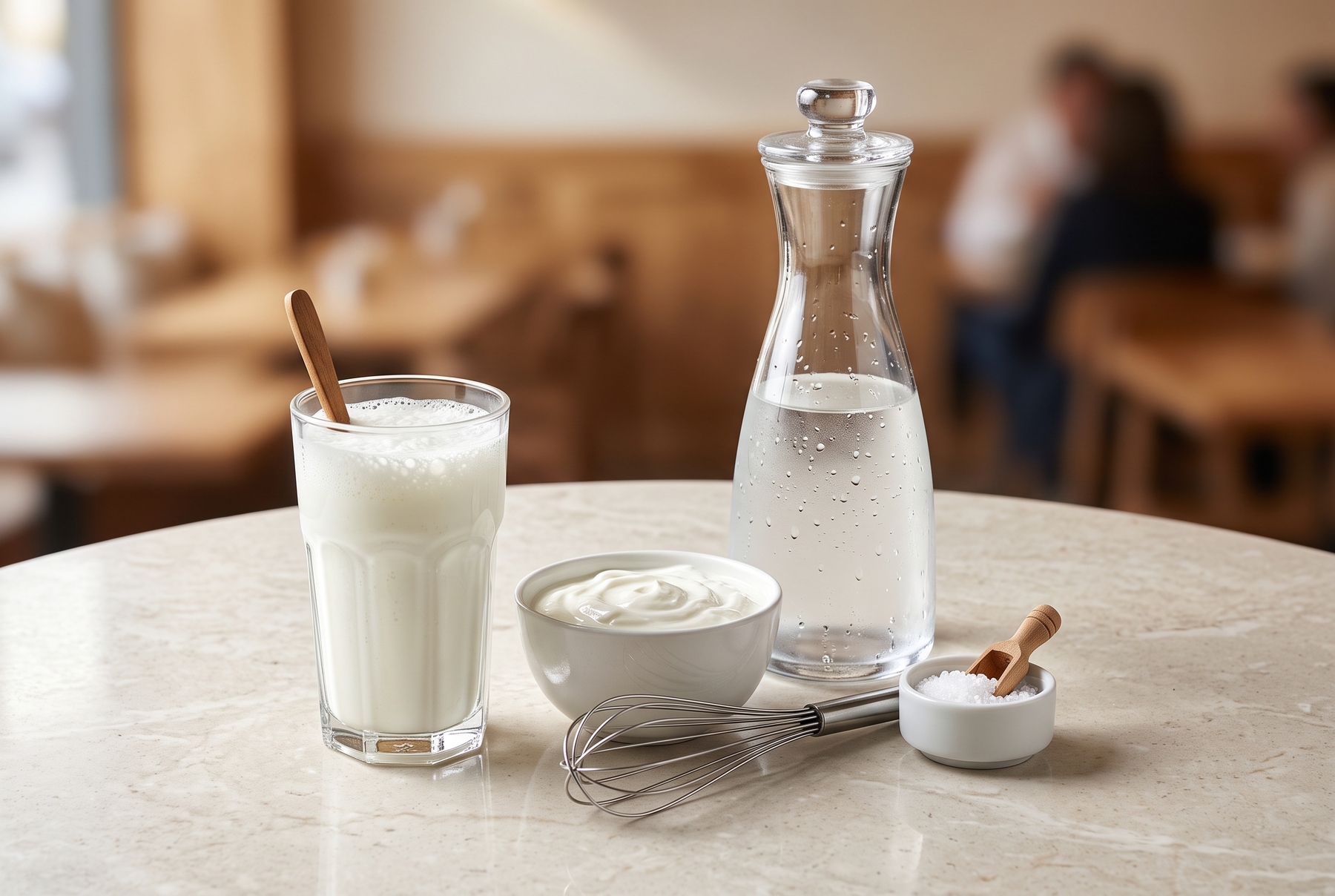
A simple set for preparing a refreshing beverage includes a high-quality unsweetened fermented milk base, thoroughly chilled water, and a pinch of salt to balance the flavor.
The Real Health Benefits of Ayran
Protein, Calcium, and Honest Satiety
Ayran contains milk protein and calcium. The exact amount depends on the fat content and the proportion of the milk base in the specific product. Having a glass of ayran with lunch adds satiety and makes the break between meals much more comfortable. This is sufficient. Ayran does not “boost metabolism” or “cleanse the body.” Making such promises is dishonest; it is an ordinary food product, not a medicine.
Fermentation and Digestion
Some individuals tolerate fermented dairy products better than whole milk because the fermentation process breaks down a portion of the lactose. It breaks down a portion, not all of it. Reactions are highly individual, and ayran might not suit someone with a severe intolerance. Probiotics are more complicated: live cultures in a commercial beverage depend heavily on production technology and storage. Therefore, treating any store-bought ayran as a default source of “beneficial bacteria” is a stretch.
A Savory Alternative Many Are Missing
The most obvious benefit of ayran here is the absence of sugar. Ayran typically contains no added sugar. For those accustomed to washing down lunch with sweet soda or packaged juice, ayran fulfills the same need: it is cold, flavorful, and pairs well with food, but without the sugar crash.
Salt: A Benefit and a Limitation
The slight saltiness makes ayran refreshing and appropriate at the dining table. However, if a doctor has recommended limiting sodium intake, choosing less salty variations or drinking it in moderation is advised. Reading the label is always a good practice.
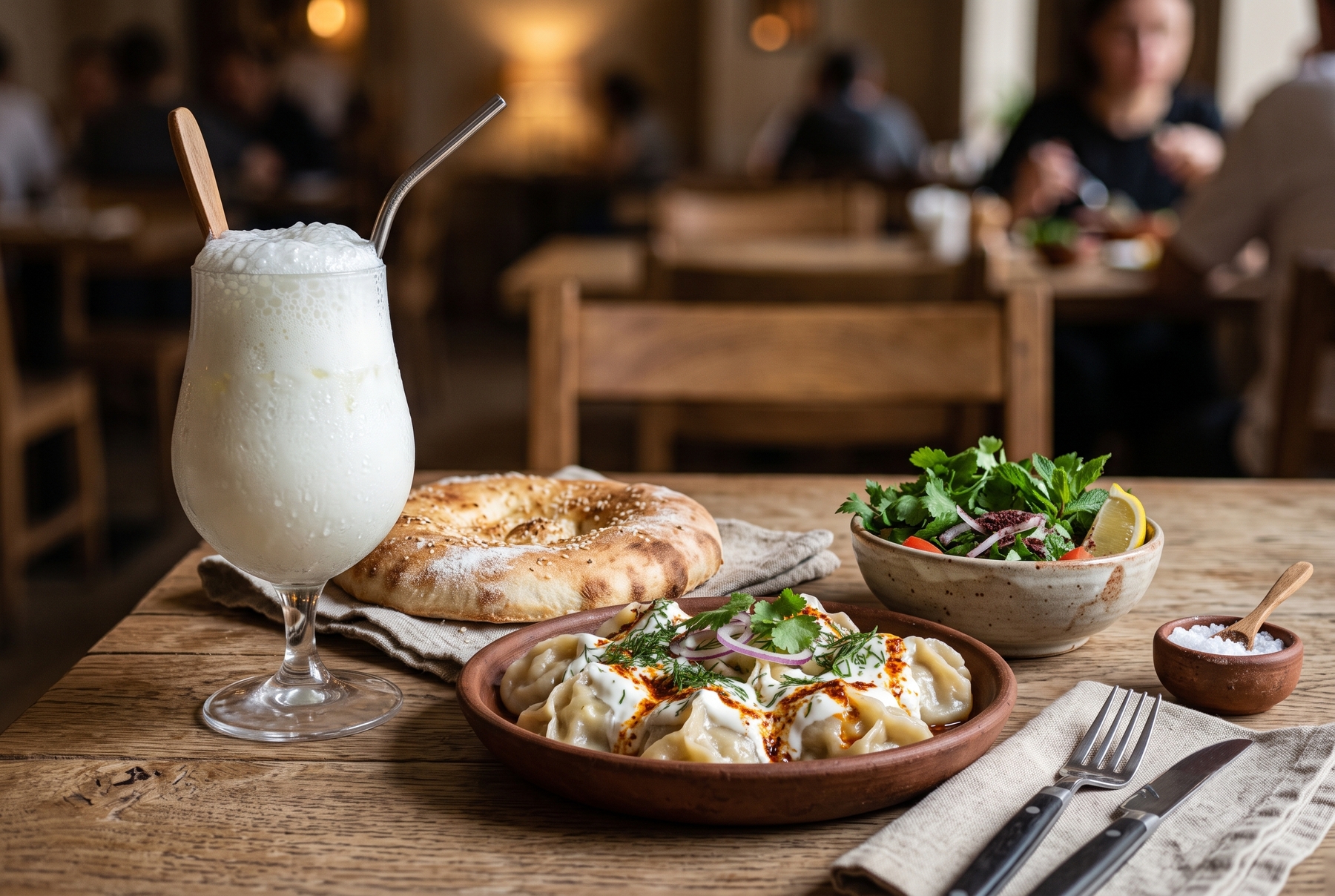
Rich and hearty meat dishes, such as manti or plov, are traditionally served with a glass of cold ayran, whose acidity and salt help balance the heavy meal.
Who Should Avoid Ayran or Exercise Caution
Ayran is unsuitable for anyone with a cow’s milk protein allergy, just like any dairy product. When it comes to lactose intolerance, the situation is individual: some find fermented products comfortable, while others do not. Testing it carefully with a small portion is the best approach. Following a doctor’s advice regarding blood pressure, kidney issues, or gastrointestinal conditions is always better than relying on articles, including this one.
How to Choose Ayran in the Store: 3 Guidelines
Ingredients matter. A shorter list is preferable: milk base, starter culture, water, and salt. Stabilizers in a commercial beverage are not a crime, as they maintain consistency during transport and storage. Yet, a shorter list makes it easier to understand what is being consumed.
Salt and fat content. Selecting a milder ayran—neither the saltiest nor the fattiest—is better for a daily glass with lunch. Conversely, a bold, salty ayran is much more fitting for a feast featuring shashlik.
Aroma and appearance. Fresh ayran has a clean, fermented dairy scent. A sharp bitterness, a yeasty smell, or a bloated package means the ayran should be poured down the drain. Separation in the bottle does not inherently indicate spoilage, as the beverage can simply be shaken. However, if the expiration date is nearing and the smell is questionable, avoiding the risk is best.
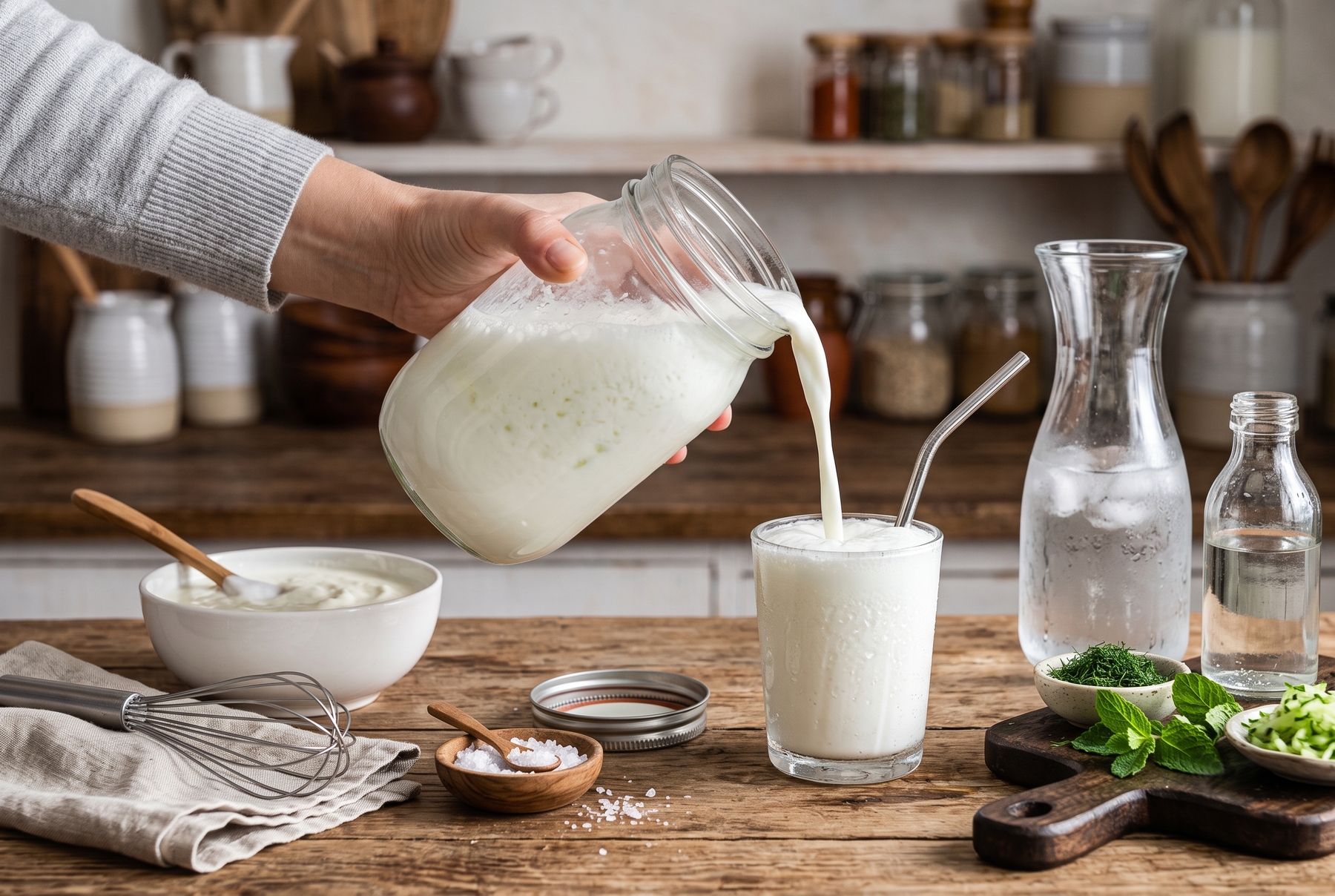
Making homemade ayran takes just a couple of minutes by whisking yogurt or matsoni with ice-cold water and salt. Adding dill, mint, or grated cucumber provides extra freshness.
Two-Minute Homemade Ayran
This is an adaptation for a modern urban kitchen, making no claims to absolute authenticity. Proportions are for one large glass:
- 150 g (5.3 oz) plain unsweetened yogurt, katyk, or matsoni
- 100 ml (3.4 fl oz) ice-cold water
- A pinch of salt
- Combine the yogurt, water, and salt in a jar or shaker.
- Whisk vigorously or shake well for 20 to 30 seconds until a light foam forms.
- Taste and add more salt if necessary. Drinking it immediately while it remains cold yields the best experience.
If only kefir is available at home, a functional version is still possible. Mixing cold kefir and ice water in a 1:1 ratio—for example, 100 ml (3.4 fl oz) kefir and 100 ml (3.4 fl oz) water per glass—works well. Adding a pinch of salt and shaking it in a jar until foamy creates a refreshing drink. It will not be classic ayran, as kefir brings a different flavor profile and distinct acidity, but it serves exceptionally well as a quick beverage to accompany fried potatoes, flatbreads, or meat. Using slightly less water is acceptable if the kefir is very thin. The main rule is to avoid sweetened kefir products and never skimp on the cold temperature.
Adding mint, dill, or grated cucumber creates something closer to diluted tzatziki. This cold, acidic mixture pairs beautifully with fried potatoes.
Common mistakes include using sweetened yogurt, which results in a confused sweet-and-sour concoction that pairs with nothing. Oversalting is another issue; the salt should be a subtle background note, not an overwhelming force that masks the dairy acidity. Making it too thick turns it into a sauce rather than a beverage. Serving it warm defeats the entire purpose, as warm ayran loses all its refreshing appeal. Finally, overdoing the garlic—half a clove per glass is already too much—destroys its role as a palate cleanser.
Ayran took root in many countries not because of marketing, but because it was necessary. Milk was plentiful, summers were hot, and the local cuisine was built on meat, dough, and fat. A single glass brought together everything needed to accompany such food: acidity, salt, a refreshing chill, and a touch of satiety. Drinking it “for health” or upon a nutritionist’s recommendation is rare. Usually, after the third manti dumpling, the hand naturally reaches for that frosted glass. Giving it a good shake to raise the foam and finishing it in two hearty gulps is the proper way.
0 comments