
Calcium usually comes to mind in two specific situations: when a child is growing and when an elderly relative is diagnosed with osteoporosis. Between these two extremes, calcium seems almost forgotten. In reality, it works constantly within the body, for people of any age, and extends far beyond just maintaining the skeleton.
While it is true that almost the entire calcium reserve in the body is stored in the bones and teeth, which provide structure and hardness, this same mineral is also essential for muscle contraction, nerve signal transmission, and blood clotting. No single cell in the human body can function properly without it. The skeleton acts more like a storage facility than the sole consumer.
Growing up in Bologna in a migrant family, I saw Italians living on pasta and Parmesan outside my window, while our table always featured tvorog (Eastern European farmer’s cheese), kefir (a fermented milk drink), and heavy traditional feasts. This background allows me to discuss calcium calmly, without resorting to scaremongering about deficiencies. Building a habit around calcium-rich foods is incredibly easy, and one can easily select the right ingredients without any dietary fanaticism.

Integrating calcium into a daily routine happens effortlessly through familiar foods like cottage cheese, cheese, and even leafy greens, all without resorting to dietary fanaticism.
Table of Contents
- What Calcium Does Inside the Body
- How Much Calcium You Need Daily and Why There Is No Single Number
- Where to Get Calcium: Groceries and Everyday Food
- Calcium From Food Is More Than Just a Number on a Chart
- How to Tell if Your Diet Lacks Calcium: Signs and Risks
- How to Incorporate Calcium Into a Normal Day Without Dietary Fanaticism
- Calcium Supplements: When They Are Necessary and Why Self-Prescribing Is a Bad Idea
- How to Shop for Calcium-Rich Foods: A Quick Cheat Sheet
- Calcium Relies on Habit, Not a Perfect Diet
What Calcium Does Inside the Body
Bones and Teeth: A Living Reserve That Constantly Rebuilds
A bone might seem as rigid as a concrete beam, but everything is entirely different inside. Bone tissue is continuously disassembled and rebuilt: certain cells dissolve the old material, while others construct the new. Imagine a highway undergoing around-the-clock repairs by alternating crews. Calcium serves as the building material here, constantly being laid into the wall and then taken back out.
Calcium alone cannot manage this massive construction project. It requires protein to form the framework where minerals settle, vitamin D to ensure proper absorption in the intestines, along with phosphorus, magnesium, physical activity, and a hormonal system to orchestrate the entire process. A bone weakens without movement, as putting physical stress on the skeleton surprisingly helps it maintain its density.
Muscles, Heart, and Nerves: Why Calcium Goes Beyond the Skeleton
Every muscle movement is triggered by a tiny signal, and calcium participates directly in this process. Clenching a fist, blinking, or taking a breath all involve an ion exchange inside the cells, with calcium acting as a key player. The heart muscle operates on the exact same principle, beating rhythmically without interruption throughout an entire lifetime.
Nerves transmit signals in a very similar manner, where calcium helps the impulse jump from one cell to another. The body keeps blood calcium levels within a very tight corridor because incredibly important processes depend on it. This precise regulation ensures that the blood never starves for calcium for long, as it always has a backup reserve.
Why the Body Sometimes Takes Calcium From Bones
When the daily diet consistently lacks calcium, the blood will still get what it needs by pulling the missing amount from the skeletal reserve. The blood level remains perfectly normal, and a standard blood test might not show anything alarming, while the bone quietly gives away its accumulated savings.
There is no reason to panic or immediately grab supplements. Looking at the diet over a long period, even years, proves much more valuable than relying on occasional heroic portions of cottage cheese. Bones recover slowly, and a deficiency cannot be reversed over a single dinner.
How Much Calcium You Need Daily and Why There Is No Single Number
A universal daily requirement simply does not exist, and that is perfectly normal. The body’s needs shift with age and overall health condition. Medical guidelines offer rough estimates rather than imposing strict daily quotas.
For most adults, the benchmark stands at around 1,000 mg per day. After fifty for women and after seventy for almost everyone, the requirement slightly increases closer to 1,200 mg, as aging bones struggle to retain calcium. Teenagers typically require significantly more, around 1,300 mg, because their skeletons are actively developing. Pregnant and nursing women usually maintain the standard adult requirement, though much younger mothers do need a higher intake.
Hitting these exact numbers down to the milligram is entirely unnecessary. They simply serve as a rough framework for daily planning. Chasing the maximum intake is also ill-advised, as calcium has a safe upper limit of about 2,000 to 2,500 mg per day for adults, including supplements, and constantly exceeding this threshold brings no benefit. Evaluating the frequency of calcium sources over a week offers a much easier approach than meticulously calculating every single meal.
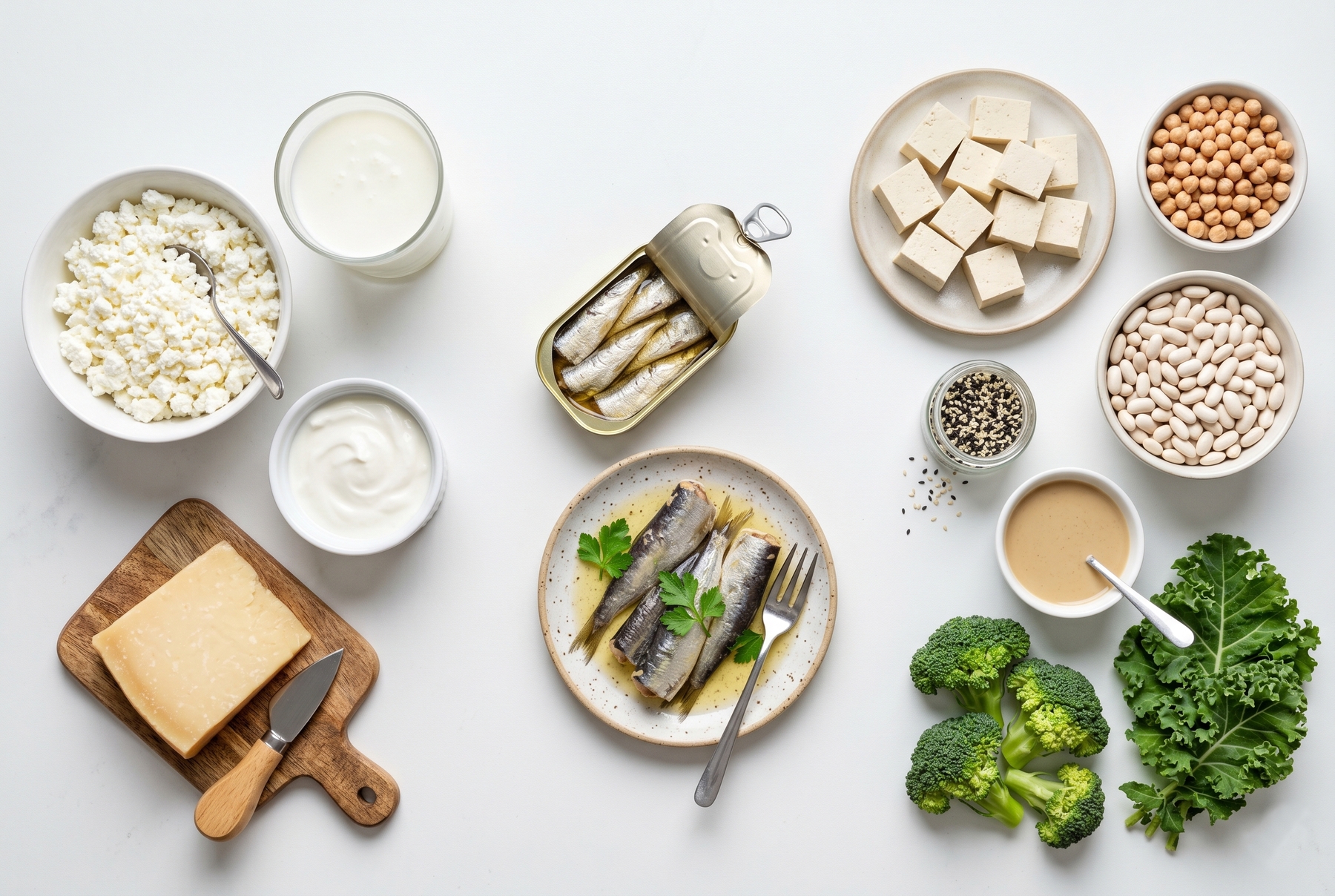
Beyond milk and cottage cheese, excellent calcium sources include bone-in canned sardines, tofu, sesame seeds, and various legumes.
Where to Get Calcium: Groceries and Everyday Food
Dairy Products With Calcium: A Familiar Source, but Not the Only One
A standard glass of milk provides around 300 mg of calcium. Plain yogurt, kefir, and ryazhenka (baked fermented milk) fall into roughly the same range, and a portion of natural yogurt sometimes even outperforms plain milk. The calcium content in cottage cheese depends entirely on how it is produced and varies drastically from brand to brand.
Hard cheeses present a dual narrative. They genuinely contain a lot of calcium, as dense, aged cheese naturally concentrates minerals. However, this calcium arrives alongside salt and fat, especially in salty brined cheeses. Evaluating not just the health benefits, but also the portion size and the frequency of its appearance on the table, becomes crucial. A thin slice of Parmesan grated over pasta functions very differently than a daily mountain of cheese stacked on sandwiches.
Soft-Bone Fish: A Small Can With Remarkable Benefits
The calcium in fish hides in the tiny bones, not the fillet. Consequently, a boneless salmon steak and a humble can of sardines offer entirely different calcium profiles.
Canned sardines, saury, pink salmon with bones, and sprats undergo a cooking process that softens their bones so completely that they mash easily with a fork and are eaten unnoticed along with the meat. A single serving of sardines from a small can easily delivers around 300 mg of calcium, and sometimes even more. This represents a serious contribution to the daily benchmark from a single, affordable ingredient. The only downside to canned fish is the salt content. If blood pressure requires medical monitoring or sodium intake is a concern, choosing low-sodium varieties and avoiding pouring the salty liquid directly onto the plate makes perfect sense.
Plant-Based Calcium Sources: Sesame, Tahini, Legumes, Greens, and Nuts
Plants also contain calcium, though the body absorbs it quite differently. The mechanics of absorption prove much more interesting than a simple grocery list here.
Sesame seeds and tahini boast rich calcium profiles, though tahini comes with a caveat: the exact amount heavily depends on the brand and the raw ingredients, as hulled seeds contain significantly less. A standard tablespoon usually hovers around 60 to 70 mg. Checking the exact numbers on the label is always worthwhile. The paste itself is thick, slightly bitter, and sandy in texture, making it hard to eat by the spoonful, but it blends beautifully into sauces or spreads. Legumes like white beans and chickpeas, alongside tofu set with calcium salts, also work wonderfully. Searching the ingredient list on a tofu package for ‘calcium sulfate’ guarantees a noticeable amount of the mineral.
Spinach, sorrel, beet greens, and rhubarb technically hold a lot of calcium, but they also pack high levels of oxalates. These compounds bind the calcium so tightly that the body extracts almost nothing from it. Only a few percent of the calcium in spinach actually gets absorbed. Conversely, greens with low oxalate content, such as kale, broccoli, and bok choy, release their calcium much more easily, sometimes even better than milk. Phytates in legumes and grains present a milder interference, and soaking and cooking them easily reduces this effect. Spinach remains an excellent and harmless ingredient; it just should not be counted on as a primary calcium source.
Fortified Foods: When It Works as a Convenient Tool Rather Than Marketing
Plant-based milks like soy, almond, and oat, along with certain yogurts, cereals, and juices, often hit the shelves enriched with added calcium. This offers a highly sensible way to cover part of the daily requirement for individuals who avoid dairy.
Reading the actual label proves far more useful here than trusting the large, bold marketing claims on the front. Pay close attention to the calcium content per serving, the added sugars, particularly in sweet beverages and cereals, and the specific form of the added calcium. The calcium in plant-based milk tends to settle at the bottom of the carton, making a vigorous shake absolutely necessary before pouring; otherwise, half the minerals simply remain trapped inside the packaging.
Calcium From Food Is More Than Just a Number on a Chart
What Helps Calcium Absorption
Simply eating calcium is never enough; the body must also absorb it. The primary assistant in this process is vitamin D, as without it, a significant portion of calcium simply passes through the digestive tract in transit. Sources of vitamin D partially overlap with calcium sources, such as fatty fish, while the rest comes from sunlight and a dedicated conversation with a doctor if concerns arise.
Sufficient protein intake, regular physical movement that places weight on the bones like walking or strength training, and consistent eating habits take over from there. The body fundamentally lacks the ability to store a massive daily dose for future use, as it efficiently absorbs only a limited amount of calcium per meal, roughly around 500 mg at a time. Therefore, attempting to consume a week’s worth of calcium on a Sunday simply will not work. Approaching it with small, frequent amounts yields much better results.
What Might Interfere
A few very common habits quietly pull calcium levels down. An excess of salt increases its excretion through urine, meaning a saltier diet leads to greater calcium loss. Very high amounts of caffeine produce a similar, though much more modest, effect. Unbalanced crash diets and vitamin D deficiency directly undermine absorption. Certain medical conditions and specific medications also impact calcium metabolism, but navigating those risks enters the territory of a medical professional, where prescriptions and blood panels should always be discussed with a doctor.

Consistency easily outweighs occasional large portions: the body absorbs calcium much more efficiently when it arrives in smaller amounts throughout the entire day.
How to Tell if Your Diet Lacks Calcium: Signs and Risks
The temptation to self-diagnose a deficiency based on brittle nails or nighttime muscle cramps runs high, but these signs remain entirely non-specific, as almost anything could be causing them. A true calcium shortage accumulates silently over a long period, without any obvious red flags, making it impossible to reliably feel a deficiency.
Taking a practical approach proves far more honest than self-diagnosis. Simply estimating how often varied calcium sources appear on the table throughout the week offers a solid baseline. Factoring in specific risks, such as eliminating dairy completely, relying on a very salty diet, or leading a highly sedentary lifestyle, helps clarify the picture. If anything raises concern, discussing laboratory tests and potential supplements with a doctor remains a much wiser choice than simply guessing based on how the body feels.
How to Incorporate Calcium Into a Normal Day Without Dietary Fanaticism
A Daily Routine With Dairy Products
Starting the morning with a glass of kefir or a bowl of yogurt topped with a handful of seeds sets a great foundation. A small serving of cottage cheese or a thin slice of cheese complements lunch perfectly. Dinner might feature fish, legumes as a side dish, and leafy greens tossed into a salad. The menu never requires strict rigidity. It merely relies on a few familiar touchpoints scattered naturally throughout the day.
A Dairy-Free Day: Hitting the Calcium Target Without Milk
Consistency becomes paramount for those who avoid dairy, as they are skipping the most common and accessible source. Morning routines can easily include fortified plant-based milk, vigorously shaken, poured over oatmeal or blended into a smoothie. The afternoon calls for calcium-set tofu or a generous spoonful of tahini mixed into a dressing or spread. Evening meals easily incorporate soft-bone sardines or legumes paired with low-oxalate greens. Checking the labels on fortified products remains essential, as falling short becomes too easy without them.
The Family Plate
Integrating calcium into shared meals requires no extra effort or pressure on loved ones. Swapping part of the mayonnaise for a yogurt-based sauce, serving cottage cheese for breakfast, or offering a bit of cheese works seamlessly. Fish served in a soft, accessible format makes it much easier to share with children. Fortified products blend right in where they naturally belong. No one at the dinner table should ever feel like they are undergoing medical treatment.
Calcium Supplements: When They Are Necessary and Why Self-Prescribing Is a Bad Idea
Supplements require far more caution than whole foods. They certainly have their place in cases of a medically confirmed deficiency, a severely restricted diet, or specific health conditions where meeting the quota through food alone proves too difficult. However, taking calcium just in case, without solid medical reasoning, remains a highly questionable idea.
Excessive intake from supplements is directly linked to a higher risk of kidney stones, meaning individuals with kidney disease, a history of stones, or those on specific medications should never start a regimen independently. Large doses of calcium can also interfere with the absorption of iron and zinc. Consequently, leaving the decision about supplements to a doctor who understands the full clinical picture and lab results makes far more sense than choosing a shiny bottle from a pharmacy shelf.

Always check labels when shopping: fortified plant-based milk or tofu can provide just as much calcium as traditional dairy products.
How to Shop for Calcium-Rich Foods: A Quick Cheat Sheet
- Look closely at the calcium amount per serving rather than relying on loud marketing claims on the front packaging;
- Choose foods that will actually be eaten regularly instead of buying the ideal ingredient that will just languish in the fridge;
- Keep an eye on salt in cheese and canned goods, and watch for added sugar in sweet fortified drinks and cereals;
- Avoid banking entirely on a single food item: three or four convenient sources easily beat one heroic attempt;
- Always shake plant-based milk vigorously to prevent the added calcium from settling at the bottom of the carton;
- Pair calcium-rich foods with vitamin D and physical movement, as a significant portion will simply fail to absorb otherwise;
- Prioritize low-oxalate greens like kale and broccoli for calcium, and simply appreciate spinach for its other nutritional benefits.
Calcium Relies on Habit, Not a Perfect Diet
The most effective strategy might look incredibly boring: keeping a simple can of sardines in the pantry and a carton of kefir in the fridge door accomplishes the goal far better than any one-time weekend marathon of eating three kilograms of cottage cheese.
0 comments