
The advice to “eat every 2–3 hours,” or to consume small, frequent meals, is more than forty years old. Dietitians, fitness trainers, health magazines, and mothers at the family table constantly repeat it. The problem lies elsewhere: the advice managed to become a habit before it was properly verified.
Where did it even come from? In the middle of the last century, physiologists began studying how the body reacts to different feeding regimens: first on animals, then in clinical trials involving patients and volunteers. Small, frequent meals were used in hospitals at that time: after surgeries, for stomach and intestinal diseases, and in patients with malabsorption. In these cases, it actually helped. But somewhere between the clinic and the glossy magazine, what always happens with medical recommendations occurred: the context was lost, and the advice remained. By the 1980s, it was already circulating in the fitness community as an axiom. By the 1990s, it was repeated as a fact.

Small, frequent meals often become a habit before a person considers their actual necessity for health.
Growing up in my house meant eating a hearty breakfast, a substantial lunch, and a late dinner. The Eastern European tradition is poorly compatible with the idea of “six meals a day.” Now, outside the window is the Italian rhythm of eating: no snacking on the go, but lunch stretches for an hour and a half. Both schemes live on. And in both places, there are strong people, people with illnesses, anxious people, and calm ones. I felt this even in childhood, although then, of course, I could not articulate it.
Table of Contents
- Frequent Meals: Where Medicine Ends and Habit Begins
- Metabolism and Meal Frequency: Where the Truth Lies
- Blood Sugar, Insulin, and the Promise of Stability
- Hunger, Satiety, and What the Brain Thinks About Small Portions
- When Small, Frequent Meals Actually Work
- How to Find Your Rhythm Without Following Someone Else's Scheme
- Why the Myth Lives On: The Snack Market
- How Many Times to Eat: There Is No Exact Answer
Frequent Meals: Where Medicine Ends and Habit Begins
When a gastroenterologist tells a patient with reflux to “eat small amounts frequently,” that is a medical recommendation. It has a physiological reason. A small volume of food stretches the stomach less, lowers intragastric pressure, and reduces the likelihood of stomach contents refluxing into the esophagus. The connection is straightforward.
When that same advice ends up in an Instagram post under the headline “How to boost your metabolism,” its meaning changes. The mechanism is similar. The context is different. There are simply no indications.
The confusion between these two things has cost many people years of anxious relationships with food. A person without digestive problems starts eating six times a day because “they have to,” carries containers of chicken breast with them, eats on a schedule even when not hungry, and calls this a “healthy lifestyle.” There is not much health here, but there is a lot of control.
In the clinic, frequent feeding works as a tool with narrow indications. But in everyday life, it is a trend that lives on its own.
Metabolism and Meal Frequency: Where the Truth Lies
The main argument for frequent meals initially sounds convincing: frequent eating “keeps the metabolic fire burning.” The metaphor with the stove is beautiful but inaccurate.
Metabolism is not a campfire. Basal metabolism (the energy the body spends at rest) is determined primarily by body composition: the ratio of muscle to fat tissue, and the work of internal organs. Meal frequency has almost no effect on it.
Studies compared people with the same daily caloric intake but different numbers of meals: three times a day versus six, that is, a normal regimen versus small, frequent meals. The difference in metabolic rate between the groups turned out to be statistically insignificant. More simply: the body does not start spending more energy just because food is provided more often.
The Thermic Effect of Food: Energy Spent on Digestion
The thermic effect of food (TEF) exists. The body spends energy on digesting and absorbing food: roughly 20–30% of protein calories, 5–10% of carbohydrates, and about 3% of fats. On average, about 10% of the entire daily diet’s calories goes toward this.
The daily total is what matters: TEF does not depend on how many times you eat. If you consume 1,500 kcal (calories) in three meals or the same in six, the body will spend roughly the same amount of energy on digestion. This expenditure is simply distributed differently throughout the day.
You can explain this through simple logic: TEF depends on what you eat and how much, not on how it is divided by time. Cut a cake into six slices: the cake does not become smaller because of it.
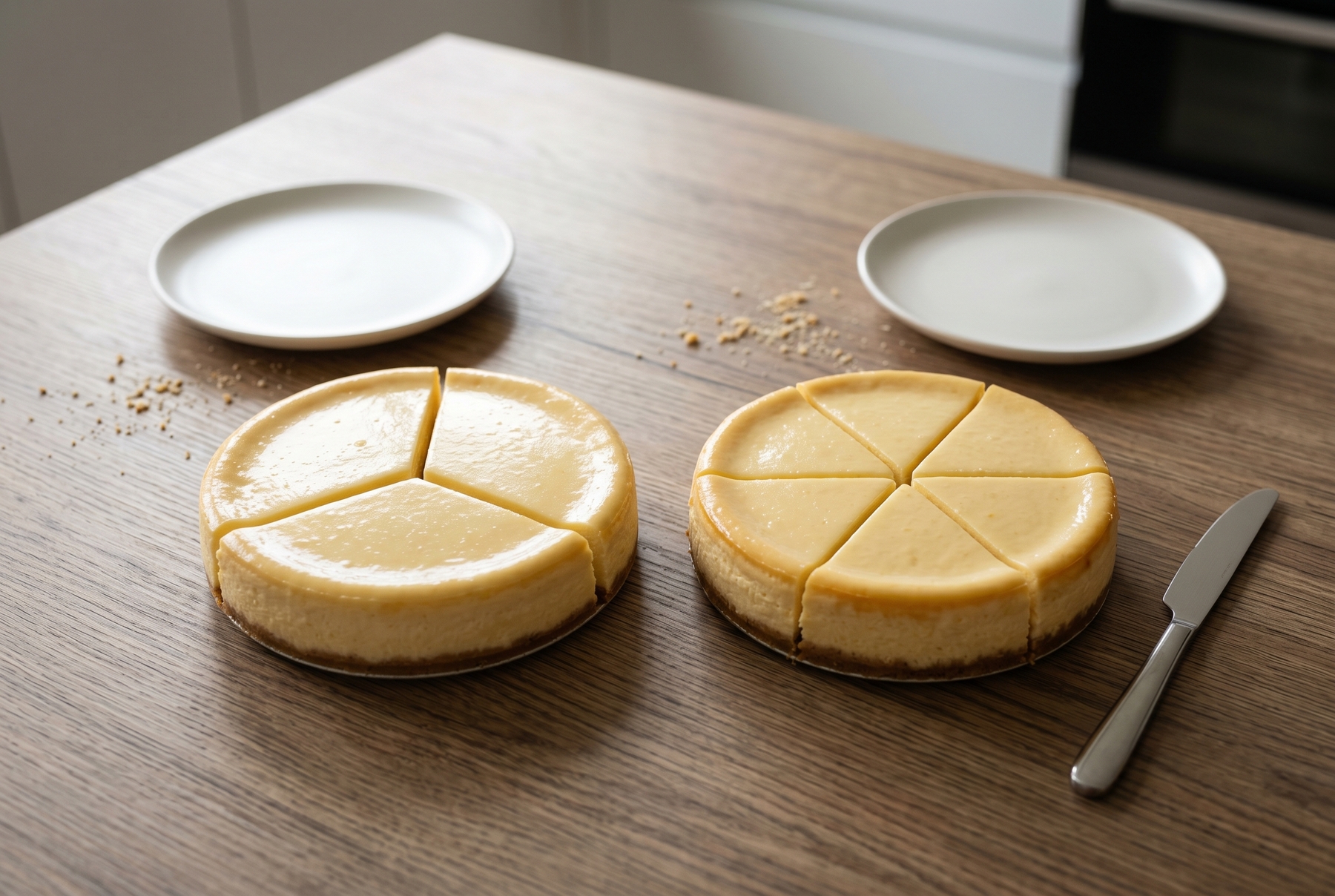
Dividing the same volume of food into a larger number of portions does not change the amount of energy spent on digestion.
Blood Sugar, Insulin, and the Promise of Stability
The second popular argument for small, frequent meals: frequent eating allegedly “stabilizes blood sugar” and “prevents insulin spikes.” It sounds scientific, but everything depends on who is being discussed.
For people with type 2 diabetes or insulin resistance, the frequency and regularity of meals really can matter. This is discussed with a doctor and dietitian individually, taking into account medications, diet, and sugar levels. Here, frequent meals can be part of a well-founded plan.
For a healthy person without carbohydrate metabolism disorders, the situation is different. The body handles moderate glucose fluctuations well. Such fluctuations are physiological. A slight rise after a meal and a return to the usual level is normal. There is no catastrophe here.
There is another side to it. The frequency of eating changes the daily curve of sugar and insulin: six small meals produce one picture, while three substantial meals produce another. But the significance of this difference is determined by the composition of the food, the overall diet, health status, and, in diabetes, the therapy regimen. The idea that small, frequent meals are inherently “milder” or “more neutral” for a healthy person is more complex than it sounds in popular advice.
The most cautious way to say it is this: for most healthy people, meal frequency is not the main way to influence blood sugar. Without specific medical reasons, it is not the thing that urgently needs optimization.
Hunger, Satiety, and What the Brain Thinks About Small Portions
This is where, in my opinion, it gets most interesting.
In theory, everything looks convenient: small, frequent meals help control appetite and prevent overeating. But in everyday life, it often turns out differently. Research in eating behavior shows that for some people, frequent small meals do not reduce overall appetite, but rather maintain a constant background craving for food. You eat at 10 a.m., and by noon you are thinking about food again: not from physiological hunger, but due to the body’s habitual signal.
Ghrelin, the hunger hormone, works in part through learned patterns. In some people, the feeling of hunger or simply the expectation of food begins to appear around habitual mealtimes: the body is capable of adapting to a steady feeding rhythm. This is not a pathology or a weakness of will, but normal adaptation.
Leptin, the satiety hormone, signals the brain that energy reserves are sufficient. Its sensitivity depends on many factors: sleep quality, stress levels, overall energy balance. Meal frequency alone does not restore it.
There is advice that alarms me: “eat without waiting for hunger.” It is given as if out of care: so that a person does not have time to “get hungry to the point of losing control.” But if you regularly ignore hunger and satiety, the ability to distinguish them gradually weakens. A person who eats on a schedule and not according to sensations may discover a few years later that they honestly do not know if they are hungry.
I am not saying a schedule is bad. A schedule sometimes saves you, especially during stressful and chaotic periods. But the difference between “I eat at roughly the same time because it is convenient for me” and “I eat every two hours because otherwise I will lose control” is fundamental.

Constant access to food at the workplace can lead to a loss of contact with natural hunger and satiety signals.
When Small, Frequent Meals Actually Work
Now an important caveat. There are situations in which frequent small meals become a medical necessity.
Certain Gastrointestinal Diagnoses: gastroparesis, short bowel syndrome, certain forms of chronic pancreatitis. In these cases, frequent small meals reduce the load on the digestive system and alleviate symptoms. Such a regimen is prescribed by a doctor.
Recovery After Abdominal Surgery. The stomach and intestines function differently after surgical intervention, and a small single portion volume becomes part of rehabilitation, not a magazine tip.
Child Nutrition. Young children have small stomachs, high energy expenditure levels, and a fast transition from satiety to hunger. This is normal developmental physiology.
Pregnancy, especially in the second and third trimesters when the growing uterus displaces organs. Many women physically cannot eat large portions without discomfort.
Old Age and Reduced Appetite. When a person eats poorly in general, frequent small meals help ensure adequate nutrition.
Athletes With Very High Energy Expenditure. Eating 3,500–4,000 kcal (calories) in three meals is physically difficult. Here, breaking it up is necessary for convenience, not for boosting metabolism.
In all these cases, specific reasoning stands behind the advice. The error occurred where this advice was taken outside medical situations and made universal.
How to Find Your Rhythm Without Following Someone Else’s Scheme
If most healthy people do not physiologically need small, frequent meals, what then? How many times a day should you eat—three, two, or maybe try intermittent fasting?
Science does not give a single answer here. And that is normal. People eat, sleep, move, stress out, and get tired differently. What works for one person may not work for another, and it does not mean that one of them is doing something wrong.
There are several guidelines. Without anyone else’s system.
First guideline: how you feel 1.5–2 hours after a meal. If you ate and an hour and a half later feel a sharp drop in energy, this more often points to the composition of the meal, rather than a lack of snacks. Simple carbohydrates without protein and fat yield exactly this effect.
Second guideline: the quality of hunger before a meal. Physiological hunger builds gradually, is felt in the stomach, and is not accompanied by anxiety or irritation unless you have not eaten for too long. A sudden craving to eat something specific, usually sweet, more often indicates stress, boredom, or habit than a physiological need.
Third guideline: what happens with sleep and concentration. The feeding schedule affects sleep, especially a late, heavy dinner. If you are experimenting with the number of meals, monitor these signs: they react faster than weight or test results.
3 Questions Before Changing Your Diet Regimen
Before rearranging your day to fit a scheme from an article, even this one, it is worth answering three questions:
- Do I want to change this because I feel bad right now, or because someone said it is correct?
- Can I maintain this regimen without constant control, planning, and anxiety, or does it require significant effort from me right now?
- A month after the changes, did I get better in specific areas (sleep, energy, concentration, attitude towards food), or do I just believe it got better because I am “doing it right”?
This is not a checklist. Just questions I ask myself when another piece of advice seems convincing again.
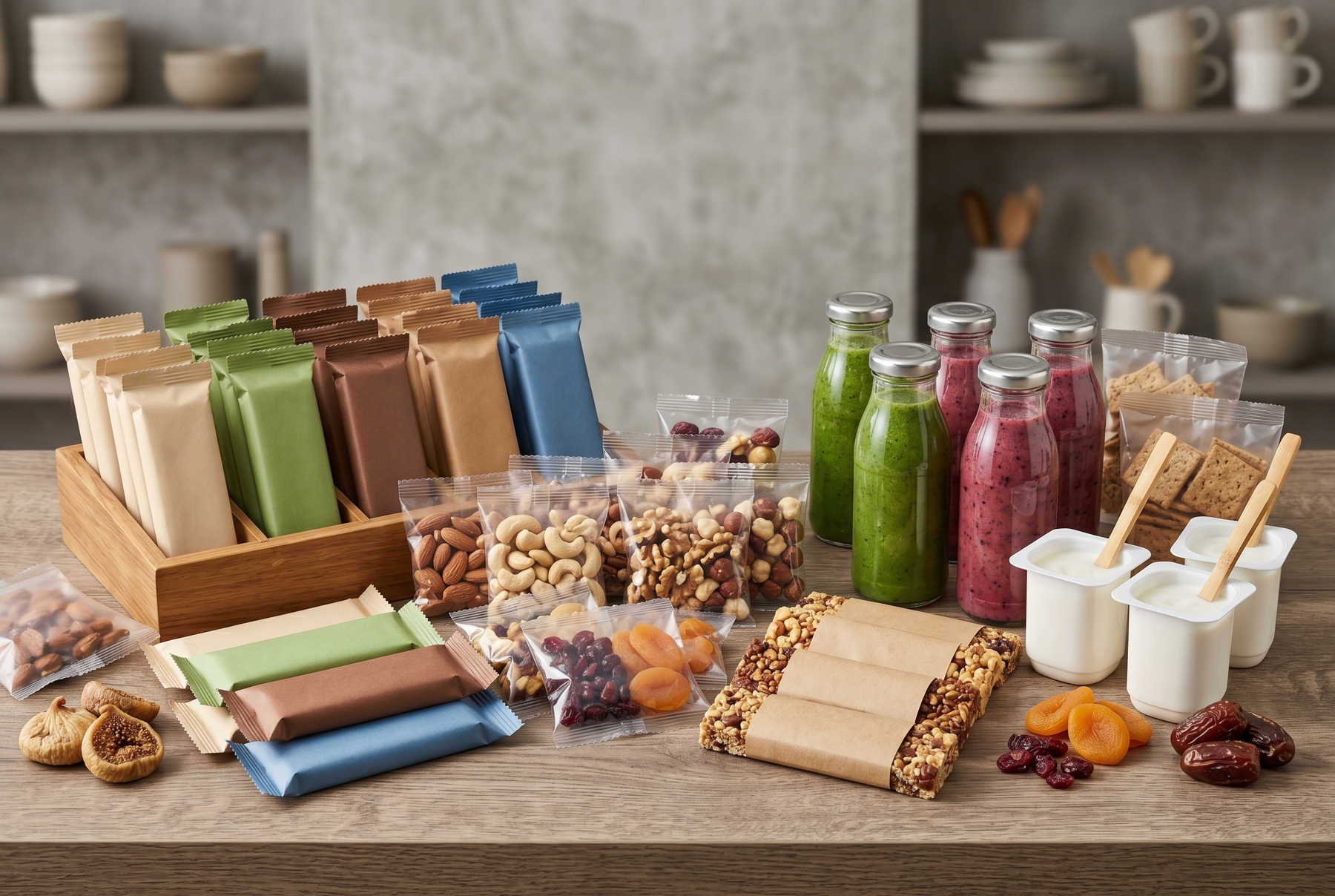
The popularity of the frequent eating idea is actively supported by the market for ready-made snacks and functional foods.
Why the Myth Lives On: The Snack Market
This story also has a market side. Without it, the picture will be incomplete.
The idea of “eating every 2–3 hours” fits perfectly into the snack market: protein bars, “healthy” snacks, nuts in portioned packaging, smoothies in bottles, muesli bars “without sugar” but with agave syrup. With six meals, something must be at hand all day. This is a huge market.
I am not saying the snack industry invented small, frequent meals. Most likely, no. But it is definitely not interested in anyone explaining to people: many healthy people do not physiologically need a snack between breakfast and lunch. Next to a $3 bar, such an idea sells poorly.
Conspiracy theories are not needed: market logic is enough. Dietary trends sometimes move in the same direction as sales. This is worth keeping in mind when the latest “scientific” nutrition advice comes to you through advertising.
How Many Times to Eat: There Is No Exact Answer
For many, this is a relief.
There is no single diet plan to which you must bend your day, appetite, and relationship with food. Two, three, four meals a day: all these are options that can work for different people at different times in their lives. More important than the number of meals is well-being, a calm attitude toward food, and the ability to distinguish hunger, satiety, and fatigue.
Frequent, small meals work as a tool with specific medical indications. Like a hammer: useful when you need to drive a nail. You do not drive screws with it.
0 comments