
Polenta and asparagus salad is a wholesome, nutritious vegetarian recipe that makes a fantastic lunch or a light dinner. Polenta, the traditional Northern Italian cornmeal porridge, takes on a whole new character here: once cooled and set, it's cubed and pan-fried to a satisfying crunch. Paired with tender green asparagus, prized for its delicate flavor and abundance of vitamins, this creates a perfectly balanced dish. It tastes wonderful whether served warm or cold. Since it contains no animal products—relying entirely on plant-based ingredients and quality olive oil—it’s also a great vegan option.
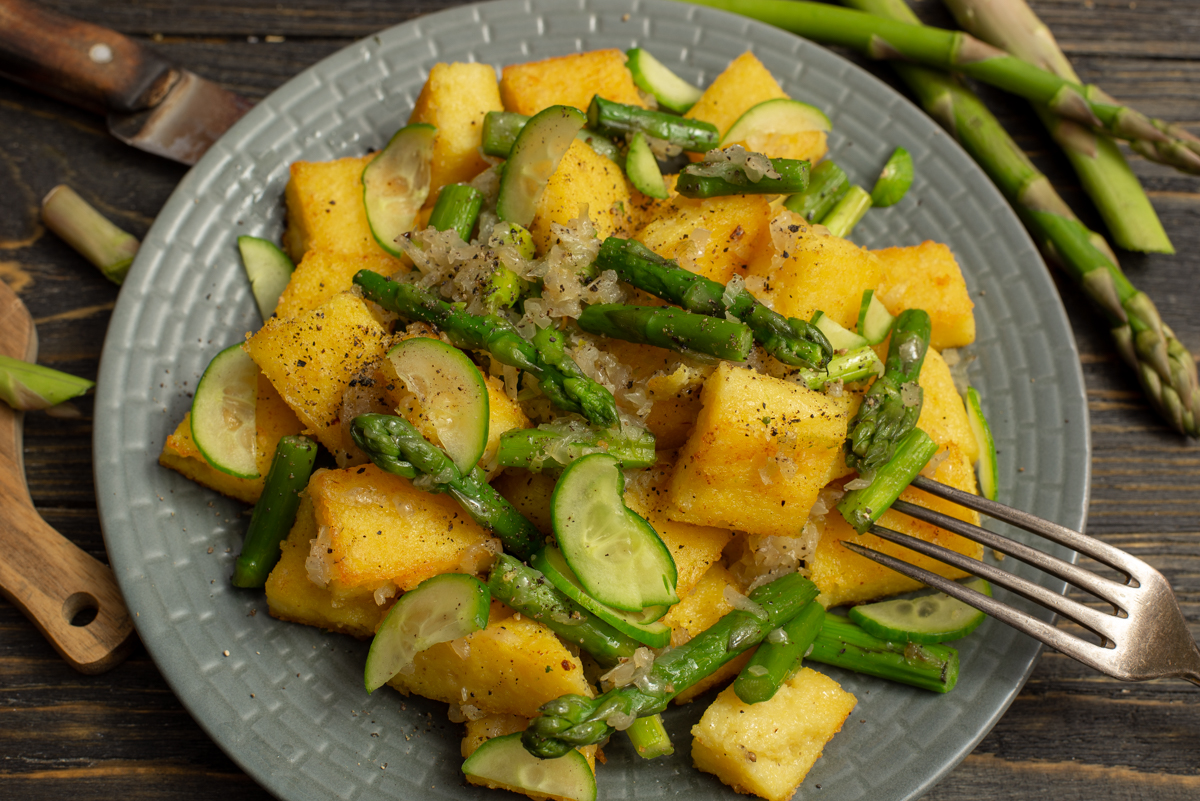
An appetizing salad of crispy polenta and tender asparagus, ready to be served. Enjoy it warm or at room temperature.
Ingredients
- 150 g (5.3 oz) finely ground polenta
- 600 ml (2.5 cups) water
- 200 g (7 oz) green asparagus
- 1 fresh cucumber
- 1 onion
- 4 tablespoons extra-virgin olive oil
- wheat flour, frying oil, salt, and pepper to taste
- white wine vinegar, olive oil, and Dijon mustard for the dressing
How to Make Polenta and Asparagus Salad
Trim about 1 inch (2-3 cm) off the asparagus stems. Then, using a vegetable peeler, shave off the fibrous skin from the bottom 4 inches (10 cm) of the stalks, removing only the thin tough layer. The very bottom of the stem is quite fibrous, but you can save it for making a puréed soup, pushing it through a sieve to catch those tough, inedible fibers.
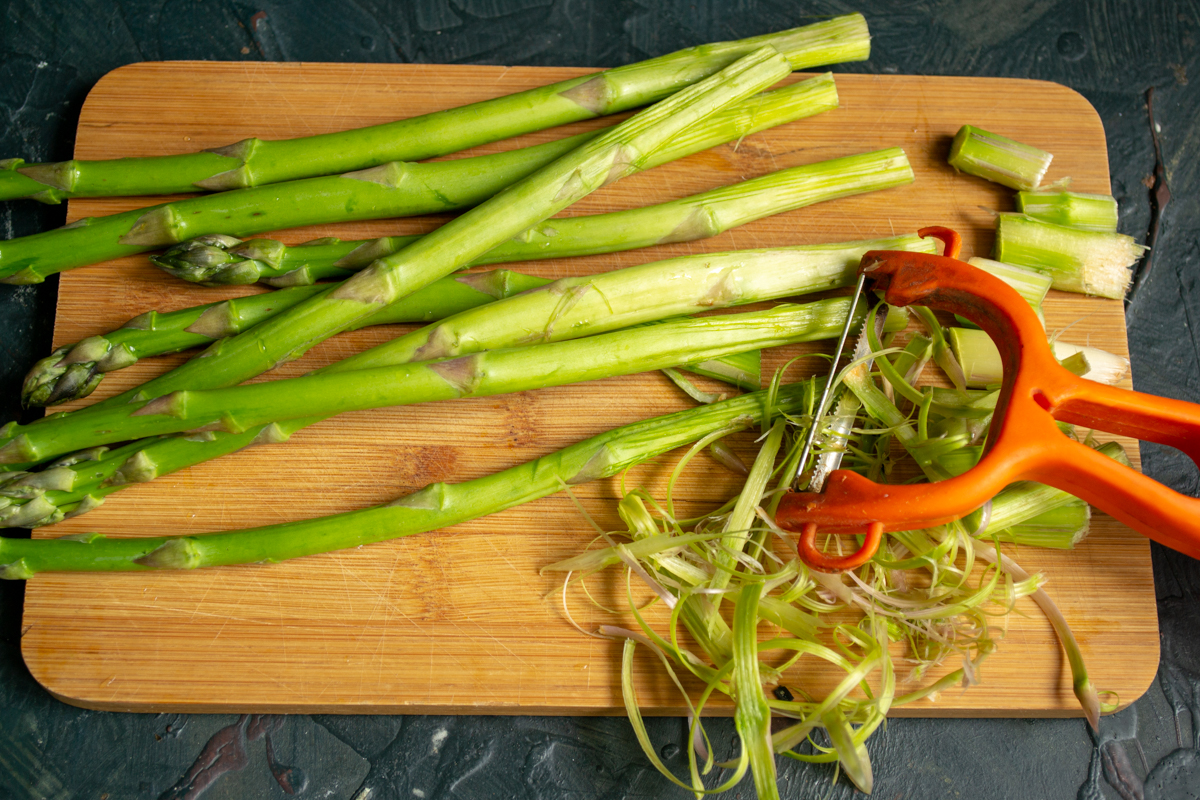
Carefully peel the tough skin from the lower portion of the asparagus stalks to ensure they are tender.
Cut the asparagus in half or into thirds. Pour 1 liter (about 4 cups) of water into a pot, salt generously, and bring to a boil. Drop the asparagus into the boiling water, cook for 4-5 minutes, and then drain in a sieve.
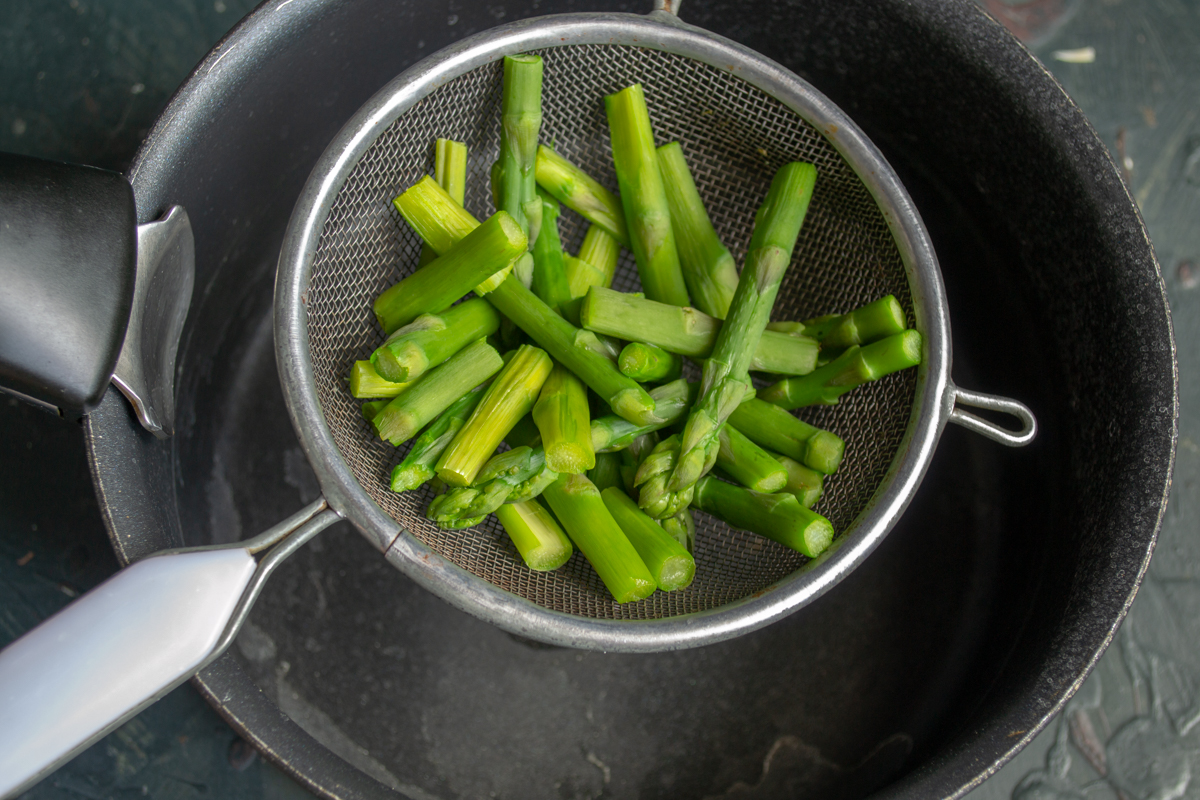
Drain the cooked asparagus in a sieve. Be careful not to overcook them to maintain a crisp-tender texture.
Now for the polenta. Pour 600 ml (about 2.5 cups) of water into a pot and add salt. Once boiling, pour the polenta in a thin, steady stream, stirring continuously with a wooden spoon or a narrow spatula. Cook the polenta over low heat for 15-20 minutes. Cooking time will vary depending on the grind—finer cornmeal will cook faster.
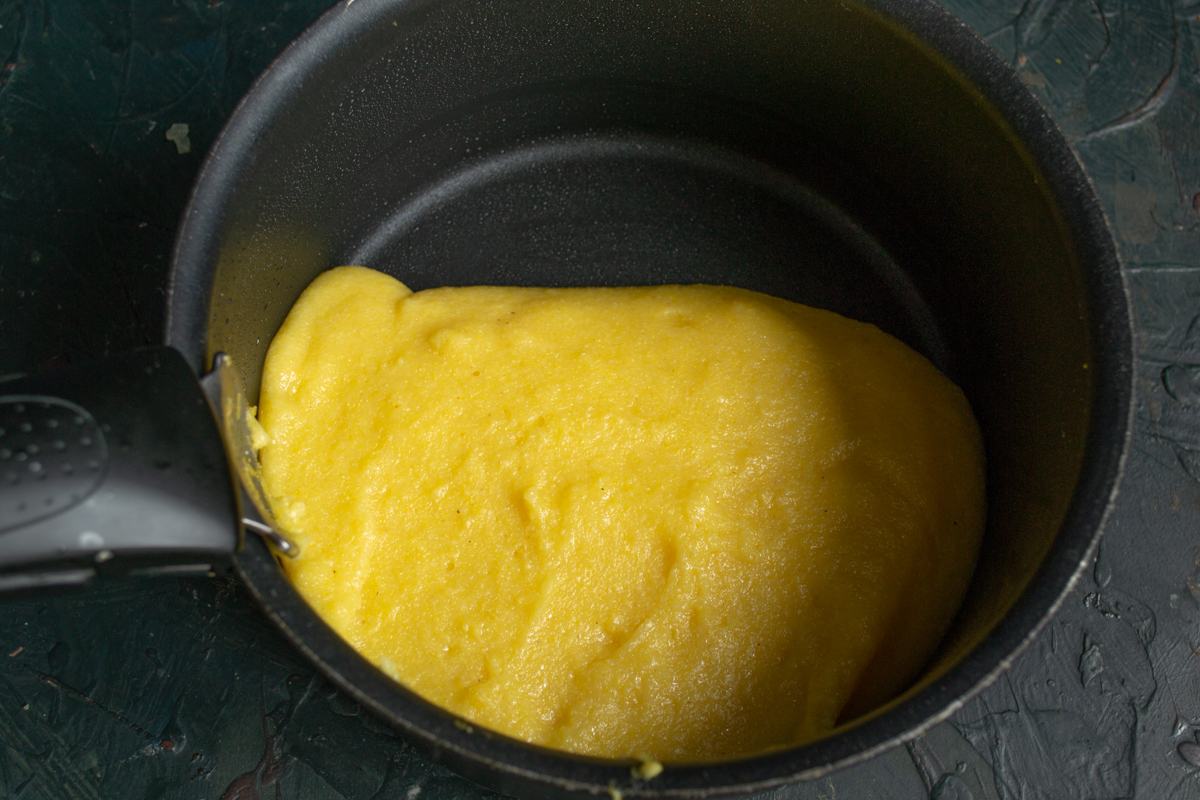
Cook the cornmeal until thickened, stirring constantly to prevent lumps from forming.
When the polenta is ready, stir in some extra-virgin olive oil and mix thoroughly. Smooth the porridge out in the pot or spread it onto a flat dish. Let it cool to room temperature. As it cools, it will set into a firm block that is easy to cut into bite-sized pieces.
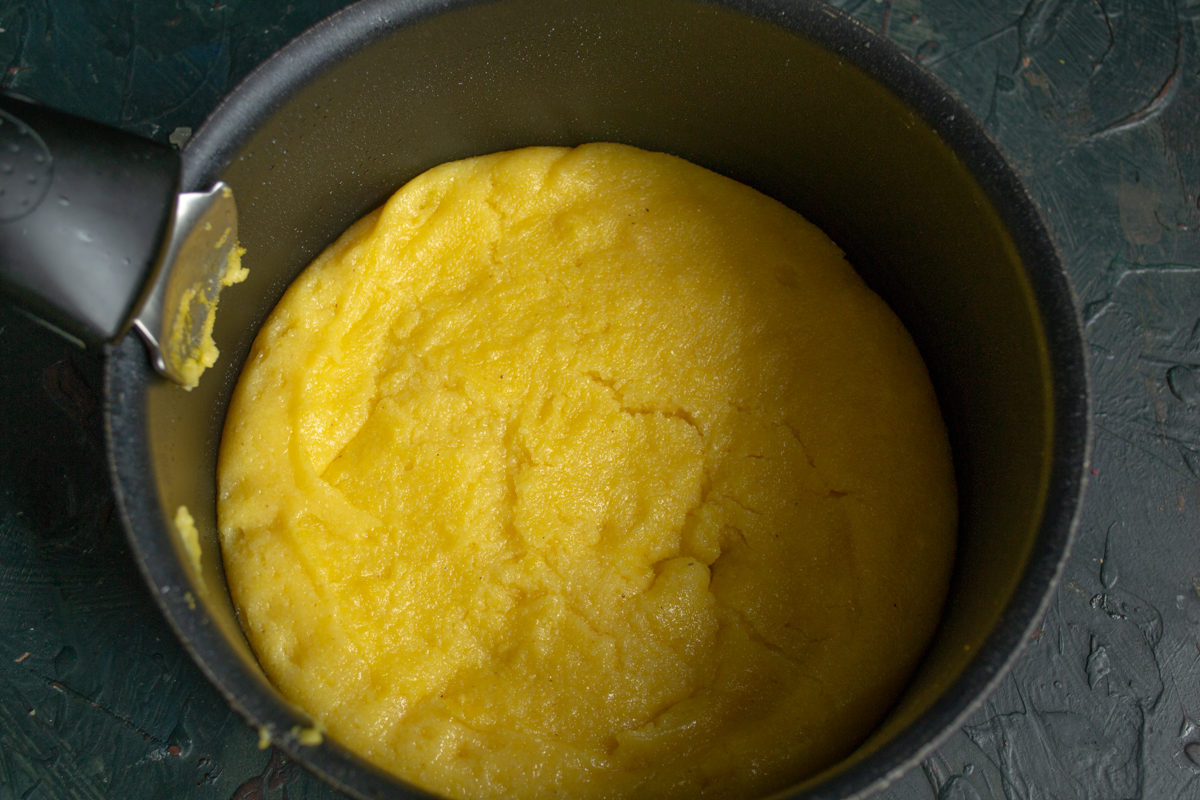
Leave the polenta to cool. Once set, it will become firm and easy to slice.
Turn the set polenta out onto a cutting board, slice it into strips, and then cut it into large cubes.
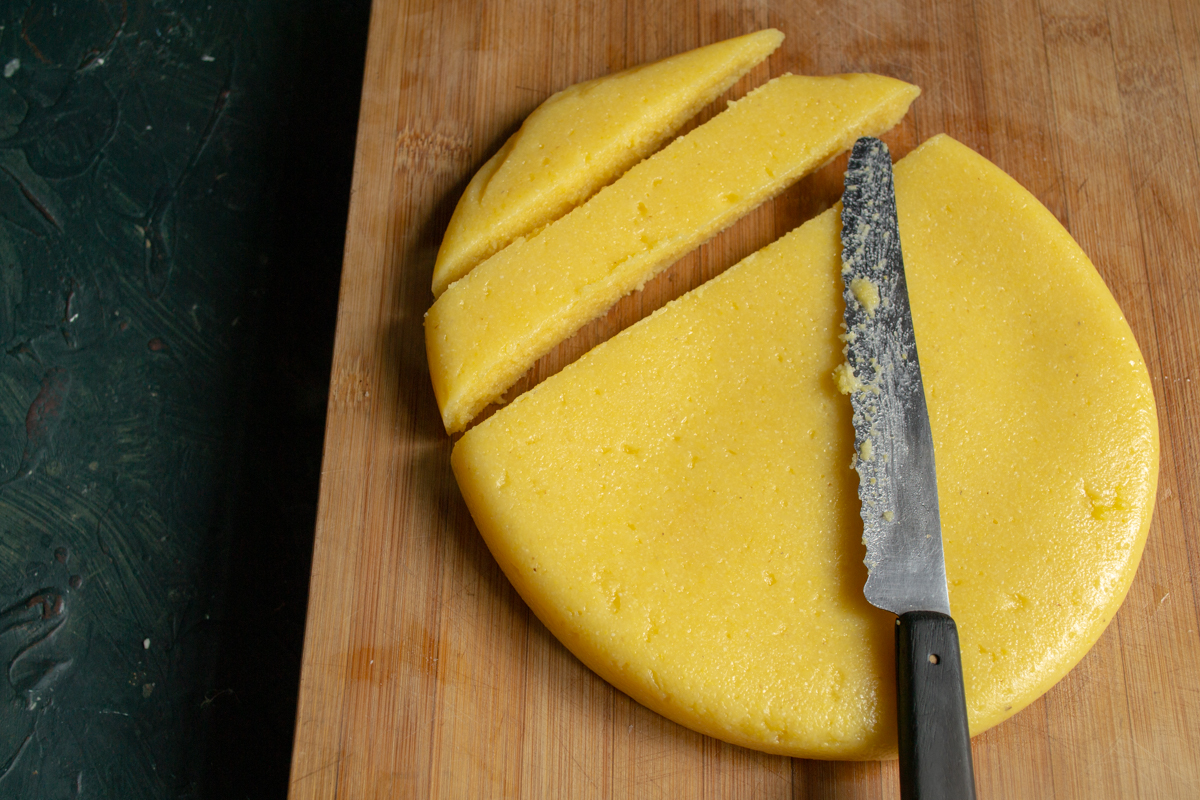
Cut the set cornmeal block into even strips, and then chop those into large cubes.
Lightly dredge the polenta cubes in wheat flour.
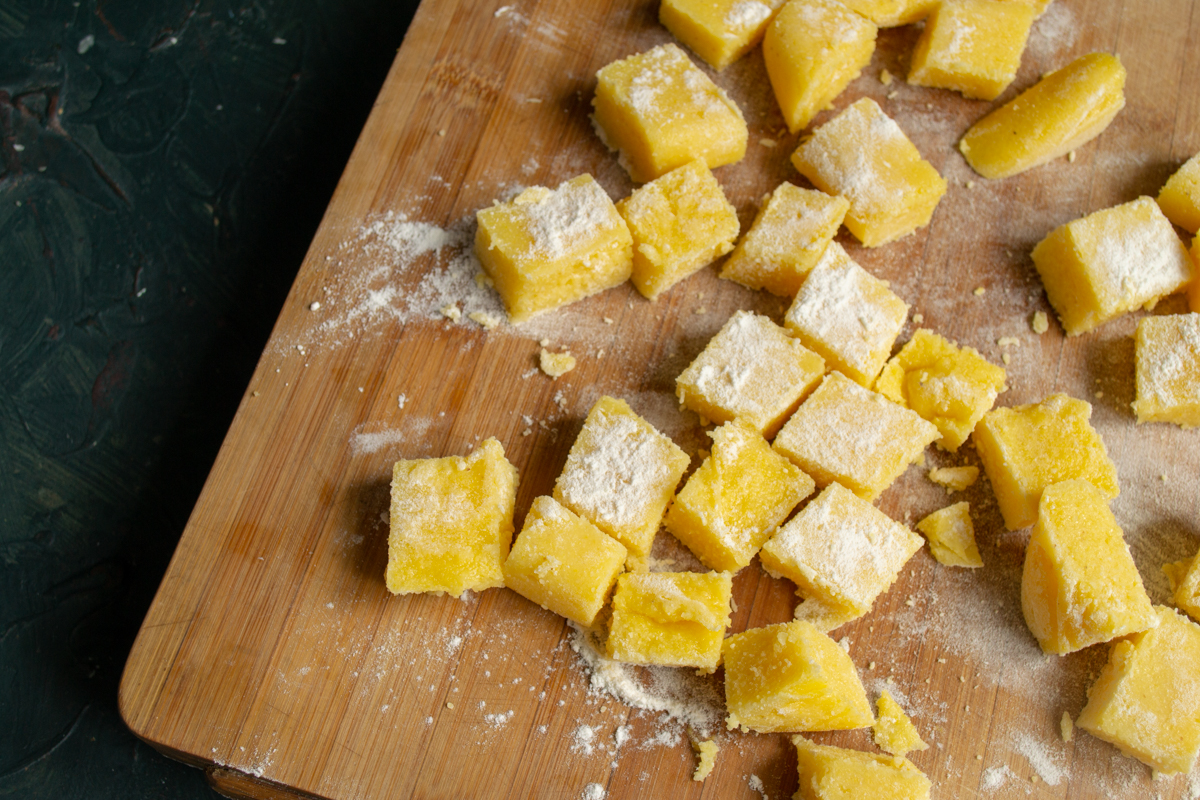
Coat each piece in flour—this guarantees a perfectly crispy crust when pan-fried.
Heat 2 tablespoons of frying oil in a heavy-bottomed skillet. Add the polenta cubes and fry until a golden crust forms on one side.
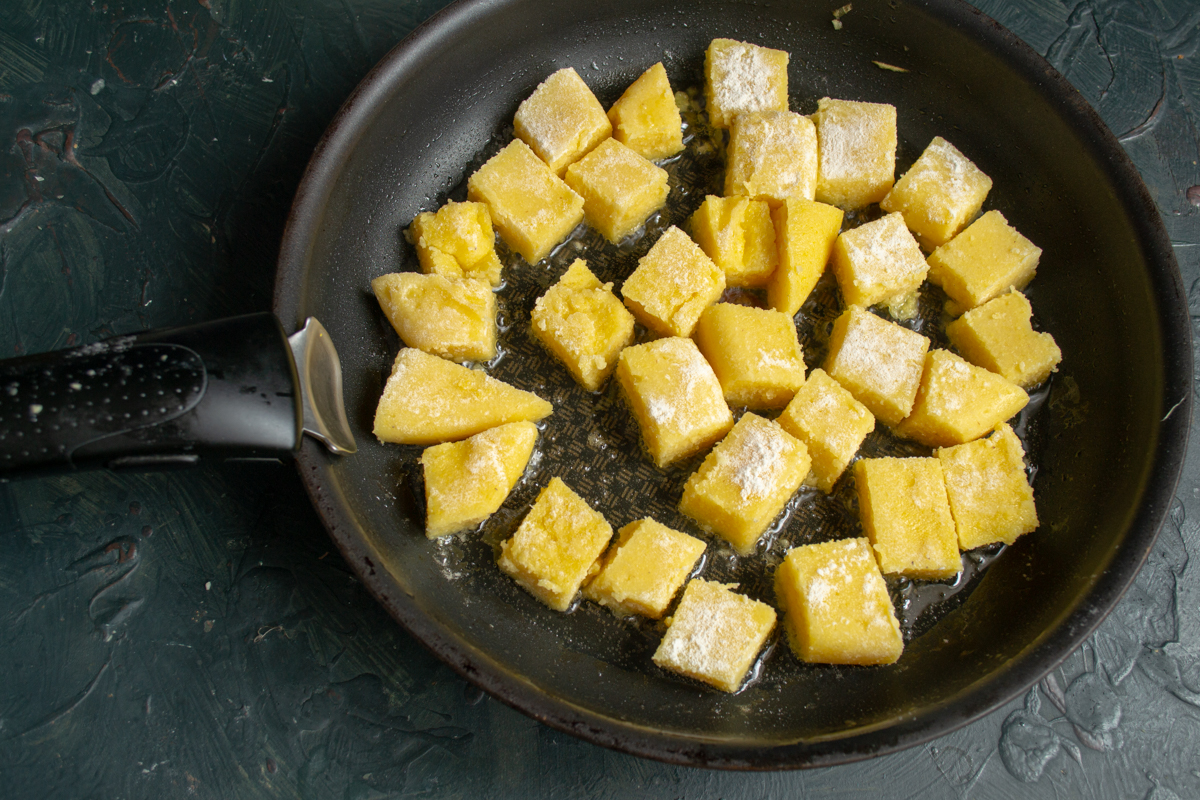
Place the cubes in a heated pan and fry until they develop a beautiful golden-brown color.
Flip the cubes and fry until golden on the other side. Remove the polenta from the pan and let it drain on a paper towel to absorb any excess oil.
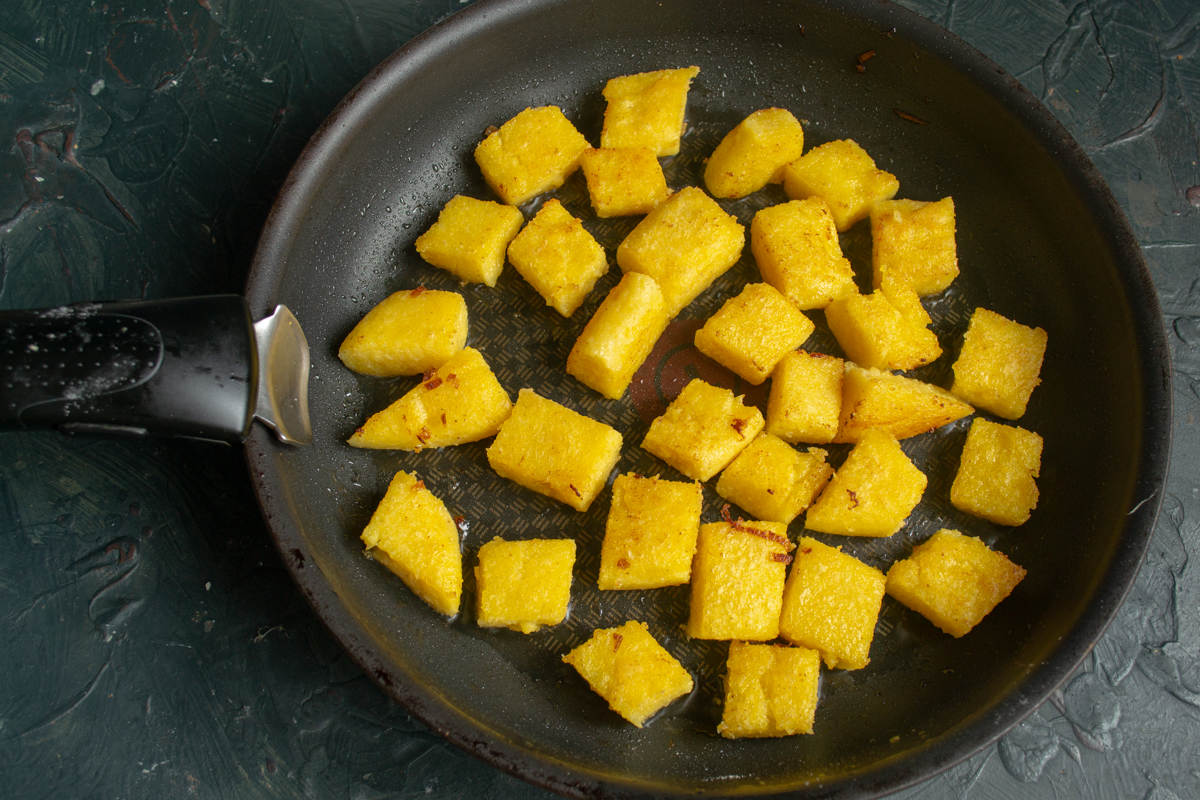
Fry until golden on all sides, then remove excess oil with a paper towel.
Finely dice the onion and sauté it until translucent, seasoning with salt and pepper.
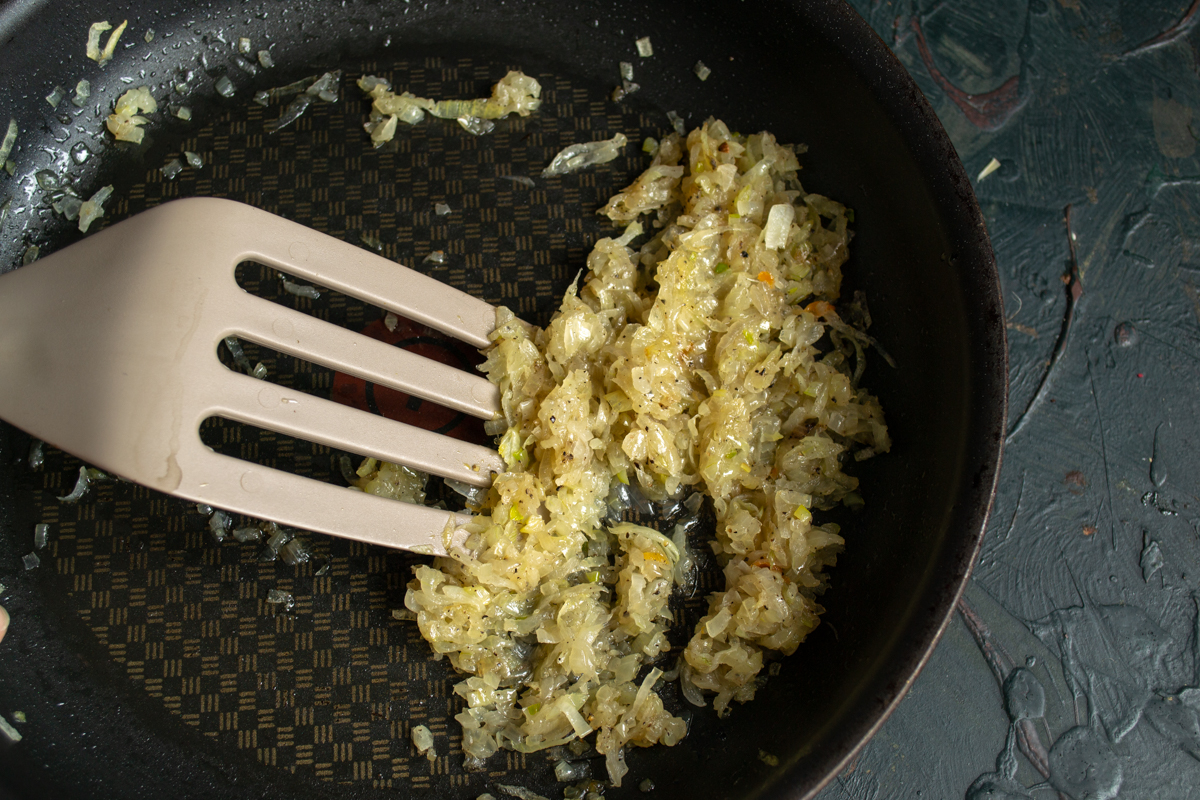
Sauté the onions until translucent—they will form the aromatic base for our salad dressing.
To the sautéed onion, add a tablespoon of white wine vinegar, a teaspoon of Dijon mustard, and a splash of extra-virgin olive oil. Stir well to combine.
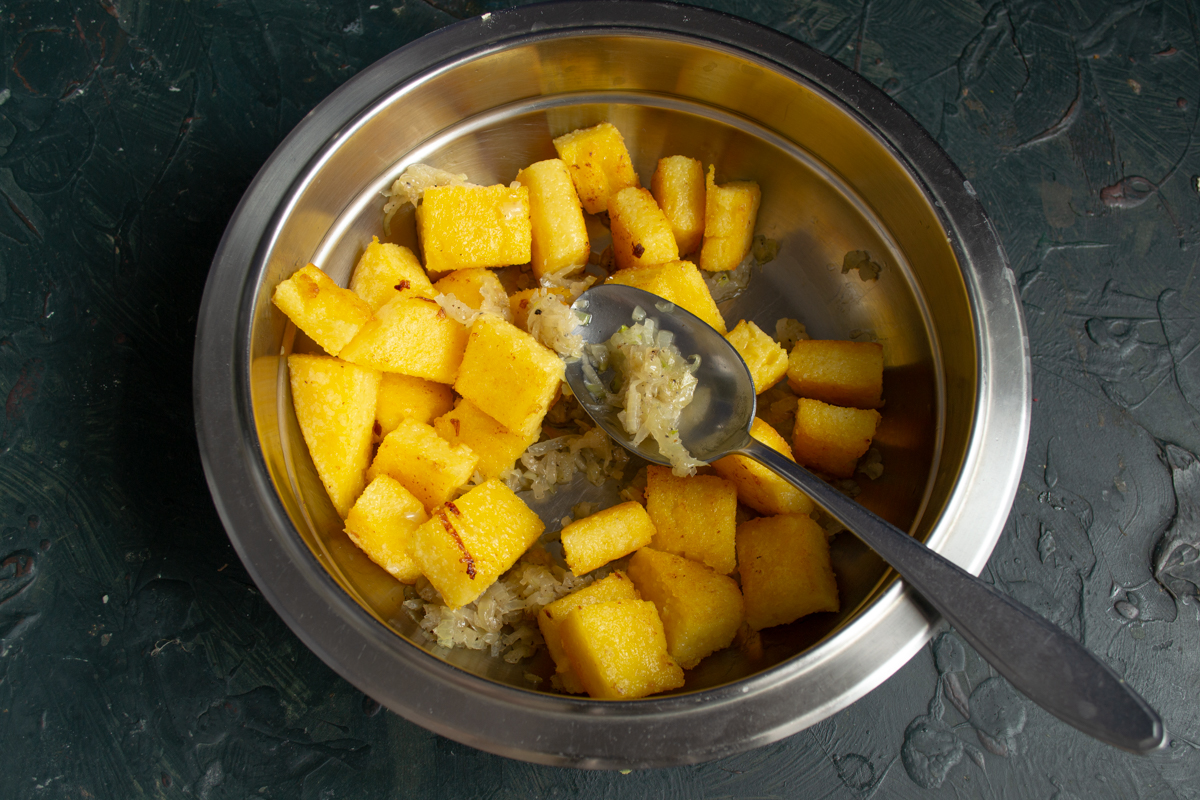
Combine the fried polenta with the onion, mustard, and vinegar so the cubes soak up the flavors.
Place the fried polenta in a mixing bowl and toss with the onion dressing.
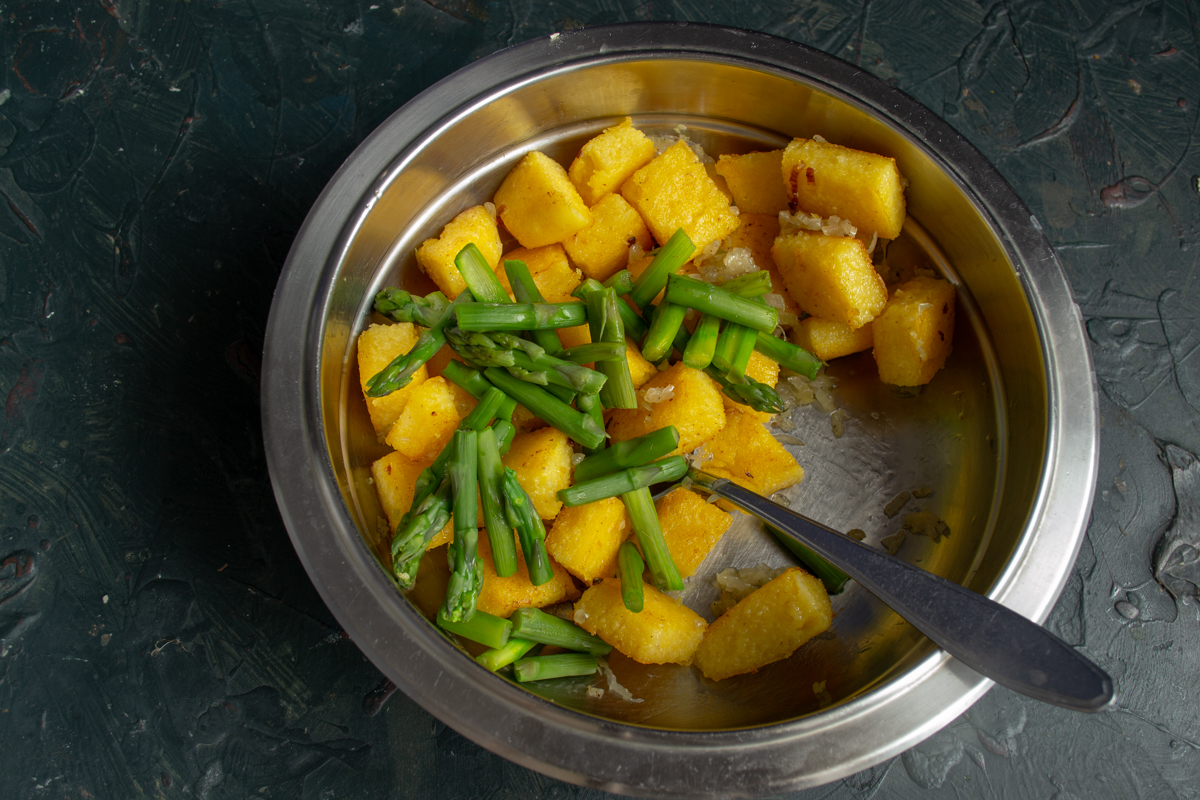
Add the vibrant asparagus to the polenta and gently toss all the ingredients.
Add the cooked asparagus to the bowl and gently toss everything together.
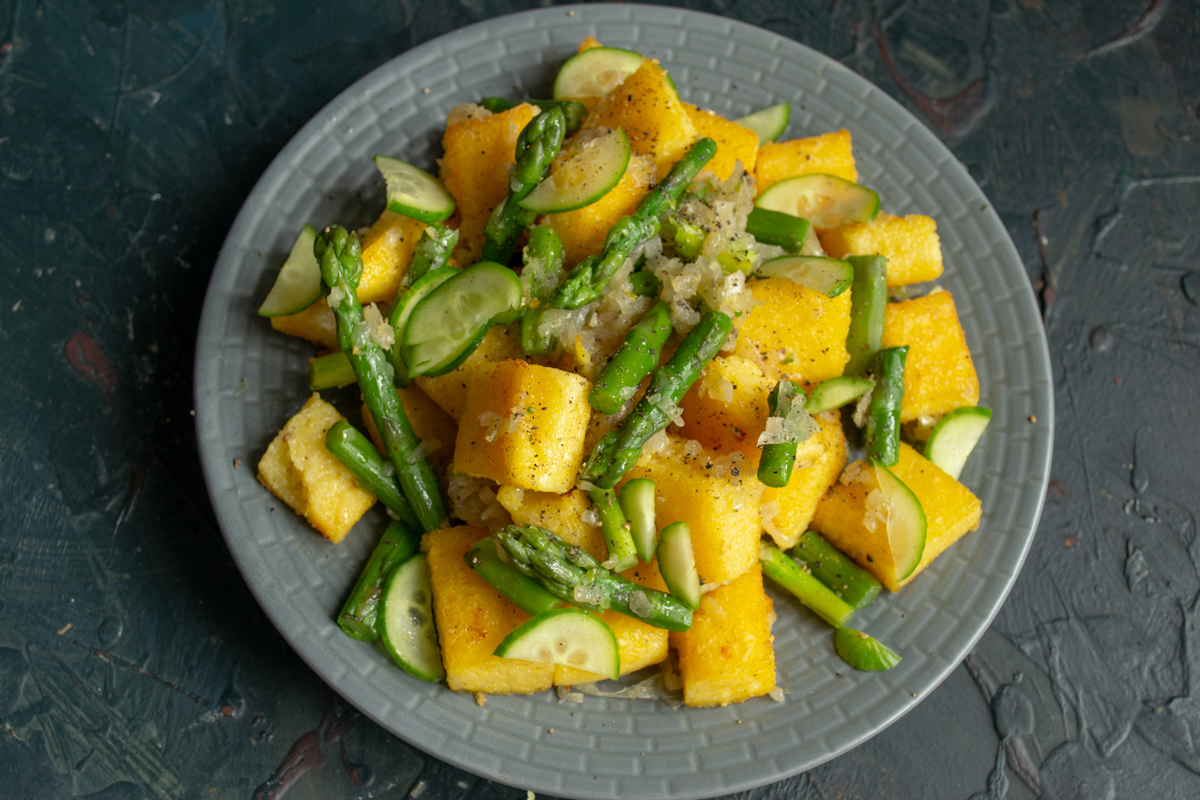
Arrange the salad on a serving dish. The contrast in textures and colors makes this dish truly special.
Mound the polenta and asparagus salad onto a serving plate. Garnish with thin slices of fresh cucumber. Finish with a crack of black pepper and serve immediately. Enjoy!
For the best presentation and texture, serve this polenta and asparagus salad immediately after tossing, while the polenta cubes are still perfectly crispy. To add another layer of flavor, consider whisking a pinch of dried thyme or finely chopped fresh parsley into the dressing. If you'd like to make the meal heartier, sprinkle toasted pine nuts over the top or fold in some sun-dried tomatoes for a Mediterranean touch.
For a more budget-friendly twist, you can easily swap the green asparagus for green beans—it will still be delicious. You can also make the polenta ahead of time, allowing it to chill thoroughly in its mold, which significantly cuts down on prep time before serving. Don't hesitate to play around with the sharpness of the mustard, adjusting the balance to suit your own palate.
0 comments